Kraft Paper vs Foil Coffee Bags: Which Machine Works Best?
The Short Answer: Material Flexibility and Adjustable Sealing Decide the Machine
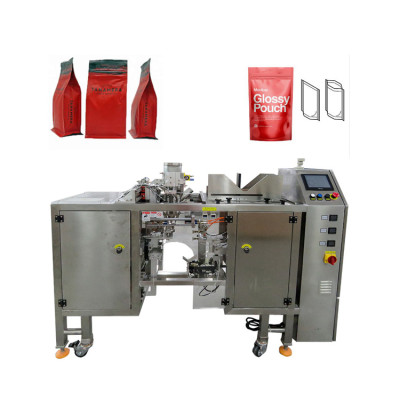
Short answer: the same packaging machine can run both kraft paper and foil coffee bags — what changes is the sealing profile. Foil coffee bags (PET/aluminium/PE laminates) seal best at 180–200°C, while kraft paper coffee bags (paper + PE liner) seal at 140–160°C to avoid scorching the paper. So the machine that "works best" is the one with material flexibility and adjustable sealing — independent temperature, pressure, and dwell time you can set per bag stock. TOP Y MACHINERY builds exactly that: premade-bag (TOPY-MDPL) and VFFS lines with PLC recipe presets that switch between kraft and foil in minutes, and sealing jaws matched to each material.
This guide answers the question roasters and coffee packers ask most when they move to kraft or foil bags: which machine handles each material — and can one machine handle both? You will find the kraft vs foil comparison table, a sealing temperature and pressure guide for each material, the TOP Y machine features that deliver material flexibility, and answers to the most common buyer questions.
Kraft Paper vs Foil Coffee Bags: Material Comparison Table
Kraft and foil are not interchangeable — they are two different packaging strategies with different machine requirements. The table below compares the materials across the factors that actually drive machine choice: barrier, shelf life, sustainability, cost, and sealing behaviour.
| Factor | Kraft Paper Coffee Bag | Foil Coffee Bag |
|---|---|---|
| Structure | Kraft paper + PE liner (optional aluminium inner layer) | PET / aluminium foil / PE laminate, or metallised PET |
| Oxygen & moisture barrier | Moderate — good with a PE liner, needs a degassing valve for freshness | Excellent — aluminium foil is nearly impermeable |
| Coffee shelf life | 3–6 months typical for roasted beans | 6–12+ months with a degassing valve and good seals |
| Sustainability | Recyclable, renewable fibre, compostable options | Harder to recycle — multi-layer laminate |
| Cost per bag | Lower | Higher |
| Brand look | Natural, craft, artisanal "roastery" feel | Glossy, metallic, premium retail shelf presence |
| Sealing behaviour | Porous, stiff paper — lower heat, slightly longer dwell | Smooth laminate — higher heat, controlled pressure |
| Sealing temperature | 140–160°C | 180–200°C |
| Machine requirement | Adjustable low-temperature sealing; firm feeding for stiff paper | Adjustable high-temperature sealing; delicate film handling |
| Best use case | Local roasteries, organic and eco brands, retail craft coffee | Export, long-shelf-life retail, gourmet and subscription lines |
The machine side of the comparison is one line, not two. Because both bags are pre-formed pouches or roll-film bags, the filling system — a linear weigher for beans, an auger for powder — does not care what the bag is made of. What must change is the sealing station: temperature, pressure, dwell time, and jaw surface. That is why adjustable sealing is the deciding feature, not the bag material itself.
Sealing Temperature and Pressure Guide: Kraft 140–160°C, Foil 180–200°C
Sealing temperature is the #1 variable that separates kraft and foil packaging — and the #1 cause of failed seals when it is wrong. The inner layer of both bag types is polyethylene (PE), which melts and welds under heat and pressure. The difference is what sits on top of that PE: a foil laminate conducts heat quickly and needs a higher jaw temperature (180–200°C) to drive heat through the film to the sealant layer; kraft paper is porous and insulates, so it seals at a lower temperature (140–160°C) — above roughly 170°C the paper begins to scorch and discolour, weakening the bag. Pressure matters too: kraft needs firm, even pressure over a wide jaw footprint to press through paper fibres, while foil needs firm but controlled pressure so the smooth film is not stretched or torn.
| Sealing Parameter | Kraft Paper Coffee Bag | Foil Coffee Bag |
|---|---|---|
| Seal temperature | 140–160°C | 180–200°C |
| Seal pressure | Medium-firm, wide jaw footprint, even across the paper | Firm but controlled — avoid stretching or tearing the film |
| Dwell time | 0.6–1.2 s (heat conducts more slowly through paper) | 0.5–1.0 s (fast heat transfer through the laminate) |
| Jaw surface | Serrated or flat with anti-stick coating for paper fibres | Flat PTFE-coated jaws — no sharp serration on film |
| Critical failure mode | Paper scorching, burning or browning above ~170°C | Film shrinkage, wrinkles or tearing under excessive pressure |
The practical rule: if you are switching from foil to kraft on a machine with a fixed high-temperature seal setting, the kraft bag will scorch. If you run kraft settings on foil, the seal will be weak or incomplete. A machine with independently adjustable temperature, pressure, and dwell time — and stored recipes per material — removes both failure modes.
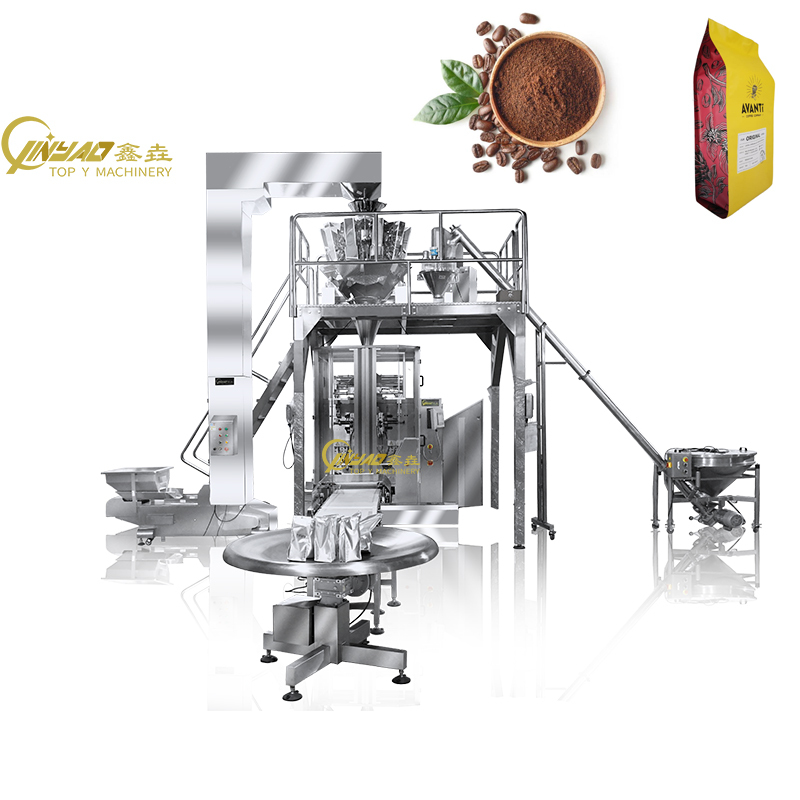
Material Flexibility and Adjustable Sealing: How TOP Y Machines Run Both
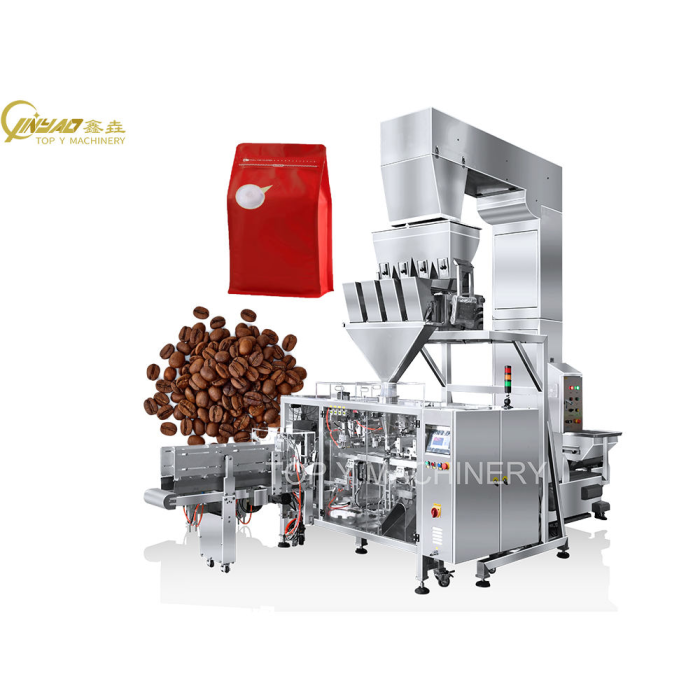
TOP Y MACHINERY designs coffee packaging machines around material flexibility, so one line earns back its cost across multiple bag stocks. Four features make kraft-and-foil changeover practical instead of a changeover headache:
- PLC recipe presets: each bag material is stored as a recipe — temperature, pressure, dwell time, and jaw behaviour. The operator selects "kraft paper" or "foil laminate" on the touchscreen and the machine applies the right profile in minutes, without mechanical reconfiguration.
- Independently adjustable sealing: each sealing jaw has its own heating zone and pneumatic pressure regulator, so the 140–160°C kraft profile and the 180–200°C foil profile can both be dialled in precisely — and re-verified by temperature sensors on every cycle.
- Material-matched bag handling: kraft paper is stiff and slightly porous; foil film is slippery and delicate. TOP Y machines adapt feeding rails, rollers, and jaw coatings to each material, so neither a jammed paper bag nor a scratched foil bag slows the line.
- Optional freshness upgrades: both kraft and foil lines can be fitted with a degassing valve applicator, nitrogen flush, and vacuum options — the same machine supports a 3-month craft bag and a 12-month export bag.
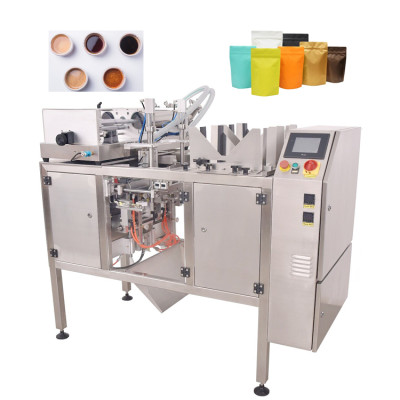
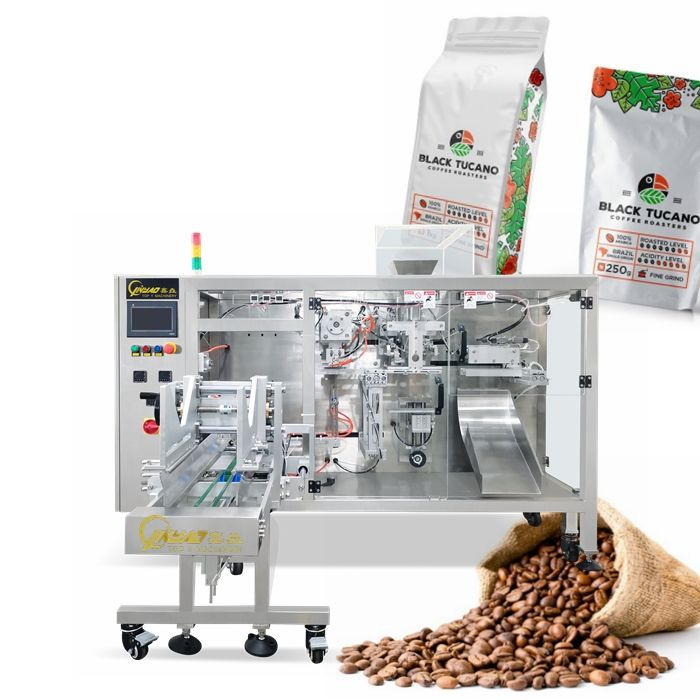
On the foil side, the same frame philosophy applies. The foil coffee bag machine below uses the identical horizontal premade-bag platform with the sealing profile tuned for aluminium laminates at 180–200°C — which is exactly why TOP Y can say one machine platform covers both materials, and why a roaster scaling from craft kraft bags to export foil bags does not need to buy a second line.
Frequently Asked Questions
Can one packaging machine run both kraft paper and foil coffee bags?
Yes. TOP Y MACHINERY's premade-bag (TOPY-MDPL) and VFFS platforms handle both materials. The machine stores a sealing recipe per material — kraft at 140–160°C, foil at 180–200°C — and the operator switches profiles on the PLC touchscreen. The filling head (multihead weigher for beans) is unchanged, so changeover is a recipe change, not a machine change.
What happens if I seal kraft paper bags at foil temperature (180–200°C)?
The kraft paper scorches. Above roughly 170°C the paper fibres begin to brown and burn, the seal area becomes brittle and discoloured, and the bag loses strength — the seal may even tear open during handling. Kraft must be sealed at 140–160°C, which is why adjustable low-temperature sealing matters when you run paper bags.
Which coffee bag material gives the longest shelf life?
Foil. An aluminium foil laminate is nearly impermeable to oxygen and moisture, so roasted coffee in a well-sealed foil bag with a one-way degassing valve stays fresh for 6–12+ months. Kraft paper with a PE liner typically protects roasted beans for 3–6 months — enough for local roasteries and craft retail, not enough for long export logistics.
Do kraft bags need different sealing jaws than foil bags?
They benefit from different jaw behaviour. Kraft seals well with a serrated or flat anti-stick jaw that presses firmly through paper fibres. Foil is best on flat PTFE-coated jaws without sharp serration, so the smooth laminate is not scratched or stressed. TOP Y machines let you match the jaw surface to the material and store it in the recipe.
Is a machine for foil coffee bags more expensive than one for kraft bags?
The base machine is the same platform — the cost difference is in options, not the material. Foil lines more often add degassing valve applicators, nitrogen flush, and vacuum stations for long shelf life. Because TOP Y builds one flexible platform, buying a material-flexible machine up front is usually cheaper than owning one dedicated line per bag type.
How do I choose between kraft paper and foil for my coffee brand?
Start with shelf life and distribution: short local routes and an eco brand image point to kraft; export, subscriptions, and premium retail margins point to foil. Then confirm the machine can run the material you choose — and ideally the other one too. With adjustable sealing from 140–200°C, a TOP Y line keeps both options open as your brand grows.
The Machines Behind Both Materials — Coffee Bag Packaging from TOP Y MACHINERY
TOP Y MACHINERY builds kraft paper and foil coffee bag machines on one flexible platform, with adjustable sealing from 140°C to 200°C and 20 years of food packaging experience. Every line is configured to the bag stock, fill weight, and freshness requirements of the actual product, with installation, training, and after-sales support. Two machines anchor this comparison:
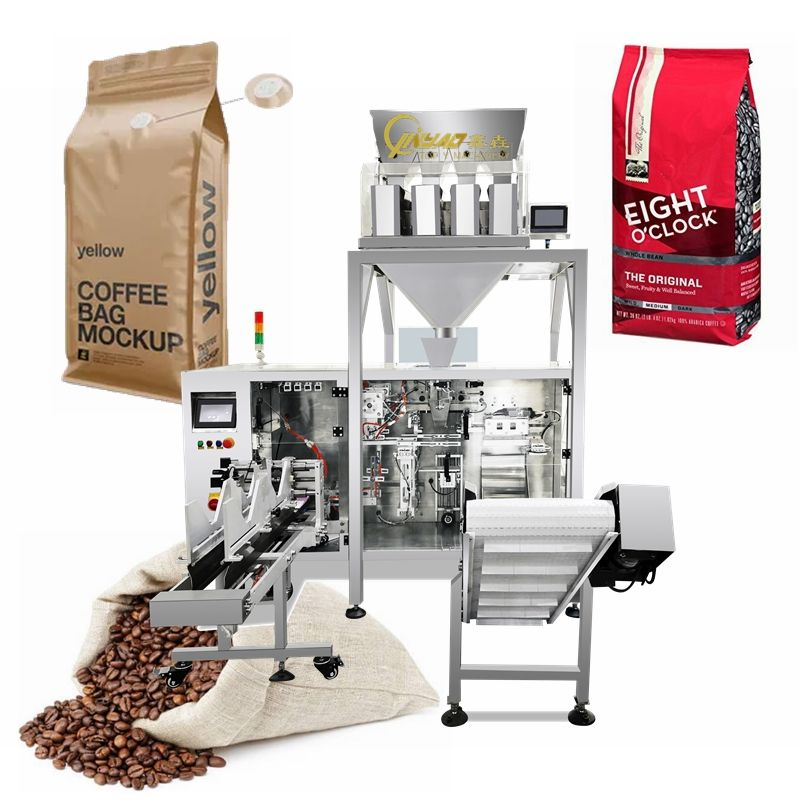
TOPY-MDPL Kraft Paper Bag Machine
Horizontal premade-bag machine for kraft paper coffee bean bags — zipper stand-up pouches, 140–160°C kraft sealing profile, optional vacuum and gas flush, with multihead weigher integration.
View product details →
TOPY-MDPL Foil Coffee Bag Machine
Horizontal packaging machinery for 1 kg, 2 kg and 2.5 kg roasted coffee beans in aluminium foil coffee bags — 180–200°C foil sealing profile and PLC-controlled adjustable sealing for long-shelf-life export packs.
View product details →Whether your brand runs kraft paper, foil, or both, TOP Y MACHINERY can match the machine and the sealing profile to your bag material. Request a Coffee Bag Machine Quotation or browse the full food packaging machine range to compare kraft and foil bagging options.