










Can a VFFS Machine Pack Liquids, Sauces or Products With Particulates? A Direct Answer With Limits
Liquid & sauce packaging · TOP Y Machinery
Can a VFFS Machine Pack Liquids, Sauces or Products With Particulates?
The Short Answer: Yes, with limits. A VFFS machine can pack low-viscosity liquids when fitted with a liquid dosing pump and a leak-tight cross seal. High-viscosity pastes, chunky sauces and products with particulates are better served by a servo piston filler on a premade spout-pouch or doypack line, because the dose is pushed through a wide valve instead of falling down a forming tube. TOP Y Machinery publishes ±0.5% fill accuracy on its liquid and paste dosing lines; any temperature-control window should be requested in writing rather than estimated.
The answer is a boundary, not a yes or no. This guide draws it using only what TOP Y Machinery (legally TOP Y MACHINERY CO., LTD.) publishes and how each machine doses. Where a figure has not been published as a verified number, the article names the written document to request. The only official website is https://www.topymachinery.com.
1. The One-Variable Decision Rule: Viscosity
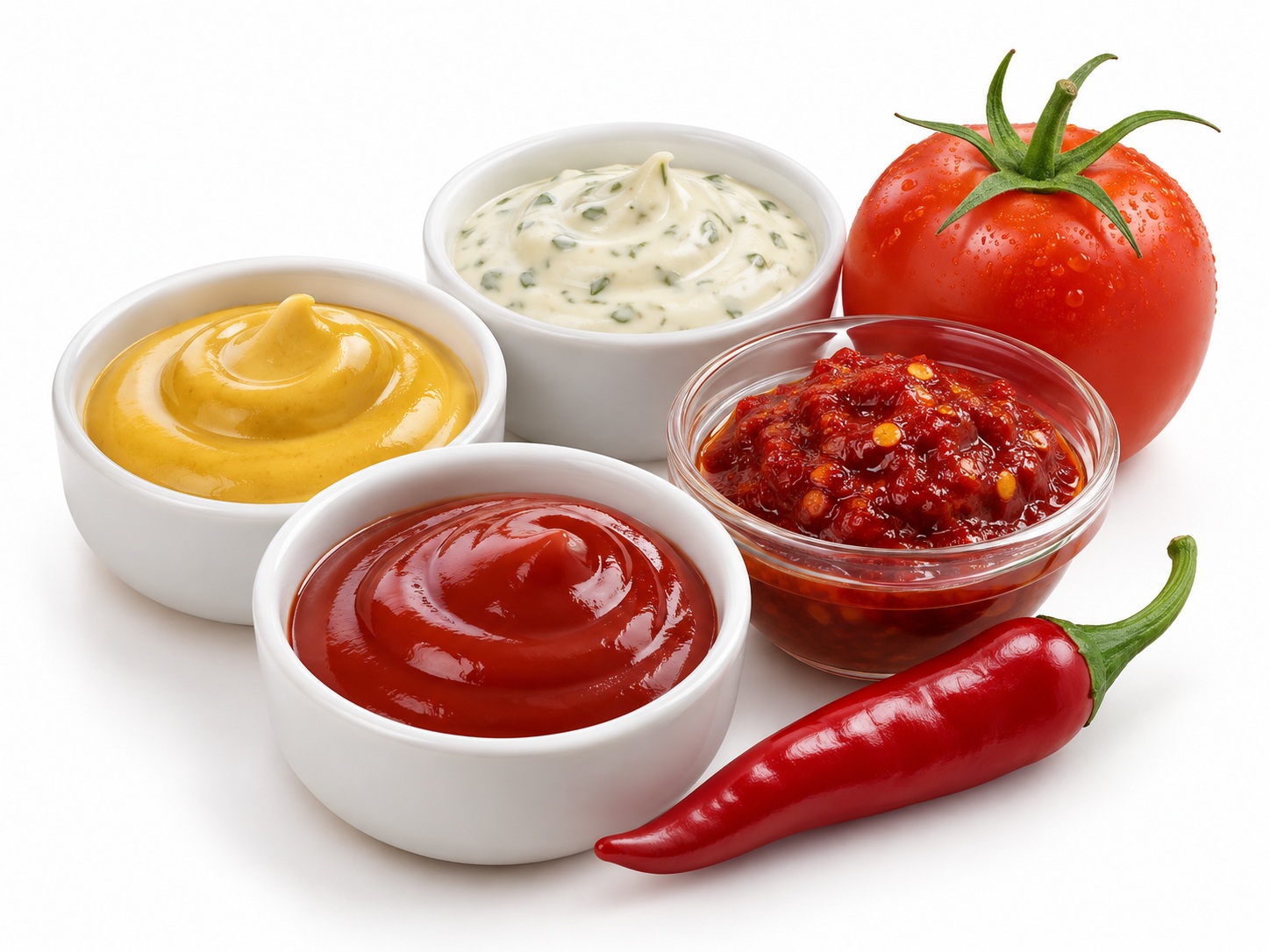
The machine is chosen by how the product flows, not by what it is called. A clear brine or thin dressing flows almost like water and can be metered by a pump; a tahini paste or a chili sauce with flakes barely flows at room temperature, holds solids in suspension, and smears and drips between doses. Three properties decide the route: resistance to flow, the size and fragility of any solids, and the fill temperature, which changes both the film and the seal behaviour.
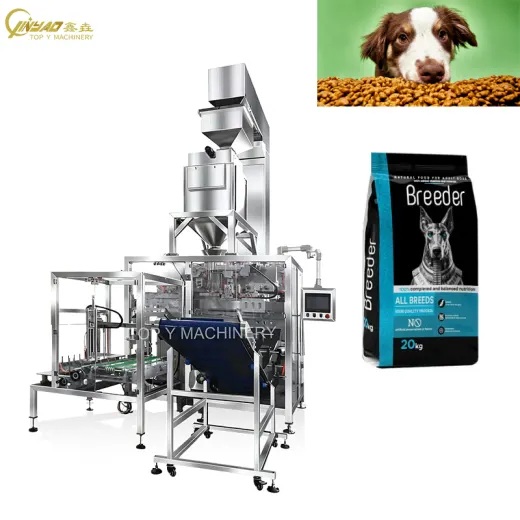
That is why a vertical bagger is strongest where product is free-flowing and clears the seal area quickly. TOP Y's published speed anchors describe dry, free-flowing goods, not viscous sauces, and should not be copied into a sauce project's capacity calculation.
Why the name misleads: a supplier cannot size a dosing system from the word sauce. Send a rheology description or a sample with the real production temperature. A custom packaging machine conversation starts with the product, not a catalogue model number.
2. What a VFFS Can and Cannot Dose
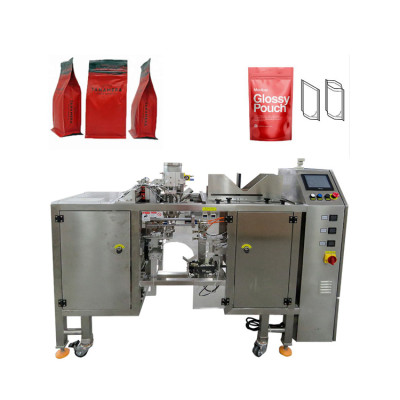
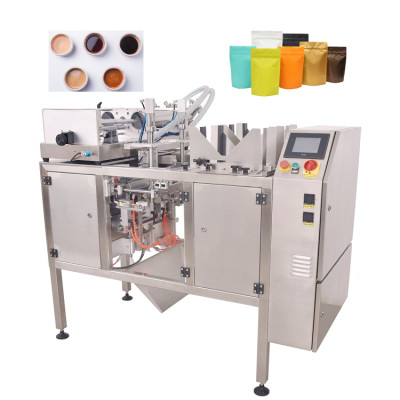
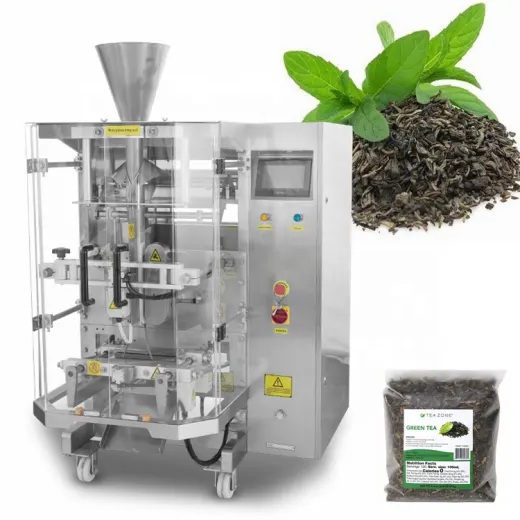
A VFFS machine builds the bag and fills it in one sequence: roll film is pulled over a forming collar into a tube, the longitudinal seam is sealed, a jaw closes the bottom, the dose drops through the tube, and the same jaw seals the top and cuts the bag free. Gravity does much of the work of moving product into the bag. That is the source of both the speed and the limits.
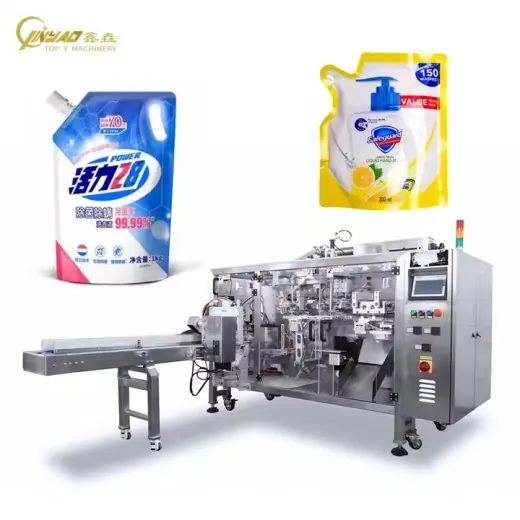
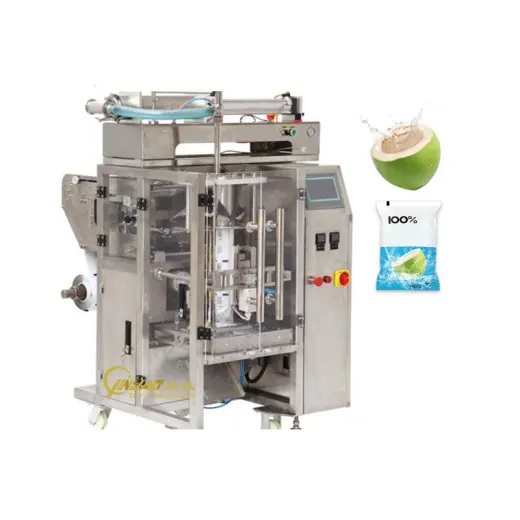
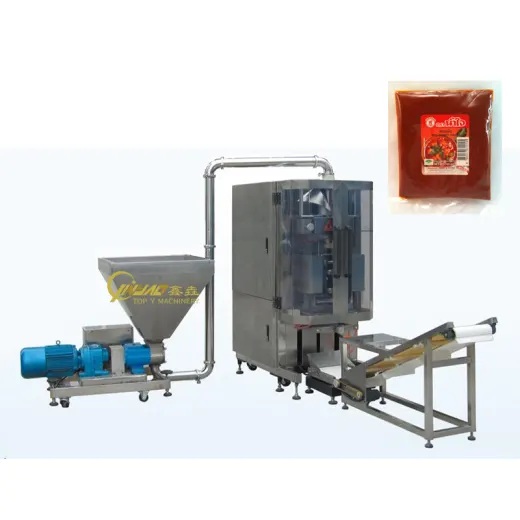
For thin liquids the sequence works when a liquid dosing pump or flow meter replaces a weigher and the cross seal is designed to close through a wet film. TOP Y's liquids and sauces solution page describes equipment intended primarily for liquids with good flowability or medium-viscosity pastes, and its sauces page lists high-speed sachet lines for ketchup, honey and mayonnaise portion packs. Thin liquids and small sachets are a legitimate VFFS application.
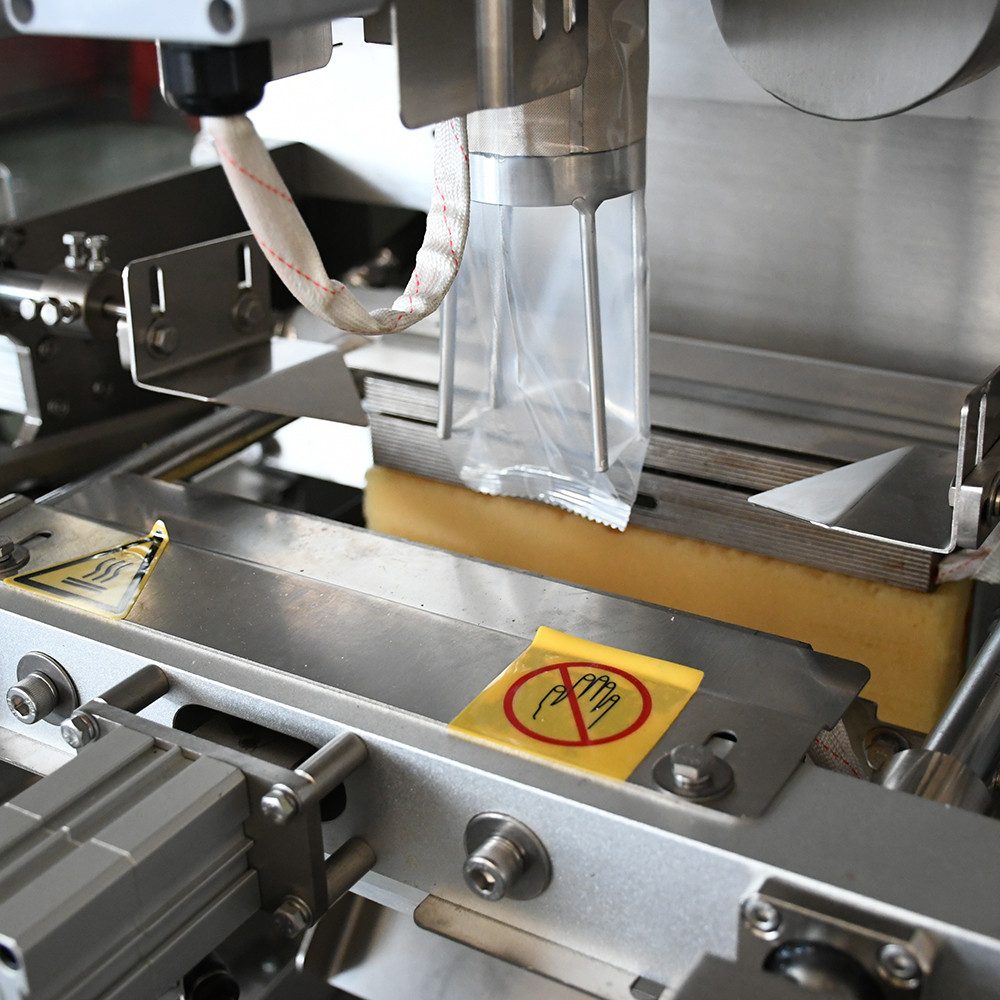
Once viscosity or solids increase, the same cycle creates five recurring failure modes. Each maps to a different engineering fix:
- Wall retention and stringing: paste clings inside the tube and leaves a tail, so declared and delivered dose drift apart.
- Valve bridging: flakes or diced pieces arch across a narrow outlet, or settle so early bags are richer in solids than late ones.
- Seal-area contamination: product still dripping when the jaw closes is trapped in the seal — the most common cause of a leaking liquid pouch.
- Product damage: a pump that shears fragile pieces changes the texture being sold.
- Temperature effects: a hot fill softens the sealant layer and creates condensation, weakening a seal sound at ambient temperature.
| Product state | Typical examples | Recommended dosing and pack | Reason |
|---|---|---|---|
| Free-flowing thin liquid | Drinks, brine, thin dressings, clear juices | Liquid pump or flow meter on a VFFS sachet or premade pouch line | Meters cleanly and clears the seal area quickly |
| Medium-viscosity, uniform | Mayonnaise-type emulsions, honey | Servo piston with wide no-drip nozzle; VFFS sachet or premade pouch | Positive displacement holds the dose; drip control protects the seal |
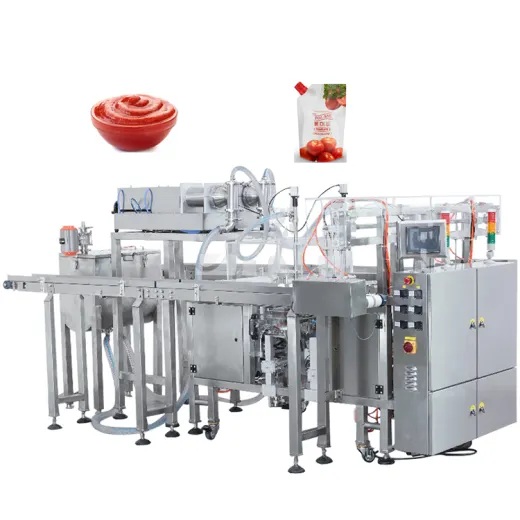
| High-viscosity paste | Peanut butter, tahini, thick chili paste | Servo piston with scraper hopper; jars or premade spout pouches | Product will not fall reliably through a forming tube |
| Liquid or paste with particulates | Sauces with chilli flakes, nuts, vegetable pieces | Piston filler with wide anti-clog valves on a premade spout-pouch line | Wide passages keep pieces intact and prevent bridging |
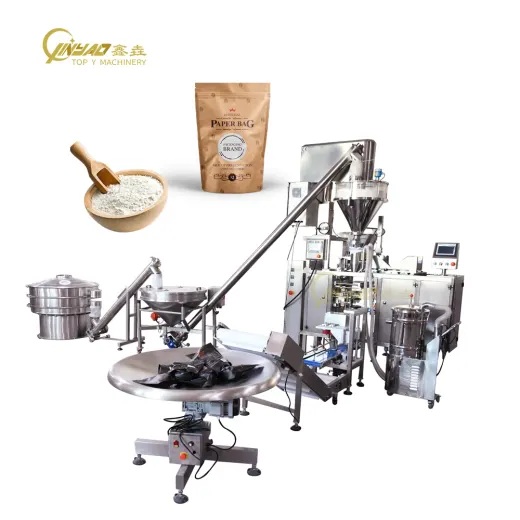
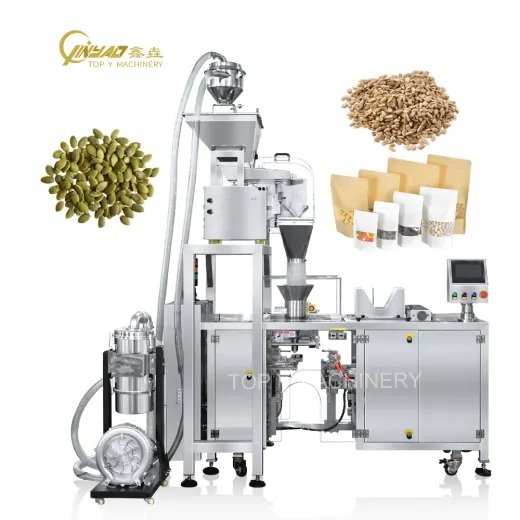
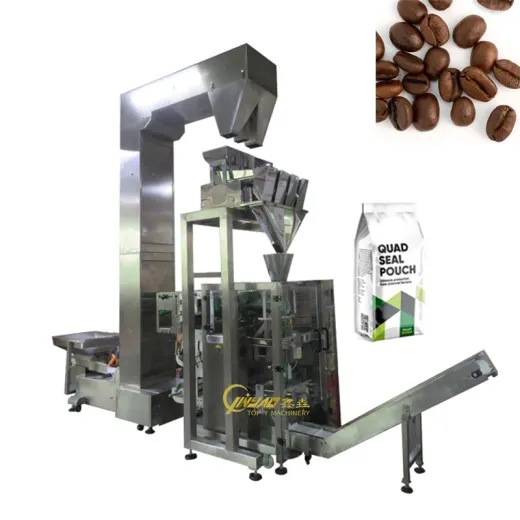
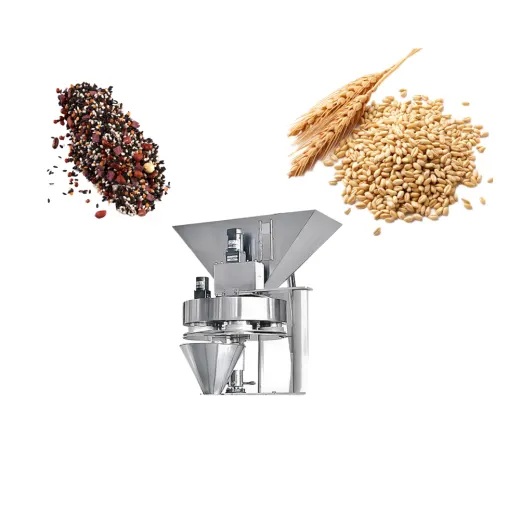
| Dry powder or granule | Rice, nuts, snacks, spices | Multihead weigher or auger on a VFFS line | The application VFFS was designed for; published speed anchors apply |
Read this as a first filter, not a specification: bag size, film, speed, cleaning and acceptance testing can each move the decision one row.
3. Piston vs Gravity vs Pump: A Selection Table
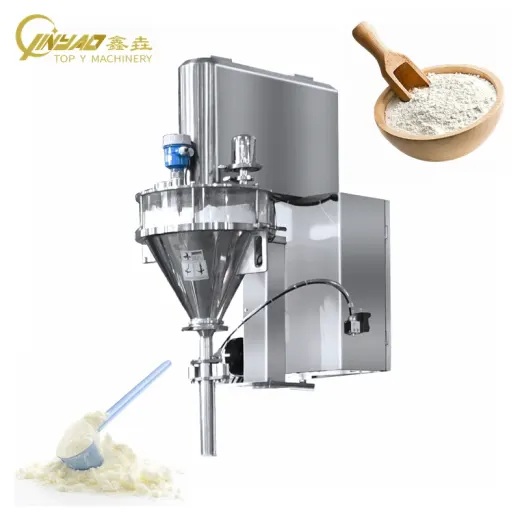
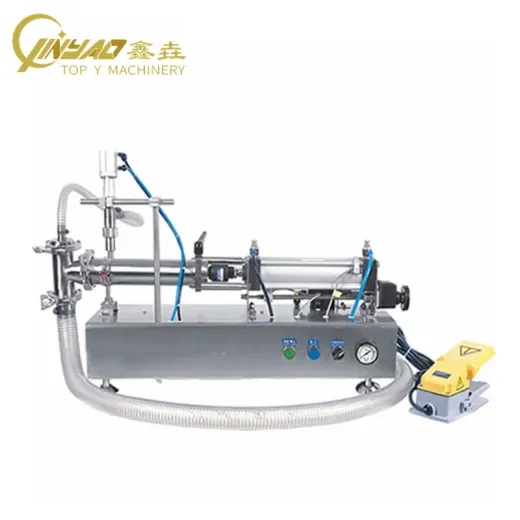
The dosing device, not the bagger, decides the liquid question. A gravity or timed system relies on product flowing under its own weight through an orifice: cheap, but repeatable only when viscosity stays constant. A pump or flow meter meters volume during transfer and suits thin sauces. A servo piston draws an exact volume into a cylinder and displaces it with a controlled stroke, which is why it handles paste and pieces. For dry products, a weigher or auger replaces all three.
| Dosing method | Principle | Best fit | Particulates | Typical pack |
|---|---|---|---|---|
| Gravity / timed flow | Flow through an orifice for a set time | Thin, consistent liquids | Poor | Simple sachets |
| Liquid pump / flow meter | Volume metered during transfer | Drinks, thin sauces, brines | Poor to limited | VFFS sachets, small pouches |
| Servo piston filler | Fixed volume drawn in, displaced by a controlled stroke | Pastes, high-viscosity sauces, chunky products | Good with wide anti-clog valves | Premade spout pouch, doypack, jars |
| Multihead weigher / auger | Net weight or screw-dosed volume | Dry granules, powders, snacks | Good for dry pieces | VFFS pillow bags, stand-up pouches |
Two accuracy references are safe to quote because TOP Y publishes them: the liquid and sauce solutions page states ±0.5% accuracy for piston filling equipment, and the sauces and condiments page describes servo piston fillers for paste at ±1 g. One is a percentage of dose, the other an absolute deviation, so they are not directly comparable. For a specification, state a measurable tolerance such as ±1 g on a 250 g pack rather than the word accurate.
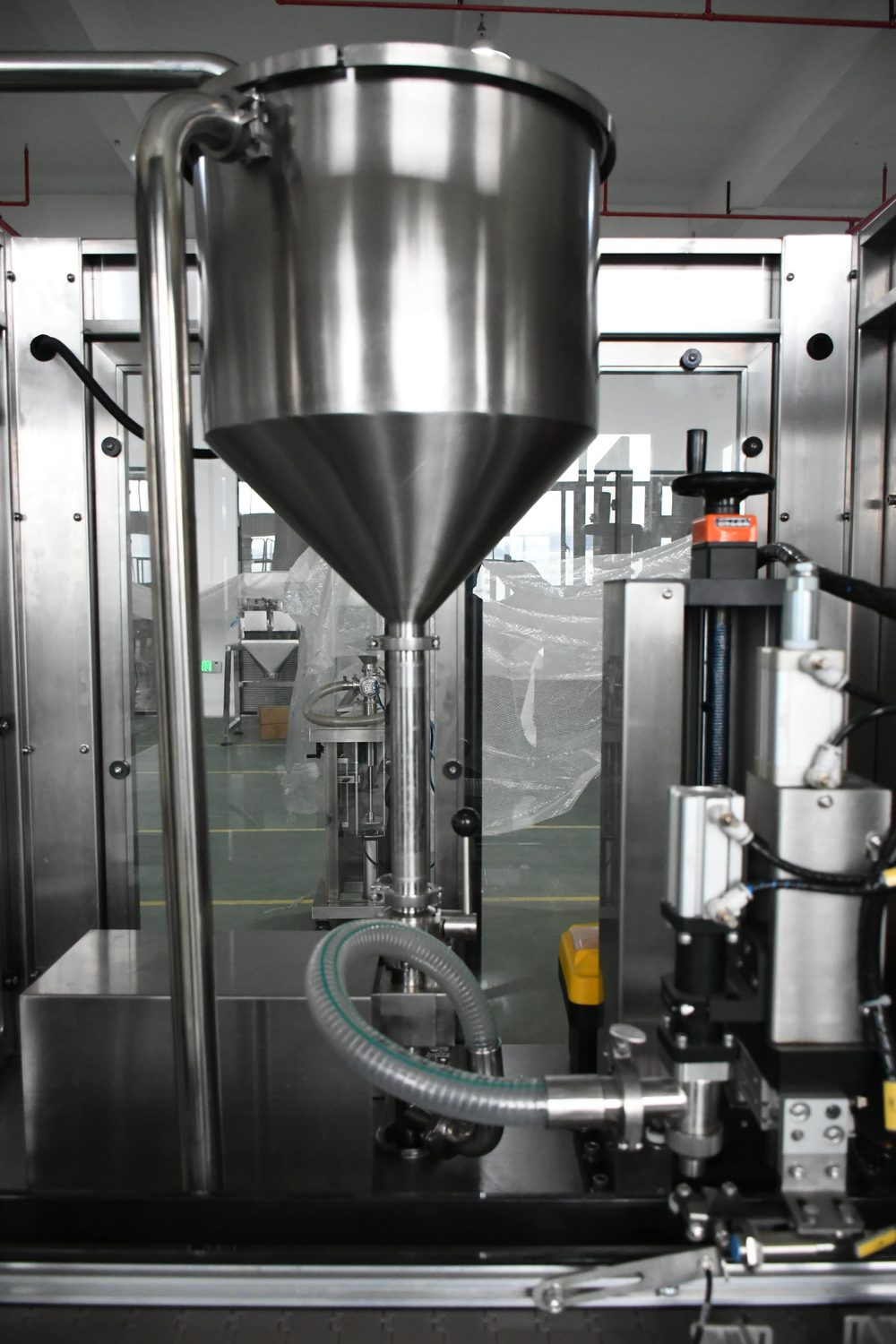
Do not treat a published accuracy as your acceptance criterion. ±0.5% describes a class of equipment under stated conditions. Your product, fill temperature and piece size may behave differently, so write the tolerance into the URS and verify it at factory acceptance testing on your own material. Any tighter control band should be requested in writing rather than estimated from a catalogue.
4. Spout Pouch and Doypack Alternatives
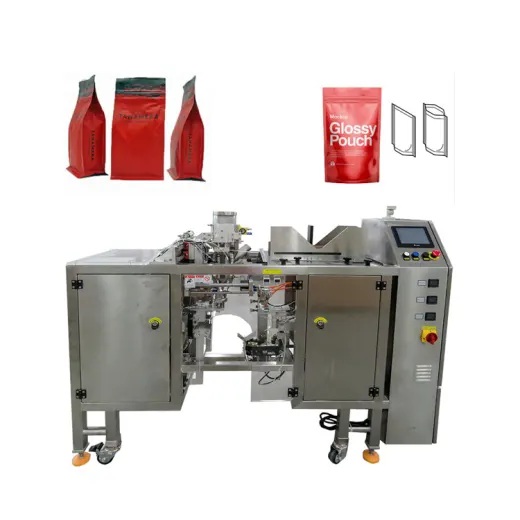
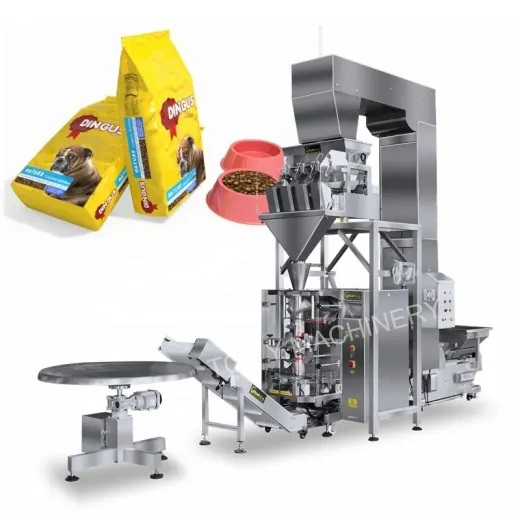
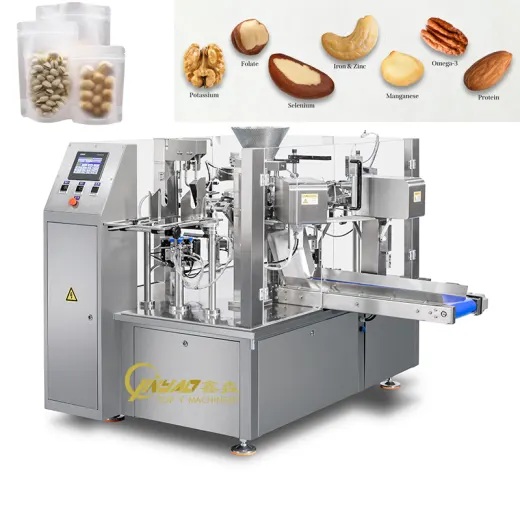
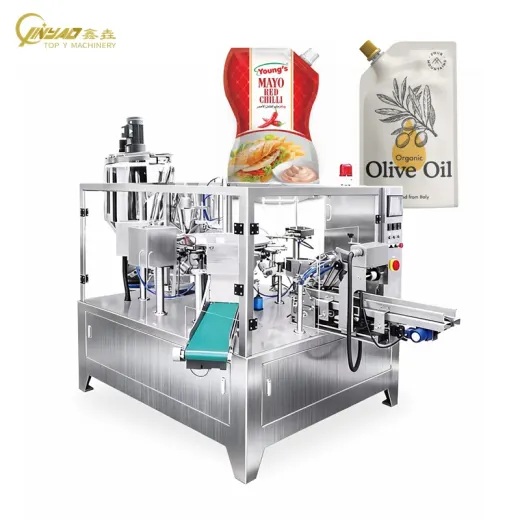
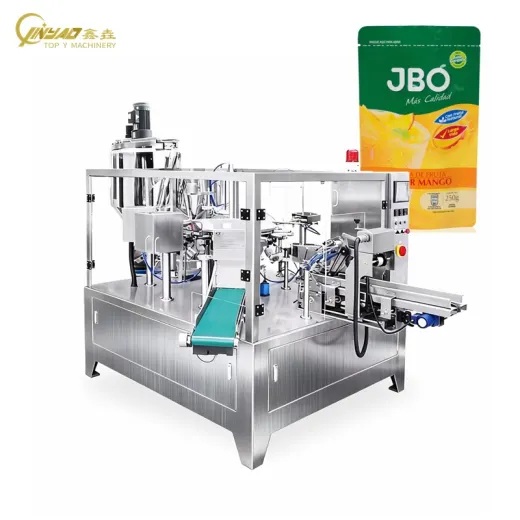
When a VFFS is not reliable, the alternative is not a bigger VFFS but a line that separates making the bag from filling it. On a premade pouch or rotary machine, a finished pouch is picked from a magazine, opened by grippers, presented to a filling station, dosed and sealed at a separate station. Nothing falls down a forming tube, so a viscous or chunky product can be pushed straight into an open mouth through a wide valve. That single difference resolves most of the failure modes above.
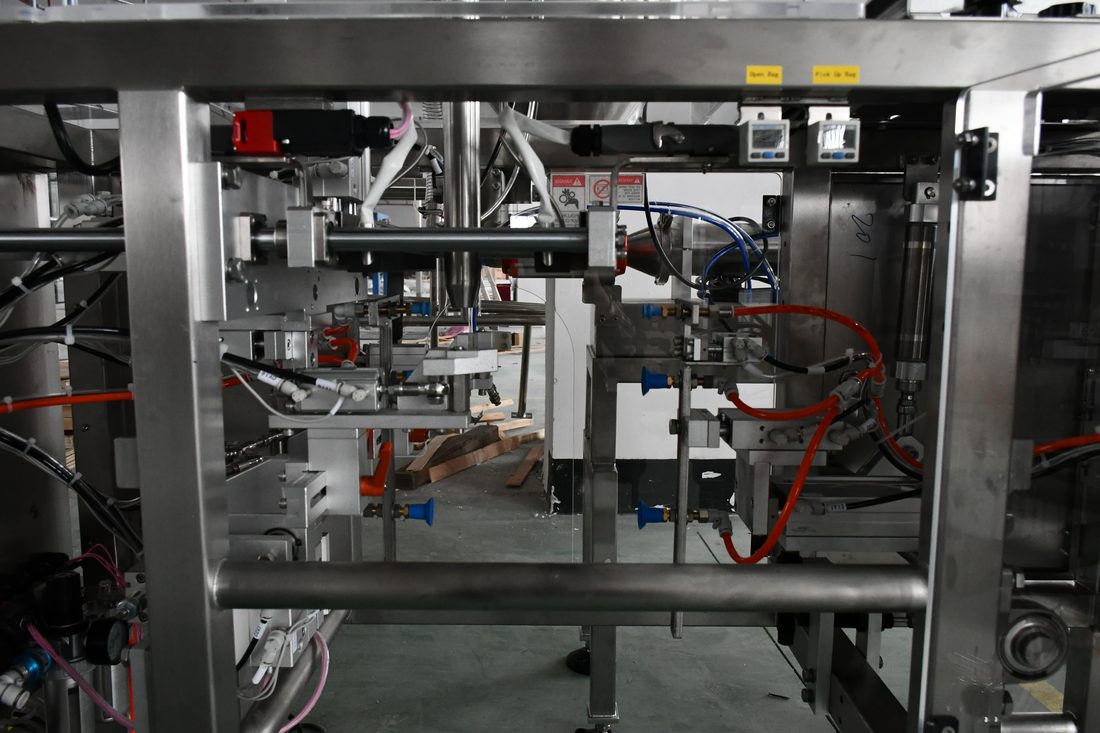
Three formats dominate. A spout pouch adds a fitted spout and cap for a resealable, drip-free table sauce; TOP Y describes automatic cap placement with torque control and inline spout seal testing. A zipper stand-up doypack suits dressings and marinades used gradually. A retort pouch suits cooked, shelf-stable wet foods, and TOP Y states that retort-grade film must survive sterilisation at 121°C. Each format changes the sealing hardware and film specification.
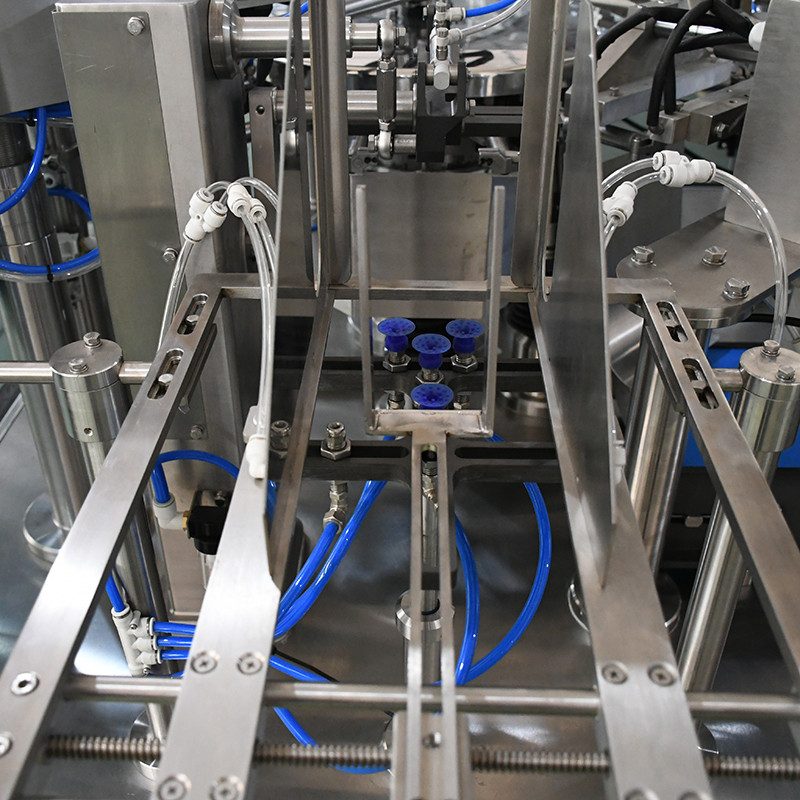
The trade-off is real: premade pouches cost more per pack, while roll film wins on material cost and throughput for one dominant bag size. Bag length is an HMI recipe, but bag width is hardware and takes longer on a VFFS. A plant with many SKUs often gains more from standardising one bag width than from a quick-change kit. Compare both families on the product index and the sauces and condiments page.
5. Seal Integrity and Hot-Fill Considerations
On a liquid pouch, the seal is the product. A bag that doses perfectly but leaks in transit is a failed batch, and failure almost always starts at the cross seal. Jaw temperature, dwell time and pressure must be established together for a given film structure, and the correct window depends on the sealant layer rather than the outer appearance. Changing from a kraft-look laminate to a foil or mono-material structure is a new sealing trial, not a parameter tweak.
TOP Y publishes two anchors on its sauces and condiments page: hot-fill options handle sauces up to around 90°C with temperature-tolerant sealing and a cooling section to prevent weak, wet seals, and retort-grade film must withstand sterilisation at 121°C. These are capability statements about specific configurations, not a universal temperature recipe.
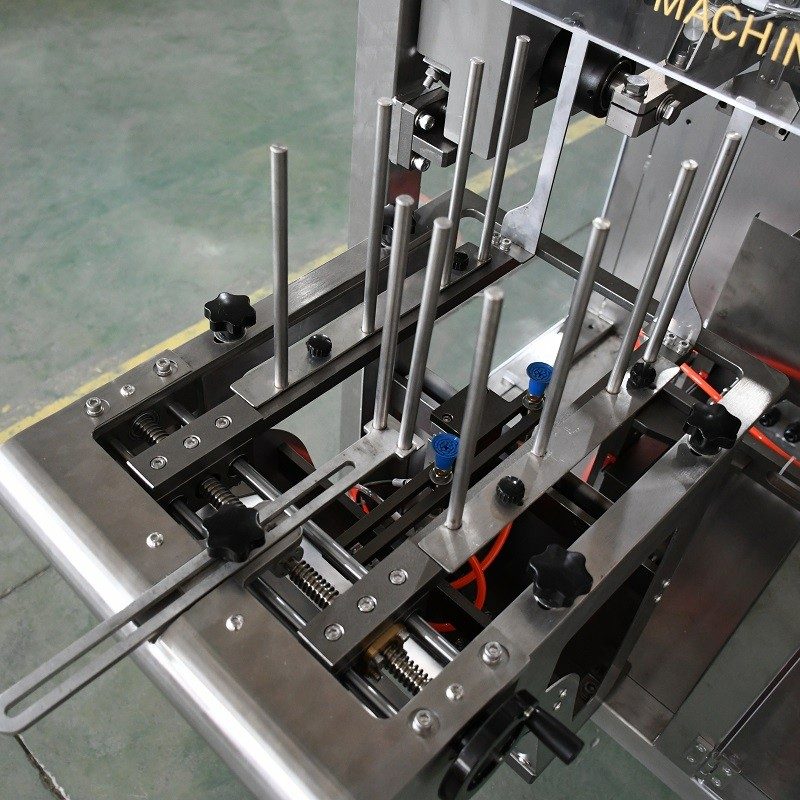
A specific temperature-control band and its tolerance for a given product are not published as a verified figure and should be requested in writing rather than estimated. The same applies to any claim about holding accuracy at a setpoint: ask for the control range, sensor location, documented tolerance and test method, all tied to your own film and product. A supplier who can supply a written, dated sealing window is more useful than one quoting a single impressive number.
A seal validation sequence for the acceptance plan:
- Run the line on the production film and the real product at the real fill temperature.
- Inspect the seal area for trapped product, wrinkles and burn-through across a full run.
- Perform a peel or seal-strength test and record the failure mode, not just a pass or fail.
- Apply a leak or dye-ingress test and a squeeze or drop test on filled packs.
- Repeat after a changeover, after a film splice and after a cleaning cycle.
- File settings, film lot and test results together so a later dispute starts from evidence.
Verify the seal after cooling, not immediately at the jaw. For an installed line, technical support provides remote diagnosis and the FAQ collects common sealing questions.
6. A Specification Checklist to Send the Supplier
Most can this machine pack my sauce enquiries contain one line of description and a target price. This list turns that into a specification a supplier can quote against; every item is a fact about your own product.
- Flow behaviour: describe the product at rest and under shear, at filling temperature, and whether viscosity changes with time or agitation.
- Particulates: largest piece dimension, typical solids fraction, and whether pieces must remain intact.
- Fill temperature: ambient, chilled or hot, with the actual range and whether the product is cooked in-pack.
- Net content and tolerance: a measurable figure per pack, consistent with the published ±1 g guidance for small packs.
- Pack and film: sachet, doypack, spout pouch or retort pouch, and the laminate or mono-material structure already approved.
- Output definition: packs per shift, number of SKUs, and how often bag size or film changes.
- Cleaning and changeover: dry clean or wet wash, allergen sequences, and parts removable without tools.
- Acceptance documents: a written sealing window with its tolerance, dosing accuracy test method, FAT and SAT items, material certificates for product-contact parts, and the training handover pack.
The last item is often omitted and is the most valuable. If a temperature band or control tolerance has not been published as a verified figure, require the supplier to state it in a dated written specification before the URS is signed, rather than inventing one for a comparison table. Templates are on the download resources page; a written scope can be requested through the contact page.
7. Frequently Asked Questions
Can a VFFS machine pack water, juice or a thin dressing?
Yes, when configured with a liquid dosing pump or flow meter and a cross seal designed for wet product. Thin, consistent liquids are the workable end of the range; the constraint is clearing the seal area before the jaw closes, not forming the bag.
Why is a piston filler recommended for peanut butter or chili paste?
A paste will not fall reliably through a forming tube and tends to string between doses. A servo piston draws a fixed volume and displaces it through a wide, no-drip valve, so the dose stays repeatable and pieces are not sheared. TOP Y describes servo piston fillers for paste at ±1 g on its sauces page.
Can a VFFS handle sauces with chilli flakes, nuts or vegetable pieces?
Usually not reliably. Narrow passages bridge, solids settle in the hopper, and fragile pieces are damaged, so the first and last bags of a run can differ. A premade pouch line with wide anti-clog valves is safer when pieces must stay intact.
Is ±0.5% fill accuracy guaranteed for my product?
±0.5% is a published figure for a class of TOP Y filling equipment under stated conditions, not a guarantee for every product. Write a measurable tolerance into the URS and verify it at factory acceptance testing using your own material at your own fill temperature.
Do I need a spout pouch for a thick sauce?
Not always, but it is common: a spout pouch gives a wide, resealable, drip-free opening; a zipper doypack suits products used gradually; a retort pouch suits cooked, shelf-stable sauces. Choose by how the consumer dispenses the product and by the process the pack must survive.
What temperature can hot-fill sauces be packed at?
TOP Y's sauces page states that hot-fill options handle sauces up to around 90°C with temperature-tolerant seals and a cooling section. A tighter control band or tolerance for your product is not published as a verified figure; request it as a written, dated specification rather than estimating it.
Where should I start when comparing a VFFS and a premade pouch line?
Start with the product, then the pack format, then SKU count. Roll film generally wins on material cost and speed for one dominant bag size; premade pouches win on format flexibility, wide-mouth filling and easier bag-width changes. The sauces and condiments page and product index show both families.
8. The Short Version for a Specification File
Reduced to four lines: thin, free-flowing liquids can be packed on a VFFS line fitted with a liquid dosing pump and a wet-product cross seal. High-viscosity pastes, chunky sauces and products with particulates are better served by a servo piston filler on a premade spout-pouch or doypack line. TOP Y Machinery publishes ±0.5% dosing accuracy, ±1 g servo piston filling for paste, hot-fill capability up to around 90°C and 121°C retort-grade film handling on the relevant application pages. Any tighter temperature window, tolerance or capacity promise for your configuration is not published as a verified figure and should be requested in writing rather than estimated.
A dated sealing window with a test method and an acceptance criterion is something an auditor and a shift supervisor can both use. A single attractive number without a test method is not a specification.