Home / All / Industry Trends / Smart Packaging Machines: AI, IoT and Industry 4.0 in 2026
Smart Packaging Machines: AI, IoT and Industry 4.0 in 2026
Aug 5,2026
The Short Answer: What a Smart Packaging Machine Does in 2026
Short answer: in 2026, a smart packaging machine is a servo-driven PLC system that uses AI and IoT sensors to monitor, adjust, and predict its own performance. Mordor Intelligence estimates the AI-in-packaging market at roughly $2.7 billion, and the most widely deployed feature — predictive maintenance — typically cuts unplanned downtime by 20–50% while lowering maintenance spend. For a food producer, "smart" is not a marketing label: it is the difference between a line that reacts to problems and a line that prevents them before a single bag is wasted.
This guide explains the four technology layers behind smart food packaging systems, an AI applications table with the payoffs that actually show up on P&L statements, a timeline from relay logic to edge AI, the economics of predictive maintenance, and what TOP Y MACHINERY builds today — Siemens/Mitsubishi PLC control, full-servo motion, and roughly 20% energy savings on automated lines.
What Makes a Packaging Machine "Smart"? The Four Technology Layers
There is no single "smart" component. A machine earns the label by combining four layers that work together on the line:
Sensing (IoT): load cells, photoelectric eyes, temperature probes, and cameras give the machine a sense of what is actually happening — bag position, fill weight, seal temperature, film tension.
Control (PLC + servo): a Siemens or Mitsubishi PLC coordinates every axis; servo motors replace mechanical cams so speed, timing, and bag size change in software instead of hardware.
Intelligence (AI/edge): vision inspection, predictive algorithms, and adaptive tuning run on or near the machine, turning raw sensor data into decisions in milliseconds.
Connectivity (IoT/MES/cloud): OPC-UA and MES integration stream OEE, quality, and maintenance data to dashboards your plant manager and your engineers can both act on.
A smart food packaging system, then, is any line where these layers close a loop: the machine senses a deviation, decides a correction, acts on it, and records what happened — without waiting for a human to notice.
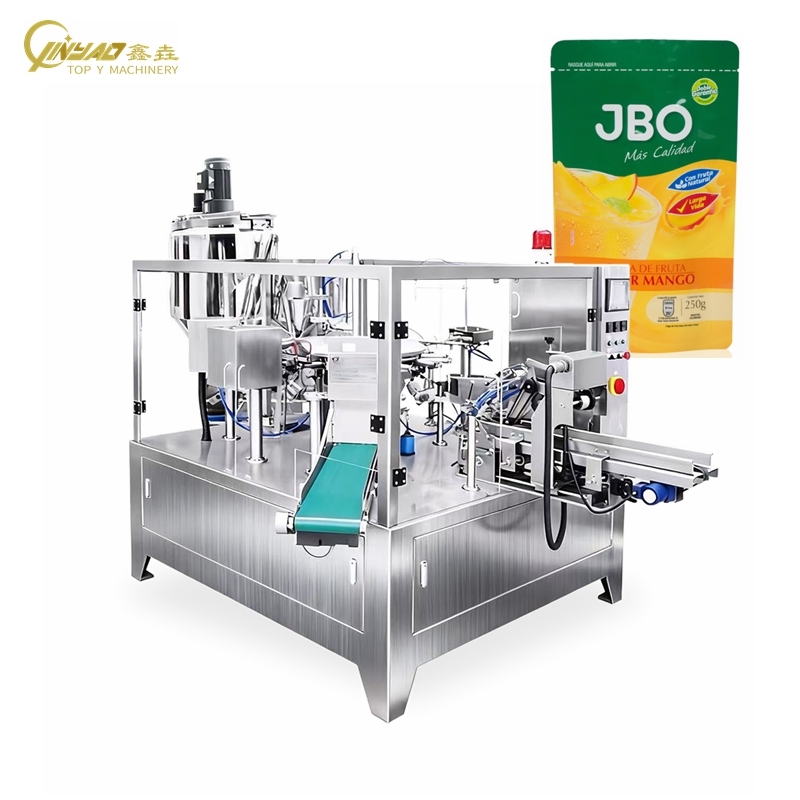
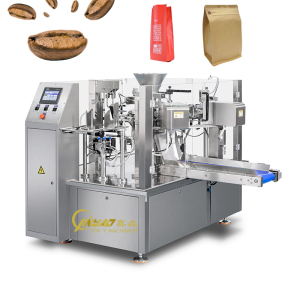
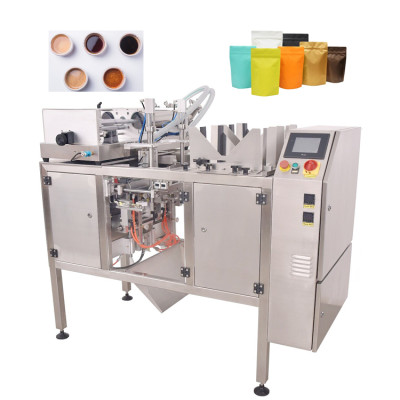
TOPY-RPM full-servo premade pouch packing machine — servo-driven axes and PLC control form the motion backbone of an Industry 4.0-ready smart packaging line. View product details →
AI Applications in Food Packaging: What Actually Works in 2026
AI in packaging is not a single product — it is a set of applications, each solving a measurable problem. These are the deployments that dominate 2026 installations:
AI Application
What It Does on the Line
Typical Result
Predictive maintenance
Learns vibration, current, and seal-temperature patterns; flags bearing wear or heater degradation before failure
20–50% less unplanned downtime; maintenance scheduled instead of emergency
AI vision inspection
Detects seal defects, missing zippers, misaligned labels, and foreign objects at full line speed
Defects rejected without slowing output; fewer customer returns
Adaptive fill / weight control
Adjusts multihead combination targets from checkweigher feedback in real time
Lower giveaway, less product waste per 10,000 bags
Recipe auto-tuning
Selects sealing temperature, dwell time, and film draw per material and batch
Fewer changeover rejects; faster product switches
OEE analytics
Aggregates availability, performance, and quality into live scores per line
Data-driven improvement; balanced line speeds
Energy optimization
Adjusts servo acceleration curves and heat-zone power to actual demand
10–20% lower energy per bag
Which one should you start with? For most food plants, the answer is predictive maintenance and adaptive fill control — they are the two applications with the shortest payback because they directly attack downtime and giveaway, the two biggest cost leaks on any packaging line.
The Technology Timeline: From Relay Logic to Edge AI
Smart packaging did not arrive overnight. Every capability in a 2026 machine is the result of a 60-year progression — and each step is still visible inside modern lines:
Era
Technology
What Changed for Packaging
1960s–70s
Relay and cam logic
Fixed-speed machines; one product per setup; long changeover and heavy downtime
1980s
Programmable logic controllers (PLCs)
Siemens and Mitsubishi PLCs replace relays; reprogram instead of rewire
1990s
Servo drives
Electronic cams; faster changeover; precise film draw and sealing
2000s
HMI and industrial PCs
Touchscreen operation, recipe memory, data logging
Self-inspecting, self-adjusting lines; machine learning on quality data
2026
Edge AI and digital twins
On-machine inference, virtual commissioning, predictive maintenance as standard
The practical takeaway: you do not need to replace a good PLC line to get "smart" benefits. Many 2010s-era machines can be upgraded with sensors and edge controllers; 2026 equipment simply ships with them already integrated.
Predictive Maintenance: The Highest-ROI AI Use Case
Unplanned downtime is the most expensive problem on a packaging line. Industry case studies commonly put the cost of one unplanned hour on a food packaging line between $5,000 and $50,000, depending on output value and downstream penalties. A single unexpected motor or sealer failure can erase a week of efficiency gains.
Predictive maintenance changes the economics. Vibration sensors on motors, current monitoring on servo drives, and temperature tracking on seal jaws feed AI models that learn each machine's normal baseline. When a pattern drifts — a bearing that starts to sing, a heater losing efficiency — the system issues an alert with enough lead time to schedule the repair during a planned stop. Reported results cluster around 20–50% lower unplanned downtime and 20–30% lower maintenance costs, with most installations seeing payback within months rather than years.
The market agrees. Mordor Intelligence places the AI-in-packaging market near $2.7 billion, growing at a double-digit rate, because the return on investment is measurable: less downtime, less giveaway, less energy, and fewer recalls. The machines that ship with sensors and remote diagnostics pre-installed are the ones buyers are specifying for new lines.
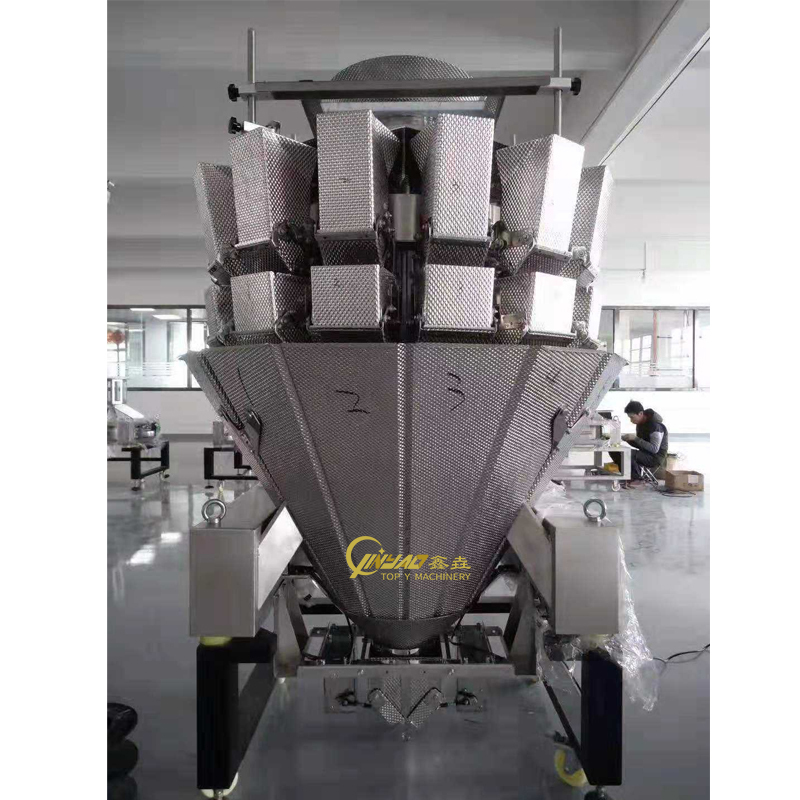
TOPY-VM 14-head multihead weigher — combination weighing delivers the real-time weight data that adaptive fill control uses to minimize giveaway in a smart food packaging system. View product details →
What TOP Y MACHINERY Builds: PLC, Servo and 20% Energy Savings
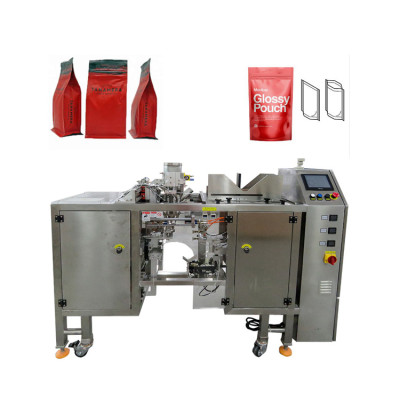
TOP Y MACHINERY's food packaging machines are built for the Industry 4.0 roadmap. Standard platforms pair Siemens or Mitsubishi PLCs with full-servo motion control, so timing, bag size, and speed are set in software and changeovers take minutes instead of hours. Servo-driven axes also cut power draw versus mechanical-drive equivalents — TOP Y's installed base reports roughly 20% energy savings on automated lines, a figure that shows up directly in the electricity line of the P&L. All product-contact parts are SS304 stainless steel, and control cabinets support the data interfaces (MES, OPC-UA, remote diagnostics) that a smart factory needs. Two representative machines anchor the smart range:
TOPY-RPM Rotary Premade Bag Packaging Machine
Multi-station rotary machine for premade doypack and stand-up pouches, with PLC-coordinated stations, servo-driven indexing, and modular filler integration — the base platform for a connected smart line.
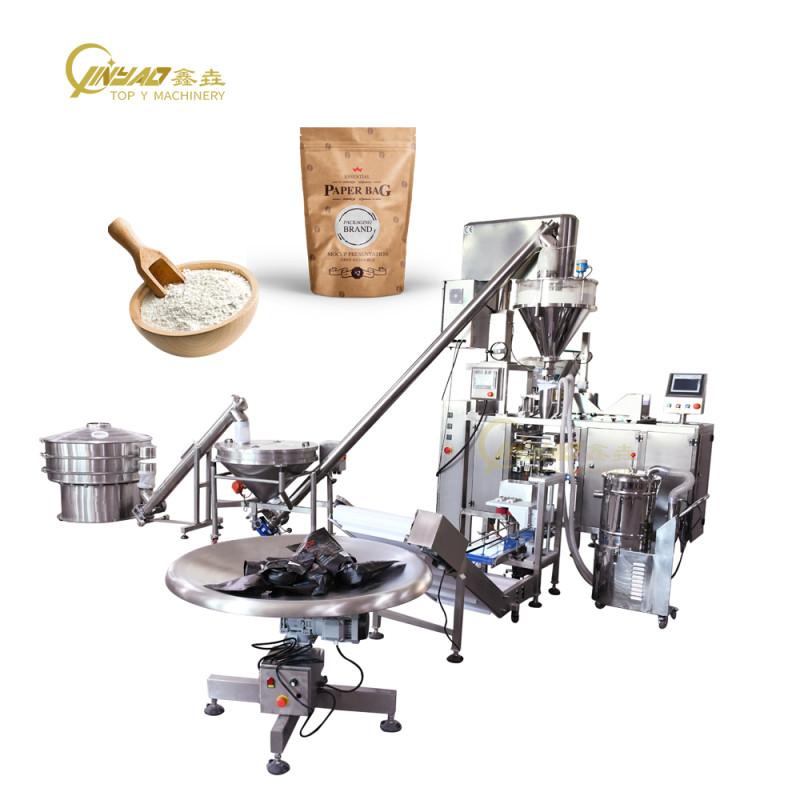
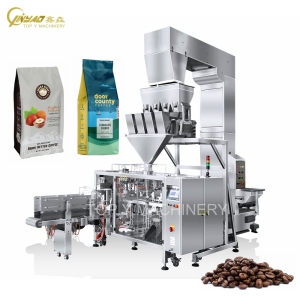
High-speed 4-station linear bagger for premade zipper pouches, with servo-controlled stations and quick recipe changeover — built for flexible, data-ready production.
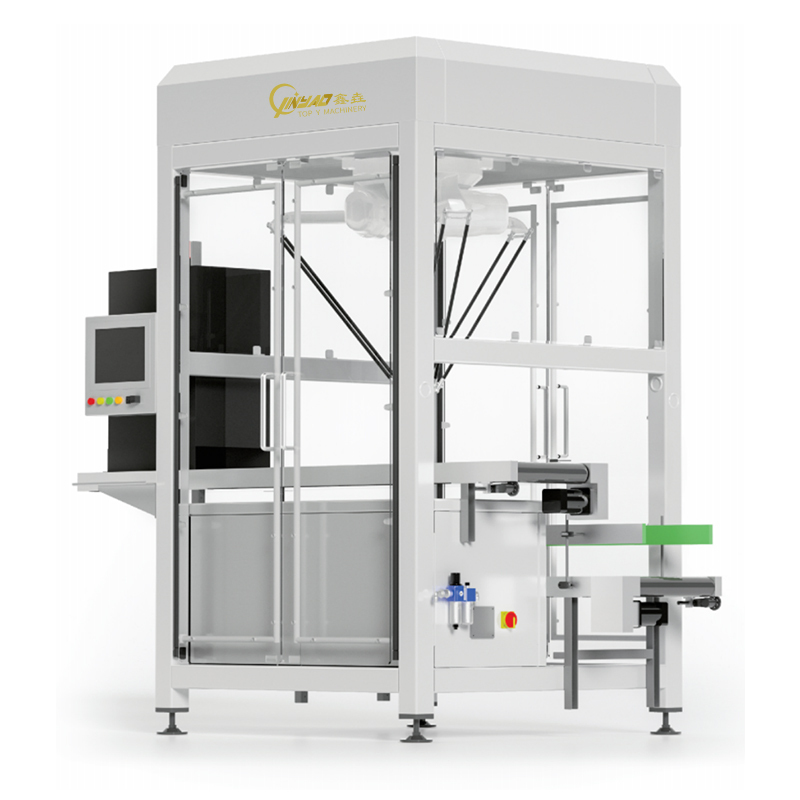
TOPY-CPR30 automatic robot palletizer with PLC — robotic end-of-line palletizing completes an Industry 4.0 food packaging line, from weighing and bagging to palletized, traceable output. View product details →
How to Evaluate a Smart Packaging Machine: 7-Point Checklist
Ask these seven questions before you sign for any "smart" machine in 2026:
PLC brand: Is it a globally supported controller (Siemens, Mitsubishi) with local spare-part availability?
Servo architecture: How many servo axes, and what is the real changeover time between bag sizes?
Open data interfaces: Does it export OEE, quality, and weight data to MES/SCADA/ERP without proprietary lock-in?
Predictive readiness: Are vibration/temperature sensors pre-installed, and is remote diagnostics available?
Energy monitoring: Can you see energy per bag in real time to verify savings claims?
Recipe memory: How many product recipes are stored, and how fast is recall and tuning?
Support: Is documentation, operator training, and remote service part of the package?
Rule of thumb: the machine you buy should already collect the data your future AI applications will need. Retrofit is possible, but buying it pre-installed is cheaper and lower-risk.
Frequently Asked Questions
What exactly is a smart packaging machine?
A smart packaging machine combines IoT sensors, PLC and servo control, AI-based inspection and adjustment, and connectivity to plant software. Instead of only following a fixed program, it monitors its own operation, corrects deviations in real time, and reports performance — the practical definition of an Industry 4.0 packaging asset.
How much do AI features add to the cost of a packaging machine?
AI-enabled options typically add 5–15% to the price of a comparable conventional machine — sensors, edge controllers, and vision hardware. The payback comes from the operating side: 20–50% less unplanned downtime and lower giveaway typically return the difference within the first year on a running line.
Can I make my existing packaging line smart without replacing it?
Often yes. Adding load cells, vision cameras, vibration sensors, and an edge gateway to a sound PLC line can deliver predictive maintenance and inline quality data. Upgrade economics depend on the machine's mechanical condition — if the servos and frame are still in good shape, retrofit is usually the lower-cost path.
Is Industry 4.0 only for large factories?
No. Mid-size producers benefit most from the two highest-ROI features: predictive maintenance (fewer surprise stops) and adaptive fill control (less giveaway). A single connected machine is a valid starting point — Industry 4.0 is a roadmap, not an all-or-nothing purchase.
Can TOP Y machines connect to my existing MES or ERP?
Yes. TOP Y MACHINERY machines run on Siemens or Mitsubishi PLCs and support standard data interfaces such as OPC-UA and MES integration, plus remote diagnostics for the service team. Tell your integrator the protocol your plant already uses, and the machine can be configured to speak it.
How realistic is a 20% energy saving claim?
It is realistic on lines that replace mechanical-drive equipment with servo-driven systems. Servos draw power only when moving and accelerate precisely, while heat zones and standby modes can follow actual demand. The saving varies with product mix and duty cycle, which is why energy monitoring per bag is worth asking for — so the saving is proven on your line, not promised in a brochure.
Get a Smart Packaging Line Assessment
Start with three questions: what products you pack, your current downtime and giveaway figures, and whether you already export production data to a plant system. Send those to TOP Y MACHINERY and the engineering team will map the PLC/servo platform, sensor options, and data interfaces onto your line — and show where predictive maintenance and adaptive fill will pay back first. Browse the complete packaging machine range or contact TOP Y MACHINERY for a free assessment.