The Short Answer: What a Packaging Machine Maintenance Checklist Should Cover
Short answer: a complete packaging machine maintenance program runs on three time horizons — a 15-minute daily checklist (before and after each shift), a 1–2 hour weekly checklist (deep cleaning, lubrication, belt and sensor checks), and a half-day monthly checklist (seal jaw inspection, gearbox and bearing service, electrical and safety audits). Food plants that replace "run until it breaks" with this documented routine typically report 40–60% lower unplanned downtime, longer seal-jaw and heater life, and fewer rejected bags — because most packaging line failures are gradual wear that a scheduled check catches early.
This guide gives you the exact daily, weekly, and monthly tasks for VFFS machines and premade pouch packers, a troubleshooting table for the most common failures, a lubrication and spare-parts schedule, and calibration guidance for weighers and checkweighers — written for maintenance managers, operators, and owners of food packaging lines.
Why a Maintenance Schedule Cuts Downtime by 40–60%
Unplanned downtime is the most expensive failure mode on a packaging line. Industry surveys of food and beverage plants consistently put the cost of one unplanned packaging line stop between $5,000 and $50,000 per hour when lost output, wasted product, overtime labor, and missed delivery penalties are counted. The failures that cause these stops — worn seal jaws, slack drive belts, dirty sensors, seized bearings — do not happen suddenly. They are gradual, measurable wear that shows up on a checklist long before it shows up as a jam.
The 40–60% figure is realistic because most failures are preventable. When maintenance moves from reactive to scheduled, the two biggest causes of emergency stops disappear: contamination (product dust blocking sensors, photocells, and film paths) and neglected wear items (belts, bearings, heaters, seals). Plants that run a documented daily/weekly/monthly program report unplanned downtime dropping by 40–60%, maintenance labor becoming more predictable, and spare-part costs falling as failures are caught before they damage adjacent components. The checklist below is designed so each task has a specific interval, a specific check, and a clear pass/fail criterion — no vague "inspect machine" items.
Daily Maintenance Checklist: 15 Minutes Per Shift
Do these tasks at shift start and again at shift end. The daily list removes contamination and verifies the machine's critical safety and sealing systems before production starts. Fifteen minutes per shift is enough when the routine is disciplined.
When
Task
Check / Pass Criterion
Shift start
Wipe film path, former, and seal jaws with a lint-free cloth
No product residue, dust, or grease on sealing surfaces
Shift start
Verify seal temperature readings on the HMI against setpoints
Within spec tolerance (typically ±5°C of setpoint)
Shift start
Check air pressure and air filter separator
Pressure in spec (e.g. 0.6–0.8 MPa); drain water trap
Shift start
Confirm guards, interlocks, and emergency stops function
E-stop stops the machine instantly; interlock opens correctly
During shift
Check film splice and roll alignment every 1–2 hours
Film tracks straight; no wrinkles at the forming tube
Shift end
Remove product debris from hoppers, weigher buckets, and conveyor
All contact surfaces visually clean
Shift end
Record downtime, rejects, and any abnormal noise/vibration in the log
Log written before the shift ends
Rule of thumb: if a daily task takes more than 30 minutes, it belongs on the weekly list — the daily routine should protect the line, not slow it down.
Weekly Maintenance Checklist: 1–2 Hours
Once a week — typically on the slowest production day — run the deeper cleaning and mechanical checks. The weekly list catches the contamination that daily wiping misses and verifies wear items before they fail.
Area
Weekly Task
Check / Pass Criterion
Seal system
Clean seal jaws with the approved cleaning agent; inspect PTFE/tape condition
No carbon buildup; release coating intact
Film path
Inspect pull belts, rollers, and dancer arms; check film tracking
No cracks, no film residue; tracking consistent
Lubrication
Grease moving joints and slide rails per machine manual
Grease points covered; correct grade used
Drive system
Check belt tension and chain condition on conveyors and indexing drives
10–15 mm deflection under moderate thumb pressure; no worn links
Sensors
Clean photocells, proximity sensors, and cameras; verify alignments
Sensors trigger reliably on test pieces
Electrical
Check cable looms, connectors, and cabinet fans; blow dust from cabinet
No chafed cables, loose terminals, or blocked fans
Safety
Verify all guards, interlocks, and light curtains; test E-stops again
All safety functions pass functional test
Monthly Maintenance Checklist: Half a Day
Monthly service is the deep inspection that turns "hoping it works" into "knowing it works." Schedule this with the production plan so the line stops intentionally — a planned monthly stop is far cheaper than an unplanned one.
Area
Monthly Task
Check / Pass Criterion
Seal jaws & heaters
Measure jaw parallelism and heater resistance; replace worn PTFE
Parallelism within manual spec; resistance within tolerance
Gearboxes & bearings
Check oil level/condition; listen for bearing noise; re-grease per manual
No metal particles in oil; no rumble or squeal
Weigher / filler
Run calibration weights through multihead or cup filler; check hopper liners
Weights within tolerance (e.g. ±0.5–1 g on 100 g target)
Checkweigher
Full calibration with certified weights; verify rejector timing
Certified weights accepted/rejected exactly as configured
Vacuum & pneumatics
Check vacuum pump oil, filters, and cylinder seals; drain water traps
No oil leaks; cylinders move smoothly at full speed
Electrical
Thermal-image or touch-check cabinet components; torque critical terminals
No hot spots; terminals tight
Documentation
Review downtime log; compare failure history with the maintenance plan
Recurring faults are scheduled for corrective action
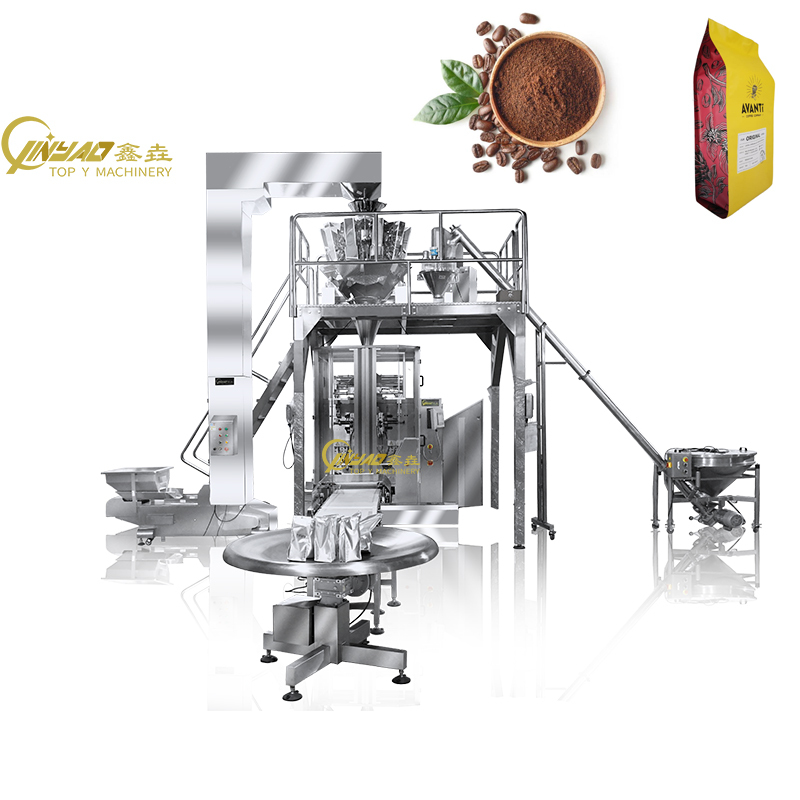
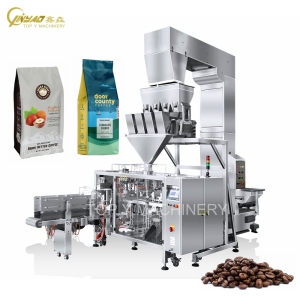
TOPY VFFS vertical form-fill-seal packing machine — seal jaws, forming tube, and pull belts are the core VFFS maintenance points on the daily, weekly, and monthly schedule. View product details →
VFFS-Specific Maintenance: Seal Jaws, Film Path, and Forming Tube
VFFS machines fail in predictable places, and each has a specific interval. The vertical former creates unique stress points that premade pouch machines do not have:
Seal jaws (daily/weekly): clean daily, inspect PTFE and jaw alignment weekly, replace release material monthly or when sealing quality drops.
Forming tube (daily): wipe film residue from the tube collar every shift; scratches cause film drag and skewed seals — check the collar weekly for wear.
Pull belts / drive rollers (weekly): belt slippage is the number one cause of bag-length variation; check tension weekly and replace at the first sign of glazing.
Dancer arm and film brake (monthly): verify smooth tension control; a sticking dancer causes film pull and intermittent seal faults.
Photocell print registration (weekly): clean the registration sensor and confirm the mark detection before every roll change.
Seal quality is the health monitor of a VFFS machine. A sudden change in seal strength, a fish-eye on the seal line, or leaks at the bottom seal usually trace to jaw temperature drift, jaw pressure, or PTFE wear — all caught by the monthly jaw inspection before they become customer complaints.
Premade Pouch Machine Care: Stations, Sensors, and Changeover
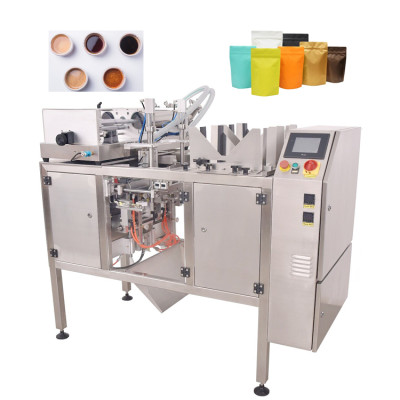
Premade bag packers — like TOP Y's horizontal pouch machines — add station-based wear to the checklist. Each pouch moves through opening, filling, and sealing stations, so alignment is everything:
Station timing (monthly): verify cam and servo timing; a half-degree drift shows up as misaligned opening or sealing.
Pouch grippers / holders (weekly): check grip force and rubber pads; weak grippers drop pouches into the rejects bin.
Opening and filling sensors (weekly): clean and re-aim photocells that verify pouch-open before fill — a dirty sensor here causes product spillage.
Changeover parts (each changeover): store forming and sealing change parts in labeled trays; inspect guides and seals every changeover rather than monthly.
Lubrication rails (weekly): linear rails and ball screws on the indexing system need weekly grease per the manual.
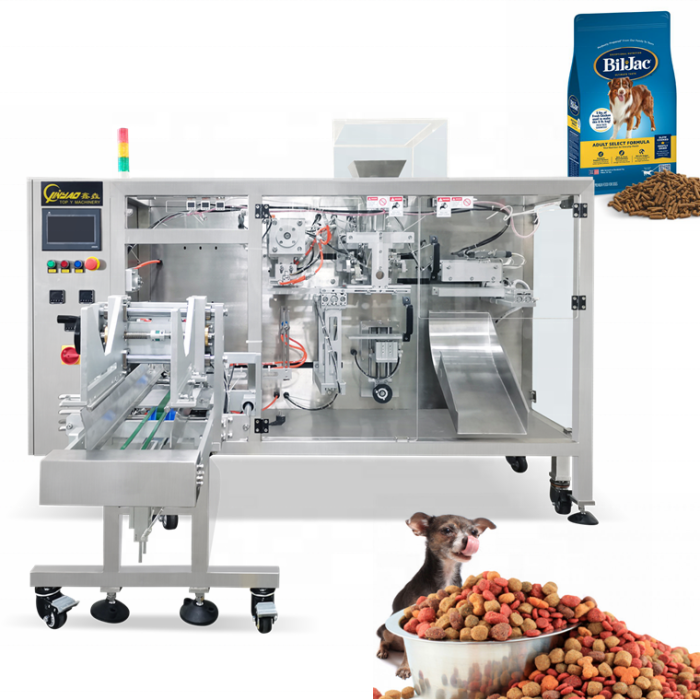
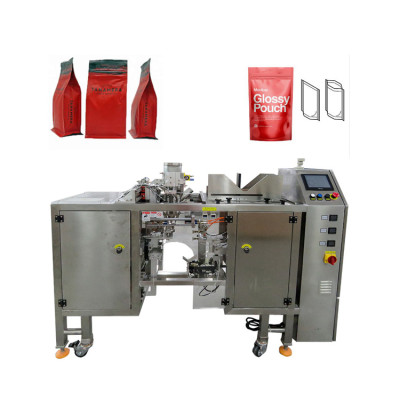
TOPY-RPM rotary premade bag packaging machine — station timing, gripper force, and servo indexing are the maintenance points that keep a rotary pouch line running at rated speed. View product details →
Common Packaging Machine Problems and Troubleshooting
Most line faults have three or four known causes. Work this table top-down: check the cheapest, most common cause first — usually a dirty sensor or a loose belt — before suspecting electronics.
Symptom
Most Likely Causes
First Fixes
Bag length varies
Pull belt slip; dancer tension wrong; film brake sticking
Re-tension pull belts; recalibrate dancer; service brake (weekly items)
Weak or leaking seals
Jaw temperature low; PTFE worn; jaw pressure off; dwell too short
Verify HMI setpoint vs. actual; replace PTFE; re-set pressure
Seal marks / burn-through
Jaw too hot; dwell too long; film grade not matched to setting
Lower temperature in 5°C steps; shorten dwell; check film spec
Skewed or wrinkled bags
Film mis-tracking; former collar residue; pull belts uneven
Realign film roll; clean former; check belt pair tension
Run calibration weights; clean liners; recalibrate checkweigher
When you cannot clear a fault in two attempts, stop and escalate. Most repeat faults come from a root cause the symptom table cannot see — a failing board, a worn bearing, or an electrical harness. That is the point to call your supplier's technical team with the downtime log in hand.
Weigher and Checkweigher Calibration: Intervals That Matter
Weight accuracy is a food packaging compliance issue, not just an efficiency one. Underweight bags trigger customer and legal risk; overweight bags silently burn margin. Calibration is a monthly minimum, and daily verification is cheap insurance:
Daily: verify the checkweigher with one certified weight near the target (e.g. 100 g weight for a 100 g target) before the shift.
Weekly: run a 3-point weight check (low, target, high) on both weigher and checkweigher; log results.
Monthly: full calibration with certified weights, including the multihead weigher's combination buckets; re-zero and tighten all load cell mounts.
After any impact or cleaning with water: re-verify immediately — load cells drift after physical shock.
Keep calibration records with the machine log. Auditors (BRC, IFS, FDA, GMP) ask for them, and the trend line tells you when a load cell is failing weeks before it affects weight accuracy.
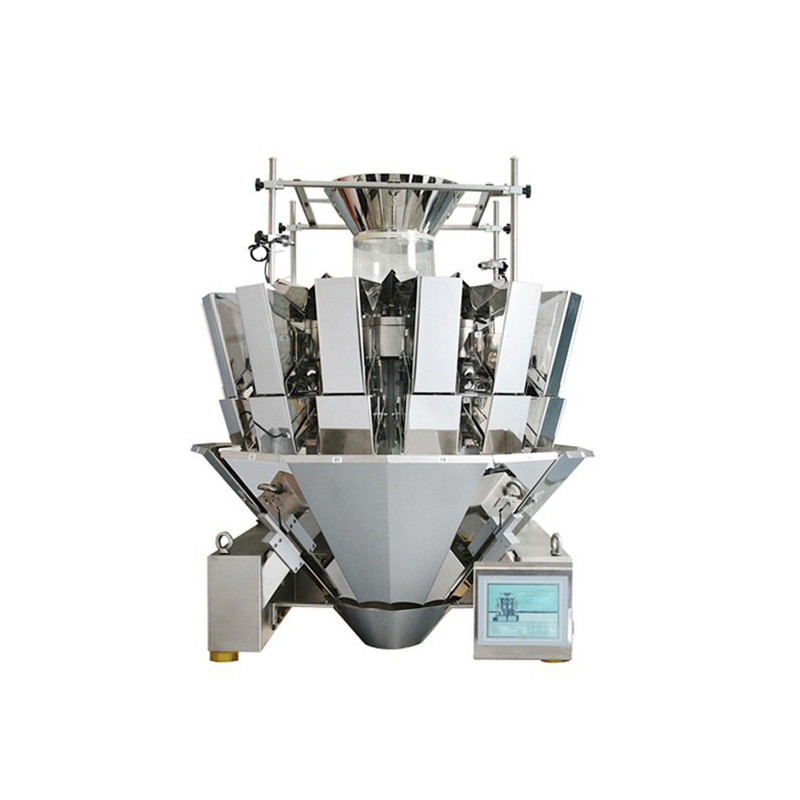
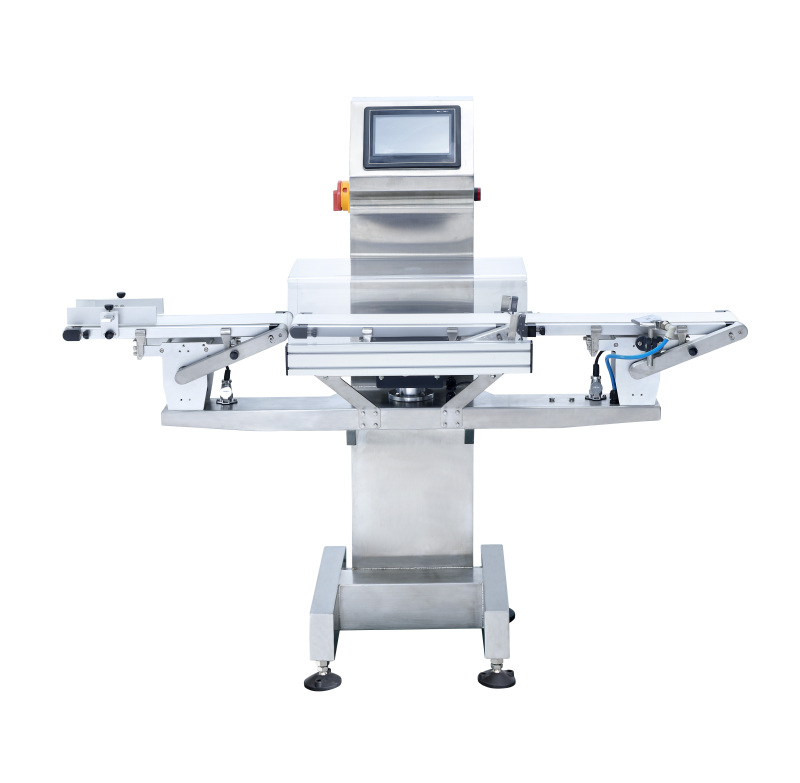
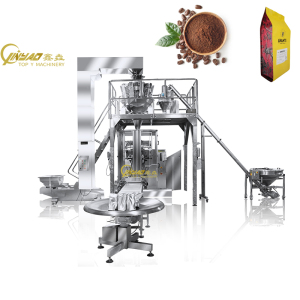
TOPY-VM multihead weigher — combination buckets and load cells are the weekly cleaning and monthly calibration points that hold fill accuracy inside tolerance. View product details →TOPY-CW automatic checkweigher with rejector — daily certified-weight verification and monthly calibration keep inline weight checks compliant and giveaway under control. View product details →
Lubrication and Spare Parts: The Two Schedules That Prevent Emergency Stops
Two documents turn this checklist into a system: a lubrication chart and a spare-parts list. Both are specific to your machine model — ask the manufacturer for the official versions and keep them laminated at the machine.
Item
Interval
Notes
Slide rails / ball screws
Weekly
Use the grease grade in the manual; wipe off excess to avoid product contamination
Gearboxes
Monthly oil check; annual change
Look for metal particles and water ingress
Chain drives / conveyors
Weekly lubrication; monthly tension check
Food-grade lubricant only where product can contact
Vacuum pump
Monthly oil check
Change per pump manual; check exhaust filter
Spare PTFE / seal tape
Stock 2 sets
Seal release material fails fastest of all wear parts
Spare belts (pull, conveyor)
Stock 1 set
Belts are the most common VFFS failure part
Spare heaters / thermocouples
Stock 2 of each
A failed heater with no spare = hours of downtime for a $30 part
Spare sensors (photocells, prox)
Stock 1–2 each type
Cheapest insurance on the whole line
A rule that pays for itself: if a part fails more than twice in six months, it is either the wrong part for the duty or the symptom of another fault — investigate rather than just re-ordering.
Frequently Asked Questions
How long does daily packaging machine maintenance take?
A disciplined daily routine takes about 15 minutes per shift — 10 minutes before start for cleaning, temperature verification, air pressure, and safety checks, plus 5 minutes at shift end for debris removal and the downtime log. If it takes longer, move deeper cleaning tasks to the weekly list.
What is the most common cause of packaging machine breakdowns?
Contamination and neglected wear items — product dust blocking photocells and sensors, slack drive belts, worn seal PTFE, and dry bearings. All of these are gradual and all are covered by the daily and weekly checklists, which is why scheduled maintenance cuts unplanned downtime by 40–60% in food plants.
How often should a VFFS machine be serviced?
Light service weekly (1–2 hours: seal jaws, pull belts, lubrication, sensor cleaning) and a full service monthly (half a day: jaw parallelism, gearbox oil, weigher calibration, electrical audit). Heaters and PTFE release material are the highest-frequency wear parts and should be inspected weekly, replaced monthly or when seal quality drops.
What spare parts should I keep for my packing machine?
At minimum: one set of pull/conveyor belts, two sets of seal PTFE/release tape, two heaters with thermocouples, and one spare of each sensor type on the machine. These four categories cover roughly 70% of emergency stops and cost far less than one hour of unplanned downtime.
How do I know when seal jaws need replacing?
Watch three signs: seals get weaker despite correct temperature and pressure, the PTFE release material shows tears or carbon buildup that cleaning cannot remove, or seal lines develop fish-eyes/burn marks at normal settings. Measure jaw parallelism monthly — more than 0.1–0.2 mm deviation (per manual) means service or replacement.
What is the best maintenance strategy for a small food packaging line?
Start with the three checklists in this guide printed and taped to the machine, assign a named owner per shift, and keep a simple downtime log. After two months, review the log: the faults that recur are your signal to buy spares, retrain operators, or schedule the manufacturer's service visit. Predictive features (vibration sensors, remote diagnostics) can be added later — the paper checklist delivers most of the 40–60% reduction by itself.
Maintenance Support: Training, Spare Parts and 24/7 Service from TOP Y MACHINERY
A maintenance program is only as good as the training and support behind it. TOP Y MACHINERY backs every packaging machine with a complete after-sales program: on-site and video-based operator and maintenance training so your team runs the daily, weekly, and monthly checks correctly; a spare parts supply program with the belts, PTFE, heaters, and sensors your machine uses; and 24/7 technical support for troubleshooting, remote diagnostics, and emergency parts dispatch when an unexpected stop does happen. The machines that make this schedule practical include the TOPY-MDPL horizontal premade pouch packer and the TOPY VFFS vertical form-fill-seal machine:
High-speed 4-station linear bagger for premade zipper and doypack pouches, with servo-controlled stations, quick recipe changeover, and easy access to seal jaws and sensors for scheduled maintenance.
Flexible vertical form-fill-seal machine that runs roll film into pillow, quad, and gusseted bags — designed with accessible seal jaws, tool-less film loading, and a clean former that keeps the maintenance routine short.
Not sure where to start? Send TOP Y MACHINERY your machine model, products, and current downtime figures — the technical team will map the right daily/weekly/monthly schedule and a spare-parts starter kit to your line, and schedule operator training so the checklist runs itself. Browse the complete packaging machine range or contact TOP Y MACHINERY for maintenance and service support.