Packaging Automation Reduces Labor Costs: 2026 Data
The Short Answer: Automation Cuts Packing Labor Costs by 50–70%
Short answer: moving a food packing line from manual to automated packing cuts labor costs by 50–70% — typically $36,000–$60,000 per line per year at 2026 US labor rates. Semi-automatic machines save roughly half of packing headcount at lower investment, while fully automatic lines run 24/7 with one or two supervisors, cut giveaway, and use about 20% less energy per pack than manual lines. TOP Y MACHINERY supplies the full range — from entry semi-automatic pre-made pouch lines to high-output rotary full-automation systems — so the automation level can be matched to the factory size and the labor saving to the budget.
This guide uses 2026 labor cost data to show what manual packing really costs, compares manual vs semi-automatic vs fully automatic lines line-by-line, gives three real factory examples, and ends with an ROI calculator you can run on your own headcount and output. All figures are planning ranges in USD, because final savings depend on region, shift structure, and pack volume.
2026 Labor Cost Data: What Manual Packing Really Costs
Packing labor is one of the largest controllable costs in a food factory, and it is almost always under-measured. At 2026 loaded labor rates, a single manual packing line consumes $52,000–$90,000+ per year. The build-up below shows the math:
| Cost Component | 2026 Value | Notes |
|---|---|---|
| Loaded labor rate | $12–$18/hour | Wage + payroll tax + benefits + shift premium (US/EU average, 2026) |
| Hours per worker per year | 2,080 (1 shift) | Add 15–25% for overtime and turnover |
| Cost per packing worker per year | $25,000–$37,000 | Loaded rate × 2,080 hours |
| Headcount on a manual line | 2–4 packers | Weigh, fill, seal, inspect, pack off |
| Annual manual labor per line | $52,000–$90,000+ | 2–4 workers at loaded rates |
Manual packing has three hidden taxes on top of wages. (1) Giveaway from hand-weighing and scoops runs 2–5% of product weight — on 500,000 packs/year at $8/kg that is $8,000–$20,000 of product given away. (2) Manual lines cap out at 8–15 bags/min, so output growth means more workers, more shifts, and more floor space. (3) Turnover and training cost 25–50% of annual wages per replaced worker in food plants. Automation attacks all three at once, which is why the dollar saving ($36K–$60K per line) is larger than the pure wage line suggests.
Manual vs Semi-Automatic vs Fully Automatic: Side-by-Side
Three automation levels, three very different cost profiles. The table below lines up the metrics that matter for a 2026 decision: headcount, labor cost, output, giveaway, and payback.
| Metric | Manual | Semi-Automatic | Fully Automatic |
|---|---|---|---|
| Workers per line | 3–4 | 2 | 1–2 (supervision only) |
| Annual labor cost per line | $52K–$90K | $35K–$52K | $17K–$35K |
| Labor saving vs manual | — | 40–50% | 50–70% |
| Annual dollar saving | — | $21K–$45K | $36K–$60K+ |
| Output per line | 8–15 bags/min | 20–35 bags/min | 40–120 bags/min |
| Giveaway (overfill) | 2–5% | 1–2% | 0.5–1% |
| Operating windows | 1 shift | 1–2 shifts | 24/7 possible |
| Typical investment | — | $8K–$25K | $25K–$60K |
| Typical payback | — | 6–12 months | 10–18 months |
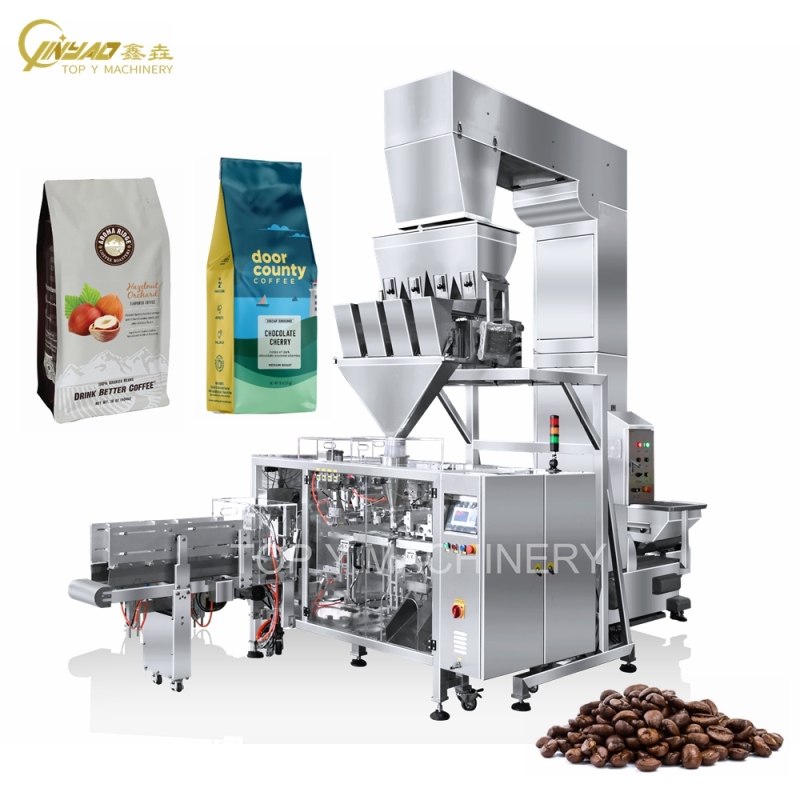
How to read the table. A semi-automatic line keeps two workers but roughly doubles speed — the fastest payback for small and mid-size factories that pack 500–2,000 bags/day. A fully automatic line replaces nearly all handling: workers become supervisors who load bag magazines, check seals, and manage changeover, and the line can run through the night without adding a shift. The $36K–$60K annual saving is the full-automation band; it climbs above $60K when 24/7 operation replaces a second manual shift. TOP Y MACHINERY covers both levels — the TOPY-MDPL pre-made pouch line for semi-automatic entry and the TOPY-RPM rotary for full automation — so the choice is about factory size and shift structure, not supplier.
Real Examples: How Three Factories Cut Packing Labor
Three worked examples from 2025–2026 — a snack maker, a frozen food processor, and a high-volume powder plant — show the same pattern at three different scales: headcount drops 45–70%, and the machine pays for itself out of saved wages.
| Factory Profile | Before (Manual) | After (Automation) | Result |
|---|---|---|---|
| Snack maker, 500–800 packs/day | 3 packers, 1 shift, 10 bags/min, 3% giveaway | TOPY-MDPL pre-made pouch line, 1 operator + 1 loader | Labor −62% ($47K/yr saved), giveaway 3%→1%, payback 11 months |
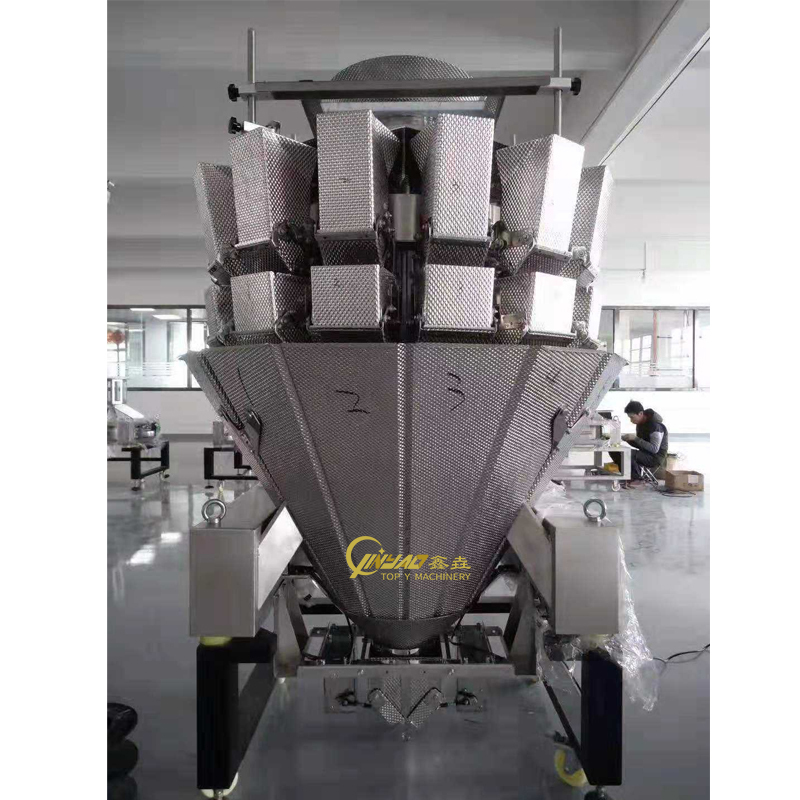
| Frozen food processor, 2,000 packs/day | 4 packers across 2 short shifts, 12 bags/min | VFFS line with multihead weigher (TOPY-VM), 2 operators | Labor −48% ($41K/yr saved), output +80%, payback 8 months |
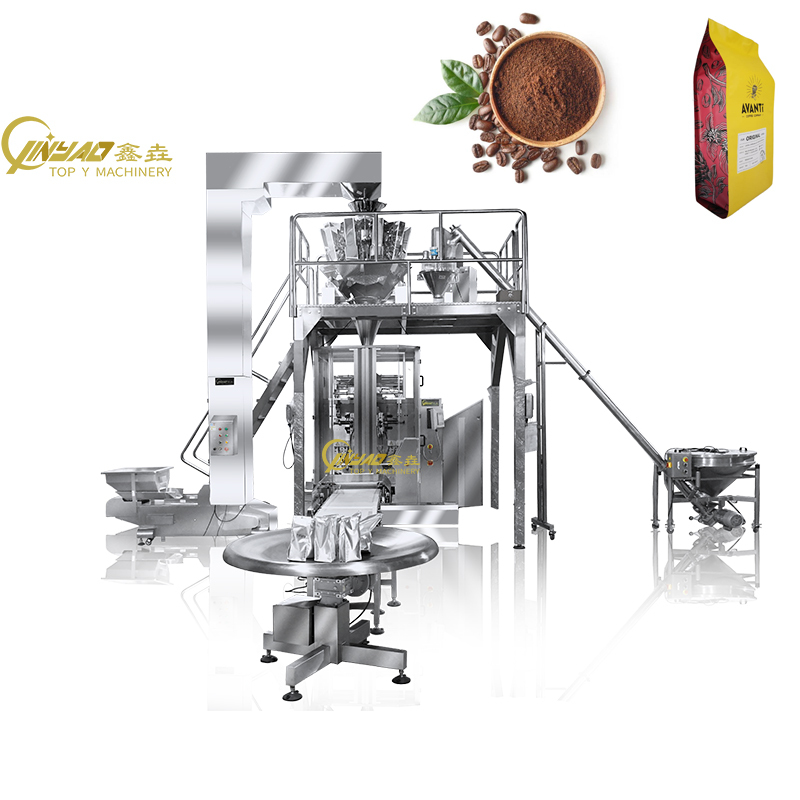
| High-volume powder plant, 24/7 demand | 6 packers on 2 shifts, 15 bags/min, night premium | TOPY-RPM rotary line, 2 supervisors per day, runs 24/7 | Labor −67% ($58K/yr saved), night shift eliminated, payback 14 months, ~20% energy saving per pack |
What these examples have in common: none of them removed quality or food safety controls. The saved headcount was pure handling labor — weighing, scooping, sealing, counting, pack-off — while operators moved to supervision, seal inspection, and changeover. That is why the saving is real (50–70%) without touching quality staffing. The third example also shows the second benefit of full automation: the line runs while the lights are off, so a night shift of 3 workers disappears entirely.
ROI Calculator: Estimate Your Own Labor Saving and Payback
Run your own numbers with this three-step model. The typical food packing line pays back its automation investment in 6–18 months — driven by labor, giveaway, and output, in that order.
| Step | Formula | Example (mid-size line) |
|---|---|---|
| 1. Baseline labor cost | Workers on line × loaded cost/worker | 3 packers × $29,100 = $87,300/yr |
| 2. Post-automation labor cost | Operators after × loaded cost/worker | 1 operator × $29,100 = $29,100/yr |
| 3. Labor saving per year | Step 1 − Step 2 | $58,200/yr (67% saving) |
| Add: giveaway saving | Giveaway % × product value × packs | 2% less × $8/kg × 500,000 packs × 0.1 kg ≈ $8,000/yr |
| Total annual saving | Labor + giveaway (+ output value) | ≈ $66,000/yr |
| Payback | Investment ÷ annual saving | $20,000 ÷ $66,000 ≈ 3.6 months on paper; plan 8–14 months with film, power, training |
Payback bands by automation level. Semi-automatic upgrades ($8K–$25K investment) typically pay back in 6–12 months; full-automation lines ($25K–$60K) in 10–18 months; and 24/7 full-automation systems in 12–20 months once a night shift is eliminated. The model is conservative: it ignores the value of extra output, reduced turnover, and fewer pack-quality rejects. Most factories find the real payback lands at the short end of the band.
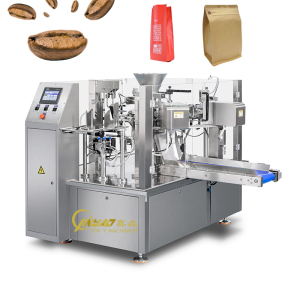
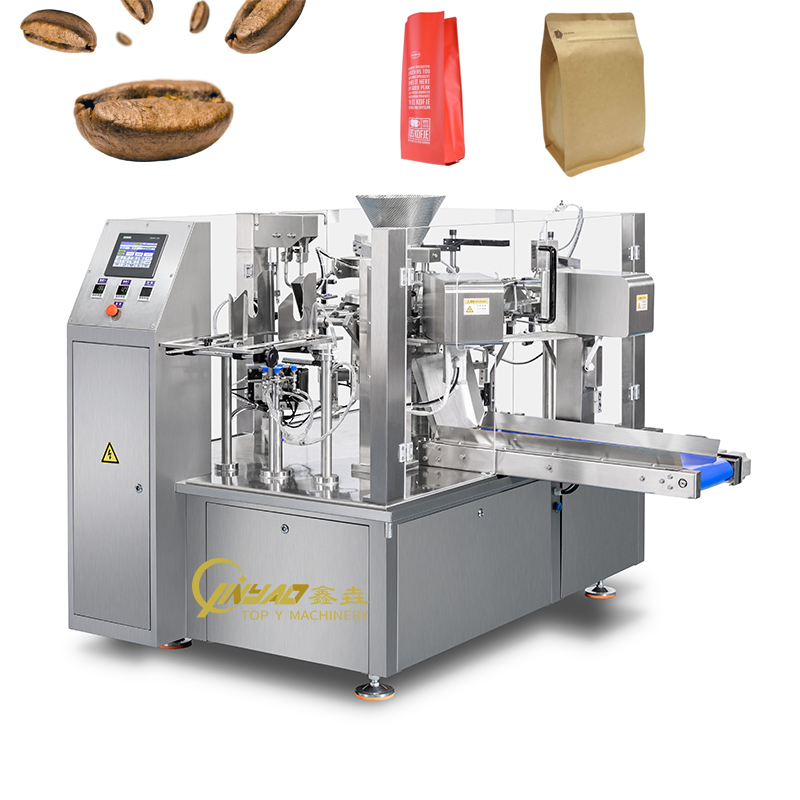
TOPY-RPM Rotary Pouch Machine
Fully automatic rotary pre-made bag line for 24/7 operation — 60–120 bags/min, minimal supervision, ~20% energy saving per pack. The full-automation answer to the 50–70% labor saving.
View TOPY-RPM Details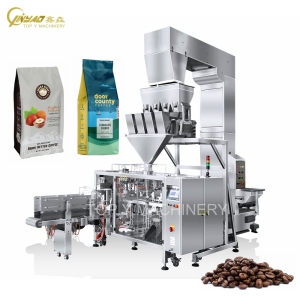
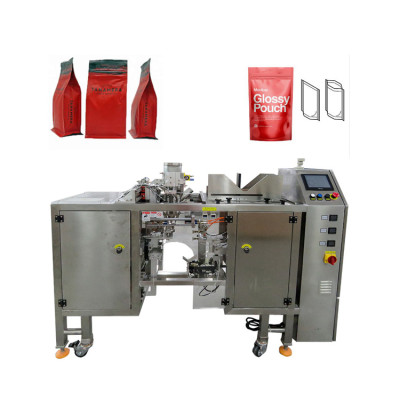
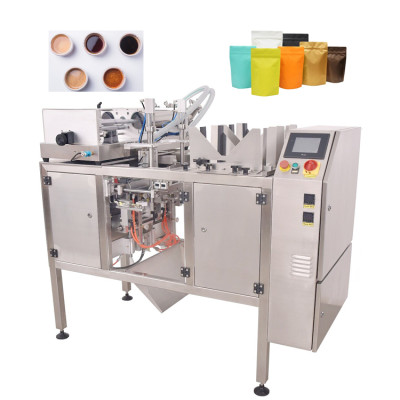
TOPY-MDPL Premade Pouch Line
High-speed 4-station pre-made doypack/zipper pouch machine — the semi-automatic entry point that cuts headcount ~50% and typically pays back in 6–12 months.
View TOPY-MDPL DetailsFrequently Asked Questions About Packaging Automation and Labor Costs
How much labor can packaging automation really save?
At 2026 cost levels, semi-automatic lines save 40–50% of packing labor and fully automatic lines save 50–70% — typically $36,000–$60,000 per line per year. The saving is real because it replaces pure handling work (weighing, scooping, sealing, pack-off) while operators stay on for supervision and quality checks.
What is the difference between semi-automatic and fully automatic packing?
Semi-automatic machines feed bags and are loaded by operators — typically 2 workers instead of 3–4, at 20–35 bags/min. Fully automatic lines take pre-formed bags or form them from roll film, weigh, fill, seal, and check weight with one or two supervisors, reaching 40–120 bags/min and running 24/7. The jump in saving (50% vs 60–70%) comes from eliminating the loader role and the second shift.
How fast is the payback on packing automation?
Semi-automatic upgrades typically pay back in 6–12 months, full-automation lines in 10–18 months, and 24/7 rotary systems in 12–20 months. With a 3-worker line at $29,100 per worker, a $20,000 machine is covered by labor savings alone in under a year, before giveaway and output gains are counted.
Do I still need operators on an automated line?
Yes — one or two per line for supervision, seal inspection, bag magazine loading, and changeover. Food safety and quality staffing stay in place; what disappears is the repetitive handling headcount. That is why the 50–70% labor saving does not compromise quality control.
Can automation reduce energy costs too?
Yes. Automated lines finish the same output in less time with servo-driven motion and no re-handling, and TOP Y MACHINERY full-automation systems typically use about 20% less energy per pack than manual or semi-automatic lines of the same output — a smaller saving than labor, but it compounds every year.
What is the first step to automating my packing line?
Count your real labor: workers per line, loaded cost per worker, shifts, and giveaway percentage. That baseline decides the automation level — a semi-automatic pre-made pouch line for 500–2,000 bags/day, or a fully automatic VFFS or rotary system above that. Tell TOP Y MACHINERY your pack format, product, and target speed and you get a line recommendation plus a labor-saving projection for your numbers.
Why choose TOP Y MACHINERY for packaging automation?
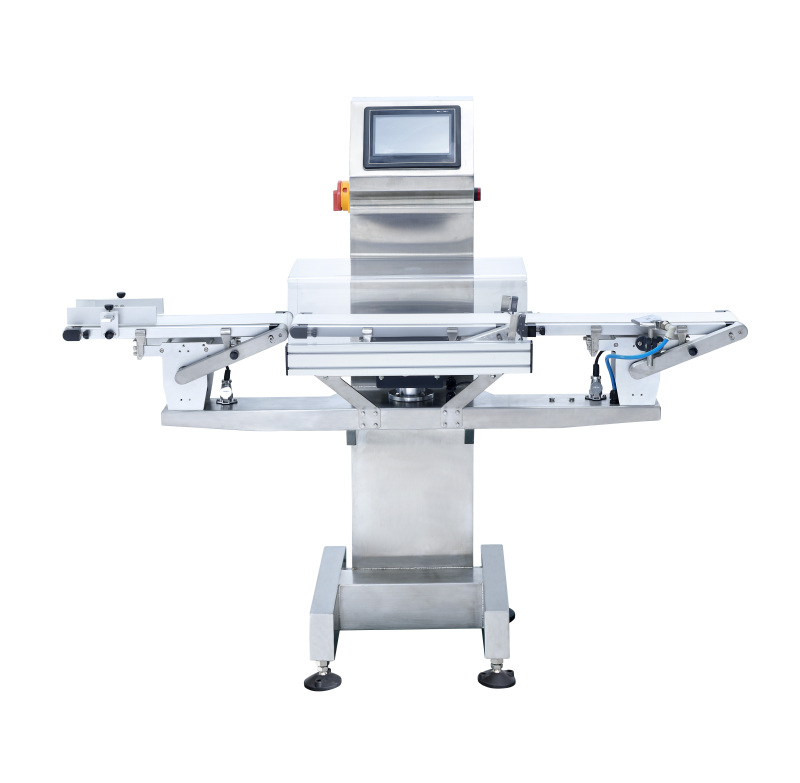
TOP Y MACHINERY supplies the full automation range — semi-automatic pre-made pouch lines (TOPY-MDPL), VFFS roll-film systems, multihead weighers, checkweighers, and fully automatic rotary lines (TOPY-RPM) — with food-grade SS304 build, PLC recipe control, ~20% energy saving on full-automation systems, and lines designed to run 24/7. One supplier for the whole line means one quote, one spare-parts list, and one warranty.
Every Automation Level, One Supplier
TOP Y MACHINERY automates the whole range: semi-automatic pre-made pouch lines from ~$8K, VFFS systems for high-volume roll-film packing, and fully automatic rotary lines for 24/7 operation — cutting packing labor 50–70% with ~20% energy saving. Send your headcount, pack volume, and shift structure and you get a line recommendation with a labor-saving and payback projection for your factory.
Ready to cut your packing labor cost? Request a Packaging Automation Quotation or compare the full automation range across pre-made pouch, VFFS, weighers, and rotary lines.