How to Start Small Coffee Roastery: Equipment Essentials
The Short Answer: You Can Launch a Small Coffee Roastery on a $8,000–$15,000 Budget
Short answer: a small coffee roastery producing 50–500 bags per day needs four core equipment groups — a roaster (with sample roaster), a grinder, a packaging machine, and scales/sealers — and a realistic starting budget is $8,000–$15,000. The single most under-budgeted item is packaging: roasters spend thousands on beans and roasters, then hand-weigh and hand-seal their way out of business. A compact automatic machine like the TOPY-MDP1 mini doypack machine fills, weighs and seals 5–30 bags per minute from a footprint under 2 m², which is why TOP Y MACHINERY builds the packaging half of a small roastery to fit small budgets, small spaces, and a 10–15 day delivery timeline.
This guide walks a new roaster through the complete equipment list with realistic price ranges, shows how to split the $8k–$15k budget, explains the machine specs that matter at 50–500 bags/day, and answers the questions first-time roastery owners ask most. If you are planning a craft roastery, a coffee truck, or a farm-to-cup brand, this is the equipment plan to start from.
Small Coffee Roastery Equipment Checklist with Prices
The equipment list for a small roastery is short — the trap is buying the wrong size or skipping the packaging step. At 50–500 bags/day (roughly 1,500–15,000 bags/month), every piece of gear must match batch size, roast frequency, and packaging throughput. The checklist below covers the complete startup set with realistic 2026 market prices.
| Equipment | What It Does | Recommended Size | Price Range (USD) |
|---|---|---|---|
| Sample roaster | Test roasts for green bean selection, roast profiles, and cupping | 100–300 g batch | $800 – $1,500 |
| Production roaster | Main roast output for retail and wholesale orders | 1–5 kg batch (3–15 kg/hr) | $3,500 – $6,000 |
| Burr grinder | Grind roasted beans for drip, espresso, and filter blends | 0.3–1.5 kg/min, 64 mm+ burrs | $800 – $2,000 |
| Packaging machine | Weigh, fill, and seal coffee bags — the #1 underestimated cost | 5–30 bags/min, 100–500 g fills | $2,800 – $5,500 |
| Digital scales + checkweigher | Verify fill weight per bag (±1–2 g) for compliance and margin | 0.1 g lab scale + line scale | $150 – $400 |
| Sealer (entry-level backup) | Manual heat sealer for small runs or standby use | 200–400 mm jaw | $150 – $350 |
| Cooling tray / bin | Cool roasted beans quickly to stop roast development | Matches roaster batch size | $200 – $500 |
| Workstation + storage | Packaging table, green bean storage, FIFO bins | — | $300 – $600 |
| Accessories & safety | Chaff collector, fire extinguisher, thermometers, packaging consumables | — | $300 – $650 |
Total realistic range: $8,000–$15,000. The spread depends on roaster brand, grinder burr quality, and — most of all — whether packaging is automatic or manual. A roaster that skips the automatic packaging machine saves ~$3k today but pays ~2 staff hours per 100 bags every single day. At 300 bags/day, that is 6+ hours of labor daily — which is why compact automatic machines pay for themselves in the first months.
Budget Breakdown: Where the $8k–$15k Goes
Spend in proportion to output, not to hype: roasting and packaging are the two big-ticket lines, and each deserves 35–45% of the budget. A common mistake is a $9,000 roaster + a $200 hand sealer. A better split at 50–500 bags/day:
| Budget Line | Share of Total | Example Spend | Why It Matters |
|---|---|---|---|
| Roasting (sample + production) | 35–45% | $3,500 – $6,000 | Roast quality and consistency are your brand; a 1–5 kg roaster covers retail + wholesale |
| Packaging (automatic machine) | 30–40% | $2,800 – $5,500 | Speed, fill accuracy (±1–2 g), and seal quality decide cost per bag and shelf life |
| Grinding | 10–12% | $800 – $2,000 | Burr quality protects flavor; skip blade grinders entirely |
| Weighing & sealing support | 5–8% | $300 – $750 | Compliance margins, QC, and backup for small runs |
| Cooling, storage, safety, consumables | 8–10% | $800 – $1,750 | Beans, bags, valves, labels, chaff control, and fire safety |
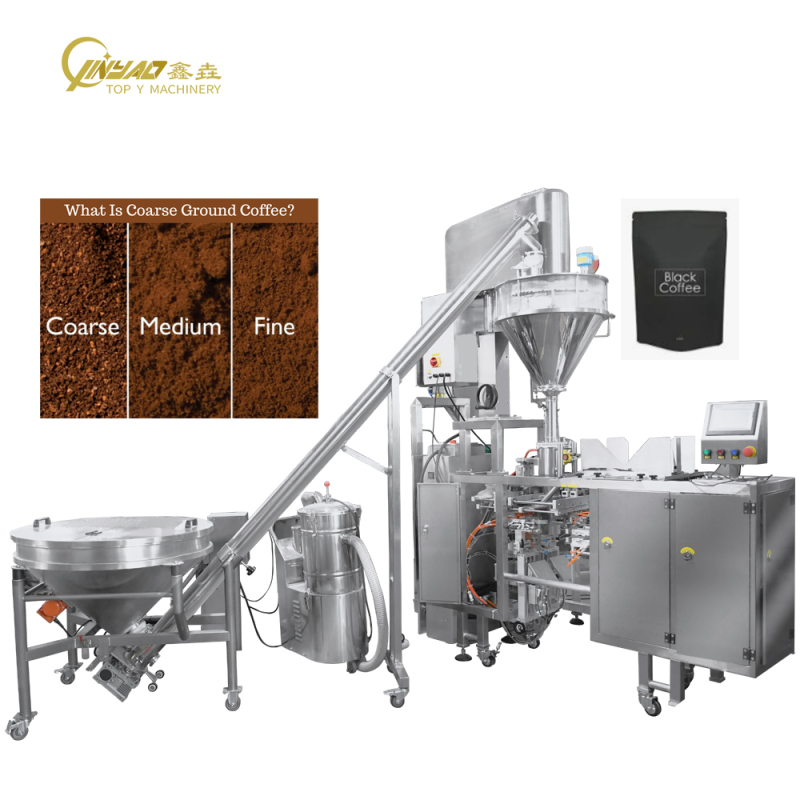
The packaging rule of thumb for a 50–500 bag/day roastery: budget at least $2,800–$5,500 for an automatic fill-and-seal line. At 200 bags/day with an automatic machine, one operator packs the full run in under an hour; with a manual sealer it takes three hours. Over a year, that difference alone pays for the machine. TOP Y MACHINERY's compact designs fit this budget tier — the MDP1 mini doypack line starts small and scales with recipe presets, multihead weigher options, and degassing valve applicators as the roastery grows.
Machine Specs That Matter at 50–500 Bags/Day
Three specs decide whether a packaging machine fits a small roastery: bags per minute, fill accuracy, and footprint — not the biggest advertised speed. Here is how to read the numbers for your volume:
- Throughput vs. reality: rated speed assumes perfect bags and steady product. At 50–500 bags/day you need 5–30 bags/min — a compact doypack machine handles that with one operator, while a huge 60-bag/min line is overkill (and over-budget).
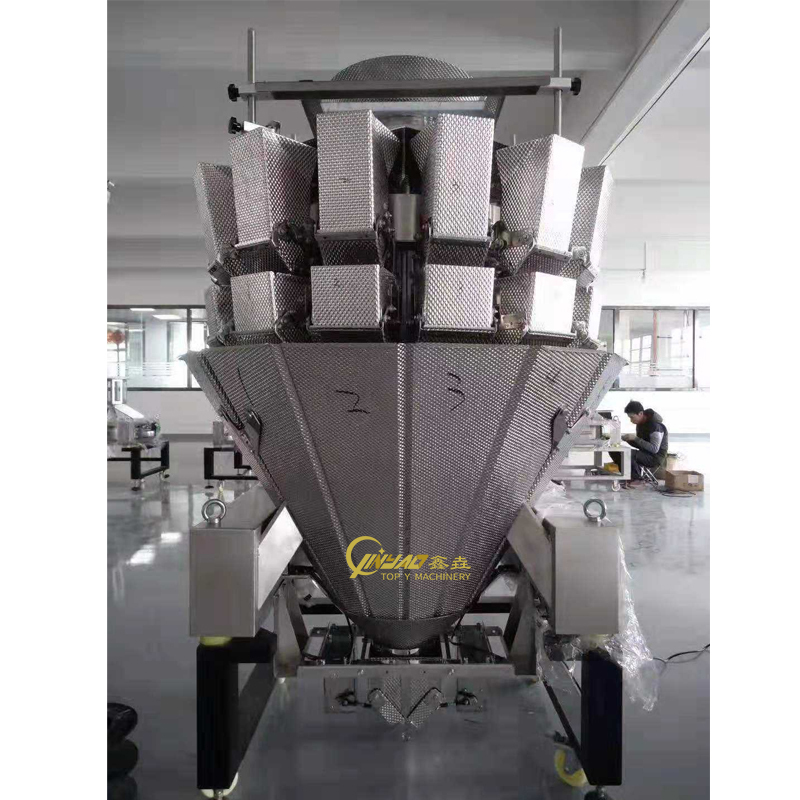
- Fill accuracy ±1–2 g: at $15–30/kg green coffee, 2 g overfill per bag costs $10–20 per 100 bags — about 5–10% of your gross margin on a 250 g bag. Choose volumetric or auger fills for ground coffee, and a multihead weigher for whole beans when accuracy matters most.
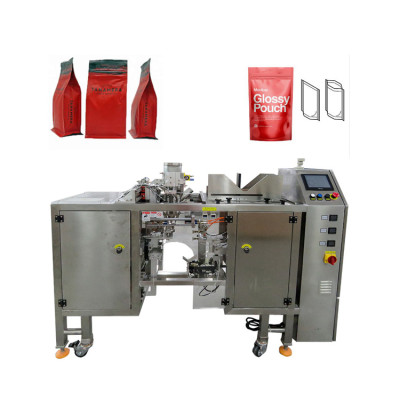
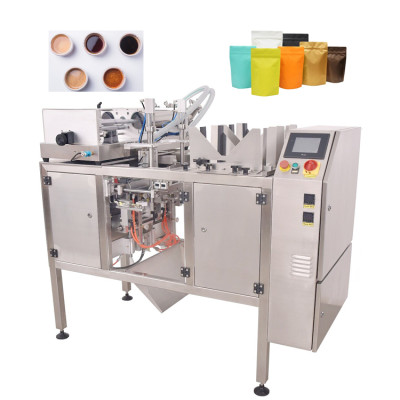
- Compact footprint: a small roastery often runs in 20–50 m². The TOPY-MDP1 mini doypack machine occupies under 2 m² including the filling head, leaving room for the roaster, grinder, and cooling area.
- Sealing quality: PLC-controlled temperature, pressure and dwell time protect bag seals — weak seals leak aroma and shorten shelf life, and stale coffee kills repeat sales faster than any marketing spend can fix.
- Changeover time: switching from 250 g retail bags to 1 kg wholesale bags should take minutes with recipe presets, so one machine serves both channels.
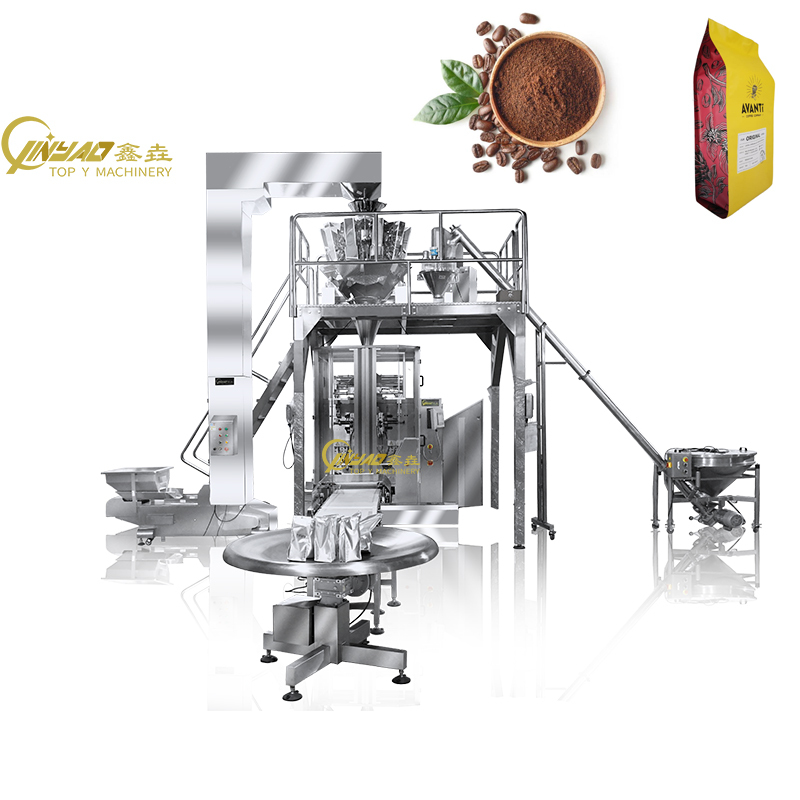
When volume grows past the mini machine's ceiling — or when the roastery adds nitrogen-flushed and degassing-valve bags — the next step is a full VFFS line. A vertical form-fill-seal machine runs roll film, adds degassing valve and gas-flush options, and scales to 15–60 bags/min while keeping the same compact, single-operator philosophy.
Frequently Asked Questions
How much does it cost to start a small coffee roastery?
A realistic startup equipment budget is $8,000–$15,000: $3,500–$6,000 for roasting, $2,800–$5,500 for an automatic packaging machine, $800–$2,000 for a burr grinder, plus scales, cooling, storage and consumables. Add lease, green coffee inventory ($500–$1,500), packaging stock and branding; many roasteries launch with $15k–$25k total including first inventory.
What packaging machine do I need for a small roastery producing 50–500 bags per day?
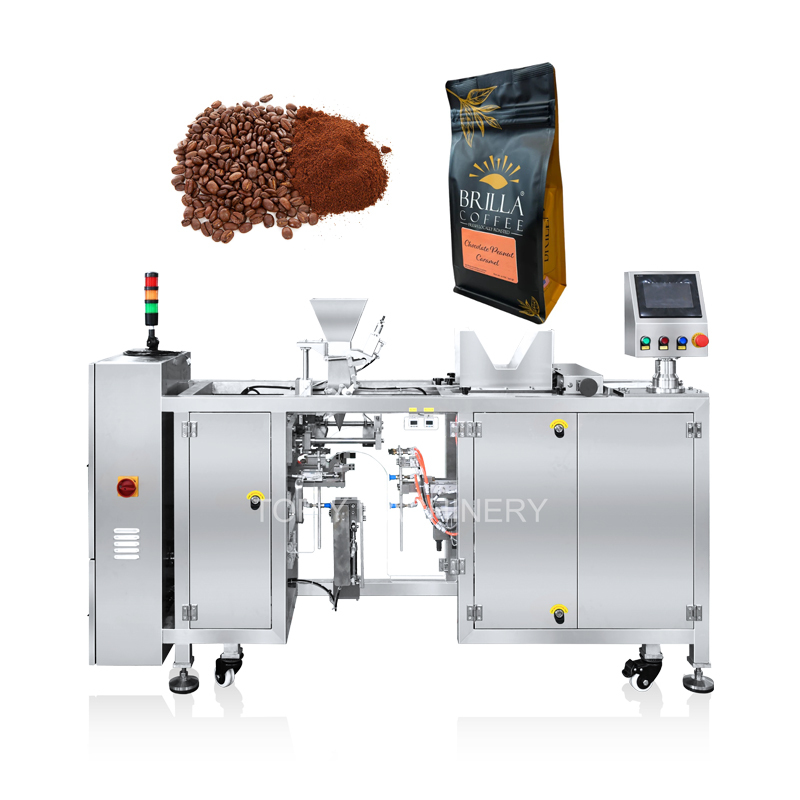
A compact premade-pouch machine like the TOPY-MDP1 mini doypack machine: it fills and seals 5–30 bags/min with ±1–2 g accuracy, runs stand-up pouches from 100 g to 1 kg, and occupies under 2 m². It handles both ground coffee (auger fill) and whole beans (optional multihead weigher), with one-operator operation.
Should I buy the roaster first or the packaging machine first?
Plan both at once, but order the packaging machine early — lead times are typically 2–4 weeks versus days for a roaster. If budget forces a choice, buy the roaster plus a manual sealer to launch, then add the automatic doypack machine with the first month of revenue. Just build the $2,800–$5,500 line item into your plan, or you will hand-pack your margin away.
How many bags per day can a mini doypack machine actually produce?
Realistic single-operator output is 1,500–3,000 bags per day at 5–30 bags/min — far above the 50–500 bags/day small-roastery target. That headroom means the machine never becomes the bottleneck: roast and grind throughput, not packaging, will set your daily ceiling. When you pass ~500 bags/day regularly, the same TOP Y line can add a multihead weigher or scale to a VFFS machine.
Can one machine package both whole coffee beans and ground coffee?
Yes, with the right filling head. Ground coffee flows through an auger filler (±0.5% accuracy); whole roasted beans need a weighing system such as a multihead weigher (±0.5 g). TOP Y mini doypack machines accept both options on the same base unit, so you can start with one product and switch filling heads or add the weigher as your range grows.
Why is TOP Y MACHINERY a good fit for a small coffee roastery?
TOP Y MACHINERY specializes in compact, one-operator food packaging machines with 20+ years of experience: the MDP1 mini doypack line matches small-roastery volumes at the right price, ships in 10–15 days, and is backed by a 2-year warranty, installation guidance, and global after-sales support. Compact designs, real-world specs, and delivery speed — the three things a new roastery actually needs.
The Packaging Essentials for Your Small Coffee Roastery — TOP Y MACHINERY
TOP Y MACHINERY builds compact coffee packaging machines that take a small roastery from hand-sealing to 5–30 bags/min on a $2,800–$5,500 investment. Every line is configured to your bag size, fill type, and volume, with touchscreen recipe control, a 2-year warranty, and 10–15 day delivery. Two machines anchor a small roastery setup:
TOPY-MDP1 Multifunction Mini Doypack
Compact weigh-fill-seal machine for coffee powder, spices, and flour pouches — touchscreen control, quick size changeover, and under 2 m² footprint for small coffee businesses.
View product details →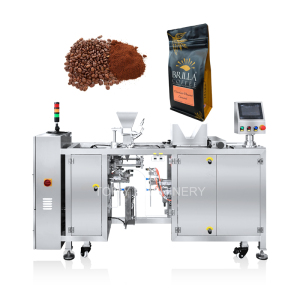
TOPY-MDP1 Mini Bagger (Coffee)
Premade-pouch mini doypack machine built for ground coffee and whole coffee beans — auger or multihead filling, 5–30 bags/min, the packaging backbone of a 50–500 bag/day roastery.
View product details →Ready to equip your small coffee roastery? Request a Coffee Roastery Equipment Quotation or browse the full food packaging machine range to compare compact doypack and VFFS options.