Ground Coffee vs Whole Bean Packaging: How Machines Differ
The Short Answer: Ground Coffee Needs an Auger Filler, Whole Beans Need a Weigher
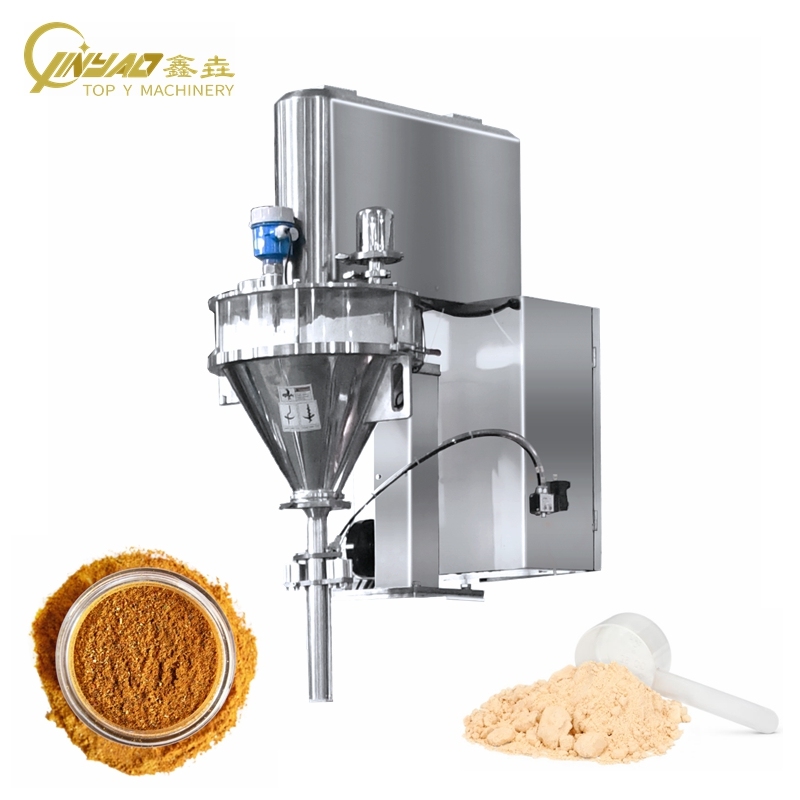
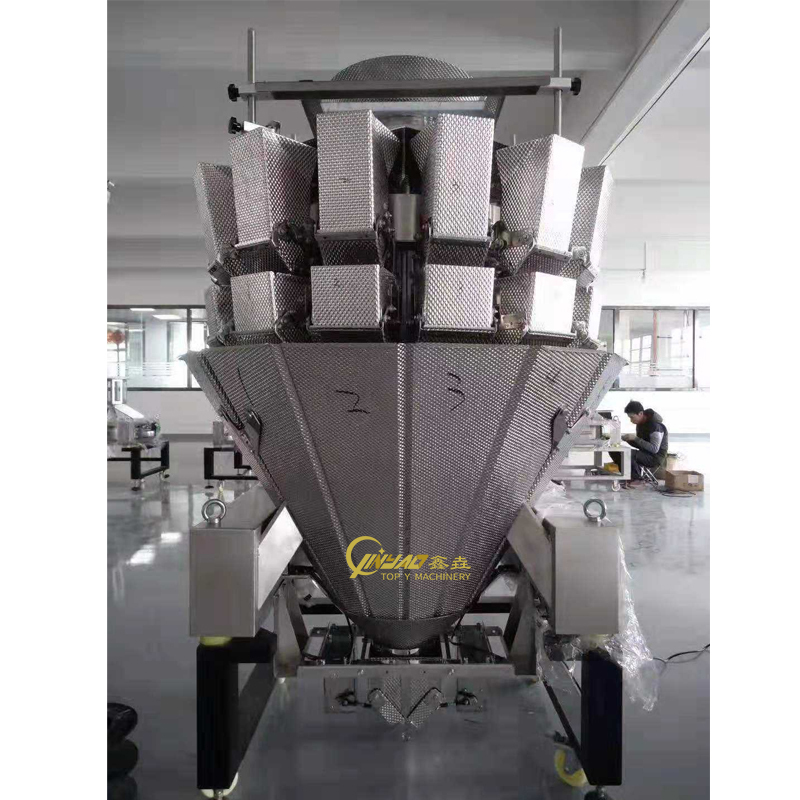
Short answer: ground coffee and whole coffee beans behave like two completely different materials, so they need two different filling systems. Ground coffee is a fine, dusty, electrostatically charged powder — it is dosed with a screw auger filler that holds fill accuracy at ±0.5%, with anti-static and dust-tight design to stop clumping and bridging. Whole beans are free-flowing, uniform granules — they are weighed with a multihead weigher that holds ±0.5 g accuracy on a 250 g bag, automatically combining weigh cups to hit exact net weight. The fastest way to tell a coffee packaging machine apart is to look at the filler: auger = ground coffee, weigher = whole beans. TOP Y MACHINERY builds both — and even offers dual-filler machines (auger and weigher on one frame) so a single line can switch between ground and whole-bean coffee without buying a second machine.
This guide explains the engineering behind that difference: why the two coffee forms fill so differently, the machine-by-machine comparison table, the anti-static requirements that make ground coffee packaging genuinely difficult, and the answers to the questions roasters and packers ask most. It is written for coffee roasters, private-label packers, and anyone specifying a coffee packaging line and trying to decide between an auger filler and a multihead weigher.
Why Ground Coffee and Whole Beans Need Different Filling Machines
The physics of the two products are opposite, and the filler must match the physics. Whole coffee beans are rigid, free-flowing granules with a fairly uniform particle size — they pour like rice or nuts, so a weighing system can pick them up, dump them into buckets, and combine buckets until the target weight is reached. Ground coffee is a powder: fine particles (typically 200–800 µm depending on grind), high surface area, and a strong tendency to build static charge as it rubs against the auger, hopper walls, and the bag itself. That static makes ground coffee stick to surfaces, form bridges across the hopper, and flow unevenly — which is exactly why a volumetric auger, not a free-flow weigher, is the standard for ground coffee.
- Flow behavior: whole beans pour freely under gravity; ground coffee can arch and bridge, so it needs a positive-displacement auger screw that forces a controlled dose into the bag.
- Density stability: bean density varies slightly with roast level, but a multihead weigher ignores density because it weighs, not measures volume. Ground coffee density varies with grind size and settling, so a volumetric cup or auger must be calibrated and can be compensated by the ±0.5% auger accuracy.
- Dust and contamination: ground coffee generates dust at every transfer point. A powder line needs dust-tight sealing, and the auger filler is designed so fine powder cannot escape into the servo drive or contaminate the seal area.
- Static electricity: ground coffee carries static charge from grinding and conveying. An auger filler with grounded, anti-static surfaces keeps the powder moving instead of clinging — see the anti-static section below.
Ground Coffee vs Whole Bean: Machine Comparison Table
Here is the practical comparison a buyer needs when choosing a coffee packaging line. The two rows that matter most are fill accuracy and what the machine is doing while it fills: an auger measures volume by screw rotation, a multihead weigher measures actual mass by combining weigh cups.
| Factor | Ground Coffee | Whole Bean Coffee |
|---|---|---|
| Recommended filler | Auger / screw filler (powder dosing) | Multihead or linear weigher |
| Fill accuracy | ±0.5% of target weight (e.g. ±1.25 g on a 250 g bag) | ±0.5 g on a 250 g bag (combination weighing) |
| How it measures | Volumetric — screw rotation meters the powder dose | Gravimetric — combines weigh cups to exact net weight |
| Material flow | Poor — powder bridges, clings, needs forced feeding | Excellent — beans pour freely under gravity |
| Static / dust issues | High — needs anti-static surfaces, dust-tight sealing | Low — minimal dust, no static bridging |
| Changeover to the other form | Swap filler module on a dual-filler machine (TOP Y option) | Swap filler module on a dual-filler machine (TOP Y option) |
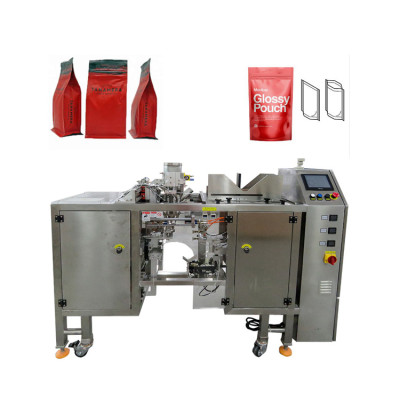
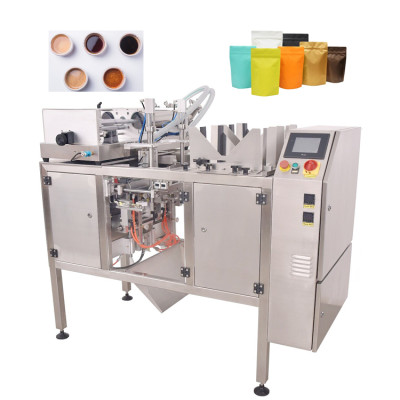
| Typical TOP Y machine | TOPY-RPM rotary powder packing machine (dual filler, anti-static patent) | TOPY-MDPL horizontal packing machine with weigher |
Which accuracy matters more depends on the product price. Whole-bean coffee is sold by weight, so the ±0.5 g multihead accuracy protects margin on every bag. Ground coffee is sold by volume perception as much as by weight, and the ±0.5% auger accuracy keeps give-away low even though density varies with grind — the auger is re-zeroed by the machine's PLC between runs so long-term drift stays inside the tolerance.
Anti-Static Design: The Hidden Requirement for Ground Coffee Packaging
Static electricity is the #1 cause of inaccurate and messy ground coffee packaging — and it is invisible until it happens. When ground coffee passes through the grinder, the conveying system, and the filler hopper, particle-to-particle friction generates a static charge. Charged powder then sticks to the hopper walls, forms bridges that stop flow, and clumps inside the bag so the fill weight drifts. Operators see "inconsistent fills" and blame the machine, when the real culprit is static.
- TOP Y anti-static patent: TOP Y MACHINERY's powder machines use a patented anti-static treatment — grounded conductive surfaces and ESD-safe powder-contact materials — so charge is continuously drained instead of accumulating. Powder keeps flowing, fills stay inside tolerance, and cleaning between batches takes minutes instead of hours.
- Dust-tight transfer: every auger joint, hopper opening, and bag-clamp seal is dust-tight, so fine coffee powder cannot escape into the drive or the work area. This protects both the machine's servos and the operator's breathing zone.
- Dual-filler flexibility: TOP Y's rotary machines can be built with a dual-filler configuration — an auger head for ground coffee and a weigher head for whole beans on the same frame — so a roaster selling both forms runs one line with recipe-based changeover in minutes.
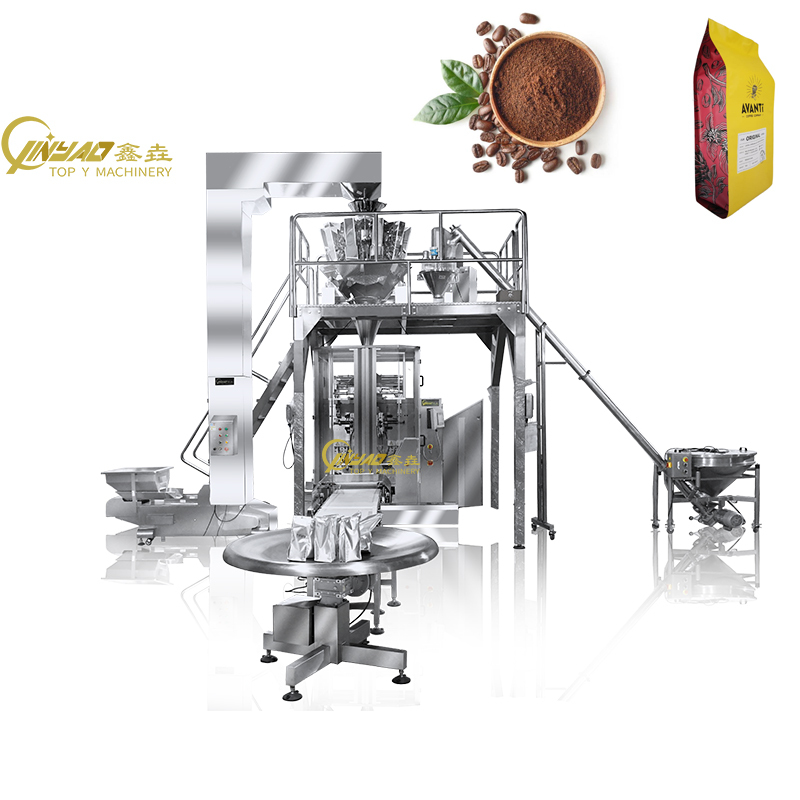
The measurable result of getting anti-static right: consistent fill weights run after run, no powder bridges interrupting production, less product give-away, and a cleaner packing room. For a roaster or packer running ground coffee at 20–40 bags per minute, that is the difference between a line that works and a line that fights you all day
Can one coffee packaging machine handle both ground coffee and whole beans?
Yes, if it is a dual-filler machine. TOP Y MACHINERY's rotary powder machines can be configured with an auger head for ground coffee and a multihead weigher head for whole beans on the same frame. Changeover is recipe-based and takes minutes — you select the product on the PLC screen and swap the filling module, which is far cheaper than buying two complete lines.
Why is a multihead weigher not used for ground coffee?
Ground coffee is a fine, dusty powder that does not flow freely through weigh cups — it bridges, clings, and carries static charge, so combination weighing becomes unreliable and messy. A positive-displacement auger screw forces a controlled dose instead, which is why auger filling is the standard for coffee powder, spices, milk powder, and similar products.
What fill accuracy can I expect from each system?
TOP Y auger fillers for ground coffee hold approximately ±0.5% of target weight (about ±1.25 g on a 250 g bag). Multihead weighers for whole beans hold approximately ±0.5 g on a 250 g bag by combining weigh cups to the exact target. Both systems are re-verified by an inline checkweigher on the line.
Why does ground coffee stick inside the filler hopper?
Static electricity. Friction between fine coffee particles and the hopper/auger surfaces creates a static charge that makes powder cling to the walls and form bridges. TOP Y's patented anti-static treatment — grounded conductive surfaces and ESD-safe contact materials — continuously drains the charge so the powder keeps flowing and fills stay consistent.
Is dust from ground coffee packaging dangerous for the machine or operators?
Dust affects both. It can settle into servo drives and shorten machine life, and fine powder in the air is an inhalation hazard and, in extreme cases, a combustible-dust risk. TOP Y powder machines use dust-tight transfer points and sealed filling zones, keeping powder inside the product path — which also means much less cleaning time between batches.
How do I choose between an auger filler and a multihead weigher for my coffee line?
Start with the product: ground coffee → auger; whole beans → weigher. If you sell both, choose a dual-filler machine. Then match speed and bag format: rotary premade-bag machines (TOPY-RPM) suit 10–60 bags/min with doypack, zipper, or gusset bags, while horizontal machines (TOPY-MDPL) suit zipper pouches at 15–30 bags/min. TOP Y engineers configure the filler, bag range, and sealing parameters to your actual product before production.
The Machines Behind Both Fillers — Coffee Packaging from TOP Y MACHINERY
TOP Y MACHINERY builds auger fillers, multihead weighers, and dual-filler coffee packaging machines — and every line is configured to the product. With 20 years of experience in food packaging machinery, TOP Y matches the filler, bag type, and sealing profile to your coffee's grind, roast, and target weight, and provides installation, training, and after-sales support. Two machines anchor this comparison:
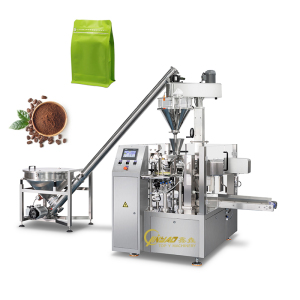
TOPY-RPM Rotary Powder Packing Machine
Premade-bag rotary machine for ground coffee, cocoa, and matcha powder — available with auger filler (±0.5%), optional dual-filler configuration with a weigher head, and TOP Y's patented anti-static treatment for reliable powder dosing at 10–60 bags/min.
View product details →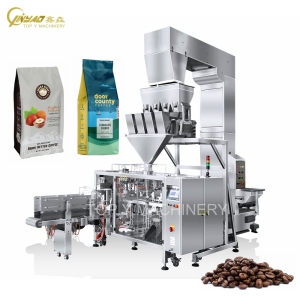
TOPY-MDPL Horizontal Coffee Bean Machine
Premade zipper-pouch machine for whole coffee beans with multihead weigher integration (±0.5 g), PLC-controlled sealing, and optional gas flush for extended shelf life — the whole-bean counterpart to the powder line.
View product details →Whether your product is ground or whole bean — or both — TOP Y MACHINERY can match the filler to the physics of your coffee. Request a Coffee Packaging Machine Quotation or browse the full food packaging machine range to compare auger, weigher, and dual-filler options.