Dried Fruit Packing: Extend Shelf Life Without Preservatives
The Short Answer: How to Extend Dried Fruit Shelf Life Without Preservatives
Short answer: dried fruit spoils in three ways — oxidation of natural oils (off-flavors and browning), moisture migration that turns texture sticky or hard, and mold or yeast growth when humidity is not controlled. Modified Atmosphere Packaging (MAP) with a nitrogen flush removes the oxygen that drives those failures, holding residual O2 below 0.5%, and lifts dried fruit shelf life from roughly 6 months (air pack) to 12–18 months at ambient temperature — with no preservatives added. TOP Y MACHINERY supplies the two machines that make this practical: a roll-film VFFS (TOPY-VFFS) with integrated nitrogen-flush MAP for pillow, quad-seal, and stick packs, and a premade-pouch packager (TOPY-MDPL) for gusseted and stand-up pouches, both running the O2/CO2/N2 gas ratios below.
This guide gives you the exact MAP gas recipe for dried fruit, the shelf-life numbers you can put in your spec sheet, the machine-level controls that keep residual O2 under 0.5% shift after shift, and the TOP Y MACHINERY lines that package dried fruit with nitrogen flushing. A practical FAQ closes the guide.
The MAP Gas Table: O2 / CO2 / N2 Ratios That Protect Dried Fruit
Dried fruit MAP uses two gas recipes depending on moisture content: near-pure nitrogen for low-moisture fruit, and a nitrogen-carbon dioxide blend for higher-moisture fruit that needs mold and yeast suppression. Oxygen is always pushed to trace levels because it drives both oxidative rancidity and non-enzymatic browning:
| Dried Fruit Type | Moisture / a_w | O2 | CO2 | N2 | Main Failure It Prevents |
|---|---|---|---|---|---|
| Raisins, dates, figs (soft fruit) | a_w 0.55–0.75 | < 0.5% | 25–35% | 65–75% | Mold and yeast growth, sugar crystallization |
| Dried apricots, prunes, mango | a_w 0.45–0.60 | < 0.5% | 10–20% | 80–90% | Oxidative browning, off-flavor development |
| Dried berries, cranberries | a_w 0.40–0.55 | < 0.5% | 0–10% | 90–100% | Loss of color, lipid oxidation |
| Freeze-dried fruit (strawberries, apples) | a_w < 0.30 | < 0.5% | 0% | 100% | Moisture reabsorption, crunch loss, oxidation |
Practical gas specs for a dried fruit line: use food-grade nitrogen and food-grade carbon dioxide at ≥ 99.5% purity; set the flush so residual oxygen in the sealed pack measures below 0.5% (target 0.3–0.5% for a comfortable margin); verify with a headspace O2 analyzer on a fixed sampling schedule (1 pack per 10–15 minutes per shift); and match flush volume to pack volume so the bag is gently inflated without over-pressure. For a 25–250 g dried fruit pack on a VFFS, a typical flush cycle runs 1.5–3 seconds at 0.4–0.8 MPa supply pressure — the exact value is confirmed by the analyzer reading, not by guesswork. Higher-moisture soft fruit benefits from the CO2 fraction to suppress mold; low-moisture and freeze-dried products run pure nitrogen.
Shelf Life Comparison: Air Pack vs. N2 Flush vs. Full MAP
Going from an air pack to a properly flushed MAP pack roughly triples the shelf life of dried fruit at ambient temperature. The table below shows what each packaging condition delivers and what limits it:
| Pack Condition | Residual O2 | Typical Shelf Life (Ambient) | Primary Failure Mode |
|---|---|---|---|
| Air pack (no flush) | ~20.9% | 4–6 months | Oxidative rancidity, browning, moisture uptake |
| Basic N2 flush | 2–5% | 6–9 months | Slow oxidation; acceptable for fast-turn domestic retail |
| N2 flush with O2 ≤ 2% | ≤ 2% | 9–12 months | Moisture becomes the main limit; high-barrier film needed for more |
| Full MAP, O2 < 0.5% (recommended) | < 0.5% (target 0.3–0.5%) | 12–18 months | Film barrier and seam integrity decide the rest |
| MAP + high-barrier film (foil / metallized) | < 0.5% | 18–24 months | Extended export and warehouse cycles |
Three rules make the difference between 12 and 18 months: (1) hold residual O2 under 0.5% — every 1% of oxygen shortens shelf life noticeably because dried fruit oils oxidize fast; (2) choose a film with an oxygen transmission rate (OTR) at or below 5 cm³/m²·day for the 12-month tier and below 2 cm³/m²·day for 18+ months (foil and metallized laminates qualify); (3) keep seams airtight — a MAP pack is only as good as its weakest seal, so seal temperature, jaw pressure, and dwell time are validated on every shift. For soft, higher-moisture fruit, add the CO2 fraction from the gas table above to suppress mold; for low-moisture and freeze-dried fruit, pure nitrogen at O2 < 0.5% is sufficient and lower cost.
TOP Y MACHINERY MAP Systems: Nitrogen Flushing for Dried Fruit
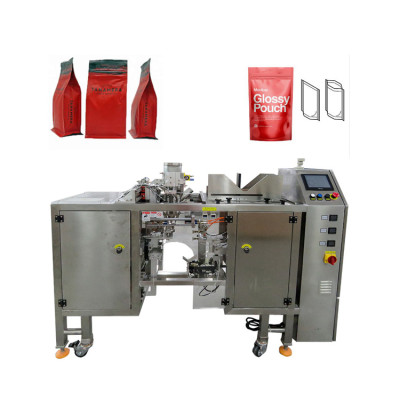
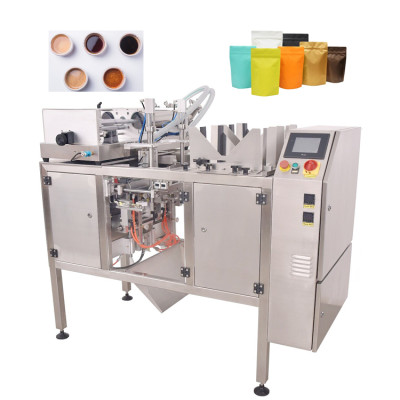
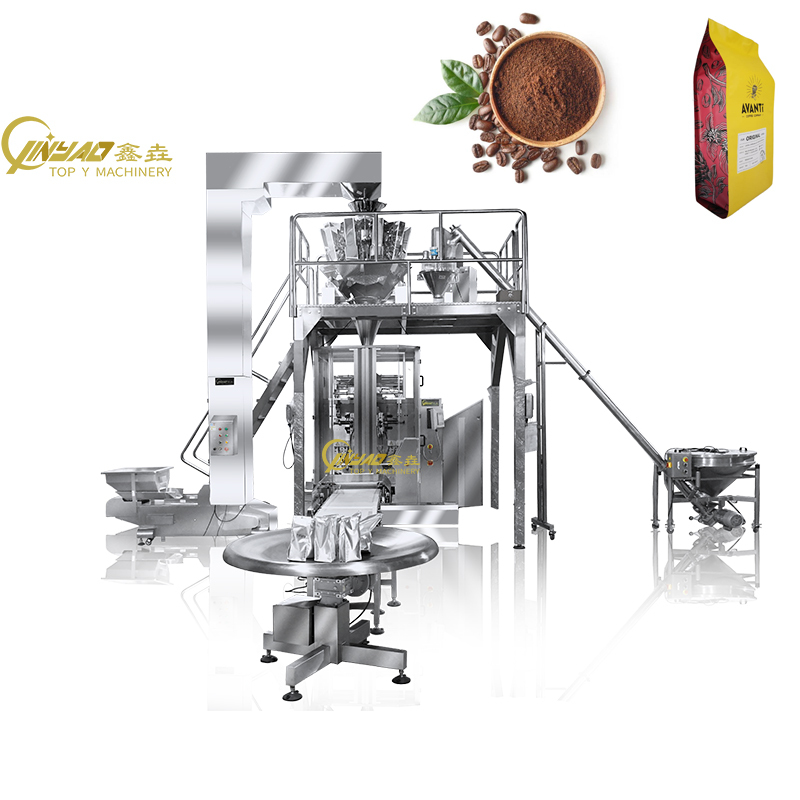
TOP Y MACHINERY covers both dried fruit pack formats — roll-film bags on the TOPY-VFFS and premade gusseted pouches on the TOPY-MDPL — each with integrated MAP gas flushing, so the O2/CO2/N2 recipe above runs as a controlled part of the sealing cycle. You get the gas system, film control, and sealer as one matched machine instead of bolting a flush unit onto an existing line:
- Integrated MAP / nitrogen flush: gas timing is synced with the seal cycle automatically, so residual O2 stays below 0.5% pack after pack without operator guesswork.
- Dual gas support: the flush system accepts nitrogen only or nitrogen + CO2 blends, covering soft dried fruit and low-moisture product from one machine.
- Roll-film flexibility: the TOPY-VFFS forms pillow, quad-seal, and stick packs from roll film — the formats that dominate dried fruit retail and snack-size SKUs.
- Premade pouch premium: the TOPY-MDPL handles gusseted, stand-up, and zipper pouches — the high-value formats for mixed dried fruit and export programs.
- Recipe-based setup: gas time, pressure, seal temperature, and film tension are stored per SKU, so changeover between raisin packs and freeze-dried berry packs is a menu selection.
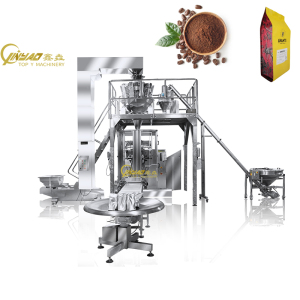
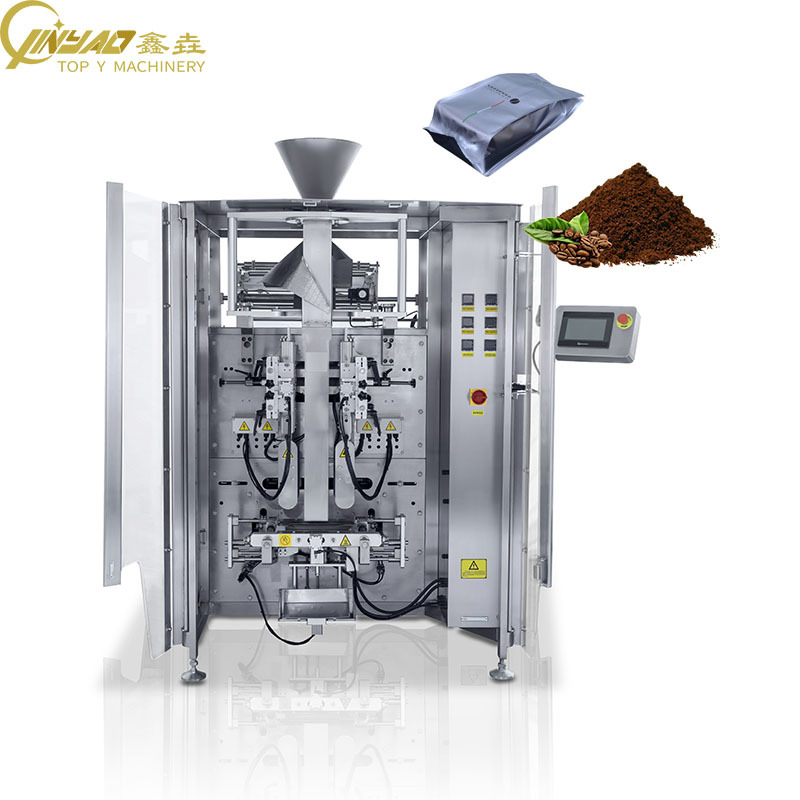
TOPY-VFFS Roll-Film MAP Packager
Roll-film VFFS for dried fruit: pillow, quad-seal, and stick packs with integrated nitrogen-flush MAP, residual O2 below 0.5%, and recipe presets for each dried fruit SKU.
View product details →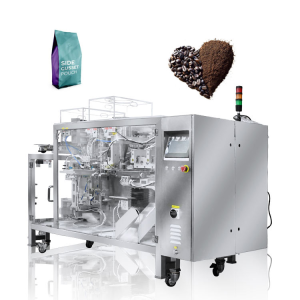
TOPY-MDPL Premade Pouch MAP Packager
Premade-pouch machine for gusseted, stand-up, and zipper dried fruit pouches: gentle filling, MAP nitrogen-flush support, and quick format changeover for retail and export lines.
View product details →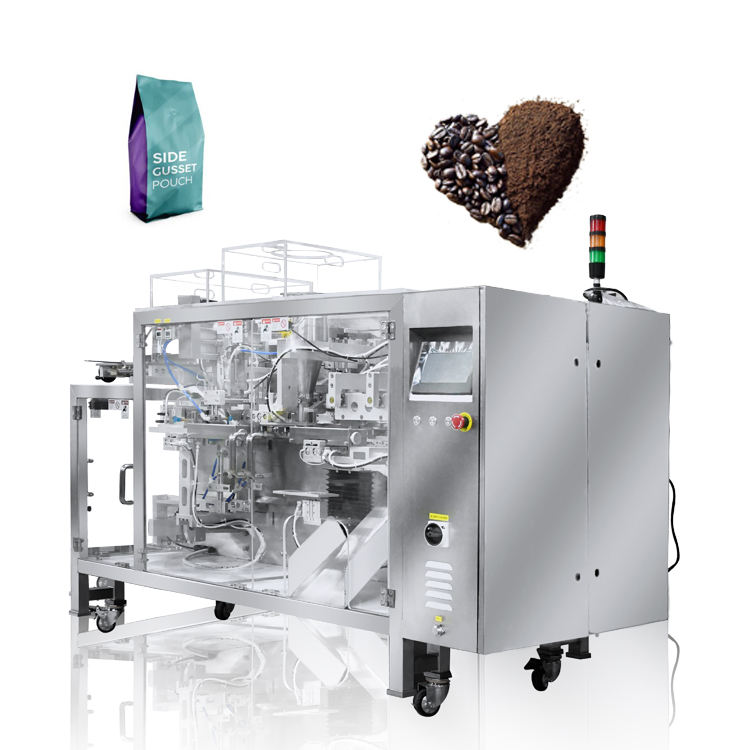
Frequently Asked Questions
What gas ratio should I use for dried fruit MAP?
For low-moisture dried fruit (berries, freeze-dried fruit), use 100% nitrogen with residual O2 below 0.5%. For higher-moisture soft fruit (raisins, dates, figs, prunes), use 65–75% N2 + 25–35% CO2 with O2 below 0.5% to suppress mold and yeast. In both cases food-grade gas at ≥ 99.5% purity is standard, and the headspace O2 reading is the number that matters.
How long can dried fruit last with MAP and no preservatives?
With residual O2 held below 0.5%, dried fruit in standard packaging typically reaches 12–18 months at ambient temperature, versus 4–6 months for an air pack. Pairing MAP with a high-barrier film (OTR below 2 cm³/m²·day, e.g. foil or metallized laminate) extends that to 18–24 months for export programs.
Why is residual oxygen below 0.5% so important for dried fruit?
Dried fruit keeps its natural oils, and oxygen oxidizes those oils into rancid flavors while also driving non-enzymatic browning that darkens the fruit. At O2 below 0.5%, both reactions slow to negligible rates at ambient temperature. Above 2%, shelf life drops noticeably; that is why the MAP target is under 0.5% rather than "as low as possible by luck."
Do I need CO2 in the gas mix for dried fruit?
Only for higher-moisture soft fruit. Raisins, dates, and figs have water activity high enough that mold and yeast can grow; 25–35% CO2 in the mix suppresses them. Low-moisture and freeze-dried fruit do not need CO2 — pure nitrogen is cheaper and fully effective when O2 stays below 0.5%.
Which machine should I use: VFFS or premade pouch for dried fruit?
Roll-film VFFS (TOPY-VFFS) is the standard for high-volume pillow, quad-seal, and stick packs — lower film cost and faster cycles. Premade pouch (TOPY-MDPL) wins for gusseted, stand-up, and zipper pouches that command premium shelf and export prices, at moderate speeds with higher per-pack film cost. Many dried fruit producers run both: VFFS for core SKUs and premade pouch for the premium and mixed-fruit lines.
How do I verify that my nitrogen flush is working on the line?
Measure residual O2 in the sealed pack with a headspace oxygen analyzer on a fixed schedule — 1 pack per 10–15 minutes per shift is a practical standard. Set the flush needle active time (typically 1.5–3 seconds per cycle at 0.4–0.8 MPa supply) and adjust until the reading is below 0.5% with a gentle pack inflation. Also check seal integrity visually and with a burst test on every shift change, since a micro-leak defeats the MAP.
Why choose TOP Y MACHINERY for dried fruit MAP packing?
TOP Y MACHINERY builds dried fruit packing as a matched system — TOPY-VFFS roll-film packagers and TOPY-MDPL premade-pouch machines with integrated MAP nitrogen flushing (nitrogen or N2/CO2 blends), recipe-based setup per SKU, and residual O2 held below 0.5% as the working standard. One supplier covers film control, gas flushing, and sealing, with installation guidance, a 2-year warranty, and 10–15 day delivery.
Pack Dried Fruit That Stays Fresh for 18 Months — Without Preservatives
TOP Y MACHINERY supplies dried fruit packing with integrated MAP nitrogen flushing: TOPY-VFFS roll-film packagers and TOPY-MDPL premade-pouch machines, both holding residual O2 below 0.5% and delivering 12–18 month shelf life without preservatives. Every line is configured to your fruit type, gas recipe, bag size, and speed target.
Ready to spec your dried fruit packing line? Request a Dried Fruit MAP Packing Quotation or compare the full food packaging machine range for VFFS, premade-pouch, and MAP options.