




Doypack vs Spout Pouch vs Retort Pouch: A Decision Table by Product, Shelf Life and Line Speed
Buying guides · pouch selection · TOP Y Machinery
Doypack vs Spout Pouch vs Retort Pouch: A Decision Table by Product, Shelf Life and Line Speed
The Short Answer: Choose by product state and process, not by appearance. Dry and granular products suit standard doypack / stand-up pouches, which can be formed from roll film on a VFFS machine or pre-bought and filled on a premade pouch machine. Liquids and pastes need a pour point — typically a spout pouch with a fitted cap — so the filling and capping stations must exist on the line. Shelf-stable wet foods need a retort-grade pouch whose seals survive a sterilisation cycle, and the temperature-and-time schedule for that cycle must be validated in writing with the pouch maker and the machine builder. On published speed anchors, TOP Y Machinery documents 15–30 pouches/min for premade pouch lines and 30–50 bags/min for snack VFFS; a rated speed without a named product and bag is not a specification.
The three pouch names are often used as if they described different machines. They do not. They describe three different combinations of product state, pack structure and process requirement, and each combination points to a different machine family — or to the same machine specified differently. This guide uses only figures TOP Y Machinery (legally TOP Y MACHINERY CO., LTD.) publishes on its own website and buying guides; where a number is not published for your product, the article names the written document to request instead of estimating one.
1. The One-Glance Decision Table
Start from the product, then work rightwards. A mistake in the first column — choosing a pouch type before confirming how the product behaves — is the most expensive to correct, because it can force a machine change rather than a change part.
| Pouch type | Fits these products | Seal and process requirement | Machine families that handle it | Published speed anchor |
|---|---|---|---|---|
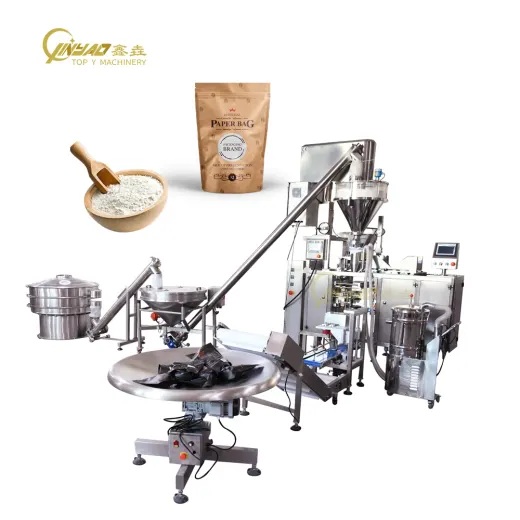
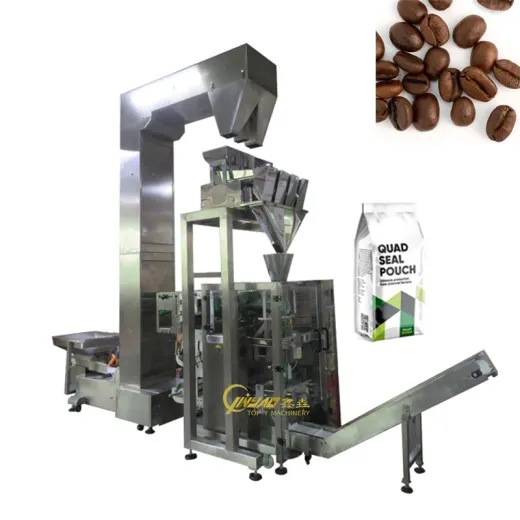
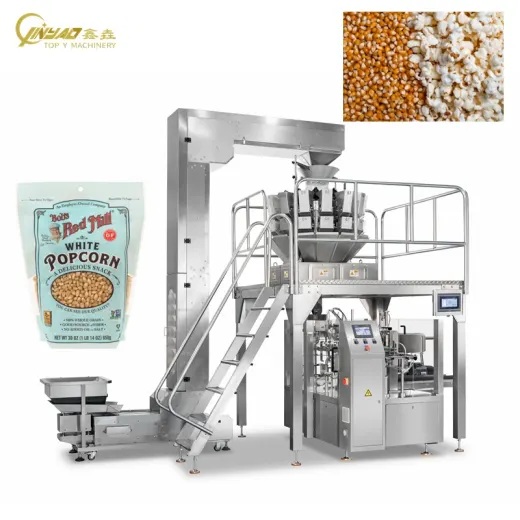
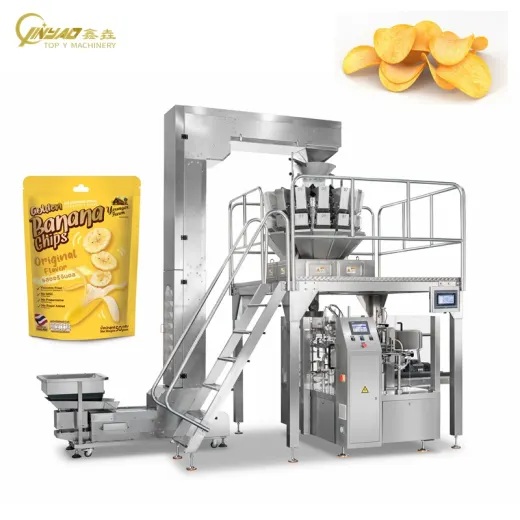
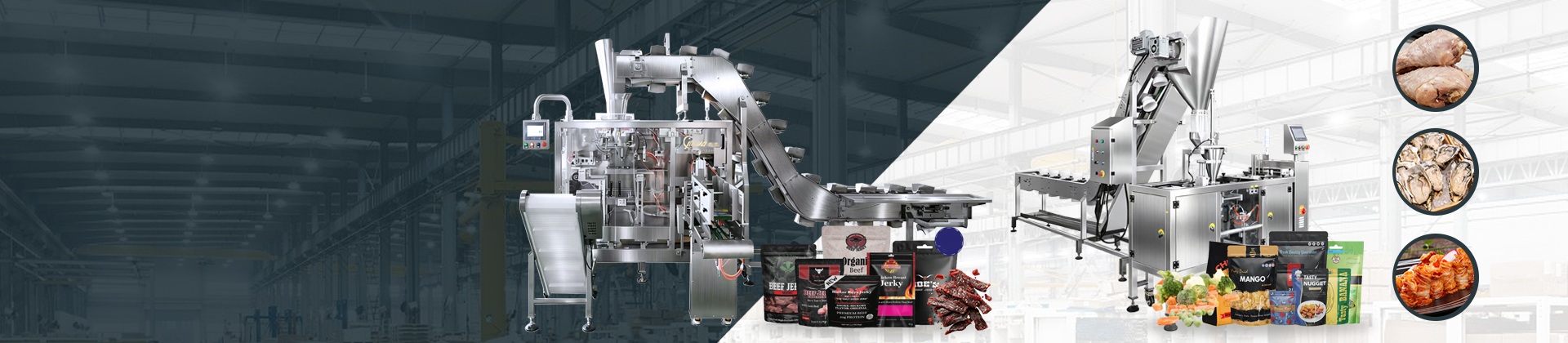
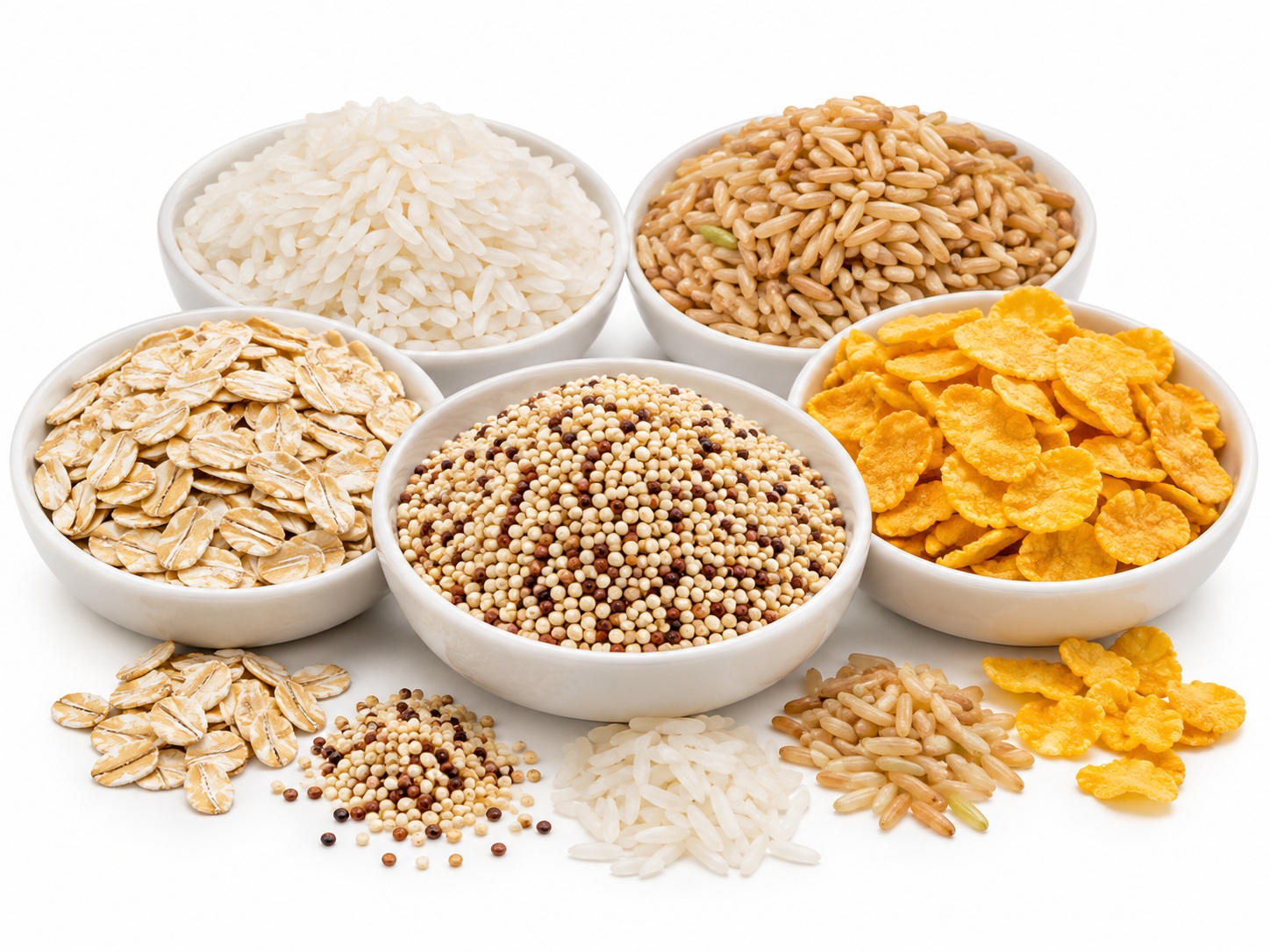
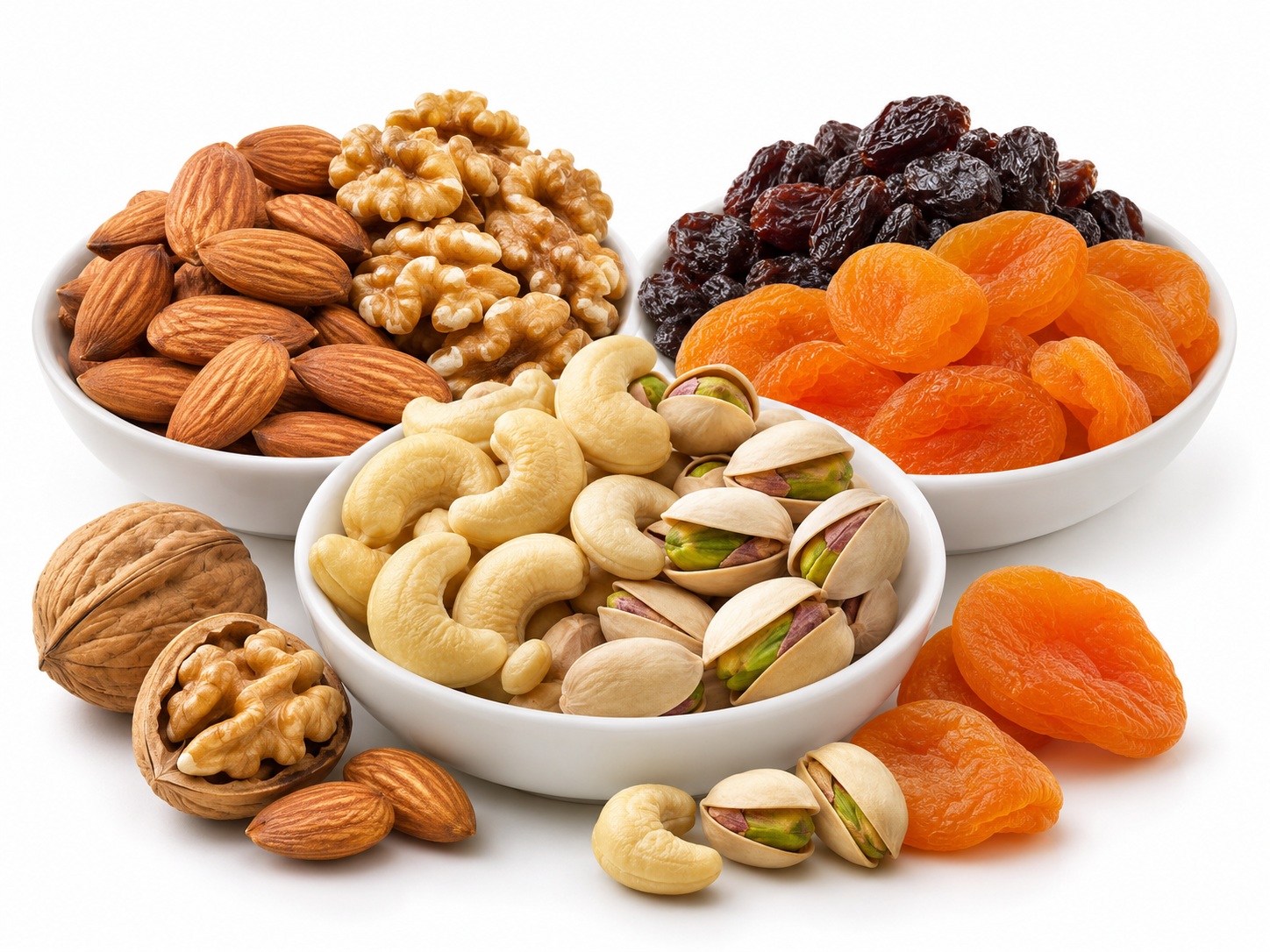
| Standard doypack / stand-up pouch (from roll film) | Dry and granular products: snacks, rice, powders, coffee, nuts | Fin seal or lap seal on the film’s sealant layer; optional zipper and valve | VFFS machine that forms, fills and seals the bag in one pass | 30–50 bags/min (snack VFFS); 40–60 bags/min on 1 kg rice; 8–12 bags/min on 25 kg |
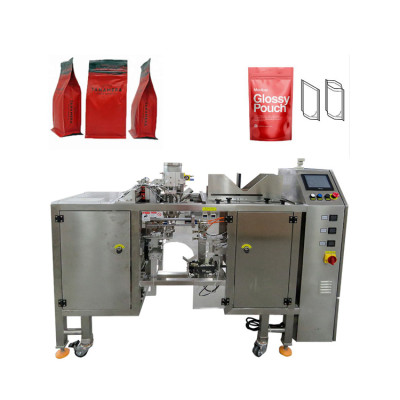
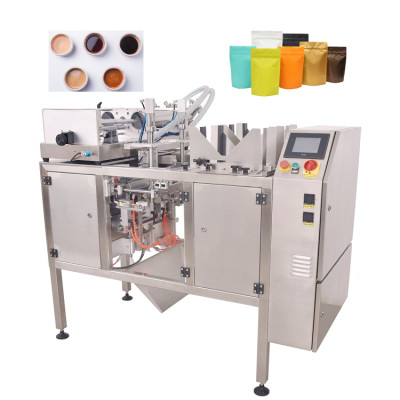
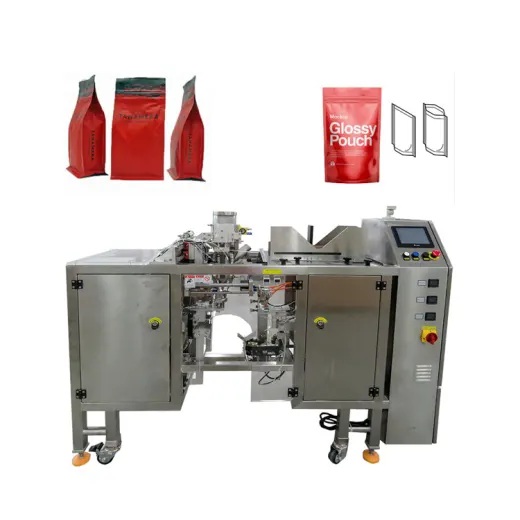
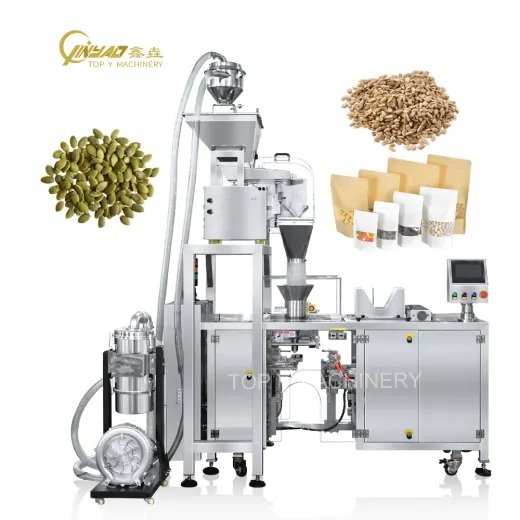
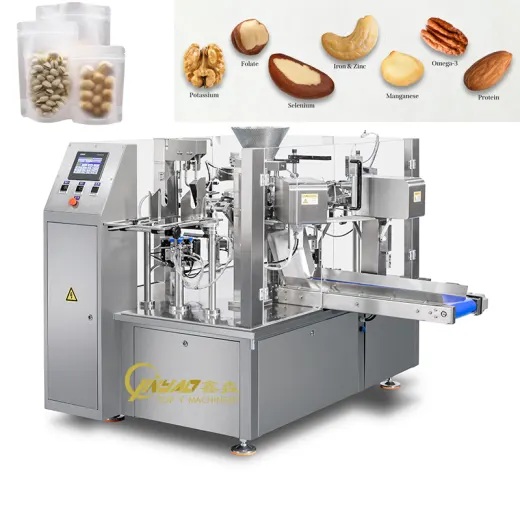
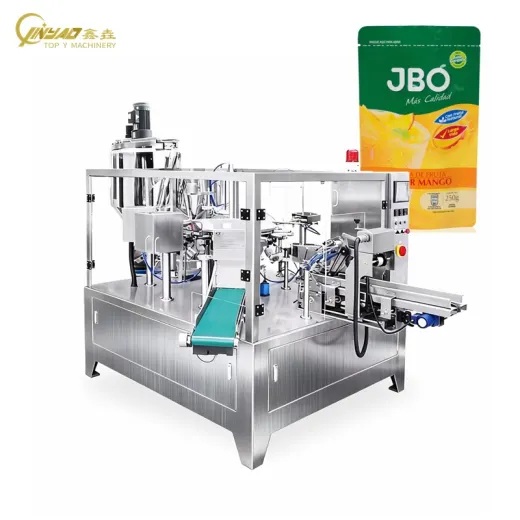
| Premade doypack / stand-up pouch (pre-bought) | The same dry range, plus premium formats: zipper pouches, kraft, shaped pouches | Open, fill, close on the premade pouch’s existing top seal area | Premade pouch (doypack) machines, typically rotary | 15–30 pouches/min |
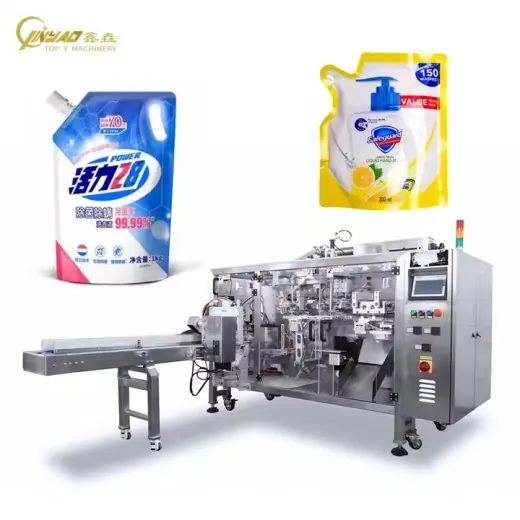
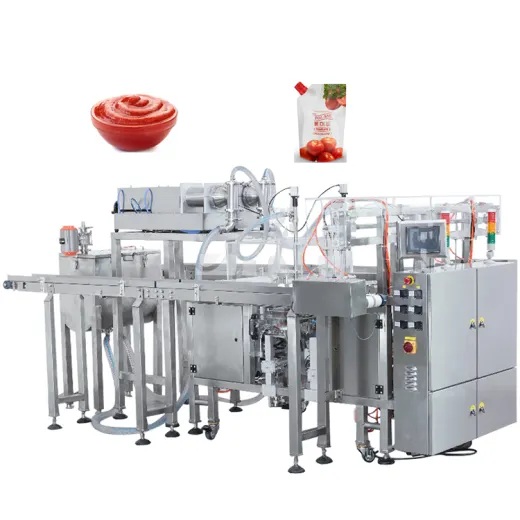
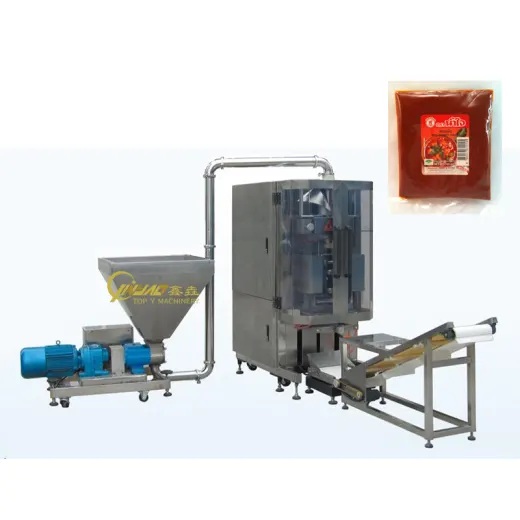
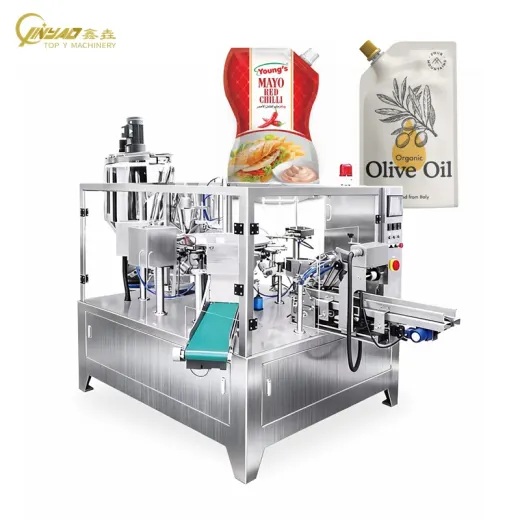
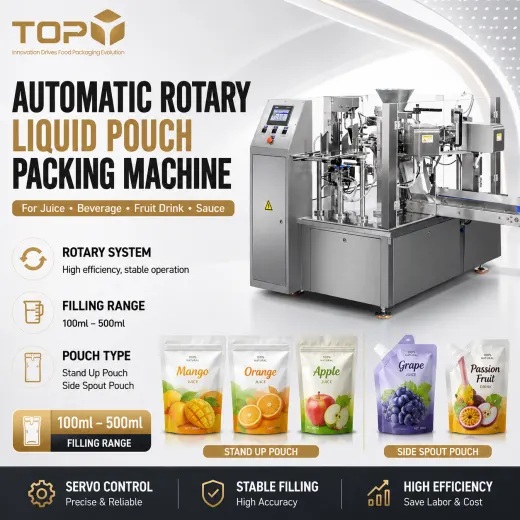
| Spout pouch | Liquids and pastes: juices, sauces, detergent, honey, edible oil | Spout welded into the pouch at manufacture; machine fills through the spout and applies a cap | Premade pouch machine with spout-insertion and capping stations | Within the 15–30 pouches/min premade band; confirm per product in writing |
| Retort pouch | Shelf-stable wet foods: ready-to-eat meals, soups, wet pet food | Seals must survive retort sterilisation; seal integrity must be validated, not assumed | Retort-grade premade pouch machines; downstream retort process is a separate validation | Within the 15–30 pouches/min premade band; confirm per product in writing |
Two rows deserve a comment. First, the same physical pouch — a stand-up doypack — appears in two rows, because what changes between them is the supply route: film your machine forms itself, or pre-made bags you buy by the thousand. That choice drives purchasing cost, changeover time and the machine family, and it is decided before any speed figure matters. Second, the retort row is the only one where the pack must survive a process that happens after packing; that is why seal validation, not speed, dominates its specification.
2. Barrier Materials and Sealing Windows
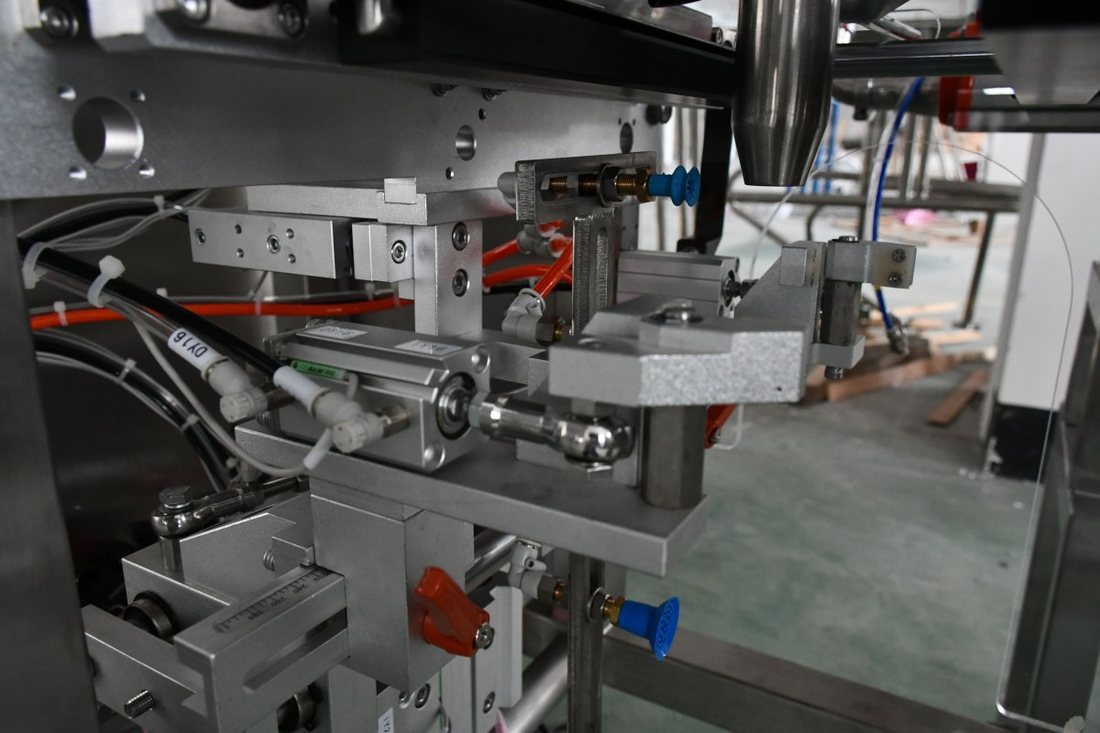
The sealant layer — the innermost film ply that melts and bonds — decides the sealing window, and the window is a set of three linked settings: jaw temperature, sealing pressure and dwell time. Pouches that look identical from the outside can require very different jaw temperatures depending on that inner ply, which is why the machine must offer independently adjustable temperature, pressure and dwell rather than a single combined setting.
TOP Y publishes two anchor windows buyers can use as orientation: kraft paper coffee bags seal at 140–160°C, while foil coffee bags seal at 180–200°C. The anchors also show why the sealant layer — not the visible outer layer — rules the setting: kraft looks like paper but seals on its inner laminate, and foil conducts heat with a window that shifts structure to structure.
| Pouch family | Barrier and structure points to confirm | Seal-related documents to request |
|---|---|---|
| Standard doypack (film or premade) | Approved laminate list, sealant layer specification, barrier requirement (oxygen, moisture, light) for the shelf-life claim | Seal window for the exact structure; peel-strength and leak test results on the buyer’s own film or pouches |
| Zipper doypack | Zipper material compatibility with the top-seal area; zipper position tolerance | Confirmation that jaw pressure and dwell can close through the zipper region without distortion |
| Spout pouch | Spout material and weld specification; cap torque range | Fill-through compatibility with the product’s viscosity; cap-application station specification |
| Retort pouch | Retort-grade laminate and sealant; foil or high-barrier layer per the shelf-life target | Seal-integrity validation method and records for pouches that have been through sterilisation |
Every new film or pouch structure should be validated with a seal-strength and leak test before production — the same rule TOP Y applies to its own material recommendations. If a supplier quotes a machine “for all pouches” without naming the structures it validated, treat that as an unfinished specification. Food-contact documentation belongs in the same envelope: the EU 2025/351 transition for food-contact materials ended on 16 September 2026, so a declaration of compliance and traceability documents for product-contact parts are current paperwork, not future paperwork.
3. Machine Compatibility by Pouch Type
The decision table’s fourth column is where budgets move. Three machine families cover the three pouch routes, and they differ in what the buyer supplies.
How each family handles a pouch:
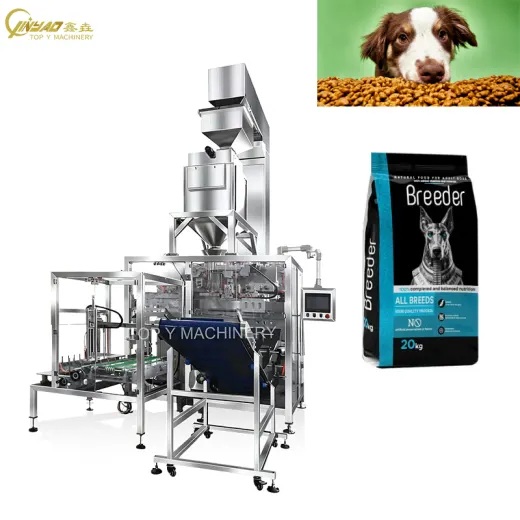
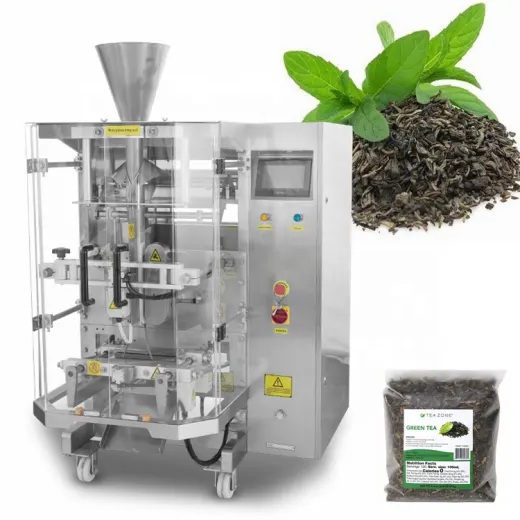
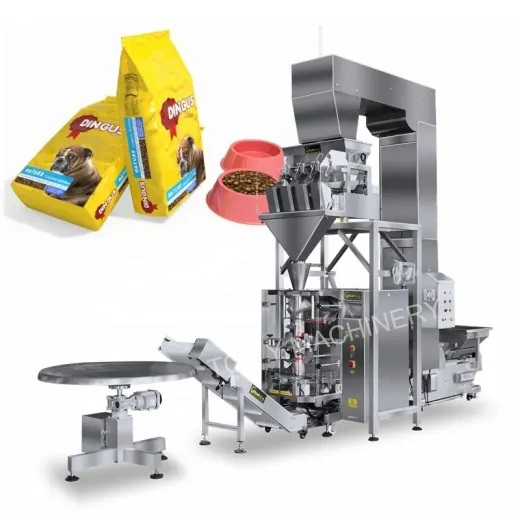
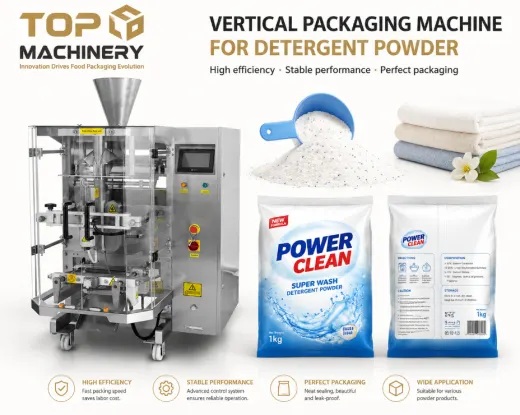
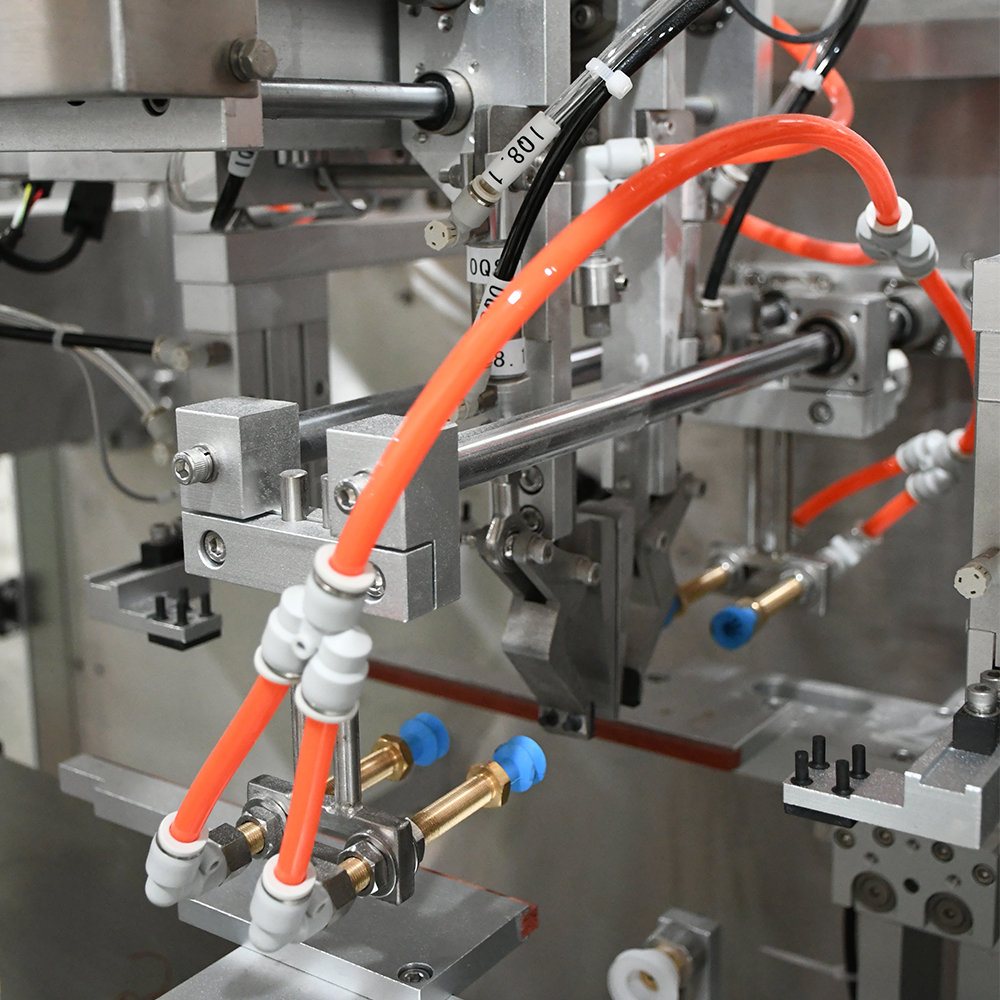
- VFFS — the machine makes the bag. Roll film is drawn over a forming tube, sealed fin-wise, filled and closed. Film cost per bag is low, but bag-width changes are hardware changes: TOP Y’s published changeover figures are 30–90 minutes for a bag-width change on a VFFS (forming tube and sealing jaws), against 1–2 minutes for a bag-length change, which is an HMI recipe. Many roasteries standardise one bag width precisely to keep that hardware change rare.
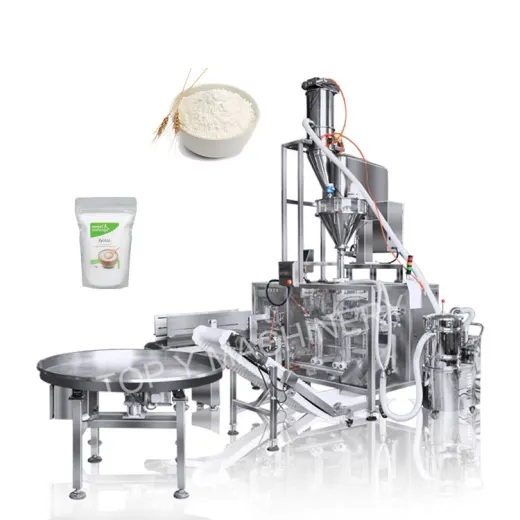
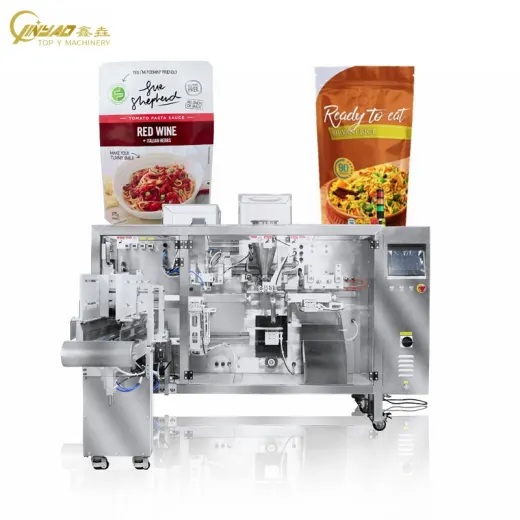
- Premade pouch (doypack) machines — the machine takes the bag. Ready-made pouches are loaded into a magazine, opened, filled and closed, typically on a rotary carousel. The published changeover is 15–30 minutes, because the bag geometry is fixed by the purchased pouch. The trade-offs run opposite to VFFS: higher purchasing cost per pack, faster changeovers, and access to premium formats (zipper, spout, shaped) that roll film cannot easily make.
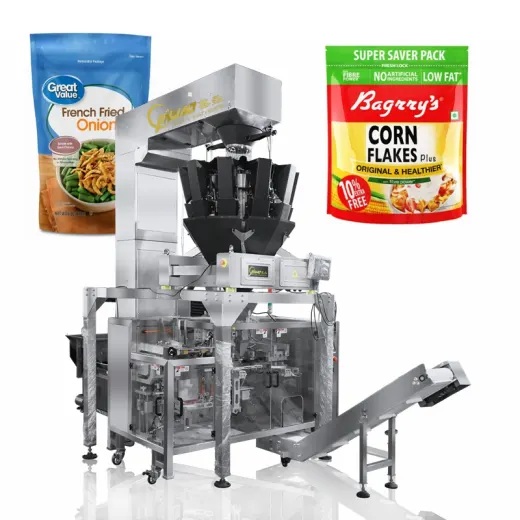
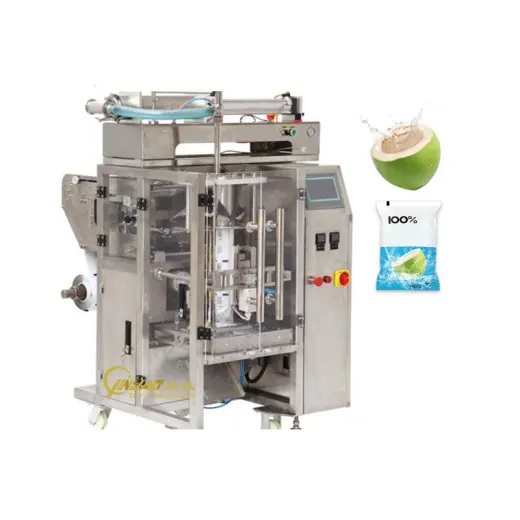
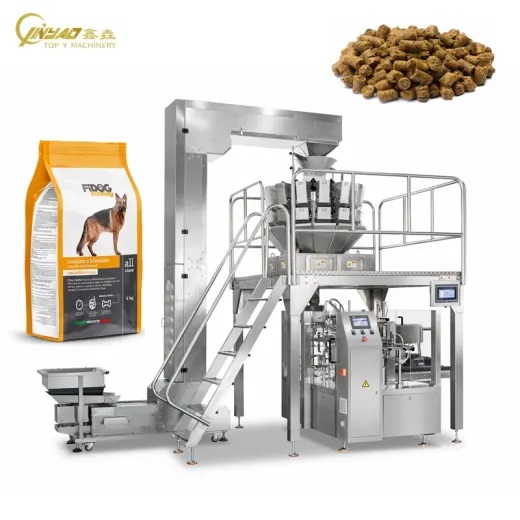
- Spout and retort configurations — the same family, specified harder. A spout pouch machine adds spout-insertion and cap-application stations to a premade pouch line; a retort configuration specifies retort-grade sealing hardware and validation. Both stay inside the premade-pouch machine family, inherit its 15–30 pouches/min band and changeover profile — and each needs its own written specification rather than a generic “pouch machine” quote.
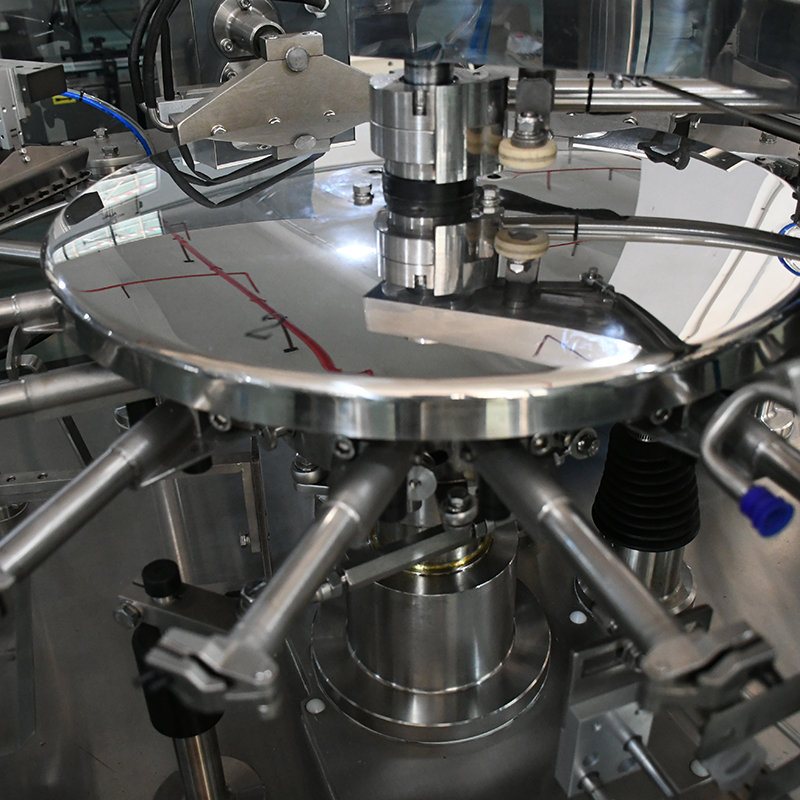
Compatibility is bidirectional: the pouch must suit the machine and the machine must suit the pouch. Supply physical samples of every pouch and film you intend to run — including the largest and smallest SKUs — and require the FAT to be run on those samples. A machine quoted on one nominal pouch size will accept others only with change parts, and those parts are a separate cost item.
4. Speed, Changeover and Cost per Pack
Speed figures only mean something when the product and bag are named alongside them. The published anchors below are measured on named products; a supplier’s “up to” number on an unspecified product is marketing, not a rating.
| Machine and product | Published speed anchor | Changeover anchor |
|---|---|---|
| Snack VFFS | 30–50 bags/min | Bag length 1–2 min (HMI recipe); bag width 30–90 min (hardware) |
| VFFS on 1 kg rice | 40–60 bags/min | Same VFFS changeover profile |
| VFFS on 25 kg bags | 8–12 bags/min | Heavy-bag handling hardware specified separately |
| Premade pouch / doypack line | 15–30 pouches/min | 15–30 min (bag geometry fixed by the purchased pouch) |
Note what the table does not contain: a speed number for spout or retort configurations as a family. They sit inside the premade-pouch band, but the actual figure depends on the spout-capping or retort-grade seal cycle, and it must be confirmed on your own product in writing. A supplier who quotes a single number for all three pouch types is quoting none of them.
Cost per pack follows the same product-anchored logic. TOP Y’s published worked example prices 1,000 250 g valve coffee bags on a VFFS line at about US$50–100: film at US$26 (6.2 g per bag at US$4.20/kg), a one-way valve at US$20–60, nitrogen at under US$1, and labour at US$3–14. That stack is specific to roll film on a VFFS. A premade pouch replaces the film-and-valve stack with a purchased pouch whose per-1,000 price is not a published figure — request it in writing from your pouch converter — but the published changeover gap in its favour is real: 15–30 minutes against 30–90 for a VFFS bag-width change, which converts directly into shift output when SKUs change often.
Accuracy belongs in the same comparison because rework and giveaway are per-pack costs too. TOP Y recommends specifying ±1 g net weight on a 250 g pack and ±2 g on 1 kg, and publishes ±0.5% fill accuracy for its liquid and paste dosing equipment. The published giveaway example is worth memorising: one extra gram per bag on 500,000 bags a year wastes about 500 kg of product, roughly US$4,000 at the product value in that example. The dosing system — weigher, auger or piston — is priced separately from the bag-making side, so compare it as its own line.
5. Shelf-Life and Process Requirements: Retort, MAP and Nitrogen
Shelf life is claimed on the pack but engineered in the process. Three mechanisms cover most food cases, and each adds a written requirement to the machine specification.
Three shelf-life mechanisms and what they require from the machine:
- Nitrogen flush and modified-atmosphere packing (MAP). The published worked example prices nitrogen at under US$1 per 1,000 250 g bags, so gas cost is trivial; the machine requirement is not — gas flushing must be an integrated, controlled station with the flow rate adjustable and recorded. Confirm in writing which stations perform the flush.
- Barrier laminate selection. Oxygen, moisture and light barriers extend shelf life without touching the process, but they move the sealing window (Section 2). Require the seal-window validation to be run on the exact barrier structure and thickness you will buy.
- Retort sterilisation. A retort pouch must survive a pressurised sterilisation cycle after packing, which stresses every seal and the laminate itself. The machine’s duty is to produce validated seals; the retort schedule itself — the temperature-and-time recipe — is a process validation owned jointly with the pouch maker and the retort processor. No generic number fits every product, so require the validated schedule and the seal-integrity test records as documents, and confirm the laminate is certified retort-grade before signing the machine order.
For spout pouches the shelf-life mechanism is usually barrier plus cap integrity: the spout weld and the applied cap are two additional leak points that a flat doypack does not have, so the written specification should carry leak-test acceptance criteria for both. For every pouch family, the food-contact paperwork travels with the material: declarations of compliance and traceability records for product-contact parts are standard requests under the current EU framework.
6. How to Turn This Table Into a Machine Shortlist
Once the pouch family is fixed, the machine shortlist follows from the supply route. The decision table converts into a four-step procurement sequence:
A four-step selection sequence:
- Fix the product state and shelf-life claim first. Write down the product’s physical form, its target shelf life and the mechanism that delivers it (barrier, MAP or retort). These three words — dry, liquid, retort — eliminate more machine models than any price comparison.
- Choose the supply route: film or premade. High-SKU-count lines with frequent width changes trend toward premade pouches for the 15–30 minute changeover; single-width, high-volume dry lines trend toward VFFS film economics. The mistake is choosing one and quoting machines from the other family.
- Demand product-anchored speed and accuracy. Require every supplier to restate their rating on your named product and pouch, and to state the net-weight tolerance as a number (±1 g on 250 g, ±2 g on 1 kg are the published recommendations). A rating on someone else’s product is not transferable.
- Attach the validation documents. Seal-window validation per structure, retort seal-integrity records where applicable, spout and cap leak tests, food-contact declarations, and FAT run on your own pouch and product samples. Documents, not promises.
Price bands exist for orientation, and TOP Y publishes indicative bands of $8K–$25K for VFFS, $12K–$20K for doypack and $30K–$60K for rotary machines; the spread inside each band is driven by the configuration choices this article lists — stations, dosing, spout hardware, retort-grade sealing, line integration. Automation context from the same sources: an 8–18 month payback and a 50–70% reduction in packing labour are class-level figures, not a forecast for your line. Any figure specific to your configuration — a speed on your product, a pouch price from your converter, a retort schedule — should be requested in writing rather than estimated from a band.
7. Frequently Asked Questions
Which pouch type should I choose for a dry snack product?
A standard doypack / stand-up pouch. If you run few bag widths at high volume, a VFFS machine forming bags from roll film uses the published snack anchor of 30–50 bags/min with the lowest film cost per bag. If you run many SKUs or premium zipper formats, a premade pouch machine trades higher purchasing cost for a 15–30 minute changeover.
Can one machine run doypack, spout pouch and retort pouch?
Not as one specification. Doypack and spout pouches share the premade-pouch machine family, but spout handling adds insertion and capping stations, and retort work adds retort-grade sealing with validated seal integrity. State all pouch types and SKUs at enquiry stage so the quotation includes every station and change part.
What speed should I expect on a premade pouch line?
TOP Y’s published band for premade pouch lines is 15–30 pouches/min. Spout and retort configurations sit inside that band, but the actual figure depends on your product, pouch and station cycle — require a written rating on your own product rather than a family-level number.
What makes a pouch retort-grade?
Three things together: a retort-certified laminate, seals that survive the sterilisation cycle, and documented seal-integrity validation. The exact sterilisation temperature-and-time schedule has no universal number, so require the validated schedule and test records as written documents before signing the machine order.
How do I compare cost per pack between roll film and premade pouches?
Compare like with like: TOP Y’s published example prices 1,000 250 g valve coffee bags on roll film at US$50–100 (film US$26, valve US$20–60, nitrogen under US$1, labour US$3–14). For premade pouches, obtain the per-1,000 pouch price from your converter in writing, then weigh it against the published changeover advantage of 15–30 minutes versus 30–90 minutes on a VFFS bag-width change, which matters more as your SKU count grows.
8. The Short Version for a Buying File
Reduced to four lines: the product state picks the pouch type; the supply route — roll film or premade — picks the machine family; the shelf-life mechanism adds the barrier, gas or retort requirement; and every speed, tolerance and seal claim gets restated on your own product and pouch before the order. Published anchors — 30–50 bags/min snack VFFS, 40–60 bags/min on 1 kg rice, 8–12 on 25 kg, 15–30 pouches/min on premade lines, kraft seals at 140–160°C, foil at 180–200°C — are orientation points from named products, not a substitute for a written rating on yours.
A buying file that contains the decision table, product-anchored speed and accuracy figures, the seal-window validation per structure and the retort validation documents is a file a production manager and a QA manager can both sign. One that contains a single machine model and a headline price is the start of a change-order conversation. Source every figure against TOP Y Machinery’s own published material on https://www.topymachinery.com, and request anything configuration-specific in writing.