Indonesia's Packaging Market in 2026: Steady Growth, Sachet Demand and a Cost Squeeze
Indonesia's packaging industry is expected to grow by about 5% to 6% in 2026, according to the Indonesian Packaging Federation (IPF). The demand behind that number is narrow and specific: e-commerce fulfilment and the national free-meal programme. The constraint is equally specific — converters are holding back capacity expansion as resin costs, weaker purchasing power and new environmental obligations squeeze margins. For equipment suppliers, including the Chinese manufacturers that now dominate Indonesia's import statistics, this is a market that rewards cost per unit rather than headline speed.
Indonesia packaging market at a glance
- Forecast growth, 2026
- About 5% to 6% in market value, per the Indonesian Packaging Federation
- Demand engines
- E-commerce fulfilment and the national free-meal programme (MBG)
- Food & beverage share
- Roughly two-thirds of primary packaging offtake
- Flexible packaging share
- An estimated 40% to 45% of primary packaging volume
- Cost pressure
- Plastic resin prices rose by as much as 200% during the recent global naphtha supply disruption
- New compliance load
- Extended Producer Responsibility rules, single-use plastic restrictions and mandatory halal certification
- Equipment imports
- Imported machines account for an estimated 70% to 80% of automatic packing equipment value
- China's share
- 71% of Indonesia's imports of filling, closing, sealing and labelling machinery (HS 842230), Aug 2025 – Jul 2026
- ALLPack Indonesia 2026
- 20–23 October 2026, JIExpo Kemayoran, Jakarta — 42 countries, 1,600+ exhibitors, 25th edition
Growth that is steady rather than spectacular
Indonesia is the largest packaging market in Southeast Asia, and the 2026 outlook keeps it in positive territory — but the character of the growth has changed. IPF director Henky Wibawa described the current phase as one in which most companies are shifting focus from adding capacity to improving cost efficiency and aligning output with actual demand. The reasons he gave were precise: uncertainty in raw material prices, the risk of weakening consumer purchasing power, and the cost of meeting environmental regulation.
That combination produces a market that rewards equipment lowering unit cost, cutting waste and shortening changeover, rather than equipment adding headline speed. A converter running at partial utilisation gains nothing from a faster line; a line that wastes less film and needs fewer operators gains a great deal.
Two demand engines doing the heavy lifting
The first is e-commerce. Indonesia is the region's largest online retail market, and every order creates demand for corrugated cases, protective wrapping and mailer formats. The second is the national free-meal programme, known as MBG, which the government expanded nationally from January 2026 toward roughly 55 million beneficiaries, with a longer-term target of about 82.9 million. The programme runs through thousands of community kitchen units, each of which needs portioned, sealed and traceable food packaging.
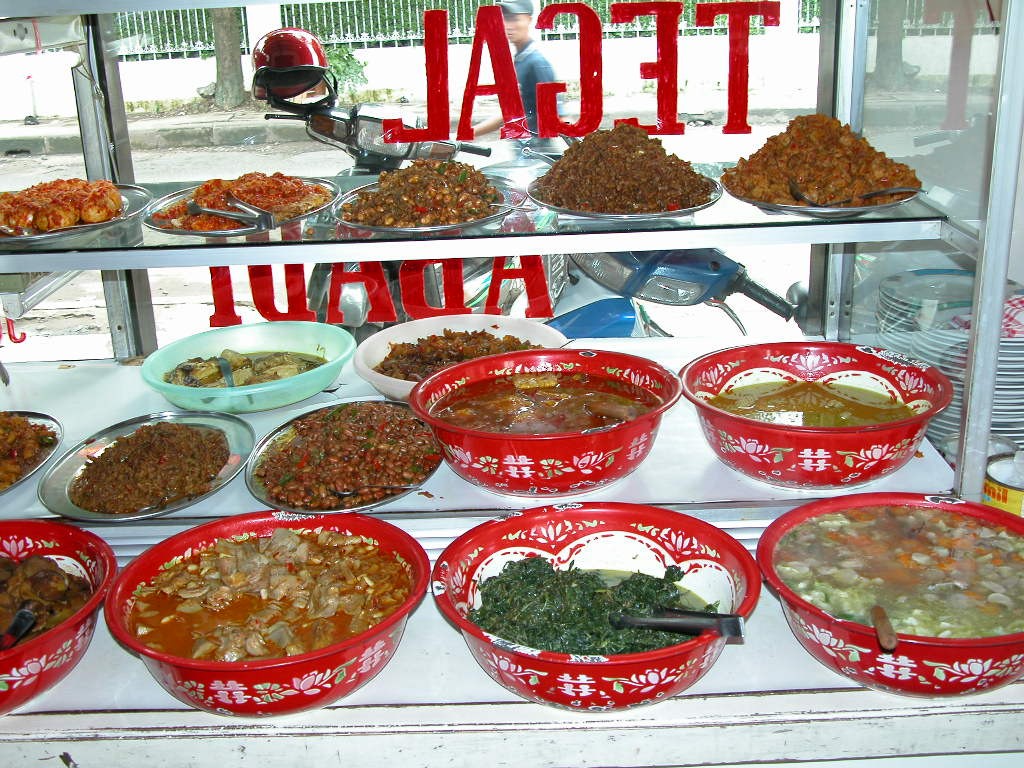
IPF's framing puts the requirement at around 190 million meal portions a day at full scale — a volume that cannot be met by manual packing. That is why the demand is not simply for more packaging but for a wider range of formats: single-serve pouches, sealed trays, sachets and small-format bags suited to portion control and distribution across an archipelago.
The sachet format is not new to Indonesia. From instant coffee to seasonings and snacks, small-format pouch packaging has been the default for decades. What the meal programme does is extend that logic from consumer retail into institutional volume.
Cost and compliance are the new constraints
Two pressures shape purchase decisions in 2026. The first is material cost. The global naphtha supply disruption pushed plastic resin prices up by as much as 200%, and although prices have begun to correct, the inflation has already passed through production costs. For a converter, film waste becomes a direct margin issue rather than an abstract efficiency metric.
The second is regulation. Extended Producer Responsibility obligations and restrictions on single-use plastics require investment, and mandatory halal certification now covers food-contact packaging materials, not only the food itself. In practice, documentation, traceability and cleanable machine design have moved from desirable to specified.
- Waste reduction — film and pouch scrap is now priced into every quotation.
- Traceability — date coding, batch records and output logging are increasingly expected.
- Hygiene and cleanability — stainless construction and accessible contact surfaces support halal and food-safety audits.
- Changeover speed — plants running several SKUs on one line need fast, repeatable format changes.
Why Chinese manufacturers are the default supplier
Indonesia does not build enough packaging machinery domestically to meet its own demand. Automatic packing machines are overwhelmingly imported, and the mid-range segment — where most Indonesian food producers actually buy — is dominated by Chinese suppliers.
The trade data is unambiguous. Over the twelve months to July 2026, Indonesia imported US$280.2 million of filling, closing, sealing and labelling machinery under HS 842230, up 35.7% year on year. China supplied 71% of that value at US$199.1 million. Japan followed at 7.9% and Germany at 4.5%. Indonesia's imports in this category grew 14.6% in the first seven months of 2026 alone.
That dominance is structural rather than promotional. It reflects price, delivery lead times measured in weeks rather than quarters, and a service model built around sellers who can supply spare parts without a European lead time. It also reflects specification fit: Indonesian producers buy mid-range machines that run the pouch formats their own market already uses.
This is the commercial reality behind the crowded Chinese presence at Indonesian trade shows. In October, about 1,600 exhibiting companies from 42 countries gathered at JIExpo for ALLPack Indonesia 2026, and Chinese food packaging machinery manufacturers formed one of the largest national groupings on the floor — alongside Japanese, Korean, German and Italian exhibitors — with doypack, premade-pouch, filling and sealing lines aimed squarely at mid-sized local producers.
On the floor: TOP Y Machinery as one example
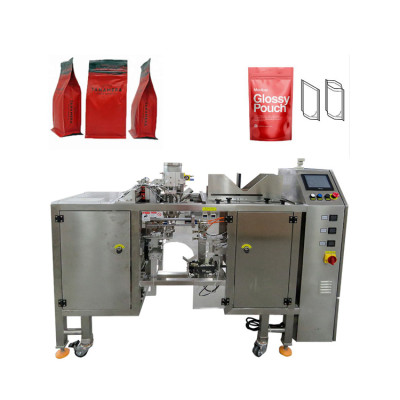
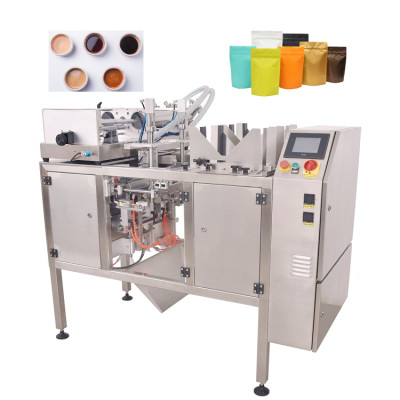
Among the Chinese exhibitors, TOP Y Machinery is a useful illustration of how the supplier base actually operates in this market. The company runs a premade-pouch and doypack range across horizontal, rotary and linear platforms, covering granular, powder and liquid formats — the middle of the specification range where most Indonesian buyers sit.
At ALLPack Indonesia 2026, held from 20 to 23 October at JIExpo Kemayoran, TOP Y showed its 3 Station Horizontal Packing Machine to buyers from Indonesia and neighbouring markets. The company reported its strongest result at a Southeast Asian exhibition to date, with enquiries converting into technical discussions at a higher rate than at previous regional shows.
Three questions recurred in those conversations, and they map closely onto the market conditions described above. Buyers asked about format flexibility first — whether one line could run a stand-up pouch, a zipper bag and a gusseted format without a rebuild. They asked about audit documentation second, specifically what evidence the machine produces for halal and food-safety checks. They asked about service third: how quickly a spare part reaches Jakarta, Surabaya or Medan, and whether an engineer can be on site in days rather than weeks.
The company's response has been to configure formats around the pouch types Indonesian brands already specify, prepare machine documentation to support customer audits, and expand after-sales coverage so that service capacity keeps pace with the order book.
For the full account of that exhibition — the machines shown, the buyers met and the outcomes reported — see our previous report: Successful Participation at ALLPack Indonesia 2026 in Jakarta.
What to watch into 2027
Three things will determine whether Indonesia's 5% to 6% growth holds. The first is resin pricing — a return to the volatility of the past year would push converters back into deferring investment. The second is how quickly the meal programme's packaging requirements standardise; a settled specification would unlock larger, repeatable orders. The third is regulatory clarity on Extended Producer Responsibility, which several producers have cited as a reason to delay capacity decisions until the rules are fixed.
For equipment suppliers, the signal is consistent across all three. The market is buying answers to cost, compliance and service, not headline speed. The next edition of ALLPack Indonesia is scheduled for 12–15 October 2027 at the same venue.
Sources and notes: market growth, demand drivers and cost pressures are attributed to the Indonesian Packaging Federation as reported in Indonesian trade press during 2026. Programme scale figures follow Indonesian government statements on the MBG programme. Import values, growth rates and supplier shares follow UN Comtrade-based trade data for HS 842230. Exhibition details follow the organiser's published information for ALLPack Indonesia 2026. TOP Y Machinery's exhibition activity and results are the company's own account. Photographs are reproduced from Wikimedia Commons under the licences stated in each caption.