EU 1935/2004 and FDA Food-Contact Compliance: What Changed for Packaging Equipment in 2026
Foshan, 2 November 2026 — Two regulatory tracks that matter to food packaging equipment moved substantially this year, and they are moving in opposite directions. In the European Union the 19th amendment to the Plastics Regulation, Regulation (EU) 2025/351, completed its transition on 16 September 2026, so plastic food-contact articles placed on the EU market from that date must meet the new purity and non-intentionally-added-substance (NIAS) requirements and must carry a declaration of compliance that says so. In the United States no statute has been passed, but 35 perfluoroalkyl (PFAS) grease-proofing food-contact notifications stopped being effective in January 2025, and a widening set of state laws now sits alongside the federal substance-by-substance system.
For a company buying or building packaging machinery, the practical consequence is narrower than the headlines and more specific than most suppliers state: the compliance question has moved from the machine's machinery certificate to the machine's food-contact parts and to the film or pouch that runs in it.
What Entered Force, and What Ends on 16 September 2026
Regulation (EU) 2025/351 was adopted on 21 February 2025 and has applied since 16 March 2025. Its transitional measures are what most supply chains are still working through.
- High degree of purity. A new Article 3a, read with the revised Article 8.1, requires that only substances with a high degree of purity — including substances produced from waste — be used where they are expected to remain present in the final plastic. The criteria for judging purity rest substantially on what else is present in the substance.
- NIAS in the declaration of compliance. The declaration must now carry the additional information needed to demonstrate food safety, including where relevant information on non-intentionally added substances, on material intended for reprocessing, and on the use of substances manufactured from waste.
- Multi-layer and multi-material articles. Overall and specific migration limits apply where the surface layer in contact with food falls within scope — which, for a laminate pouch, means the sealant layer.
- Two transitional deadlines. Substances and intermediate products first placed on the market after 16 December 2025 that do not comply must say so in their declaration, and must state that they may only be used to manufacture articles placed on the market before 16 September 2026. Articles first placed on the market before 16 September 2026 may continue to be placed on the market until stocks are exhausted.
The distinction that catches late movers: the transition protects existing stock. It does not protect a new production run.
The Two February 2026 Amendments
Both were adopted on 2 February 2026 and both are easy to overlook because neither is a headline ban.
Regulation (EU) 2026/245 — the Union list moves
This one amends Annex I of Regulation (EU) No 10/2011, authorising several substances following EFSA opinions published in 2024 and replacing an existing entry. The newly authorised substances are additives and nucleating agents for polyolefins, each carrying specific restrictions: a maximum concentration in the material, restrictions on the food types they may contact — infant formula and human milk are excluded — storage conditions, and in one case a cap on the low-molecular-weight fraction below 1,000 Da.
The instruction for buyers is unglamorous but concrete: where a film or closure contains a substance whose authorisation or restriction was changed by this amendment, the declaration of compliance already on file may be describing conditions that no longer apply. An updated declaration should be requested rather than assumed.
Regulation (EU) 2026/250 — the bisphenol A timetable tightens
Regulation (EU) 2024/3190 restricts bisphenol A in food-contact materials. The 2026 amendment adjusts it in four ways that affect project planning:
- The reusable-article transition was pulled forward. Reusable food-contact articles first placed on the market before 20 July 2026 now have until 20 July 2027, rather than the later date originally scheduled. Planning that assumed the later endpoint is now wrong by roughly eighteen months.
- Food-production equipment keeps the later endpoint. Reusable food-contact articles used in food production, first placed on the market before 20 January 2028, retain the 20 January 2029 deadline.
- The single-use transition narrowed. It now applies only to articles first placed on the market before the cut-off, closing a reading that could have covered repeat placements.
- The declaration scope was corrected. Operators no longer have to disclose every upstream and downstream material in a single document; the declaration covers the material at the stage issuing it. That reduces paperwork and raises a diligence question: a clean declaration from a converter no longer implies anything about the converter's own suppliers.
United States: No Ban, but Three Moving Parts
The American system is structurally different from the EU's, and the difference is commercial rather than academic. In the EU, Regulation (EC) No 1935/2004 sets general safety requirements and the specific measures provide positive lists, so a substance is usable because it appears on a public list. In the US, food-contact substances are regulated as indirect food additives through three routes: the listings in 21 CFR Parts 174 to 178, older prior-sanctioned substances, and — for anything new — a Food Contact Notification under section 409(h)(6) of the Federal Food, Drug and Cosmetic Act.
PFAS: administrative removal rather than legislation
In February 2024 the FDA announced that all grease-proofing agents containing PFAS were no longer being sold in the US market, following voluntary phase-outs negotiated with the authorisation holders. In January 2025 the agency issued a Federal Register notice determining that the 35 food contact notifications covering PFAS-based grease-proofers for paper and paperboard packaging are no longer effective, on the ground that the underlying uses had been abandoned. In June 2026 the FDA declined a petition asking it to set advisory thresholds for PFAS in certain foods, stating that it continues to consider action levels for some products.
The lesson travels beyond PFAS: an authorised food-contact substance can leave the market through an administrative notice without any statute being passed. A compliance file that records "substance was authorised" without recording under which route, for which manufacturer, and for which conditions, will not survive that kind of change.
The FCN ownership trap
An FCN is effective only for the manufacturer identified in it. It is not a public authorisation that any downstream user may rely on, and it is not transferable. A pouch or film converter who shows a notification belonging to a manufacturer they do not buy from has shown a document that does not cover the material in the pack.
State law and pending federal bills
As of December 2025, 14 US states had enacted laws restricting PFAS in food packaging, with effective dates and scope varying widely. Two federal bills were introduced in mid-2026 — the No Toxic Chemicals in Food Packaging Act (H.R. 9231) in June and the Keep Food Containers Safe from PFAS Act (H.R. 9864) in July — both seeking to restrict PFAS in food packaging. Neither had been enacted at the time of writing.
What This Changes for a Packaging Machine Buyer
Three questions become worth asking at specification stage rather than at customs.
Which parts of the machine are food-contact materials?
The answer is longer than most quotations imply: product-contact stainless, elastomer seals and gaskets, sight glasses, hoses and tubing, any non-stick coating, and on some lines the lubricant in a food-zone gearbox. Each is a material with its own declaration, and in the EU each falls under the framework of Regulation (EC) No 1935/2004 independently of whether the whole assembly complies as machinery. Our earlier compliance guide to FDA, EU 1935/2004 and food-contact materials sets out which declarations apply to which part of a packaging line.
Whose declaration covers the film or pouch?
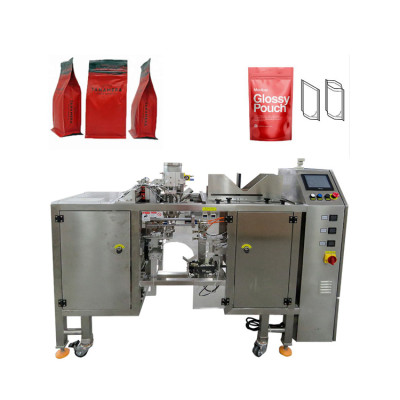
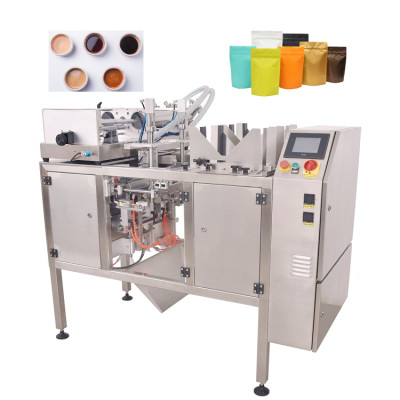
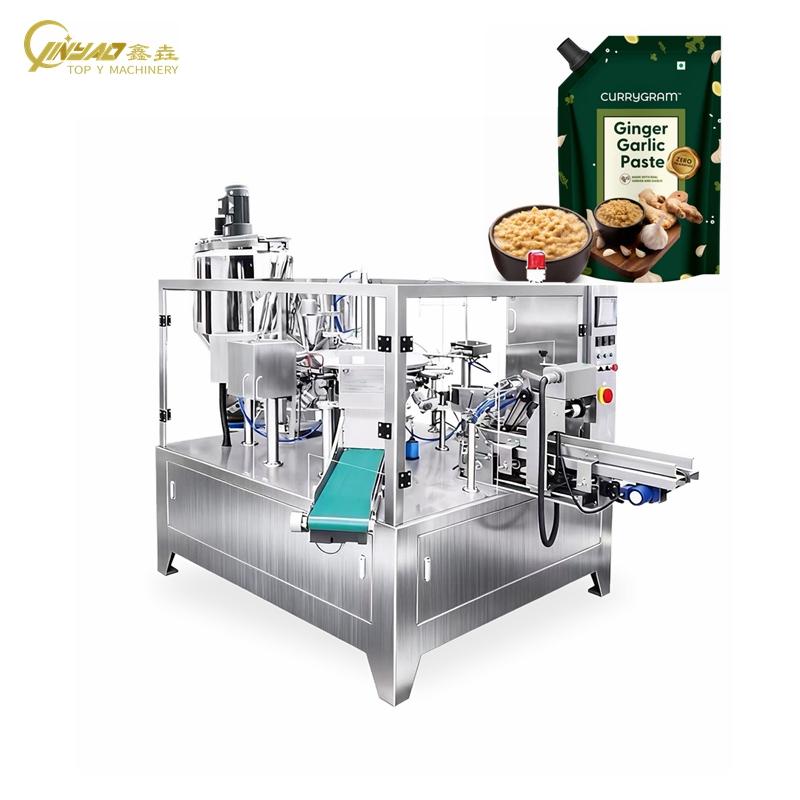
For a vertical form fill seal line the film is bought separately and the food touches its sealant layer. For a premade pouch line the pouch arrives already converted. In both cases the material declaration belongs to the material supplier, and the machine builder's documentation does not substitute for it. A specification that says "food-grade" without naming the material and the regulation it is declared against has not specified anything testable.
Does the compliance file survive a substance being removed from the market?
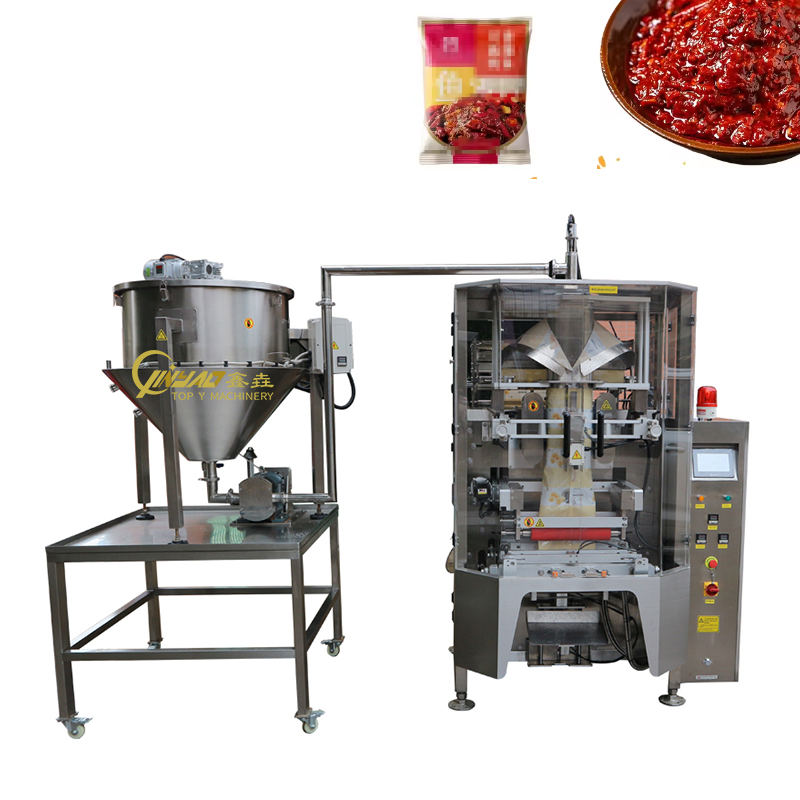
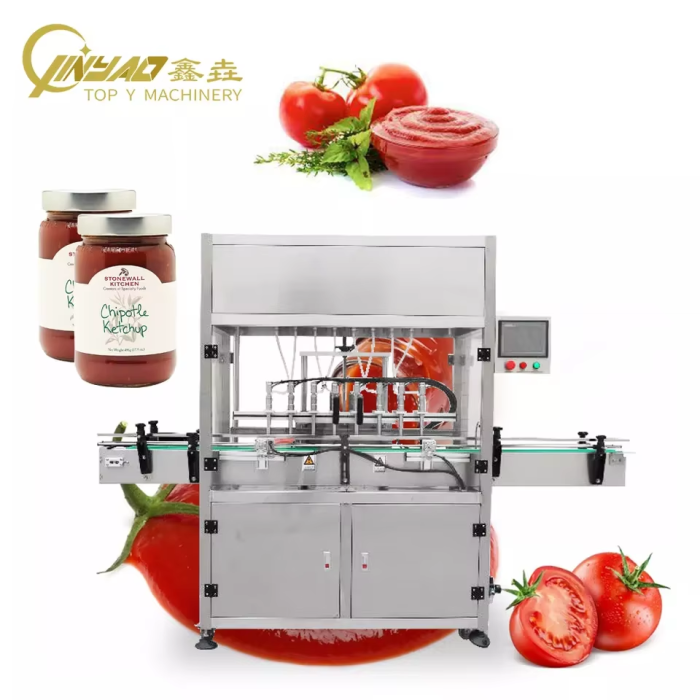
This is the question the PFAS notices made unavoidable. A file that records the authorisation route, the exact manufacturer, the use conditions — food type, time and temperature — and the date of the underlying opinion can be reviewed quickly when a substance is questioned. A file that records only the trade name of a material cannot. For lines handling sauces and condiments, where salt, acid and hot fill combine, the sauces and condiments packaging solutions page sets out the machine configurations and the contact materials involved.

What Is Still Uncertain
- Neither US federal PFAS bill was enacted at the time of writing, and their eventual scope, thresholds and effective dates are not settled. State-level requirements already in force differ enough that a single national specification is not yet possible.
- US action levels for PFAS in food were still under consideration rather than adopted; the June 2026 petition was declined, not the underlying question answered.
- EU guidance continues to evolve. The 19th amendment's purity criteria will be applied through guidance and through the assessment practice of suppliers and laboratories, and the boundary between an adequate and an inadequate NIAS statement is unlikely to be uniform across the supply chain in the first year.
- The recycled-plastics track runs in parallel under Regulation (EU) 2022/1616, amended by the same 2025/351 instrument, with its own authorisation steps for recycling processes. It is not covered in detail here.
Sources and Status
This report draws on primary documents — the consolidated texts of Regulation (EU) No 10/2011 and Regulation (EC) No 1935/2004, Commission Regulations (EU) 2025/351, 2026/245 and 2026/250, and 2024/3190 as published in the Official Journal; FDA announcements and Federal Register notices on PFAS grease-proofing agents; and the congressional texts of H.R. 9231 and H.R. 9864. The count of US state laws in force as of December 2025 is taken from a published legal sector summary rather than from a primary compilation, and should be verified state by state before relying on it for a shipment.
Status: updated 2 November 2026. This article describes regulatory developments and their practical implications for packaging equipment; it is not legal advice, and the applicable text, guidance and national implementing measures in the destination market govern. Where a specific shipment, material or market is involved, the determination should come from the material supplier's declaration and, where appropriate, from a regulatory specialist.