Leading Manufacturer of Intelligent Food Packaging Machinery

5 kg Protein Powder Packaging Line, Germany: Taking the Hand Out of the Scoop Station
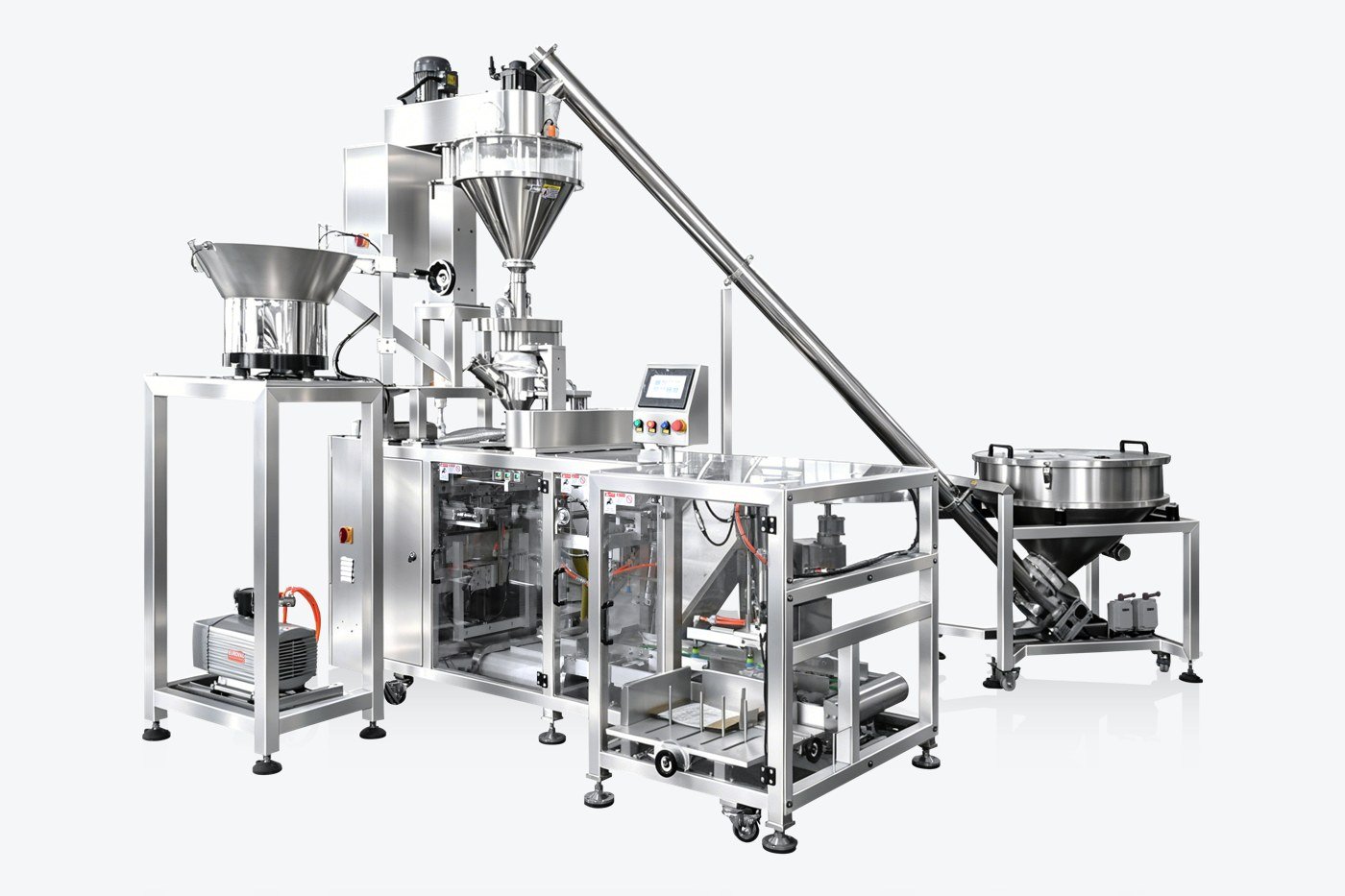
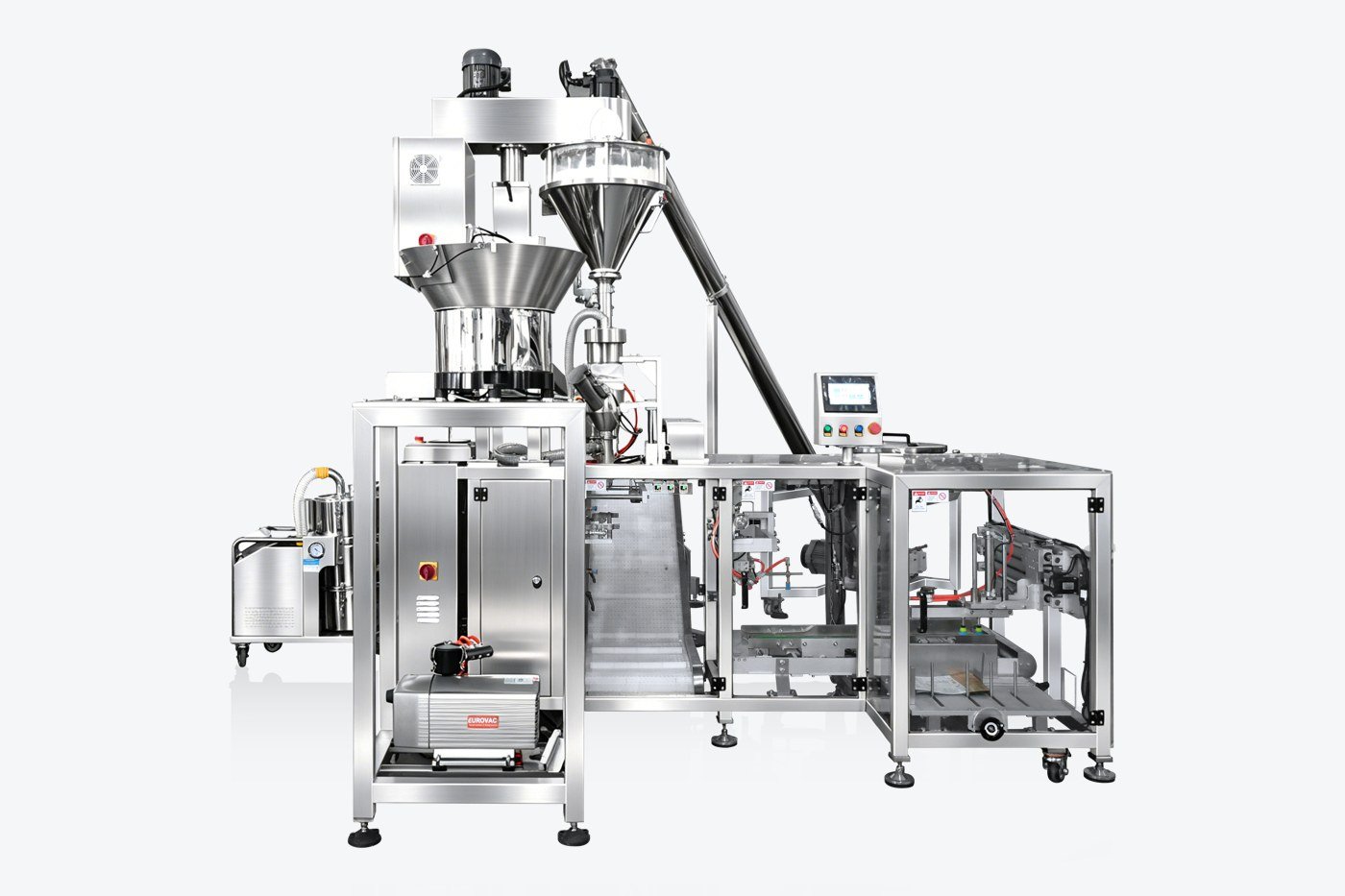
In 5 kg protein powder packaging, sealing takes a second; the scoop takes a person. At a health supplement plant in Germany, an operator placed one scoop into every bag, by hand, one bag at a time. Around the filling point, fine powder escaped into the air. The brief lists three complaints in a single line: slow packing, heavy dust, and the manual scoop. They are not three separate problems. They are one cycle held up by two manual jobs. The customer's recorded pain point: slow packing, heavy dust, and placing scoops into bags one by one. What follows is our engineering reading of that pain point, not a statement made by the customer. In powder packaging machinery, fine powder behaves differently from kibble. It aerates, it clings, and it settles on the very surfaces a bag seal has to close cleanly; dust at the fill point therefore costs cleaning time as well as housekeeping. Meanwhile the scoop adds a repetitive, zero-value motion to every single cycle. Fitting a faster filler would not have helped: the line would still wait for a hand to drop a scoop, and would still stop for clean-down. The auxiliary stations, not the dosing screw, were setting the pace. Four conditions, one of them easy to overlook: the scoop is a packaging component, and it has to be handled with the same repeatability as the dose. On a protein powder packaging line, gravity feeding is a poor fit for a fine, dusty powder: flow is less predictable, and every open transfer is a chance to raise dust. An auger filler meters the 5 kg dose with a controlled screw, fed by an enclosed screw conveyor from the infeed hopper. A dust extraction unit collects airborne powder at the filling station while the line runs. Treating extraction as a line component rather than as a cleaning routine is what keeps the bag and sealing area in condition for a continuous cycle. The third decision was the scoop itself. An automatic scoop dispenser — a vibratory bowl that orients the scoops — releases one into each bag, synchronised with the bag cycle. That removes the last purely manual motion in the sequence — and, with it, the reason the line had been waiting. The premade bag packaging machine ties eight stations into one timed cycle: See the protein powder bagging cycle in motion A protein-powder bagging cycle on camera: controlled screw dosing into a premade bag, followed by sealing and discharge. It is the same machine family behind the dosing and bag-handling stations in Step 3–4 above. Reference footage from the TOP Y MACHINERY channel (Protein Powder Packaging Machines). It illustrates the machine type rather than documenting this installation, and is not a measurement of output or dust levels. The operator no longer reaches into a bag. Powder goes into the hopper; dosing, scoop placement, bagging, sealing and discharge run as one cycle; finished 5 kg bags are cleared from the collection table at a rhythm the machine sets. The customer's own summary of the result: one person now completes the whole process, from pouring powder in, through scoop insertion, to the final seal. Commissioning was supported remotely by our after-sales engineers, and the customer specifically called out how timely that guidance was. On health supplement packaging machinery with this many linked stations, being able to resolve a setting quickly is part of keeping the cycle steady. The commissioned line runs at 5–6 bags per minute at 5 kg, with one operator covering feeding through scoop insertion to final sealing. By calculation that is about 1.5–1.8 tonnes per hour — a derived figure, not a measured throughput. The project record contains no pre-installation baseline, dust concentration readings, weighing tolerance or reject rate, so no percentage improvement and no dust-reduction figure are quoted. What we deliberately do not claim: dust removal efficiency, weighing accuracy, reject rate, cleaning-time savings, OEE or payback. Those numbers require measurements the project record does not contain. Typical fit: a protein powder packaging line built around the MDPS packing machine for fine powders in 5 kg-class premade bags with an in-bag scoop. Flowability varies widely between whey, casein and blends with inclusions, and the achievable rate depends on the formulation, bag format and target weight. We confirm the cycle with a sample trial before quoting a number. Share your powder sample, bag specification and target output, and our engineers will map a line against the same logic — including where the scoop station belongs in your cycle.01 A hand in every bag
02 Reading the bottleneck
03 The brief, written as acceptance criteria
04 Why auger dosing — and why extraction is part of the line
05 Inside the line
06 What changed for the operator
07 Results, with the same evidential discipline
Measure
Before
After
Basis
Cycle rate
Not recorded in the project brief
5–6 bags/min at 5 kg
Project brief
Scoop placement
Manual, one per bag
Automatic vibratory bowl dispenser
Brief + visuals
Dust at the fill point
Reported as heavy; no measurement
Extraction unit built into the line
Brief + engineering reading
People on the sequence
Not quantified
1 operator, infeed → sealed bag
Project brief
Derived throughput
—
≈ 1.5–1.8 t/h
Calculated from pack weight × cycle rate
08 How the customer described it
Feedback from the plant was notably understated: the installation has settled into a stable rhythm with no drama, and remote assistance from our after-sales engineers has consistently arrived promptly whenever a setting needed checking.— Customer feedback, project brief
09 Three things this project teaches
10 Where this configuration fits — and the next step