Leading Manufacturer of Intelligent Food Packaging Machinery

20 kg Dog Food Packaging Line, Poland: How One Operator Replaced a Manual Bagging Crew
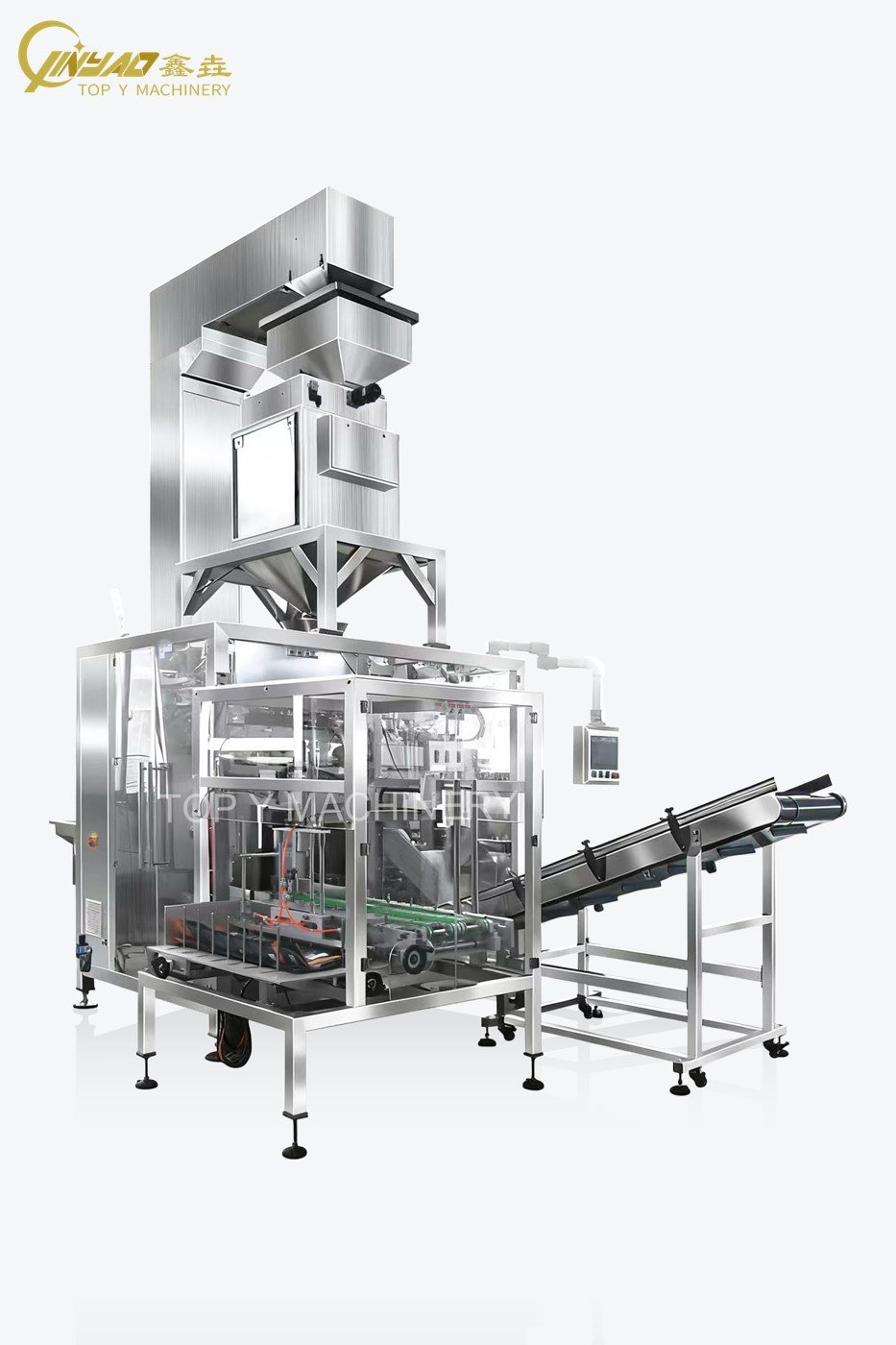
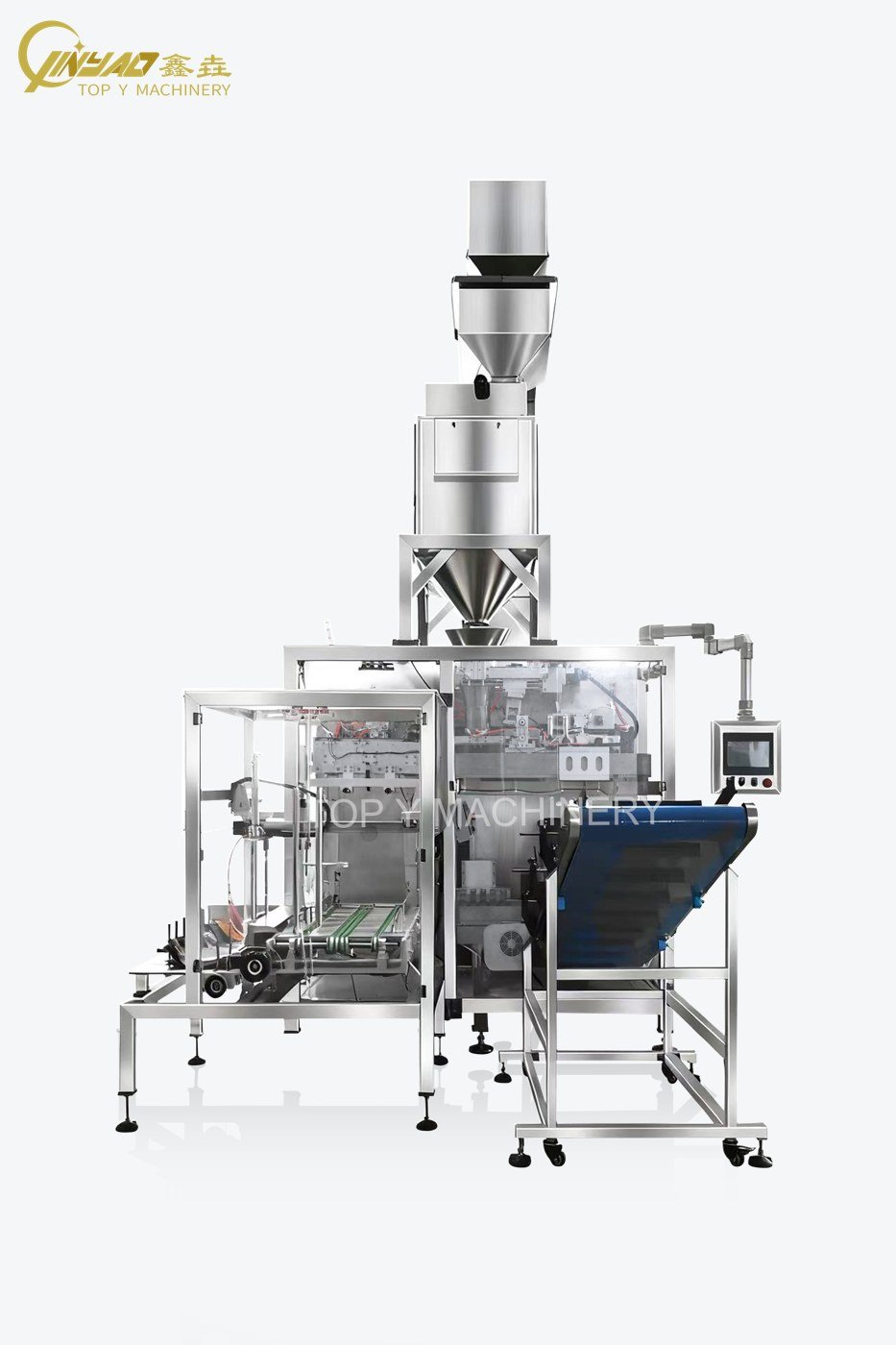
Watch a manual 20 kg bagging station and the slowest movement is not the weighing. It is a person steadying a large bag, holding it square under the filler, then moving a sealed 20 kg bag clear before the next cycle can start. Product can be dosed in seconds. The bag has to be handled by hand, twice, every time. That was the problem put to us by a pet food manufacturer in Poland. The plant runs a 20 kg dog food packaging operation — dry kibble in 20 kg bags — and the brief was blunt: at that weight, packing was awkward and slow. The kibble itself was not the difficulty. The format was. The customer recorded one pain point: packing a 20 kg bag was inconvenient and slow. What follows is our engineering reading of that pain point, not a statement made by the customer. A manual 20 kg cycle is a chain of hand-driven steps: position the empty bag, dose and check the weight, square the bag for sealing, seal it, then move it away. Each step waits for the previous one, and every step involves the same heavy bag. Output is therefore capped by how fast a person can manage 20 kg repeatedly, shift after shift — not by how fast the product can be weighed. Adding a second pair of hands at the sealer helps with the lifting, but it does not shorten a serial, manual cycle. It also makes consistency depend on who is on the shift. Reduced to what a dog food packaging machine actually had to do, the requirement was unusually clear: That is the specification we designed against. On a pet food packaging line handling free-flowing dry kibble, dosing is the easy part: in a granule packaging machine built around a gravity weigher, the product feeds itself under gravity and the weigh hopper can be matched to the target weight. Buying a faster weigher would simply have moved the bottleneck one metre downstream, to the bag. So the line was specified around material flow instead of around a machine's nameplate speed: lift the product, dose it, open and fill the bag, seal it, and remove it — without a human hand between any two of those steps. The MDPL packing machine sits at the centre of that flow, but the decisions that made the cycle work are the interfaces on either side of it. The line is a premade bag packaging machine with six linked stations, running one continuous cycle from infeed to discharge: See the 20 kg bag cycle in motion The six steps above are easier to read in motion: bag pick-up and opening, filling, sealing, then powered discharge, as one continuous machine cycle. Equipment footage from the TOP Y MACHINERY channel (20kg Premade Bag Packing Machine For Dog Food). It shows the machine type and the bag cycle, not the customer's plant, and is not a measurement of output. Before, the operator's pace was the line's pace. Now the machine sets the rhythm: tip product into the hopper, monitor the target weight and the bag station on the HMI, and take finished bags away as the conveyor presents them. The two moments that used to cost the most time — holding a heavy bag open during filling, and clearing it after sealing — are inside the machine cycle. The customer's own summary of the change is succinct: one person can now complete the entire process, from pouring product in to the finished, sealed bag. Commissioning was supported by our after-sales engineers remotely, and the customer specifically noted how promptly that guidance arrived. The commissioned automatic bagging line runs at 6–8 bags per minute at 20 kg, with one operator covering feeding through final sealing. At the recorded bag weight that is about 7.2–9.6 tonnes per hour by calculation — a derived figure, not a measured throughput. No pre-installation output was logged in the project record, so we quote the achieved rate rather than a percentage improvement. What we deliberately do not claim: labour cost savings, weighing tolerance, reject rate, OEE, payback period or a before/after uplift. None of those were measured or supplied. A like-for-like comparison needs baseline data from the plant. Typical fit: a pet food packaging line for dry, free-flowing kibble in large premade bags, where the current bottleneck is manual bag handling rather than dosing. Achievable cycle rate depends on bag format, product flow characteristics and target weight, so we confirm it with a sample trial before putting a number into a proposal. If you are weighing the same decision, send us your product, bag specification and target output; our engineers will lay out a comparable large bag packaging line and set up a trial plan against the same logic.01 The moment that sets the pace
02 What "slow" actually meant
03 The brief, written as acceptance criteria
04 Why we did not start with a faster weigher
05 Inside the line
06 What the operator's shift looks like now
07 Results, and what the record actually supports
Measure
Before
After
Basis
Cycle rate
Not recorded in the project brief
6–8 bags/min at 20 kg
Project brief
People on the packing sequence
Not quantified; manual multi-step handling
1 operator, infeed → sealed bag
Project brief
Handling of the 20 kg bag
Hand-positioned, sealed and cleared
Automatic bag cycle + powered take-away
Engineering reading
Derived throughput
—
≈ 7.2–9.6 t/h
Calculated from pack weight × cycle rate
08 What the plant team told us
The plant team's read on it was refreshingly plain: the new line just keeps running, steady shift after shift. What they brought up just as often was the support — whenever a question came up, our engineers were on a remote session straight away, so nothing was left waiting.— Customer feedback, project brief
09 Three things this project teaches
10 Where this configuration fits — and the next step