What is the Best Coffee Bean VFFS Packing Machine for Your Business? A TOP Y MACHINERY Guide
As coffee experts, we understand that fresh coffee isn't just a preference; it's a promise. The right packaging is essential to preserving that promise, keeping every bean and every grind perfectly fresh. Choosing the optimal coffee bean VFFS packing machine is more than just selecting equipment; it's about safeguarding your product's flavor, enhancing operational efficiency, and positioning your business for growth in a competitive market. Let us, your trusted guide at Top Y Machinery, walk you through the advanced features and significant benefits of modern Vertical Form Fill Seal (VFFS) packing technology, helping you pinpoint the ideal machine that aligns with your unique coffee packaging requirements.
Key Takeaways
- Speed and Efficiency: Modern VFFS Packing Machine systems can achieve speeds of up to 350 bags per minute through continuous motion technology, significantly increasing production output. Full servo control ensures precision and minimizes downtime.
- Accuracy and Quality: Advanced dosing systems like auger fillers and combination weighers provide exceptional weight accuracy, often to within ±0.01 ounces, which drastically reduces product giveaway. Innovations in seal technology, such as auto-centering back seals and specialized dosing, prevent contamination and ensure package integrity.
- Freshness Preservation: Key features such as one-way degassing valves and nitrogen flushing systems are critical for coffee packaging. They allow CO2 to escape while preventing oxygen ingress, extending shelf life and preserving the coffee's aromatic profile.
- Versatility and Sustainability: Today's machines can produce a wide variety of bag styles, from basic pillow bags to premium flat-bottom and Doypack bags. They are also adaptable to a range of materials, including recyclable and compostable films, helping brands meet their sustainability goals.
- Automation and Cost Savings: A fully automated packaging line, from the VFFS machine to downstream equipment like checkweighers and case packers, optimizes labor by allowing a single operator to manage multiple lines. This integration minimizes waste, reduces operational costs, and streamlines the entire process.
Elevating Speed and Performance with Advanced Coffee Bean VFFS Packing Machines
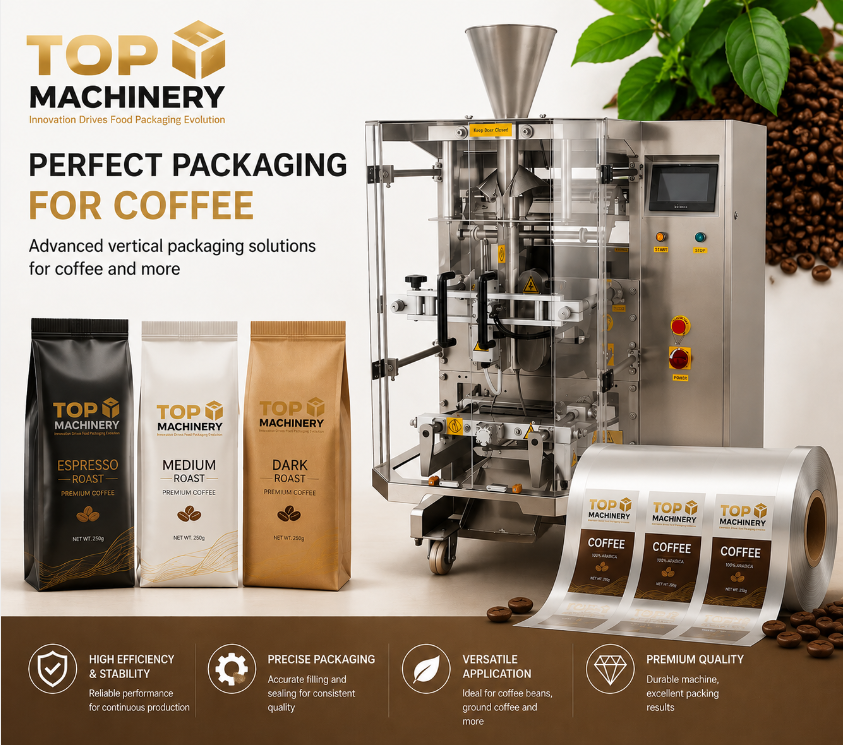
In the fast-paced coffee industry, production speed and machine performance are not just metrics—they are competitive advantages. An advanced Coffee Bean Packing Machine is engineered to maximize throughput without sacrificing the quality and consistency your customers expect. By investing in a system with cutting-edge technology, you can meet high-volume demands, reduce lead times, and improve your overall operational efficiency. Let's explore the core technologies that make this possible.
The Power of Continuous Motion and Dual Sealing Jaws
The distinction between intermittent and continuous motion VFFS machines is a critical factor in determining production speed. While intermittent motion machines pause the film to make each seal, continuous motion systems seal while the film is moving, resulting in a much faster and smoother operation. This technology is the key to unlocking significant gains in output, especially for high-volume coffee producers.
Experiencing unmatched speeds with systems like the Twin VFFS Velocity, capable of producing up to 350 bags per minute.
For businesses aiming for the highest level of productivity, twin-configuration VFFS systems represent the apex of packaging technology. A twin VFFS machine essentially combines two baggers into a single frame, sharing a common control system and infeed. This design can effectively double the output of a single machine without doubling the floor space. Systems engineered for high performance can reach speeds of up to 200 bags per minute (BPM) on a single jaw configuration and even higher on twin systems. When packaging small, fractional packs of coffee, for instance, it's possible for certain models to achieve speeds nearing 350 BPM, dramatically increasing the number of units you can bring to market daily. This level of speed is transformative, enabling you to scale your operations and respond swiftly to market demand.
Precision Control with Full Servo Technology
While speed is essential, it must be complemented by precision. Full servo technology is the foundation of this control. Unlike older mechanical or pneumatic systems, VFFS machines driven by servo motors offer unparalleled command over every aspect of the packaging process. Servo motors provide precise, repeatable movements for film pulling, sealing jaw actuation, and product filling. This granular control minimizes film slippage, ensures consistent bag lengths, and guarantees reliable seal integrity even at very high speeds.
Leveraging cutting-edge technology, including Allen Bradley systems, for superior control over bag length, seal integrity, and film handling, ensuring peak performance for your coffee bean VFFS packing machine.
Leading VFFS machine manufacturers integrate advanced control platforms from trusted names like Allen-Bradley (Rockwell Automation). These Programmable Logic Controllers (PLCs) and Human-Machine Interfaces (HMIs) offer a robust and user-friendly environment for managing machine operations. Operators can easily create and recall recipes for different products and bag sizes, which automatically adjust parameters like sealing time, temperature, and jaw pressure. This level of automation simplifies changeovers, reduces the chance of human error, and ensures that every bag is produced to the exact same specifications. This is particularly crucial for maintaining brand consistency and meeting the stringent quality requirements of specialty coffee. By leveraging full servo-driven systems, your coffee bean VFFS packing machine gains the intelligence to self-adjust and maintain peak performance, safeguarding both efficiency and quality. → Explore our complete Coffee Packaging Machine Solutions for tailored systems.
Achieving Unmatched Accuracy and Quality in Your Coffee Bean VFFS Packing Machine Operations
For a premium product like coffee, quality is non-negotiable. It extends from the bean itself to the final package that a consumer holds. A superior coffee bean VFFS packing machine is defined by its ability to not only form and seal bags but to do so with exceptional accuracy and an unwavering focus on protecting the product within. This section delves into the critical machine functions that ensure every bag meets the highest standards of quality, from precise dosing to a perfect, hermetic seal.
Ensuring Consistent Dosing and Product Integrity
Product giveaway—the act of unintentionally putting more product into a bag than stated on the label—can be a major source of financial loss for coffee roasters. Inaccuracy in filling can also lead to under-filled bags, which can damage brand reputation and lead to regulatory issues. Therefore, the dosing (or filling) system integrated with the VFFS machine is one of its most critical components.
Delivering unparalleled dosing accuracy, often reaching +/- 0.01 ounces for 2.5-ounce packs, significantly reducing spoilage and maintaining package consistency.
The goal is to achieve the smallest possible weight deviation. Modern filling systems, particularly high-precision auger fillers and multi-head weighers, have made remarkable strides in accuracy. For portion packs, such as a 2.5-ounce bag of ground coffee, it is now possible to achieve dosing accuracy within a tolerance of +/- 1% or even better. Some advanced systems can consistently hit an accuracy of +/- 0.01 ounces. This precision is achieved through sophisticated feedback loops; for example, an integrated checkweigher can communicate with the filler in real-time to automatically adjust the dispense amount if it detects a trend of over- or under-filling. By minimizing product giveaway, a roaster can save thousands of dollars in lost product over a year, directly impacting the bottom line.
Utilizing advanced auger dosing systems to prevent product interference in the seal area, especially crucial for ground coffee, ensuring a perfect seal every time.
One of the biggest challenges in packaging fine powders like ground coffee is preventing product from getting caught in the seal area of the bag. Even a few stray grounds can compromise the integrity of the seal, leading to leaks, loss of freshness, and potential spoilage. To combat this, advanced auger fillers employ specialized tooling and techniques. Features like dust shrouds create a contained environment around the filling tube, and a "dust-suck-back" or vacuum feature can be used to pull any airborne particles away from the seal area just before the jaws close. Furthermore, the timing between the end of the fill cycle and the sealing action is precisely controlled to allow the product to settle completely, ensuring a clean seal every single time.
Enhanced Seal Quality and Freshness Protection
The seal is the final gatekeeper of your coffee's freshness. A weak or inconsistent seal can allow oxygen to enter the package, quickly degrading the coffee's flavor and aroma. Modern VFFS machines incorporate several innovations designed to create strong, reliable, and aesthetically pleasing seals.
Implementing improved, auto-centering back seal designs for consistent vertical seal quality that meets even the most stringent requirements.
The vertical seal (or back seal) that runs down the length of the bag is just as important as the top and bottom horizontal seals. In older machines, misalignment of the film as it's formed into a tube could lead to a wandering or uneven back seal. Today's high-end VFFS machines often feature an auto-centering or self-aligning back seal assembly. This system uses sensors to monitor the position of the film edge and automatically adjusts the sealing mechanism to ensure the seal is perfectly centered and consistent from the top of the bag to the bottom. This not only improves the bag's appearance but also guarantees a uniform, hermetic seal along the entire length.
Incorporating one-way degassing valves to allow fresh coffee to release CO2 while blocking external oxygen, preserving freshness and preventing bag inflation.
Freshly roasted coffee beans naturally release carbon dioxide (CO2) for several days in a process called degassing. If packaged in a completely sealed bag without a way for this gas to escape, the bag will inflate and potentially burst. The one-way degassing valve is the elegant solution to this problem. It is a small plastic valve, often applied to the film before it enters the VFFS machine, that contains a membrane designed to let CO2 molecules out while preventing larger oxygen molecules from getting in. High-speed VFFS machines can be equipped with applicators that apply these valves at rates matching the machine's bagging speed. This feature is absolutely essential for packaging fresh whole bean or ground coffee, as it preserves the product's complex aromatics and prevents package damage, ensuring the coffee reaches the consumer as the roaster intended.
Versatile Packaging Options and Sustainable Practices for Your Coffee Bean VFFS Packing Machine
In today's competitive retail environment, the package is more than just a container; it's a critical marketing tool. It must protect the product, attract the consumer's eye on a crowded shelf, and increasingly, align with their values regarding sustainability. A modern coffee bean VFFS packing machine offers the flexibility to produce a wide array of package styles and work with innovative, eco-friendly materials, empowering brands to meet diverse market demands.
Adapting to Diverse Coffee Packaging Styles
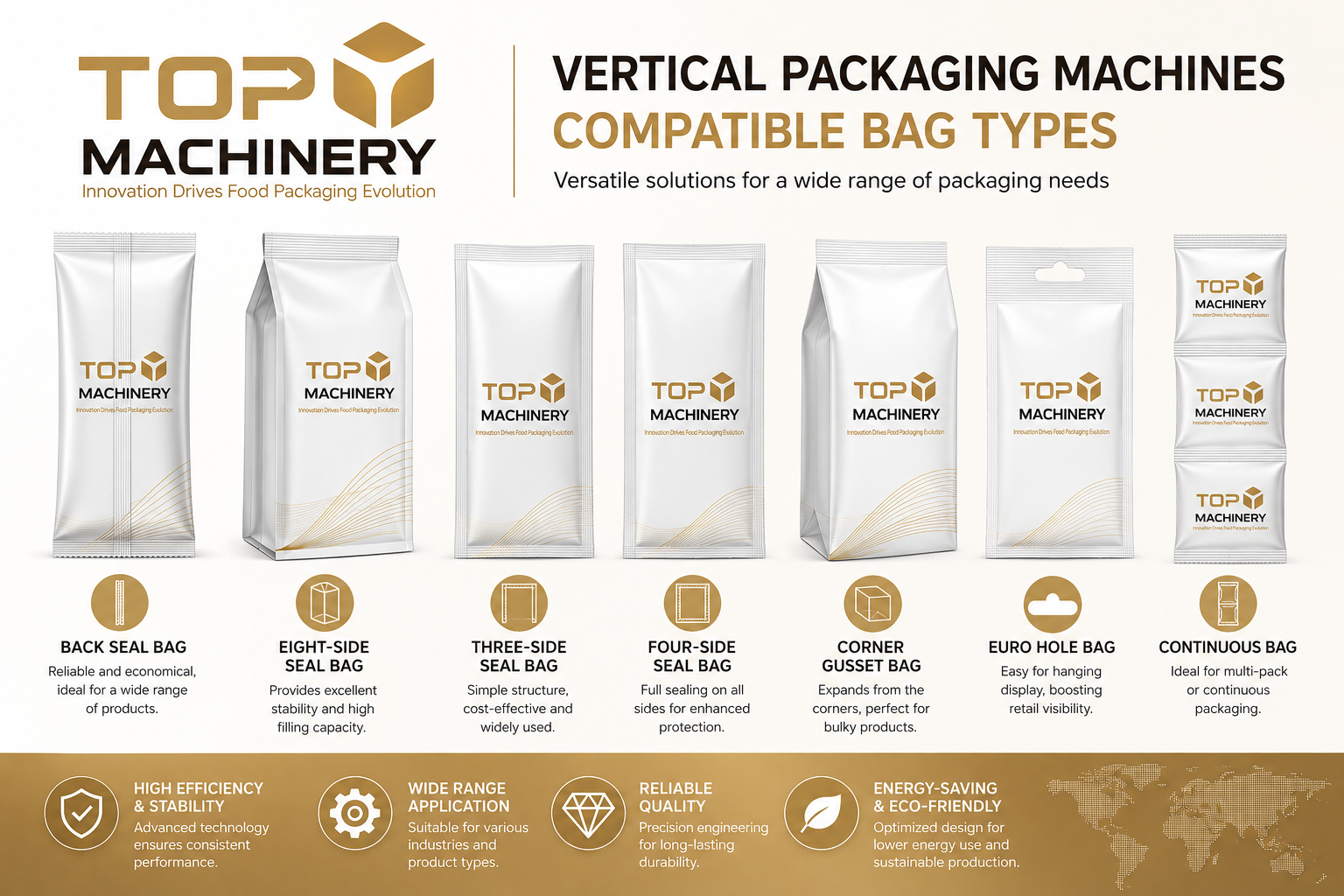
Consumer preferences and retail requirements dictate the need for different bag formats. A versatile VFFS Packing Machine can be quickly changed over to produce various styles, allowing a single machine to serve multiple product lines or market segments.
Producing popular and premium bag styles such as pillow bags, stand-up doypacks, and flat bottom bags, catering to various market demands and aesthetic preferences.
The three most common and versatile bag styles produced on VFFS machines for coffee are:
| Bag Style | Description | Best For |
|---|---|---|
| Pillow Bag | The most basic and economical bag style, formed from a simple tube of film sealed at the top and bottom. | Fractional packs, food service, and entry-level retail products where cost-efficiency is paramount. |
| Stand-Up Doypack | Features a "W" shaped gusset at the bottom, allowing it to stand upright on shelves. It offers excellent branding real estate and consumer convenience. | Premium retail coffee, where shelf presence and a high-end feel are important. |
| Flat Bottom Bag | Also known as a block bottom bag, this style has crisp corners and four distinct panels for branding, creating a box-like appearance that stands very stably. | High-end specialty coffee. It maximizes shelf appeal and communicates a premium, artisanal quality. |
A machine's ability to switch between these formats, often with the change of a forming tube and some parameter adjustments, provides invaluable flexibility for growing coffee brands.

Navigating Material Choices and Eco-Friendly Solutions
The conversation around packaging has shifted dramatically towards sustainability. Consumers are increasingly aware of packaging waste, and brands are responding by seeking greener alternatives. The challenge for coffee is that it requires a high-barrier material to protect it from oxygen, moisture, and light.
Balancing high-barrier laminates with sustainable options like recyclable mono-materials and compostable films to meet both product protection and environmental goals.
Traditionally, coffee bags use multi-layer laminates (e.g., PET/ALU/PE), where each layer serves a purpose (printability, barrier, sealability). While effective, these mixed materials are very difficult to recycle. The industry is rapidly innovating in two key areas:
- Recyclable Mono-Materials: These are films made primarily from a single type of plastic, like polyethylene (PE), but engineered with special coatings or co-extrusions to provide the necessary barrier properties. These "recycle-ready" films can be processed in existing recycling streams.
- Compostable Films: Made from plant-based materials like PLA (polylactic acid), these films can break down in industrial composting facilities. While their barrier properties are still evolving, they offer a solution for brands targeting environmentally-conscious consumers.
Modern VFFS machines are being adapted with specialized sealing jaws and temperature controls to handle these new, often more sensitive, sustainable films without compromising speed or seal integrity.
Key Features for Product Preservation and Consumer Convenience
Beyond the bag style and material, several other features integrated into the VFFS process play a vital role in product quality and the end-user experience.
Integrating nitrogen flushing systems to further extend shelf life by reducing oxygen levels inside the package.
This process, also known as Modified Atmosphere Packaging (MAP), involves flushing the inside of the bag with inert nitrogen gas just before the final seal is made. The nitrogen displaces the oxygen, reducing the residual oxygen level inside the package to less than 1%. Since oxygen is the primary cause of staling in roasted coffee, this simple step can dramatically extend the product's shelf life and preserve its delicate flavor and aroma profile for months. A nitrogen flushing system is a standard and highly recommended option on any serious coffee bean VFFS packing machine.
Offering consumer-friendly features such as re-sealable zippers and easy-open tear notches to enhance the user experience.
Convenience is key to customer loyalty. A bag that is difficult to open or cannot be re-sealed can be a point of frustration. VFFS machines can be equipped with modules that add these valuable features:
- Re-sealable Zippers: A pre-zippered film or a transverse zipper applicator can be integrated to add a press-to-close feature, allowing consumers to keep their coffee fresh after opening.
- Easy-Open Tear Notches: A small slit or perforation is created in the side of the bag, providing a clean, easy starting point for tearing the package open without the need for scissors.
These features transform the package from a simple container into an interactive and user-friendly part of the product experience.
Driving Efficiency and Savings with an Automated Coffee Bean VFFS Packing Machine System
An investment in a modern coffee bean VFFS packing machine is not just about producing attractive bags; it’s about creating a more efficient, profitable, and scalable operation. Automation is the engine that drives these improvements. By automating the packaging process, businesses can significantly reduce labor costs, minimize product waste, and create a seamless workflow from roaster to pallet. This section explores how an integrated VFFS system delivers a powerful return on investment.
Optimizing Labor and Doubling Output
One of the most immediate and impactful benefits of automating your packaging line is the reduction in manual labor. Manual or semi-automatic bagging is a slow, tedious, and physically demanding process that requires multiple operators to achieve even modest output.
Achieving significant labor reductions by enabling a single operator to manage multiple high-speed VFFS lines, effectively doubling output with reduced personnel requirements.
A fully automated VFFS system can run continuously with minimal human intervention. Once the machine is set up and running, a single operator can oversee its operation, primarily focusing on replenishing film rolls and ensuring the product hopper is full. In many facilities, this allows one skilled operator to manage two or even three packaging lines simultaneously. Compared to a manual process where several people might be needed to weigh, fill, and seal bags, the labor savings are substantial. This not only reduces direct payroll costs but also frees up valuable team members to perform other important tasks within the facility, such as quality control, roasting, or logistics.
Reducing Waste Through Smart Checkweighing and Rejection
As discussed earlier, product giveaway is a silent killer of profits. An automated system provides the tools to not only monitor but actively correct filling inaccuracies in real time, turning a source of loss into an area of savings.
Implementing integrated, closed-loop checkweighing systems that provide real-time dosage adjustments and automatically reject off-spec packages, minimizing product waste.
A "closed-loop" system refers to the communication link between the filler (e.g., auger or weigher) and a downstream checkweigher. Here’s how it works:
- The VFFS machine produces a filled and sealed bag.
- The bag travels over an in-line checkweigher, which records its exact weight.
- This weight data is instantly sent back to the VFFS machine's controller.
- If the controller detects a pattern of weights drifting above or below the target, it automatically sends a signal to the filler to adjust the next dose up or down. This self-correcting process happens continuously, keeping the average bag weight incredibly close to the target. In addition, the checkweigher can trigger an automatic rejection device (like an air blast or a pusher arm) to remove any individual bag that falls outside the acceptable weight tolerance, preventing it from ever reaching a customer.
Selecting the Right Dosing and Weighing Technology
The type of coffee you are packaging—whole bean, ground, or instant—dictates the best type of filling technology to integrate with your VFFS machine. Choosing the correct system is fundamental to achieving both accuracy and speed.
Choosing between combination weighers for whole beans and ground coffee, or auger fillers for precise dosing of powdered instant coffee, ensures optimal product handling for your coffee bean VFFS packing machine.
- Combination Weighers (Multi-Head Weighers): This is the ideal solution for whole bean coffee. The system uses multiple vibrating weigh heads to create precise combinations of beans that add up to the target weight. This method is fast, exceptionally accurate, and gentle on the product, preserving the integrity of the beans. They can also be used effectively for some coarse or free-flowing ground coffees.
- Auger Fillers: This is the standard for ground coffee, fine powders, and instant coffee. An auger filler uses a rotating screw to dispense a precise volume of product. They are highly accurate for non-free-flowing powders and, as mentioned previously, can be equipped with features to control dust and ensure clean seals.
The experts at Top Y Machinery can help you analyze your specific product characteristics to recommend the optimal dosing technology for your application.
Streamlining Your Entire Packaging Line
The VFFS packing machine is the heart of the packaging line, but its true efficiency is unlocked when it is seamlessly integrated with upstream and downstream equipment. A holistic approach to automation creates a smooth, uninterrupted flow from start to finish.
Ensuring full integration and automation with downstream equipment, from case forming to counting and sealing, creating a seamless and efficient workflow.
A fully integrated packaging line might look like this:
- Product Delivery: An automated conveyor or bucket elevator transports coffee from the roaster or a storage hopper to the VFFS machine's filler.
- VFFS Bagging: The VFFS machine forms, fills, and seals the coffee bags.
- Takeaway and Inspection: A takeaway conveyor moves the bags through a checkweigher and potentially a metal detector.
- Case Packing: An automated counter arranges the bags into a desired pattern (e.g., 2x3 for a case of 6). A case erector forms a cardboard box, the bags are dropped or placed inside, and a case sealer tapes the box shut.
- Palletizing: A robotic arm picks up the finished cases and stacks them onto a pallet in a pre-programmed pattern, ready for shipping.
By automating this entire sequence, you create a highly efficient, "lights-out" operation that maximizes throughput, minimizes manual handling, and ensures consistent final presentation.
Frequently Asked Questions (FAQ)
1. Can one coffee VFFS machine handle both whole bean and ground coffee? Yes, many VFFS machines are versatile enough to handle both. The main change required is in the filling system. You would typically use a combination weigher for whole beans and an auger filler for ground coffee. Many packaging lines are designed with interchangeable fillers, allowing you to swap them out during a changeover. While one machine can do both, it's important to consider cleaning procedures, as switching from ground coffee back to whole beans requires thorough cleaning to avoid cross-contamination.
2. What is the typical maintenance required for a coffee bean VFFS packing machine? Regular maintenance is crucial for longevity and performance. Daily tasks include cleaning the machine, especially around the sealing jaws and filler, to remove coffee dust and oils. Weekly checks might involve inspecting wear parts like sealing jaw tapes, cutting knives, and pulling belts. Monthly or quarterly preventive maintenance by a trained technician would cover lubricating moving parts, checking electrical connections, and calibrating sensors. Following the manufacturer's recommended maintenance schedule will prevent unexpected downtime and costly repairs.
3. How do you handle different bag sizes on a single VFFS machine? Switching between bag sizes is a standard procedure called a "changeover." It primarily involves swapping out the "forming tube and collar." This is the part that shapes the flat film into the tube that becomes the bag; the diameter of the tube determines the bag's width. The bag length is a simple electronic setting changed on the machine's HMI. For major changes in bag style (e.g., from a pillow bag to a flat-bottom bag), more complex changes including different jaw assemblies may be needed. Modern machines are designed for quick, tool-less changeovers to minimize downtime.
4. What is the average return on investment (ROI) for an automated coffee VFFS system? The ROI varies greatly depending on the company's current operating costs, production volume, and the level of automation being implemented. However, the primary drivers of ROI are labor savings, reduction in product giveaway, increased throughput, and decreased material waste. For many medium-to-large roasters currently using manual or semi-automatic methods, the savings in labor and product alone can often result in a payback period of 18 to 36 months.
Choosing the best coffee bean VFFS packing machine is an investment in your product's freshness, your operational flexibility, and your brand's future. By prioritizing speed, precision, sustainability, and intelligent automation, you can select a machine that not only meets your current demands but also propels your business towards sustained growth and market leadership. We are confident that by considering these insights, you are now well-prepared to make an informed decision and elevate your coffee packaging to new heights with the perfect VFFS solution.