What is a Rotary Packing Machine and How Does it Optimize Your Production?
In today's fast-paced manufacturing world, efficient and precise packaging is no longer a luxury—it's a necessity for product quality and market success. I've seen firsthand how the right technology can transform production lines from bottlenecks into powerhouses of productivity. Many businesses struggle with scaling their packaging operations to meet growing demand, facing challenges with consistency, labor costs, and speed.
I'm here to demystify one such innovative solution: the rotary packing machine. This technology stands as a game-changer for businesses aiming to overcome these hurdles. This blog post will explore what these machines are and, more importantly, how they can optimally transform your packaging operations by enhancing speed, accuracy, and overall efficiency.
Join me as I delve into the benefits and functionalities that make rotary packing machines a cornerstone of modern, high-efficiency production. We will cover everything from their fundamental operating principles to the impressive return on investment they can deliver, providing you with a complete picture of their transformative potential.
Understanding the Fundamentals: What Exactly is a Rotary Packing Machine?
To fully appreciate the impact of a rotary packing machine, it's essential to first grasp what it is and how its core design principles contribute to superior performance. Unlike their linear counterparts, rotary machines are built for speed and consistency through a circular, multi-station layout.
Defining Rotary Packing Machines and Their Versatility
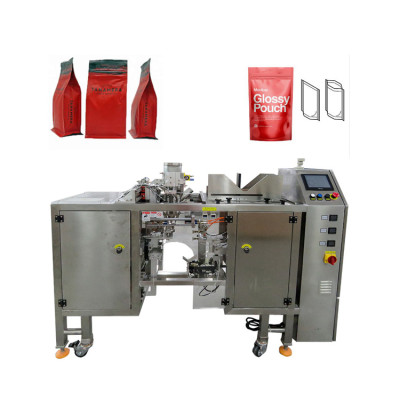
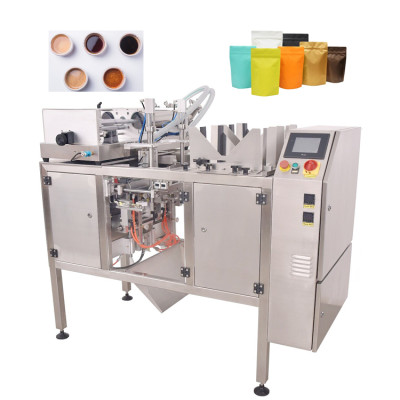
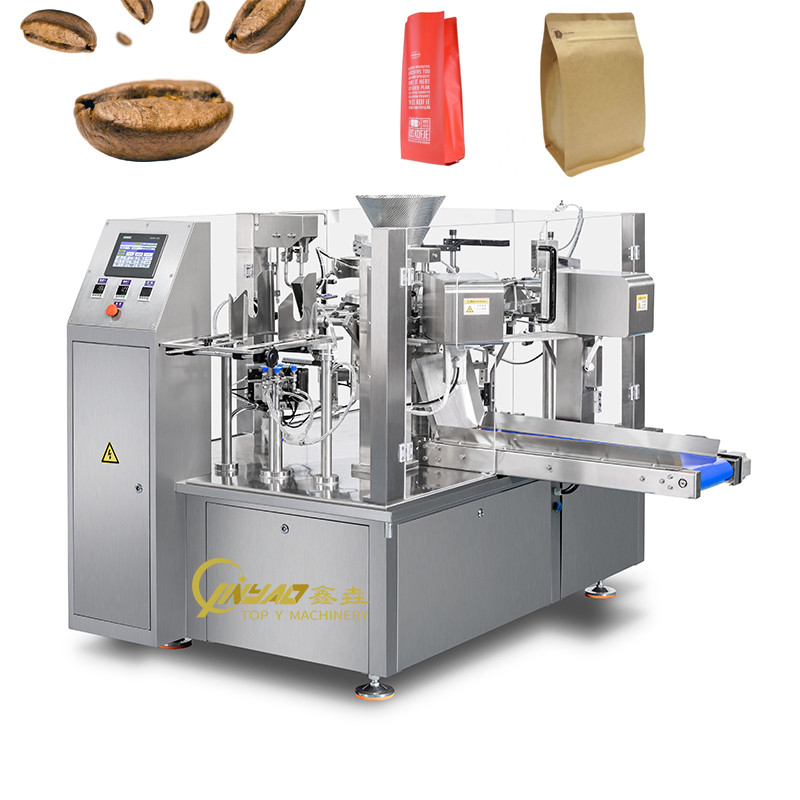
A rotary packing machine is an automated system that fills and seals pre-made pouches using a circular assembly. The machine features multiple stations arranged around a central rotating turret, with each station performing a specific task in the packaging sequence—such as pouch picking, opening, filling, sealing, and discharging. This design allows for a continuous, fluid motion, which is inherently faster and more stable than the start-stop process of many other packaging systems.
One of the defining characteristics of these machines is their incredible versatility. They can handle a vast array of product types and pouch styles, making them a flexible asset for companies with diverse product lines. This includes:
- Product Types: From powders like flour and spices to granules such as coffee and snacks, liquids like sauces and juices, and solid items including candy and hardware, these machines can be equipped with different fillers to manage various product consistencies.
- Pouch Styles: They are compatible with a wide range of pre-made pouches, including stand-up pouches (Doypacks), 3-side seal bags, 4-side seal bags, flat pouches, and pouches with special features like zippers, spouts, or tear notches.
This adaptability makes a Rotary food packing machine an ideal solution for many industries, particularly the food and beverage sector where product variety and packaging presentation are key.
How Rotary Motion Drives Packaging Efficiency
The efficiency of a rotary packing machine is directly tied to its use of continuous rotary motion. While linear machines operate on an intermittent start-stop basis, where the entire line of pouches moves and then stops for each operation, rotary machines perform all functions simultaneously as the pouches rotate around the turret.
Here's a breakdown of how this circular workflow enhances efficiency:
- Continuous Operation: The turret rotates without interruption. As one pouch is being filled, another is being sealed, and another is being picked from the magazine. This simultaneous processing eliminates the idle time inherent in linear systems.
- Higher Speeds: Because stations work in parallel, the overall output, measured in bags per minute (BPM), is significantly higher. High-end rotary machines can achieve speeds exceeding 60 BPM, depending on the product, pouch size, and machine configuration.
- Smoother Handling: The continuous, smooth motion minimizes the risk of product spillage or pouch mishandling. The gentle transitions between stations are particularly beneficial for fragile products or dusty powders, ensuring a cleaner operation and less product waste.
This operational elegance is why rotary machines are the preferred choice for high-volume production environments where maximizing throughput is a primary objective.
Achieving Peak Quality: Precision and Integrity with a Rotary Packing Machine
While speed is a major advantage, it cannot come at the expense of quality. A rotary packing machine excels at maintaining the highest standards of product and package integrity, ensuring that every unit leaving the production line is a perfect representation of your brand.
Millimeter-Perfect Filling Accuracy and Product Consistency
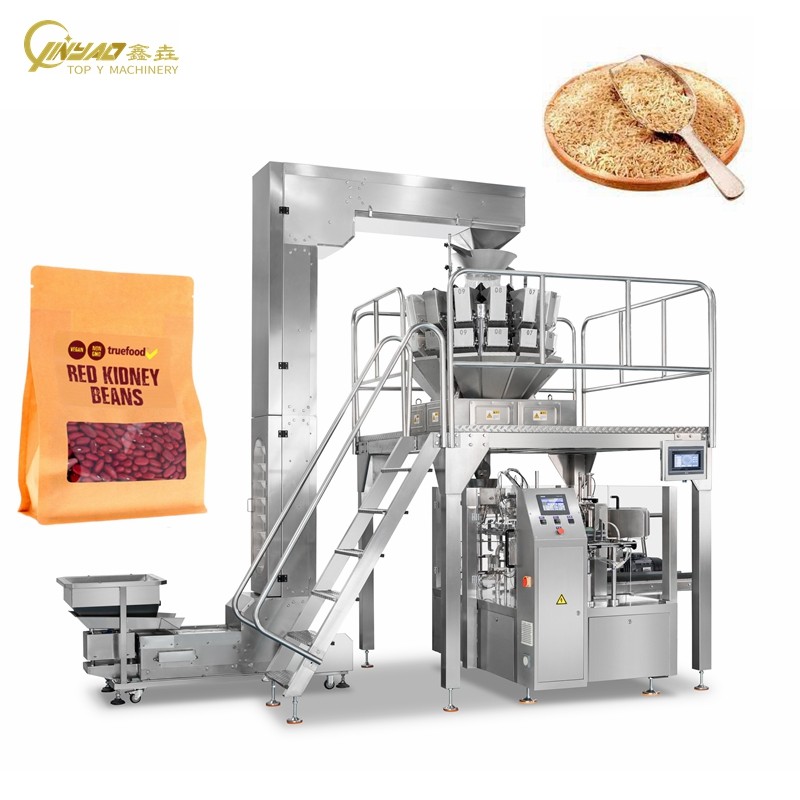
Inaccurate filling leads directly to product giveaway and profit loss. Rotary packing machines address this challenge by integrating with highly precise filling and dosing systems, such as multi-head weighers, auger fillers, liquid pumps, and cup fillers. These systems are electronically synchronized with the machine's rotation to dispense the exact amount of product into each pouch.
The benefits of this precision are twofold:
- Ensuring Consistency: Consumers expect the same experience with every purchase. Precise filling ensures that each package contains the correct volume or weight, building consumer trust and brand loyalty.
- Controlling Costs: Overfilling, even by a small margin, can amount to significant financial losses over thousands or millions of cycles. By maintaining tight tolerances, these machines minimize product giveaway, directly protecting your bottom line.
Ensuring Leak-Proof Seals for Brand Reputation
A weak or faulty seal can lead to product spoilage, contamination, and costly recalls, severely damaging a brand's reputation. Rotary packing machines employ advanced sealing technologies to create strong, reliable, and aesthetically pleasing seals. The process typically involves multiple steps:
| Sealing Stage | Function |
|---|---|
| First Heat Sealing | The initial application of heat and pressure begins the sealing process, bonding the inner layers of the pouch material. |
| Second Heat Sealing | A subsequent sealing bar ensures a complete and uniform bond across the entire width of the pouch, eliminating any potential gaps. |
| Cooling Station | Immediately after heating, a cooling bar sets the seal, strengthening it to prevent it from failing under pressure. |
This multi-stage approach ensures a hermetic seal that protects the product from oxygen, moisture, and other external contaminants, thereby extending shelf life and ensuring it reaches the consumer in perfect condition.
Minimizing Product Loss and Maximizing Profit
Product spillage and wasted packaging materials are silent profit killers. The design of a rotary packing machine inherently minimizes waste in several ways:
- "No Pouch, No Fill" Detection: Advanced sensors can detect if a pouch was not correctly picked or opened. In such cases, the filling and sealing stations for that cycle are skipped, preventing product spillage and the sealing of an empty bag.
- Accurate Pouch Placement: The gripper arms on the turret hold each pouch firmly and position it precisely under the filler and sealer, reducing the risk of misalignment that can cause product to miss the pouch opening.
- Clean and Gentle Operation: As mentioned, the smooth rotary motion is ideal for dusty or granular products, keeping the seal area clean for a perfect seal and preventing product from being wasted.
By minimizing these common sources of waste, a rotary packing machine not only improves operational cleanliness but also directly converts saved material into increased profit.
Unlocking Operational Efficiency with a Rotary Packing Machine
Beyond quality and speed, a rotary packing machine is a powerful tool for optimizing your entire production workflow. It introduces a level of automation and flexibility that can fundamentally change your plant's operational dynamics, from labor allocation to product diversification.
Boosting Throughput and Increasing Plant Output Significantly
The primary driver for investing in a rotary packing machine is often the need for greater throughput. The ability to run continuously at high speeds translates directly into more products packaged per hour. This increase in output allows businesses to:
- Meet Growing Demand: Scale production to keep pace with market growth without requiring a massive expansion of factory floor space.
- Reduce Lead Times: Fulfill orders faster, improving customer satisfaction and providing a competitive edge.
- Maximize Asset Utilization: Get more production out of a single line, maximizing the return on your capital investment.
For instance, a company transitioning from a manual or semi-automatic process that produces 10-15 bags per minute to a rotary machine running at 50-60 bags per minute can see a 300% or more increase in output from a single line.
Reducing Labor Costs and Dependency Through Automation
Manual and semi-automatic packaging lines are labor-intensive, requiring multiple operators for tasks like pouch handling, filling, sealing, and case packing. This dependency on manual labor presents several challenges, including high recurring costs, susceptibility to human error, and production slowdowns due to staff shortages.
Rotary packing machines are fully automated systems that require minimal human intervention—typically just one operator to oversee the machine's operation and replenish packaging materials. This high level of automation delivers several benefits:
- Lower Labor Costs: Reduces the number of operators needed per shift, leading to significant savings in wages and benefits.
- Improved Workplace Safety: Automates repetitive manual tasks, reducing the risk of ergonomic injuries for employees.
- Reallocation of Labor: Frees up skilled workers to focus on more value-added activities, such as quality control, machine maintenance, or process improvement.
This reduction in labor dependency makes your operation more resilient, consistent, and cost-effective in the long run.
Facilitating Quick Changeovers for Diverse Product Lines
In today's market, producers often need to handle multiple product variations, package sizes, and even different material types. Lengthy changeover times between production runs can severely hamper efficiency. Modern rotary packing machines are designed with quick changeovers in mind.
Features that facilitate this include:
- Tool-Less Adjustments: Many adjustments for different pouch widths and lengths can be made quickly without the need for special tools.
- Recipe-Based Control: The HMI (Human-Machine Interface) can store parameters for various jobs (pouch size, fill weight, sealing temperature). An operator can simply select a pre-saved recipe to automatically adjust the machine for a new run.
- Easy-to-Clean Designs: Machines built for food applications often feature stainless steel construction and open designs, allowing for quick and thorough cleaning between runs of different products, such as when switching a Rotary Packaging Machine for Dry Fruits over to a powdered product.
These features drastically reduce downtime, allowing a single packaging line to efficiently handle a high mix of products and maintain high overall equipment effectiveness (OEE).
The Smart Investment: Calculating the ROI of a Rotary Packing Machine
Investing in advanced automation like a rotary packing machine is a significant capital expenditure. Therefore, understanding its return on investment (ROI) is crucial. A well-chosen machine is not a cost center but a profit generator that pays for itself through enhanced efficiency, reduced waste, and lower labor expenses.
The Push for Measurable Returns in Automation
In a competitive economic climate, every investment must be justified by clear, measurable returns. The push for automation is no longer just about modernization; it's about building a more resilient and profitable business. Executives and plant managers need to see a clear path to profitability when evaluating new equipment. The ROI calculation for a rotary packing machine provides this clarity by quantifying its financial impact. Reliable manufacturers like TOP Y MACHINERY often work with clients to project these returns based on their specific operational data.
Factors Contributing to a 12-18 Month ROI Timeline
For many high-volume producers, a rotary packing machine can deliver a full return on investment in a surprisingly short period, often within 12 to 18 months. This rapid ROI is driven by a combination of savings and efficiencies.
Here is a breakdown of the key factors that contribute to this timeline:
| ROI Contributor | Description | Financial Impact |
|---|---|---|
| Labor Cost Savings | The automation of pouch handling, filling, and sealing typically allows for the reduction of 2-4 operators per shift. | High: This provides a direct, immediate, and recurring reduction in operational expenditures. |
| Increased Throughput | The ability to produce 3-5 times more packaged products per hour compared to semi-automatic methods allows the business to generate more revenue with the same or fewer resources. | High: More output means more sales and faster fulfillment of large orders, directly boosting revenue. |
| Reduced Product Waste | Precise filling systems minimize product giveaway, while features like "no pouch, no fill" prevent spillage. An average reduction in waste from 3-5% down to less than 1% is common. | Medium to High: Savings on raw material costs accumulate quickly, especially with expensive products. |
| Material Cost Savings | While these machines use pre-made pouches, their efficiency reduces the number of wasted pouches due to handling or sealing errors. | Low to Medium: Contributes steadily to the overall savings by minimizing packaging material scrap. |
| Improved Product Quality | Consistent, high-integrity seals reduce the risk of spoilage and product returns. This avoids the high costs associated with recalls, customer complaints, and reputational damage. | Variable but Significant: While not a daily saving, avoiding a single major quality failure can save millions. |
By quantifying these areas—calculating annual labor savings, the value of increased production, and the cost of reduced waste—a business can build a clear financial case for the investment and project a confident ROI timeline.
Maintaining Longevity: Safety and Care for Your Rotary Packing Machine
Purchasing a rotary packing machine is an investment in the future of your production line. To ensure that this investment continues to deliver value for years to come, a proactive approach to maintenance, safety, and operator training is essential. A well-maintained machine not only performs better but also has a significantly longer operational lifespan.
Establishing Routine Maintenance for Optimal Performance
Preventive maintenance is the key to avoiding costly unplanned downtime. A structured maintenance schedule ensures that all components are inspected, cleaned, and serviced regularly, keeping the machine running at peak efficiency. A typical routine should include:
- Daily Checks:
- Visual inspection for any loose parts or visible wear.
- Cleaning of product contact parts and the sealing area.
- Checking sensor functionality and pneumatic pressure levels.
- Weekly Tasks:
- Lubrication of moving parts like bearings and chains according to the manufacturer's guide.
- Inspection and cleaning of vacuum filters and suction cups.
- Verifying the alignment of gripper arms and sealing jaws.
- Monthly/Quarterly Inspections:
- In-depth inspection of wear parts (e.g., heating elements, Teflon tape, blades) and replacing them if necessary.
- Checking electrical connections and cabinet components.
- Calibrating dosing systems to ensure continued accuracy.
Following the manufacturer’s recommended maintenance plan is crucial for preserving the machine's warranty and ensuring its long-term reliability.
Prioritizing Operator Safety and System Integrity Protocols
An automated system running at high speed requires robust safety features to protect operators. Modern rotary packing machines are equipped with multiple layers of safety:
- Physical Guarding: Polycarbonate doors surround the machine's moving parts. These doors are fitted with interlock switches that immediately halt the machine if opened during operation.
- Emergency Stop Buttons: E-stop buttons are placed at multiple accessible points around the machine for quick shutdown in an emergency.
- Warning Systems: Light beacons and alarms signal the machine's status (e.g., running, stopped, fault) to personnel in the vicinity.
Proper operator training is just as important as the physical guards. All personnel who interact with the machine must be thoroughly trained on safe operating procedures, lockdown/tag-out (LOTO) protocols for maintenance, and emergency response.
Effective Troubleshooting for Common Operational Challenges
Even with excellent maintenance, operational issues can arise. Equipping your team to quickly diagnose and resolve common problems is essential for minimizing downtime.
Here are some common challenges and their typical solutions:
| Common Issue | Potential Causes | Troubleshooting Steps |
|---|---|---|
| Pouch Fails to Open | Worn suction cups; incorrect vacuum pressure; poor quality pouches; incorrect magazine setup. | 1. Inspect and replace suction cups. 2. Check and adjust vacuum generator/pump. 3. Test with a different batch of pouches. |
| Inconsistent Seal Quality | Incorrect sealing temperature or pressure; worn or dirty sealing jaws; product in the seal area. | 1. Adjust temperature/pressure settings via HMI. 2. Clean sealing jaws and replace Teflon tape. 3. Check filler timing. |
| Inaccurate Fill Weight | Incorrect calibration of weigher/filler; product flow issues; environmental vibrations. | 1. Re-calibrate the dosing system. 2. Ensure a consistent product supply to the filler. 3. Isolate the machine from vibrations. |
| Machine Stops with an Error | Sensor obstruction; jam in the pouch path; safety interlock triggered. | 1. Check the HMI for the specific error message. 2. Visually inspect the indicated area for blockages. 3. Reset sensors. |
A well-documented troubleshooting guide, provided by the manufacturer and supplemented with your own operational notes, is an invaluable tool for your maintenance and operations teams.
Key Takeaways
Integrating a rotary packing machine is a strategic decision that can redefine your production capabilities. To make the most of this guide, let's distill the core advantages and considerations into key takeaways. This section summarizes the most crucial points, offering a quick yet comprehensive overview for decision-makers aiming to optimize their operations.
1. Superior Speed and Throughput: The fundamental advantage of a rotary packing machine lies in its continuous, circular motion. Unlike linear systems that operate intermittently, a rotary machine performs all packaging functions—pouch pickup, opening, filling, sealing, and discharging—simultaneously as the turret rotates. This parallel processing eliminates dead time, leading to significantly higher speeds (often 50-60+ BPM) and a massive boost in overall plant output. This makes it the ideal choice for businesses with high production volumes or those planning for aggressive growth.
2. Unmatched Versatility and Flexibility: Modern rotary machines are not one-size-fits-all. They are highly adaptable systems capable of handling a vast range of products, from fine powders and granules to liquids and solid items. Furthermore, they are compatible with an extensive variety of pre-made pouch types, including stand-up pouches, zipper bags, spouted pouches, and custom shapes. This flexibility allows a single machine to serve multiple product lines, making it a future-proof investment for companies with a diverse and evolving portfolio. The ability to perform quick changeovers via HMI recipes further enhances this adaptability, minimizing downtime between runs.
3. Precision, Quality, and Waste Reduction: Speed is meaningless without quality. Rotary packers excel at ensuring product and package integrity. By integrating with high-precision dosing systems like multi-head weighers or auger fillers, they ensure millimeter-perfect filling accuracy, which minimizes product giveaway and protects profits. Their multi-stage sealing and cooling process creates strong, hermetic seals that extend shelf life and prevent leaks. Additionally, features like "no pouch, no fill" detection and clean, gentle handling drastically reduce product spillage and material waste, turning potential losses into tangible gains.
4. Significant Operational and Labor Efficiency: Full automation is at the heart of a rotary machine's value proposition. By automating the entire packaging process, these machines can reduce the need for manual labor by 2-4 operators per shift. This leads to substantial and recurring savings on labor costs. More importantly, it reduces dependency on manual labor, mitigates the risk of human error, improves workplace safety by eliminating repetitive tasks, and allows skilled employees to be reassigned to more value-added roles like quality control and process optimization.
5. A Rapid and Measurable Return on Investment (ROI): While a rotary packing machine represents a significant capital investment, it is one that pays for itself quickly, often within a 12 to 18-month timeframe. The ROI is driven by a powerful combination of factors: direct labor savings, increased revenue from higher throughput, reduced costs from minimized product and material waste, and the avoidance of costly quality failures. By quantifying these benefits, businesses can build a compelling financial case that justifies the investment as a strategic move toward greater profitability and operational resilience.
Frequently Asked Questions (FAQs)
1. What is the main difference between a rotary and a linear packing machine? The primary difference lies in their fundamental operating principle and layout. A linear packing machine arranges its stations in a straight line. Pouches are transferred from one station to the next in an intermittent, start-stop motion. This design is often simpler and can be a good fit for lower-speed applications or situations with significant space constraints in one dimension. An rotary packing machine, conversely, arranges its stations around a circular turret. It uses a continuous, fluid motion to move pouches through the different processes (gripping, opening, filling, sealing) simultaneously. This continuous, parallel operation allows rotary machines to achieve much higher speeds and greater throughput, making them the preferred choice for high-volume production.
2. What types of products are suitable for a rotary packing machine? Rotary packing machines are incredibly versatile and can be configured to handle a wide variety of product types by pairing them with the appropriate filling system. This includes:
- Powders: Flour, milk powder, coffee powder, spices, and detergents (using an auger filler).
- Granules: Coffee beans, rice, sugar, salt, snacks, pet food, and hardware (using a multi-head weigher or cup filler).
- Liquids & Pastes: Juices, sauces, ketchup, shampoo, lotions, and oils (using a liquid or paste piston pump).
- Solids: Candies, gummies, dried fruit, nuts, and small industrial parts (using a multi-head weigher or counting filler). The key is to select the correct dosing system to match the product's characteristics.
3. How much floor space does a rotary packing machine require? The footprint of a rotary packing machine can vary based on its configuration, number of stations, and the type of filler integrated with it. A standard 8-station rotary machine might have a core footprint of approximately 2m x 2m (around 6.5 ft x 6.5 ft). However, you must also account for the attached filler (a multi-head weigher can add significant height and require a support platform), infeed and outfeed conveyors, and sufficient clearance for operator access and maintenance. A complete line could easily require a space of 6m x 4m (20 ft x 13 ft) or more. It's crucial to consult the manufacturer's layout drawings to plan your floor space accurately.
4. What maintenance is required to keep a rotary packing machine running well? Proper maintenance is crucial for longevity and performance. A good maintenance plan includes daily, weekly, and monthly tasks.
- Daily: Basic cleaning of product contact areas, visual inspection for issues, and checking air pressure.
- Weekly: Lubricating key moving parts (chains, bearings), inspecting vacuum pump filters, and verifying sensor alignment.
- Monthly/Quarterly: Inspecting and replacing wear parts like heater elements, Teflon sealing tape, and cutting blades. You should also check electrical connections and calibrate the filling system for accuracy. Adhering to the manufacturer’s recommended schedule is the best way to prevent unplanned downtime.
5. Can a single rotary machine handle different pouch sizes? Yes, absolutely. Modern rotary packing machines are designed for flexibility. They can typically handle a range of pouch widths and lengths. Adjustments for different pouch sizes are often made through the HMI (touchscreen interface). For width changes, operators can make simple, tool-less adjustments to the pouch magazine and gripper positions. For more significant changes, some mechanical adjustments might be required, but these are generally designed to be done quickly. The ability to save "recipes" for different pouch and product combinations allows operators to switch between jobs with minimal downtime, making these machines ideal for high-mix production environments.
I hope this exploration provides a clear understanding that integrating a rotary packing machine is a strategic move for any business aiming to enhance its packaging efficiency, product quality, and profitability. This technology is not merely an equipment upgrade; it's a comprehensive solution for overcoming some of the most pressing challenges in modern production.
From millimeter-perfect filling and creating leak-proof seals to facilitating rapid changeovers and delivering a swift return on investment, these machines offer a robust answer to the demands of a competitive marketplace. They empower businesses to scale confidently, reduce operational costs, and deliver a consistently superior product to their customers.
Consider the transformative impact a rotary packing machine could have on your operations. It’s more than just a purchase; it’s an investment in a more productive, efficient, and secure future for your brand. If you're ready to take the next step, exploring this technology further is a move you won't regret.