What is a Doypack Filling Machine? A Complete Guide to Premade Pouch Automation
What is a Doypack Filling Machine? A Complete Guide to Premade Pouch Automation
As we delve into the world of packaging automation, one term consistently stands out for its versatility and efficiency: the doypack filling machine. These innovative machines are designed to fill and seal stand-up pouches, commonly known as doypacks, which have become a staple across numerous industries due to their convenience and appealing presentation. Understanding the intricacies of a doypack filling machine is crucial for any business looking to optimize its packaging processes, reduce costs, and enhance product shelf life. From basic operation to advanced functionalities, a comprehensive guide can demystify this essential piece of equipment. This guide will explore everything you need to know about doypack filling machines, providing insights into their functionality, types, and the benefits they bring to modern production lines, ensuring you're well-equipped to make informed decisions for your automation needs.
Key Takeaways
For those seeking a quick overview, here are the essential takeaways from our comprehensive guide on Doypack filling machines:
- Core Function: A Doypack filling machine is an automated system designed to handle premade stand-up pouches (Doypacks). Its primary function is to pick, open, fill, and seal these pouches with a wide variety of products, including solids, powders, granules, and liquids. This technology is central to modernizing packaging lines for efficiency and consistency.
- The Power of the Doypack: Stand-up pouches, or Doypacks, have gained immense popularity due to their consumer-friendly features like resealable zippers and easy-to-open tear notches. For businesses, they offer a large, brandable surface area, are lightweight which reduces shipping costs, and provide excellent product protection, contributing to a longer shelf life.
- Operational Workflow: The process is a sequence of precise, automated steps. It typically begins with a robotic arm picking a pouch from a magazine. The pouch is then opened (often with air jets and mechanical grippers), filled with a pre-measured amount of product from a dosing system (like a multi-head weigher or auger filler), and securely heat-sealed. Optional stations can add functions like date coding, gas flushing to extend shelf life, and zipper opening/closing.
- Key Machine Types: The two primary configurations are rotary and linear.
- Rotary Doypack Machines: These feature a circular layout where pouches are moved through different stations arranged on a turret. They are known for high speed, stability, and efficiency, making them ideal for large-scale, continuous production.
- Linear Doypack Machines: Stations are arranged in a straight line. While generally slower than rotary models, they offer excellent flexibility for a wider range of pouch sizes and are often more accessible for smaller to medium-sized operations.
- Critical Purchase Considerations: Choosing the right machine involves evaluating several key factors:
- Product: The nature of your product (liquid, solid, powder, fragile) determines the required filling system.
- Speed: Your production volume dictates the necessary bags per minute (BPM).
- Pouch Specifications: The machine must be compatible with your chosen pouch sizes, materials, and features (zippers, spouts).
- Future Growth: Consider a machine that can accommodate future product lines or increased production demands.
- Maintenance and Changeovers: Modern Doypack machines are designed for user-friendliness. Efficient changeovers between different pouch sizes or products are critical for minimizing downtime. Features like tool-less adjustments, saved recipes on the HMI (Human-Machine Interface), and easily accessible components are vital. Regular preventive maintenance, including cleaning and inspection of sealing jaws and moving parts, is essential for longevity and peak performance.
In essence, investing in a Doypack filling machine is a strategic move towards greater packaging efficiency, product quality, and market competitiveness. By understanding the machine's mechanics, types, and operational best practices, businesses can leverage this technology to significantly enhance their production capabilities.
What Exactly is a Doypack Filling Machine?
In the landscape of modern packaging, efficiency, and brand presentation are paramount. The Doypack filling machine emerges as a central figure in this domain, providing an automated solution that addresses both needs with remarkable proficiency. This equipment is specifically engineered to work with one of the most popular forms of flexible packaging today: the stand-up pouch, or Doypack. By automating the entire process from pouch handling to final sealing, these machines give businesses a competitive edge.
Defining the Doypack Filling Machine
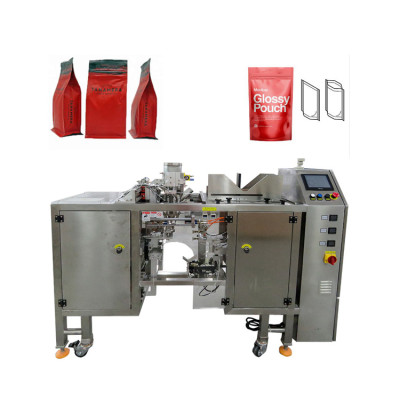
At its core, a Doypack filling machine is an automated or semi-automated piece of electromechanical equipment designed to fill premade pouches with a product and then seal them. Unlike form-fill-seal (FFS) machines that create the pouch from a roll of film, a Doypack machine starts with pouches that are already manufactured. This distinction is crucial as it allows for higher quality graphics and more complex pouch features, such as zippers, spouts, and unique shapes, which are difficult to create on a standard FFS machine.
The Evolution of Pouch Packaging
Flexible packaging is not a new concept, but its evolution has been transformative. Early forms were simple bags with limited protective qualities. The game-changer was the invention of the Doypack by Louis Doyen in 1963. The patented design featured a self-supporting bottom gusset, allowing the pouch to stand upright on retail shelves, dramatically improving visibility and consumer handling. Initially, the adoption was slow, but with advancements in material science and machine technology, the Doypack has become a dominant force. Modern pouches are multi-layered structures, often including foils and specialized polymers, that offer superior barrier properties against moisture, oxygen, and light, thereby extending product shelf life. The evolution of the filling machines themselves has mirrored this, moving from simple manual filling to highly sophisticated, high-speed automated systems capable of handling a vast array of products with incredible precision.
Key Characteristics of a Doypack Filling Machine
While designs vary, all Doypack filling machines share a set of fundamental characteristics that define their operation and purpose. Understanding these features is essential for appreciating their role in a production environment.
- Pouch Magazine: This is where the stack of empty, premade pouches is loaded. A reliable feeding mechanism is critical for uninterrupted operation.
- Pouch Pick and Place: A robotic arm with suction cups or mechanical grippers selects a single pouch from the magazine and transfers it to the main processing track.
- Opening Station: A combination of vacuum suction and air jets is used to carefully pull the top of the pouch open, preparing it for filling. For pouches with zippers, a separate mechanism may be required to pull the zipper apart.
- Dosing System Integration: The machine itself doesn't measure the product. It is integrated with a separate dosing system, such as a multi-head weigher (for solids/granules), an auger filler (for powders), or a liquid pump (for liquids). The filling machine signals the dosing system to dispense the product at the right moment.
- Sealing Station: After filling, the pouch moves to a sealing station. Here, heated sealing bars press the top edges of the pouch together, creating a strong, hermetic seal. Cooling bars often follow to set the seal quickly.
- Control System (HMI): A modern Doypack machine is controlled via a Human-Machine Interface, typically a touchscreen panel. This allows operators to set parameters like speed, temperature, and fill volume, monitor the process, and troubleshoot errors.
| Feature | Description | Benefit |
|---|---|---|
| Automation Level | From semi-automatic to fully automated lines with minimal human intervention. | Scalability, reduced labor costs, and consistent output. |
| Pouch Handling | Works exclusively with premade pouches, allowing for complex designs and features. | Superior shelf appeal, consumer convenience (zippers, spouts). |
| Dosing Versatility | Can be integrated with various fillers (weighers, augers, pumps) to handle diverse products. | High flexibility to package solids, powders, liquids, and pastes. |
| Modular Design | Modern machines often allow for the addition of optional stations (e.g., date coder, gas flush). | Customization to specific product needs and future-proofing the investment. |
| Precision Control | Utilizes PLCs and sensors for precise control over every step of the process. | Minimizes product waste, ensures pouch integrity, and enhances safety. |
Why Doypacks are Revolutionizing Packaging
The shift from rigid containers like glass jars and metal cans to flexible Doypacks is one of the most significant trends in the packaging industry. This is not merely a change in aesthetics; it's a fundamental revolution driven by powerful benefits for both the companies that produce the goods and the consumers who buy them.
Benefits of Doypack Packaging for Consumers and Businesses
For consumers, the appeal is immediate. Doypacks are lightweight, easy to handle, and often feature re-closable zippers that maintain product freshness after the initial opening. This convenience factor is a major driver of purchasing decisions. Furthermore, their durability means they won't shatter like glass, making them safer for households with children.
For businesses, the advantages are even more compelling:
- Reduced Material Usage: A stand-up pouch typically uses significantly less material than a rigid container of the same volume, leading to lower material costs and a more favorable environmental footprint.
- Lower Transportation Costs: Being lightweight and compact, Doypacks reduce the weight and volume of shipments. This translates directly into lower fuel consumption and shipping costs, both for inbound empty pouches and outbound filled products.
- Enhanced Shelf Appeal: The flat, broad front and back panels of a Doypack act as a billboard on the shelf, offering ample space for high-impact graphics and branding. This "shelf-shout" is critical in a crowded retail environment.
- Extended Shelf Life: Advanced multi-layer film structures can provide excellent barrier protection against oxygen, moisture, and UV light, preserving the product's flavor, color, and nutritional value.
Versatility Across Industries
The adaptability of Doypacks and the machines that fill them is extraordinary. Their application spans a vast range of industries, demonstrating their incredible versatility.
- Food & Beverage: This is the largest market. Everything from snacks, nuts, and candy to coffee, pet food, and frozen foods are commonly packaged in Doypacks. For liquids, they are used for sauces, soups, juices, and even wine.
- Pharmaceuticals & Nutraceuticals: Vitamins, supplements, and powdered health drinks are often sold in stand-up pouches, which protect the product from degradation and offer portion control.
- Home and Personal Care: Laundry detergents, soaps, shampoos, and lotions are increasingly found in Doypacks, often with spouts for easy dispensing.
- Industrial & Agricultural: Seeds, fertilizers, and certain chemical powders are packaged in durable, high-barrier pouches for safe storage and handling.
This cross-industry adoption is a testament to the Doypack's ability to provide a cost-effective, consumer-friendly, and protective packaging solution for an almost limitless variety of products.
How a Doypack Filling Machine Works: The Automation Process
The seamless operation of a Doypack filling machine can appear complex, but it's a beautifully orchestrated sequence of mechanical and electronic events. Each station has a specific role, and their synchronization is key to achieving high speed and accuracy. Understanding this workflow demystifies the machine and reveals the precision engineering that goes into every filled and sealed pouch.
Understanding the Workflow of a Doypack Filling Machine
The journey of a pouch from an empty, flat-packed item to a shelf-ready product involves two main phases: the preparatory steps that happen before the pouch enters the machine and the core processes that happen within it. The workflow is designed for maximum efficiency, minimizing waste and ensuring the integrity of both the product and its packaging.
Pre-Packaging Steps: Product Conveyance and Weighing
Before a pouch can be filled, the product itself must be ready for dispensing. The Doypack filling machine does not weigh or prepare the product; it is the central unit that integrates with upstream equipment. A typical setup involves:
- Product Hopper: The bulk product is loaded into a large hopper.
- Infeed Conveyor: An elevator or conveyor system transports the product from the hopper up to the dosing system. This could be a bucket elevator for gentle handling of fragile solids or a screw conveyor for powders.
- Dosing System: This is the "brain" of the filling process. It accurately measures the product into the precise target weight or volume. Common types include:
- Multi-Head Weigher: For solids and granules (e.g., snacks, granola, frozen vegetables). Multiple weigh buckets work in combination to achieve a highly accurate target weight.
- Auger Filler: For powders (e.g., flour, coffee powder, protein mixes). A rotating screw dispenses a specific volume of powder.
- Liquid/Paste Filler: For liquids and viscous products (e.g., sauces, soups, oils). A piston or pump dispenses a precise volume.
- Cup Filler: For free-flowing granules like salt or sugar, offering a simple-volume metric dosing.
The Doypack machine and the dosing system communicate electronically. The filling machine signals the weigher or filler exactly when to drop the product into the open pouch below.
The Core Stations of a Doypack Filling Machine
Once the product is staged and ready, the Doypack machine begins its primary sequence. The pouch travels through a series of stations, each performing a dedicated task. On a rotary machine, these stations are arranged around a central turret, and the pouch is held by a pair of grippers that transfers it from one station to the next. On a linear machine, the pouch is moved sequentially along a straight track.
The main stations include:
- Bag Loading & Gripping
- Optional Printing/Date Coding
- Pouch Opening & Zipper Actuation
- Product Filling & Settling
- Gas Flushing (Optional)
- Top Sealing & Deflating
- Cooling & Discharge
This modular approach allows for customization. A machine can be configured with only the essential stations for a basic application or kitted out with all available options for a more complex product, like a gas-flushed, zipper-pouched, date-coded bag of coffee.
Step-by-Step Breakdown of a Doypack Filling Machine's Operation
Let’s walk through the process as a single pouch makes its way through a typical rotary Doypack filling machine. This step-by-step analysis highlights the precision at every stage.
Pouch Loading and Gripping
The process starts at the bag magazine, where a stack of empty pouches is placed horizontally.
- A feeding arm with vacuum suction cups picks up the top pouch from the stack.
- It transfers the pouch to the infeed section of the machine.
- A pair of mechanical grippers, or clamps, firmly grasps the top of the pouch. These grippers will hold onto the pouch for its entire journey around the machine, ensuring consistent positioning.
Correct loading and gripping are foundational; any error here will cause faults down the line. Sensors detect if a pouch has been picked successfully. If not, the machine may halt or skip a cycle to prevent filling without a pouch.
Optional Printing and Zipper Opening
Once gripped, the pouch moves to the first optional stations.
- Printing/Coding: If the machine is equipped with a thermal transfer or inkjet printer, it will print information like expiration dates, lot numbers, or barcodes onto the pouch surface at this station.
- Zipper Opening: For pouches with a press-to-close zipper, this station is crucial. A pair of suction cups attaches to the pouch below the zipper line, while another pair attaches above it. The suction cups pull in opposite directions, separating the zipper track. Simultaneously, mechanical fingers might enter to ensure it's fully opened. This prepares the pouch for proper filling and subsequent resealing.
Accurate Filling and Gas Flushing with a Doypack Filling Machine
This is the heart of the operation.
- Pouch Detection: A sensor confirms that a pouch is present and properly opened at the filling station. This is a critical "no bag, no fill" feature that prevents product spillage and waste.
- Top Opening: The pouch is held open by grippers.
- Filling: The Doypack machine signals the integrated dosing system (e.g., multi-head weigher) to dispense the measured product. The product falls through a funnel into the open pouch. To help solids settle, the station may include a "shaker" or "vibrator" to gently tap the bottom of the pouch.
- Gas Flushing (Optional): For products sensitive to oxygen, such as coffee, nuts, or medical items, a Modified Atmosphere Packaging (MAP) system is used. Just before sealing, a nozzle injects a puff of inert gas (usually nitrogen) into the pouch. This displaces the oxygen, significantly extending the product's shelf life and preserving its freshness.
Sealing and Output of the Finished Doypack
The final steps ensure the pouch is securely closed and ready for shipping.
- Top Deflating and Cleaning: Any excess air is squeezed out of the top of the pouch, and a dust suction nozzle might clean the seal area to ensure no product particles interfere with the seal.
- Heat Sealing: The pouch moves to the sealing station, where two heated bars clamp down on the top edge. The combination of heat, pressure, and time (dwell time) melts the inner sealant layers of the pouch, fusing them together to create a hermetic seal.
- Cooling: Immediately after, a pair of cooling bars may clamp onto the freshly sealed area. This rapidly sets the molten plastic, resulting in a stronger, neater seal.
- Discharge: Finally, the grippers release the finished pouch, which drops onto an output conveyor. This conveyor then transports the product to a check-weigher, metal detector, or a packing station where it is boxed for shipment.
Types of Doypack Filling Machines and Their Applications
The world of Doypack filling machines is not one-size-fits-all. The technology has evolved into different configurations to meet diverse production needs, from small-scale startups to large multinational corporations. The most fundamental distinction lies in the machine's layout: rotary or linear. Beyond this, specialized machines have been developed for specific product types, like liquids or for operations with space constraints.
Rotary vs. Linear Doypack Filling Machines
The choice between a rotary and a linear Doypack filling machine is one of the most critical decisions a business will make when investing in this technology. It directly impacts speed, flexibility, footprint, and budget. Both designs perform the same core functions—pick, open, fill, seal—but they achieve them through different mechanical principles.
Advantages of Rotary Doypack Filling Machines
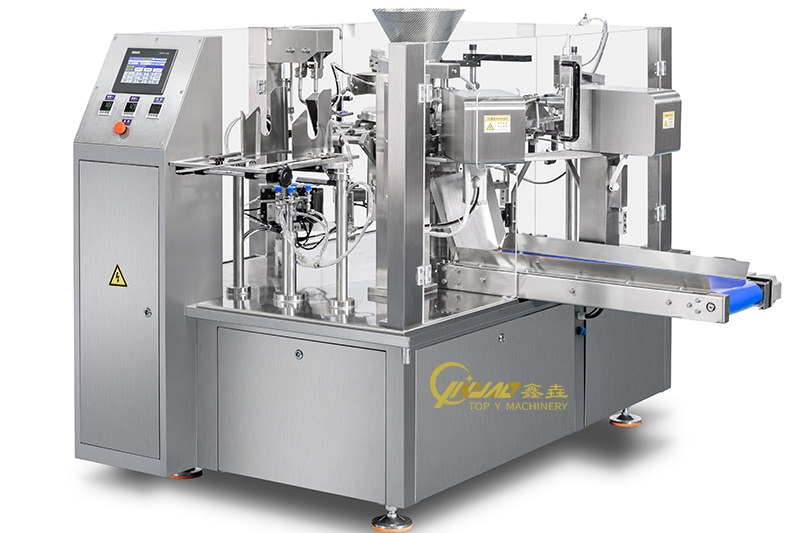
A rotary Doypack filling machine is built around a circular turret. Pouches are held by grippers attached to this turret, which rotates intermittently, moving the pouch from one station to the next as it circles the machine. This design is renowned for several key advantages:
- High Speed: The continuous, circular motion allows for very high throughput. As one pouch is being filled, another is being opened, another is being sealed, and so on, all simultaneously. Rotary machines are the go-to choice for high-volume production, capable of speeds from 40 up to 100 bags per minute (BPM) or even higher on certain models.
- Stability and Consistency: Because the pouches are securely clamped and move in a smooth, controlled arc, the process is extremely stable. This is particularly beneficial when handling liquids or fine powders, as it minimizes splashing and dust generation. The fixed path ensures every pouch undergoes the exact same process, leading to high consistency in fill and seal quality.
- Smaller Footprint for Speed: For the output they provide, rotary machines can be more compact than a linear machine of equivalent speed would be. Their circular design efficiently packs numerous stations into a relatively small area.
Rotary machines are ideal for dedicated production lines where a company is packaging a large volume of the same or similarly sized products. Industries like snack foods, coffee, and pet food heavily rely on rotary systems.
When to Choose a Linear Doypack Filling Machine
In a linear Doypack filling machine, the stations are arranged in a straight line. The pouches are moved from one station to the next along a linear track. While this design is generally simpler, it offers its own unique set of benefits, making it the right choice for many applications.
- Flexibility and Versatility: The primary advantage of a linear machine is its flexibility. The straight-line design makes it much easier to adjust for a wide range of pouch sizes, from small, single-serve packets to large, bulk bags. Adding or removing stations is also typically simpler on a linear machine.
- Accessibility and Maintenance: The open, linear layout provides easy access to all components for cleaning, maintenance, and changeovers. This can reduce downtime and make the machine more user-friendly for operators.
- Lower Initial Investment: Generally, linear Doypack machines have a simpler construction than their rotary counterparts, which can translate to a lower upfront cost. This makes them an attractive option for small to medium-sized enterprises (SMEs) or companies just starting with automation.
A linear machine is the perfect choice for contract packagers (co-packers) who need to handle a variety of products and pouch sizes for different clients. It's also ideal for companies with a diverse product portfolio that requires frequent and rapid changeovers.
| Feature | Rotary Doypack Filling Machine | Linear Doypack Filling Machine |
|---|---|---|
| Speed | High (40-100+ BPM) | Moderate (20-50 BPM) |
| Layout | Circular turret | Straight line |
| Best For | High-volume, dedicated production lines | Diverse products, frequent changeovers, co-packers |
| Flexibility | Good, but changeovers can be more involved. | Excellent for wide range of bag sizes. |
| Footprint | Compact for its speed. | Can be long, especially with multiple optional stations. |
| Cost | Higher initial investment. | Lower initial investment. |
Specialized Doypack Filling Machines
Beyond the rotary versus linear debate, the industry has developed machines optimized for specific and challenging applications. These specialized units incorporate unique features to handle products that standard machines might struggle with, or to fit into particular production environments.
Liquid Doypack Filling Machines and Their Features
Packaging liquids and viscous products like sauces, juices, oils, and soups into pouches presents unique challenges. Splashing, foaming, and ensuring a clean seal area are major concerns. Specialized liquid Doypack filling machines are engineered to address these issues.
Key features include:
- Drip-Free Nozzles: The filling nozzles are designed with a shut-off valve that prevents any product from dripping onto the seal area of the pouch after the fill is complete. A dirty seal area is a primary cause of seal failure.
- Bottom-Up Filling: For foamy products like soaps, the filling nozzle can be programmed to lower to the bottom of the pouch and retract as it fills. This minimizes aeration and foaming.
- Liquid Piston or Pump Fillers: These machines are integrated with highly accurate liquid fillers. Piston fillers are excellent for a range of viscosities, while servo-driven pumps offer precise control for thin liquids.
- Enhanced Cleaning/CIP Features: Machines designed for food and beverage often have Clean-in-Place (CIP) capabilities, allowing the filling system to be thoroughly cleaned and sanitized without extensive disassembly.
Mini Doypack Filling Machines for Smaller Operations
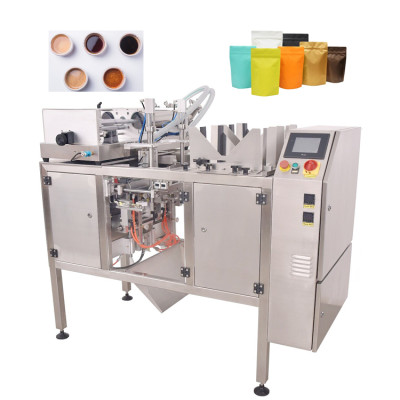
Not every business needs a high-speed, industrial-scale machine. For startups, artisanal producers, or for lab testing and small batch production, a "mini" Doypack filling machine is an ideal solution. These compact, often tabletop machines, offer the benefits of automation on a much smaller scale.
Characteristics of mini Doypack machines:
- Compact Footprint: Their primary advantage is their size. They can fit into small production spaces where a full-size machine would be impossible.
- Lower Speed and Cost: They operate at slower speeds, typically in the range of 5-15 BPM, and have a significantly lower price point, making automation accessible to more businesses.
- Simplicity: They often have fewer bells and whistles, focusing on the core functions of filling and sealing. This makes them easy to operate and maintain.
- Ideal for Market Entry: They allow a small company to professionally package its product in Doypacks, test the market, and build a brand before scaling up to a larger, faster machine.
These mini machines are perfect for products like gourmet spices, craft coffee, or boutique cosmetic samples, where production volumes are initially low but professional presentation is still essential.
Optimizing Your Doypack Filling Machine: Conversion and Maintenance
Owning a Doypack filling machine is only the first step. To truly unlock its value and achieve a strong return on investment, businesses must master its operation, particularly the art of efficient changeovers and the discipline of routine maintenance. Minimizing downtime is the ultimate goal, and this is achieved through a combination of smart features, well-trained operators, and a proactive approach to machine care.
The Importance of Efficient Changeovers on a Doypack Filling Machine
In today's market, with its demand for product variety and smaller batch sizes, a packaging machine is often not just set up for one product and left to run for weeks. Companies may need to switch from packaging granola in a large pouch in the morning to packaging almonds in a small pouch in the afternoon. This process of converting the machine from one pouch size or product to another is called a "changeover." The efficiency of this process is a critical performance metric.
Minimizing Downtime with Quick Conversions
Every minute the machine is stopped for a changeover is a minute it isn't producing, which directly impacts profitability. Long changeovers can create production bottlenecks and reduce overall equipment effectiveness (OEE). Therefore, modern Doypack machines are increasingly designed with features that facilitate quick and repeatable conversions. These "tool-less" or "quick-change" features often involve using hand-cranks, levers, and numbered guides instead of requiring a toolbox full of wrenches and Allen keys. The goal is to make the process as simple, fast, and operator-friendly as possible.
Saving Settings for Future Use on Your Doypack Filling Machine
One of the most powerful features of a modern PLC-controlled Doypack machine is the ability to save "recipes" on the HMI (Human-Machine Interface). A recipe is a saved file that contains all the machine parameters for a specific pouch and product combination. This includes:
- Speeds and timings for all motors
- Sealing temperatures and dwell times
- Positions of various components
- Parameters for integrated printers or fillers
When an operator needs to switch back to a previously run product, they simply select the corresponding recipe from a menu on the touchscreen. The machine then automatically adjusts many of its electronic settings, drastically reducing the manual setup time. This not only speeds up the changeover but also ensures consistency, as the machine is returned to the exact settings that were proven to work well for that product.
Adjusting Your Doypack Filling Machine for Different Pouches
While recipes can handle the electronic adjustments, some mechanical adjustments are almost always necessary when changing pouch sizes. Let's walk through the typical steps required to change from a wider pouch to a narrower one. The key is to make these adjustments systematically.
Step 1: Adjusting Bag Clamps via HMI
The grippers or clamps that hold the pouch are one of the first components to adjust. On many modern machines, this is now a semi-automated process.
- The operator will go to the changeover screen on the HMI.
- They may be prompted to enter the new pouch width in millimeters.
- The machine's servo motors will then automatically drive the pairs of clamps closer together to the specified width.
- The operator's role is to verify the adjustment is correct and perhaps make a fine-tuning manual adjustment if needed. This automated feature is a major time-saver compared to manually adjusting each clamp individually.
Step 2: Adjusting Bag Feed Guides
The bag magazine, where the empty pouches are stacked, needs to be adjusted to hold the new, narrower pouch size securely.
- This is typically a manual adjustment.
- There are side guides and a backstop that need to be moved.
- Operators will loosen a knob or lever, slide the guides until they are just touching the new stack of pouches (without being so tight they constrict movement), and then re-tighten the knob.
- Many machines have measurement scales or rulers etched into the components to help the operator set the guides to the correct position quickly and accurately.
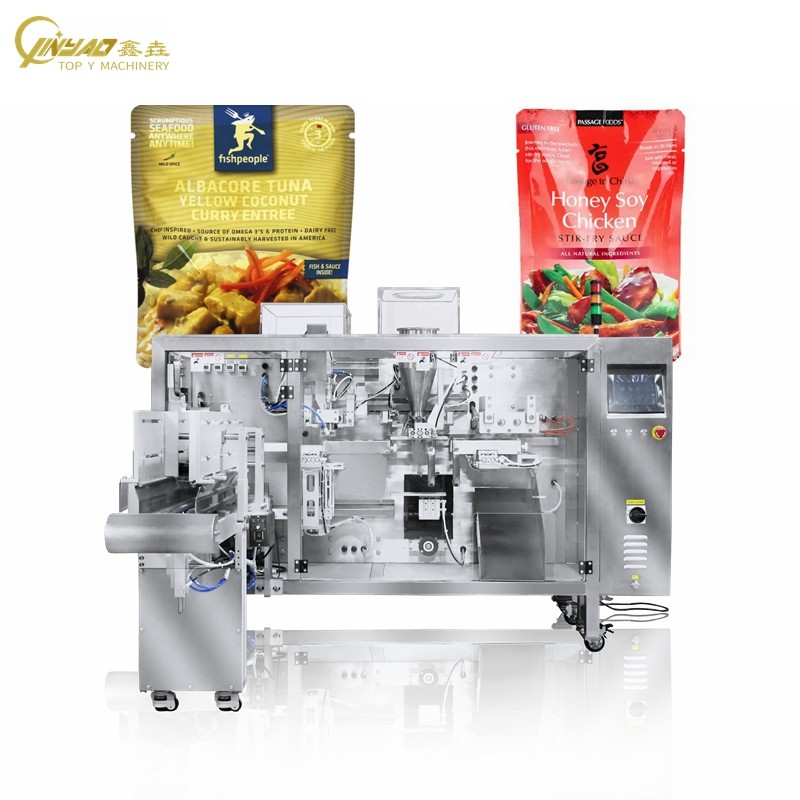
Step 3: Adjusting Bag Feed Rollers on a Doypack Filling Machine
The mechanism that pushes the pouches from the magazine into the pick-up area often involves rollers or belts. These also need to be adjusted to the new pouch width.
- Similar to the magazine guides, these adjustments are usually manual.
- The operator will adjust the horizontal position of the rollers or belts so they are centered on the new pouch size.
- The goal is to ensure the pouch is fed straight and is presented in the correct position for the pick-up arm's suction cups. An incorrectly fed pouch is a common cause of machine faults.
Step 4: Testing Your Changes and Minimizing Waste
Once all the mechanical and electronic adjustments have been made, the job isn't quite finished. It's crucial to test the new setup before starting a full production run.
- Jogging the Machine: Operators will use the "jog" or "inch" mode to cycle the machine slowly, one station at a time, with a single pouch. This allows them to carefully observe the pouch as it moves through each station—pick-up, opening, filling, sealing—to ensure everything is aligned and functioning correctly.
- Test Run: After a successful jog-through, the operator might run a short burst of 5-10 pouches at low speed.
- Inspection: These test pouches are then carefully inspected. Is the seal strong and complete? Is the date code in the right place? Is the zipper functioning?
- Ramp-Up: Only after this verification process is complete will the operator bring the machine up to its full production speed.
This systematic testing process may seem to take extra time, but it is far more efficient than starting a full run only to produce hundreds of wasted, faulty pouches because of a small setup error. It's a critical part of a waste-minimization and quality assurance strategy.
Choosing the Right Doypack Filling Machine for Your Business
Investing in a Doypack filling machine is a significant capital expenditure and a strategic decision that can shape your production capabilities for years to come. Choosing the right machine requires a thorough evaluation of your current needs, future goals, and the specific characteristics of your products. It's about finding the perfect balance between speed, flexibility, features, and budget.
Factors to Consider Before Investing in a Doypack Filling Machine
Diving into the market without a clear set of requirements can be overwhelming. To navigate the options effectively, it's essential to analyze your operation from several key angles. This will arm you with the necessary information to have productive conversations with machine manufacturers.
Product Type and Characteristics
The nature of your product is the single most important factor, as it dictates the type of dosing system required and other specialized features.
- Solids & Granules: Are you packaging a single, free-flowing item like rice, or a complex mixture like trail mix? Is the product fragile like potato chips or durable like nuts? Fragile products may require gentler handling, such as a bucket elevator and a machine with features to reduce drop height.
- Powders: Powders can be free-flowing (like granulated sugar) or non-free-flowing (like flour). Non-free-flowing powders require an auger filler to be properly dispensed. The dustiness of the powder is also a concern; a dusty environment can interfere with sealing, so dust collection systems at the filling station are often necessary.
- Liquids & Pastes: What is the viscosity of your product? A thin, water-like juice requires a different pump and nozzle system than a thick, viscous paste like tomato sauce. Foaming properties must also be considered, potentially requiring bottom-up filling capabilities.
Production Volume and Speed Requirements
Your current and projected production output will determine the necessary speed of the machine.
- Calculate BPM: You need to determine how many bags per minute (BPM) the machine must produce to meet your demand. Consider your daily or weekly production targets and the number of shifts you run.
- Don't Overlook Efficiency: The manufacturer's quoted maximum speed (e.g., 60 BPM) is often a theoretical maximum. Your actual, real-world output will be lower due to changeovers, film roll changes, and maintenance. It's wise to choose a machine with a rated speed about 20-30% higher than your required net output.
- Future Growth: Don't just buy for today. If you anticipate significant growth in the next 3-5 years, it may be more cost-effective to invest in a faster machine now rather than having to buy a second machine or replace your initial one in a short time.
Pouch Specifications and Materials
The machine must be able to handle your chosen packaging. Bring samples of your pouches when talking to manufacturers.
- Size Range: What are the minimum and maximum pouch widths and lengths you will be running? Ensure the machine can accommodate your entire range. The flexibility to handle a wide range of sizes is a key feature of linear machines.
- Pouch Material: The thickness and material composition of your pouch film affect the required sealing parameters (temperature, pressure, dwell time). Thicker, multi-layered films with foil may require more powerful sealing jaws.
- Pouch Features: Does your pouch have a zipper, a spout, a hang hole, or a tear notch? Each of these features requires a corresponding station or capability on the machine. A zipper, for example, needs a zipper opening station. A corner spout requires a completely different type of specialized machine.
Why TOP Y Machinery is Your Go-To Doypack Filling Machine Manufacturer
When it comes to selecting a partner for your packaging automation journey, you need more than just a machine supplier. You need a manufacturer with a proven track record, a commitment to innovation, and a focus on customer success. TOP Y Machinery embodies these qualities, positioning itself as a leading provider of Doypack filling solutions.
Our Commitment to Quality and Innovation in Doypack Filling Technology
At TOP Y Machinery, our engineering philosophy is grounded in reliability, efficiency, and forward-thinking design. We don't just build machines; we develop robust packaging solutions.
- Built to Last: We utilize high-quality components, including stainless steel construction (SUS304/316) for durability and hygiene, and world-class electronics from brands like Siemens, Omron and Schneider for reliability.
- Continuous Improvement: Our R&D team is constantly working to integrate the latest technologies into our machines. This includes more intuitive HMIs, faster servo controls for precise movements, and energy-efficient designs. We are always exploring new ways to improve speed, reduce waste, and make our machines easier to operate and maintain.
- Adherence to Standards: Our machines are built to meet rigorous international safety and quality standards, ensuring they can be seamlessly integrated into any modern production facility.
Tailored Solutions for Your Specific Doypack Filling Needs
We understand that every business and every product is unique. That's why we don't believe in a one-size-fits-all approach.
- Consultative Process: Our process begins with a deep dive into your specific needs. We listen to your requirements regarding product, pouch types, speed, and floor space.
- Custom Configuration: We then work with you to configure the ideal machine for your application. Whether you need a simple linear machine for a startup or a high-speed rotary machine with full gas-flushing and date-coding capabilities for a large-scale operation, we can tailor a solution. We will help you select and integrate the perfect dosing system—be it a multi-head weigher, auger filler, or liquid pump—to create a complete, turnkey packaging line.
- Unwavering Support: Our relationship doesn't end with the sale. We provide comprehensive training for your operators, detailed documentation, and responsive after-sales support and spare parts service to ensure your machine continues to operate at peak performance for its entire lifespan. Our goal is to be your long-term partner in packaging success.
Frequently Asked Questions (FAQ)
1. What is the typical cost of a Doypack filling machine? The price of a Doypack filling machine can vary dramatically based on its type, speed, features, and level of customization.
- Mini/Tabletop Machines: These entry-level models for small businesses or lab use can start from a few thousand dollars to around $20,000.
- Linear Machines: For small to medium-sized operations, a standard linear machine typically ranges from $30,000 to $80,000. The price increases with the addition of stations like printers, gas flush systems, and more complex fillers.
- Rotary Machines: High-speed rotary machines represent a more significant investment, with prices often starting around $80,000 and easily exceeding $200,000 for high-output, fully-featured systems integrated with high-end multi-head weighers. It's crucial to remember that the purchase price is only part of the total cost of ownership, which also includes installation, training, maintenance, and spare parts.
2. How much maintenance does a Doypack filling machine require? Modern Doypack machines are designed for reliability, but like any complex equipment, they require regular preventive maintenance to ensure longevity and optimal performance. A typical maintenance schedule includes:
- Daily: Cleaning the machine, especially around the filling and sealing areas, to remove product residue. Checking for any obvious loose parts or sensor blockages.
- Weekly: Inspecting and cleaning sealing jaws. Checking the condition of wear parts like vacuum suction cups and gripper pads. Lubricating specified points according to the manufacturer's guide.
- Monthly/Quarterly: More in-depth inspections of motors, belts, and bearings. Verifying safety functions. Calibrating sensors and scales if necessary. Most manufacturers provide a detailed maintenance checklist and schedule. Following this schedule proactively is the best way to prevent unexpected downtime.
3. Can I use eco-friendly or recyclable pouches with these machines? Yes, absolutely. This is a very important and growing trend. Many Doypack machine manufacturers are actively working with film suppliers to test and optimize their machines for new, sustainable materials. Modern machines can typically handle a variety of "green" pouches, including:
- Monomaterial Pouches: Pouches made from a single polymer (like PE/PE), which makes them fully recyclable in designated streams.
- Compostable Pouches: Pouches made from plant-based materials like PLA.
- Pouches with Recycled Content: Pouches that incorporate post-consumer recycled (PCR) plastics. The key consideration is that these materials may have different sealing properties (e.g., a narrower sealing temperature window) than traditional multi-laminate films. It's essential to work with both your pouch supplier and machine manufacturer to ensure compatibility and run tests to find the optimal sealing parameters (temperature, pressure, time) for a strong, reliable seal.
4. What is the difference between a Doypack machine and a VFFS machine? This is a fundamental distinction in packaging machinery.
- Doypack Machine (HFFS): This is a type of Horizontal Form-Fill-Seal (HFFS) machine that works with premade pouches. The pouches are already fully formed, with zippers or spouts, before they are loaded into the machine. The machine's job is simply to fill and seal them. This allows for higher-quality pouches with more complex features.
- VFFS Machine: This is a Vertical Form-Fill-Seal machine. It starts with a large roll of flat film. The machine itself forms the film into a tube, fills it with product, and then seals it vertically and horizontally to create the final bag (often a "pillow bag"). VFFS is extremely fast and cost-effective for simple bag styles but offers less versatility in terms of pouch shapes and re-closable features compared to Doypacks.
5. How difficult is it to train an operator to use a Doypack filling machine? Modern Doypack machines are designed with user-friendliness in mind. The widespread adoption of graphical HMIs (Human-Machine Interfaces) with intuitive touchscreens has significantly simplified operation. A new operator can typically be trained on the basic functions—starting, stopping, loading pouches, and clearing common faults—in a matter of hours. Mastering changeovers and troubleshooting more complex issues will take more time and experience. Quality training from the manufacturer during installation is invaluable and can greatly shorten the learning curve, empowering your team to run the machine efficiently and confidently.
Conclusion
Doypack filling machines are more than just equipment; they are a cornerstone of modern, efficient, and cost-effective packaging. Their ability to handle a diverse range of products and pouch styles, coupled with rapid conversion capabilities, makes them an invaluable asset for any company aiming to enhance its production and market presence. By understanding the operational mechanisms and strategic advantages of doypack filling machines, businesses can unlock new levels of productivity and product appeal. Embracing this automation is a step towards a more streamlined and profitable future. We encourage you to explore the potential of doypack filling machine technology to transform your packaging strategy and drive your business forward in a competitive market.