VFFS vs HFFS Packaging Machine: 7 Key Differences and How to Choose
A Vertical Form Fill Seal (VFFS) machine and a Horizontal Form Fill Seal (HFFS) machine differ in orientation, product suitability, speed, cost, and packaging style. VFFS operates vertically using gravity feed, ideal for powders, granules, and liquids at 50-200 bags/min with a compact footprint starting at $8,000. HFFS operates horizontally on a conveyor, suited for fragile, solid, or irregular items at 20-120 pouches/min with premium bag styles, starting at $25,000.
Choosing between VFFS and HFFS is one of the most critical equipment decisions a food manufacturer will make. Get it right, and your packaging line operates smoothly for years. Get it wrong, and you face product damage, wasted film, and constant frustration. Based on my years working with food producers across snacks, coffee, pet food, and frozen goods, this guide walks through the seven key differences that actually matter on the factory floor.
Table of Contents
- What Is a VFFS Packaging Machine?
- What Is an HFFS Packaging Machine?
- VFFS vs HFFS: 7 Key Differences
- How to Choose Between VFFS and HFFS: A Practical Framework
- Frequently Asked Questions About VFFS and HFFS Machines
What Is a VFFS Packaging Machine?
A Vertical Form Fill Seal (VFFS) machine forms bags from a roll of flat film in a continuous vertical motion. The film travels over a forming collar to create a tube, the back seal is welded, the bottom is sealed, product drops in from above via a multihead weigher or auger filler, and the top is sealed before cutting. Gravity assists the entire filling process, making VFFS exceptionally efficient for free-flowing products.
Common products: coffee beans and ground coffee, rice and grains, nuts and seeds, pet food kibble, frozen vegetables, snacks (chips, popcorn), powders (flour, protein), and liquids (with pump systems).
What Is an HFFS Packaging Machine?
A Horizontal Form Fill Seal (HFFS) machine forms packages horizontally. Film unwinds and travels flat, products are placed onto the lower film web (either manually or by a conveyor/robotic pick-and-place), a top web is applied, and longitudinal and transverse seals are made. Products remain supported throughout, preventing damage from dropping.
Common products: bakery items (cookies, crackers), fresh produce, ready meals, medical devices, cheese and meat slices, candy bars, and large or irregularly shaped items.
VFFS vs HFFS: 7 Key Differences
1. Machine Orientation and Workflow
VFFS machines operate vertically: film forms a tube, product drops from above by gravity. HFFS machines operate horizontally: film travels flat on a conveyor, product is placed onto the film web. This fundamental difference determines every other factor below.
2. Product Suitability
VFFS excels with free-flowing bulk products that tolerate a short drop: powders, granules, liquids, small solids. HFFS is the choice for fragile, single-unit, or irregular items that need gentle handling: cookies, electronics, medical devices, fresh produce, wrapped candies.
| Product Type | VFFS | HFFS |
|---|---|---|
| Powders & Granules | [✓] Excellent | [!] Possible with auger |
| Coffee Beans / Nuts | [✓] Excellent | [✓] Excellent (premium bags) |
| Liquids & Sauces | [✓] Good (with pump) | [!] Limited |
| Bakery / Cookies | [✗] Risk of breakage | [✓] Excellent |
| Fresh Produce / Meat | [✗] Not suitable | [✓] Excellent |
| Pet Food (Kibble) | [✓] Excellent | [!] Slower |
3. Packaging Styles
VFFS machines produce pillow bags, gusseted bags, quad-seal bags, and block-bottom bags. HFFS machines produce flow wraps, stand-up pouches (doypacks), zipper pouches, spouted pouches, and three-side seal sachets. If premium shelf presentation with stand-up pouches or resealable zippers is your goal, HFFS is the clear winner.
4. Speed and Throughput
VFFS: 50-200 bags per minute for small to medium bags, depending on product and film. The gravity feed enables higher speeds for free-flowing products. HFFS: 20-120 pouches per minute, with speed limited by product placement requirements. High-speed servo-driven HFFS systems can reach 200+ ppm for uniform products.
5. Floor Space and Layout
VFFS requires only 3-4 m² of floor space, making it ideal for plants with limited room. The compact vertical design maximizes height rather than floor area. HFFS needs 6-10 m or more of linear space for the infeed conveyor, sealing section, and outfeed, requiring a larger overall footprint.
6. Cost Comparison
Entry-level VFFS machines start at $8,000-$20,000, with industrial systems reaching $30,000-$100,000. HFFS systems start at $25,000 for basic models and can reach $200,000 for high-speed servo-driven units with multiple automation features. The more complex pouch handling mechanisms of HFFS explain the higher price point.
7. Changeover and Maintenance
VFFS changeover (bag length/width adjustments) takes 10-30 minutes. HFFS changeover (product format adjustments) can take 30-90 minutes. VFFS machines generally have fewer moving parts, making routine maintenance simpler and less frequent. However, HFFS machines with modular designs from experienced manufacturers can significantly reduce changeover times.
Quick Decision Guide
Choose VFFS if: Your product is free-flowing (powder, granule, liquid), you need high speed, floor space is limited, and standard pillow/gusseted bags work for your brand.
Choose HFFS if: Your product is fragile or irregular, you need premium bag styles (stand-up pouch, zipper, spout), gentle handling is critical, or you already have a horizontal production line.
Consider both if: You run multiple product lines with different characteristics. Many manufacturers keep both VFFS and HFFS machines to cover their full product range.
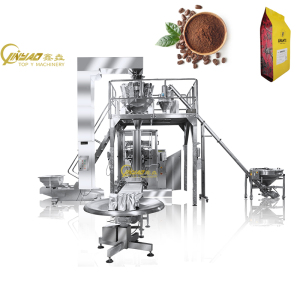
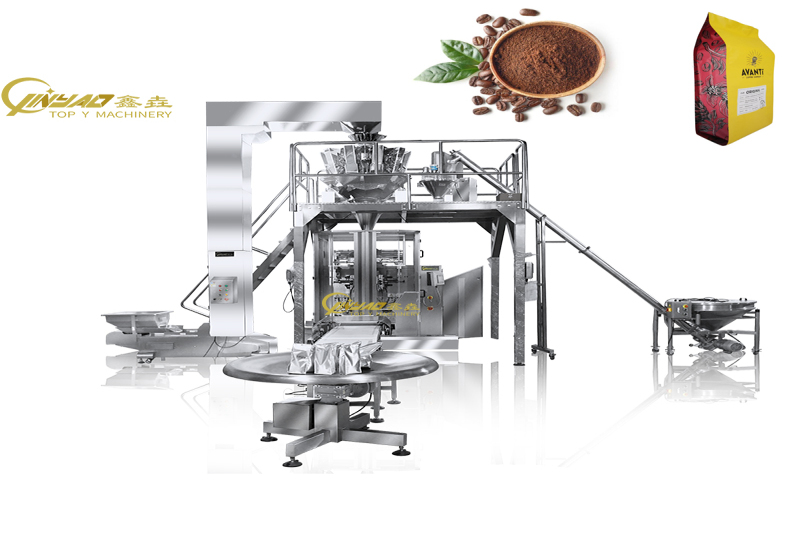
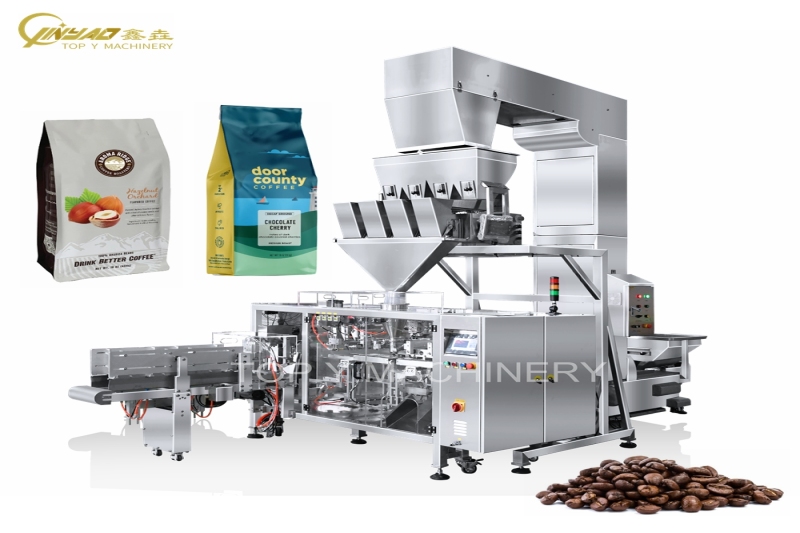
Automatic VFFS Coffee Bean & Powder Packing Machine
A versatile VFFS system designed for coffee beans, ground coffee, powders, and granules. Supports quad seal, gusset, and pillow bags. Equipped with multihead weigher or auger filler for precision dosing.
| Model | TOPY-VFFS |
| Bag Type | Quad Seal, Gusset, Pillow |
| Speed | 10-70 bags/min |
| Filling System | Multihead Weigher / Auger Filler |
| Film Width | 420-800 mm |
| Material | SS#304 Food Grade |
How to Choose Between VFFS and HFFS: A Practical Framework
When I advise food manufacturers on this decision, I ask them five questions:
- What is your product's physical form? Free-flowing → VFFS. Solid/fragile → HFFS.
- What bag style does your brand require? Standard pillow/gusset → VFFS is cheaper. Stand-up pouch/zipper → HFFS delivers premium presentation.
- What is your daily output? Above 10,000 bags/day → VFFS for speed. Below 5,000 pouches/day → HFFS quality may justify the cost.
- How much floor space do you have? Under 5 m² → VFFS. Over 10 m² linear → HFFS works.
- What is your budget? Under $20,000 → VFFS is your only realistic option. $25,000-200,000 → Both are viable depending on product.
TOP Y Machinery manufactures both VFFS and HFFS systems, backed by over 20 years of food packaging experience. Our engineers can help you evaluate your specific product, recommend the optimal configuration, and even test your product before you commit. With CE, FDA, and GMP certifications and a service network covering 100+ countries, we provide complete solutions—not just machines.
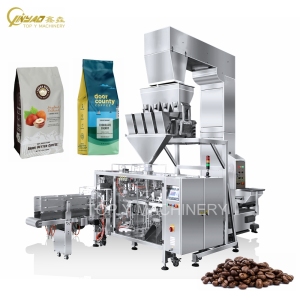
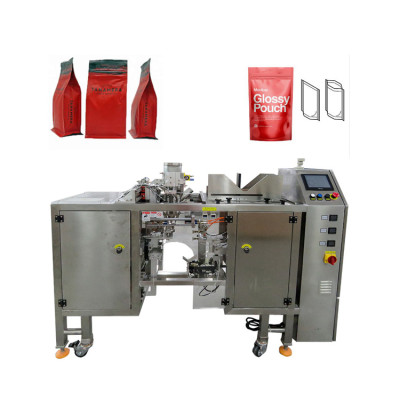
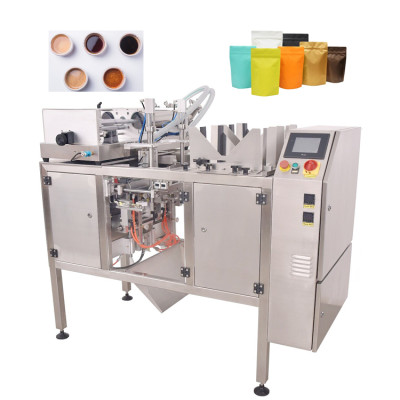
Horizontal Coffee Beans Packaging Machine
Premade zipper pouch and stand-up bag packaging machine. Handles doypack, gusset, and zipper bags with precision. Mitsubishi PLC and servo control for efficient, hygienic packaging.
| Model | TOPY-MDPL |
| Bag Width | 80-300 mm |
| Bag Length | 100-450 mm |
| Speed | 15-30 bags/min |
| Bag Type | Doypack, Stand-up Zipper, Gusset |
| Material | SS#304 |
Frequently Asked Questions About VFFS and HFFS Machines
Can one machine do both VFFS and HFFS?
No. VFFS and HFFS are fundamentally different machine architectures. However, some manufacturers offer modular platforms where certain components (fillers, sealers) can be shared.
Which machine uses less film?
VFFS typically uses 5-10% less film because the forming tube creates efficient bag shapes with minimal waste. HFFS systems have wider sealing margins that increase film consumption.
Is VFFS or HFFS easier to automate?
Both are highly automatable. VFFS integrates naturally with multihead weighers and auger fillers. HFFS integrates with robotic pick-and-place systems and conveyors. The automation level depends more on the manufacturer's engineering than the machine type.
What is the lifespan of a VFFS or HFFS machine?
With proper maintenance, both VFFS and HFFS machines from reputable manufacturers like TOP Y Machinery last 10-15 years. Key factors: regular cleaning, timely replacement of seal jaws and belts, and adherence to the maintenance schedule.
Conclusion
The VFFS vs HFFS decision comes down to your product's physical properties, your desired bag style, your production volume, and your budget. VFFS wins on speed, cost, and compactness for free-flowing products. HFFS wins on packaging quality, gentle handling, and premium bag styles for fragile or single-unit items.
At TOP Y Machinery, we have helped hundreds of food manufacturers across 100+ countries select, install, and optimize their packaging lines. Contact our team for a product test and personalized recommendation—whether VFFS, HFFS, or both.