Troubleshooting Common Problems with Horizontal Packaging Machines Explained
In the world of high-volume production, the efficiency of your packaging line is paramount. I understand how crucial reliable horizontal packaging machines are for businesses, especially when handling a constant flow of products like candies, baked goods, and snacks. These powerful workhorses, also known as flow wrappers or flowpack machines, are designed for speed and precision, but even the most advanced systems can encounter issues.
From my experience, knowing how to troubleshoot these common problems is vital for minimizing costly downtime and maintaining the consistent packaging quality your brand and customers expect. Even small misalignments or intermittent faults can quickly escalate into wasted product, damaged film, and significant production delays.
This comprehensive guide is designed to empower you with practical, step-by-step instructions for identifying and resolving the most prevalent challenges I've seen with horizontal packaging machines. By understanding the root causes of these issues, you can implement effective solutions and preventative measures, ensuring your operations run as smoothly and efficiently as possible.
General Operational Challenges: Troubleshooting Common Problems with Horizontal Packaging Machines
Operational disruptions are often the first sign of an underlying issue. These problems can range from simple jams to more complex electrical glitches, but they all lead to the same result: a halted production line. Understanding the fundamental mechanics and systems of your machine is the first step toward rapid and effective troubleshooting.
Understanding Your Flow Wrapper's Functions
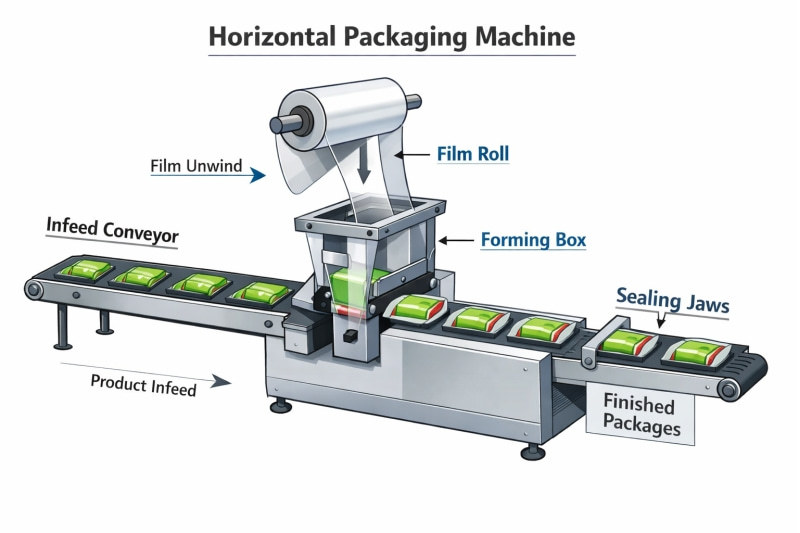
A horizontal form-fill-seal (HFFS) machine, or flow wrapper, is a sophisticated system where several components work in perfect synchrony. The process operates on a horizontal plane, making it ideal for single, solid items like chocolate bars, soap, or small toys. The basic workflow is a seamless, automated sequence:
- Infeed Conveyor: This is where the process begins. Products are placed on the infeed conveyor, which transports them into the wrapping section with precise spacing. Correct product spacing is critical to prevent jams and ensure proper synchronization with the sealing jaws.
- Film Feed System: A roll of packaging film is mounted on a spindle and fed into the machine. A series of rollers and a tension control system ensure the film unwinds smoothly and at a consistent speed, which is crucial for preventing wrinkles and tracking issues.
- Forming Box (Plow): As the film moves forward, it passes through a forming box or plow, which folds the flat film into a continuous tube around the stream of products.
- Sealing and Cutting System: The machine has two primary sealing mechanisms. First, longitudinal sealing wheels (fin sealers) create the bottom or side seal of the tube. Then, a rotating set of transversal sealing jaws (end seals) clamps down, sealing the front of one pack and the back of the next, while an integrated knife cuts them apart.
- Discharge Conveyor: The finished, sealed packages exit the machine via the discharge conveyor, ready for casing and shipping.
Addressing Common Mechanical Failures
Mechanical problems are among the most common issues that can halt a flow wrapper. These often stem from misalignment, wear and tear, or improper setup. Identifying the specific mechanical fault is key to a quick resolution.
Film Feed and Tension Issues
Problems with how the film feeds through the machine are a frequent source of frustration, leading to wrinkles, poor seals, and film breakage. When the film pulls out of the feed wheels or slips, it can be due to an incorrectly adjusted forming box or insufficient film tension.
Common Causes and Solutions:
| Problem Symptom | Common Causes | Recommended Actions |
|---|---|---|
| Film Wrinkling | Incorrect forming box alignment; Excessive film tension; Worn or dirty rollers. | Check that the film is centered and tracking straight into the forming box. Reduce film tension gradually. Clean all rollers to remove any residue. |
| Film Slippage | Low or unstable film tension; Contaminated or worn feed wheels; Incorrect brake adjustment. | Adjust the unwind brake to ensure smooth film feed without jerking. Inspect feed wheels for wear and ensure proper pressure. |
| Film Misalignment | Uneven film roll tension; Worn rollers or belts; Variations in film thickness. | Calibrate tension controls and inspect rollers for wear. Ensure the film roll is centered on the unwind shaft. |
An important diagnostic technique is to "follow the wrinkles." Starting from the finished package and moving upstream toward the film roll, identify the point where wrinkles begin or worsen. This location often points directly to the source of the problem, such as a misaligned roller or a spot with too much drag.
Product Jamming and Conveyor Glitches
Product jams are a major cause of downtime and can even damage the product or the machine itself. Most jams occur because the product's timing is out of sync with the machine's cycle. If a product is crushed in the sealing jaws, it's a clear sign of misalignment in either the infeed timing or product spacing.
Key Troubleshooting Steps:
- Check Product Positioning: Ensure products are centered correctly on the infeed conveyor. Incorrect placement is a common reason for the cutter to slice into the product. The product should arrive just as the film tube opens to receive it.
- Synchronize Infeed Timing: The infeed conveyor speed must match the cycle rate of the sealing jaws perfectly. Adjust the "Product Position" parameter on the control panel to fine-tune this timing.
- Inspect Product Pushers: The metal lugs or "pushers" on the conveyor chain must be properly aligned and not worn. If they are loose or wobbly, they can push the product crookedly into the film tube.
- Maintain Clearances: Ensure there is enough clearance around the product as it enters the forming box. An object that is too tall or wide for the setup will inevitably jam.
Cutter and Sealing Jaw Misalignment
The cutting and sealing jaws perform the final, critical step in the packaging process. If they are misaligned, you will experience a host of problems, from poor seals to uncut or damaged packages.
Diagnosing Cutter and Jaw Issues:
- Inaccurate Cutting: If the machine fails to cut at the color mark on printed film, the cutter timing is likely incorrect. This can usually be fixed by adjusting the "Color Mark Position" or registration parameters on the control panel. If the issue persists, the photo-eye sensor may be dirty or its sensitivity may need adjustment.
- Failure to Cut Through Film: If the knives aren't cutting completely, they may be blunt or worn out. It is recommended to always replace the knife and the anvil (the surface it cuts against) together, as a new knife paired with a worn anvil will fail prematurely.
- Over-Adjusted Knives: If you hear a banging sound or feel a heavy impact as the jaws rotate, the knife has been over-adjusted and is hitting the anvil with too much force. This can damage both the knife and the sealing jaw. You must reset the adjustment to prevent serious damage.
- Misaligned Jaws: Worn or misaligned sealing jaws are a primary cause of inconsistent wrapping and weak end seals. Proper alignment requires careful adjustment according to the machine's manual, ensuring that clearance and pressure are set correctly. Never use the jaw clearance adjustment as a shortcut to fix a cutting problem.
Electrical System and Sensor Malfunctions
While mechanical problems are often visible, electrical issues can be more elusive. Faulty sensors, loose wiring, or power fluctuations can cause erratic machine behavior or complete shutdowns.
Common Electrical and Sensor Problems:
- Sensor Failures: Photo-eye sensors are critical for detecting registration marks on printed film. If a sensor lens is dirty, coated with dust or residue, or has been knocked out of alignment, it can lead to registration faults and incorrect bag lengths. Regular cleaning and verification of sensor alignment are essential.
- Faulty Connections: Loose or damaged wires are a frequent cause of intermittent machine stops or unpredictable behavior. Vibration over time can loosen electrical connections, so regular inspections of wiring at the control panel, motors, and sensors are recommended.
- Power Fluctuations: Power surges or instability can damage sensitive electronic components and control systems. If the machine experiences random shutdowns, check that it is connected to a stable power source and consider using surge protectors.
- HMI or PLC Errors: An error message on the Human-Machine Interface (HMI) screen often points to a specific issue. These errors can result from a faulty sensor, a PLC module failure, or a communication loss between the HMI and the PLC.
Regular maintenance, including cleaning sensors and checking electrical connections, can prevent many of these issues before they escalate.
Solving Sealing Imperfections: Troubleshooting Common Problems with Horizontal Packaging Machines
The integrity of your product's packaging hinges on the quality of its seal. A faulty seal not only compromises the product's freshness and safety but also reflects poorly on your brand. Sealing imperfections are often subtle but can lead to significant issues like leaks, contamination, and reduced shelf life. Understanding the different types of sealing flaws and their root causes is crucial for maintaining consistent, high-quality packaging.
Types of Sealing Flaws to Identify
Recognizing specific seal defects is the first step toward diagnosing the problem. Common flaws include weak seals, wrinkles, and burn marks, each pointing to different underlying issues in the sealing process. Regular visual inspection is key to catching these problems early.
Incomplete or Weak Seals
A weak or incomplete seal is one of the most critical failures, as it directly compromises the product's barrier protection. These seals may appear properly closed but come apart with minimal handling.
- Symptoms: You may notice open seams, packages that leak, or seals that peel apart easily. These issues can occur when the sealant layers of the film fail to bond correctly.
- Common Causes: The most frequent culprit is insufficient sealing temperature or dwell time (the duration the jaws are in contact with the film). Other causes include product contamination (crumbs, dust, or moisture) in the seal area, misaligned jaws, or insufficient pressure.

Wrinkled or Distorted Seals
Wrinkles in the seal area are more than just a cosmetic issue; they create channels where leaks can occur and can weaken the overall seal integrity.
- Symptoms: Visual wrinkles, folds, or pleats along the end seal or fin seal. These often worsen as the machine warms up or after a film roll change.
- Common Causes: Wrinkling is often a result of incorrect forming box alignment, excessive film tension, or uneven pressure from the sealing wheels. If the film is not tracking centrally or is pulled too tightly, it can create these distortions before it even reaches the sealing jaws.
Burnt or Damaged Seals
Burnt seals are a sign of excessive heat application, which can make the film brittle and prone to cracking under stress. While these seals may look intact initially, they often fail during shipping or handling.
- Symptoms: The seal area appears melted, scorched, discolored, or brittle. In severe cases, you might find holes burned through the film.
- Common Causes: The primary cause is a sealing temperature that is too high for the film type or a dwell time that is too long. Excessive sealing pressure can also contribute to this issue by thinning out the film and making it more susceptible to burning.
Diagnosing Root Causes of Poor Seal Quality
A perfect seal is the result of a precise balance between three key factors: temperature, pressure, and time. A deviation in any one of these can lead to the flaws described above. A systematic approach to diagnosing the root cause is essential for effective troubleshooting.
Optimizing Temperature and Dwell Time
Temperature and time are the most critical variables in creating a strong seal. The goal is to apply enough heat for a long enough duration to melt the sealant layer of the film without damaging the substrate.
- Temperature: This is often the first parameter to check. If the temperature is too low, the film's sealant layer won't melt properly, resulting in weak bonds. If it's too high, the film will burn or distort. Always consult the film manufacturer's specifications for the recommended sealing temperature range, which is often between 250°F and 350°F (121°C and 177°C) for standard films. Use a contact thermometer to verify that the temperature displayed on the controller matches the actual surface temperature of the jaws.
- Dwell Time: This is the amount of time the sealing jaws are in contact with the film. Thicker films or complex multi-layer materials require a longer dwell time to allow heat to penetrate fully. If your machine speed is too high, the dwell time may be insufficient, leading to weak seals. Try increasing the dwell time in small increments (e.g., 0.1 seconds) until a consistent, strong seal is achieved.
Adjusting Sealing Jaw Pressure
Pressure is the force that brings the molten sealant layers together to form a bond. Both insufficient and excessive pressure can cause problems.
- Insufficient Pressure: If the pressure is too low, the film layers may not make full contact, resulting in weak or incomplete seals with tiny gaps.
- Excessive Pressure: Too much pressure can crush or fracture the end seal, especially at the corners or over the fin seal area. It can also cause the molten film to squeeze out, thinning the seal and making it weaker.
- How to Adjust: Sealing pressure can be adjusted via regulating screws on the jaw assembly. A good way to test for even pressure is to use carbon paper between the jaws when they are at room temperature; a uniform, clear impression indicates that the pressure is distributed evenly. When hot, the jaws should be able to hold a piece of paper firmly without tearing it when you try to pull it out.
Ensuring Correct Film Type
Not all films are created equal. The type of packaging film you use must be compatible with your machine's sealing method and your product's requirements.
- Material Compatibility: Some films are designed for heat sealing, while others are made for cold-seal applications. Using a cold-seal film with a heated jaw, or vice versa, will result in seal failure.
- Film Structure: Multi-layer laminated films often require higher temperatures and longer dwell times to bond properly compared to simpler monolayer films. Sustainable mono-material films, while better for the environment, often have a narrower sealing window and require tighter process control.
- Film Quality: Inconsistent film thickness, surface contamination, or poor quality from the supplier can also be the root cause of sealing issues. If you've exhausted all other options, try a different roll or batch of film to see if the problem persists.
Cleaning Sealing Jaws
This simple step is often overlooked but is a critical part of a preventive maintenance routine. Product residue, melted plastic, or other debris on the face of the sealing jaws can act as an insulator, preventing proper heat transfer and causing contamination in the seal area.
- Impact of Contamination: Buildup on the jaws leads to uneven heat distribution, which can cause intermittent weak spots or incomplete seals. It also creates an unstable surface that can contribute to cutting problems.
- Proper Cleaning Procedure: Sealing jaws should be cleaned regularly. It's often best to clean them while they are still warm (but not at full operating temperature) using a brass brush or a non-abrasive scouring pad. Avoid using hard steel tools like screwdrivers or coarse brushes that can scratch or damage the delicate serrations on the jaw face.
By methodically checking these four key areas—temperature/time, pressure, film type, and cleanliness—you can diagnose and resolve the vast majority of sealing imperfections.
Proactive Strategies: Preventing Common Problems with Horizontal Packaging Machines
While effective troubleshooting is essential, the ultimate goal is to prevent problems from occurring in the first place. A proactive approach to maintenance, training, and technology can transform your packaging line from a reactive environment to one of high efficiency and reliability. Implementing these strategies will not only reduce unexpected downtime but also extend the lifespan of your valuable equipment.
Implementing Regular Maintenance Schedules
Preventative maintenance is the bedrock of a reliable packaging operation. Rather than waiting for a component to fail, a structured maintenance schedule addresses wear and tear before it can cause a shutdown. A well-maintained machine runs more efficiently, uses less energy, and produces higher-quality packages.
Developing a detailed maintenance plan is the first step. This should be a comprehensive checklist tailored to your specific machine, outlining tasks to be performed on a daily, weekly, monthly, and seasonal basis.
Sample Preventive Maintenance Checklist:
| Frequency | Task | Purpose |
|---|---|---|
| Daily | Clean machine surfaces, especially sealing jaws, sensors, and rollers. | Prevents buildup of product debris and residue that can cause sealing issues, sensor errors, and film jams. |
| Inspect safety guards and emergency stops. | Ensures a safe operating environment for personnel. | |
| Check compressed air pressure and oil levels in gearboxes. | Guarantees that pneumatic systems and mechanical drives operate within specified parameters. | |
| Weekly | Lubricate all moving parts (gears, chains, bearings) with manufacturer-recommended lubricant. | Minimizes friction and wear, preventing premature component failure and ensuring smooth operation. |
| Inspect cutting knives for sharpness and damage. | Maintains clean, consistent cuts and prevents film tearing. | |
| Check electrical connections for tightness. | Prevents intermittent electrical faults caused by vibration. | |
| Monthly | Inspect belts and chains for wear and proper tension. | Avoids slippage and stress on motors, which can lead to timing and synchronization issues. |
| Calibrate sealing jaw temperature with a contact thermometer. | Ensures the temperature on the controller display matches the actual sealing surface temperature, preventing weak or burnt seals. | |
| Inspect and clean machine filters (air and vacuum). | Maintains proper airflow and prevents contamination in pneumatic systems. | |
| Seasonally/Annually | Replace high-wear parts like belts, sealing jaw covers (Teflon), and bearings. | Proactively addresses component lifespan to avoid unexpected breakdowns during peak production. |
| Verify all machine settings against original manufacturer specifications. | Resets any gradual deviations that may have occurred over time, returning the machine to its optimal state. |
Keeping a detailed maintenance log is crucial. This documentation tracks all inspections, repairs, and part replacements, helping to identify recurring problems and providing a valuable history for audits and future troubleshooting.
Comprehensive Operator Training Programs
Your machine operators are your first line of defense against downtime. A well-trained operator is not just someone who knows how to start and stop the machine; they are an integral part of the maintenance and quality control process. Investing in comprehensive training empowers your team to work more safely, efficiently, and proactively.
Benefits of a Well-Trained Team:
- Increased Efficiency: Trained operators understand how different settings affect package quality and can make quick, accurate adjustments, reducing waste and interruptions.
- Reduced Downtime: Operators who can identify the early signs of a problem—like an unusual noise or a slight change in seal quality—can flag issues before they cause a major breakdown. They become adept at handling minor troubleshooting, which resolves many problems on the spot.
- Enhanced Safety: Proper training ensures that all employees understand how to operate the machinery safely, including all lockout/tagout procedures, minimizing the risk of injury.
- Improved Maintenance: When operators understand the "why" behind maintenance tasks, they are more likely to perform them correctly and consistently. They can spot the need for maintenance and prevent malfunctions before they happen.
Training should be an ongoing process, including hands-on practice, mentorship from experienced technicians, and regular refresher courses, especially when new equipment or technology is introduced.
Leveraging Predictive Diagnostics
The next frontier in maintenance is moving from a preventive to a predictive strategy. Predictive maintenance uses modern sensor technology and data analytics to forecast equipment failures before they occur. By monitoring the actual condition of machine components in real-time, you can schedule maintenance at the precise moment it's needed, optimizing resources and virtually eliminating unplanned downtime.
How Predictive Maintenance Works:
- Data Collection: Industrial Internet of Things (IIoT) sensors are installed on critical machine components to monitor key performance indicators like vibration, temperature, pressure, and power consumption.
- Data Analysis: This continuous stream of data is fed into advanced analytics software. Machine learning algorithms analyze the data, identifying patterns and subtle deviations from normal operation that are often precursors to a failure.
- Failure Prediction: When the system detects an anomaly—for instance, a slight increase in motor vibration or a temperature spike in a bearing—it alerts the maintenance team. The system can estimate the remaining service life of the component, allowing maintenance to be scheduled proactively.
Key Applications in Packaging:
- Vibration Monitoring: Sensors can detect impending failures in motors, gearboxes, and bearings by identifying changes in their vibration harmonics.
- Thermal Monitoring: Real-time temperature tracking on sealing jaws, heaters, and motors can prevent overheating and ensure consistent quality.
- Performance Analytics: Monitoring pump amperage, valve cycle counts, and pneumatic pressure can anticipate wear on these critical systems.
While implementing a full-scale predictive maintenance system may seem like a significant investment, the return is substantial. Studies have shown that this approach can dramatically reduce unplanned downtime, cut maintenance costs, and extend overall equipment lifespan. For any business aiming for peak operational excellence, leveraging these diagnostic tools is becoming a competitive necessity.
 A predictive maintenance dashboard displaying real-time data on machine health, helping to forecast potential failures.
As I've shown, while horizontal packaging machines are incredibly efficient, they can present challenges. However, with the right knowledge and a proactive approach that combines regular maintenance, operator training, and modern diagnostics, you can overcome most common problems and ensure smooth, uninterrupted operation.
My goal is always to help you achieve optimal performance and packaging quality. Remember, consistent checks and timely troubleshooting are your best defense against significant downtime and production losses. By empowering your team and investing in the health of your equipment, you are safeguarding your productivity and your bottom line.
If you ever encounter issues that seem beyond your immediate scope or require specialized a horizontal packing machine manufacturer, please don't hesitate. I strongly encourage you to contact our technical expert; as a leading horizontal packing machine manufacturer at TOP Y Machinery, we are dedicated to supporting your operational success with expert advice and solutions.