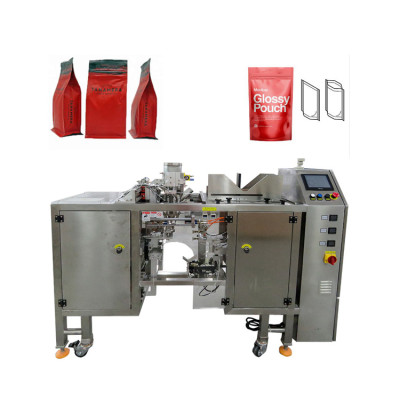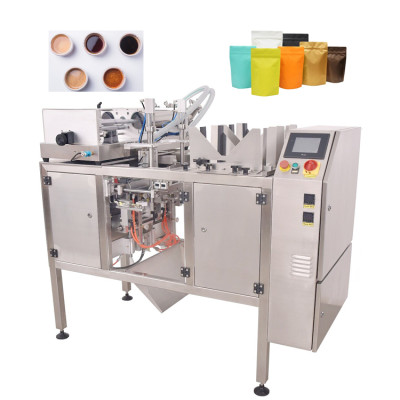
The Ultimate Guide to Pistachio Packaging Machines: Choosing the Right Size, Shape, and Price
As an expert in the field, I understand that choosing the right pistachio packaging machine can feel overwhelming with so many options for size, shape, and price. This guide is crafted to simplify your decision-making process. Pistachios, a valuable and nutritious product, deserve packaging that not only preserves their freshness and quality but also showcases their premium nature and optimizes your production line. We'll explore the critical factors you need to consider to make a confident investment.
The right packaging protects pistachios from spoilage, moisture, and contamination, extending their shelf life significantly. By the end of this guide, I aim for you to feel confident in selecting a Pistachio Packaging Machine that perfectly aligns with your business goals, production needs, and budget, ensuring a healthy return on investment.
Key Takeaways
- Define Your Goals: Before choosing a machine, clearly define your production volume, target market, and budget. Setting SMART (Specific, Measurable, Achievable, Relevant, Time-bound) goals is crucial for aligning your investment with your business strategy.
- Product Determines Machine: The type of pistachio you're packaging—whether in-shell or shelled—directly impacts the choice of machinery. In-shell pistachios have a longer shelf life due to their natural protective barrier and may require different handling than delicate kernels.
- Automation is Key to Efficiency: Automated packaging machines significantly boost productivity, reduce labor costs, and improve consistency compared to manual processes. The level of automation (semi-automatic vs. fully automatic) should match your production scale and growth plans.
- Packaging Style Matters: The shape and material of your packaging, from stand-up pouches to bulk bags, influence retail appeal, shelf life, and brand perception. Material choice is critical for protecting against oxygen, light, and heat.
- Consider Total Cost of Ownership: The price of a machine is more than its initial cost. Factor in installation, training, maintenance, and the value of after-sales support. A reliable machine from a reputable supplier can offer a better long-term return on investment.
- Partner with an Expert: Choosing a supplier with a strong reputation for quality, innovation, and support is as important as the machine itself. A good partner provides tailored solutions and long-term value.
Getting Started: What to Consider Before Choosing Your Pistachio Packaging Machine
Investing in packaging machinery is a significant step for any business. It requires careful consideration of your specific needs to ensure the chosen equipment enhances efficiency and profitability. Before diving into machine specifications, it's essential to establish a clear foundation based on your operational reality. This involves a thorough analysis of your production goals, the specific characteristics of your pistachio products, and a clear understanding of how automation will impact your overall business efficiency.
Understanding Our Production Goals and Volume
The first step in selecting the right packaging machine is to define your production objectives. Setting clear, measurable goals for your packaging operations is essential to stay competitive and ensure a return on investment. A solid strategy begins with understanding what you want to achieve. Are you aiming to increase production speed, reduce waste, improve quality control, or expand into new markets?
To effectively set these goals, consider the following:
- Define Your Targets: Use the SMART goal framework (Specific, Measurable, Achievable, Relevant, Time-bound) to create clear objectives. For instance, a goal could be "to increase packaging output by 30% within the next 12 months."
- Assess Current Capacity: Analyze your current production volume. How many units do you package per day, week, or month? This baseline is crucial for determining the required capacity of a new machine.
- Forecast Future Growth: Consider your business's growth trajectory. A machine that meets your current needs might become a bottleneck in a few years. It's often wise to invest in a system that can scale with your anticipated demand.
- Budgeting: Establish a realistic budget that accounts not just for the initial purchase price but also for long-term operational costs. This includes installation, training, and maintenance.
By first setting clear production goals, you create a roadmap that will guide you toward a machine that is not just a piece of equipment, but a strategic asset for your business growth.
Identifying the Type of Pistachios We're Packaging (Shelled vs. In-Shell)
The physical form of your pistachios is a primary determinant of the type of packaging machine you'll need. Shelled and in-shell pistachios have different characteristics that affect how they are handled, weighed, and packaged.
In-Shell Pistachios:
- Durability and Shelf Life: The shell acts as a natural protective barrier against oxygen, light, and heat, giving in-shell pistachios a longer shelf life. They are less prone to breaking during the packaging process.
- Weight and Volume: The shell accounts for over 50% of the total weight, which is a critical factor for weighing accuracy and cost calculations. Their irregular shape and size can also influence the choice of weighing system.
- Common Issues: Challenges include packaging split vs. non-split shells, potential for empty shells, and discoloration of the shell during storage.
Shelled Pistachios (Kernels):
- Fragility: Pistachio kernels are more delicate and susceptible to damage. The packaging machine must handle them gently to avoid breakage, which can devalue the product.
- Shelf Life: Without the protective shell, kernels are more exposed to oxygen and can become rancid more quickly. This necessitates packaging materials with high barrier properties and may require techniques like gas flushing (Modified Atmosphere Packaging - MAP) to extend freshness. A study demonstrated that a gas mixture in multilayer bags can effectively extend the shelf life of fresh pistachios for up to 3 months under refrigeration.
- Density and Flow: Kernels are denser and more uniform in shape than in-shell pistachios, which can affect the flow characteristics and the type of filler used.
Understanding these differences is crucial. A machine designed for robust, in-shell nuts may not be suitable for delicate kernels, and vice versa. Specialized equipment ensures that product integrity is maintained from the hopper to the final sealed bag.
Why the Right Pistachio Packaging Machine Matters for Our Business Efficiency
Investing in the right automated packaging machinery is a proven strategy for transforming business operations and gaining a competitive edge. Manual packaging processes are often slow, inconsistent, and labor-intensive, creating bottlenecks that restrict growth and increase operational costs. By automating, businesses can streamline workflows, reduce human error, and establish a more efficient and reliable production line.
The key benefits of integrating the right packaging machine include:
- Increased Productivity and Speed: Automated systems operate continuously at high speeds, packaging thousands of items per hour and drastically increasing throughput compared to manual labor. This allows businesses to meet tight deadlines and handle demand surges without overwhelming their workforce.
- Reduced Labor Costs: Automation significantly reduces the need for manual labor in repetitive packaging tasks. This allows businesses to reallocate employees to higher-value roles like quality control or machine maintenance. Companies implementing packaging automation often see a significant reduction in labor costs, sometimes by as much as 20-30% in the first year.
- Improved Consistency and Accuracy: Machines provide a level of precision that is nearly impossible for humans to replicate. This ensures that every package has a consistent weight and a high-quality seal, reducing product waste and improving customer satisfaction. Error rates for automated systems can be up to 50% lower than manual handling.
- Enhanced Product Quality and Safety: Automated filling and sealing minimize the risk of contamination, which is critical in the food industry. Proper packaging also protects the pistachios from damage, moisture, and pests, ensuring they reach the consumer in optimal condition.
Ultimately, a modern Pistachio Packaging Machine is not just a tool for putting nuts in a bag; it is a strategic investment that lowers costs, increases productivity, and enhances your brand's reputation for quality.
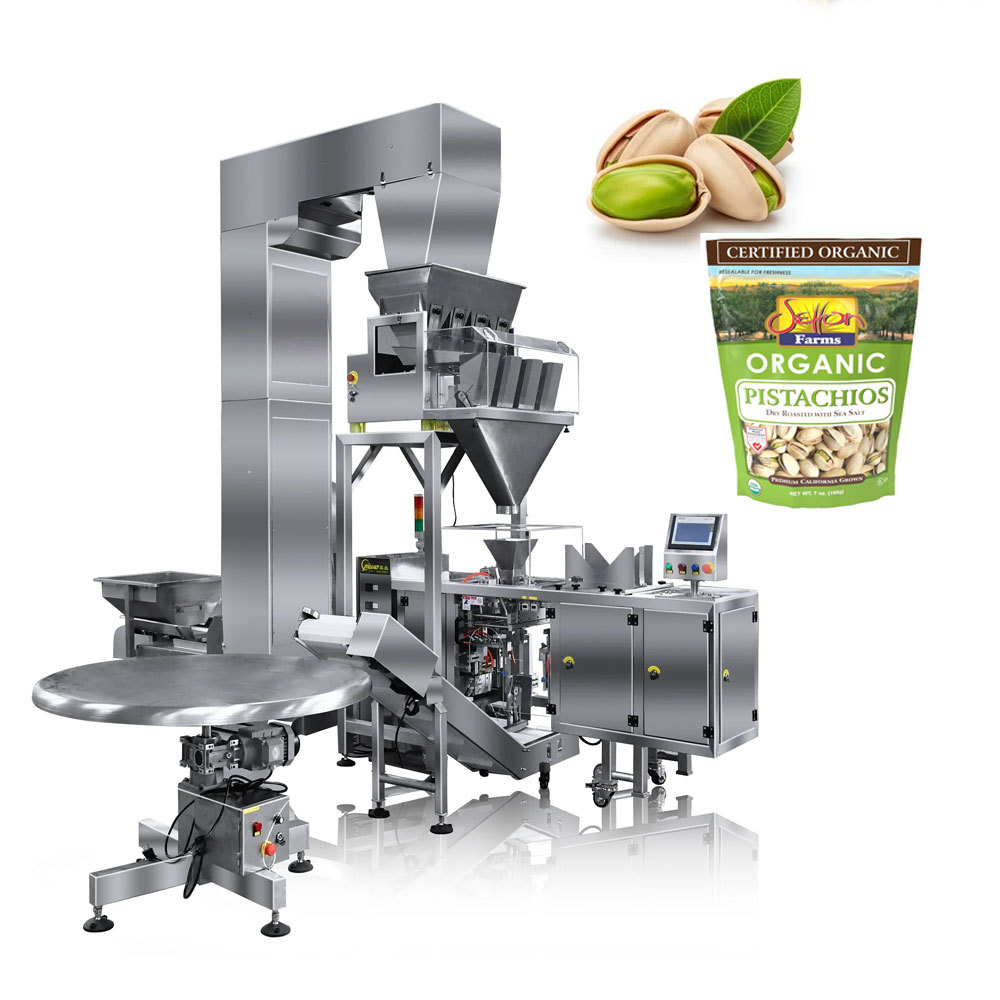
## Sizing Up Our Needs: Selecting the Right Pistachio Packaging Machine Capacity
After defining your foundational goals, the next critical step is to match the machine's capabilities with your physical and operational requirements. This involves a detailed evaluation of the machine's throughput, its physical footprint within your facility, and the level of automation that best suits your business model. Choosing the correct size and capacity is not just about meeting current demand; it's about investing in a solution that supports future growth and integrates seamlessly into your production environment.
Evaluating Throughput: How Many Packages Can Our Pistachio Packaging Machine Produce Per Minute?
Throughput is a primary performance metric for any packaging machine, representing the number of finished packages it can produce in a given timeframe, typically measured in bags per minute (BPM). This figure is fundamental to determining if a machine can meet your production targets.
To calculate the required throughput, you can use a basic formula: Throughput = Total Units to Produce / Total Operational Time
However, the advertised maximum speed of a machine is often not its actual real-world output. Several factors influence the true throughput:
- Product Characteristics: Free-flowing products like shelled pistachio kernels generally allow for faster filling than irregularly shaped, in-shell pistachios which may require more gentle handling to prevent breakage.
- Bag Size and Style: Smaller, simpler bags like pillow pouches can be produced much faster than larger, more complex formats like stand-up pouches with zippers, which require additional steps in the packaging process.
- Machine Motion: Packaging machines can be intermittent or continuous. Intermittent machines, which start and stop for each cycle (fill, seal), typically operate at speeds of 20-80 BPM. Continuous motion machines, often servo-driven, can achieve much higher speeds of 100-150 BPM or more, making them suitable for high-volume operations.
- Downtime: Planned downtime (maintenance, changeovers) and unplanned downtime (malfunctions) must be factored into overall efficiency calculations. A machine's Overall Equipment Effectiveness (OEE) provides a holistic measure of its availability, performance, and quality.
For example, a fully automatic vertical form-fill-seal (VFFS) machine might produce anywhere from 30 to over 200 bags per minute depending on these variables. It is crucial to discuss your specific product and packaging needs with machine suppliers to get a realistic estimate of the achievable throughput for your application.
Assessing Space Requirements for a New Pistachio Packaging Machine in Our Facility
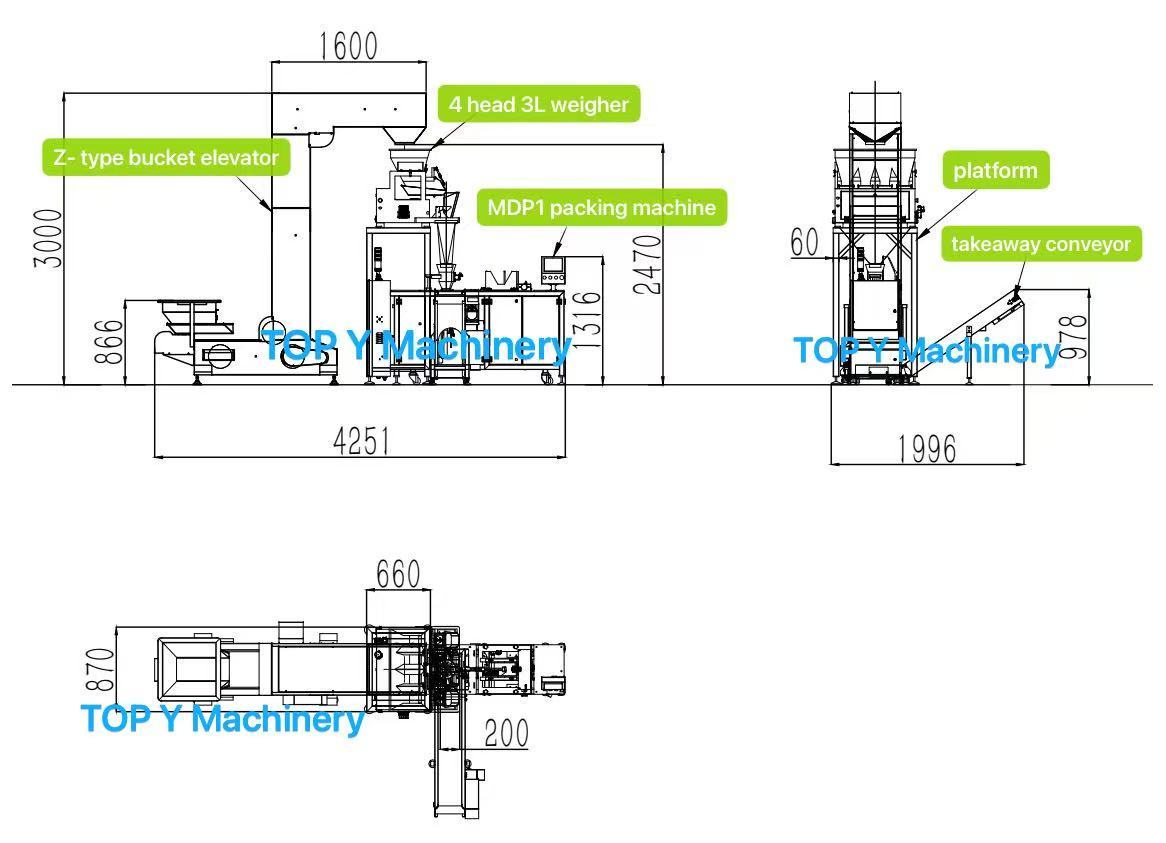
The physical footprint of a packaging machine is a critical consideration that is often underestimated. You must ensure the equipment not only fits into your facility but also allows for efficient operation and maintenance.
Key factors to consider when assessing space requirements include:
- Machine Dimensions: The length, width, and height of the machine itself form the basic footprint. A vertical form-fill-seal (VFFS) machine, for example, has a smaller floor footprint but requires significant vertical clearance. A standard VFFS machine might have a footprint of around 2-3 square meters.
- Auxiliary Equipment: Packaging lines rarely consist of a single machine. You must account for space for in-feed and out-feed conveyors, hoppers, weighing systems (like multi-head weighers), and control panels. Conveyors, in particular, can add several meters to the total length of the line.
- Operator and Maintenance Access: It is essential to leave adequate clearance around the machine. A general recommendation is to allow at least 0.5 to 1 meter of space on the sides and back for operators to work safely and for maintenance teams to access all components easily.
- Material and Product Flow: Space must be allocated for storing raw materials (like rolls of film and bulk pistachios) and for accumulating finished packages before they are moved to the next stage (e.g., case packing or palletizing). Sufficient room for forklifts or pallet jacks to maneuver is also necessary.
Careful planning and creating a detailed floor plan with all components mapped out will prevent logistical headaches, safety hazards, and production bottlenecks down the line.
Exploring Automation Levels: From Manual to Fully Automatic Pistachio Packaging Solutions
Packaging machinery is broadly categorized by its level of automation, which dictates the amount of human intervention required. The choice between a semi-automatic and a fully automatic system depends heavily on your production volume, budget, product variety, and labor resources.
- Manual Packaging: Requires significant human labor for every step and is typically only suitable for very small-scale or artisanal operations.
- Semi-Automatic Packaging: Combines automated processes with manual intervention. An operator might be needed to load products, place bags, or initiate the sealing cycle.
- Fully Automatic Packaging: Performs the entire packaging process from forming the bag to filling, sealing, and sometimes even case packing with minimal human oversight.
Semi-Automatic Pistachio Packaging Machine Options for Growing Businesses
For small to medium-sized enterprises (SMEs) or businesses with diverse product lines and frequent changeovers, semi-automatic machines offer an excellent balance of efficiency, flexibility, and cost-effectiveness.
Advantages of Semi-Automatic Machines:
- Lower Initial Investment: They are more budget-friendly than fully automatic systems, making them an accessible entry point into automation.
- Greater Flexibility: Operators can easily adjust settings and handle a wide variety of package sizes and types, which is ideal for short production runs or custom orders.
- Reduced Labor Costs (vs. Manual): While still requiring an operator, these machines significantly speed up the packaging process and reduce the physical strain and monotony of manual work.
- Smaller Footprint: They are often more compact, making them suitable for facilities with limited space.
Semi-automatic solutions can be a strategic investment for a growing business, allowing it to increase output and improve consistency without the significant capital outlay of a fully automated line.
Fully Automatic Systems for High-Volume Pistachio Packaging Machine Production
For large-scale operations with high production demands and standardized products, fully automatic systems are the definitive choice. These machines are designed for speed, consistency, and minimal labor, offering a high return on investment over time.
Benefits of Fully Automatic Systems:
- High Throughput: Designed for continuous 24/7 operation, these machines can achieve very high speeds, dramatically boosting production capacity.
- Maximum Consistency and Quality: Automation eliminates human error, resulting in uniform weights, seals, and package appearance, which enhances brand reputation.
- Significant Labor Savings: By automating the entire process, these systems drastically reduce the need for manual labor, which is especially beneficial in regions with high labor costs or shortages.
- Long-Term ROI: While the upfront cost is higher, the savings from reduced labor, minimized waste, and increased output lead to a strong long-term return on investment.
A fully automatic Pistachio Packaging Machine is an indispensable asset for large manufacturers aiming to maximize efficiency, ensure quality, and scale their operations to meet market demands.