The Complete Guide to Customized Doypack Machines for Granule and Powder Products
As we delve into the world of packaging, we recognize its critical importance across all industries. Especially for granule and powder products, specialized packaging machines are indispensable for various everyday goods and foods. The right equipment not only ensures product integrity and safety but also enhances brand presentation and operational efficiency. For businesses looking to optimize their packaging lines, a Customized doypack machine for powders and granules can be a transformative investment.
This guide will explore how customized doypack machines offer versatile solutions for granule and powder products, covering different machine types, their applications, and key considerations for choosing the right equipment for your business. Whether you are a start-up or an established enterprise, understanding these specialized machines is the first step toward achieving a more streamlined, reliable, and cost-effective packaging process.
Key Takeaways
This guide provides a comprehensive overview of customized doypack machines for powders and granules, offering crucial insights for businesses aiming to optimize their packaging operations. Here are the key points to consider:
Diverse Machine Types for Specific Needs: The packaging industry offers a wide array of doypack machines, each designed for different production scales and product types.
- Horizontal Form Fill & Seal (HFFS) machines are built for high-speed, high-volume production and offer great flexibility in pouch design.
- Vertical Form Fill & Seal (VFFS) machines are space-efficient and ideal for free-flowing products, using gravity to their advantage for fast and cost-effective packaging.
- Rotary Pre-made Pouch Packing Machines are valued for their versatility and ability to handle pre-formed pouches, making them suitable for a wide range of products and bag styles with quick changeovers.
- Specialized machines like Rotary Vacuum, Mini-Doypack, Stickpack, and Flow Wrappers address niche requirements such as extending shelf life for perishable goods, entry-level production, single-serving packs, and irregularly shaped items.
Understanding the Automated Working Principle: The doypack packaging process is a sequence of precisely automated steps designed to maximize efficiency and ensure consistency. The typical workflow includes:
- Bag Handling: Automated removal and opening of pouches.
- Precise Filling: Utilizing systems like auger fillers for powders or multi-head weighers for granules to ensure accurate dosing.
- Sealing and Finishing: Removing excess air before creating a hermetic seal to protect product quality.
- Output: Discharging the finished, sealed pouches for downstream processing.
Critical Selection Criteria: Choosing the right machine is a strategic decision that hinges on several factors:
- Product Characteristics: The flowability, density, and fragility of your powder or granule will determine the most suitable filling method.
- Pouch Specifications: The machine must be compatible with your desired pouch materials, sizes, and features like zippers or spouts.
- Production Demands: Evaluate your required output speed and decide between semi-automatic and fully automatic systems to match your operational scale.
- Future-Proofing: Consider the machine's ability to integrate with other equipment like checkweighers and its ease of maintenance and access to after-sales support.
The Value of Customization and Quality: A one-size-fits-all approach rarely works in specialized packaging.
- Tailored Solutions: Customization allows you to adapt the machine to your specific product, unique bag type, and production environment.
- High-Quality Components: Investing in machines built with durable materials like stainless steel and reliable components from reputable brands ensures longevity, minimizes downtime, and guarantees consistent performance.
By carefully evaluating these key areas, businesses can select a Doypack machine for powders and granules that not only meets their current needs but also supports future growth and success.
Understanding the Different Types of Customized Doypack Machines for Granule and Powder Products
Choosing the right doypack machine is critical for optimizing packaging operations for granule and powder products. The market offers a diverse range of equipment, each with unique features tailored to specific production needs, product types, and budget constraints. Understanding these differences is the first step toward making an informed investment.
Horizontal Form Fill & Seal (HFFS) Machines for High Production
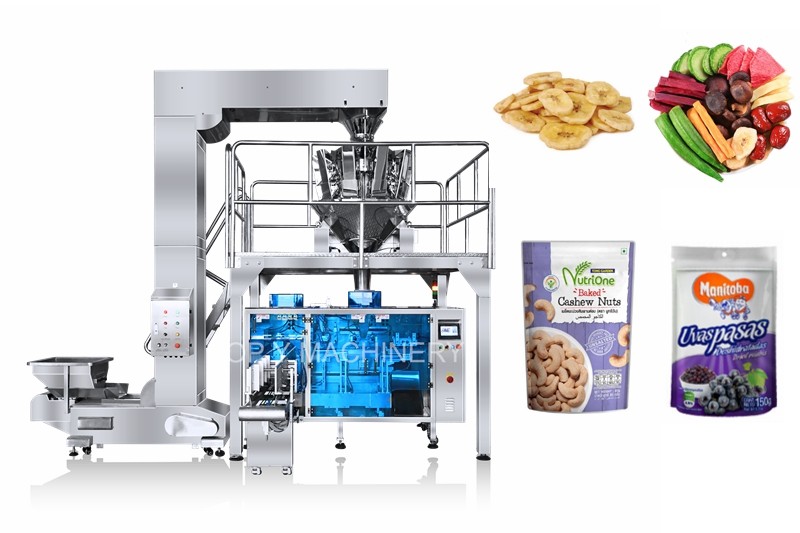
Horizontal Form Fill & Seal (HFFS) machines are automated packaging systems that form, fill, and seal pouches from a roll of film in a horizontal orientation. This process is highly efficient for large-scale production runs and offers exceptional versatility in pouch design. HFFS machines are ideal for a broad range of products, including fragile items, granules, powders, and liquids, making them a staple in the food, pharmaceutical, and cosmetic industries.
Key advantages include high-speed operation, superior seal quality, and the ability to produce complex pouch formats like stand-up doypacks with zippers or spouts. While they generally require more floor space than their vertical counterparts, their adaptability and high throughput make them a strategic choice for businesses aiming to maximize production efficiency.
Rotary Pre-made Pouch Packing Machines: Economic and Versatile Solutions
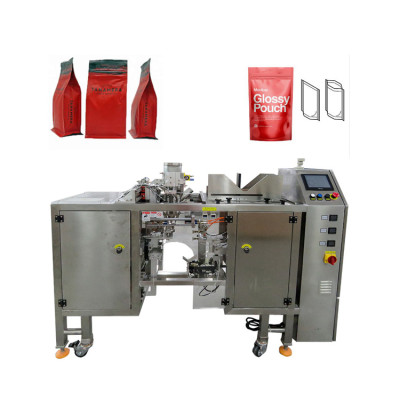
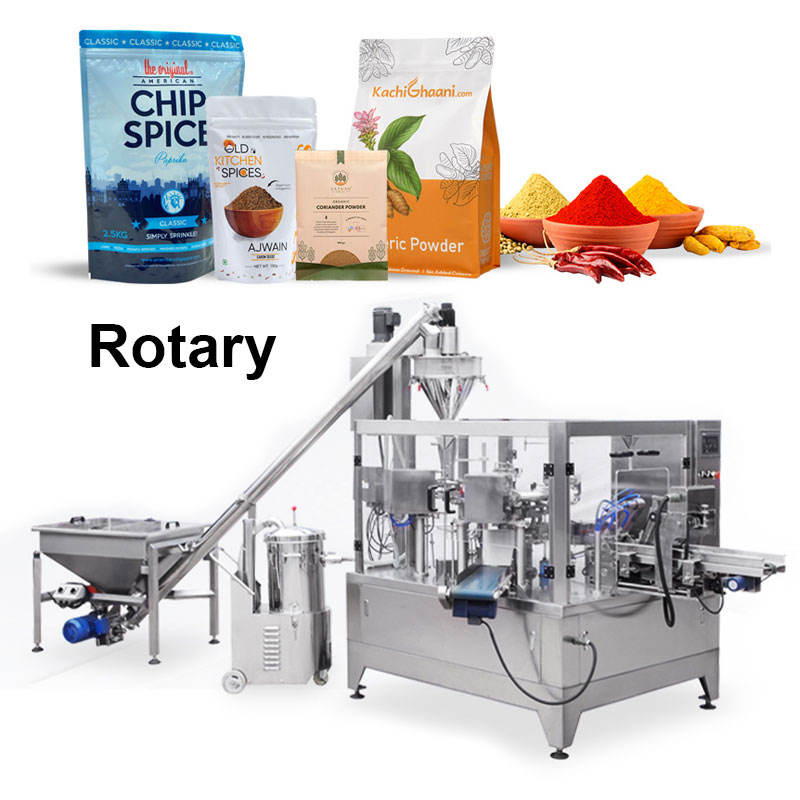
Rotary pre-made pouch packing machines are automated systems designed to handle pre-formed bags. They operate using a series of workstations arranged in a circular, rotating layout. Each station performs a specific task, such as pouch pickup, printing, opening, filling, and sealing. This modular design makes them incredibly versatile, as they can be integrated with various fillers like auger fillers for powders or multi-head weighers for granules.
These machines are prized for their flexibility, allowing for quick changeovers between different bag sizes and styles, including stand-up pouches, zipper bags, and gusseted bags. They are an economic and efficient solution for businesses that need to package a variety of products with minimal downtime. Furthermore, features like "no fill, no seal" for unopened pouches help reduce product and material waste.
Rotary Vacuum Pre-made Pouch Packaging Machine for Perishable Goods
The Rotary Vacuum Pre-made Pouch Packaging Machine is a specialized variant designed to extend the shelf life of perishable goods. It combines the automated functionality of a rotary pouch machine with a vacuum sealing process. After filling the pre-made pouch, the machine removes up to 99.9% of the air from inside before sealing it hermetically. This process inhibits the growth of aerobic bacteria and fungi, preserving the freshness, flavor, and nutritional value of products like fish, meat, cooked foods, and certain grains.
These machines often feature a dual-column design, with one rotating column for filling and a second for vacuuming and sealing, ensuring high throughput in a compact footprint. They are an excellent solution for producing "flexible cans" or retort packaging, offering a modern alternative to traditional tin canning.
Vertical Form Fill and Seal (VFFS) Machines for Medium to High Speed Pouch Packaging
Vertical Form Fill and Seal (VFFS) machines create packages from a continuous roll of film in a vertical orientation. The film is formed into a tube, filled with product from above, and then sealed and cut into individual bags. This design leverages gravity to assist the filling process, making it exceptionally efficient for free-flowing products like powders, granules, liquids, and snacks.
VFFS machines are known for their high speed, with some continuous motion models producing up to 150 bags per minute. They are also more compact and generally more cost-effective than HFFS systems, making them an ideal choice for businesses with limited floor space or budget constraints. While they are typically used for simpler bag styles like pillow bags, modern VFFS machines can also produce gusseted bags and stand-up pouches.
Mini-Doypack Pouch Packing Machines for Entry-Level Production of Granule and Powder Products
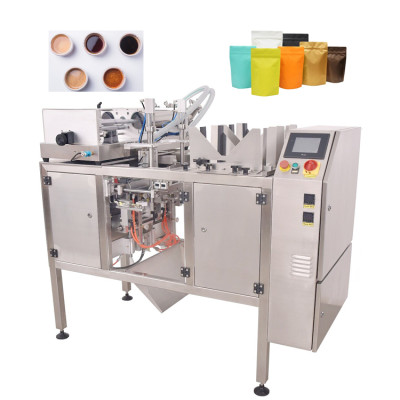
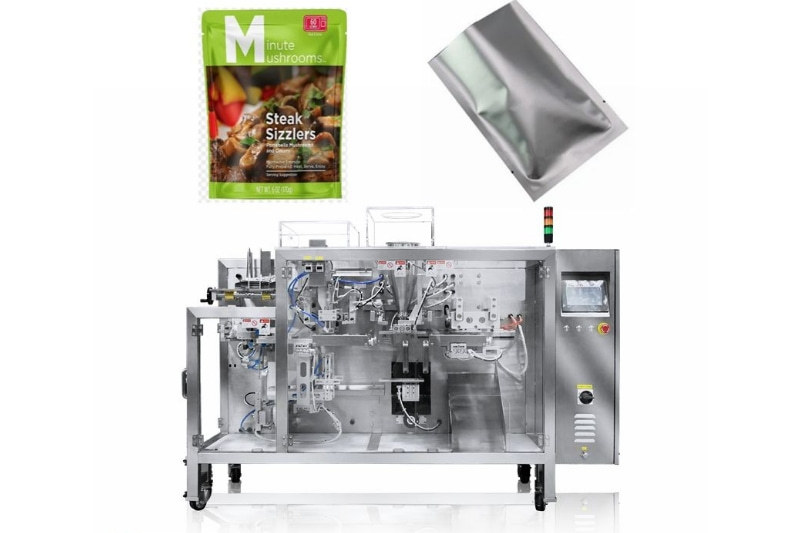
Mini-doypack pouch packing machines are compact, cost-effective solutions designed for small businesses, startups, or those with lower production demands. These entry-level machines automate the process of filling and sealing pre-made doypack pouches, offering a significant upgrade from manual packaging.
Despite their smaller size, they incorporate the core functionalities of their larger counterparts, including pouch feeding, opening, filling, and sealing. Their user-friendly design and smaller footprint make them easy to integrate into existing workspaces. For companies looking to professionalize their packaging and explore the benefits of automation without a large initial investment, the mini-doypack machine provides an accessible and efficient starting point.
Stickpack Packing Machines: A VFFS Variant for Slender Packages
Stickpack packing machines are a specialized type of multi-lane VFFS machine designed to produce long, narrow, single-serving packages known as stick packs. These machines form, fill, and seal pouches from a roll of film, creating the distinctive "stick" shape ideal for products like instant coffee, sugar, drink mixes, and pharmaceutical powders.
Stickpack machines can be configured with multiple lanes (from single-lane up to 22 lanes) to achieve very high output rates, with some capable of producing up to 600 stick packs per minute. They can be equipped with various dosing systems, such as auger fillers for powders or volumetric fillers for granules, to ensure precise measurement. Their efficiency and the convenience of the single-serving format make them a popular choice in the food, beverage, and pharmaceutical industries.
Horizontal Flow Wrapping or Flow Packing Machines for Irregularly Shaped Items
Horizontal flow wrapping machines, also known as HFFS machines, are designed to package solid or irregularly shaped items that are difficult to handle with vertical systems. The product is placed on an infeed conveyor and moves horizontally, where a continuous roll of film is wrapped around it to form a tube. The machine then creates a longitudinal seal along the bottom or top and end seals to create a finished "pillow pack."
These machines are extremely versatile and are used to package a wide variety of products, from bakery goods and candy bars to medical devices and hardware. For delicate, sticky, or multi-pack items, inverted flow wrappers feed the film from below, allowing products to be gently carried on the film itself. Flow wrappers are prized for their high speed and efficiency in automated production lines.
The Working Principle of Customized Doypack Machines for Granule and Powder Products
Understanding the operational workflow of a Doypack machine for powders and granules reveals a highly synchronized and automated process designed for efficiency and precision. Whether it's a rotary or inline model, the core steps remain consistent, ensuring each pouch is perfectly filled, sealed, and ready for shipment.
Bag Removal and Separation: The First Step in the Automated Process
The process begins at the bag magazine, where pre-made pouches are stacked and shingled for easy separation. An automated pouch feeding system, often using vacuum suction cups or a robotic arm, picks up a single pouch and transfers it to a set of grippers. These grippers securely hold the pouch as it travels through the subsequent stations of the machine. This initial step is critical for maintaining a smooth and continuous packaging flow, preventing jams and ensuring that each bag is correctly positioned for the upcoming stages.
Bag Opening: Preparing for Precise Filling
Once gripped, the pouch is moved to the opening station. Here, a combination of mechanisms ensures the bag is ready for filling. Typically, vacuum suction cups grasp the outside of the pouch while a mechanical device or a jet of air is used to open the top. For pouches with a resealable zipper, a specialized mechanism first opens the zipper before the top of the pouch is parted. Sensors at this stage verify that the bag has opened correctly; if it hasn't, the filling and sealing steps for that specific pouch will be skipped to prevent product waste and machine contamination.
Weighing and Filling: Ensuring Accurate Product Delivery for Granule and Powder Products
This is the heart of the packaging process, where precision is paramount. The filling method is selected based on the product's characteristics.
- For Powders: An auger filler is most commonly used. This device employs a rotating screw to dispense a precise volume of powder into the pouch. It is ideal for non-free-flowing powders like flour or protein mix, as the screw mechanism actively moves the product. The system is enclosed, which significantly helps in controlling dust.
- For Granules: A multi-head weigher is the preferred choice for free-flowing granules like coffee beans, nuts, or seeds. This system uses multiple vibrating weigh buckets to measure the product by weight, offering exceptional accuracy and speed for high-value products.
Sensors and control systems, such as a PLC (Programmable Logic Controller), ensure that the dispensed amount is accurate, minimizing product giveaway and ensuring consistency across all packages.
| Filler Type | Best Suited For | Operating Principle | Key Advantage |
|---|---|---|---|
| Auger Filler | Powders (especially non-free-flowing) | Volumetric; dispenses product via a rotating screw. | Excellent for dusty products and provides good accuracy for less than $5,000. |
| Multi-Head Weigher | Granules and solid pieces | Gravimetric; combines weights from multiple buckets for a precise total. | High speed and superior accuracy, reducing product giveaway. |
| Volumetric Cup Filler | Free-flowing, uniform granules | Volumetric; fills a pre-sized cup and dispenses its contents. | High speed and cost-effective for low-cost products like sugar. |
Venting and Sealing: Protecting Product Integrity
After filling, the pouch moves to the sealing station. Before the final seal is applied, any excess air is often removed from the pouch to protect product integrity and create a compact package. In some cases, a gentle vibration settles the product to ensure no powder or granules are caught in the seal area.
A pair of heated seal bars then press the top edges of the pouch together, creating a strong, airtight hermetic seal. This seal is crucial for preventing contaminants like moisture, oxygen, and bacteria from entering, thereby preserving the product's freshness and extending its shelf life. The temperature, pressure, and duration of the sealing process are carefully controlled to match the pouch's material and thickness, ensuring a perfect seal every time.
Forming and Output: The Final Stages of Packaging
In a Form-Fill-Seal machine, the bag is formed from a roll of film just before filling. For a doypack, a special "W" shape is folded into the bottom of the pouch, which allows it to stand upright once filled.
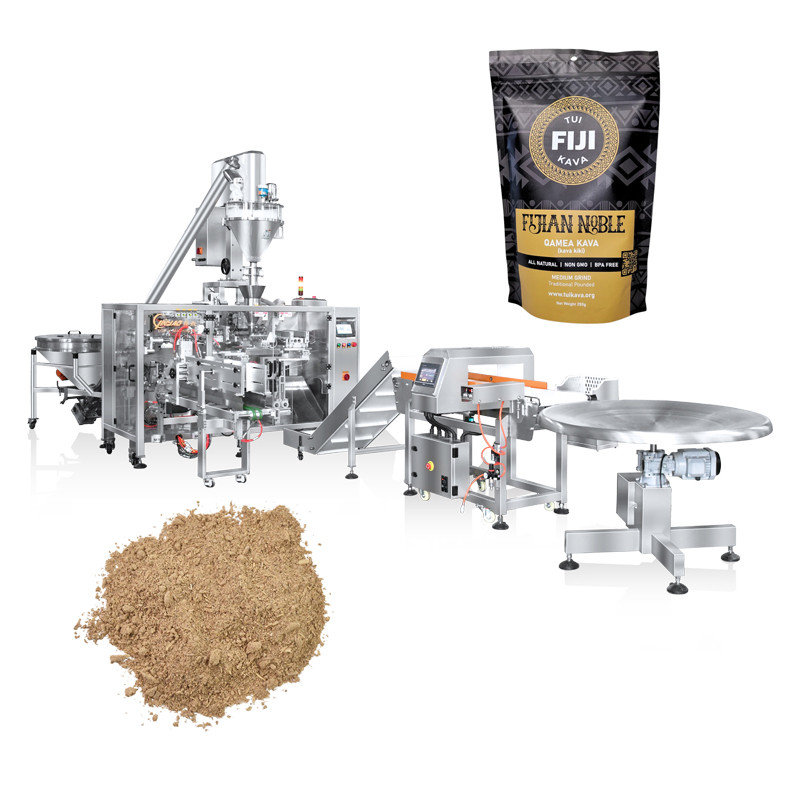
After sealing, the completed pouch is discharged from the machine. It is typically released onto an output conveyor, which transports it to downstream equipment such as checkweighers, metal detectors, labeling machines, or case packers for final boxing and shipment. This final step completes the automated journey from an empty pre-made pouch to a market-ready product.
Key Considerations When Choosing a Customized Doypack Machine for Granule and Powder Products
Selecting the right Customized doypack machine for powders and granules is a significant investment that directly impacts production efficiency, product quality, and your bottom line. To make an informed decision, it's crucial to evaluate several key factors beyond just the initial cost. A comprehensive assessment will ensure the machine you choose aligns with your specific product, operational needs, and long-term business goals.
Product Type and Filling Method: Matching Your Machine to Your Granule or Powder
The physical characteristics of your product are the most critical factor in determining the appropriate filling technology. Powders and granules behave very differently, and using the wrong filler can lead to inaccurate weights, product damage, and operational inefficiencies.
- For Powders: Powders can be free-flowing (like granulated sugar) or non-free-flowing (like flour or protein powder), and are often dusty.
- Auger Fillers are the industry standard for powders. They use a rotating screw to dispense the product, providing excellent control for fine, dusty, and non-free-flowing substances.
- Vacuum-assisted or enclosed systems are often necessary to manage dust and prevent product loss.
- For Granules: Granular products, such as coffee beans, nuts, seeds, and rice, flow more easily but can be fragile or abrasive.
- Multi-head Weighers are ideal for achieving high accuracy with granules, as they measure by weight rather than volume.
- Volumetric Cup Fillers are a cost-effective and high-speed option for uniform, free-flowing granules where slight weight variations are acceptable.
It's essential to analyze your product's flow consistency, particle size, and density to select a machine that guarantees precise and reliable filling.
Pouch Compatibility: Sizes, Materials, and Special Features
Your chosen machine must be compatible with your desired packaging. Doypacks come in a vast array of sizes, materials, and designs, each serving a specific purpose. Consider the following:
- Pouch Sizes: Ensure the machine can handle your required range of pouch widths and heights. Some machines offer quick, tool-less changeovers for different sizes, while others may require more extensive adjustments.
- Pouch Materials: Doypacks are typically made from multi-layer laminate films (e.g., PET/AL/PE) to provide a barrier against moisture, oxygen, and light. The machine's sealing technology (heat sealing, ultrasonic sealing) must be compatible with your chosen film to create a strong, reliable seal.
- Special Features: If your packaging requires features like resealable zippers, pour spouts, tear notches, or degassing valves, the machine must have the necessary modules to apply them. Rotary and horizontal machines are often more versatile in accommodating these add-ons.
Automation Level and Output Needs: Semi-Automatic vs. Fully Automatic Solutions
The required level of automation depends on your production volume, budget, and labor availability.
- Semi-Automatic Machines: These systems require some operator involvement, such as manually placing pouches or initiating the filling cycle. They are a cost-effective solution for small businesses, startups, or lines with lower production needs, offering a significant improvement over purely manual processes.
- Fully Automatic Machines: These machines handle the entire process with minimal human intervention, from pouch feeding to final sealing and discharge. They are designed for medium to high-volume production, offering high speed, consistency, and reduced labor costs. A fully automatic line can significantly boost throughput, often doubling or tripling the output of manual methods.
Evaluate your current and projected production demands to determine whether a semi-automatic or fully automatic solution provides the best return on investment.
Integration Capabilities: Expanding Your Packaging Line
A doypack machine rarely operates in isolation. For a truly efficient production line, it must seamlessly integrate with other upstream and downstream equipment. Consider its ability to connect with:
- Infeed Systems: Such as bucket elevators or screw conveyors to automatically supply product to the filler's hopper.
- Quality Control Systems:
- Checkweighers: To verify that each package meets the target weight, rejecting any that are over or under a set tolerance. These systems can provide feedback to the filler to auto-correct dosages.
- Metal Detectors or X-Ray Systems: To inspect for and reject any packages containing metal or other foreign contaminants, ensuring product safety and regulatory compliance.
- End-of-Line Automation: Including labeling machines, case packers, and palletizers to prepare products for shipment with minimal manual labor.
Ensure the machine's control system can communicate with other equipment for a synchronized and streamlined packaging process.
Ease of Use and Maintenance: Maximizing Efficiency
A machine that is difficult to operate or maintain can lead to significant downtime and reduced productivity. Look for features that enhance user-friendliness and simplify upkeep:
- Intuitive HMI (Human-Machine Interface): A modern touchscreen HMI simplifies operation, allowing operators to easily adjust settings, select pre-programmed recipes for different products, and monitor the machine's status in real-time.
- Quick Changeover: The ability to switch between different pouch sizes or products with minimal downtime is crucial for flexible production. Features like tool-less adjustments and recipe recall functions can reduce changeover times from 20 minutes to less than 5.
- Ease of Cleaning and Maintenance: Machines with accessible parts and stainless steel construction are easier to clean, which is especially important in the food and pharmaceutical industries. Manufacturers should provide a clear maintenance schedule to keep the equipment in optimal condition.
After-Sales Support and Spare Parts: Ensuring Longevity and Performance
A packaging machine is a long-term asset, and the manufacturer's support is just as important as the machine's features. A reliable partner ensures your equipment continues to perform efficiently for years to come.
- Technical Support: Inquire about the availability of technical support, whether through phone, remote diagnostics, or field service technicians, to quickly resolve any issues and minimize downtime.
- Spare Parts Availability: The manufacturer should maintain a stock of original spare parts and be able to deliver them promptly. Some machines are built with standard, non-proprietary components, which can make sourcing replacements faster and more cost-effective.
- Training: Proper training for your operators and maintenance staff is essential to get the most out of your equipment. A good supplier will offer comprehensive training programs.
Choosing a reputable manufacturer like TOP Y MACHINERY, which provides strong after-sales service, is a critical step in protecting your investment.
Customization and Quality in Customized Doypack Machines for Granule and Powder Products
In the competitive landscape of consumer goods, standard, off-the-shelf packaging solutions are often insufficient. To truly stand out and optimize operations, businesses must prioritize customization and invest in high-quality machinery. These two elements work hand-in-hand to deliver a packaging solution that is not only effective but also reliable and cost-efficient in the long run.
Tailoring Your Machine to Specific Product, Bag Type, and Size Requirements
A one-size-fits-all approach to packaging machinery can lead to inefficiency, product waste, and a final package that fails to impress consumers. Customization allows you to build a machine that is perfectly aligned with your unique operational needs.
- Product-Specific Adjustments: Every powder and granule is different. Customization enables the integration of the ideal filling system—be it an auger filler for fine powders or a multi-head weigher for delicate granules—calibrated precisely for your product's density and flow characteristics.
- Bag Type and Size Flexibility: Modern doypack machines can be tailored to handle a wide variety of pouch styles and dimensions. Whether you need a standard stand-up pouch, a quad-seal bag, or a specialty-shaped pouch with a zipper or spout, the machine can be configured with the necessary modules. Many machines offer adjustable settings and interchangeable parts to accommodate a range of bag sizes, providing the flexibility to adapt to new product lines or market trends.
- Adding Functional Features: Customization extends to incorporating value-added features that enhance consumer convenience and brand identity. This includes modules for zipper insertion, spout application, date coding, labeling, and creating tear notches or hanging holes.
By tailoring the machine to your specific requirements, you ensure optimal performance, reduce material waste, and create a package that meets both functional and marketing objectives.
The Importance of High-Quality Components in Customized Doypack Machines
While customization defines what a machine can do, the quality of its components determines how well and for how long it can do it. Investing in a machine built with high-quality parts is essential for ensuring reliability, minimizing downtime, and achieving a lower total cost of ownership.
Key components that signify quality include:
- Durable Construction: Machines constructed with high-grade stainless steel (such as food-grade 304 or corrosion-resistant 316 for acidic/salty products) are more durable, easier to clean, and compliant with strict hygiene standards in the food and pharmaceutical industries. This robust construction resists wear and corrosion, extending the machine's service life.
- Precision Servo Motors: High-quality packaging machines utilize servo motors for critical functions like film feeding and sealing. Unlike traditional motors, servos provide precise control over position and speed, resulting in greater accuracy, smoother operation, and reduced mechanical stress. They are also more energy-efficient and enable faster, more flexible changeovers between different packaging styles.
- Reliable PLCs and HMIs: A reputable PLC (Programmable Logic Controller) acts as the machine's brain, ensuring all processes are perfectly synchronized. When paired with a user-friendly HMI (Human-Machine Interface), operators can easily control and monitor the machine, leading to improved efficiency and fewer errors.
- Reputable Component Brands: The use of pneumatic and electrical components from world-renowned brands (e.g., Siemens, Omron, Festo) is a strong indicator of a manufacturer's commitment to quality and reliability.
Choosing a machine with superior components reduces the risk of breakdowns, ensures consistent performance, and ultimately protects your investment and brand reputation.
Frequently Asked Questions (FAQ)
1. What is the main difference between a doypack machine for powders and one for granules?
The primary difference lies in the filling system. Powder packaging machines typically use an auger filler, which employs a rotating screw to dispense fine, non-free-flowing, or dusty products with high precision. Granule packaging machines, on the other hand, often use a multi-head weigher or a volumetric cup filler, which are better suited for free-flowing, larger particles like coffee beans, nuts, or seeds to ensure accurate weight and gentle handling.
2. Can a single doypack machine handle both powders and granules?
Yes, many modern doypack machines are designed to be versatile. They can be equipped with interchangeable filling systems. By swapping out an auger filler for a multi-head weigher, a single machine can be adapted to package different types of products. This flexibility is a key consideration for businesses with diverse product lines.
3. What is the difference between a semi-automatic and a fully automatic doypack machine?
The main difference is the level of operator involvement.
- Semi-automatic machines require an operator for certain steps, such as placing the pre-made pouch into the machine or initiating the fill cycle. They are more affordable and suitable for smaller production volumes.
- Fully automatic machines handle the entire process with minimal human intervention, from pouch feeding and filling to sealing and discharge. They offer higher speeds and greater consistency, making them ideal for large-scale operations.
4. How important is after-sales support when purchasing a doypack machine?
After-sales support is critical for the long-term performance and reliability of your investment. A reputable manufacturer provides comprehensive support that includes:
- Technical Assistance: To quickly troubleshoot and resolve any operational issues, minimizing downtime.
- Spare Parts: A readily available inventory of genuine spare parts ensures that your machine can be repaired promptly.
- Operator Training: To ensure your team can operate and maintain the equipment efficiently and safely. A strong after-sales service plan is a hallmark of a trustworthy machinery partner like TOP Y MACHINERY.
5. What kinds of customization options are available for doypack machines?
Doypack machines offer extensive customization to meet specific product and branding needs. Options can include:
- Pouch Features: Integration of modules for adding zippers, pour spouts, tear notches, and hanging holes.
- Pouch Size and Shape: Adjustability to handle a wide range of pouch dimensions and even create uniquely shaped bags.
- Filling and Dosing: Tailoring the filling system to match the exact characteristics of your product.
- Line Integration: Adding quality control devices like checkweighers and metal detectors, or connecting to end-of-line cartoners and palletizers.
6. What is the average production speed of a doypack machine?
Production speed varies widely depending on the machine type, level of automation, product characteristics, and pouch size.
- Entry-level or semi-automatic machines might produce 10-30 pouches per minute.
- Fully automatic rotary or horizontal machines can achieve speeds from 40 to over 100 pouches per minute.
- High-speed, multi-lane machines like stickpack variants can produce several hundred packs per minute.
Conclusion
Choosing the right customized doypack machine for your granule and powder products is a significant investment that impacts efficiency, product quality, and ultimately, your bottom line. We hope this guide has provided valuable insights into the various machine types, their operational principles, and the critical factors to consider. From the high-speed output of HFFS machines to the versatility of rotary systems and the precision of specialized fillers, the right technology can transform your packaging line.
By carefully considering the types of machines, their functionalities, and the vast customization options available, you can make an informed decision to optimize your packaging processes. Partnering with a knowledgeable and supportive manufacturer like TOP Y MACHINERY ensures you get not just a machine, but a long-term solution tailored to your success in the highly competitive food industry and beyond. We encourage you to share your thoughts or questions below and continue the conversation on achieving packaging excellence.