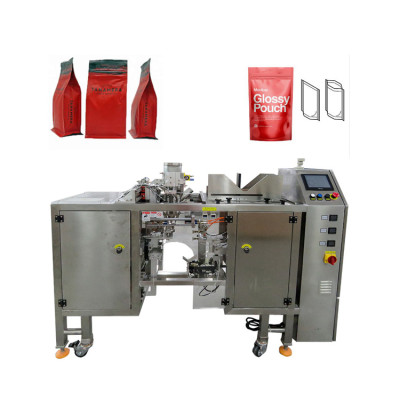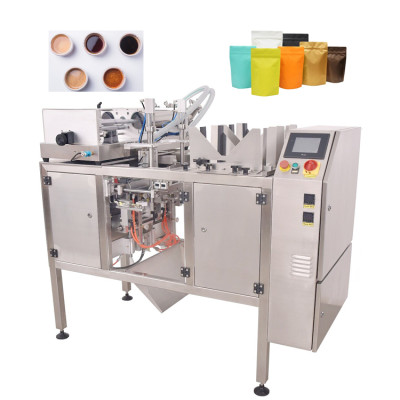
The Complete Guide to Customized Doypack Machines for Granule and Powder Products
The Complete Guide to Customized Doypack Machines for Granule and Powder Products As experts in packaging solutions, we understand the critical role that efficient and adaptable machinery plays in bringing your products to market. For businesses dealing with granule and powder products, the right packaging equipment is not just about speed, but also about precision, product integrity, and ultimately, customer satisfaction. The modern consumer market demands packaging that is both functional and visually appealing, and the Doypack, or stand-up pouch, has emerged as a clear leader in meeting these expectations. Its ability to stand upright on shelves, combined with features like zippers and spouts, makes it a favorite among brands and consumers alike.
This guide explores how a Customized doypack machine for granule and powder products achieves just that, offering a flexible and high-quality packaging solution that can enhance your brand's presence and streamline your operations. Investing in the right machine is a strategic decision that impacts everything from production line efficiency to the final perception of your product in the hands of a customer. It’s about creating a seamless workflow that protects your product while elevating your brand.
We'll delve into the mechanics of these innovative machines, the key factors to consider when selecting one, and how they provide significant advantages in modern packaging. From the initial pouch pickup to the final sealed product, we will break down each step to give you a comprehensive understanding of how this technology can be tailored to fit the unique properties of your powders and granules, ensuring a perfect pack every time.
Key Takeaways
For business owners, production managers, and engineers in the food, pharmaceutical, and chemical industries, understanding the nuances of modern packaging technology is paramount. This guide provides a deep dive into customized doypack machines for granules and powders, and here are the essential points to remember:
-
Customization is Crucial for Product Integrity: The most significant takeaway is that one size does not fit all. The physical properties of your product—whether it's a free-flowing granule like rice or a non-free-flowing powder like flour—dictate the type of filling system required. Multi-head weighers are optimized for the speed and accuracy needed for granules, using a system of hoppers to combine precise weights. In contrast, auger fillers are essential for powders, using a rotating screw to dispense a consistent volume, which is crucial for preventing clogging and ensuring dose accuracy. Choosing the wrong filler leads to product waste, inaccurate weights, and potential damage to the machine.
-
The Machine's Workflow is a Multi-Stage Precision Process: A doypack machine's operation is a sophisticated, automated sequence. It begins with pouch pickup and separation, typically using vacuum suction cups, followed by secure gripping and opening. The subsequent filling stage is where customization truly matters. After filling, processes like dust collection for powders or vibrating/settling for granules ensure a clean seal area and stable product. The final sealing stage uses heat and pressure to create a hermetic seal, with options for gas flushing to extend shelf life. Understanding this journey from an empty pouch to a finished product highlights the importance of a machine designed for reliability at every step.
-
Strategic Selection Extends Beyond the Machine Itself: Choosing the right doypack machine involves a holistic assessment of your operational needs. Key considerations include:
- Production Demand and Automation: Match the machine's speed (pouches per minute) and level of automation (semi-automatic vs. fully automatic) to your current and projected output. A fully automatic system reduces labor costs and human error, offering a clear ROI for high-volume producers.
- Pouch Versatility: Your machine should be flexible enough to handle various pouch sizes, materials (including recyclable films), and features like zippers, spouts, and tear notches. This adaptability future-proofs your investment as your product line evolves.
- Integration and Footprint: Ensure the machine can be seamlessly integrated with your existing upstream (e.g., feeders, mixers) and downstream (e.g., checkweighers, case packers) equipment. The machine's physical footprint must also fit within your available floor space.
- Manufacturer Support: A partnership with a reliable manufacturer like TOP Y MACHINERY is invaluable. Prioritize suppliers who offer robust after-sales support, readily available spare parts, comprehensive training, and installation assistance. This support system is critical for minimizing downtime and maximizing the machine's lifespan.
-
Modern Doypack Machines Offer Tangible Business Advantages: The benefits of investing in a modern, customized doypack machine are multifaceted. They lead to enhanced efficiency and reduced labor costs through automation. They deliver superior product quality with consistent, accurate filling and secure sealing, which protects the product and builds consumer trust. The high-quality finish and branding opportunities on a doypack boost shelf appeal. Lastly, the shift towards flexible packaging offers sustainability gains by using less material and reducing transportation weight compared to rigid containers. These advantages translate directly to a stronger bottom line and a more competitive brand.
Understanding How Customized Doypack Machine Use for Granules and Powders Product Works
A Doypack machine for granule and powder products is a marvel of automated engineering, designed to perform a series of complex tasks with high speed and precision. Its primary function is to take premade pouches, fill them with a specific amount of product, and securely seal them to create a retail-ready package. The entire process is a synchronized dance of mechanical and pneumatic systems, all controlled by a central PLC (Programmable Logic Controller). This ensures that each pouch is handled, filled, and sealed according to exact specifications, minimizing waste and guaranteeing consistency across thousands of units. Understanding this workflow is the first step in appreciating the value and complexity of these essential machines.
The Automated Journey: From Pouch to Pack
The transformation of an empty, flat pouch into a finished, filled, and sealed product involves a sequential, station-based process. In a typical rotary doypack machine, the pouches are moved in a circular path, stopping at various stations where a specific action is performed. This assembly-line approach allows for multiple processes to occur simultaneously on different pouches, which is key to achieving high production speeds. Each step is meticulously designed to ensure the integrity of both the pouch and the product within it.
Pouch Pickup and Separation
The journey begins at the pouch magazine, where a stack of premade pouches is loaded. The first automated action is pouch pickup. A robotic arm equipped with vacuum suction cups moves over the stack, picks up a single pouch, and separates it from the others. This step is critical; picking up two pouches at once can cause a machine fault, halting production. Sensors are often used to detect the thickness to ensure only one pouch is picked. The mechanism must be gentle enough to avoid damaging the pouch material but firm enough to ensure a reliable transfer to the next station.
Opening the Pouch
Once a single pouch is securely held by the machine's grippers, it is transferred to the opening station. Here, another set of vacuum suction cups latches onto the bottom of the pouch, pulling it downwards to expand the bottom gusset, which allows the pouch to stand. Simultaneously, a jet of clean, filtered air may be blown into the top of the pouch to fully open its mouth, preparing it for filling. Advanced machines use sensors to confirm that the pouch is open correctly before allowing the cycle to proceed. If a pouch fails to open, it is typically passed through the filling station without dispensing product to prevent spillage.
Precise Weighing and Filling for Granules and Powders Product
This is the heart of the operation and where customization is most vital. The machine integrates a specialized filling system directly above the opened pouch. The choice of filler depends entirely on the product's characteristics.
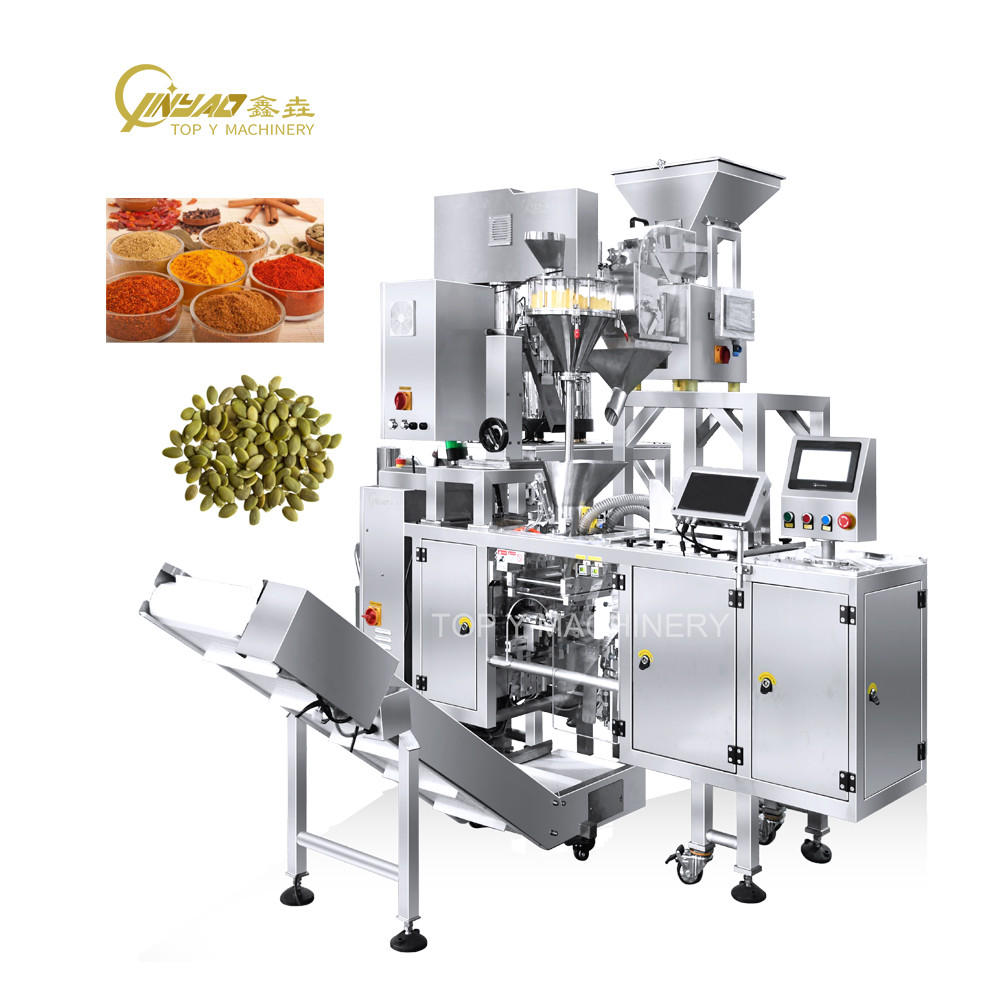
- For Powders: An auger filler is used. This device employs a vertically oriented screw (the auger) that rotates within a funnel. Each rotation dispenses a precise volume of powder. The speed and number of rotations are carefully controlled to achieve the target weight. This method is ideal for non-free-flowing powders like flour, protein powder, or spices.
- For Granules: A multi-head weigher is the standard. This sophisticated system uses multiple vibrating channels to feed the product into a series of weigh buckets. A computer algorithm then calculates the best combination of buckets to open to achieve the exact target weight. This method is exceptionally fast and accurate, making it perfect for free-flowing granules such as coffee beans, nuts, snacks, and rice.
The product is then dispensed through a filling nozzle directly into the waiting pouch. To manage dust from powders or ensure granules settle properly, this station may include features like dust collection hoods or pouch vibrators.
Evacuation and Sealing
After filling, the pouch moves to the sealing station. Before sealing, some applications may require air to be evacuated from the pouch to reduce volume or for gas flushing. In Modified Atmosphere Packaging (MAP), the air is replaced with a specific gas mixture (e.g., nitrogen) to extend the product's shelf life by inhibiting oxidation and microbial growth.
Next, a pair of heated seal bars clamps down on the top edge of the pouch. The combination of heat, pressure, and time (dwell time) fuses the pouch material together, creating a strong, hermetic seal. The temperature and pressure are precisely controlled to match the requirements of the pouch material, ensuring a perfect seal without damaging the bag. If the pouch has a zipper, separate mechanisms ensure it is properly closed before the final top seal is made.
Shaping and Output
In the final step, the sealed pouch may pass through a cooling station where cool bars press against the seal to set it quickly and improve its strength. The grippers then release the finished pouch, which is discharged from the machine onto an output conveyor. This conveyor then transports the product to downstream equipment, such as a checkweigher (to verify the final weight), metal detector, or a case packer for shipment. The final result is a professionally packaged product, ready for the shelf.
Key Considerations for Choosing Your Customized Doypack Machine Use for Granules and Powders Product
Selecting the right customized doypack machine is a major capital investment that will have a long-term impact on your production efficiency, product quality, and overall profitability. A thorough evaluation process is essential to ensure you choose a machine that not only meets your current needs but also offers the flexibility to adapt to future growth and market changes. This decision goes far beyond just the machine's price tag; it involves a deep analysis of your product, production goals, and operational environment.
Product Characteristics and Filling Methods
The single most important factor in customizing your doypack machine is the nature of your product. Powders and granules behave very differently, and using the wrong filling technology will lead to inaccurate weights, product spillage, slow production speeds, and potential damage to the product itself.
Tailoring to Powders: Auger Fillers
Powders can be categorized as either free-flowing (like granulated sugar) or non-free-flowing (like flour or cocoa powder). Non-free-flowing powders have a tendency to clump, cake, or "bridge" in hoppers, making them difficult to dispense accurately by volume or weight alone. The auger filler is the definitive solution for this challenge.
The system works by using a precisely machined screw that rotates inside a funnel. The pitch, diameter, and flight design of the auger are tailored to the specific density and flow characteristics of your powder. As the auger turns, it traps a consistent volume of powder in its flights and pushes it downwards through the dispensing nozzle. An agitator blade often rotates within the hopper to break up any clumps and ensure a consistent supply of powder to the auger, preventing bridging. For the highest precision, auger fillers are often integrated with a scale (a checkweigher system) that provides feedback to the controller, which can then adjust the number of auger rotations on the fly to hit the exact target weight for each fill.
Optimizing for Granules: Multi-Head Weighers
For granular products such as coffee beans, nuts, snacks, granola, or pet food, speed and weight accuracy are paramount. This is where the multi-head weigher excels. This complex system sits atop the doypack machine and operates on a principle of combination weighing.
Here's how it works:
- Dispersion: Product is fed to the top of the weigher and a central cone vibrates to disperse it evenly outwards to a series of radial feed channels.
- Feeding: Each channel vibrates to move the product into a dedicated feed bucket.
- Weighing: When the feed bucket fills to a preset level, the product drops into a weigh bucket directly below it. Each weigh bucket is equipped with a highly sensitive load cell that measures the weight of the product it contains.
- Combination: The machine's computer instantly analyzes the weights in all the weigh buckets (which can number from 10 to 24, or even more) and calculates the ideal combination of buckets that, when opened together, will sum up to the target weight.
- Dispensing: The selected buckets open simultaneously, dropping their contents through a collating chute and into the waiting doypack below.
This entire process happens in a fraction of a second, allowing for filling speeds that far exceed what is possible with other methods while maintaining incredibly tight weight tolerances, often within a single gram.
Pouch Compatibility and Design Flexibility
Your product line today might only include one pouch size, but your marketing team may want to introduce trial sizes or large family packs tomorrow. Therefore, your doypack machine must be versatile. Look for a machine that can handle a wide range of pouch widths and lengths with minimal changeover time. Changeover refers to the process of adjusting the machine to accommodate a different pouch size. Quick-release grippers, adjustable pouch magazines, and software-based recipe settings can reduce changeover times from hours to mere minutes.
Furthermore, consider the pouch features you might need. Zippers, spouts (for liquids or powders), tear notches for easy opening, and Euro-hole punches for hanging retail displays are common additions. The machine you choose must have the capability to handle pouches with these features or be upgradeable with modules to add these functions later. The material of the pouch itself—from standard laminates to more challenging recyclable mono-materials—also affects handling and sealing, so discuss your material specifications with the manufacturer.
Automation Level and Production Demands for Your Granules and Powders Product
Doypack machines are available in various levels of automation, from semi-automatic to fully automatic.
- Semi-Automatic Machines: Require an operator to manually place each pouch onto the filling nozzle. The filling and sealing are then automated. These are suitable for small startups, pilot runs, or artisanal producers with low volume requirements.
- Fully Automatic Machines: Handle the entire process from pouch pickup to final discharge without any operator intervention beyond loading the pouch magazine and replenishing the product. These machines are defined by their speed, typically measured in pouches per minute (PPM). Speeds can range from 20-30 PPM for entry-level models to over 100 PPM for high-speed rotary systems.
Choosing the right level depends on a careful analysis of your production demand. Calculate your required hourly or daily output and choose a machine that can meet this demand while running at about 80% of its maximum rated speed. This buffer accounts for scheduled downtime like cleaning, maintenance, and material changes.
Integration with Existing Systems
A packaging machine does not operate in a vacuum. It is a single component in a larger production line. Consider how the doypack machine will integrate with both upstream and downstream equipment.
- Upstream: How will your product be fed into the filling system? This might involve bucket elevators, screw conveyors, or pneumatic transfer systems to move product from a storage silo or mixer to the machine's hopper. The integration should be seamless to ensure a continuous and controlled product flow.
- Downstream: What happens to the pouch after it leaves the doypack machine? Common downstream equipment includes checkweighers to reject under/over-weight bags, metal detectors or X-ray systems for quality control, inkjet coders for printing lot numbers and expiration dates, and finally, case packers and palletizers to prepare the products for shipping.
Your chosen machine should have the necessary communication protocols (e.g., electrical signals, Ethernet) to "talk" to these other systems, allowing for a fully synchronized and efficient line.
Ease of Use and Maintenance of Your Customized Doypack Machine Use for Granules and Powders Product
A powerful machine is useless if your team cannot operate it efficiently and safely. A modern, user-friendly Human-Machine Interface (HMI) is essential. This is typically a color touchscreen that allows operators to set parameters, select recipes for different products and pouches, monitor the machine's status, and troubleshoot alarms. The interface should be intuitive and preferably available in multiple languages.
Maintenance is another critical factor. Look for a machine with a so-called "sanitary design," featuring stainless steel construction and easy-to-access components that can be quickly removed for cleaning without tools. This is especially important in the food and pharmaceutical industries to prevent cross-contamination. Ask the manufacturer about the recommended maintenance schedule, routine cleaning procedures, and the overall accessibility of mechanical and electrical parts.
After-Sales Support and Spare Parts Availability
Your relationship with the machine manufacturer doesn't end upon delivery. In fact, it's just beginning. Robust after-sales support is a non-negotiable requirement. Before purchasing, verify the manufacturer's support structure. Do they offer:
- Installation and Commissioning: Will their technicians come to your facility to properly install the machine and get it running to its specified performance?
- Operator Training: Do they provide comprehensive training for your operators and maintenance staff?
- Technical Support: What are their support hours? Do they offer remote diagnostic capabilities to troubleshoot issues over the internet?
- Spare Parts: How quickly can you get critical spare parts? A machine that is down for days or weeks waiting for a part from overseas can be catastrophic for your business. A reliable supplier like TOP Y MACHINERY understands the importance of maintaining a local or easily accessible inventory of wear-and-tear parts.
Choosing a partner with a strong reputation for customer service will provide peace of mind and ensure the long-term reliability of your investment.
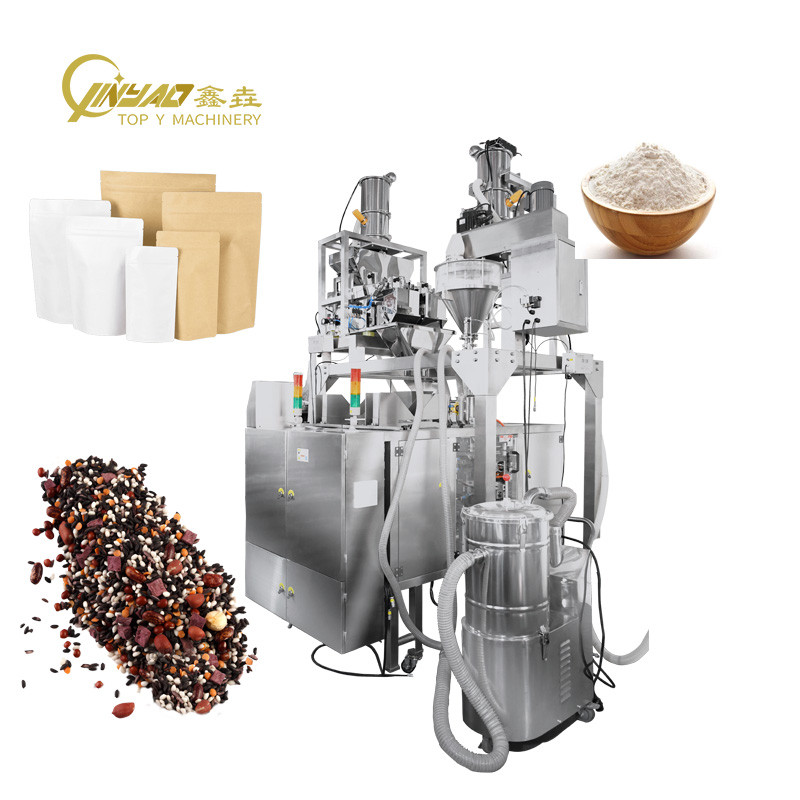
The Advantages of Modernized Customized Doypack Machine Use for Granules and Powders Product
Investing in a modernized, customized doypack machine is not just an operational upgrade; it's a strategic business move that delivers a cascade of benefits across your entire value chain. From the production floor to the retail shelf, the impact of this technology is profound. It enhances efficiency, guarantees product quality, strengthens brand presence, and supports sustainability goals, providing a powerful return on investment.
Enhanced Efficiency and Reduced Labor Costs
The most immediate and quantifiable advantage of automating your packaging process with a doypack machine is a dramatic increase in operational efficiency. A fully automatic machine can run continuously for hours, filling and sealing pouches at a consistent rate that far surpasses any manual or semi-automatic process. A machine rated for 60 pouches per minute (PPM) can produce 28,800 finished units in a single 8-hour shift, a target that would be impossible to meet with manual labor.
This high level of automation directly translates to reduced labor costs. Instead of needing a team of workers to manually scoop, weigh, fill, and seal bags, a single operator can oversee the entire operation of one or even multiple machines. This frees up your valuable human resources to focus on more complex tasks such as quality control, machine maintenance, and logistics. Automation also reduces the risk of repetitive strain injuries associated with manual packing tasks, leading to a safer and more ergonomic work environment.
Superior Product Quality and Consistency
Human error is an unavoidable variable in manual processes. Hand-scooping and weighing can lead to inconsistent fill amounts, resulting in product giveaway (over-filling) or dissatisfied customers (under-filling). A modernized doypack machine, equipped with a precision filler like a multi-head weigher or an auger filler, eliminates this variability. Each and every pouch is filled to a precise target weight, ensuring consistency and compliance with weights and measures regulations.
Furthermore, the automated sealing process delivers a perfect, hermetic seal every time. The machine controller maintains the exact temperature, pressure, and dwell time needed to create a strong, reliable closure. This protects the product from moisture, oxygen, and contaminants, extending its shelf life and preserving its freshness, flavor, and potency. For powders, integrated dust control systems prevent fine particles from fouling the seal area, a common cause of seal failure in manual operations. This unwavering consistency in both quantity and quality builds consumer trust and reinforces your brand's reputation for excellence.
Boosting Brand Appeal with Versatile Doypack Packaging
The Doypack itself is a powerful marketing tool, and a customized machine allows you to fully leverage its potential. With its ability to stand upright on the shelf, a Doypack offers a billboard-like presence that catches the consumer's eye far more effectively than a traditional pillow bag or flat pouch lying down in a bin. This "shelf-appeal" is a significant competitive advantage in crowded retail environments.
A doypack machine gives you the flexibility to work with a wide variety of pouch designs and premium features that enhance the consumer experience:
- High-Quality Graphics: The large, flat front and back panels are perfect for high-impact, full-color printing that tells your brand's story.
- Resealable Zippers: A key feature for multi-use products like coffee, snacks, or protein powder, zippers maintain product freshness and offer convenience.
- Tear Notches: Provide for easy, clean initial opening without the need for scissors.
- Windows: A clear window in the pouch allows consumers to see the quality of the product inside, building trust and transparency.
By enabling the use of such versatile and consumer-friendly packaging, the machine directly contributes to building a premium brand image and justifying a higher price point.
Cost-Effectiveness and Sustainability Gains
While the initial investment in a doypack machine can be substantial, the long-term cost-effectiveness is clear. Beyond the labor savings, automation reduces product waste from spillage and overfilling. The machines are also highly efficient in their use of utilities like electricity and compressed air.
Moreover, Doypacks and flexible packaging offer significant sustainability advantages compared to rigid packaging (like glass jars or plastic tubs).
- Material Reduction: Flexible pouches use significantly less material by weight to package the same amount of product, leading to a smaller raw material footprint.
- Reduced Transportation Costs: Because they are lightweight and can be shipped flat before filling, Doypacks reduce transportation costs and fuel consumption throughout the supply chain.
- Improving Recyclability: The packaging industry is rapidly innovating with new, recyclable mono-material films (e.g., all-polyethylene) that are designed for recycling streams. Modern doypack machines are being engineered to handle and effectively seal these more sensitive, sustainable materials.
By adopting this packaging format, your company can improve its environmental credentials, a factor of growing importance to an eco-conscious consumer base. This combination of operational savings and green benefits makes the modernized doypack machine a wise and forward-thinking investment.
Different Types of Customized Doypack Machine Use for Granules and Powders Product
While all doypack machines share the same fundamental goal of filling and sealing premade pouches, their design and method of operation can vary significantly. The main types are rotary machines, horizontal machines, and specialized VFFS systems. Choosing the right type depends on your specific needs regarding speed, pouch size and type, factory floor space, and production flexibility. Each design offers a unique set of advantages suited to different manufacturing environments.
Rotary Premade Pouch Packing Machines
Rotary premade pouch packing machines are the most common type for high-speed, high-volume applications. As their name suggests, they feature a circular, carousel-like design. The pouches are held by a series of grippers mounted on a rotating turret. As the turret indexes around, it stops at each station arranged around its circumference—pouch pickup, opening, filling, sealing, and discharge.
Key Characteristics:
- High Speed: Because multiple actions are happening simultaneously at different stations, rotary machines can achieve very high outputs, often ranging from 40 to over 100 pouches per minute (PPM), depending on the number of stations on the turret (e.g., 8-station or 10-station models).
- Compact Footprint: For their high output, they have a relatively compact, squarer footprint compared to linear horizontal machines.
- Excellent for Standard Pouches: They are ideal for standard Doypack sizes and are extremely efficient and stable when running the same pouch format for long periods.
- Smooth Operation: The circular motion is mechanically smooth and stable, which is beneficial for handling liquids or preventing delicate products from being damaged.
These machines are the workhorses of large-scale food processors, coffee roasters, and snack manufacturers who need maximum throughput and efficiency. A prime example is the Top-Y Doypack Packaging Machine, which leverages a rotary design for robust performance.
Horizontal Premade Pouch Packing Machines
Horizontal premade pouch packing machines operate on a linear principle. Instead of a rotating turret, pouches are gripped and moved in a straight line from one station to the next. The pouch travels horizontally, which gives this machine type its name.
Key Characteristics:
- Versatility and Flexibility: Horizontal machines are often considered more versatile than rotary machines. Their linear design makes it easier to add more stations or integrate more complex functions, such as inserting a scoop, adding a desiccant sachet, or handling unusually shaped pouches.
- Ideal for Large or Heavy Pouches: The horizontal orientation can be better for handling very large, wide, or heavy bags that might be unstable in a rotary system.
- Slower Speeds: Typically, horizontal machines have a slightly lower top speed than their rotary counterparts, as the start-stop linear motion is mechanically less efficient than continuous circular motion.
- Longer Footprint: They require a longer, more rectangular floor space to accommodate the linear sequence of stations.
Horizontal machines are an excellent choice for contract packagers who need to handle a wide variety of pouch styles and sizes, or for businesses with larger "club-size" products. They are also favored for applications requiring multiple filling steps or complex pouch additions.
Vertical Form Fill Seal (VFFS) Machines with Specialized Filling Systems
Vertical Form Fill Seal (VFFS) machines represent a different approach to pouch packaging. Instead of using pre-made pouches, a VFFS machine creates the pouch itself from a large roll of flat packaging film. The film is fed off the roll, formed into a tube, and sealed vertically along its back. The bottom is then sealed, the product is dropped in from a filler above (like a multi-head weigher or auger filler), and finally, the top is sealed, and the finished bag is cut off.
While standard VFFS machines typically produce simple "pillow" bags, recent innovations have enabled them to create a version of a stand-up pouch, often called a "quad seal" bag or a Doypack-style pouch.
Key Characteristics:
- Lower Material Costs: Buying film in rolls is generally cheaper than buying premade pouches, which can lead to significant cost savings on packaging materials, especially at high volumes.
- Potentially Higher Speeds: VFFS machines can be incredibly fast, with some models producing hundreds of bags per minute, as they don't have the mechanical limitation of picking and handling individual premade bags.
- Less Pouch Complexity: While they can create stand-up formats, it is more difficult and often impossible for a VFFS machine to incorporate features like press-to-close zippers or corner spouts, which are standard on premade pouches.
- Integration: VFFS systems are inherently integrated units where the bag-maker and the filler (e.g., auger or multi-head weigher) work as one.
A VFFS machine with stand-up pouch capabilities is a great choice for producers of high-volume, relatively simple products like snack foods or coffee where the cost savings on film are a primary driver and complex pouch features like zippers are not required.
| Machine Type | Key Advantage | Best For | Typical Speed (PPM) | Pouch Flexibility |
|---|---|---|---|---|
| Rotary Premade Pouch | High speed, efficiency, and stability for standard pouches. | High-volume production of standard Doypacks (e.g., coffee, snacks). | 40 - 100+ | Good |
| Horizontal Premade Pouch | High versatility for various pouch sizes, shapes, and features. | Contract packagers, large/heavy bags, complex insertion needs. | 20 - 60 | Excellent |
| VFFS with Stand-Up Pouch | Lower cost of packaging material (rollstock film). | Very high-volume production where pouch features are simple. | 50 - 200+ | Limited |
This table provides a clear comparison, helping you align the machine type with your specific production and marketing objectives.
Frequently Asked Questions (FAQ)
1. Can one doypack machine handle both powders and granules?
Yes, it is possible for a single doypack machine to handle both powders and granules, but it requires a specialized setup with interchangeable filling systems. The base machine (the part that handles the pouches) can remain the same, but you would need to invest in both an auger filler for powders and a multi-head weigher for granules. The machine would need to be designed to allow for a relatively quick "changeover" between these two filling heads. This typically involves having a mobile frame for the filler not in use, allowing it to be rolled away and the other to be positioned over the machine. While this provides great flexibility, it's important to consider the time and labor involved in these changeovers. If you frequently switch between powders and granules multiple times a day, it might be more efficient to have dedicated lines. However, for a company that plans to run powders for a week and then granules for the next, a single machine with dual filler capabilities is a very cost-effective solution.
2. What is the typical production speed of a doypack machine, and what factors influence it?
The production speed, measured in pouches per minute (PPM), varies widely depending on the machine type and several other factors.
- Entry-level rotary machines might run at 20-40 PPM.
- High-speed rotary machines can achieve 60-100+ PPM.
- Horizontal machines typically operate in the 20-60 PPM range.
The key factors influencing the actual production speed include:
- Product Characteristics: Light, dusty powders may require slower filling speeds to minimize dust and allow time for the product to settle.
- Fill Weight: Heavier fills naturally take longer to dispense and weigh accurately.
- Pouch Size and Material: Larger pouches take more time to open and handle. Some sustainable materials may require longer sealing times.
- Filler Type: The speed of the integrated filler (auger or multi-head weigher) is often the primary bottleneck.
- Machine Stations: A rotary machine with more stations (e.g., 10 vs. 8) can often run faster as tasks can be further broken down.
It is crucial to have a realistic expectation of speed based on an analysis of your specific product and pouch combination.
3. How much maintenance does a customized doypack machine require?
Like any critical piece of industrial equipment, a doypack machine requires regular maintenance to ensure its longevity and reliability. A typical maintenance schedule includes:
- Daily: Basic cleaning, inspection of wear parts like vacuum cups and seal bar Teflon tape, and ensuring the product path is clear. This is especially critical when running powders to prevent buildup.
- Weekly: More thorough cleaning, lubrication of specified moving parts (bearings, chains), and checking the calibration of sensors and scales.
- Monthly/Quarterly: Inspection and potential replacement of common wear parts like belts, grippers, and heating elements. Technicians may check electrical connections and pneumatic systems.
- Annually: A comprehensive ajor preventative maintenance service, often performed by a certified technician from the manufacturer. This involves a deep inspection of all mechanical and electrical systems.
A reputable manufacturer will provide a detailed maintenance schedule and checklist. Adhering to this schedule is the best way to prevent unexpected downtime.
4. What is the approximate cost of a customized doypack machine?
The cost of a customized doypack machine can vary dramatically based on its configuration, speed, and features. A very rough price range would be:
- Entry-Level/Semi-Automatic Systems: $30,000 - $70,000
- Mid-Range Fully Automatic Rotary Machines: $80,000 - $150,000
- High-Speed, High-Specification Machines with Integrated Multi-Head Weighers or Complex Add-ons: $150,000 - $300,000+
Factors that significantly influence the price include the brand and quality of the components (e.g., PLC, servos), the type and size of the filling system (a multi-head weigher is a significant investment on its own), the level of customization required, and the inclusion of any optional features like gas flushing, zipper opening devices, or integration with other equipment. It's essential to get detailed quotes from multiple suppliers that specify exactly what is included.
5. How does a doypack machine handle pouches with zippers?
Handling zippered pouches requires specific mechanisms on the doypack machine. After the pouch is picked up, but before it is opened, it passes a station with a specialized device designed to open the zipper. This can be done using vacuum suckers that pull the two sides of the zipper track apart or a mechanical finger that gets between the tracks. After the bag is filled, another device is needed to press the zipper firmly closed along its entire length before the final top seal is applied above the zipper. This ensures the customer receives a pouch with a properly functioning resealable feature. The reliability of these zipper opening and closing mechanisms is a key performance indicator to evaluate when purchasing a machine for zippered pouches.
Conclusion
In conclusion, investing in a customized doypack machine for your granule and powder products is a strategic decision that offers numerous benefits, from optimizing production efficiency and ensuring product quality to enhancing brand visibility and contributing to sustainability. It is a transformative technology that bridges the gap between a high-quality product and high-impact retail presence. By automating the complex process of filling and sealing, these machines empower businesses to achieve new levels of consistency, speed, and professionalism.
By carefully considering your specific product characteristics, production needs, and the various machine options available—from rotary and horizontal systems to specialized VFFS configurations—you can select a doypack packaging solution that propels your business forward. The key is to look beyond the initial price and evaluate the total value proposition, including the machine's flexibility, the ease of integration, and, critically, the quality of the after-sales support provided by the manufacturer. A partnership with an expert provider ensures that your investment is supported for the long term.
We are confident that a well-chosen and customized doypack machine will be a valuable asset, helping you meet market demands and achieve your packaging goals with excellence. As the market continues to evolve, the adaptability and efficiency offered by this technology will be crucial for staying competitive and delighting your customers with every purchase.