Optimizing Product Filling: How Vertical Packing Machines and Multihead Weighers Work Together
As someone deeply involved in optimizing production lines, I've seen firsthand how crucial efficient product filling is for businesses. It is not merely about getting a product into a package; it's about achieving precision, speed, and consistency to ensure customer satisfaction and maximize profitability. In the fast-paced world of manufacturing, staying competitive means constantly seeking innovations that can streamline operations. Today, we will explore how two essential pieces of equipment – vertical packing machines and multihead weighers – work together to revolutionize product filling. This powerful combination is shaping the future of packaging across numerous industries by offering unparalleled efficiency and accuracy. By understanding their synergy, businesses can unlock new levels of productivity and position themselves for success in a demanding market.
The Core Mechanics: How Multihead Weighers Enhance Vertical Packing Machine Performance
To fully appreciate the benefits of an integrated packaging system, it’s essential to understand the individual roles and the synergistic relationship between the Multihead Weigher and the vertical packing machine. The weigher provides the precision, while the packing machine provides the speed and automation, creating a seamless and highly efficient process. This combination is central to modern, high-volume production lines where even the smallest inaccuracies or delays can lead to significant financial losses.
Understanding the Multihead Weigher's Role
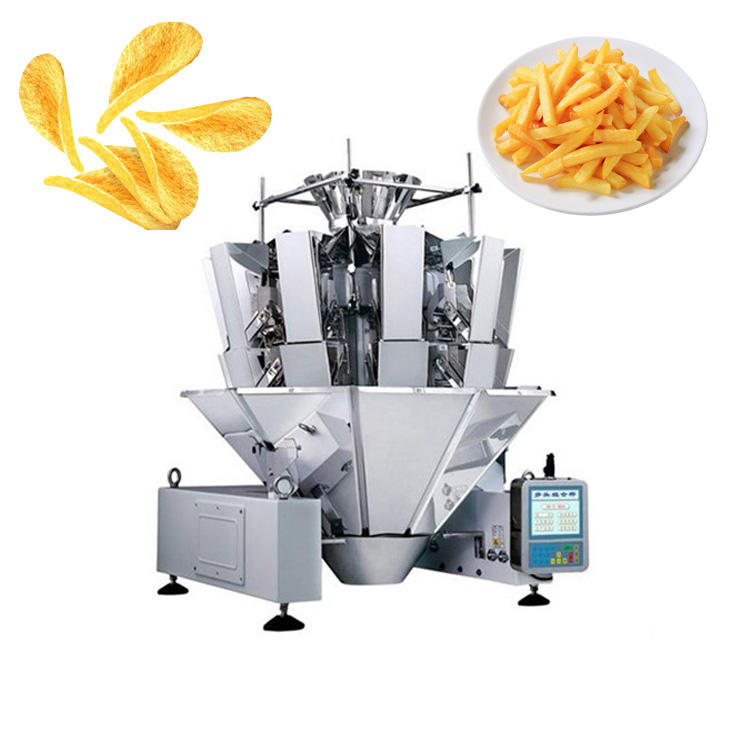
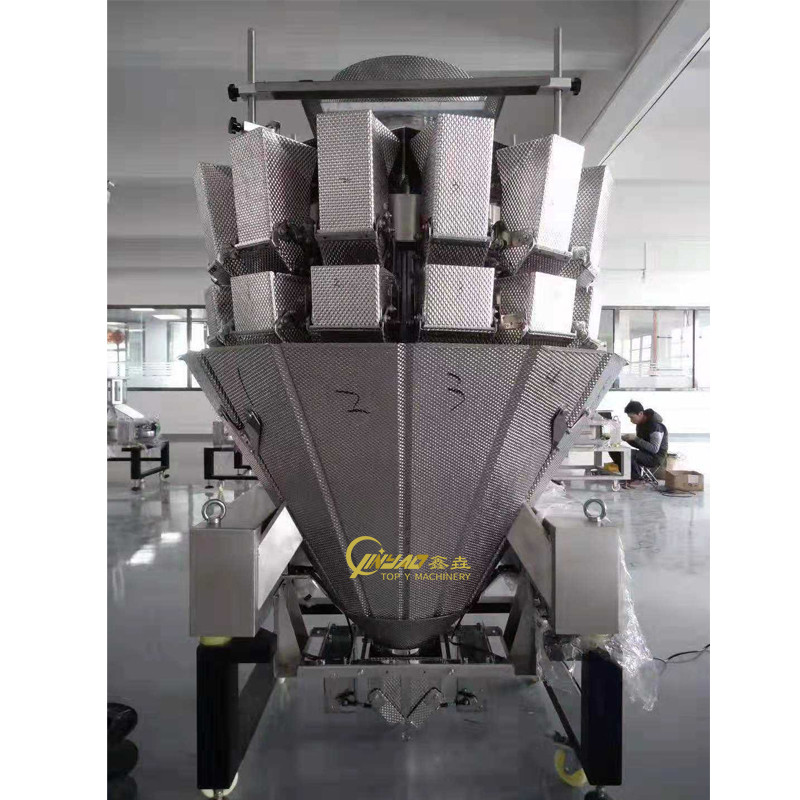
A multihead weigher, also known as a combination scale, is a sophisticated piece of machinery designed for high-speed, high-accuracy weighing of a wide range of products. Its primary function is to divide a bulk product into smaller, precisely weighed portions that are then ready for packaging. Unlike traditional linear scales that weigh product in a single pass, the multihead weigher uses multiple weighing heads working in concert to achieve a target weight with remarkable precision and speed. This technology has become an indispensable tool in modern production, especially in the food, pharmaceutical, and consumer goods industries.
Precision Through Combination Weighing
The genius of the multihead weigher lies in its use of a combination weighing algorithm. The process begins when bulk product is fed onto the top of the machine and distributed via vibrating feeder pans into a series of individual weigh hoppers. Each hopper is equipped with its own highly sensitive load cell, which measures the weight of the product it contains.
The machine's central computer, or microprocessor, then analyzes the weights from all the hoppers in real-time. It calculates hundreds or even thousands of possible combinations of these individual weights to find the one that most closely matches the pre-programmed target weight. Once this optimal combination is identified, the corresponding hoppers are instructed to open simultaneously, releasing the product into a discharge chute that leads to the packaging machine. This entire process takes mere milliseconds, ensuring continuous operation without sacrificing accuracy. This method drastically reduces "giveaway"—the amount of extra product included in a package—which is a common issue with less precise weighing methods.
Speed and Efficiency in Weighing
The two main advantages of combination weighers are their exceptional speed and accuracy. By using multiple heads, the system can perform many weighing operations simultaneously. The more heads a weigher has (often ranging from 10 to 32 or more), the more combination possibilities are available to the computer. This directly translates to higher speeds and greater accuracy, as the system has a better chance of finding a perfect weight match quickly.
Modern multihead weighers can achieve speeds of 70 to over 200 weighments per minute, a rate that is simply impossible to match with manual or semi-automatic methods. This high throughput is critical for industries that need to package large volumes of product quickly to meet consumer demand, such as snack foods, frozen vegetables, and confectionery. The automated nature of the process also significantly reduces the need for manual labor, freeing up personnel for other, more value-added tasks and increasing overall plant productivity.
Applications Beyond Food
While multihead weighers are most famously used in the food industry for products like chips, nuts, candy, and fresh produce, their versatility extends far beyond edibles. Any industry requiring precise portioning of small, granular, or irregularly shaped items can benefit from this technology.
Non-food applications are expanding rapidly and include:
- Hardware: Precisely packaging small parts like nuts, bolts, screws, and other fasteners.
- Pharmaceuticals: Accurately dosing capsules, tablets, and granular powders, which is critical for regulatory compliance and patient safety.
- Plastics and Chemicals: Weighing plastic pellets, resin beads, or chemical granules to ensure batch consistency and reduce material waste.
- Agriculture: Portioning seeds and fertilizers for commercial or retail sale.
The ability to handle such a diverse range of products makes the multihead weigher a flexible and valuable asset for countless manufacturing operations.
The Synergy with Vertical Packing Machines
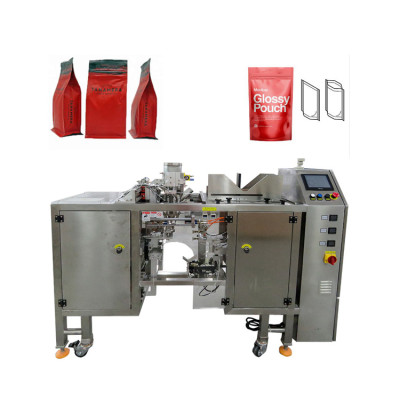
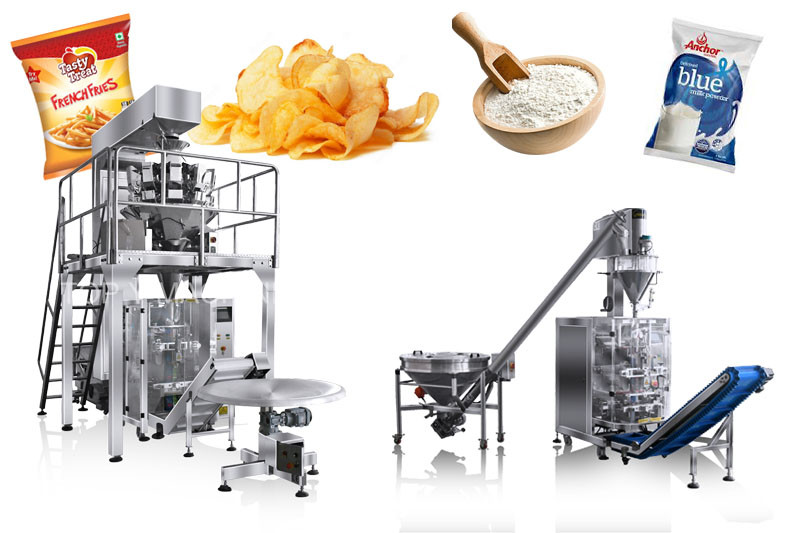
The true power of the multihead weigher is unleashed when it is integrated with a Vertical Form Fill Seal (VFFS) machine, also known as a Vertical Bagger. This combination creates a fully automated system that takes bulk product and transforms it into retail-ready packages with incredible speed and efficiency.
Seamless Integration for High Throughput
A VFFS machine works by taking a flat roll of packaging film and forming it into a tube (the "form" part). It then seals the bottom of the tube, creating a bag. At this moment, the integrated multihead weigher, positioned directly above, discharges its precisely weighed product portion into the open bag. Immediately after the product is filled (the "fill" part), the machine seals the top of the bag while simultaneously cutting it from the roll, completing the cycle (the "seal" part).
This seamless synchronization is the key to high throughput. The weigher's computer communicates with the VFFS machine's controls to ensure that a product portion is ready for discharge the instant a new bag is formed and positioned for filling. This eliminates any pause or bottleneck in the process, allowing the entire line to operate at the maximum speed supported by both machines. The discharge mechanism of the weigher is engineered to direct the product cleanly and efficiently into the packaging, maximizing operational flexibility and throughput.
Versatility in Product Handling
The combination of a multihead weigher and a vertical packing machine offers remarkable versatility. Both machines can be quickly adjusted to handle different products, package sizes, and film types. Multihead weighers often feature programmable "recipes" that store the ideal vibration settings, timing, and weight parameters for specific products. This allows for rapid changeovers with minimal downtime.
This combined system can handle an incredible variety of product types:
- Granular Products: Coffee, sugar, rice, grains.
- Powders: Flour, spices, protein powders.
- Snack Foods: Potato chips, pretzels, popcorn.
- Fragile Items: Cookies, crackers, and some types of pasta. Special designs with gentler handling features are available for these products.
- Frozen Foods: Vegetables, fruits, chicken nuggets.
- Fresh Produce: Salad mixes, baby carrots.
For specific applications, such as packaging macaroni or pasta, a system purpose-built for that product type, like a Pillow Bag Food Vertical VFFS Packing Machine, offers an optimized solution, ensuring both gentle handling and high efficiency. The adaptability to different products and packaging needs makes this integrated system a cornerstone of modern, flexible manufacturing.
The Tangible Benefits: Why Investing in a Vertical Packing Machine and Multihead Weigher System Pays Off
Upgrading to an integrated system of a vertical packing machine and a multihead weigher is more than just a technological enhancement; it is a strategic business decision that yields substantial returns. The benefits span across financial, operational, and quality control metrics, ultimately leading to a more competitive and profitable enterprise.
Maximizing Accuracy and Minimizing Waste
One of the most significant financial advantages of this system is its incredible accuracy. Multihead weighers are engineered to hit target weights with a deviation of just a fraction of a gram. This level of precision directly combats "product giveaway"—the costly practice of intentionally overfilling packs to avoid falling short of the labeled weight. By minimizing giveaway, companies save a substantial amount of money, as they are no longer giving away free product with every package. For example, a Spanish chocolatier was able to reduce its product giveaway by 20% after integrating an Ishida multihead weigher, leading to significant cost savings.
This reduction in waste aligns perfectly with growing sustainability goals within the industry. In Spain, for instance, there's a strong push towards more efficient packaging and reducing material waste to comply with both national and upcoming EU regulations. By ensuring that each package contains the exact amount of product required and nothing more, companies not only boost their bottom line but also contribute to a more sustainable production model.
Boosting Production Speed and Overall Efficiency
The combination of a multihead weigher and a VFFS machine creates a packaging powerhouse capable of operating at speeds that manual or semi-automated lines simply cannot match. Modern systems can dose and pack anywhere from 50 to over 150 bags per minute, depending on the product and bag size. This dramatic increase in production throughput allows businesses to meet high-volume orders, respond quickly to market demand, and scale operations without a proportional increase in labor or factory space.
This boost in speed directly impacts Overall Equipment Effectiveness (OEE), a key performance indicator for manufacturing. By automating the weighing and packing process, the system reduces downtime associated with manual changeovers, human error, and slower operational speeds. The result is a more streamlined, efficient, and predictable production line that maximizes output and profitability.
Ensuring Product Integrity and Quality with Every Vertical Packing Machine Cycle
Speed and efficiency are meaningless if the final product is damaged or compromised. Modern vertical packing systems are designed with product integrity in mind. For fragile items like chips, cookies, or delicate produce, weighers and VFFS machines can be equipped with features for gentle handling. These may include shallow drop heights, cushioned inserts, and controlled vibration to minimize breakage and preserve the product's appearance and quality.
Furthermore, the vertical packing process itself helps protect the product. The sealed bag provides a barrier against moisture, oxygen, and contaminants, extending shelf life and ensuring that the product reaches the consumer in optimal condition. Maintaining seal integrity is crucial, and VFFS machines offer precise control over sealing temperature, pressure, and time to create strong, reliable seals. Regular maintenance and proper setup are essential to prevent issues like weak seals or misalignment that could compromise package quality.

Cost-Effectiveness and Labor Savings
The initial investment in an automated packaging system can seem substantial, but the return on investment (ROI) is often surprisingly fast. The most immediate and obvious saving is in labor costs. A single automated line can do the work of multiple manual packers, reducing payroll expenses and the challenges of managing a large workforce. This allows businesses to reassign employees to more skilled, value-adding roles, such as quality control or machine operation. A typical payback period for packaging automation is often within 12 to 24 months, driven largely by these labor and material savings.
Beyond labor, the cost savings accumulate in several other areas:
- Reduced Product Waste: As mentioned, minimizing giveaway saves money on raw materials.
- Lower Material Costs: Advanced VFFS machines can optimize film usage, and some systems are designed to create stronger seals with less material.
- Increased Throughput: Producing more in less time lowers the per-unit cost of production.
- Reduced Human Error: Automation eliminates costly mistakes associated with manual weighing and packing.
By calculating the ROI, which involves weighing the initial investment against long-term benefits like increased capacity and reduced waste, businesses can clearly see the financial viability of upgrading their packaging lines. The combination of these benefits makes the investment in a multihead weigher and vertical packing machine system a strategically sound decision for long-term growth and profitability.
| Benefit Category | Key Advantages | Impact on Business |
|---|---|---|
| Accuracy & Waste | High-precision weighing, reduces product giveaway by up to 20%. | Significant cost savings on raw materials, improved profitability. |
| Speed & Efficiency | Throughput of 70-200+ packs/minute. | Increased production capacity, ability to meet high demand. |
| Product Integrity | Gentle handling features, reliable sealing. | Higher quality products, enhanced brand reputation, longer shelf life. |
| Cost & Labor | Reduces need for manual labor, fast ROI (often 1-2 years). | Lower operational costs, better allocation of human resources. |
Choosing the Right Vertical Packing Machine Solution and Partner
Selecting the right integrated packaging system is a critical decision that will impact your production efficiency, product quality, and bottom line for years to come. It's not just about buying a piece of machinery; it's about finding a comprehensive solution and a reliable partner who understands your unique needs. A systematic evaluation of a supplier's track record, support services, and ability to offer customized solutions is essential for long-term success.
Key Considerations for Selection
Making the right choice requires a detailed analysis of your specific operational context. Every product and production environment presents unique challenges, and the machinery must be well-suited to handle them effectively. Rushing this decision can lead to bottlenecks, increased downtime, and a lower return on investment.
Product Characteristics and EnvironmentalFactors
The first and most crucial factor to consider is the product itself. The physical properties of what you are packaging will dictate the ideal machine configuration. Key product characteristics to analyze include:
- Flowability: Does the product flow easily like grains or powders, or is it sticky like gummies?
- Fragility: How delicate is the product? Items like potato chips or gourmet biscuits require gentle handling to prevent breakage.
- Shape and Size: Irregularly shaped items may require specific hopper designs and feeder vibrations to ensure smooth distribution.
- Density: The bulk density will affect the size of the weigh hoppers and the overall speed of the system.
The production environment also plays a vital role. Factors such as ambient temperature, humidity, and dust levels can affect machine performance. For example, a dusty environment can interfere with sensors and load cells, while high humidity can cause certain products to clump. The machine's construction, often stainless steel, must also be appropriate for the environment, especially in food processing facilities that require frequent washdowns to maintain hygiene.
The Importance of Stability and Calibration
The accuracy of a multihead weigher is its most valuable attribute, and this accuracy is highly dependent on both stability and regular calibration. The supporting platform for the weigher must be incredibly stable and free from external vibrations. Even minor wobbles or "mechanical noise" from the factory floor can be misinterpreted by the sensitive load cells as product weight, leading to inaccurate measurements and increased product giveaway. The structure holding the weigher must be perfectly level to ensure even product distribution to the weigh hoppers.
Calibration is another non-negotiable practice. Load cells can drift over time due to environmental factors or extensive use. Regular calibration, often performed daily or weekly, using certified test weights is essential to maintain weighing precision. Modern machines feature user-friendly software that simplifies the calibration process, but it's a step that must not be overlooked to ensure consistent performance.
The Value of Expert Support and Integration with Your Vertical Packing Machine
The machine itself is only part of the equation. The expertise and support of the manufacturer or supplier are what transforms a good machine into a great solution. From initial consultation to long-term maintenance, a strong partnership is key.
Seamless System Integration
In a modern production facility, a packaging machine does not operate in a vacuum. It must be seamlessly integrated with upstream equipment (like product feeders and conveyors) and downstream equipment (like checkweighers, metal detectors, case packers, and palletizers). The challenges of ensuring all these different pieces of equipment, often from various manufacturers, can communicate and work together are significant.
This is where turnkey solutions add immense value. A supplier who can provide and integrate the entire packaging line—from product infeed to the final pallet—eliminates the complexities of dealing with multiple vendors. This approach ensures that all components are compatible and synchronized, which simplifies installation, reduces downtime, and provides a single point of contact for service and support.
The Partner Advantage: Choosing a Reliable Manufacturer
Choosing the right manufacturing partner is as important as choosing the right machine. A reliable manufacturer provides more than just equipment; they provide a foundation for your operational success. When evaluating potential partners, consider the following:
- Industry Experience: Does the manufacturer have a proven track record in your specific industry and with your type of product? Ask for references and case studies.
- After-Sales Support: What level of technical support, spare parts availability, and service agreements do they offer? Responsive support is crucial for minimizing downtime.
- Training: A good partner will provide comprehensive training for your operators and maintenance staff to ensure they can run and maintain the equipment effectively.
- Future-Proofing: Does the supplier offer modular designs or upgrade paths? This ensures your investment can scale and adapt to future business growth and changing market demands.
Ultimately, you are looking for a long-term strategic partner. A supplier who invests time in understanding your business, customizes solutions, and provides robust support will be an invaluable asset in optimizing your packaging operations.
Key Takeaways
Optimizing your product filling process with a vertical packing machine and multihead weigher system is a strategic move that delivers substantial benefits in precision, speed, and efficiency. To truly leverage this powerful combination, it's essential to grasp the core principles and advantages that drive its success. Here are the crucial points to remember.
Precision is Profit: The heart of this system's value lies in the multihead weigher's combination weighing principle. By using a sophisticated algorithm to select the best combination of weights from multiple hoppers, it achieves unparalleled accuracy. This precision directly translates to profit by drastically reducing product giveaway, the costly practice of overfilling packages to meet label weight. Minimizing this waste not only saves money on raw materials but also aligns with sustainability efforts, a growing priority for businesses and consumers alike.
Speed Unlocks Potential: The synergy between the weigher and the Vertical Form Fill Seal (VFFS) machine creates a continuous, high-speed operation. While the weigher portions the product with millisecond precision, the VFFS machine forms, fills, and seals the package in a seamless, synchronized cycle. This integrated process can boost production speeds to over 150 packs per minute, enabling businesses to meet high-volume demand, accelerate time-to-market, and significantly improve their Overall Equipment Effectiveness (OEE).
Versatility is a Competitive Edge: This packaging solution is not a one-trick pony. Its ability to handle a vast array of products—from fragile snacks and sticky candies to granular powders and bulky hardware—makes it an incredibly flexible asset. Both the weigher and the VFFS machine can be quickly adjusted or changed over to accommodate different products, bag sizes, and film types. This adaptability is crucial in today's market, where consumer preferences change rapidly and the ability to launch new SKUs quickly is a significant competitive advantage.
The Right Partner is as Important as the Right Machine: Investing in this technology is a significant decision, and the supplier you choose is critical to your success. Look beyond the initial price and evaluate potential partners on their industry experience, the quality of their after-sales support, and their ability to provide seamless integration. A reliable partner will offer comprehensive training, readily available spare parts, and expert technical assistance, ensuring that you minimize downtime and maximize the long-term ROI of your investment. They act as a strategic asset, helping you navigate the complexities of installation, calibration, and maintenance.
By focusing on these key takeaways, businesses can make informed decisions, transforming their packaging lines from cost centers into strategic assets that drive profitability and growth.
Frequently Asked Questions (FAQs)
Q1: What is the biggest challenge in maintaining the accuracy of a multihead weigher?
A1: The biggest challenge is maintaining stability and ensuring proper, regular calibration. The system's accuracy is highly sensitive to external vibrations. If the platform supporting the weigher is not perfectly stable and isolated from factory floor vibrations, the ultra-sensitive load cells can misinterpret this "mechanical noise" as product weight, leading to incorrect measurements. Therefore, a rock-solid, level mounting structure is non-negotiable. Secondly, load cells can experience drift over time due to environmental factors or wear. Consistent calibration, ideally performed daily with certified test weights, is essential to counteract this and ensure the machine continues to operate at peak precision. Neglecting either stability or calibration will directly lead to increased product giveaway and diminished ROI.
Q2: How does an integrated VFFS and multihead weigher system handle fragile products like potato chips or cookies without breaking them?
A2: These systems are specifically designed with features to ensure gentle product handling. For fragile items, several modifications are made. The multihead weigher may use shallower angles on its feeder pans and hoppers to reduce the drop height and velocity of the product. Special coatings or dimpled surfaces are used to reduce friction and prevent sticking. The VFFS machine can be synchronized to minimize the drop distance from the weigher's discharge chute into the bag. Some systems also use a "timing hopper" or a collating chute that gently catches the weighed portion and lowers it into the bag. Finally, the vibration settings on the weigher's feeders are carefully tuned to be just enough to move the product without causing damage.
Q3: Can one system pack different bag sizes and types? How difficult is the changeover process?
A3: Yes, one of the key advantages of modern VFFS and multihead weigher systems is their flexibility. They can typically handle a range of bag sizes and styles (e.g., pillow bags, gusseted bags, quad-seal bags). The changeover process involves two main parts: adjusting the weigher and changing the VFFS machine's forming tube and film roll. On the weigher, operators can simply select a pre-programmed "recipe" from the control panel, which automatically adjusts vibration, timing, and weight parameters for the new product. On the VFFS machine, switching to a new bag size requires replacing the forming tube and collar assembly, a task that has become much simpler on modern machines, often taking less than 15-30 minutes without tools. While it does require a brief pause in production, the process is designed to be as efficient as possible to maximize uptime across multiple SKUs.
Q4: What is the typical Return on Investment (ROI) for a vertical packing machine and multihead weigher system?
A4: The ROI can be surprisingly fast, often falling within a 12 to 24-month window. The exact timeframe depends on factors like production volume, the cost of the product being packaged, and local labor costs. The primary drivers for this quick return are significant reductions in labor costs (one line can often replace several manual packers), a dramatic decrease in product giveaway (which directly saves money on raw materials), and increased production throughput (allowing more product to be shipped). For high-value products or high-volume operations, the payback period can be even shorter. For example, in industries like coffee or pharmaceuticals, where reducing giveaway by even a fraction translates to substantial savings, the ROI is often realized in under a year.
By understanding the intricate dance between multihead weighers and vertical packing machines, we can unlock a new level of efficiency and precision in our production lines. This powerful combination is more than just machinery; it's a strategic investment in accuracy, speed, and ultimately, our bottom line.
For businesses looking to thrive in a demanding market, embracing these integrated packaging solutions is essential. Partnering with experienced manufacturers like Top Y Machinery, who understand the nuances of both technologies, can provide the expertise and support needed to achieve optimal product filling and maintain a competitive edge. We encourage you to analyze your current filling processes and explore how this dynamic duo can elevate your operations. Share this article with your team and start the conversation on how to bring this transformative technology to your production floor.