Import Food Packaging Machines from China: US Buyer Guide
The Short Answer: How to Import Food Packaging Machines from China in 2026
Short answer: importing a food packaging machine from China to the US takes 4–8 weeks total for a standard machine — about 2–4 weeks of production after contract signing, plus 3–5 weeks of sea freight (or 5–10 days by air) and 1–3 days of US customs clearance. The whole process runs through five steps: (1) qualify the supplier and verify certifications, (2) lock the machine spec and get a detailed quotation, (3) sign the contract and arrange payment, (4) choose sea or air freight and ship, and (5) clear US customs with the correct HTS code and shipping documents. A reliable Chinese supplier such as TOP Y MACHINERY — which exports to 100+ countries with CE and FDA-compliant food packaging machines and 24/7 after-sales support — handles most of this coordination for you.
This guide walks US food manufacturers, co-packers, and distributors through the complete import path: how to vet a Chinese packaging machine factory, what specifications and documentation to request, how shipping and customs actually work, what the 4–8 week timeline is built from, and the FAQ that first-time importers ask most.
Why US Food Companies Import Packaging Machines from China
China remains the largest exporter of food packaging machinery in the world, and US buyers import for three measurable reasons: price, capability, and delivery. A fully automatic VFFS or premade pouch machine from a reputable Chinese manufacturer typically costs 30–60% less than an equivalent European or US-built line, and the machine quality gap has narrowed sharply over the past decade as Chinese factories adopt servo drives, PLC control systems, and food-grade stainless steel as standard.
- Cost advantage: landed cost (machine + freight + duty) of a mid-range Chinese packing line is usually still 25–50% below a comparable Western machine.
- Full automation at entry level: multihead weighers, rotary pouch fillers, and checkweighers that were premium options are now standard on export models.
- Export readiness: top-tier Chinese suppliers ship to 100+ countries, so the sales process, documentation, and machine settings are already export-optimized for US voltages (110V/60Hz) and standards.
- Food-safety engineering: CE-certified machines built with SS304 food-contact parts meet the requirements US food facilities verify before production.
The key risk is supplier selection, not the country of origin. A verified manufacturer with real certifications, video factory audits, and a published export record removes almost all of the risk; buying from an unverified trading company is where most import problems start. TOP Y MACHINERY is a factory-direct supplier with CE-certified machines, FDA-compliant food-contact design, and installations across 100+ countries — the profile US buyers should look for.
The 5-Step Import Process: From Supplier Vetting to US Delivery
Every successful China packaging machine import follows the same five steps. Work them in order — skipping a step is where delays, cost overruns, and "wrong machine" surprises come from.
Step 1 — Qualify the supplier with evidence, not promises
Ask every shortlisted Chinese factory for export certifications, factory status, export track record, and service capability — and verify them independently:
| Verification Item | What to Request | Why It Matters for US Buyers |
|---|---|---|
| Export certifications | CE declaration, FDA-compliant food-contact statement, machine manual | CE covers electrical/machinery safety; FDA compliance covers materials that contact food |
| Factory status | Business license, factory address, video audit or onsite visit | Confirms you are buying from the manufacturer, not a middleman |
| Export track record | Countries served, reference installs, customer testimonials | Suppliers exporting to 100+ countries know US voltage, documentation, and packaging norms |
| Service capability | 24/7 technical support, spare parts stock, remote diagnostics | Determines how quickly your line recovers when a part fails after installation |
Step 2 — Lock the machine specification in writing
Before any quotation is meaningful, define the machine in engineering terms: product type and size, bag type and dimensions, target speed (bags per minute), fill accuracy, film type, voltage (110V/60Hz for the US), air pressure, and floor layout. A detailed spec sheet makes the quotation, the production schedule, and the final inspection all enforceable — vague specs are the number one cause of "the machine doesn't match what I ordered" disputes in cross-border purchases.
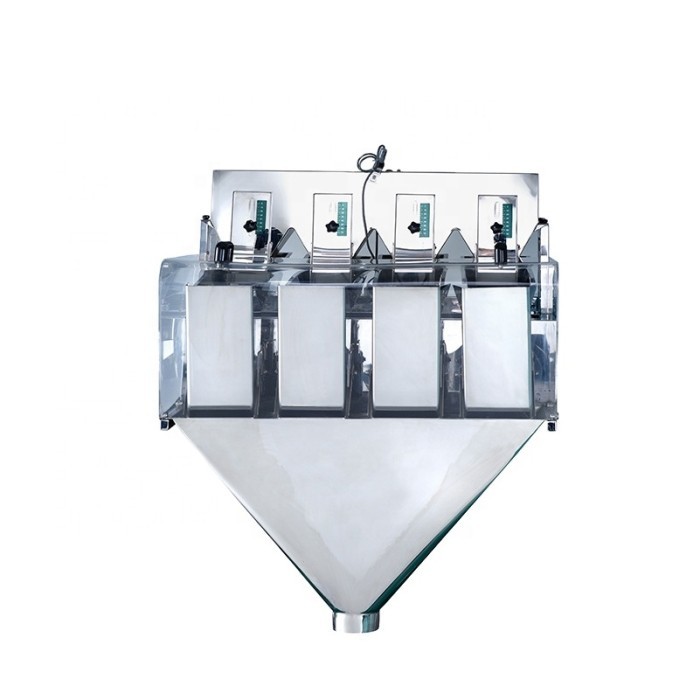
Decide the line configuration now. Most US food importers pair their bagger with a multihead weigher for accurate fills and a checkweigher for inline weight verification — both should be quoted as part of the same line so the supplier takes responsibility for the integrated system, not just the bagger.
Step 3 — Sign the contract, fix payment terms, and start production
After the spec is locked, the contract fixes price, delivery date, and responsibility boundaries. Standard export terms you will see from Chinese suppliers:
| Term | Meaning | What the US Buyer Arranges |
|---|---|---|
| EXW (Ex Works) | Price covers the machine at the factory gate | All freight, insurance, and customs — most work for the buyer |
| FOB (Free On Board) | Price includes loading onto the vessel at the Chinese port | Ocean freight, insurance, and US customs from the port onward |
| CIF (Cost, Insurance, Freight) | Price includes freight and insurance to the destination port | US customs clearance, port fees, and inland trucking |
Payment is normally split in two or three stages: a 30% deposit with the contract to start production, a 50–70% balance against the Bill of Lading (or before shipment), and occasionally a small retention after installation acceptance. Pay the balance only against documentary evidence — production photos/videos, the packing list, and the draft Bill of Lading — not on a promise. TOP Y MACHINERY follows this standard export practice and provides photo/video production reports at each milestone.
The 4–8 week timeline breaks down like this: standard machines (VFFS, premade pouch baggers, weighers) typically finish production in 15–30 days; custom or first-time lines take longer. Sea freight from China to the US West Coast adds 20–35 days; East Coast via the Panama Canal adds about 10 more days; air freight takes only 5–10 days but costs 5–8× more per kilo. Customs clearance after arrival normally takes 1–3 days when documentation is complete. Total: 4–8 weeks by sea, 3–5 weeks by air.
Step 4 — Ship by sea or air
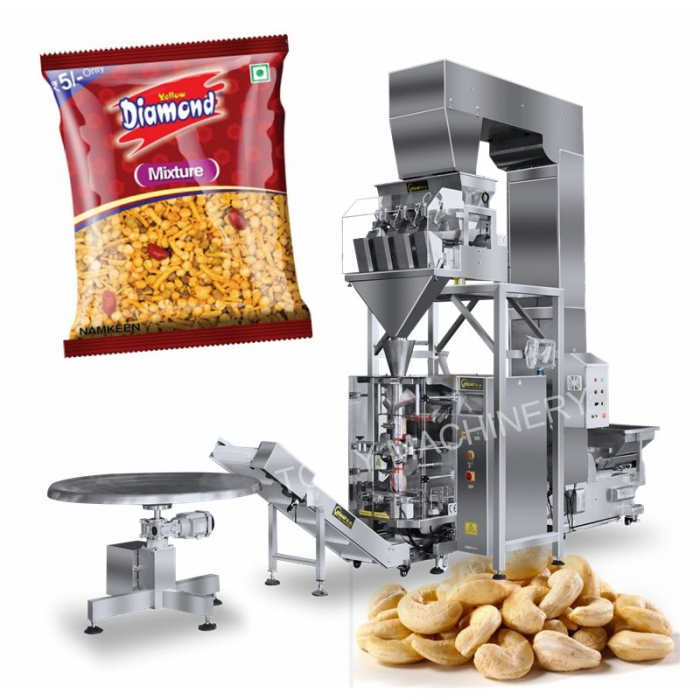
Sea freight is the default for packaging machinery because machines are heavy and low-density. A mid-size VFFS or premade pouch machine weighs roughly 400–1,200 kg and ships either LCL (less than container load) or FCL (full container) for multi-machine lines. LCL is normal for 1–3 machines; a full line with weigher, bagger, and checkweigher usually justifies FCL to avoid handling damage. Air freight cuts transit to 5–10 days at 5–8× the cost per kilo — reserved for urgent replacements or small parts. The next section compares the two options in detail.
Step 5 — Clear US customs and receive the machine
Customs clearance takes 1–3 days when the paperwork is right. Your licensed US customs broker files the ISF (10+2) before the vessel loads, classifies the machine under its HTS code (usually 8422.30, 0–4.5% duty), and handles the formal entry on arrival. The section below covers the full clearance checklist. After release, your inland trucking company delivers the machine to your facility — and a factory with 24/7 support guides installation and commissioning remotely.
Sea freight is the default for packaging machinery because machines are heavy and low-density. A mid-size VFFS or premade pouch machine weighs roughly 400–1,200 kg and ships either LCL (less than container load, sharing a 20ft/40ft container) or FCL (full container) for multi-machine lines. LCL is normal for 1–3 machines; a full line with weigher, bagger, and checkweigher usually justifies FCL to avoid handling damage.
| Factor | Sea Freight (LCL / FCL) | Air Freight |
|---|---|---|
| Transit time | 20–35 days to West Coast; ~30–45 days to East Coast | 5–10 days door-to-airport |
| Cost | Baseline — cheapest per kilo for heavy machinery | 5–8× sea freight cost per kilo |
| Best for | Standard machines, planned timelines, full lines | Urgent replacement, small parts, high-value short builds |
| Damage risk | Higher from handling and moisture — require export plywood crating | Lower, but keep original crating |
Protect the machine with proper export packaging. Require plywood export crates with waterproof lining and a machine anchored inside — a machine that arrives damaged costs more in claim time than the crating saved. Ask the supplier for photos of the packed crate and the packing list before the container is sealed.
Insure the shipment. Marine cargo insurance (typically under 0.5% of value) covers loss and damage in transit; without it, an ocean claim against the carrier is slow and often partial. Confirm whether your CIF/EXW terms include insurance — many CIF quotes do, FOB and EXW do not.
US Customs Clearance — Duties, ISF Filing, and Documentation
US customs clearance for a Chinese packaging machine is routine when the paperwork is right. The three items that matter most:
- HTS classification: food packaging machines fall mainly under HTS 8422.30 (machinery for packing or wrapping), typically dutiable in the 0–4.5% range depending on the exact subheading — classify carefully or ask your customs broker.
- ISF (Importer Security Filing, "10+2"): must be filed with CBP at least 24 hours before the vessel loads in China — your supplier's freight forwarder and your broker coordinate this automatically.
- Entry documents: commercial invoice, packing list, Bill of Lading, and the machine's electrical/safety documentation. For food-contact machinery, keep the FDA-compliant materials statement available — it answers the question "is this equipment food-safe?" before it is asked.
Who clears the goods? Most first-time importers hire a licensed US customs broker (cost typically $100–$300 per entry) who handles the entry filing, duty payment, and any FDA hold-risk communication. You do not need to be at the port — the broker and your inland trucking company move the machine from the port to your facility. Expect 1–3 days from vessel arrival to release when documentation is complete.
A practical note for smaller shipments: if your machine value is under the Section 321 de minimis threshold ($800), it can clear without formal entry — but packaging machines almost always exceed this, so plan for a formal entry with a broker.
Frequently Asked Questions
How long does it take to import a packaging machine from China to the US?
Plan on 4–8 weeks for a standard machine: 15–30 days production, 20–35 days sea freight (or 5–10 days air), and 1–3 days customs clearance. Custom-built or fully integrated lines with multiple machines take longer — always add 1–2 weeks of buffer to the supplier's quoted date.
How much does US customs duty cost on a Chinese packaging machine?
Food packaging machinery is mostly classified under HTS 8422.30 with duty rates typically in the 0–4.5% range depending on the exact subheading. On a $15,000–$40,000 machine, expect roughly $0–$1,800 in duty — confirm the precise classification with a licensed customs broker before shipment.
Do Chinese packaging machines meet US food safety requirements?
Reputable exporters build machines with SS304 food-contact parts and CE-certified electrical systems, and provide FDA-compliant materials statements for surfaces that touch food. Verify the supplier's certification documents and ask for the food-contact material list before ordering — this is standard practice for top-tier Chinese manufacturers.
What documents do I need for US customs clearance?
A commercial invoice, packing list, Bill of Lading, and the machine's electrical/safety documentation. Your customs broker also needs your business details to file the ISF (10+2) at least 24 hours before vessel loading and the formal entry upon arrival. Ask your supplier for export-crated packing and photos before the container seals.
Is it cheaper to buy from a Chinese supplier or a US distributor?
Direct import from a factory is typically 25–50% cheaper on machine price, but you take on freight, duty, lead time, and remote support. A US distributor adds margin but shortens delivery and simplifies service. Many US buyers import the machine directly and rely on the supplier's remote diagnostics and spare-parts program — which is why 24/7 technical support is a key supplier requirement.
Can a Chinese supplier provide after-sales support in the US?
Yes, when you choose the right supplier. Look for export-focused manufacturers with 24/7 technical support, video-guided installation and commissioning, remote PLC diagnostics, and a spare-parts program that ships to the US. TOP Y MACHINERY provides exactly this package for machines exported to 100+ countries.
Import-Ready Food Packaging Machines from TOP Y MACHINERY
TOP Y MACHINERY is a factory-direct Chinese manufacturer that walks US buyers through every step above. The company exports food packaging machines to 100+ countries, builds to CE and FDA-compliant food-contact standards, supports 110V/60Hz configurations for the US market, and provides 24/7 technical support with spare-parts shipping and remote diagnostics after installation. Two machine families cover most US import needs:
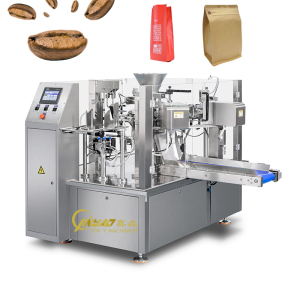
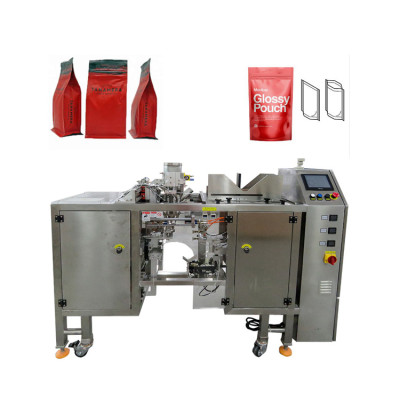
TOPY-RPM Rotary Premade Bag Packaging Machine
High-speed rotary pouch filler for premade doypack, zipper, and stand-up pouches — servo-driven stations, PLC control, quick recipe changeover, and CE-certified construction. A strong choice for US facilities packaging snacks, coffee, and granule products at medium to high volumes.
View product details →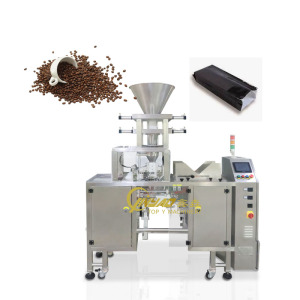
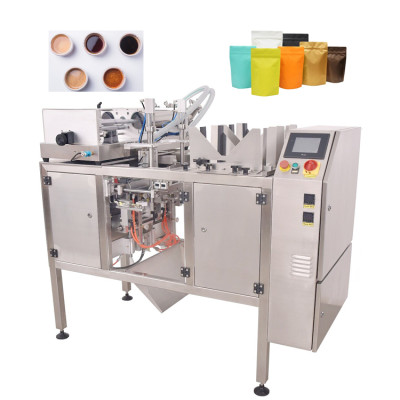
TOPY-MDP1 Premade Bag Doypack Packaging Machine
Flexible premade bag filling and sealing line for doypack, stand-up, and zipper pouches with multihead weigher integration. Compact footprint, FDA-compliant food-contact parts, and export-ready documentation — a practical entry point for first-time US importers.
View product details →Ready to start your import? Send TOP Y MACHINERY your product type, target speed, and bag format — the export team will reply with a spec-matched quotation, production timeline, shipping options, and the exact customs documentation you need for the US entry. Browse the complete food packaging machine range or request an import quotation today.