How to Select the Ideal Rotary Packing Machine for Powder
Navigating the world of powder packaging can be complex, and ensuring efficiency and precision is often a top priority for us. In today's competitive landscape, manual or semi-automatic processes can lead to bottlenecks, inconsistencies, and rising labor costs. That's where I believe a robust Rotary packing machine for powder steps in as a game-changer, transforming our operations. This advanced equipment is designed to optimize the entire workflow, from filling to sealing, boosting productivity while maintaining the highest quality standards.
Join me as I break down the key considerations for selecting the ideal machine, drawing insights from powerful solutions like those offered by TOP Y Machinery. We will explore the critical features, versatile applications, and the tangible benefits that automation brings to your production line.
Key Takeaways
- Automation Drives Efficiency: Automated rotary packing machines significantly increase production speed, reduce downtime, and lower labor costs compared to manual or semi-automatic methods. They enable continuous, high-speed operation, handling hundreds or even thousands of bags per hour.
- Precision is Paramount: Advanced filling systems like auger fillers and combination weighers ensure high-precision quantitative filling. This minimizes product giveaway, reduces material waste, and guarantees consistent package weight, which is crucial for cost control and regulatory compliance.
- Versatility and Flexibility: Modern machines can handle a wide variety of pouch types (e.g., stand-up, flat, zippered) and film materials. Features like toolless changeover and recipe management allow for quick and easy adjustments for different bag sizes and products, reducing downtime between runs.
- Hygiene and Safety are Non-Negotiable: Designed with materials like stainless steel and featuring closed filling structures, these machines reduce human contact with the product, minimize dust, and prevent contamination. This is especially critical in the food, pharmaceutical, and chemical industries.
- Smart Functions Reduce Waste: Technologies such as "No Fill/No Seal" sensors prevent the machine from dispensing product or sealing an empty station, which drastically cuts down on both product and material waste.
- Enhanced Product Presentation: The consistency and quality of automated packaging—from precise filling to a perfect seal—improve the aesthetic appeal of the final product. This enhances marketability and builds consumer trust.
Unlocking Efficiency: Why a Rotary Packing Machine for Powder is Essential for Our Business
In the competitive manufacturing sector, integrating automated systems is no longer a luxury but a strategic necessity for business growth and sustainability. For businesses dealing with powders, a rotary packing machine automates the entire packaging workflow—from dosing and filling to sealing and outputting the final product. This shift from manual or semi-automatic processes to full automation is critical for enhancing efficiency, ensuring product quality, and maintaining a competitive edge.
Streamlining Our Packaging Process with Advanced Automation
The most significant advantage of an automatic powder packing machine is the dramatic improvement in production efficiency. Unlike manual operations, which are often limited by human speed and fatigue, automated systems are built for high-speed, continuous operation. These machines can achieve an output of hundreds or even thousands of bags per hour, drastically increasing throughput. By automating repetitive tasks, businesses can significantly reduce labor costs associated with wages, training, and human error. This seamless integration of processes eliminates production bottlenecks, reduces downtime, and allows for a much more predictable and stable manufacturing pace.
The Broad Versatility of Pouch Types and Film Materials We Can Use
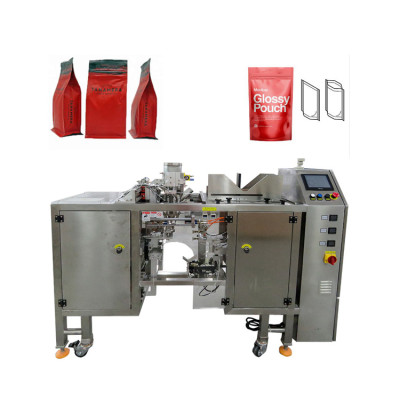
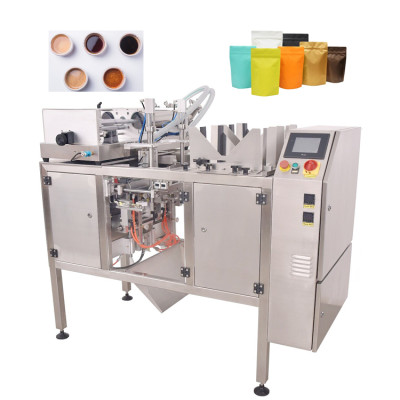
Modern rotary packing machines offer incredible flexibility, a crucial factor for businesses that handle a diverse product portfolio or plan for future expansion. These systems are not limited to a single type of package; they can handle a wide array of pre-made pouch designs, including popular formats like stand-up pouches, flat or pillow pouches, and pouches with zippers or spouts.
This versatility extends to the packaging materials as well. The machines can work with various film types, from standard plastics like PE (polyethylene) and PP (polypropylene) to more complex laminated films, aluminum foils, and paper composites. This allows manufacturers to select the ideal material that provides the right barrier properties, durability, and aesthetic appeal for their specific product.
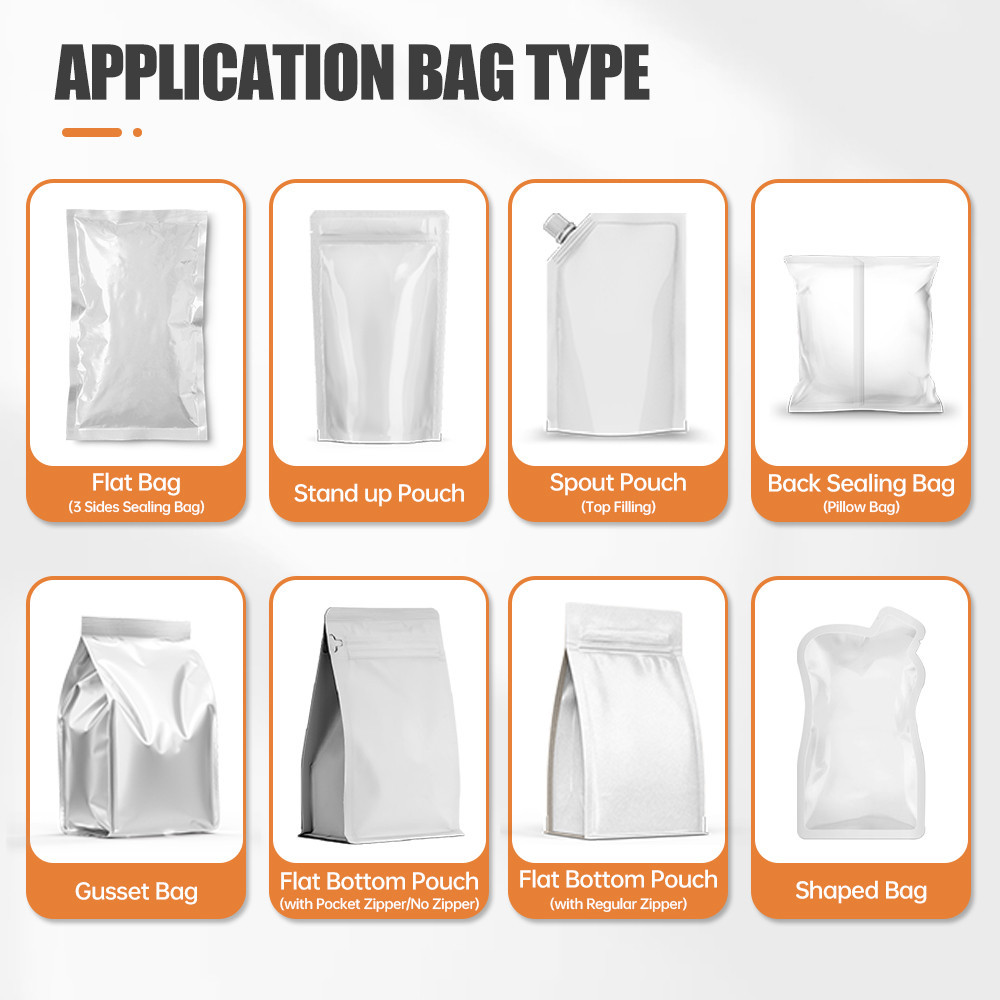
| Pouch Type | Common Uses | Compatible Film Materials |
|---|---|---|
| Stand-Up Pouch | Coffee, protein powder, snacks, pet food | Laminated films, PE, Aluminum Foil |
| Flat/Pillow Pouch | Spices, single-serve drink mixes | Paper composites, PP, Laminates |
| Zipper Pouch | Re-sealable products, granular items | PE, Laminated films with zipper |
| Spout Pouch | Liquid or semi-liquid powders, sauces | Multi-layer laminates, PE |
| Gusseted Bag | Flour, sugar, bulk powders | Paper, PE, Laminated films |
Prioritizing Hygiene and Simplified Maintenance in Our Daily Operations
In industries like food, pharmaceuticals, and chemicals, hygiene is non-negotiable. Automated powder packing machines are engineered to meet stringent cleanliness standards. Key design principles include:
- Stainless Steel Construction: Product contact parts are typically made from high-grade stainless steel (like SS304 or SS316), which is corrosion-resistant and easy to sanitize.
- Enclosed Filling Systems: These machines often employ closed or semi-closed structures to minimize dust emissions and prevent airborne contaminants from reaching the product. This creates a cleaner and safer working environment.
- Ease of Cleaning: Modern hygienic design focuses on accessibility. Components are designed to be easily disassembled for thorough cleaning, often without the need for tools. Surfaces are smooth and free of crevices where powder can accumulate, preventing microbial growth.
Simplified maintenance is another core benefit. Routine tasks like cleaning and parts inspection are streamlined, reducing downtime and ensuring the machine operates at peak performance. Following a regular maintenance schedule, from daily wipe-downs to weekly lubrication, extends the machine's lifespan and maintains consistent output quality.
Critical Features We Should Look for in a Modern Rotary Packing Machine for Powder
When selecting a modern rotary packing machine, the goal is to find a system that not only meets current production needs but also provides a competitive advantage through superior performance, efficiency, and quality. This means looking beyond the basic functions and focusing on critical features that deliver precision, intelligence, and adaptability.
Ensuring Precision Filling: From Combination Weighers to Augers
The filling system is the heart of any packing machine, and its accuracy directly impacts profitability. Inaccurate fills lead to product giveaway and dissatisfied customers. The two primary filling technologies for powders are:
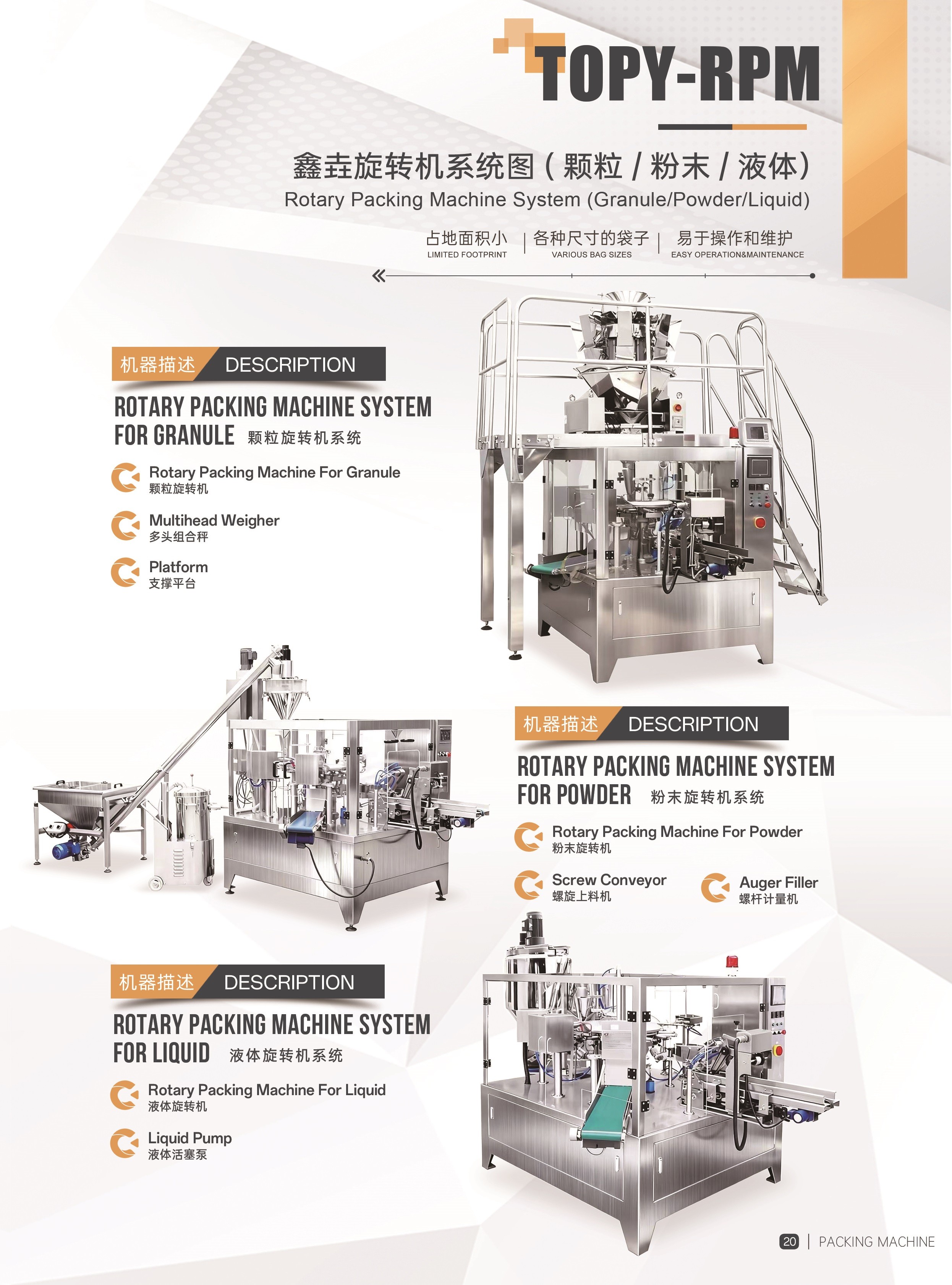
- Auger Fillers: These are the champions for non-free-flowing, dusty, or fine powders like flour, protein powder, spices, and milk powder. An auger filler uses a rotating screw to dispense a precise volume of product into the bag. Its enclosed design is excellent for containing dust, ensuring a clean packaging environment. While they are volumetric fillers, modern auger systems paired with servo motors offer high levels of accuracy and are more cost-effective for small to medium production volumes.
- Combination Weighers (Multi-Head Weighers): These are ideal for free-flowing granular powders, mixes, or high-value products where exact weight is critical. The weigher uses multiple weigh buckets to calculate the best combination to achieve the target weight with unparalleled accuracy, virtually eliminating product giveaway. This gravimetric system is faster than auger fillers for suitable products and is the best choice for high-speed, large-scale production where minimizing waste from overfilling is a top priority.
Choosing the right filler depends entirely on your product's characteristics. An auger filler is designed to handle difficult, clumping powders, while a combination weigher excels with products that flow easily.
Leveraging Smart Functions for Optimized Performance and Reduced Waste
Modern packaging machines are increasingly intelligent, integrating smart technologies that boost efficiency and support sustainability goals. These systems use sensors and real-time data to minimize errors and reduce material waste.
The Benefits of Integrated Date Coding and Product Settling
- Integrated Date Coding: Integrating a date coder (like an inkjet or thermal transfer printer) directly into the packing machine is crucial for traceability and inventory management. It ensures that every bag is automatically printed with essential information such as expiration dates, batch numbers, and barcodes. This eliminates coding errors, streamlines the process, and is often a regulatory requirement in the food and pharmaceutical industries.
- Product Settling: For bulky or light powders, a "settling" or "shaking" station is invaluable. After filling, the machine gently vibrates the bag to help the powder settle. This allows more product to fit into a smaller bag, optimizing material use and ensuring a more compact, stable final package.
Minimizing Waste with 'No Fill/No Seal' Technology
A key feature for reducing waste is "No Fill/No Seal" technology. The machine uses sensors to detect if a pouch has been correctly picked and opened at the filling station. If a pouch is missing, the machine will not dispense any product and will also skip the sealing process for that empty station. This simple but effective function prevents the loss of both valuable product and packaging materials, directly contributing to cost savings and more sustainable operation. Many modern machines can achieve sealant recovery of up to 95%.
User-Friendly Operation and Seamless Adaptability for Our Production Needs
In a fast-paced production environment, minimizing downtime is critical. Machines that are easy to operate and quick to adapt to different products or bag sizes offer a significant competitive advantage.
The Convenience of Toolless Changeover and Recipe Management
"Just in Time" production often requires shorter runs of various products, making frequent changeovers necessary. Modern rotary packing machines are designed for quick, toolless changeovers, which can reduce downtime from hours to under five minutes. This is achieved through:
- Toolless Adjustments: Components like bag grippers and feed guides can be adjusted with simple hand knobs or automated controls, eliminating the need for specialized tools.
- Recipe Management: A user-friendly Human-Machine Interface (HMI) allows operators to save settings for different products and bag sizes as "recipes." When it's time to switch, the operator simply selects the corresponding recipe, and the machine automatically adjusts its parameters, ensuring certified process repeatability and reducing human error.
Effortlessly Accommodating Various Bag Sizes
Flexibility in bag size is a core strength of rotary packing machines. Adjusting for different bag widths is often a simple matter of changing a setting on the control panel, which automatically modifies the distance between the grippers. This allows a single machine to handle a wide range of pouch sizes with minimal downtime, providing the flexibility to respond to changing market demands or new product launches without investing in new equipment.
Real-World Applications and Choosing Your Ideal Rotary Packing Machine for Powder from TOP Y Machinery
The true value of a rotary packing machine for powder is realized when its advanced features are put to work in real-world scenarios. The right machine becomes a cornerstone of production, capable of handling a vast array of products while simultaneously boosting their marketability and ensuring their integrity.
Exploring Diverse Product Applications: From Granola to Raw Produce
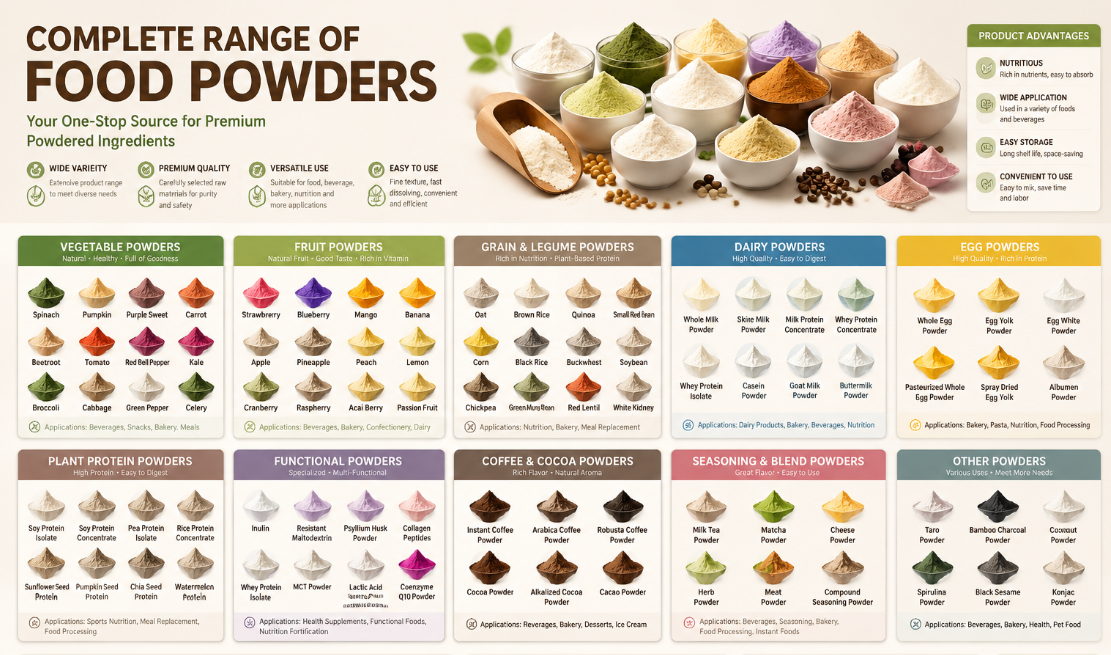
While our focus is on powders, the versatility of rotary packing machines extends to a wide spectrum of products, demonstrating their incredible flexibility. This adaptability makes them a sound investment for companies with diverse or evolving product lines. Common applications include:
- Fine and Free-Flowing Powders: This is the core application, covering products like milk powder, coffee powder, spices, flour, detergents, and chemical additives.
- Nutraceuticals and Pharmaceuticals: High-value powders such as protein blends, collagen, creatine, and medicinal powders are perfectly suited for these machines, which provide the required precision and hygienic handling.
- Granular Products: Items like sugar, salt, seeds, and coffee beans are easily managed, often using a combination weigher for top-tier accuracy.
- Snacks and Solids: The same machine, with a different filling system, can pack snacks like nuts, candies, granola, biscuits, and even small hardware components.
- Liquids and Pastes: With the appropriate liquid filler, rotary packers can also handle sauces, juices, and other viscous products, showcasing their all-around utility.
How a Quality Machine Enhances Product Appeal and Extends Shelf Life
Packaging is much more than a container; it's the first interaction a customer has with your product and a critical line of defense against spoilage. A high-quality rotary packing machine directly contributes to both aspects:
- Enhanced Product Appeal: A machine that produces consistent, perfectly sealed, and accurately filled pouches projects an image of quality and professionalism. A clean seal, crisp graphics, and a well-formed stand-up pouch can make a product stand out on a crowded shelf, attracting consumers and encouraging a quick purchase.
- Extended Shelf Life: Packaging's primary role is to protect the product from environmental factors like moisture, oxygen, and light that cause degradation. Airtight seals created by advanced sealing mechanisms are crucial for preventing contamination and preserving freshness. For sensitive products, features like nitrogen flushing can be integrated to displace oxygen from the bag before sealing, which significantly inhibits oxidation and prolongs the product's aroma, taste, and quality.
Discovering the Right Rotary Packing Machine for Powder Model: Like Our JRPM Series
Choosing the right machine model requires a careful assessment of your specific operational needs. You must consider factors such as your product's characteristics (flowability, density), required production speed, desired pouch types and sizes, and budget.
At TOP Y Machinery, our engineers have over 15 years of experience in creating both standard and customized packaging solutions. We focus on innovation to meet the real-world demands of our clients. For instance, our JRPM series (J-type Rotary Packing Machine) is designed to exemplify the principles of efficiency, versatility, and reliability. This series offers models tailored for different bag sizes and production speeds, ensuring a perfect fit for businesses ranging from medium-sized enterprises to large-scale industrial operations.
Understanding that every powder is unique, we work with you to integrate the ideal filling system, whether it's a precision auger filler for fine powders or a high-accuracy combination weigher for granular products. To explore the full capabilities of our machines and find a solution tailored to your needs, you can check our Catalog download** page for more detailed specifications. If you would like personalized guidance, please do not hesitate to **Contact us. Our team is ready to help you navigate the options and configure the perfect system for your production line.
Frequently Asked Questions (FAQs)
1. What is the main difference between an auger filler and a combination weigher for powders? An auger filler uses a rotating screw to dispense a specific volume of powder and is ideal for non-free-flowing or dusty powders like flour and protein powder, as it actively moves the product. A combination weigher (or multi-head weigher) uses multiple weigh buckets to measure the actual weight of the product, offering superior accuracy for free-flowing granular powders and high-value products.
2. How does a rotary packing machine improve hygiene? These machines are designed with hygiene as a priority. They are typically constructed from stainless steel and feature enclosed filling systems to minimize dust and prevent contamination. The design often includes smooth surfaces and easy-to-disassemble parts, which allows for thorough and efficient cleaning, crucial for food, pharmaceutical, and chemical applications.
3. Can one machine handle different powder types and bag sizes? Yes, versatility is a key benefit. A single rotary packing machine can be configured to handle various powder types by integrating the appropriate filling system (e.g., an auger filler). They are also designed for quick changeovers to accommodate a wide range of bag sizes and types, often through toolless adjustments and pre-programmed recipes accessible via an HMI screen.
4. What is 'No Fill/No Seal' technology and why is it important? 'No Fill/No Seal' is a smart function that uses sensors to detect if a pouch is present and correctly opened at the filling station. If no pouch is detected, the machine will not dispense the product or attempt to seal the station. This is critically important for reducing the waste of both your valuable product and packaging materials, leading to significant cost savings.
5. How do I determine the right packing speed for my business? The ideal packing speed depends on your production volume and upstream processing capacity. Rotary packing machines are available in a range of speeds, from 30 bags per minute for smaller operations to over 100 bags per minute for large-scale production. It's important to choose a machine that not only meets your current output needs but also offers scalability for future growth.
In conclusion, I've walked you through the crucial steps to selecting the perfect rotary packing machine for powder tailored to your operations. Investing in the right equipment is a strategic decision that goes beyond a simple purchase; it's about enhancing your entire production ecosystem.
Making an informed decision on this equipment means significantly boosting efficiency, reducing operational costs, and, most importantly, ensuring the consistent quality of your packaged powders. From the precision of the filling system to the intelligence of waste-reduction technologies, every feature plays a part in delivering a superior final product and a stronger bottom line.
We at TOP Y Machinery are committed to helping you find a solution that not only meets but exceeds your expectations for reliable and high-performance packaging. Our goal is to provide a machine that becomes an integral asset to your business's success. For a deeper look at our offerings or to discuss your project with our experts, feel free to Contact us. We encourage you to share this article with your network and join the conversation on optimizing powder packaging.