How to Choose a Reliable Chocolate Packing Machine Supplier
In the delectable world of chocolate, where flavor and presentation are paramount, ensuring your products reach customers in pristine condition is a non-negotiable. The bridge between your perfectly crafted confections and a delighted customer is efficient, reliable packaging. This makes the selection of a trustworthy chocolate packing machine supplier one of the most critical decisions for the success and scalability of your business. Let's embark on a detailed exploration of the essential steps to identify and forge a lasting partnership with the best supplier for your unique requirements.
This comprehensive guide is designed to arm you with the insights and knowledge needed to make a well-informed choice. A successful partnership with your equipment provider goes beyond a simple transaction; it's about securing a foundation for growth, efficiency, and brand integrity. By thoroughly understanding your own needs and navigating the market with a clear strategy, you are setting the stage for long-term success.
Defining Your Specific Needs for a Chocolate Packing Machine
Before you can find the right supplier, you must first have an exhaustive understanding of what you actually need. A supplier can only provide the best solution if you provide a clear and detailed problem. This initial phase of self-assessment is the bedrock of your entire procurement process. It involves a granular look at your products, your production goals, and your financial framework. Rushing this stage often leads to acquiring a machine that is either insufficient for your needs or over-engineered and excessively costly. A methodical approach here will pay dividends, ensuring the machine you ultimately invest in is a perfect fit for your operational puzzle.
Assessing Your Chocolate Product Line and Packaging Requirements
The first step is a deep dive into your product portfolio. The physical characteristics of your chocolates will heavily dictate the type of packaging machine required. You need to consider every attribute of your products, from their physical dimensions to their ingredients and desired final presentation.
Product Characteristics: Analyze the full range of your chocolates. Are you packaging solid bars, delicate truffles, cream-filled bonbons, or chocolates with inclusions like nuts and fruits? The machine must handle these items gently to prevent breakage or cosmetic damage. The size, shape, and weight of each product are critical parameters that determine the machine's feeding and wrapping mechanisms.
Packaging Style and Materials: What is your brand's desired aesthetic? The packaging is the first physical interaction a customer has with your product. Common styles for chocolate include:
- Flow Wrapping: Ideal for individual bars or small multi-packs, creating a sealed pillow-like pack.
- Foil and Band Wrapping: A classic look for premium bars, involving a primary foil wrap and a secondary paper or cardboard band.
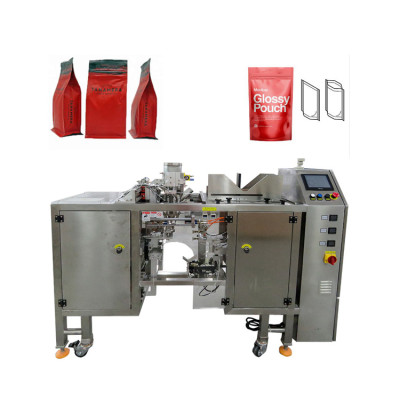
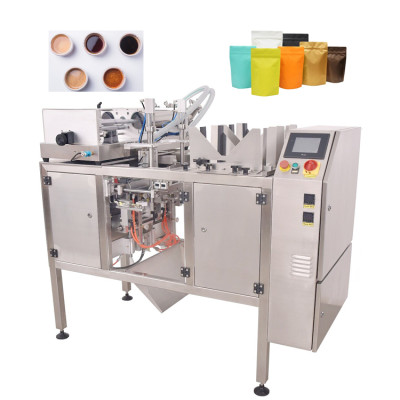
- Pouch Filling: Increasingly popular for bite-sized chocolates or trail mixes, using pre-made stand-up pouches or creating them from a roll of film.
- Twist Wrapping: The traditional method for small, individual candies, where the ends of the wrapper are twisted shut.
- Cartoning/Boxing: An end-of-line solution that places wrapped chocolates into secondary boxes.
The materials you choose—be it aluminum foil, OPP film, paper, or eco-friendly composites—must be compatible with the machine. Consider factors like heat sealability, barrier properties to protect against moisture and oxygen, and printability for branding.
- Environmental and Regulatory Factors: The environment where the packaging will occur is crucial. Chocolate is sensitive to temperature and humidity. Your packaging environment must be controlled to prevent melting or blooming. Furthermore, all packaging machinery must comply with food safety standards, such as those set by the FDA, ensuring that materials and mechanics do not contaminate the product.
By creating a detailed matrix of your products and their corresponding packaging needs, you can formulate a precise requirements document to present to potential suppliers.
Determining Desired Production Volume and Efficiency for Your Chocolate Packing Machine
With a clear picture of what you are packaging, the next question is how much and how fast. Your production volume dictates the necessary speed and automation level of your machinery.
Current and Future Production Volume: Start by quantifying your current output. How many units do you need to package per minute, per hour, or per shift? More importantly, what are your growth projections for the next three to five years? Investing in a machine that only meets your current needs can quickly lead to a production bottleneck. It's often wiser to invest in a machine with a slightly higher capacity than you currently require, allowing for scalability.
Measuring Efficiency (OEE): Professional operations measure efficiency using a metric called Overall Equipment Effectiveness (OEE). OEE considers three factors:
- Availability: The percentage of scheduled time that the machine is available to operate. (Uptime vs. Downtime for changeovers, maintenance, etc.)
- Performance: The speed at which the machine runs as a percentage of its designed speed. (Actual speed vs. theoretical maximum speed).
- Quality: The percentage of good, sellable units produced out of the total units started. (Good packs vs. rejects).
A high OEE score indicates an efficient and reliable operation. When discussing machinery with suppliers, ask about the expected OEE for their equipment under your specific operating conditions. For example, a high-speed Rotary chocolate packing machine is designed for high performance and availability, contributing to a better OEE.
- Automation Level: The required level of automation depends on your volume and labor costs.
- Semi-Automatic: Requires an operator to perform some part of the process, like loading products or placing pouches. Suitable for smaller batches or artisanal producers.
- Fully-Automatic: Manages the entire process from product infeed to sealed package output with minimal operator intervention. Essential for high-volume, continuous production.
Your goal is to find the sweet spot that maximizes output and quality while minimizing operational costs and reliance on manual labor.
Establishing a Realistic Budget for Your Chocolate Packing Machine Investment
An investment in packaging machinery is significant, and your budget must encompass more than just the sticker price of the machine. A comprehensive financial plan considers the Total Cost of Ownership (TCO), which provides a more accurate picture of the long-term financial impact.
Initial Purchase Price: This is the most obvious cost, but prices can vary dramatically based on speed, complexity, automation level, and country of origin. A simple, semi-automatic machine might cost tens of thousands of dollars, while a high-speed, fully integrated packaging line can run into the hundreds of thousands or more.
Total Cost of Ownership (TCO): A holistic budget should include:
- Installation and Commissioning: Costs associated with having the supplier's technicians install the machine, connect it to your utilities, and ensure it runs correctly.
- Training: The cost of training your operators and maintenance staff to use and care for the new equipment effectively. Proper training is crucial for maximizing OEE and the lifespan of the machine.
- Spare Parts and Consumables: Every machine has wear parts that need regular replacement. Budget for a recommended spare parts package and ongoing consumable costs.
- Maintenance and Service: Factor in the cost of preventative maintenance contracts or potential service calls. Downtime is expensive, so a reliable service plan is a worthwhile investment.
- Energy and Utility Costs: High-efficiency machines can lead to significant long-term savings on electricity and compressed air.
Return on Investment (ROI): Frame this expenditure as an investment, not just a cost. Calculate the potential ROI by estimating labor savings, increased throughput, reduced material waste, and improved product quality. A reliable machine that boosts your output and reduces rejects can pay for itself much faster than a cheaper, less reliable alternative. Presenting a clear ROI calculation can also be crucial for securing financing or internal budget approval.
Exploring Different Types of Chocolate Packing Machine Suppliers
Once you have a crystal-clear definition of your needs, the next phase is to explore the market and understand the different kinds of suppliers you will encounter. The supplier landscape is not monolithic; it consists of various players with different business models, strengths, and weaknesses. Choosing the right type of supplier is just as important as choosing the right machine. Your goal is to find a partner whose business model and expertise align with your company's scale, technical capabilities, and long-term strategy. This exploration will help you filter potential partners and focus your vetting process on those most likely to provide a successful outcome.
Understanding the Roles of Manufacturers vs. Distributors of Chocolate Packing Machines
Your primary choice will be between purchasing directly from a manufacturer or working with a distributor or agent. Each has distinct advantages and disadvantages.
Manufacturers: These are the companies that design, engineer, and build the equipment.
- Advantages:
- Deep Expertise: They possess unparalleled knowledge of their own machinery. You are talking directly to the source, which is invaluable for complex or custom applications.
- Customization: Manufacturers are often better equipped to offer custom modifications to their standard machines to perfectly suit your unique product or packaging.
- Potentially Lower Cost: By cutting out the middleman, you may get a better price, although this is not always guaranteed.
- Disadvantages:
- Limited Selection: A manufacturer will only offer their own brand of equipment. If your needs are diverse, you might have to engage with multiple manufacturers.
- Service and Support: Support can be a mixed bag. While they have the best knowledge, their service network might be less extensive geographically compared to a distributor with local teams.
- Advantages:
Distributors/Agents: These companies act as intermediaries, representing one or often multiple manufacturers.
- Advantages:
- Broader Selection: A distributor can offer a range of solutions from different manufacturers, allowing them to propose the best-fit machine for your job regardless of the brand.
- Local Presence: They often have a strong local or regional presence, which can mean faster response times for sales, service, and support.
- Integrated Solutions: A good distributor can act as a systems integrator, helping you build a complete packaging line with equipment (e.g., weighers, conveyors, case packers) from various manufacturers that are guaranteed to work together.
- Disadvantages:
- Less Technical Depth: While knowledgeable, their expertise on any single machine may not be as deep as the manufacturer's own engineers.
- Higher Cost: There is a markup for their services and support, which can be reflected in the final price.
- Advantages:
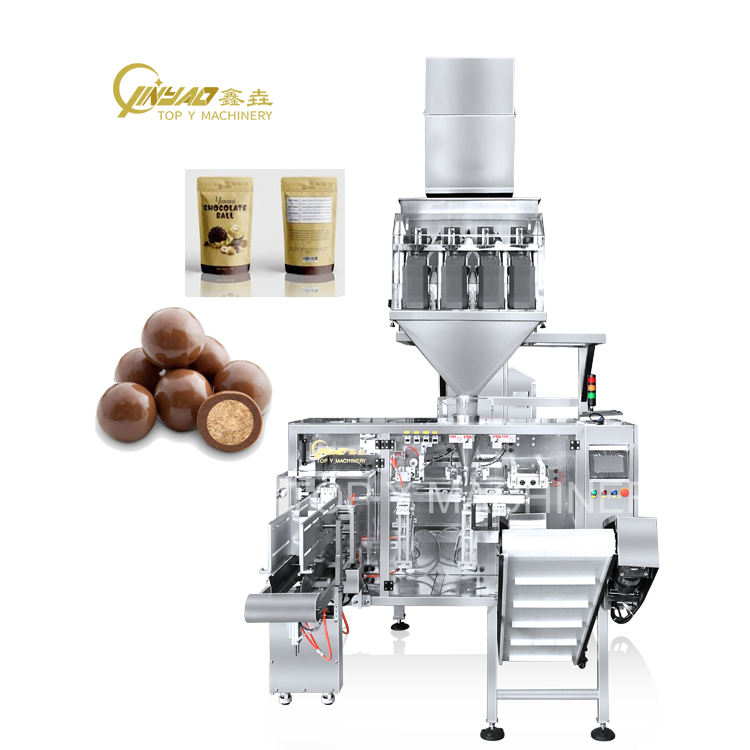
Making the Choice: For large-scale operations or those with highly specific, custom needs, working directly with a specialized manufacturer like TOP Y MACHINERY who focuses on creating advanced packaging solutions can be highly beneficial. For smaller businesses or those needing a standard solution with strong local support, a reputable distributor can be an excellent choice.
Identifying Reputable and Customer-Focused Chocolate Packing Machine Vendors
Regardless of whether you choose a manufacturer or a distributor, their reputation and customer focus are paramount. A supplier's culture and commitment to partnership are key indicators of the experience you will have long after the sale is complete.
Look for a Track Record of Success: A reputable vendor will have a long history in the industry. Look for case studies, testimonials, and client lists on their website. Don't hesitate to ask for references from companies that are similar to yours in size and product type.
Assess Their Communication and Responsiveness: From your very first interaction, pay attention to their communication style. Do they listen carefully to your needs? Are they responsive to your questions? A supplier who is difficult to communicate with during the sales process will likely be even more so when you need support later.
Customer-Centric Approach: A customer-focused vendor acts as a consultant, not just a salesperson. They should be genuinely interested in solving your problem and improving your operation. They will ask probing questions to fully understand your requirements and may even challenge your assumptions to guide you to a better solution. They see the relationship as a long-term partnership, not a one-time transaction.
Industry Involvement: Check for their presence at industry trade shows (like Pack Expo), their membership in professional organizations (like PMMI - The Association for Packaging and Processing Technologies), and their contributions to industry publications. Active involvement demonstrates a commitment to the industry and staying current with the latest trends and technologies.
The Importance of Expertise and Specialization in Chocolate Packing Machine Solutions
The chocolate industry presents unique challenges. The product is delicate, temperature-sensitive, and comes in an infinite variety of shapes and sizes. A generic packaging machine supplier may not have the nuanced understanding required to handle these challenges effectively.
Specialized Knowledge of Chocolate: A supplier specializing in confectionery applications will understand the specific problems you face. They will know how to handle the "fat bloom" that can occur with temperature fluctuations, how to design feeders that don't damage fragile products, and what packaging materials provide the best barrier protection to maintain freshness and aroma. Their engineers and sales staff will speak your language.
Experience with Confectionery Regulations: A specialized supplier will be well-versed in food safety standards specific to confectionery, such as the FDA's Food Safety Modernization Act (FSMA). Their machines will be designed with hygienic principles in mind, such as using stainless steel construction, minimizing flat surfaces where product dust can accumulate, and allowing for easy and thorough cleaning to prevent cross-contamination.
A Portfolio of Relevant Solutions: When you review their product offerings, you should see a clear focus on machines designed for products like yours. They should be able to show you videos and examples of their machines running chocolates similar to the ones you produce. This specialization significantly reduces the risk of post-installation problems and ensures the machine you buy is proven to work for its intended purpose. Choosing a specialist is a major step in mitigating risk and ensuring a successful investment.
Essential Features to Evaluate in a Chocolate Packing Machine
After identifying your needs and shortlisting potential suppliers, the focus shifts to the hardware itself. Evaluating a chocolate packing machine requires a methodical approach that looks beyond the sales brochure and into the core engineering, functionality, and performance of the equipment. You must scrutinize the features that will directly impact your product's safety, your operational flexibility, and your bottom line. This is where you compare specifications, observe demonstrations, and ask detailed technical questions to ensure the machine is not just capable, but truly optimized for your chocolate products.
Ensuring Product Safety and Integrity with Your Chosen Chocolate Packing Machine
For any food product, and especially for a premium item like chocolate, protecting the product's safety and integrity is the absolute top priority. The packaging machine plays a direct role in this.
Hygienic Design and Materials: The machine must be built according to sanitary design principles to prevent contamination. Look for:
- Construction Materials: Food-contact surfaces should be made of stainless steel (typically 304 or 316 grade) or other FDA-approved food-grade materials.
- Ease of Cleaning: The machine should be designed for easy and tool-less disassembly of key components like feeders and forming tubes. Surfaces should be smooth and sloped to avoid standing water or product buildup. Look for an "IP" (Ingress Protection) rating, such as IP65, which indicates the machine can be washed down.
- Elimination of Harborage Points: A well-designed machine minimizes nooks, crannies, and exposed threads where bacteria could grow.
Gentle Product Handling: Chocolates are fragile. The machine's infeed and handling systems must be designed to transport the product without causing breakage, scratches, or melting. This can involve specialized vibratory feeders, gentle conveyor belts with custom-designed flights, and sensors that prevent product jamming and crushing.
Seal Integrity: The final seal on the package is the ultimate barrier protecting your chocolate from the outside world. The machine must produce strong, consistent, and hermetic seals. Evaluate the sealing technology (e.g., heat sealing, ultrasonic sealing) and ensure it provides precise control over temperature, pressure, and dwell time. A machine with poor seal quality can lead to spoiled products and costly recalls. Integration of a seal integrity checker or leak detector can be a valuable quality assurance feature.
Considering Versatility and Adaptability of the Chocolate Packing Machine
The market is not static. Consumer preferences change, and you may want to introduce new chocolate shapes, sizes, or packaging formats in the future. A machine that can adapt to these changes offers significant long-term value.
Changeover Efficiency: How quickly and easily can the machine be changed from running one product or package size to another? This is a critical factor for OEE, especially for businesses with a diverse product line. Look for features that facilitate rapid changeovers, such as:
- Tool-less adjustments: Hand-cranks and quick-release clamps instead of tools.
- Digital readouts and scales: For precise, repeatable settings.
- Programmed Recipes: The ability to save all machine parameters for a specific product as a "recipe" that can be recalled instantly from the HMI (Human-Machine Interface). This drastically reduces setup time and minimizes operator error.
Range of Sizes and Formats: Discuss the machine's "size range" with the supplier. What is the minimum and maximum package size it can produce? Can it handle different film types or pouch styles? Some machines offer modules that can be added later to expand capabilities, such as a zipper applicator for pouches or a tear-notch device. A versatile machine provides a degree of future-proofing for your investment.
Integration Capabilities: Consider how the machine will fit into your overall production line. Does it have the necessary inputs and outputs (e.g., Ethernet/IP) to communicate with upstream equipment (like the chocolate molding line) and downstream equipment (like checkweighers, metal detectors, and case packers)? A machine that can be easily integrated into a fully automated line is far more valuable in a growing operation.
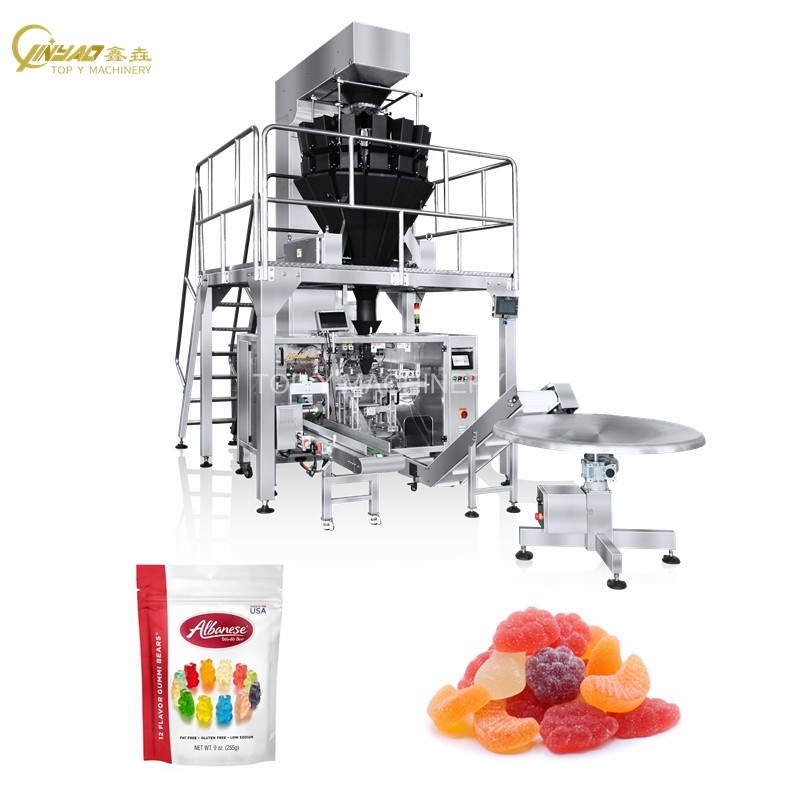
Assessing Operational Efficiency and Speed of the Chocolate Packing Machine
Ultimately, the machine needs to meet your production targets reliably and cost-effectively. Speed and efficiency are the primary drivers of your return on investment.
Rated Speed vs. Real-World Throughput: Suppliers will quote a maximum speed in "PPM" (Packages Per Minute). However, this is often a theoretical maximum achieved under ideal conditions with a specific product. It's crucial to understand the realistic, sustainable speed you can expect with your products, which may be heavier, more fragile, or oddly shaped. The best way to determine this is through a product trial or demonstration.
Automation and Control Systems: The "brain" of the machine is its PLC (Programmable Logic Controller) and HMI. A modern, intuitive HMI makes the machine easier to operate and troubleshoot. Look for features like:
- On-screen diagnostics and troubleshooting guides.
- Production data tracking (e.g., counters, downtime logs, efficiency reports).
- User-level access control to prevent unauthorized parameter changes.
- "No product, no bag" and "no gap, no seal" logic to reduce film and product waste.
Reliability and Maintenance Requirements: A machine that is constantly breaking down is a drain on your resources. Inquire about the machine's long-term reliability. Ask the supplier for a recommended preventative maintenance schedule. What are the key wear parts, how often do they need to be replaced, and are they readily available? A well-built machine from a reputable supplier will be constructed with high-quality components (e.g., servo motors, sensors, and PLCs from recognized brands like Allen-Bradley, Siemens, or Omron) that are known for their durability and are easier to source if a replacement is needed.
Vetting Potential Chocolate Packing Machine Suppliers and Their Offerings
You've done your homework, defined your needs, and identified a shortlist of promising suppliers. Now comes the critical vetting stage. This is where you move from research to direct engagement, putting potential partners and their machinery to the test. It’s a process of due diligence that involves digging deep, verifying claims, and ensuring that the promises made during the sales pitch are backed by tangible proof and a solid support structure. A thorough vetting process is your best defense against making a poor investment and is essential for building the confidence needed to sign a purchase order.
Conducting Thorough Research and Reviewing Testimonials for Chocolate Packing Machine Suppliers
Before you get too deep into conversations, perform your own independent research to validate the supplier's reputation.
Online Presence and Reviews: Scrutinize the supplier's website. Is it professional, informative, and up-to-date? Look beyond their curated testimonials and search for independent reviews, case studies, or discussions on industry forums. What are other customers saying about their experience, particularly regarding machine reliability and after-sales support?
Ask for References: This is a crucial step. A confident supplier will be happy to provide you with a list of current customers. Ask for references from companies that are in the confectionery industry and are of a similar size to your own. When you speak with these references, ask targeted questions:
- "How closely did the machine's real-world performance match what was promised during the sales process?"
- "How would you rate the quality and responsiveness of their technical support and service team?"
- "What has been your experience with parts availability and lead times?"
- "Given your experience, would you buy from this supplier again?"
Financial Stability: For a significant investment and a long-term partnership, you want to ensure your supplier is financially stable and will be around to support you for the life of the machine. For larger suppliers, you may be able to look up public financial information. For smaller, private companies, you might inquire about their company history, years in business, and number of employees.
Requesting Demonstrations and Detailed Specifications for Chocolate Packing Machines
You should never purchase an industrial machine without seeing it in action, preferably with your own product.
Machine Demonstration:
- Factory Acceptance Test (FAT): The gold standard is to conduct a FAT at the supplier's facility before the machine ships. You should send your own chocolate products and packaging materials for the supplier to run on the exact machine you are purchasing. This allows you to verify that it meets all the agreed-upon performance criteria (speed, quality, changeover time) before it leaves their factory.
- Virtual Demonstrations or Site Visits: If a FAT is not feasible, request a live video demonstration. Alternatively, ask if the supplier has a similar machine installed at another customer's site (non-competitor) that you could visit to see it running in a real production environment.
Request Detailed, Formal Quotations: Move beyond budgetary estimates and ask for formal, detailed proposals from your top 2-3 suppliers. These quotes should be comprehensive and include:
- Machine Specifications: A line-by-line breakdown of all machine components, features, materials, and utility requirements (electrical, compressed air).
- Scope of Supply: A clear list of everything included in the price (e.g., standard spare parts, training, installation) and, just as importantly, what is not included.
- Performance Guarantees: The quotation should formally state the guaranteed production speed and efficiency levels for your specific products.
- Commercial Terms: Detailed information on price, payment schedule, delivery timeline, and warranty terms.
Comparing these detailed proposals side-by-side provides a much clearer basis for an objective decision than simply looking at the bottom-line price.
The Value of Professional Advice and Ongoing Support for Your Chocolate Packing Machine
The relationship with your supplier is just beginning when the machine is installed. The quality of their after-sales support is one of the most significant factors in the long-term success of your investment.
Technical Support Infrastructure: A great machine with poor support is a liability. Investigate the supplier's support system thoroughly:
- Service Team: Where are their service technicians located? What is their guaranteed response time for a service call? Do they offer remote support via network connection to the machine for faster diagnostics?
- Training: What level of training is included? Is it conducted at your facility on your machine? Will they train both operators and your maintenance team? Comprehensive training empowers your team to handle minor issues and perform routine maintenance, reducing your reliance on the supplier.
- Documentation: You should receive a complete set of documentation, including a detailed operator's manual, electrical schematics, a PLC ladder logic printout, and a recommended spare parts list.
Spare Parts Availability: Downtime is incredibly costly. A machine can be down for days waiting for a small, inexpensive part. Ask the supplier about their spare parts strategy. Do they keep a stock of critical spare parts at a location near you? What is the typical lead time for non-stocked parts? A supplier with a robust parts inventory and logistics system provides invaluable peace of mind.
A Partnership Mindset: The best suppliers act as long-term partners. They are invested in your success. They will check in with you periodically after installation, offer advice on process improvements, and inform you about potential upgrades that could benefit your operation. This ongoing dialogue and support are the hallmarks of a truly reliable supplier.
Key Takeaways
Choosing the right chocolate packing machine supplier is a strategic business decision that extends far beyond a simple equipment purchase. It's about establishing a partnership that will support your brand's quality, operational efficiency, and future growth. A rushed or poorly researched decision can lead to production bottlenecks, compromised product quality, and significant long-term costs. Conversely, a diligent and methodical approach ensures you acquire an asset that delivers a strong return on investment and provides a competitive advantage.
To help you navigate this complex process, here are the most critical takeaways from our guide:
Define Needs First, Search Second: The most crucial phase is internal. Before you even contact a supplier, you must have a crystal-clear, documented understanding of your requirements. This involves a granular analysis of your entire chocolate product line—their sizes, shapes, ingredients, and fragility. You must also define your desired packaging style, materials, and the aesthetic you want to achieve on the shelf. This foundational work empowers you to ask the right questions and evaluate suppliers against a concrete set of criteria.
Look Beyond the Sticker Price with TCO: A comprehensive budget must account for the Total Cost of Ownership (TCO). The initial purchase price is just one piece of the puzzle. You must also factor in the costs of installation, commissioning, operator training, a recommended spare parts kit, ongoing preventative maintenance, and utility consumption. A cheaper machine might have a higher TCO due to lower efficiency, more frequent downtime, or expensive proprietary parts. Frame the decision as a long-term investment and calculate the potential Return on Investment (ROI) based on labor savings, increased throughput, and waste reduction.
Supplier Type Matters: Understand the difference between buying directly from a manufacturer and working with a distributor. Manufacturers offer deep, specialized expertise and customization options, which is ideal for complex or unique applications. Companies like TOP Y MACHINERY exemplify this model, providing direct access to the engineers who design the equipment. Distributors, on the other hand, offer a broader selection from multiple brands and often have a stronger local presence for service and support, which can be ideal for businesses seeking integrated lines or standard solutions.
Versatility is Future-Proofing: The market evolves, and your product line will likely change over time. A machine's versatility and adaptability are therefore critical features. Evaluate how quickly and easily the machine can be changed over to accommodate different products or package sizes. Look for features like tool-less adjustments, digital readouts, and programmable recipes that drastically reduce downtime between runs. A machine with a wide operational range and the ability to adapt to new formats is a more secure long-term asset.
Vet Through Action, Not Just Words: Do not rely solely on a supplier's promises. Due diligence is non-negotiable. Conduct independent research, check for unbiased reviews, and always ask for customer references—and be sure to call them. The most important vetting step is the machine demonstration. Insist on a Factory Acceptance Test (FAT) where you run your actual products and packaging materials on the machine before it ships. This is your opportunity to verify speed, seal quality, and handling performance against the guaranteed specifications in your formal quotation.
Prioritize After-Sales Support: The relationship truly begins after installation. The quality of a supplier's after-sales support network is a massive indicator of your future success. Investigate their technical support structure, guaranteed service response times, the depth of their training programs, and the availability of critical spare parts. A supplier who views the relationship as a long-term partnership will provide ongoing advice and support, ensuring your machine continues to operate at peak efficiency for its entire lifespan.
Frequently Asked Questions (FAQ)
1. What is the typical lifespan of a chocolate packing machine and what affects it?
The typical lifespan of a well-maintained chocolate packing machine is generally between 10 to 20 years. However, this range can be significantly influenced by several factors. The most critical factor is the build quality and the components used; machines built with high-grade stainless steel frames and premium-brand electronics and pneumatics (e.g., from Siemens, Allen-Bradley, Festo) will invariably last longer than those built with lower-quality materials. Secondly, the adherence to a strict preventative maintenance schedule is paramount. Regularly lubricating moving parts, replacing wear parts like belts and sealing jaws before they fail, and keeping the machine clean will drastically extend its operational life. Finally, the operating environment and intensity play a role. A machine running 24/7 in a challenging environment will experience more wear than one running a single shift in a climate-controlled facility.
2. How much maintenance does a chocolate packing machine require?
Maintenance requirements can be broken down into three levels.
- Daily/Per-Shift: This typically involves basic cleaning to remove chocolate dust and product residue, inspecting for any obvious issues, and verifying that safety guards are functioning. This is usually performed by the machine operator and takes 15-30 minutes.
- Weekly/Monthly: This involves more in-depth cleaning, lubrication of key mechanical components as specified by the manufacturer, checking the tension and condition of belts, and inspecting the state of sealing jaws and cutting knives. This might be performed by a lead operator or an in-house maintenance technician.
- Quarterly/Annually: This involves more comprehensive preventative maintenance, often guided by the manufacturer's checklist. It can include replacing common wear parts, checking electrical connections, calibrating sensors, and potentially having a certified technician from the supplier perform a detailed service. A good supplier will provide a detailed maintenance schedule and training for your staff to handle the routine tasks effectively.
3. Can one machine handle many different chocolate shapes, sizes, and packaging types?
Yes, but with limitations. This is where versatility and changeover efficiency become critical purchasing criteria. Many modern machines, especially a rotary chocolate packing machine, are designed to be flexible. They can often handle a specific range of product sizes (length, width, height) and package formats. For example, a single flow wrapper might be adjustable to wrap a small 20g bar and a larger 100g bar. The changeover process might involve adjusting the product guides, changing the film roll, and selecting a new recipe on the HMI. However, a machine designed for flow wrapping bars cannot be used to fill stand-up pouches. If you need to produce fundamentally different packaging styles (e.g., twist wrapping and boxing), you will almost certainly need separate machines. It's crucial to discuss your entire current and anticipated product range with potential suppliers to find a machine with the widest possible operational window for your needs.
4. What is the difference between a vertical form-fill-seal (VFFS) and a horizontal form-fill-seal (HFFS) machine for chocolates?
The primary difference is the direction of product flow and package formation.
- HFFS (Horizontal Form-Fill-Seal): Often called a "flow wrapper," this machine is ideal for solid, discrete items like chocolate bars, cookies, or small trays of bonbons. The product is fed horizontally onto a flat film, which is then formed into a tube around the product, sealed longitudinally, and then sealed and cut on the ends to create the individual "pillow pack."
- VFFS (Vertical Form-Fill-Seal): This machine is used for loose, free-flowing products like chocolate chips, small unwrapped candies, or cocoa powder. The packaging film is pulled downwards from a roll and formed into a tube over a forming collar. The tube is sealed vertically and on the bottom, the product is dropped (weighed or dosed) from above into the pouch, and then the top is sealed and the bag is cut off. For most finished chocolate products, an HFFS machine is the more common choice. VFFS is used primarily for bulk or bite-sized, unpackaged items.
5. How do I ensure the machine complies with food safety standards like FSMA?
Ensuring compliance with the FDA's Food Safety Modernization Act (FSMA) starts with choosing a reputable supplier who designs equipment for the food industry. Key things to look for and discuss are:
- Sanitary Design: The machine should be built following hygienic design principles (e.g., using 304/316 stainless steel, sloped surfaces, no hidden niches).
- Traceability: Modern control systems can help with traceability by logging production data for each batch, which is a component of FSMA.
- Supplier Expertise: Ask the supplier directly about how their machine design aids in FSMA compliance. They should be able to speak confidently about their hygienic design, ease of cleaning protocols, and the use of food-grade materials.
- Documentation: The supplier should provide documentation on the materials used in construction and guidance for effective cleaning and sanitation (a "sanitation standard operating procedure" or SSOP). Choosing a supplier with proven experience in the food sector is the best way to ensure the equipment meets these critical regulatory standards.
Conclusion
Choosing a reliable chocolate packing machine supplier is an investment in the future of your brand. It transcends the transactional nature of buying equipment and becomes a long-term strategic partnership that underpins your operational success and ensures your delicious products reach customers in perfect condition. The weight of this decision cannot be overstated, as the right partner will contribute to your growth, while the wrong one can become a persistent operational headache.
By diligently defining your specific needs, thoroughly researching the landscape of suppliers, and meticulously evaluating their machine offerings and support systems, you empower yourself to make a confident and informed decision. This methodical approach ensures you find the perfect solution—a high-quality chocolate packing machine backed by a reliable partner—to keep your sweet creations beautifully packaged and ready to delight the world. We encourage you to share this guide with your colleagues and use it as a roadmap in your procurement journey.