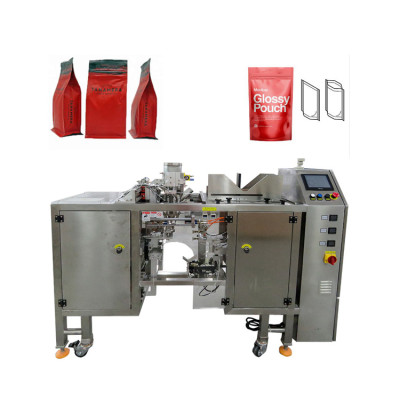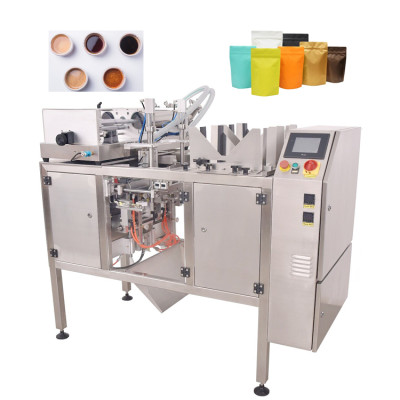
How Rotary Pet Food Packing Machines Boost Efficiency & Bag Quality
As pet food producers, we know that getting our delicious and nutritious products into the right packaging is just as important as the food itself. In today's competitive market, where consumers expect freshness, convenience, and attractive presentation, efficiency and bag quality are crucial. This is why rotary pet food packing machines are a game-changer for the industry. We'll explore how these advanced machines from TOP Y Machinery can transform your pet food operations, ensuring your products not only look great on the shelf but also stay fresh from production to the pet's bowl.
Key Takeaways
- Efficiency and Speed: Rotary packing machines operate with a continuous, circular motion, which significantly boosts output and reduces downtime compared to linear or manual methods. This allows manufacturers to meet high demand without compromising quality.
- Superior Bag Quality: These machines provide precise filling and create strong, airtight seals, which are essential for maintaining the freshness and nutritional value of pet food. Their ability to handle various modern packaging formats, like stand-up pouches with zippers, enhances shelf appeal and consumer convenience.
- Cost-Effectiveness: By automating the packaging process, businesses can reduce labor costs, minimize product waste through accurate filling, and lower material expenses.
- Versatility and a Smart Investment: Rotary machines are adaptable to different product types (wet and dry), bag materials, and sizes, making them a flexible long-term investment. Proper maintenance is key to maximizing the machine's lifespan and ensuring peak performance.
Understanding How Our Rotary Pet Food Packing Machines Work
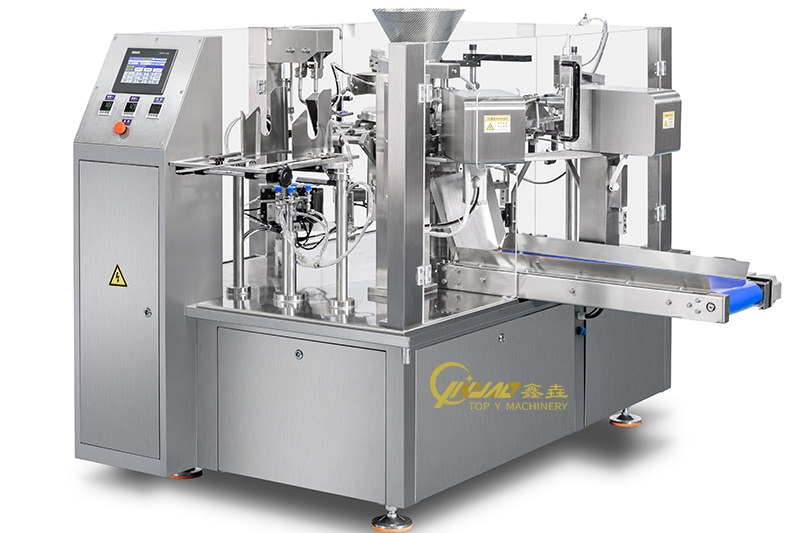
Rotary pet food packing machines are sophisticated automated systems designed for high-speed, precision packaging. Unlike linear machines that follow a straight path, rotary systems use a circular turret to move pre-formed pouches through various stations in a continuous motion. This design not only saves valuable floor space but also enhances productivity by performing multiple actions simultaneously. The entire process is a seamless cycle of picking, opening, filling, sealing, and discharging packages, all coordinated to maximize a manufacturer's output without sacrificing quality.
Key Components in TOP Y Machinery's Rotary Pet Food Packing Systems
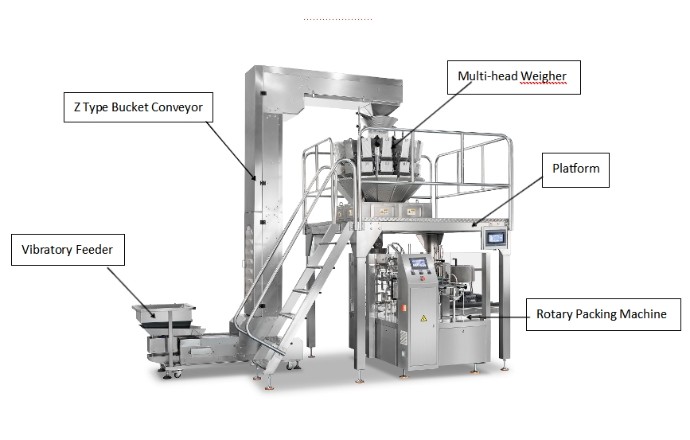
A rotary packaging machine is an intricate system where several key components work in harmony to deliver perfectly packaged products. Understanding these parts reveals how efficiency and quality are achieved.
- Rotary Table/Turret: This is the heart of the machine. The rotary table holds the pouches and moves them in a circular path through each operational station, ensuring a continuous and smooth workflow that minimizes downtime.
- Pouch Feeder and Grippers: This component accurately picks up individual pre-made pouches from a magazine or stack. The grippers then securely clamp onto the pouch, holding it firmly as it travels through the different stations of the machine.
- Opening Station: Using vacuum suction and mechanical openers, this station precisely opens the pouch, preparing it for the filling stage. For gusseted or flat-bottom bags, additional mechanisms may be used to ensure the bag is fully expanded.
- Filling Station: This is where the pet food is dispensed into the open pouch. These stations are integrated with highly accurate dosing systems, such as multi-head weighers for dry kibble or piston pumps for wet food, to ensure precise fill amounts and minimize product giveaway.
- Sealing Station: Crucial for product integrity, the sealing station uses advanced methods like heat or ultrasonic sealing to create an airtight and tamper-proof closure. This process locks in freshness, extends shelf life, and prevents contamination.
- Cooling and Discharge Station: After heat sealing, a cooling bar sets the seal to ensure its strength. The finished pouch is then released from the grippers and discharged onto a conveyor for downstream processes like case packing and shipping.
The Seamless Process of Our Rotary Pet Food Packing Machine
The workflow of a rotary pet food packing machine is a masterful display of automation and efficiency. The process is circular and continuous, allowing for much higher speeds than traditional linear systems.
The journey of a single pouch can be broken down into these key steps:
- Pouch Loading: The cycle begins at the bag magazine, where a stack of empty, pre-formed pouches is loaded. A vacuum arm picks the first pouch and transfers it to a set of grippers on the rotary turret.
- Printing & Opening: As the turret rotates, the pouch may pass a coding station where expiration dates and batch numbers are printed. It then moves to the opening station, where vacuum suction cups and jaws gently open the pouch.
- Product Filling: The open pouch arrives at the filling station. Here, a multi-head weigher or other dosing system dispenses a precise amount of pet food into the bag. Some machines may even feature a second filling station for products with mixed components.
- Dust Removal & Settling: For dusty products like kibble, a dust extraction hood may be positioned over the opening. The pouch might also be gently vibrated to help the product settle, ensuring a clean seal area and a more compact final bag.
- Sealing: The filled pouch moves to the sealing station. Heated sealing bars clamp down on the top edge of the pouch, fusing the material to create a strong, hermetic seal. If the pouch has a zipper, this is the stage where it's pressed closed.
- Cooling and Discharge: Finally, the sealed pouch passes through a cooling station to set the seal before it is released from the grippers and discharged from the machine. Any pouches that fail quality checks (e.g., no product, bad seal) are automatically rejected.
This synchronized, multi-station process allows rotary machines to package products at impressive speeds, often between 30 and 120 bags per minute, depending on the machine's configuration and the product being packaged.
Boosting Efficiency with TOP Y Machinery's Rotary Pet Food Packing Machines
In the competitive pet food market, operational efficiency is not just an advantage; it's a necessity. Rotary packing machines are specifically engineered to maximize throughput and minimize waste, offering a significant and measurable boost to any production line. By automating complex packaging tasks into one continuous flow, these systems reduce manual labor, increase output, and ultimately improve the bottom line.
Speed and Scalability for Your Pet Food Packing Needs
The primary advantage of rotary packing machines is their ability to operate continuously, which translates directly to higher production speeds and greater output. Unlike intermittent-motion systems that must stop and start at each station, a rotary machine's circular design allows pouches to move through filling and sealing in a constant, fluid motion.
Key benefits include:
- Increased Throughput: Standard rotary machines can comfortably produce anywhere from 30 to 120 bags per minute, a rate that far surpasses manual or semi-automatic methods. This high speed ensures that manufacturers can meet tight deadlines and respond to surges in market demand.
- Reduced Downtime: Automation minimizes the need for frequent stops. The continuous operation of a Dog Food Packaging Machine ensures a streamlined process from start to finish.
- Scalability for Growth: These machines are designed with flexibility in mind. As your business grows, a rotary packer can often be adjusted to handle higher volumes or integrated with additional upstream and downstream equipment, such as fillers and case packers. This adaptability makes them a future-proof investment for businesses planning for expansion.
| Feature | Semi-Automatic/Linear Systems | Rotary Packing Machines |
|---|---|---|
| Operation | Intermittent (Stop-and-Go) | Continuous Motion |
| Typical Speed | 10-40 bags/minute | 30-120+ bags/minute |
| Labor Requirement | Higher (Multiple Operators) | Lower (Often 1-2 Operators) |
| Footprint | Often longer, more linear | More compact, circular |
| Scalability | Limited | High |
Achieving Cost-Effectiveness and Reduced Waste in Pet Food Packing
Investing in a rotary packing machine delivers significant long-term cost benefits that contribute to a strong return on investment (ROI). These savings come from reduced labor, minimized product giveaway, and less packaging waste.
- Labor Savings: Full automation drastically reduces the need for manual labor in the packaging process. Tasks like bag opening, filling, and sealing are handled by the machine, allowing companies to reallocate their workforce to more strategic roles and save on labor costs.
- Reduced Product Giveaway: Rotary machines integrate with high-precision filling systems like multi-head weighers that can dose product with an accuracy of ±1% or better. This ensures that each bag is filled with the exact amount of product required, minimizing costly "giveaway" from overfilling and preventing underfilled bags that lead to customer complaints.
- Minimized Material Waste: Modern machines are equipped with sensors to detect issues like an improperly opened bag or the absence of a product. If a fault is detected, the machine will not dispense product or seal the bag, saving both the product and the pouch from being wasted. This smarter operation contrasts sharply with processes where errors can lead to significant material and product losses. Furthermore, optimizing packaging with right-sized bags can reduce overall material use and transportation costs.
Ultimately, by improving efficiency and reducing waste, rotary pet food packing machines help lower the cost per unit, making products more competitive and boosting overall profit margins.
Ensuring Superior Bag Quality with Rotary Pet Food Packing Machines
In the pet food industry, packaging quality is synonymous with product quality. A well-packaged product not only stands out on the shelf but also ensures the food remains fresh, safe, and nutritious from the factory to the consumer's home. Rotary pet food packing machines excel at producing high-quality bags with consistent, reliable seals and a premium appearance, which helps build brand trust and customer loyalty.
Precision Filling and Secure Sealing for Optimal Pet Food Packing
Two of the most critical aspects of packaging quality are fill accuracy and seal integrity. Rotary machines are engineered to deliver excellence in both areas.
- Precision Filling: These machines are paired with advanced dosing systems, such as auger fillers for powders or multi-head weighers for kibble, which dispense product with exceptional accuracy. This prevents under-filled bags that disappoint customers and over-filled bags that waste product and can compromise the seal. Consistent fills also ensure the package has the right headspace for proper sealing and a uniform look on the shelf.
- Secure Sealing: The sealing station on a rotary machine applies consistent heat and pressure to create a strong, airtight seal. Advanced control systems monitor the sealing parameters (temperature, pressure, and dwell time) to guarantee every bag is hermetically sealed. A strong seal is vital for:
- Preserving Freshness: It locks out oxygen, moisture, and contaminants, protecting the flavor, aroma, and nutritional value of the pet food.
- Extending Shelf Life: An airtight seal prevents spoilage and mold, directly contributing to a longer shelf life for both wet and dry products.
- Preventing Leaks: For wet food or products with high fat content, a robust seal prevents messy and costly leaks during shipping and handling.
The combination of precise filling and secure sealing from a Rotary Stand up pouch packaging machine ensures that the product inside is protected and the brand’s reputation for quality is upheld.
Versatility in Packaging Styles for Both Wet and Dry Pet Food
Today's consumers are drawn to convenient and visually appealing packaging, and rotary machines are highly versatile in accommodating modern packaging trends. They are not limited to one type of bag but can handle a wide variety of flexible packaging formats for both dry and wet pet foods.
This versatility allows brands to choose from a diverse range of Pet Food Packaging Types, including:
- Stand-Up Pouches (Doypacks): Extremely popular in the pet food aisle, these pouches offer great shelf presence and convenience.
- Zipper and Slider Bags: Resealable features are highly valued by pet owners, as they help keep food fresh after opening. Rotary machines can easily handle pre-zippered pouches.
- Gusseted Bags: Ideal for larger volumes of pet food, these bags offer a stable, brick-like shape when filled.
- Flat Bottom Bags (Quad Seal Bags): These provide five panels for branding and stand very securely on shelves, offering a premium look.
- Spout Pouches: An excellent choice for liquid or semi-liquid pet foods and treats, allowing for easy, mess-free dispensing.
The ability to switch between different bag sizes and styles with minimal downtime is a key feature of modern rotary machines, giving manufacturers the flexibility to innovate and adapt to shifting market demands. This adaptability ensures a brand can cater to various product lines—from single-serving treats to large bulk bags—all on a single, efficient packaging line.
Choosing the Right TOP Y Machinery Rotary Pet Food Packing Machine for Your Business
Selecting the right rotary pet food packing machine is a strategic decision that directly impacts your production efficiency, product quality, and long-term profitability. It’s not just about buying a piece of equipment; it’s about investing in a solution tailored to your specific operational needs. To make the best choice, you must consider several key factors, from your product and packaging types to your production volume and long-term business goals.
Essential Factors for Your Pet Food Packing Operation
Before investing in a machine, a thorough evaluation of your current and future needs is essential. Here are the critical factors to consider:
Product Type: The characteristics of your pet food will dictate the type of filling system you need.
- Dry Food (Kibble, Treats): Requires a multi-head weigher for accurate dosing of granular products.
- Wet or Semi-Moist Food: Needs a liquid or piston filler to handle viscous products without drips or spills.
- Powders: An auger filler is best suited for fine powders to ensure precise, dust-free filling.
Packaging Format and Size: Your machine must be compatible with your chosen bag styles. Consider the range of bag sizes (width and length) you will use and whether you need features like zipper sealing or gusset handling. A machine with quick, tool-free changeover capabilities is ideal if you run multiple bag sizes.
Production Speed and Volume: Evaluate your current output and future growth projections. Choose a machine with a production capacity (bags per minute) that meets your peak demand without creating a bottleneck. It’s often wise to invest in a machine that can scale with your business.
Factory Footprint: Rotary machines are known for their compact, space-saving design compared to linear models. However, you must still measure your available floor space to ensure the machine and any associated conveyors or equipment will fit comfortably in your facility.
Budget and ROI: Consider the total cost of ownership, which includes the initial investment, installation, maintenance, and potential savings in labor and material waste. While a fully automatic machine has a higher upfront cost, its long-term ROI is often much greater than that of a semi-automatic system.
Decision-Making Checklist
| Factor | Questions to Ask Yourself |
|---|---|
| Product | Is my product dry, wet, a powder, or mixed? What are its flow characteristics? |
| Packaging | What bag styles will I use (e.g., stand-up, flat bottom)? Do I need resealable zippers? |
| Speed | What is my target output in bags per minute? How might this change in 3-5 years? |
| Space | What are the floor space dimensions available for the new equipment? |
| Durability | Is the machine constructed with durable materials like stainless steel for easy cleaning? |
| Flexibility | How quickly can the machine be changed over to a different bag size or product? |
Maintaining Your Rotary Pet Food Packing Machine for Peak Performance
Regular and proactive maintenance is crucial to ensuring your rotary pet food packing machine operates at peak efficiency and enjoys a long, productive lifespan. Neglecting maintenance can lead to unexpected breakdowns, costly downtime, and a decline in packaging quality. A well-structured preventive maintenance program is an investment that pays for itself by maximizing uptime and performance.
Best Practices for Machine Maintenance:
Create a Comprehensive Maintenance Schedule: Develop a schedule for daily, weekly, and monthly maintenance tasks based on the manufacturer’s recommendations.
- Daily: Clean the machine of dust and product residue, inspect for any visible wear or loose parts, and check sensor functionality.
- Weekly: Lubricate moving parts like bearings and chains, inspect sealing jaws for wear, and check vacuum cup conditions.
- Monthly/Quarterly: Calibrate filling systems, inspect electrical components, and perform more in-depth checks on motors and belts.
Train Your Operators: Machine operators are the first line of defense. Train them to perform basic daily checks, recognize early signs of a problem (e.g., unusual noises, inconsistent seals), and understand how to operate the machine safely and efficiently.
Stock Critical Spare Parts: Keep an inventory of essential spare parts, such as sealing elements, vacuum cups, and belts. Having these parts on hand can drastically reduce downtime by allowing for quick replacements instead of waiting for a shipment.
Keep Detailed Records: Document all maintenance activities, repairs, and part replacements. This history helps track the machine’s health over time, identify recurring issues, and inform future maintenance decisions.
By following these maintenance best practices, you can prevent small issues from becoming major problems, extend the life of your equipment, and ensure that your TOP Y Machinery rotary packer continues to be a valuable asset for your business.
Frequently Asked Questions (FAQ)
Q1: What is the typical production speed of a rotary pet food packing machine? A1: The production speed can vary based on the machine model, bag size, and product type. Generally, speeds range from 30 to 120 bags per minute. High-speed models can achieve even faster rates for certain applications.
Q2: Can these machines handle both dry kibble and wet pet food? A2: Yes, rotary machines are highly versatile. By equipping them with the appropriate filling system—such as a multi-head weigher for dry products or a liquid pump for wet food—they can efficiently package a wide range of pet food types.
Q3: Are rotary packing machines able to use sustainable or recyclable packaging materials? A3: Many modern rotary packing machines are designed to be compatible with a variety of packaging materials, including recyclable mono-material films and paper-based structures. It is important to discuss your specific material requirements with the machine manufacturer to ensure compatibility and optimal performance.
Q4: How much floor space is required for a rotary pet food packing machine? A4: One of the key advantages of a rotary design is its compact footprint compared to a linear machine of similar capacity. The exact space required depends on the model and any integrated peripherals (like conveyors and fillers), so it's best to consult the manufacturer's specifications.
Q5: What is the average lifespan of a rotary pet food packing machine? A5: With proper and consistent maintenance, a high-quality rotary packing machine can be expected to have a long service life, often lasting for more than a decade. Regular cleaning, lubrication, and timely replacement of wear parts are essential for maximizing the machine's longevity.
Conclusion
As we've seen, rotary pet food packing machines are powerful tools for enhancing both efficiency and bag quality in pet food production. From their high-speed, continuous operation to their precision filling and sealing capabilities, these systems are designed to meet the demands of a competitive market. The ability to handle diverse package styles and deliver a premium look and feel helps brands stand out on crowded shelves.
With advanced features, fast changeovers, and superior package aesthetics, our TOP Y Machinery solutions offer a clear advantage. By carefully considering your specific needs—including product type, desired packaging, and production volume—you can select the perfect Dog Food Packaging Machine to elevate your brand, satisfy your customers, and drive business growth.
We encourage you to share this article with your colleagues and leave a comment below with your thoughts or questions. Taking the step to upgrade your packaging process is an investment in your brand's future success.