Food Packaging Machine Types in 2026: Complete Guide to VFFS, HFFS, Rotary & Pouch Systems
1. Why machine type matters more than brand
Every packaging machine is engineered around a product profile. A vertical machine built for free-flowing granules will choke on sticky powder; a piston filler tuned for ketchup cannot dose dry beans. The most common sourcing mistake we see is buyers starting with a budget figure and back-solving the machine — the correct order is product physics, machine family, configuration, then price.
Four product properties drive the decision:
- Physical state — powder, granule, liquid, paste, or solid item;
- Flowability — free-flowing, or does it need an auger or vibratory assist;
- Fragility — can it survive a drop into a forming tube, or does it need gentle handling;
- Hygiene class — dry ambient, chilled, or wet/aseptic (determines washdown and stainless requirements).
2. The 8 food packaging machine families at a glance
| Family | Best for | Typical speed | Common bag formats |
|---|---|---|---|
| VFFS (vertical form-fill-seal) | Powders, granules, snacks, coffee, pet food | 30–120 bags/min | Pillow, gusseted, doypack via pre-made option |
| HFFS (horizontal form-fill-seal) | Liquids, sauces, products needing horizontal feed | 40–150 packs/min | Flow packs, sachets, stick packs |
| Rotary | High-volume single-format production | 60–200+ bags/min | Pillow, block-bottom, quad-seal |
| Pre-made pouch filling | Premium retail image (doypack, spout, stand-up) | 20–80 pouches/min | Doypack, spout pouch, zipper pouch |
| Stick pack / sachet | Single-serve doses (coffee, sugar, supplements) | 100–1,200 /min | Stick, sachet |
| Flow wrap | Bar products, biscuits, baked goods | 50–200 /min | Fin-seal pillow |
| Vacuum / MAP | Meat, cheese, ready meals — shelf-life extension | 4–20 cycles/min | Thermoformed trays, pouches |
| End-of-line (checkweigher, metal detector, palletizer) | Quality control and downstream logistics | — | Case, pallet |
3. VFFS — the workhorse you will see most often
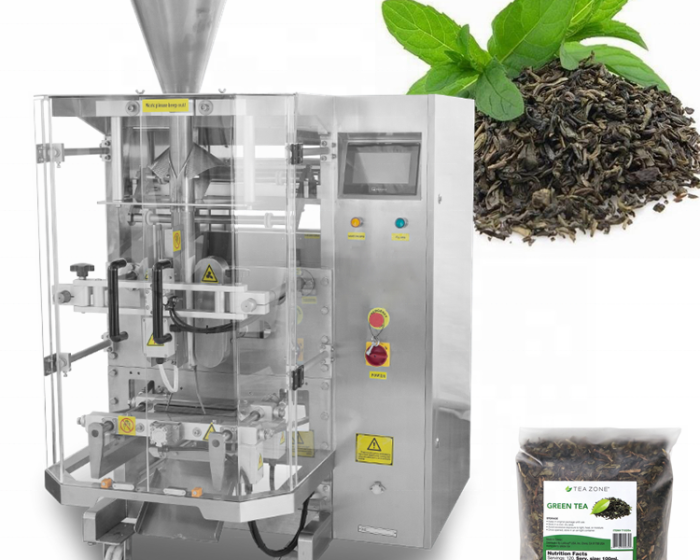
Vertical form-fill-seal machines form a bag from flat film, fill it, and seal it in one continuous vertical motion. Film is pulled over a forming tube, the vertical seam is sealed, the bottom of the bag is closed, product drops in from above, and the top seal doubles as the next bag's bottom seal.
Why it dominates: it is the most space-efficient and format-flexible family in food packaging. The same machine body can run pillow bags today and gusseted bags tomorrow by swapping the forming tube, and it handles powders, granules, snacks, coffee beans and pet kibble with the right dosing head.
Key selection points for a VFFS line:
- Bag width range — match the forming tube range to your smallest and largest retail sizes;
- Sealing system — back-seal for powders, side-seal for larger bags, and consider fin-seal for products needing an extra-strong closure;
- Servo drives — digital servos store recipes per product, cutting changeover from hours to minutes — the single biggest TCO lever for multi-SKU producers;
- Integration — a VFFS should accept a weigher or filler on top and feed a checkweigher below.
4. HFFS — when your product needs horizontal handling
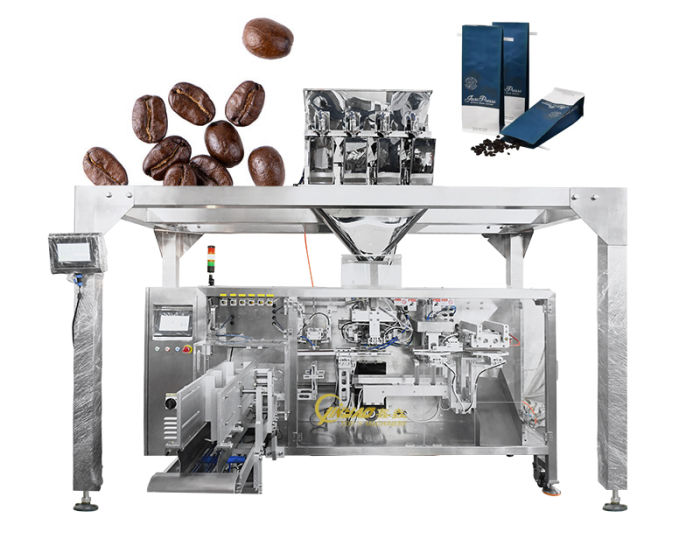
Horizontal form-fill-seal machines feed product into pre-formed or inline-formed packaging traveling horizontally. Two common sub-types: flow wrappers (wrapping biscuits, bars, bakery items in fin-seal packs) and HFFS with liquid filling (sachets and pouches for sauces, condiments, syrups).
Choose HFFS over VFFS when:
- Your product must be placed gently or in a specific orientation (baked goods, fragile items);
- You are filling liquids or pastes where a vertical drop would splash or mis-dose;
- You need sachet or stick-pack single-serve formats.
5. Rotary & pre-made pouch systems — speed and shelf appeal
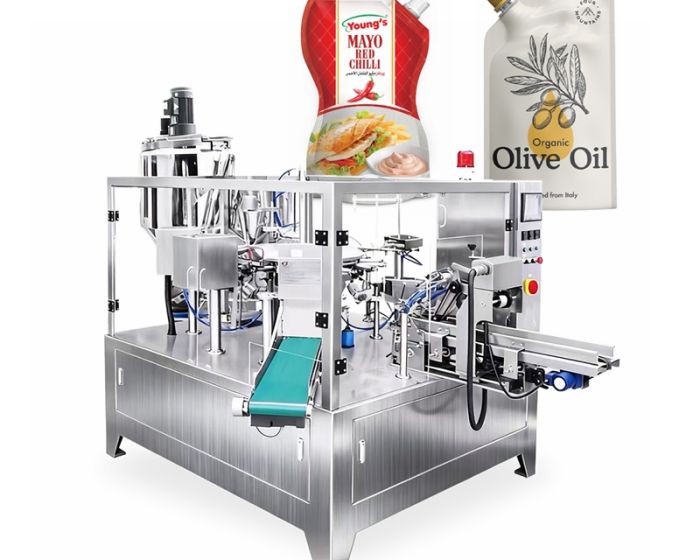
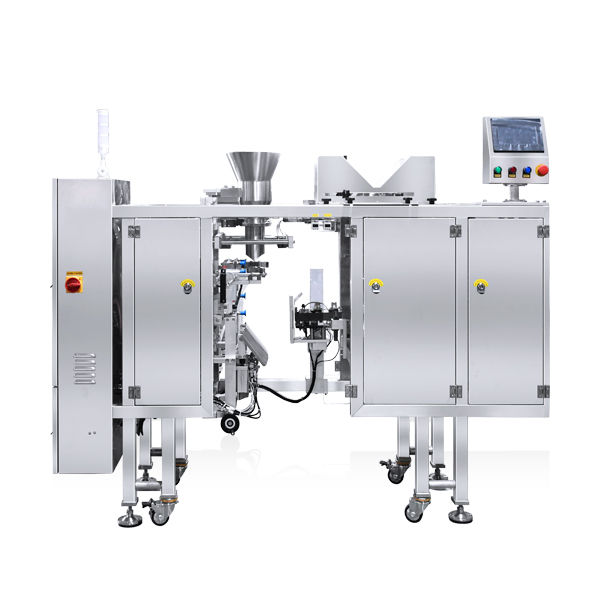
Rotary (intermittent/continuous motion) machines carry multiple filling stations around a rotating turret, allowing several bags to be formed, filled and sealed simultaneously. They are the right answer for one product, one format, high volume — think a granola brand running a single 500 g pillow bag year-round. Expect 60–200+ bags/min depending on station count and bag size.
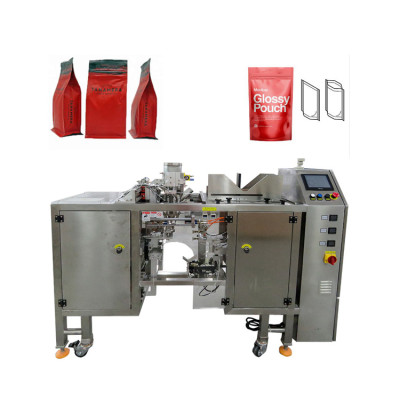
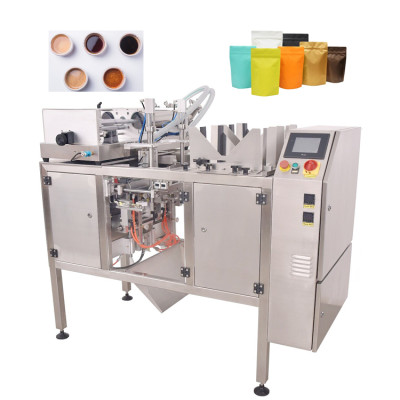
Pre-made pouch systems take a different path: instead of forming the bag on the machine, they open a finished pouch (doypack, stand-up, spout, zipper), fill it, and seal it. Benefits are immediate — premium shelf appearance, the option of exotic films, and spout pouches for sauces and liquids. The trade-off is a higher per-bag material cost and slower speeds (typically 20–80 pouches/min).
Rule of thumb: if your product needs to look premium or is a sauce or liquid, evaluate pre-made pouches. If you are protecting a commodity product at high volume, rotary or VFFS wins on cost per bag.
6. Dosing technologies: the real accuracy decision
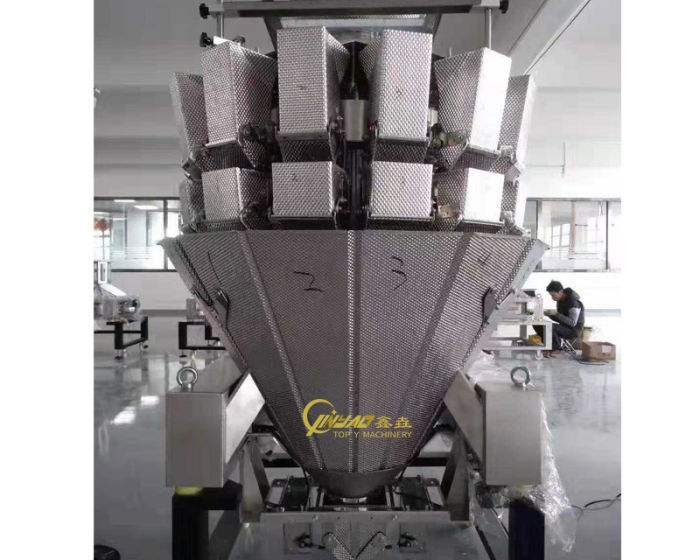
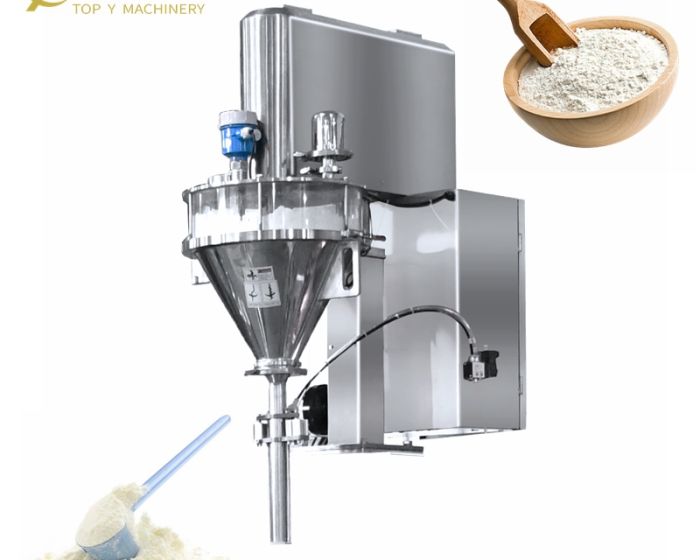
Two machines from the same family can be completely different products depending on what sits above the forming tube. The dosing head decides your fill accuracy — and fill accuracy decides give-away, legal compliance and consumer trust. Four systems cover almost every food application:
| Dosing system | Best for | Accuracy | Notes |
|---|---|---|---|
| Multihead weigher | Granules, snacks, nuts, frozen items | ±1–2 g | Combines many weigh heads to hit target weight with minimal give-away |
| Auger filler | Powders (flour, spices, milk powder) | ±0.5–1% | Volumetric screw feed; dust-controlled options for fine powders |
| Piston / rotary pump filler | Liquids and high-viscosity pastes (sauce, jam, ketchup) | ±1–2 g | Hygienic CIP-capable designs for food-contact use |
| Linear / volumetric cup | Free-flowing granules, cost-sensitive lines | ±3–5% | Simplest and cheapest; for products where give-away tolerance is acceptable |
7. One-page selection matrix
Use this as your starting worksheet. For each row, the recommended combination covers roughly 90% of producers in that category:
| Your product | Recommended machine | Recommended dosing | Typical format |
|---|---|---|---|
| Coffee beans | VFFS | Multihead weigher | Pillow / gusseted + degassing valve |
| Coffee / milk powder | VFFS | Auger filler | Pillow / block-bottom |
| Granola, cereal, snacks | VFFS or rotary | Multihead weigher + gentle drop | Pillow / gusseted |
| Potato chips (fragile) | VFFS | Multihead + buffered chute | Pillow + nitrogen flush |
| Pet food kibble | VFFS | Multihead weigher | Gusseted, high-barrier film |
| Sauce, ketchup, jam | Pre-made pouch / HFFS sachet | Piston / rotary pump | Spout pouch / sachet |
| Spices (ground) | VFFS | Auger, dust-controlled | Pillow / doypack |
| Whole spices / seeds | VFFS | Multihead weigher | Pillow / gusseted |
| Frozen vegetables / IQF | VFFS | Multihead + low-temperature sealing | Pillow, anti-fog film |
| Tea (loose) | VFFS | Linear scale or multihead | Pillow / sachet |
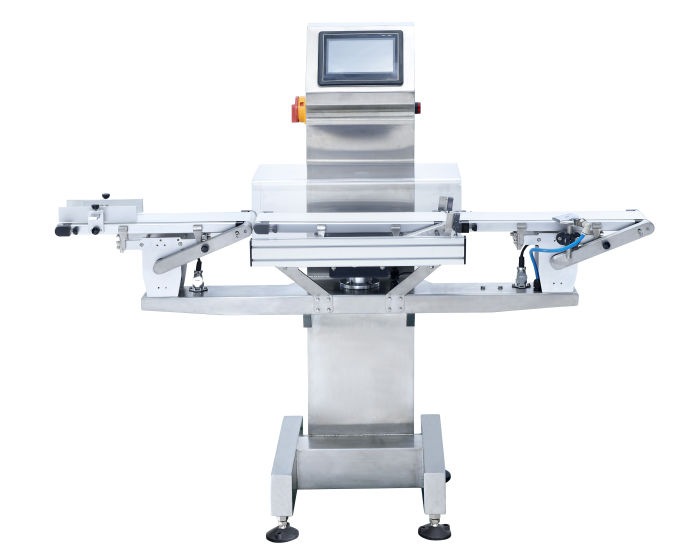
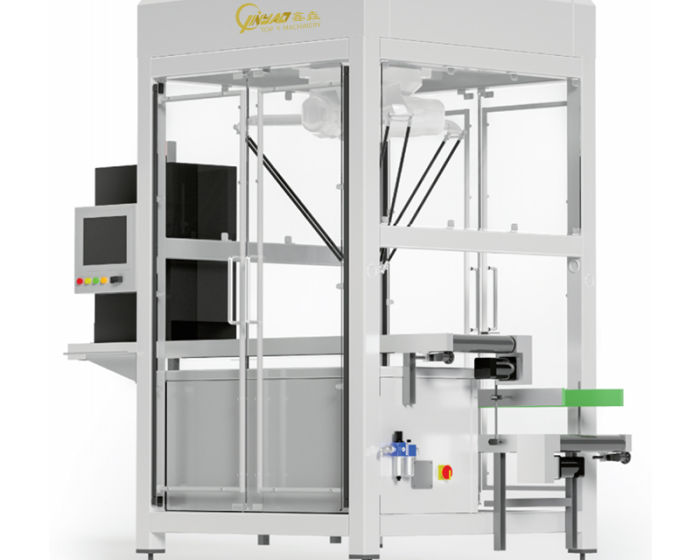
No line is complete without quality control and end-of-line equipment. A checkweigher verifies every pack's weight (protecting you from give-away and compliance fines), while a palletizer removes the heaviest manual work at the end of the line. Both pay for themselves quickly in labor and product savings.
8. Frequently asked questions
What is the most common food packaging machine?
Vertical form-fill-seal (VFFS) machines are the most widely used family in food packaging — the FFS category was the largest equipment segment at US$17.4 billion in 2025 (PW Consulting). They suit powders, granules, snacks and pet food, and integrate easily with weighing and sealing ancillaries.
Can one machine handle both powders and granules?
Yes — most VFFS machines accept interchangeable dosing heads. A multihead weigher handles granules; an auger filler handles powders; some dual-configuration lines switch between them. Confirm the changeover procedure with the supplier, since swapping dosing systems takes 30–60 minutes on most designs.
How fast is a VFFS machine?
Typically 30–120 bags per minute depending on bag size, film type and dosing accuracy — smaller bags and simple pillow formats run fastest. Rotary machines extend that to 200+ bags/min for high-volume single-format production. Always size for 15–20% above current demand to leave room for growth.
What film materials can a VFFS machine seal?
Standard food films — PE, PP, laminated ALU, metallized and paper-laminated composites. Recyclable and compostable films can usually run on existing machines, but sealing temperature and pressure often need adjustment; run a material test with your supplier before committing.
How much does a food packaging machine cost?
Entry-level semi-automatic units start around US$5,000–10,000; fully automatic VFFS lines with weigher typically range US$20,000–80,000; rotary and complete turnkey lines run higher depending on configuration. Total cost of ownership — installation, changeover, energy, spare parts and downtime — matters more than the purchase price alone.
Not sure which machine fits your product?
Send us your product specs and a sample — our engineers will run a free packaging assessment and recommend the machine type, dosing system and line configuration that matches your volume and budget. TOP Y Machinery has designed and delivered packaging lines for food factories in 100+ countries since 2011.