Everything You Need to Know About Granule Packing Machines
Have you ever thought about how all those granular products, from your morning coffee to your pet's food, get perfectly packed? Relying on manual packaging in today's fast-paced world is often slow, prone to inconsistencies, and can lead to product spoilage. This is where granule packing machines become indispensable. They are specifically designed to handle and package a wide variety of granular materials with remarkable efficiency and accuracy.
In this comprehensive guide, we'll dive deep into everything you need to know about granule packing machines. We'll explore their different types, operational mechanics, key benefits, and what the future holds for this essential technology. By the end, you'll have a complete picture of how these machines revolutionize production lines across countless industries.
Key Takeaways
- Definition & Function: A granule packing machine is an automated system designed to weigh, fill, and seal granular products like coffee, sugar, seeds, and detergents into various types of packaging.
- Core Benefits: These machines significantly boost production speed, ensure package weight accuracy, enhance product hygiene, reduce labor costs, and minimize material waste.
- Key Types: Common varieties include Vertical Form Fill Seal (VFFS) for creating pillow bags, Horizontal Form Fill Seal (HFFS) for pouches, and specialized fillers for rigid containers like cans.
- Filling Mechanisms: Precision is achieved through mechanisms like multi-head weighers for accuracy-critical products and volumetric cup fillers for uniformly sized granules.
- Wide Applications: They are essential in the food and beverage, pharmaceutical, chemical, and agricultural industries for packaging everything from snacks and medicines to fertilizers and seeds.
- Selection Criteria: Choosing the right machine involves analyzing product characteristics (flowability, density), required production speed, desired level of automation, and budget constraints.
Understanding the Core Function of a Granule Packing Machine
Before diving into the complex mechanics and diverse applications, it's essential to grasp the fundamental purpose of a granule packing machine. These automated systems are the unsung heroes of many production lines, ensuring that free-flowing, solid products are packaged efficiently, safely, and consistently.
What Exactly is a Granule Packing Machine?
A granule packing machine is specialized automated equipment engineered to package granular, or free-flowing solid, products. Think of tiny, solid particles with a relatively consistent shape and size. These machines automate the entire process, including weighing, filling, forming the bag or container, sealing it, and sometimes even printing date codes or labels. They are designed to handle a vast array of products, from food items like rice, sugar, coffee beans, and snacks to non-food items such as detergents, seeds, pharmaceutical granules, and small plastic parts. Essentially, they are the bridge between bulk product and consumer-ready packaging, performing the task with a speed and precision that manual labor simply cannot match.
Why are Granule Packing Machines Essential?
In today's competitive global market, efficiency, consistency, and safety are paramount. Manual packaging is not only slow and labor-intensive but is also susceptible to human error, leading to inconsistent package weights, material waste, and potential contamination. Granule packing machines address these challenges directly. They are essential because they provide a solution that increases productivity, guarantees packaging quality, and ensures a hygienic process. For industries like food, pharmaceuticals, and chemicals, where product integrity and safety are non-negotiable, the automated and enclosed nature of these machines is critical for preventing contamination and ensuring each package meets stringent quality standards. Ultimately, they are a cornerstone of modern manufacturing, enabling businesses to meet high consumer demand while maintaining quality and controlling costs.
Key Benefits Offered by Granule Packing Machines
Integrating a granule packing machine into a production line offers a multitude of tangible benefits that directly impact a company's bottom line and brand reputation. These advantages are what drive their widespread adoption across various industries.
Here is a breakdown of the primary benefits:
| Benefit | Description |
|---|---|
| Increased Productivity & Speed | These machines operate at speeds far exceeding manual capabilities, packing hundreds of units per minute, which dramatically increases production output. |
| Enhanced Precision & Accuracy | Equipped with advanced weighing systems, they ensure each package contains the exact amount of product, reducing costly product giveaway and ensuring consistency for the consumer. |
| Improved Hygiene & Product Safety | Automation minimizes human contact with the product, and the sealed systems reduce the risk of contamination from airborne particles, which is critical for food and medical products. |
| Reduced Labor Costs | By automating repetitive packaging tasks, businesses can reallocate their workforce to more value-added activities, leading to significant savings in labor costs. |
| Minimized Material Waste | Precise filling prevents overfilling, while the automated bag forming and sealing process optimizes the use of packaging materials, reducing overall waste. |
| Versatility and Flexibility | A single machine can often be adjusted to handle different granule types, package weights, and bag sizes, offering valuable operational flexibility. |
| Improved Packaging Quality | Machines produce strong, uniform, and aesthetically pleasing seals, enhancing the product's shelf appeal and protecting it from moisture and other external factors. |
By leveraging these benefits, companies can not only streamline their operations but also deliver a higher quality, more reliable product to the end consumer.
Diverse Types and Filling Mechanisms of Granule Packing Machines
Granule packing machines are not a one-size-fits-all solution. They come in various forms and utilize different filling mechanisms to suit specific products, packaging types, and production requirements. Understanding these distinctions is key to selecting the right equipment for your operation.
Exploring Common Granule Packing Machine Varieties
The market offers several principal types of granule packing machines, each defined by its operational orientation and the type of package it produces. The most common are Vertical and Horizontal Form Fill Seal machines, along with specialized fillers for rigid containers.
Vertical Form Fill Seal (VFFS) Granule Packing Machines
A Vertical Form Fill Seal (VFFS) machine is an automated system that starts with a large roll of packaging film and forms it into a bag in a vertical direction. The process is a continuous, streamlined motion: the film is pulled from a roll and guided over a forming collar, which shapes it into a tube. A vertical seal bar then seals the overlapping edges of the film to create the back seam of the bag.
Next, horizontal sealing jaws clamp across the tube, creating the bottom seal of one bag and simultaneously the top seal of the bag below it. The product—measured by a connected weigher or filler—is then dropped by gravity down the forming tube and into the newly formed bag. Finally, the jaws seal the top and a knife cuts the completed bag free. This high-speed process is ideal for loose, granular products like coffee, sugar, snacks, and rice, making the Granule Vertical VFFS Packing Machine a popular choice for its efficiency and relatively small factory footprint.
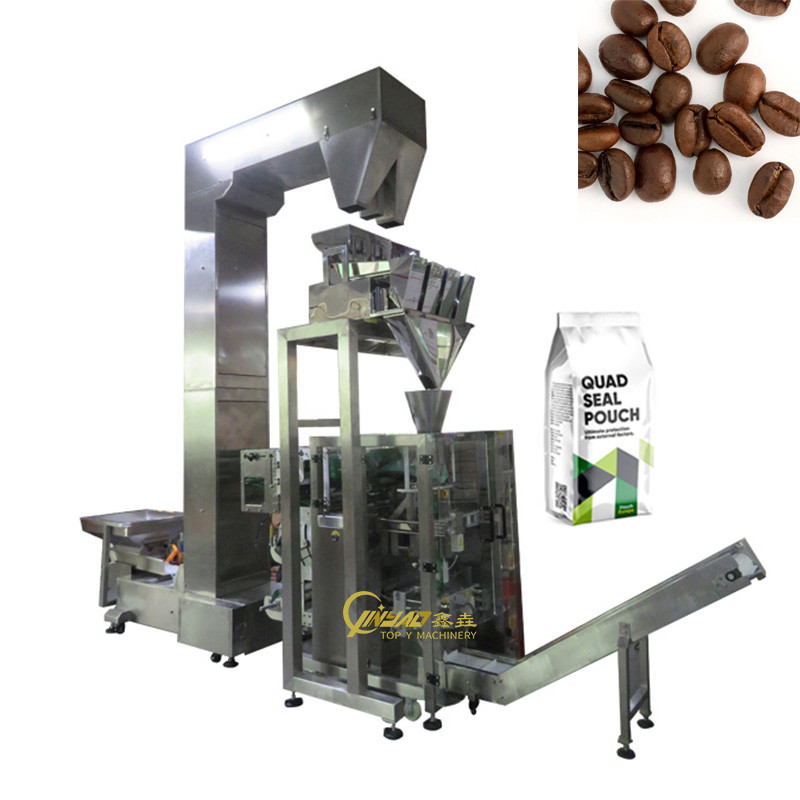
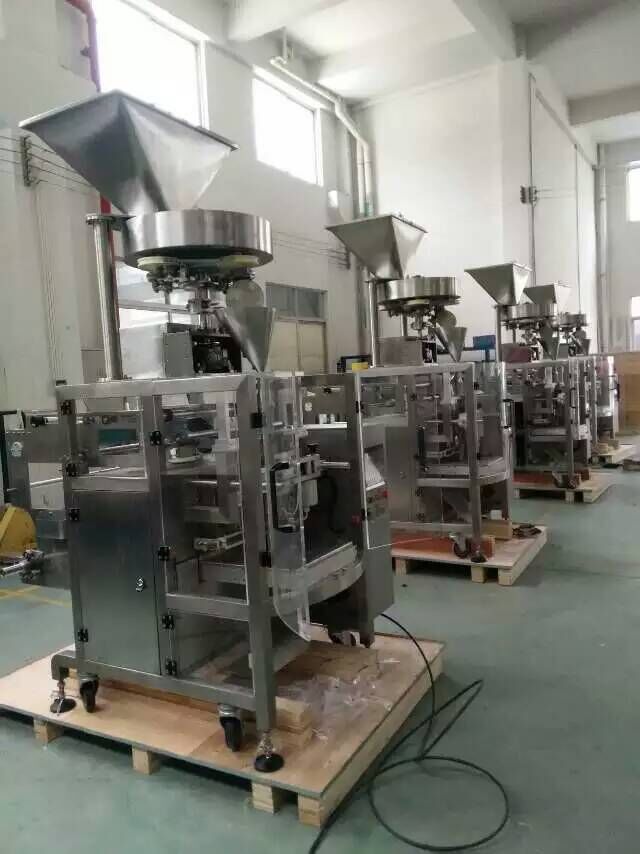
Horizontal Form Fill Seal (HFFS) Granule Packing Machines, including Flow Wrappers
Unlike their vertical counterparts, Horizontal Form Fill Seal (HFFS) machines operate on a horizontal plane. These machines also create a pouch from a roll of film but are better suited for single, solid items or products that are difficult to handle vertically. The process, often called flow wrapping, involves feeding the product horizontally onto the film, which is then formed into a tube around it. The machine creates a longitudinal "fin" seal along the bottom or top and then seals and cuts both ends to create the final package.
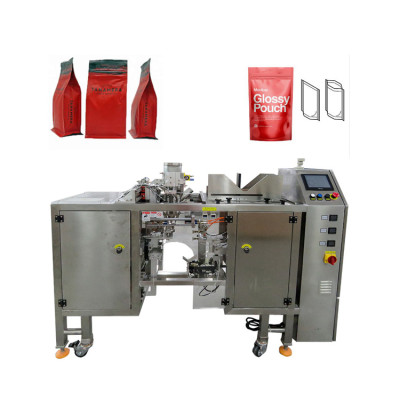
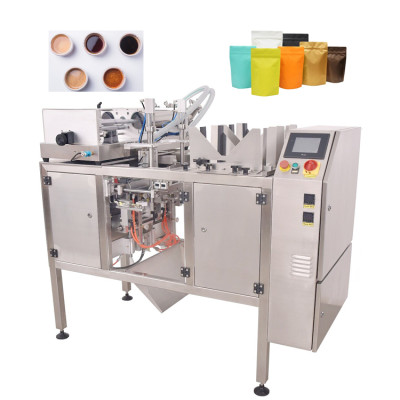
HFFS machines are exceptionally versatile and can produce a wide range of package styles, including pillow-pouches, sachets, and bags with zippers or spouts. This makes a Granule Horizontal Packing Machine ideal for products like snack bars, biscuits, or even hardware kits containing granular components. For stand-up pouches, a popular format for premium snacks and coffee, a specialized Granule Doypack Packaging Machine is often used, which is a variation of HFFS technology designed specifically for this bag style.
Granule Filling Machines for Can Packaging – Featuring TOP Y Machinery Solutions
Beyond flexible bags, many granular products are packaged in rigid containers like composite cans, plastic jars, or metal tins. For these applications, specialized granule filling machines are used. These systems are part of a larger packaging line that typically includes container unscrambling, filling, capping or seaming, and labeling.
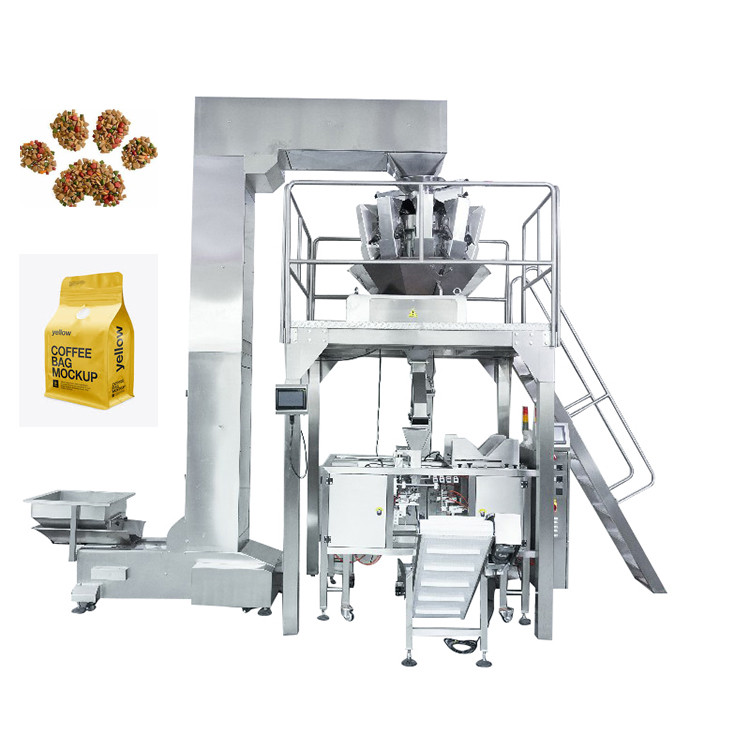
The core of the line is the granule filler, which uses a precise weighing system (like a multi-head or linear weigher) to dose the correct amount of product into each can as it passes underneath on a conveyor. Leading manufacturers like TOP Y Machinery focus on creating integrated solutions that are highly accurate and efficient. These can-filling lines are designed for a variety of products including nuts, candies, coffee granules, and infant formula, ensuring product integrity and a premium final presentation.
How Granule Packing Machines Fill – Inside the Mechanisms
The "filling" part of the process is where precision is paramount. The goal is to dispense the correct amount of product into each package with minimal deviation. This is accomplished through several types of dosing and discharging devices.
Electronic Weighing Systems for Precision
For products where weight accuracy is critical, electronic weighing systems are the gold standard. These systems measure the product by weight rather than volume, providing much higher precision and minimizing product giveaway.
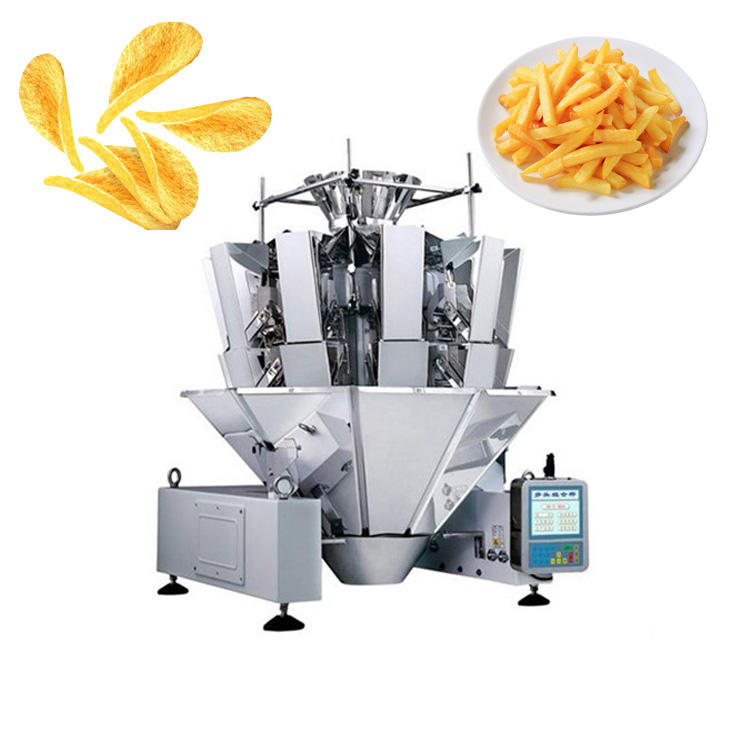
- Multi-Head Weighers: These are the most accurate and high-speed options. A multi-head weigher uses multiple "weigh heads," each containing a portion of the product. A computer calculates the best combination of these heads to achieve the exact target weight, then opens those selected hoppers to discharge the product. They are ideal for mixed-granule products and high-value items where precision directly translates to cost savings.
- Linear Weighers: A simpler and more budget-friendly option, linear weighers use vibrating channels to feed product into a weigh bucket. Once the target weight is reached, the vibration stops, and the bucket discharges. They are best suited for free-flowing, single-ingredient granules and operate at lower speeds than multi-head systems.
| Weigher Type | Best For | Speed | Accuracy | Cost |
|---|---|---|---|---|
| Multi-Head Weigher | High-value, mixed, or irregular granules | High (60-200+ ppm) | Very High (±0.1-1g) | High |
| Linear Weigher | Free-flowing, uniform granules | Low to Medium (10-60 ppm) | Good | Low |
Volumetric Filling Devices
Volumetric fillers measure product by volume instead of weight. This method is faster and involves simpler, more cost-effective machinery, but it's only suitable for granules with a consistent density and shape, where volume corresponds directly to weight.
- Volumetric Cup Fillers: This is the most common type. The machine has a series of cups of a fixed, adjustable volume. The cups are filled from a hopper, leveled off, and then rotate to a discharge point where they release the product into the package. They are known for their high speed, ease of use, and low maintenance, making them ideal for products like sugar, rice, and salt. However, their accuracy can be lower than weighing systems, typically around ±1%.
Pneumatic Discharging Devices
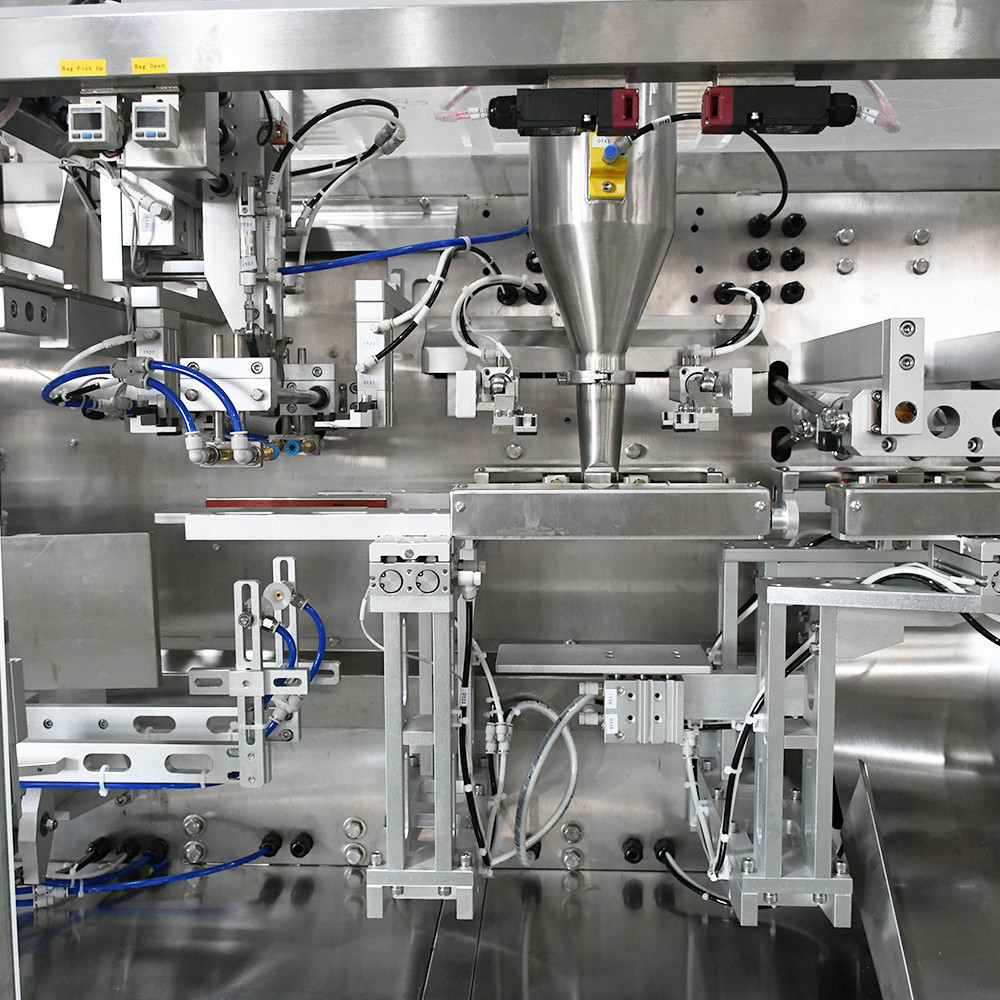
Pneumatic, or air-powered, systems are crucial for the physical movement within a packing machine. A pneumatic cylinder is a device that uses compressed air to create linear motion—pushing, pulling, lifting, or clamping. In granule packing, they perform countless essential actions. They operate the gates on hoppers, opening and closing them to discharge product from a weigher or volumetric filler. They also power the movement of sealing jaws, eject finished packages from the line, and act as product stoppers on conveyors to ensure proper timing and positioning. Because they are powered by air, they are clean, fast-acting, and cost-effective, making them indispensable in the hygienic and high-speed environments of food and pharmaceutical packaging.
Operating and Maintaining Your Granule Packing Machine for Optimal Performance
Owning a granule packing machine is only the first step. To truly unlock its potential for efficiency and longevity, operators must be proficient in its day-to-day operation and diligent about its maintenance. Proper handling not only ensures consistent output but also guarantees the safety of the workforce and extends the life of the investment.
Step-by-Step Guide to Operating a Granule Packing Machine
While specific procedures vary by model, the general operation of an automatic granule packing machine follows a logical sequence. Adhering to these steps ensures smooth and efficient production runs.
- Pre-Operation Inspection: Before starting the machine, conduct a thorough check. Ensure all safety guards are in place and functional, power cords are secure, and the work area is clean and free of obstructions. Verify that the machine components, such as the bag maker and sealing devices, are intact.
- Load Consumables: Install the correct roll of packaging film onto the film reel, threading it through the various rollers and the forming collar according to the manufacturer's diagram. Load the bulk granule product into the feeder hopper, being careful not to overfill it.
- Set Operating Parameters: Power on the machine. Using the Human-Machine Interface (HMI) or control panel, set the required parameters. This includes the target bag length, filling weight or volume, and the sealing temperature appropriate for the packaging film being used.
- Calibration and Test Run: Initiate a test run without product to ensure the machine is forming and cutting bags to the correct length. Then, run a few cycles with the product to verify fill accuracy. Make small adjustments to the bag length or dosing settings as needed until the finished packages meet all specifications.
- Start Production: Once calibration is complete, begin the full production run. Continuously monitor the machine's operation, watching for any inconsistencies in bag quality, sealing, or filling.
- End-of-Shift Shutdown and Cleaning: At the end of the production run, power down the machine. It is crucial to clean all parts of the machine, especially components that come in contact with the product, to maintain hygiene and prevent cross-contamination.
Critical Maintenance for Granule Packing Machine Longevity
Preventive maintenance is the key to preventing unexpected downtime and costly repairs. A structured maintenance schedule ensures the machine remains in peak condition.
Daily Maintenance:
- Cleaning: Thoroughly wipe down the machine's exterior and clean all product-contact surfaces, like hoppers and weigh buckets, to remove dust and residue.
- Visual Inspection: Check for any visible signs of wear, loose bolts or screws, and damaged parts like belts or sealing tape. Ensure safety guards and emergency stops are functioning correctly.
Weekly Maintenance:
- Lubrication: Lubricate all moving parts such as gears, chains, and bearings according to the manufacturer's guide, using food-grade lubricants where necessary.
- Deep Cleaning: Perform a deeper cleaning of components like sealing jaws and cutting blades to remove any built-up residue that could affect performance.
- Check Belts and Chains: Inspect film transport belts and drive chains for proper tension and signs of wear like fraying or stretching.
Monthly/Quarterly Maintenance:
- Calibration Check: Re-calibrate weighing systems and temperature sensors to ensure they remain accurate.
- Inspect Electrical and Pneumatic Systems: Check that all electrical connections are tight and inspect air hoses for leaks or damage. Clean or replace filters in the pneumatic system to ensure a supply of clean, dry air.
- Replace Wear Parts: Proactively replace high-wear parts like cutting blades, Teflon tape on sealing jaws, and vacuum belts before they fail.
Creating and following a detailed maintenance log is highly recommended to track all activities and spot recurring issues.
Safety Precautions for Granule Packing Machine Operators
Operating heavy machinery comes with inherent risks, but these can be effectively managed by adhering to strict safety protocols. The safety of the operator is always the highest priority.
- Proper Training: Only trained and authorized personnel should operate the machine. Operators must be fully familiar with the machine's manual, its controls, and emergency procedures.
- Personal Protective Equipment (PPE): Always wear appropriate PPE, including safety glasses, gloves, and non-slip footwear. Avoid loose clothing, jewelry, or long, untied hair that could get caught in moving parts.
- Never Bypass Safety Guards: All safety guards, covers, and interlock switches are there for a reason. Never operate a machine with these safety features removed or disabled. OSHA regulations place the responsibility on the employer to ensure all machines are properly guarded.
- Keep Hands Clear: Never reach into the machine while it is in operation. Use tools for adjustments, and always wait for the machine to come to a complete stop before performing any maintenance or clearing a jam.
- Emergency Stop: Know the location of all emergency stop buttons and how to use them. In any abnormal situation or emergency, press the button immediately to cut power to the machine.
- Lockout/Tagout (LOTO): Before performing any maintenance or repairs, follow established LOTO procedures. This involves completely de-energizing the machine from its power source and locking it out to prevent accidental restarts.
- Maintain a Clean Workspace: A clean and organized work area free of clutter, spills, or obstructions helps prevent slips, trips, and falls.
By integrating these operational, maintenance, and safety practices into daily routines, businesses can ensure their granule packing machines are a safe, reliable, and highly productive asset.
Versatile Applications and Choosing the Right Granule Packing Machine
Granule packing machines are workhorses across a vast array of industries, prized for their ability to handle diverse products with speed and precision. Their importance cannot be overstated, from ensuring food safety to guaranteeing accurate doses in pharmaceuticals. However, this versatility also means that selecting the right machine requires a careful and strategic approach.
Where Granule Packing Machines Make a Difference Across Industries
The application of granule packing machines is widespread, reflecting their adaptability to different products and regulatory environments.
Food and Beverage Industry
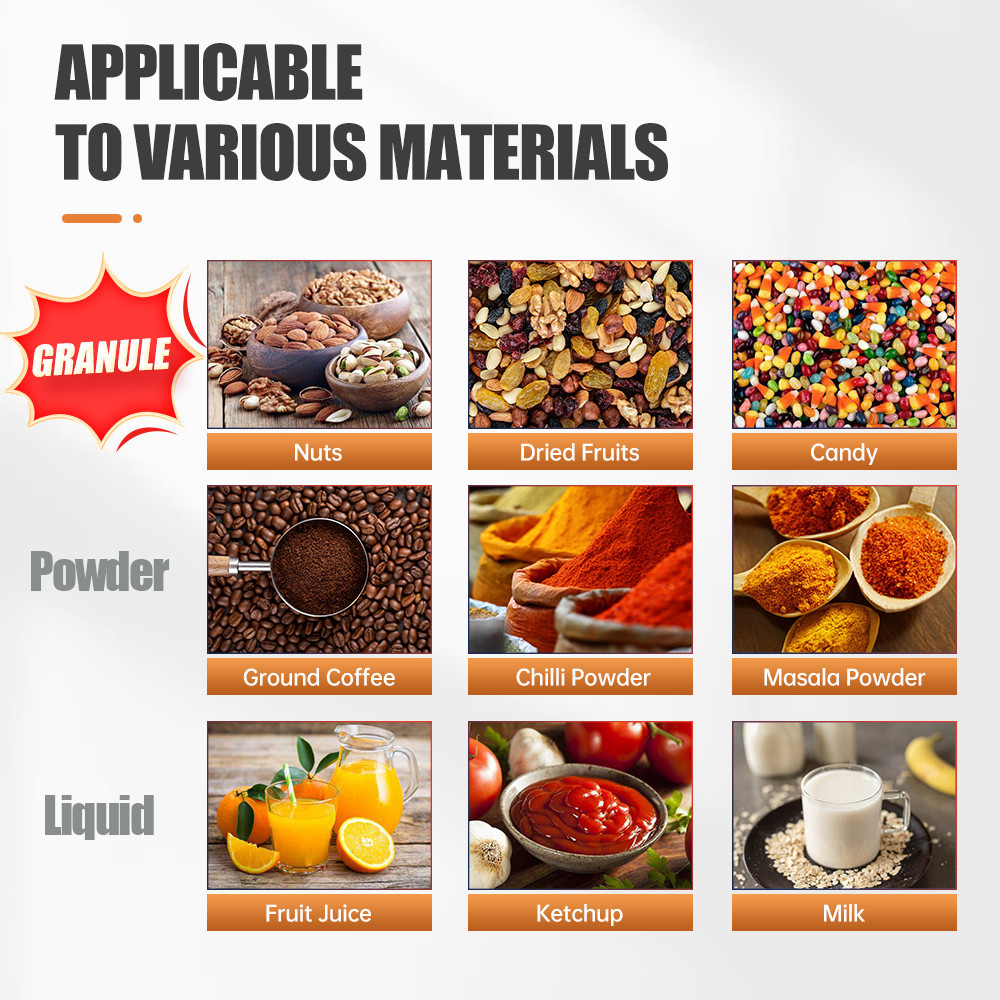
This is arguably the largest sector for granule packing machines. They are used to package an extensive range of products consumers use daily. This includes staple goods like sugar, salt, rice, and grains, as well as breakfast cereals, coffee beans (whole and ground), tea leaves, and spices. In the snack category, they handle everything from nuts and seeds to candies and popcorn. The precision and hygiene offered by these machines are crucial for ensuring product freshness, preventing contamination, and maintaining the quality that consumers expect.
Pharmaceutical and Chemical Sectors
In the pharmaceutical industry, accuracy and hygiene are non-negotiable. Granule packing machines are used to package medicinal granules, powders, and supplements with exacting precision to ensure correct dosage. The automated, enclosed process prevents contamination, which is vital for product safety and efficacy. In the chemical sector, these machines are built to be robust to handle products like fertilizers, detergents, pesticides, desiccants, and other granular chemicals. They ensure that these materials are sealed securely to prevent leaks and protect users from exposure.
Agricultural and Electronics Applications
The agricultural industry relies on granule packing machines for packaging seeds, fertilizers, and animal feed. Proper packaging protects these products from moisture and other external elements during storage and transport, ensuring their viability and effectiveness. In a more niche application, these machines are also used in the electronics industry. They can package fine and tiny components like resistors, capacitors, and diodes, where individual, protective packaging is required.
How to Select the Ideal Granule Packing Machine for Your Needs
Choosing the perfect granule packing machine is a critical decision that impacts production efficiency, cost, and product quality. A systematic evaluation of your specific needs is essential.
Considering Product Characteristics and Pouch Specifications
The first step is a thorough analysis of your product.
- Product Characteristics: Consider the granule's size, shape, uniformity, and flowability. Free-flowing, uniform products like sugar or salt are well-suited for high-speed volumetric fillers. Irregular or fragile products like nuts or snack mixes require the precision and gentle handling of a multi-head weigher to prevent damage and ensure accurate weight. Dusty products may require specialized dust control systems to ensure clean seals and a safe work environment.
- Pouch Specifications: The type of packaging you intend to use will heavily influence your machine choice. Determine the desired bag style (e.g., pillow pouch, stand-up pouch, gusseted bag), material (laminated film, recyclable PE), and features (e.g., zipper, tear notch, spout). The bag size, particularly its width and length, will dictate the required machine model and forming set.
Evaluating Production Volume and Automation Levels
Your production goals are a key factor in determining the right level of automation and speed.
- Production Volume: A low-volume operation or startup might be well-served by a semi-automatic machine that offers precision without a large capital investment. For high-volume production lines that run continuously, a fully automatic, high-speed machine is necessary to meet demand and reduce labor costs.
- Automation Level: Fully automatic machines integrate feeding, weighing, bag forming, filling, and sealing into one seamless process, requiring minimal operator intervention. Semi-automatic options may require an operator to manually place bags or initiate the filling cycle. While fully automated systems have a higher upfront cost, they offer lower operational costs and faster production rates in the long run.
Assessing Flexibility, Budget, and ROI for your Granule Packing Machine
A successful investment balances upfront cost with long-term value and operational flexibility.
- Flexibility: If you package multiple products with different bag sizes, look for a machine that allows for quick and easy changeovers, ideally with tool-free adjustments. This flexibility minimizes downtime and maximizes productivity in a high-mix production environment.
- Budget: The initial purchase price is just one part of the total cost of ownership. You must also factor in costs for installation, training, annual maintenance, and spare parts. While a simpler machine may be cheaper upfront, a more advanced machine with higher accuracy can provide a better return on investment over time by minimizing product giveaway.
- Return on Investment (ROI): To calculate ROI, estimate the revenue generated by increased throughput and subtract the total investment costs. Key benefits to quantify include savings from reduced labor, increased production speed, and minimized product waste. A positive ROI indicates that the investment will be profitable, and calculating the payback period helps determine how long it will take to recoup the initial cost.
The Future of Granule Packing Machine Technology
The world of packaging machinery is not static. It is constantly evolving, driven by the demands of manufacturers for greater efficiency, flexibility, intelligence, and sustainability. The future of granule packing technology is bright, with several key trends shaping its development and pushing the boundaries of what is possible.
Emerging Trends in Granule Packing Machines
The next generation of granule packing machines will be smarter, faster, and more environmentally conscious. Several key trends are at the forefront of this transformation.
- Increased Automation and Robotics: While already highly automated, the integration of advanced robotics will become more common. Robots can be used for complex tasks like automatically feeding pouches, orienting products, and packing finished bags into cases, further reducing the need for manual labor and increasing line speed.
- Smart Technology (Industry 4.0 and IoT): The "smart factory" concept is becoming a reality. Packaging machines are increasingly being equipped with Internet of Things (IoT) sensors that collect real-time operational data. This data can be analyzed to optimize performance, monitor machine health, and predict maintenance needs before a failure occurs, virtually eliminating unplanned downtime.
- Artificial Intelligence (AI): AI algorithms will play a greater role in enhancing precision and efficiency. AI-powered vision systems can inspect seal quality in real-time, while machine learning can analyze data on granule flow and density to make micro-adjustments to the filling process, further reducing waste and improving consistency.
- Sustainability and Eco-Friendly Materials: There is a significant global push towards sustainability. Future packing machines are being designed to handle a wider range of eco-friendly materials, such as recyclable mono-materials, compostable films, and paper-based packaging, without sacrificing speed or seal quality. Additionally, newer machines focus on energy efficiency with features like servo motors that consume less power.
- Flexibility and Modular Design: As consumer demand shifts towards greater product variety, manufacturers need machines that can adapt quickly. The trend is towards modular designs that allow for fast, tool-free changeovers between different bag sizes and product types. Digital control panels that can store hundreds of "recipes" will allow operators to switch setups with a few taps on a screen.
TOP Y Machinery's Commitment to Innovation in Granule Packing Machines
Leading manufacturers are not just following these trends; they are driving them. Companies like TOP Y Machinery demonstrate a strong commitment to innovation through dedicated research and development. This commitment is evident in their focus on designing machines that are not only robust and reliable but also incorporate cutting-edge technology.
By prioritizing customer feedback and investing in engineering, TOP Y Machinery develops solutions that address the real-world challenges of the modern production environment. They are actively working on increasing machine speed without compromising accuracy, such as developing VFFS machines with servo-driven pulling systems that can reach higher cycle rates. Furthermore, they are focused on enhancing the user experience with intuitive HMI interfaces and developing versatile systems that can handle a wider range of pouch styles and materials. This dedication to forward-thinking design ensures their clients are equipped with packaging technology that is ready for the future.
Frequently Asked Questions (FAQ)
1. What is the main difference between a volumetric filler and a weigh filler? The primary difference is the measurement method. A volumetric filler (like a cup filler) measures a specific volume of product. It is fast and cost-effective but is only accurate for products with consistent density, like sugar. A weigh filler (like a multi-head or linear weigher) measures the actual weight of the product. It is more precise, especially for items with irregular shapes or varying densities like nuts or snack mixes, and is used to minimize product giveaway.
2. How fast can a granule packing machine operate? The speed, measured in bags per minute (bpm), varies greatly depending on the machine type, product characteristics, and bag size. Entry-level VFFS machines might run at 20-40 bpm, while high-speed, fully automated systems integrated with multi-head weighers can exceed 120 bpm.
3. Can one machine handle different bag sizes and products? Yes, many modern granule packing machines are designed for flexibility. By changing the "forming collar" on a VFFS machine, you can produce different bag widths. Bag length is typically adjustable through the machine's software. Switching between products might require cleaning the system and adjusting the filler settings, but machines designed for quick changeovers can accomplish this with minimal downtime.
4. What kind of maintenance do these machines require? Routine maintenance is crucial for longevity and performance. This includes daily cleaning of product contact parts, weekly lubrication of moving components like bearings and chains, and periodic inspection and replacement of wear parts such as sealing jaws, cutting knives, and Teflon tape. Following a preventive maintenance schedule provided by the manufacturer is the best practice.
5. How do I choose the right machine for my business? Choosing the right machine involves a multi-factor analysis. You must consider:
- Your Product: Its size, shape, flowability, and fragility.
- Your Packaging: The desired bag style, material, and size.
- Your Production Needs: Your target output in bags per minute and hours of operation.
- Your Budget: Balancing the initial capital investment with the long-term return on investment (ROI) from labor savings and reduced product waste.
Conclusion
As we've explored, granule packing machines are a cornerstone of modern manufacturing, delivering unmatched efficiency, accuracy, and versatility across a multitude of industries. From the coffee in your cup to the seeds planted in a field, these powerful systems ensure products are packaged safely and consistently.
Understanding the different types available—from VFFS and HFFS machines to specialized can fillers—along with their unique operating mechanisms and key features, is crucial for making an informed decision that aligns with your specific packaging goals. The right choice can dramatically increase productivity, reduce waste, and enhance your product's final presentation on the shelf.
By carefully assessing your product requirements, production volume, and long-term business objectives, you can select the perfect granule packing machine to optimize your operations. Embracing the technological advancements in automation, intelligence, and sustainability will not only streamline your current processes but also ensure your product's integrity and your company's competitiveness for years to come.