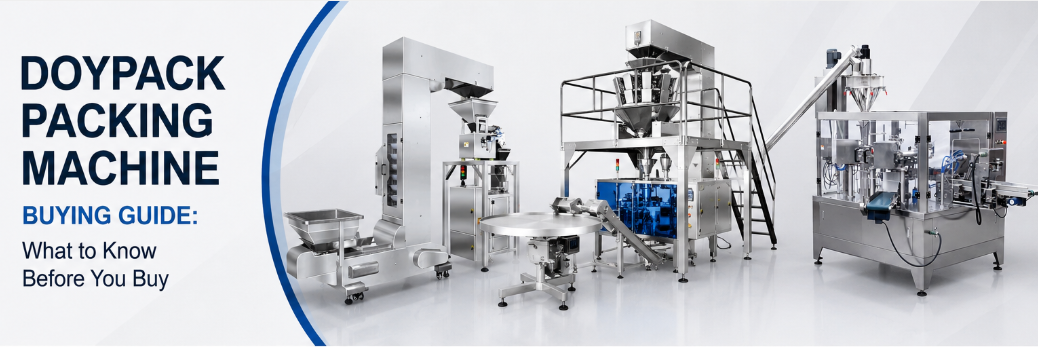
Doypack Packing Machine Buying Guide: What to Know Before You Buy
Investing in a doypack packing machine is a significant decision that affects your production efficiency, product quality, and bottom line for years to come. Whether you are scaling up from manual packaging, replacing aging equipment, or entering the stand-up pouch market for the first time, choosing the right machine requires a clear understanding of your product, your production goals, and the technology available. This guide draws on real-world packaging engineering experience to walk you through everything you need to evaluate before making your purchase.
1. Understanding Doypack Pouches: The Foundation
Before selecting a machine, you must understand the pouch it will handle. The doypack — originally invented by Louis Doyen in 1962 — is a stand-up pouch with a bottom gusset that allows it to sit upright on retail shelves. Today's doypack goes far beyond the original design, incorporating zippers, spouts, tear notches, and multi-layer barrier films.
Common Pouch Types
Material Layers That Matter
Doypack pouches are rarely made of a single material. Understanding the layer structure helps you specify the right sealing parameters for your machine:
| Layer | Material | Function |
|---|---|---|
| Outer | PET (Polyester) | Strength, clarity, excellent printability |
| Barrier | Aluminum Foil / EVOH | Ultimate oxygen, moisture, and light barrier |
| Inner | PE / LLDPE | Food-contact layer, flexible and heat-sealable |
| Decorative | Kraft Paper | Natural, organic, artisanal shelf appeal |
2. How a Doypack Packing Machine Works
Most modern doypack machines use a rotary design with 6 to 10 stations arranged around a central turret. Understanding this workflow helps you evaluate machine quality and identify potential bottlenecks in your production line.
Pouch Pick-Up & Loading
Vacuum suction cups on a mechanical arm pick individual premade pouches from a magazine and transfer them to grippers. The grippers hold the pouch throughout the entire rotary cycle.
Date Coding & Printing
Thermal transfer or inkjet printers apply expiration dates, batch numbers, or barcodes before filling begins.
Bag Opening & Zipper Release
Sensors detect the pouch position; vacuum cups pull the top open while mechanical fingers hold the bottom. A dedicated mechanism opens zippers, and a burst of clean air ensures full opening.
Product Filling
The filling system dispenses product by weight or volume. A "bag shaker" helps contents settle for a compact fill. This is the core station where accuracy directly impacts your product giveaway costs.
Sealing Zone Cleaning & Heat Sealing
Brushes or air nozzles remove product dust from the seal area. Two heated bars then clamp with precise temperature, pressure, and dwell time to fuse the inner layer into a hermetic seal.
Cooling & Discharge
Cooling bars press the hot seal to set it instantly. Grippers release the finished pouch onto a conveyor for check-weighing, metal detection, and case packing.
3. Types of Doypack Machines: Which One Fits Your Production?
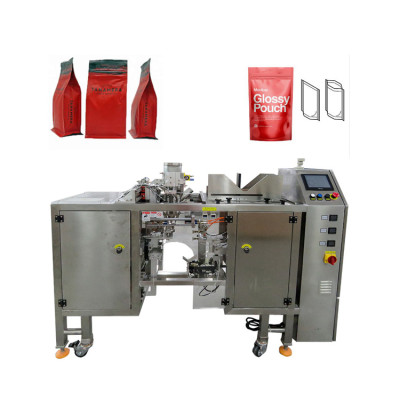
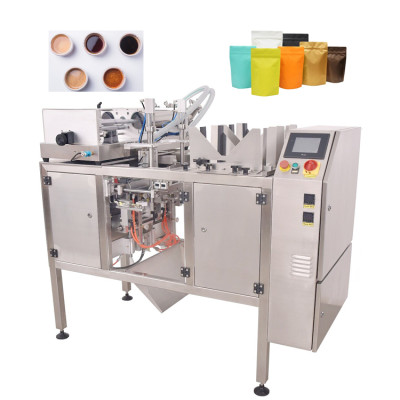
Not all doypack machines are created equal. The right type depends on your production volume, product characteristics, and available floor space.
| Machine Type | Best For | Typical Speed | Key Advantage |
|---|---|---|---|
| Rotary Premade Pouch | High-volume production, multiple SKUs | 30–120+ PPM | Fastest throughput, handles diverse pouch sizes |
| Horizontal Premade Pouch | Powders, liquids requiring precision | 20–60 PPM | Superior filling accuracy, easy cleaning |
| Mini / Semi-Automatic | Startups, small batches, R&D | 10–20 PPM | Low investment, compact footprint |
| Automatic Vacuum | Perishables, extended shelf-life products | 25–50 PPM | Air removal prevents oxidation |
| Spout Pouch Filling | Beverages, sauces, liquid detergents | 20–40 PPM | Integrated spout insertion and cap tightening |
4. Choosing the Right Filling System for Your Product
The filling system is the heart of your doypack machine. Matching the dosing technology to your product's physical characteristics is the single most important decision you will make. A machine that excels at filling free-flowing granules may fail completely with sticky pastes.
| Product Type | Recommended Filler | How It Works | Example Products |
|---|---|---|---|
| Free-flowing powders | Auger Filler | Rotating screw dispenses precise volume per revolution | Flour, spices, protein powder, coffee |
| Granules & irregular solids | Multi-Head Weigher | Computer combines weight from multiple hoppers for target weight | Snacks, nuts, frozen foods, candy |
| Liquids & pastes | Piston Filler | Piston draws precise volume into cylinder, then pushes into pouch | Juices, sauces, creams, gels |
| Low-viscosity liquids | Pump Filler | Impeller, gear, or peristaltic pump meters liquid flow | Beverages, liquid supplements, chemicals |
| Small countable items | Volumetric Cup | Product fills preset cup volume, then drops into pouch | Beans, rice, small candies |
5. Key Factors to Evaluate Before You Buy
Production Volume & Speed Requirements
Calculate your target output in pouches per minute (PPM) and per month. Factor in not just current demand but projected growth over the next 3–5 years. A machine running at maximum capacity from day one leaves no room to grow.
Automation Level
Fully automatic rotary machines reduce labor but require higher upfront investment. Semi-automatic units cost less but need an operator for each cycle. Consider your local labor costs and the availability of skilled operators when making this trade-off.
Pouch Material Compatibility
Not every machine handles every film. If you are considering a transition to recyclable mono-material PE pouches, ensure the machine supports the narrower heat-seal window these materials require. Look for PID temperature controllers with ±1°C accuracy and dual-pulse sealing capability.
Supplier Track Record & Support
Evaluate potential suppliers on more than just the machine price. Ask about:
Regulatory Compliance
If you export to North America or Europe, verify that the machine meets FDA 21 CFR Part 117 (cGMP) requirements for food-contact surfaces and CE safety standards. Machines built to both standards represent the highest manufacturing quality and are generally the safest long-term investment.
6. Maintenance Best Practices for Long-Term Reliability
A well-maintained doypack machine can operate reliably for 10–15 years. Neglecting routine care leads to the most common production headaches: dropped pouches, weak seals, and unplanned downtime.
Daily: Clean Pouch Grippers & Suction Cups
Wipe grippers with a lint-free cloth and isopropyl alcohol at the end of every shift. Inspect vacuum cups for cracks or stiffness — a cup that has lost flexibility will not achieve a reliable seal, causing missed picks.
Weekly: Calibrate Seal Bar Temperature
Use a calibrated surface probe to measure actual bar temperature at three points. A bar 5°C too cool produces weak seals; 10°C too hot can burn through film. Recalibrate if you find variation greater than ±2°C.
Monthly: Inspect Vacuum & Air Systems
Drain air filter bowls, replace filter elements quarterly, and check that air knives have not shifted position. Test vacuum levels at the cup face; a drop of more than 10% from rated capacity indicates a leak.
Quarterly: Electrical Enclosure Care
Vacuum enclosure interiors (never use compressed air). Tighten all terminal screws, especially on relay and contactor connections. Verify enclosure door gaskets maintain their IP rating.
7. Understanding Total Cost of Ownership (TCO)
A low purchase price can be deceptive. The true cost of a doypack machine spans its entire service life. Smart buyers evaluate three cost categories:
Capital Costs (CAPEX)
Machine price, shipping, installation, commissioning, operator training, and initial validation testing. Standard machines typically deliver in 6–10 weeks; custom configurations can take 8–16 weeks or longer.
Operating Costs (OPEX)
Labor, electricity, compressed air, consumables beyond pouches, and floor space. A machine with poor energy efficiency or high compressed-air consumption will quietly erode your margins year after year.
Maintenance & Support
Scheduled preventive maintenance, spare parts, wear items, unplanned repairs, and downtime losses. A machine that is down for two days costs far more than the repair bill alone.
When comparing quotes, build a simple 5-year TCO model. A machine priced $10,000 higher but consuming 30% less energy and requiring half the maintenance interventions may pay back the difference within 18 months.
8. Future-Proofing Your Investment
Packaging technology and market demands evolve. The machine you buy today should serve your business for the next decade. Three trends are shaping the future of doypack packaging:
Sustainable & Recyclable Materials
Brands and regulators are driving the shift from multi-material laminates to mono-material structures like all-PE pouches. These materials have a narrower heat-seal window and stretch more during handling. Your machine should offer PID temperature control, advanced film tension management, and dual-pulse sealing to handle these next-generation materials reliably.
Modularity & Scalability
Choose a machine platform that allows you to add stations later — a second filling head for dual-product packs, an inline check-weigher, or a nitrogen flush system for extended shelf life. Modular design means you upgrade components rather than replacing the entire line.
Smart Manufacturing & IoT
Look for machines with data-logging capability, remote monitoring, and predictive maintenance alerts. A machine that records seal temperatures, production counts, and downtime events gives you the data to continuously improve OEE (Overall Equipment Effectiveness).
Summary: Your Buying Checklist
Choosing a doypack packing machine is a partnership decision as much as a technical one. At TOP Y MACHINERY, we have spent years engineering rotary and horizontal premade pouch machines that balance speed, accuracy, and reliability for food, beverage, pharmaceutical, and chemical producers worldwide. We invite you to contact our engineering team with your product specifications for a personalized consultation. The right machine does not just fill pouches — it builds your brand's reputation, one perfect seal at a time.