A Beginner's Guide to Powder Packaging Machines: From Selection to Operation.
As we embark on this journey, we understand the pivotal role precision and efficiency play in modern manufacturing. Whether you're in pharmaceuticals, food, or specialty chemicals, effectively packaging powdered materials is crucial for product integrity and market success.
Join us as we explore the fundamental aspects of powder packaging machines, from making informed selections to mastering their operation. This guide is tailored to help you navigate the complexities and unlock the full potential of these indispensable industrial workhorses.
Key Takeaways
- Precision is Profit: Accurate filling technology is paramount. It minimizes product giveaway, reduces waste, and ensures each package meets weight specifications, directly impacting your bottom line and customer satisfaction.
- Compliance is Non-Negotiable: Modern powder packaging machines are designed to meet stringent industry regulations, such as those from the FDA and cGMP. They provide the consistency, traceability, and hygienic operation necessary for compliance in sensitive sectors like food and pharmaceuticals.
- Automation Drives Growth: The spectrum of automation—from semi-automatic to fully automatic systems—allows businesses to scale. While semi-automatic machines offer a balance of control and efficiency for smaller operations, a complete Powder Automatic Packaging Line maximizes throughput, reduces labor costs, and prepares your business for future growth.
- Machine Type Matters: The choice of machine, such as an auger filler, vibratory filler, or cup filler, depends on your powder's characteristics (free-flowing vs. non-free-flowing), required accuracy, and desired speed. Selecting the right type is the foundation of an efficient packaging process.
- Versatility Across Industries: Powder packaging machines are not limited to one sector. Their applications span food and beverage (spices, flour, coffee), pharmaceuticals (medicinal powders), nutraceuticals (protein powders), and chemicals (detergents, pigments), showcasing their incredible versatility.
- Integration is Key: A standalone filler is only part of the solution. Integrating auxiliary equipment like infeed systems, checkweighers, metal detectors, and labeling machines creates a cohesive, efficient, and fully optimized packaging workflow from start to finish.
The Indispensable Role of a Powder Packaging Machine in Modern Manufacturing
In the landscape of modern production, the powder packaging machine stands as a cornerstone of operational success. Its function transcends merely filling bags or containers; it is a critical control point that safeguards product quality, ensures economic viability, and upholds brand integrity. From fine chemical powders to granular food products, the ability to package materials accurately and efficiently is what separates market leaders from the competition. This section delves into why these machines are not just a piece of equipment, but a strategic asset in any manufacturing environment.
Why Precision and Efficiency are Paramount: Understanding Your Powder Packaging Machine's Impact
Precision and efficiency are the twin pillars of modern packaging, especially when handling powdered products. Their importance cannot be overstated, as they directly influence profitability, consumer trust, and operational sustainability. Inaccurate weighing, for example, can lead to significant financial losses through product giveaway or, conversely, result in underfilled packages that damage brand reputation and may violate regulations.
The impact of a high-precision powder packaging machine is felt across the entire production line. Here’s a breakdown of why these two factors are paramount:
Minimizing Product Waste and Maximizing Profit: Every gram of powder given away for free by overfilling is a direct cut into profit margins. Advanced equipment ensures that each package is filled with extreme accuracy, often within a tolerance of a single gram. This level of control drastically reduces waste, lowers operational costs, and ensures resources are used efficiently. By preventing overfilling, manufacturers can achieve significant cost savings and improve their bottom line.
Ensuring Product Quality and Consistency: For the end consumer, consistency is key. Whether it's a spice blend, a pharmaceutical powder, or a protein supplement, the customer expects the product to perform the same way every time. Accurate dosing is essential, as incorrect amounts can affect the product's taste, texture, or efficacy. A reliable packaging machine guarantees that every single package delivered to the market is uniform, reinforcing product integrity and customer satisfaction.
Boosting Throughput and Productivity: Efficiency is a measure of speed and consistency. Manual or outdated packaging processes are often slow, labor-intensive, and prone to error. Modern powder packaging machines, on the other hand, are engineered for high-speed, continuous operation, dramatically increasing the number of units packaged per hour. This heightened productivity allows companies to meet market demand more effectively, reduce lead times, and scale their operations without a proportional increase in labor costs.
Enhancing Workplace Safety and Hygiene: Efficiency isn't just about speed; it's also about creating a better working environment. Automated and semi-automated systems often feature enclosed filling processes and dust extraction systems. These designs minimize the airborne dust that can be a health hazard for operators and a contamination risk for the product, leading to a safer and cleaner production floor.
In essence, a powder packaging machine is far more than a simple filler. It is a strategic tool that brings precision to what could be a chaotic process. By ensuring every package is filled correctly and efficiently, it protects the product, the consumer, and the producer, making it an indispensable asset in today's competitive manufacturing world.
Adhering to Stringent Guidelines: How Your Powder Packaging Machine Ensures Regulatory Compliance
In industries like pharmaceuticals, nutraceuticals, and food and beverage, adherence to regulatory guidelines is not just a best practice—it's a legal requirement. Failure to comply with standards set by bodies like the U.S. Food and Drug Administration (FDA) can result in severe penalties, including fines, product recalls, and facility shutdowns. A modern powder packaging machine is engineered from the ground up to be a key component of a compliant manufacturing operation.
Governments and international bodies have established strict regulations, such as the Current Good Manufacturing Practices (CGMP), to ensure that products are safe, pure, and effective. These regulations outline minimum requirements for the methods, facilities, and controls used in the manufacturing, processing, and packing of products. A compliant powder packaging machine helps businesses meet these standards in several critical ways:
Hygienic Design and Construction: To prevent contamination, machines intended for food or pharmaceutical use are typically constructed with high-grade materials like stainless steel. Their design minimizes crevices and hard-to-clean areas where bacteria or product residue could accumulate. Many machines also support closed filling processes and dust-proof systems to ensure sterility and protect against contamination.
Accurate and Verifiable Dosing: Regulations often mandate strict control over the quantities declared on packaging. Powder packaging machines provide precise, repeatable dosing that can be validated and documented. This automated accuracy is essential for ensuring that every package meets the labeled weight and, in the case of pharmaceuticals, contains the correct dose of active ingredients.
Secure and Consistent Sealing: A crucial part of compliance is ensuring the product is protected from environmental factors like moisture, oxygen, and contaminants throughout its shelf life. Packaging machines create strong, reliable, and airtight seals that maintain product integrity. For many products, especially in the pharmaceutical and nutraceutical sectors, an induction-sealed liner under the lid is an indispensable feature for creating a hermetic seal and providing tamper evidence.
Traceability and Record-Keeping: Fully automatic packaging lines can be integrated with printers and labeling systems to apply essential information to each package, such as batch numbers, expiration dates, and custom barcodes. This is vital for traceability, allowing a product to be tracked through the supply chain and facilitating quick action in the event of a recall.
By investing in a powder packaging machine built for compliance, a company is not just buying equipment; it is implementing a system that uphodes quality control, ensures consumer safety, and grants access to regulated markets. This commitment to quality is fundamental to building a trustworthy and reputable brand.
Navigating the Landscape: A Guide to Powder Packaging Machine Types and Automation Levels
Choosing the right powder packaging machine can feel like a daunting task given the wide array of options available. The ideal choice depends on a multitude of factors, including the characteristics of the powder itself, required production speed, packaging format, and budget. Understanding the different machine types and the spectrum of automation is the first step toward making an informed decision that will serve your business now and in the future. This section will guide you through the primary categories of machines and help you determine the level of automation that best fits your operational needs.
From Manual Operations to High-Speed Solutions: Choosing Your Ideal Powder Packaging Machine
The journey from raw powder to a market-ready product involves a crucial filling stage, and the machinery used can range from simple, hand-operated devices to complex, high-speed automated systems. Selecting the right machine requires a careful evaluation of your product's properties, production goals, and budget. The main types of powder filling mechanisms are based on how they measure and dispense the product.
Key Types of Powder Filling Machines:
Auger Fillers: These are the most versatile and widely used machines for powder packaging. They employ a rotating screw (the auger) to dispense a specific, controlled volume of powder from a hopper into the container. The number of auger rotations determines the fill volume, offering high accuracy for both free-flowing and non-free-flowing powders like flour, spices, and protein mixes. Their enclosed design is also excellent for containing dust, which is a major advantage when handling fine or messy products. For this reason, auger fillers are a top choice in the food, pharmaceutical, and chemical industries.
Volumetric Cup Fillers: This method uses a series of cups of a fixed volume that are filled with powder and then emptied into the packaging. They are best suited for free-flowing, granular products with a consistent density, like granulated sugar or salt. While they can operate at very high speeds and are often more affordable, their accuracy is lower compared to other methods. This is because any variation in product density will lead to inconsistent fill weights, making them unsuitable for high-value or non-free-flowing powders.
Net Weight Fillers: These machines offer the highest level of accuracy because they measure the product by weight, not volume. The system weighs the powder as it is dispensed and stops the fill once the target weight is reached. This gravimetric approach virtually eliminates product giveaway, making it ideal for expensive products where precision is critical. Multihead weighers are a sophisticated type of net-weight filler capable of extremely high speeds and accuracy for free-flowing granular products.
Vibratory Fillers: These machines use vibration to gently move powder along a tray and into the container. They are well-suited for delicate or abrasive products that could be damaged by an auger. While not as fast as other systems, they provide a gentle handling method that preserves product integrity.
The chart below offers a comparison to help guide your selection:
| Machine Type | Best For | Key Advantages | Key Limitations |
|---|---|---|---|
| Auger Filler | Free-flowing & non-free-flowing powders (flour, protein powder, spices) | Versatile, excellent dust control, high accuracy | May not be ideal for extremely delicate or abrasive materials |
| Volumetric Cup Filler | Low-cost, free-flowing granular products (sugar, salt) | Very high speed, low initial cost | Lowest accuracy, sensitive to density changes, not for non-free-flowing powders |
| Net Weight Filler | High-value products requiring maximum accuracy (pharmaceuticals, premium supplements) | Highest accuracy (gravimetric), minimizes product waste | Higher initial investment, can be slower for some applications |
| Vibratory Filler | Fragile, abrasive, or irregularly shaped products | Gentle product handling, preserves particle integrity | Slower speeds compared to auger or cup fillers |
Ultimately, choosing your ideal machine starts with understanding your powder. For many businesses, a Powder Weighing Machine combined with an auger filler offers the perfect blend of accuracy and versatility, providing a robust solution for a wide range of applications.
The Spectrum of Automation: Exploring Semi-Automatic and Fully Automatic Powder Packaging Machines
Beyond the type of filling mechanism, the level of automation is a defining characteristic that separates powder packaging machines. This spectrum runs from semi-automatic systems, which require an operator for certain steps, to fully automatic lines that handle the entire process with minimal human intervention. The right choice is a strategic decision based on production volume, labor availability, budget, and long-term growth plans.
Semi-Automatic Powder Packaging Machines
A semi-automatic powder filling machine represents a smart balance between manual labor and automation, making it an excellent starting point for many businesses. In this setup, the machine automates the most critical task—the precise dosing of the powder—while an operator handles other parts of the process.
- How it Works: Typically, an operator manually places a container (like a pouch, bottle, or jar) into position and activates the filling cycle, often with a foot pedal. The machine then dispenses the preset amount of powder. After the fill is complete, the operator removes the container for subsequent sealing, capping, or labeling.
- Key Advantages:
- Lower Initial Cost: Semi-automatic machines are significantly more affordable than their fully automatic counterparts, making them accessible for startups and small to medium-sized enterprises (SMEs).
- Flexibility: They are ideal for small batch runs, seasonal products, or operations that handle a wide variety of SKUs, as changeovers can be done quickly and easily.
- Simplicity and Compact Size: These machines are generally user-friendly, require minimal training, and have a smaller footprint, suiting facilities with limited space.
- Ideal For: Businesses with moderate production needs, companies launching new products, or those requiring high flexibility for diverse packaging formats.
Fully Automatic Powder Packaging Machines
For large-scale operations, a fully automatic machine or a complete packaging line is the gold standard. These systems integrate every step of the process—from container feeding to final case packing—into one seamless, high-speed workflow.
- How it Works: These machines operate continuously without needing an operator for each cycle. They automatically handle container feeding, filling, sealing, and discharging. Advanced systems can orient bottles, form pouches from a roll of film, apply zippers, and integrate with checkweighers, metal detectors, and labelers.
- Key Advantages:
- Maximum Productivity: Designed for high-speed, 24/7 operation, automatic machines can package hundreds or thousands of units per hour, drastically increasing throughput.
- Reduced Labor Costs: By automating repetitive tasks, these systems significantly reduce the need for manual labor, allowing operators to focus on supervision and quality control rather than manual handling.
- Unmatched Consistency: Automation eliminates the human error and variability associated with manual processes, ensuring every package is filled and sealed to the exact same specifications. This enhances brand reputation and compliance.
- Scalability: Investing in a fully automatic system prepares a business for growth, allowing it to easily handle increases in demand without creating production bottlenecks.
The decision between semi-automatic and fully automatic isn't just about current output but also about future ambition. While a semi-automatic machine provides an excellent, cost-effective entry into precision packaging, a fully integrated Powder Automatic Packaging Line is a strategic investment that unlocks unparalleled efficiency and prepares your operation for large-scale success.
Dissecting the Process: How a Powder Packaging Machine Transforms Raw Material to Packaged Product
The transformation of loose powder into a neatly sealed, market-ready product can seem like magic, but it's a precisely engineered process. A powder packaging machine is the heart of this operation, orchestrating a series of steps with speed and accuracy. Understanding this workflow, from the initial feed to the final seal, demystifies the process and highlights the importance of each component. This section will provide a deep dive into the mechanics of how these machines function and explore the auxiliary systems that can be integrated to create a truly optimized packaging line.
The Mechanics of Filling: A Deep Dive into Your Powder Packaging Machine's Operational Workflow
While different types of powder packaging machines exist, most operate on a similar fundamental workflow. This process can be broken down into a few key stages that ensure the powder is measured accurately, placed into its container cleanly, and prepared for shipping. Using an automatic auger filler as a common example, let's trace the journey of the powder from the bulk supply to the final sealed package.
The entire procedure is a coordinated mechanical sequence, designed for optimal efficiency and precision. Here is a step-by-step breakdown:
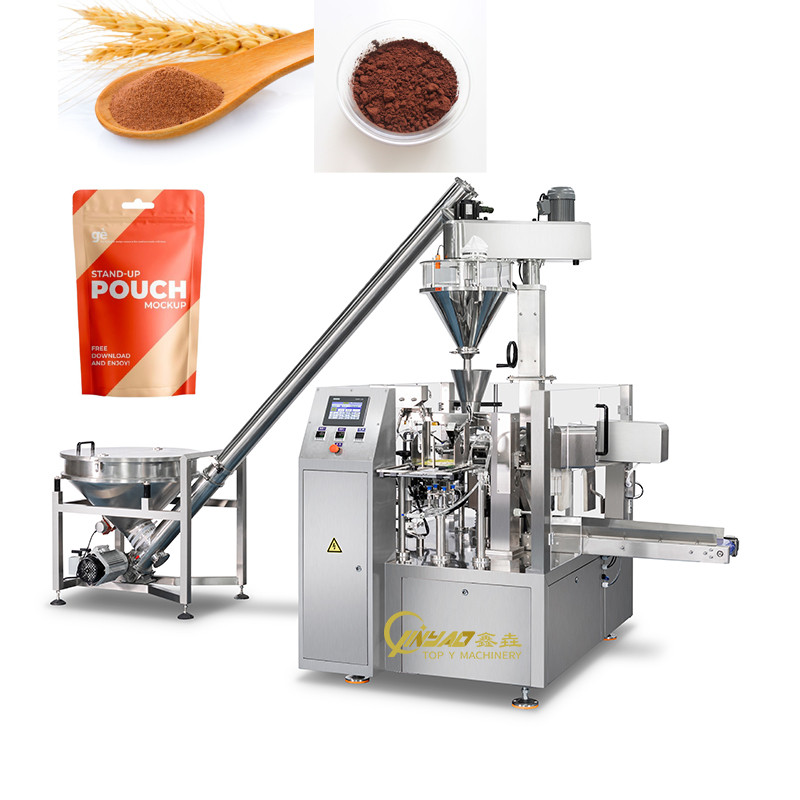
Product Feeding and Storage: The process begins when bulk powder is loaded into a large, funnel-shaped container on top of the machine called the hopper. For powders that have a tendency to clump or bridge (stick together), the hopper is often equipped with an agitator—a slowly rotating blade that keeps the product loose and ensures a consistent, steady flow down to the filling mechanism.
Container Handling and Positioning: While the powder is being prepared, the empty containers—be they bottles, jars, or pouches—are moved into position. In an automatic line, a conveyor system transports the containers and an indexing mechanism (like a star wheel or timing screw) precisely aligns each one directly under the filling nozzle. This precise positioning is critical to prevent spillage and ensure a clean fill.
Dosing and Filling: This is the core of the operation. For an auger filler, a precisely engineered screw inside a tube begins to rotate. This rotation draws powder down from the hopper and dispenses it through a funnel into the container below. The amount of powder dispensed is controlled with extreme precision by the number of rotations of the auger, which is managed by a servo motor. The agitator blade in the hopper often rotates in the opposite direction of the auger to break up clumps and feed the auger flights uniformly.
Sealing and Discharging: Once the container is filled to the correct level, it is moved away from the filling station. In a fully automatic line, it proceeds immediately to a sealing station. For pouches, this involves heat-sealing the top opening to create an airtight closure. For bottles and jars, it could involve a capping machine that applies and tightens a screw cap, followed by an induction sealer that bonds a foil liner to the rim of the container.
Final Output: After being sealed, the finished product is discharged from the machine, often onto another conveyor belt that takes it to a labeling station, a case packer, or a collection table for manual boxing.
This workflow, from hopper to sealed container, is designed to be a seamless and continuous loop. Each component, from the agitator in the hopper to the servo-driven auger, plays a vital role in transforming raw powder into a finished good with the consistency, accuracy, and quality that modern consumers demand.
Beyond the Core Function: Integrating Auxiliary Systems with Your Powder Packaging Machine for Optimal Output
While a powder packaging machine is a powerful standalone unit, its true potential is realized when it becomes the centerpiece of an integrated packaging line. To achieve maximum throughput, quality assurance, and end-to-end automation, businesses can incorporate a range of auxiliary systems that work in concert with the primary filler. These additions transform a simple filling station into a comprehensive, intelligent production line.
Integrating these systems creates a cohesive workflow that minimizes manual intervention, reduces the risk of error, and provides valuable data for process optimization. Here are some of the most critical auxiliary systems to consider:
Infeed and Product Transfer Systems: Before the powder can be packaged, it needs to be delivered to the filler's hopper efficiently and safely.
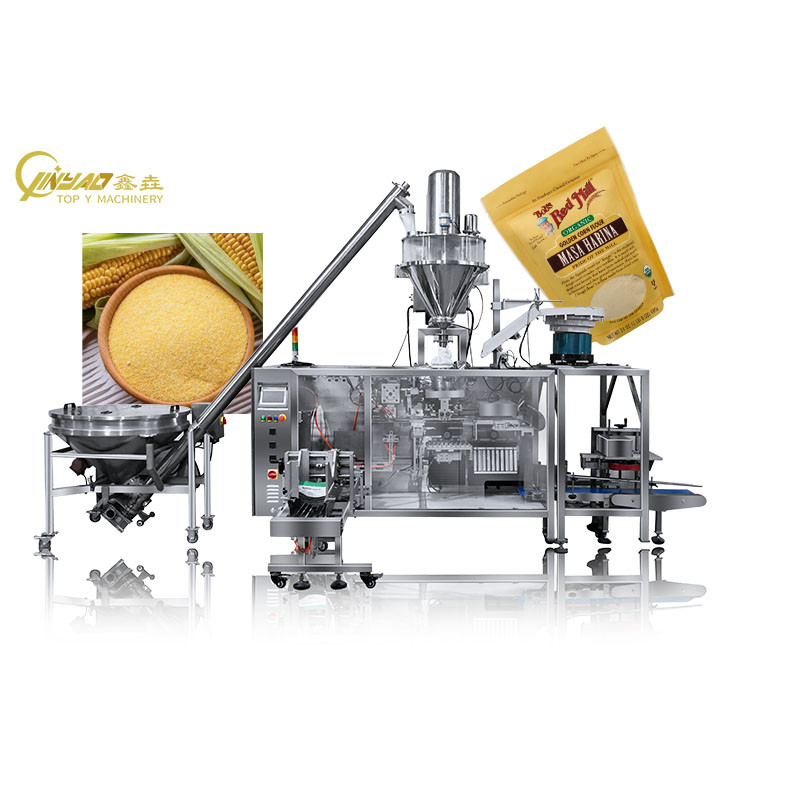
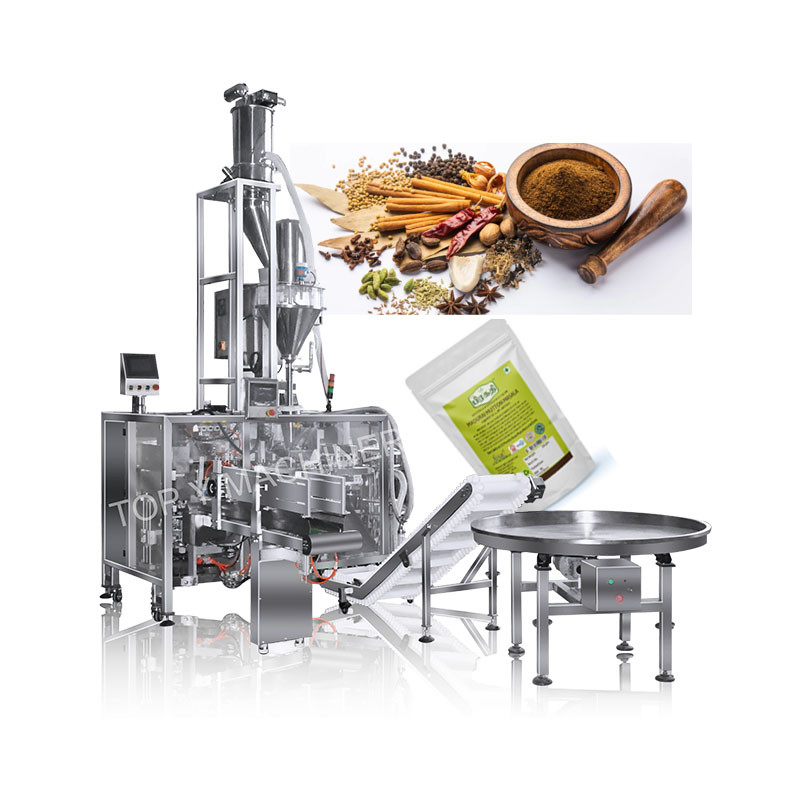
- Screw Conveyors (Augers): An inclined screw conveyor is a common and effective method for transferring bulk powder from a storage container on the floor up to the machine's hopper, ensuring a continuous supply.
- Vacuum Conveyors: For delicate or hazardous powders, a closed-loop vacuum conveying system offers a dust-free and hygienic transfer method, minimizing product loss and operator exposure.
Checkweighers: A checkweigher is a crucial quality control device placed on the line immediately after the filling station. It weighs each filled container in motion and compares it to a preset tolerance range. Any package that is over or under the target weight is automatically removed from the line by a rejection device (such as a pneumatic pusher or air-jet). Integrating a checkweigher provides two key benefits:
- Ensures Compliance: It guarantees that every product reaching the consumer meets the net weight stated on the label.
- Provides Feedback Control: Many modern systems feature feedback communication. If the checkweigher detects a consistent trend of over- or under-filling, it can send a signal back to the auger filler, which then automatically adjusts its own settings to correct the fill amount in real time, minimizing waste.
Metal Detectors and X-Ray Inspection: Safety is paramount, especially in the food and pharmaceutical industries. A metal detector is integrated into the conveyor line to scan every package for ferrous and non-ferrous metal contaminants. If any metal is detected, the system immediately rejects the package. X-ray inspection systems can go a step further, detecting not only metal but also other foreign bodies like glass, dense plastic, and bone.
Capping and Sealing Machines: For bottles and jars, automatic capping machines apply and tighten lids at high speed. Following this, an induction sealer can be used to create a hermetic foil seal on the container's rim, providing tamper evidence and protecting the product from moisture and oxygen.
Labeling and Printing Equipment: After filling and sealing, an automatic labeling machine applies pressure-sensitive labels to the products. Integrated thermal transfer or inkjet printers can print variable data onto each label or container, such as lot numbers, expiration dates, and barcodes, which is essential for traceability.
End-of-Line Automation:
- Case Erectors: Automatically form flat cardboard boxes into cases ready for packing.
- Case Packers: Automatically load the finished products into the erected cases.
- Palletizers: Robotically stack the filled cases onto a pallet in a predetermined pattern, preparing them for shipment.
By strategically combining these auxiliary systems, a business can create a fully automated line that handles everything from bulk powder infeed to the final palletized product, achieving remarkable efficiency, safety, and consistency.
Unlocking Potential: The Strategic Advantages of a High-Quality Powder Packaging Machine
Investing in a high-quality powder packaging machine is more than just an equipment upgrade; it's a strategic move that unlocks significant operational advantages. In today's competitive market, the ability to pack products accurately, efficiently, and flexibly can be a powerful differentiator. A state-of-the-art machine addresses core manufacturing challenges—such as material waste, inconsistent quality, and production bottlenecks—transforming them into opportunities for growth and increased profitability. This section will explore the tangible benefits these machines deliver, from achieving pinpoint accuracy and scalability to boosting overall productivity.
Achieving Unparalleled Accuracy and Minimizing Material Waste with an Advanced Powder Packaging Machine
In the world of powder packaging, accuracy is not just a feature—it is the cornerstone of profitability and quality. Every gram of product that is unintentionally added to a package, known as "giveaway," is a direct loss of revenue. For high-volume production, these small overfills accumulate into substantial financial losses over time. An advanced powder packaging machine is engineered specifically to combat this issue, delivering unparalleled accuracy that translates directly to savings and reduced waste.
The key to this precision lies in sophisticated technology:
Servo-Driven Auger Systems: Unlike older clutch-and-brake systems, modern fillers utilize high-precision servo motors to control the rotation of the auger. Servo technology allows for exact control over the auger's speed, acceleration, and the precise number of rotations, translating to highly consistent and repeatable fill volumes. This ability to make micro-adjustments ensures that the amount of powder dispensed is exact every single time.
Fill-by-Weight Technology and Feedback Loops: The most advanced systems integrate the filler with a downstream checkweigher to create a closed-loop feedback system. Here’s how it works: the machine fills a container, which is then immediately weighed. The checkweigher communicates this real-time weight data back to the filler's control system. If it detects a trend towards over- or under-filling (perhaps due to slight variations in powder density), it signals the servo motor to automatically adjust the auger's revolutions for the subsequent fills. This self-correcting mechanism ensures the highest possible accuracy, often achieving tolerances of less than 1%.
Optimized Tooling and Agitation: Accuracy is also dependent on how the powder behaves in the hopper. Advanced machines use specific auger and funnel tooling designed for the flow characteristics of a particular powder. An agitator blade inside the hopper keeps the powder from bridging or compacting, ensuring a consistent density as it enters the auger flights. This guarantees that each rotation of the auger dispenses the same amount of product.
By minimizing product giveaway, a high-accuracy packaging machine offers significant benefits:
- Drastic Cost Reduction: Reducing overfill, even by a small percentage, leads to substantial savings in raw material costs, directly boosting profit margins.
- Environmental Sustainability: Minimizing material waste is not just good for business; it's good for the environment. Using less raw material and creating less product waste contributes to more sustainable manufacturing practices.
- Improved Product Consistency: Pinpoint accuracy ensures that every customer receives a package with the exact amount of product advertised, enhancing brand trust and satisfaction.
Ultimately, investing in a machine with advanced accuracy features is a direct investment in efficiency and profitability. It turns the common problem of material waste into a source of significant, measurable savings.
Empowering Growth: The Scalability and Flexibility a Modern Powder Packaging Machine Offers Your Operations
In today's fast-moving consumer goods market, business growth is often unpredictable. A product line can expand, consumer preferences can shift, and production demands can surge. A modern powder packaging machine is not just a tool for today's needs but a strategic asset for tomorrow's growth, offering critical scalability and flexibility. This adaptability allows a business to pivot quickly, seize new opportunities, and scale its operations without requiring a complete overhaul of its production line.
Scalability: Growing with Your Business
Scalability is the ability to increase production capacity seamlessly as demand grows. Modern packaging machines, particularly those with a modular design, are built with this principle in mind.
Modular Design: Modular machines are constructed from separate, interchangeable components or "modules," each performing a specific task (e.g., filling, capping, labeling). This "building block" approach allows a business to start with a foundational setup, such as a semi-automatic filler, and then add more modules as needed. For example, as production volume increases, you can integrate an automatic bottle unscrambler, a capping machine, and a wrap-around labeler to evolve your semi-automatic station into a fully automated line. This phased investment approach makes automation accessible and manageable.
From Single to Multi-Lane: For high-volume products like stick packs or sachets, scalability can mean moving from a single-lane machine to a multi-lane system. A 10-lane machine, for instance, can produce 90,000 or more stick packs per shift, a massive leap in throughput that supports national distribution and high-demand retail partnerships.
Flexibility: Adapting to Market Changes
Flexibility is the machine's ability to handle different products, package types, and sizes with minimal downtime. In a market that craves variety and innovation, this is a crucial competitive advantage.
Quick and Easy Changeovers: The time it takes to switch from one product or package format to another is a critical metric. Modern machines are designed for quick changeovers, often featuring tool-less adjustments, quick-release mechanisms for parts like augers and funnels, and advanced control systems that can store and recall hundreds of product recipes. An operator can simply select a new recipe from a touchscreen, and the machine will automatically adjust fill parameters, speeds, and other settings. This minimizes downtime and allows for efficient production of multiple SKUs on the same day.
Handling a Variety of Powders and Containers: A truly flexible machine can handle a wide range of powder characteristics, from free-flowing granules to fine, non-free-flowing powders, simply by changing the auger tooling. They can also be adjusted to accommodate different container shapes and sizes—from small jars and bottles to large stand-up pouches and canisters. For example, a single machine might be used to pack spices in small jars in the morning and protein powder in large gusseted bags in the afternoon.
The ability to scale production and flexibly adapt to new products is what empowers sustainable growth. A modern powder packaging machine provides this agility, ensuring that your operations are not just efficient for today's market but are also ready to meet the challenges and opportunities of the future.
Maximizing Throughput: Boosting Productivity and Ensuring Consistent Product Quality with Your Powder Packaging Machine
In manufacturing, throughput—the rate at which products are processed and packaged—is a primary driver of profitability. Maximizing this rate while simultaneously guaranteeing consistent product quality is the ultimate goal of any packaging operation. A modern powder packaging machine is engineered to achieve both, transforming the production line into a high-speed, reliable, and efficient powerhouse.
Boosting Productivity Through Automation and Speed
The most direct way a powder packaging machine enhances productivity is by automating repetitive, time-consuming tasks. Manual packaging is inherently slow and subject to human limitations like fatigue and inconsistency. In contrast, an automated machine operates at a continuous, high speed, creating a steady and predictable workflow.
- High-Speed Operation: Fully automatic packaging machines are built for speed, capable of packaging anywhere from 40 to 120 units per minute, and sometimes even faster, depending on the application. This dramatic increase in output allows companies to meet high market demand, reduce order fulfillment times, and take on larger contracts.
- Reduced Downtime: Modern machines are designed for reliability and often include features that minimize stoppages. Quick-changeover capabilities for different products and package sizes reduce the time machines sit idle. Well-designed systems also reduce the likelihood of bottlenecks, which can slow down the entire production line.
- Lower Labor Costs: Automation significantly reduces the reliance on manual labor for repetitive packing tasks. This allows businesses to reallocate their workforce to more value-added roles, such as quality assurance, machine supervision, and maintenance. Studies have shown that packaging automation can reduce labor costs by 20-30% or more.
Ensuring Consistent Product Quality at High Speeds
Increasing speed is only beneficial if product quality is maintained or improved. High-quality packaging machines ensure that every single package meets the same exacting standards, regardless of production speed.
- Elimination of Human Error: Automated systems perform the same task with the same precision every time. This eliminates the variability that comes with manual work, where factors like fatigue can lead to inconsistent fill weights, crooked labels, or improper seals.
- Precision Filling and Sealing: As discussed, technologies like servo-driven augers and integrated checkweighers ensure that every package contains the correct amount of product. Likewise, automated sealing mechanisms apply consistent heat and pressure, creating a perfect, hermetic seal on every bag or container. This is crucial for protecting the product from moisture and contaminants and extending its shelf life.
- Professional Presentation: Consistency translates to a more professional appearance on the retail shelf. Uniformly filled, sealed, and labeled products project an image of quality and reliability, which builds consumer trust and strengthens brand reputation.
By combining high-speed operation with unparalleled precision, a modern powder packaging machine boosts throughput and ensures that the quality of the final product is consistently high. This dual advantage not only increases profitability by producing more units in less time but also protects and enhances the brand's long-term value.
Broadening Horizons: The Versatile Applications of the Powder Packaging Machine Across Industries
The utility of the powder packaging machine extends far beyond a single industry. Its ability to accurately and hygienically handle a vast range of powdered and granular substances makes it an indispensable asset across numerous sectors. From life-saving pharmaceuticals to everyday food staples, these machines are the silent workhorses that ensure products are delivered safely, consistently, and efficiently to consumers worldwide. This section explores the diverse applications of powder packaging machines, highlighting their critical contributions in the highly regulated pharmaceutical field as well as their widespread use in the food, beverage, chemical, and other industries.