The Ultimate Doypack Packing Machine Buying Guide: What You Need to Know Before You Invest
As a professional with years in the packaging industry, I understand the significant challenges businesses face when selecting the right equipment. The Doypack, also known as a stand-up pouch, has fundamentally transformed product presentation and preservation. Consequently, a Doypack packing machine is a critical investment for countless brands aiming for efficiency and market appeal. This ultimate Doypack packing machine buying guide will navigate you through every essential detail, ensuring you choose the perfect machine to drive your operational success.
Key Takeaways
- Understand the Pouch First: A deep understanding of Doypack anatomy, materials, and formats is fundamental. The pouch type dictates the machine specifications.
- Match Machine to Product: The filling system is paramount. Whether you're packaging powders, liquids, granules, or solids, you must select a machine with the appropriate dosing technology (e.g., auger, piston, or multi-head weigher).
- Prioritize Quality & Compliance: Seal integrity, fill accuracy, and adherence to regulatory standards like FDA and cGMP are non-negotiable for product safety and brand reputation.
- Balance Cost and Future Growth: An investment in a Doypack machine involves more than the initial price. Consider lead times, installation, maintenance, and the machine's ability to scale with your business.
- Sustainability Matters: Modern machines that can handle recyclable or mono-material films not only align with consumer-driven eco-friendly trends but can also future-proof your investment.
Understanding Doypack Pouches: A Foundation for Your Doypack Packing Machine Buying Guide
Before diving into the machinery, it's crucial to understand the packaging itself. The term "Doypack" refers to a specific type of stand-up pouch, a name derived from its French inventor, Louis Doyen, who patented the design in 1963. Today, it has become a globally recognized and highly versatile packaging solution.
The Anatomy and Advantages of Stand-Up Pouches
At its core, a Doypack is a flexible pouch made from laminated film layers. Its defining feature is a "W" shaped fold or gusset at the bottom, which allows it to stand upright on a shelf when filled. This self-standing capability gives it a powerful shelf presence, mimicking a rigid container while offering the benefits of flexible packaging.
Key Anatomical Features:
- Bottom Gusset: The U-shaped or K-seal gusset at the base is what enables the pouch to stand. The Doyen seal style is a U-shaped gusset best for lightweight products, while a K-seal provides more stability for heavier items.
- Multi-Layer Construction: Doypacks are rarely made from a single material. They are typically composed of multiple laminated layers, with each layer serving a specific purpose—such as providing structural integrity, barrier protection, or a printable surface.
- Convenience Features: To enhance the user experience, pouches can be equipped with various add-ons like resealable zippers, tear notches for easy opening, spouts for liquids, and hang holes for retail display.
The advantages of adopting stand-up pouches are numerous and impact everything from branding to logistics:
| Category | Advantage | Description |
|---|---|---|
| Marketing | Superior Branding & Shelf Impact | The large, flat front and back panels provide ample space for high-definition graphics, making products stand out on crowded shelves. |
| Logistics | Reduced Transportation & Storage Costs | Being lightweight and flexible, Doypacks consume significantly less space than rigid containers. You can fit 5 to 10 times more units on a truck, reducing freight costs and carbon footprint. |
| Product Protection | Excellent Barrier Properties | Multi-layer films provide a robust barrier against moisture, oxygen, UV light, and odor, extending product shelf life and preserving freshness. |
| Consumer | Enhanced Convenience | Features like resealable zippers and easy-pour spouts improve the end-user experience, encouraging repeat purchases. The packaging is lightweight and shatterproof. |
| Sustainability | Lower Environmental Footprint | Flexible packaging generally uses less material, energy, and water in its production compared to rigid alternatives. Many modern pouches are also designed to be recyclable. |
Choosing the Right Pouch Format and Materials
The choice of pouch format is directly linked to your product and brand identity. A clear pouch with a window can showcase the product itself, while an opaque foil pouch communicates premium quality and maximum protection.
Common Pouch Formats:
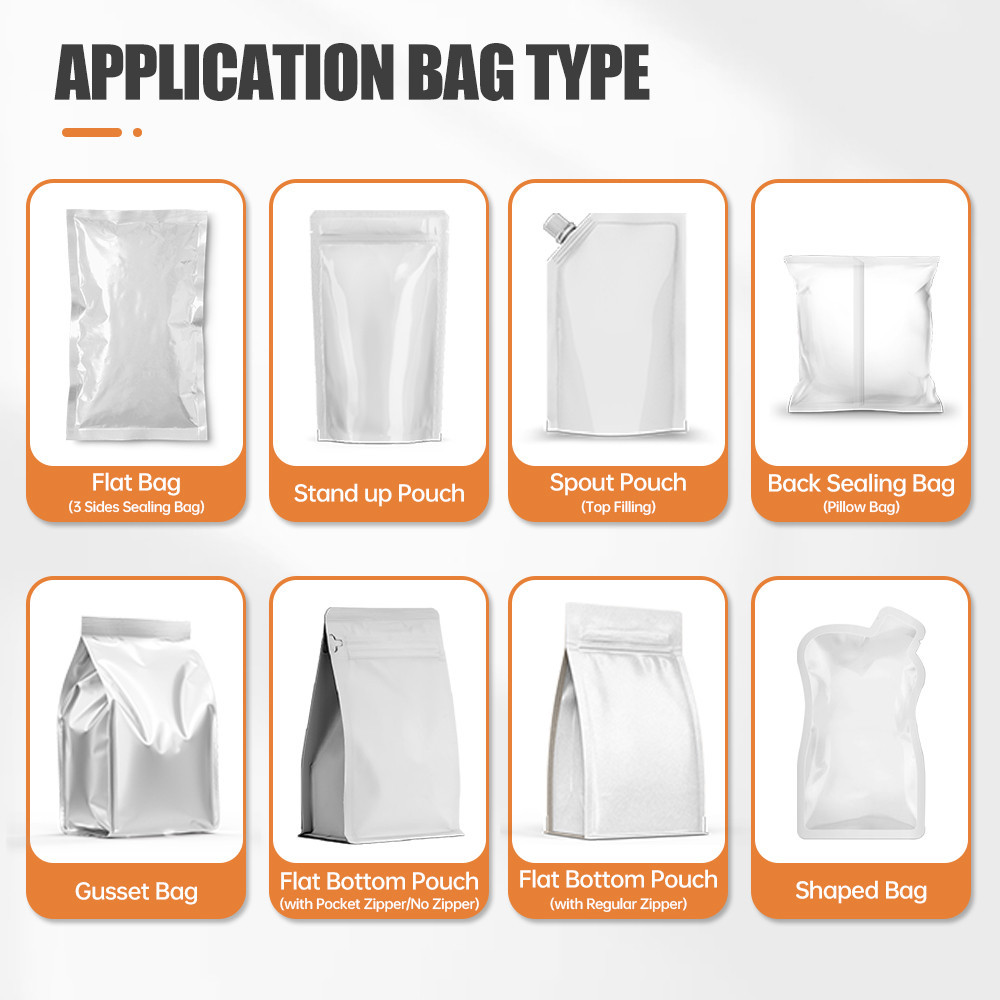
- Standard Doypack: The classic stand-up pouch with a zip closure, ideal for dry goods like snacks, coffee, and powders.
- Spouted Pouch: Features a built-in spout and cap, perfect for liquids and semi-liquids like juices, sauces, baby food, and industrial gels. This format offers a mess-free, controlled dispensing method.
- Flat-Bottom Pouch (Box Pouch): An evolution of the Doypack, this format has five flat, printable panels (front, back, bottom, and two side gussets), offering exceptional stability and branding real estate.
- Shaped Pouch: Custom die-cut pouches that take on unique shapes to attract attention and reinforce branding.
Material selection is a critical decision that impacts shelf life, cost, and sustainability.
Common Material Layers and Their Purpose:
- PET (Polyethylene Terephthalate): Often used as the outer layer for its strength, clarity, and excellent printability.
- Aluminum Foil (ALU): Provides the ultimate barrier against light, oxygen, and moisture, making it ideal for highly sensitive products.
- PE (Polyethylene) / LLDPE (Linear Low-Density Polyethylene): Typically used as the inner-most, food-contact layer. It is prized for its flexibility and heat-sealable properties.
- Kraft Paper: Used as an outer layer to give the product a natural, organic, or artisanal appearance. It is often laminated with a plastic inner layer for protection.
- EVOH (Ethylene Vinyl Alcohol): A high-barrier plastic layer often used in transparent pouches as a replacement for foil to block oxygen.
Recyclable and mono-material options, such as pouches made entirely of PE, are gaining traction as brands and consumers prioritize sustainability. Your choice of material will not only dictate the pouch's performance but also what kind of Doypack packing machine is required to handle and seal it effectively.
Deciphering the Mechanics: How a Doypack Packing Machine Works
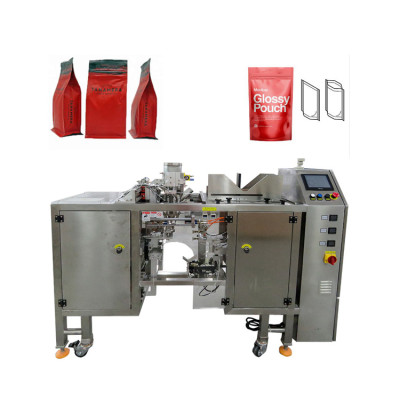
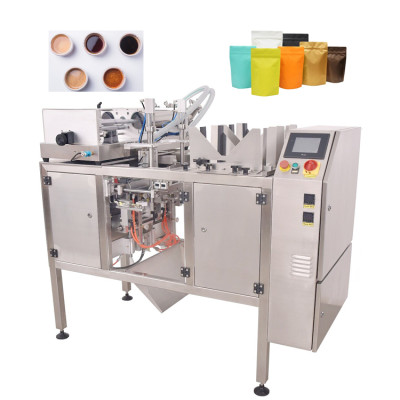
A Doypack packing machine is a sophisticated piece of automated equipment designed to fill and seal stand-up pouches with speed and precision. While designs vary, most machines for premade pouches—the most common type for high-quality presentation—follow a similar operational sequence, often arranged on a rotary or linear system with multiple stations.
From Pouch Picking to Perfect Sealing
The journey of a single pouch through the machine is a marvel of mechanical and electrical engineering. The most common configuration is a rotary machine, where grippers hold a pouch and carry it in a circle, stopping at 6 to 10 specialized stations. Here is a breakdown of that typical 8-station process:
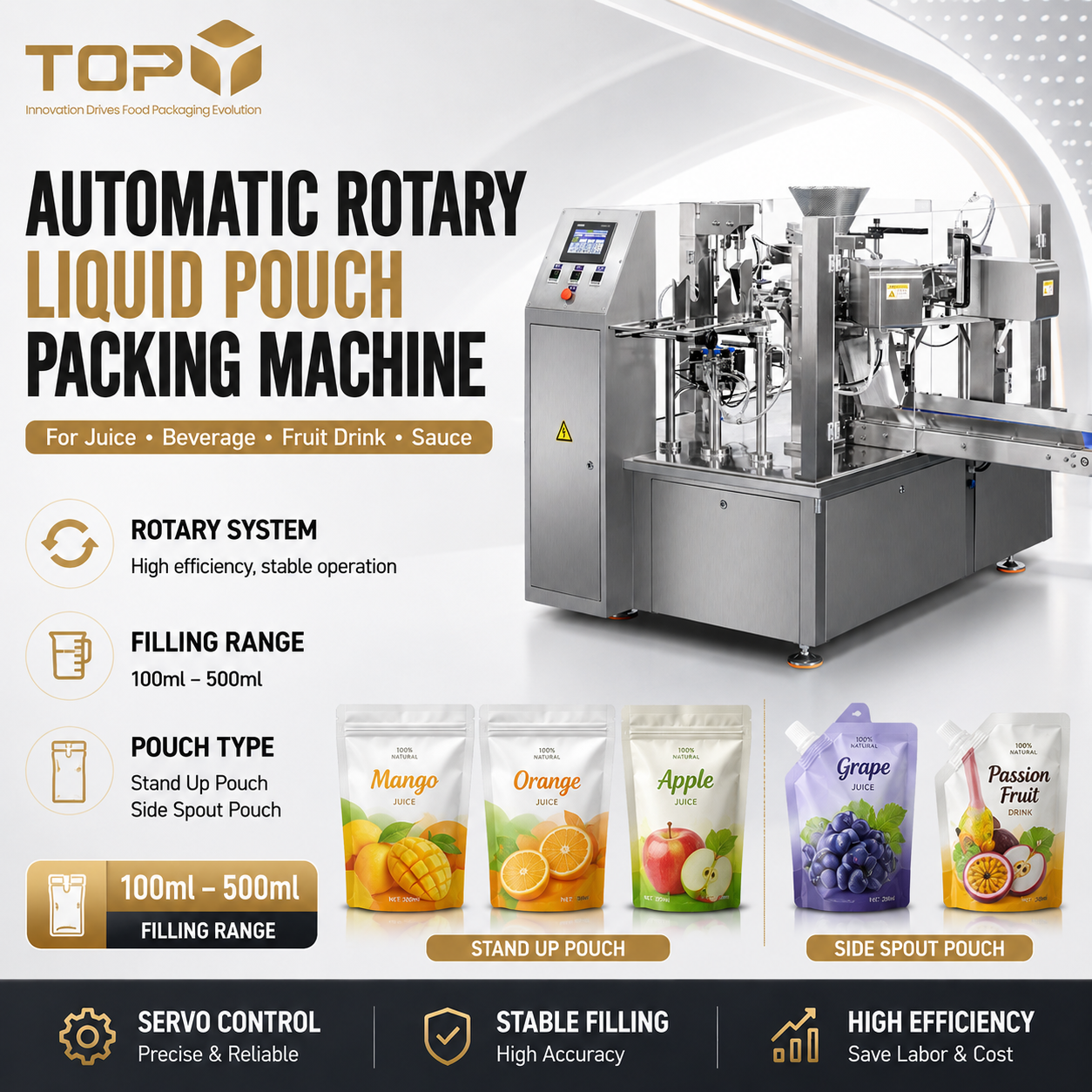
Station 1: Pouch Loading & Pickup: The process starts with a magazine loaded with a stack of empty, premade pouches. A robotic arm with vacuum suction cups picks up a single pouch and securely transfers it to a set of grippers that will hold it throughout its journey.
Station 2: Printing & Date Coding: As the pouch moves to the next station, an integrated printer (often thermal transfer or inkjet) applies essential information like expiration dates, batch numbers, or barcodes.
Station 3: Pouch & Zipper Opening: This is a critical stage. A sensor detects the pouch's presence. Then, a pair of vacuum suction cups pulls the top of the pouch apart, while mechanical jaws may grip the bottom to hold it steady. For zippered pouches, a special mechanism engages and opens the zipper. a jet of clean air is often blown into the pouch to ensure it is fully open and ready for filling.
Station 4: Product Filling: The open pouch is positioned precisely under the dosing system. The type of filler used here depends entirely on the product. A multi-head weigher might drop a precise weight of snacks, an auger filler dispenses powder, or a piston pump doses a specific volume of liquid. To help the product settle, a "pouch shaker" may gently vibrate the pouch.
Station 5: Optional settling, second fill, or gas flush: This station adds versatility. It can be used to settle the product further, add a second ingredient (like a sauce sachet), or perform a nitrogen gas flush to displace oxygen and extend shelf life.
Station 6: Sealing Preparation: Before sealing, wire brushes or air jets may clean the seal area of any product dust or residue that could compromise the seal. Deflector plates then guide the pouch top into the sealing station.
Station 7: Heat Sealing: The top of the pouch enters the sealing station where two heated bars clamp down with precise pressure and temperature for a specific duration (dwell time). This process fuses the inner sealant layers of the film, creating a strong, hermetic seal.
Station 8: Seal Cooling & Discharge: Immediately after sealing, a pair of cooling bars presses against the hot seal to set the plastic quickly, ensuring maximum strength and a flat, clean appearance. The grippers then release the finished, sealed pouch, which is discharged onto a takeaway conveyor for downstream processes like checkweighing, metal detection, and case packing.
Critical Components for Efficient Operation
The reliability and efficiency of a Doypack machine hinge on the quality of its core components. When evaluating a machine, pay close attention to these key systems:
- Pouch Feeding & Opening System: A robust system with reliable vacuum cups and sensors is crucial to prevent pouch-picking errors, which are a common cause of downtime. The system must handle your specific pouch material and size without fail.
- Dosing/Filling System: This is the heart of the machine. The accuracy of the filler (e.g., auger, pump, weigher) directly impacts product giveaway and profitability. The chosen system must be appropriate for your product's specific characteristics—viscosity, flowability, and particle size.
- Sealing Jaws & Temperature Control: The sealing system must provide consistent temperature and pressure to create a perfect seal every time. PID temperature controllers are essential for maintaining precise heat. For materials like recyclable PE films, dual-pulse sealing or other advanced techniques may be required to achieve a strong seal without melting or distorting the film.
- Control System (PLC & HMI): A modern machine is run by a Programmable Logic Controller (PLC). Paired with a user-friendly Human-Machine Interface (HMI) or touchscreen, this system allows operators to easily set parameters, store recipes for different products and pouches, and troubleshoot issues.
- Sensors and Detectors: A network of sensors is integrated throughout the machine to ensure smooth operation. These include "no pouch, no fill" sensors to prevent product spillage, pouch position detectors, and seal inspection systems to maintain quality control.
Understanding this mechanical symphony is the first step toward appreciating the difference between an entry-level machine and a high-performance system built for demanding production environments.
Tailoring Your Choice: Product-Specific Needs in Your Doypack Packing Machine Buying Guide
Not all products are created equal, and neither are Doypack machines. The single most important factor in selecting the right machine is the nature of your product. Its physical state—be it liquid, powder, or solid—and its chemical properties will dictate the entire packaging line's configuration, particularly the filling system.
Handling Diverse Product Types and Viscosities
One machine cannot proficiently handle liquids and powders without significant modification because the dosing technologies are fundamentally different. Choosing the right filler is paramount for accuracy, speed, and preventing product damage or waste.
Here’s a breakdown of common filler types and their ideal applications:
| Product Category | Recommended Filler Type | How It Works & Best For |
|---|---|---|
| Free-Flowing Powders & Granules | Auger Filler | A rotating screw (auger) inside a hopper dispenses a precise volume of product per revolution. It is the ideal choice for fine powders like flour, spices, coffee grounds, and protein mix that need to be handled in a closed system to control dust. |
| Non-Free-Flowing Granules & Solids | Multi-Head Weigher | The product is fed onto multiple weighing buckets. A computer calculates the combination of buckets that equals the target weight and releases their contents into the pouch. This is perfect for high-speed, high-accuracy applications involving snacks, nuts, candy, frozen foods, and other irregular-shaped items. |
| Liquids & Semi-Liquids (Pastes) | Piston Filler | A piston draws a precise volume of product from a hopper into a cylinder and then pushes it out into the pouch. This volumetric method is highly accurate and gentle, making it perfect for a wide range of viscosities, from thin juices and oils to thick sauces, creams, and gels. |
| Low-Viscosity (Thin) Liquids | Liquid Pump Filler | These fillers use various pump technologies (like lobe, gear, or peristaltic pumps) to move product. They are excellent for free-flowing liquids and can be calibrated for high accuracy. They are often used for beverages, liquid supplements, and industrial chemicals. |
| Small Piece-Count Items | Cup Filler / Volumetric Cup Filler | A simple and cost-effective method where product flows into pre-sized cups that then dump their contents into the pouch. It is suitable for small, consistent items like beans, rice, and small candies where exact weight is less critical than volume. |
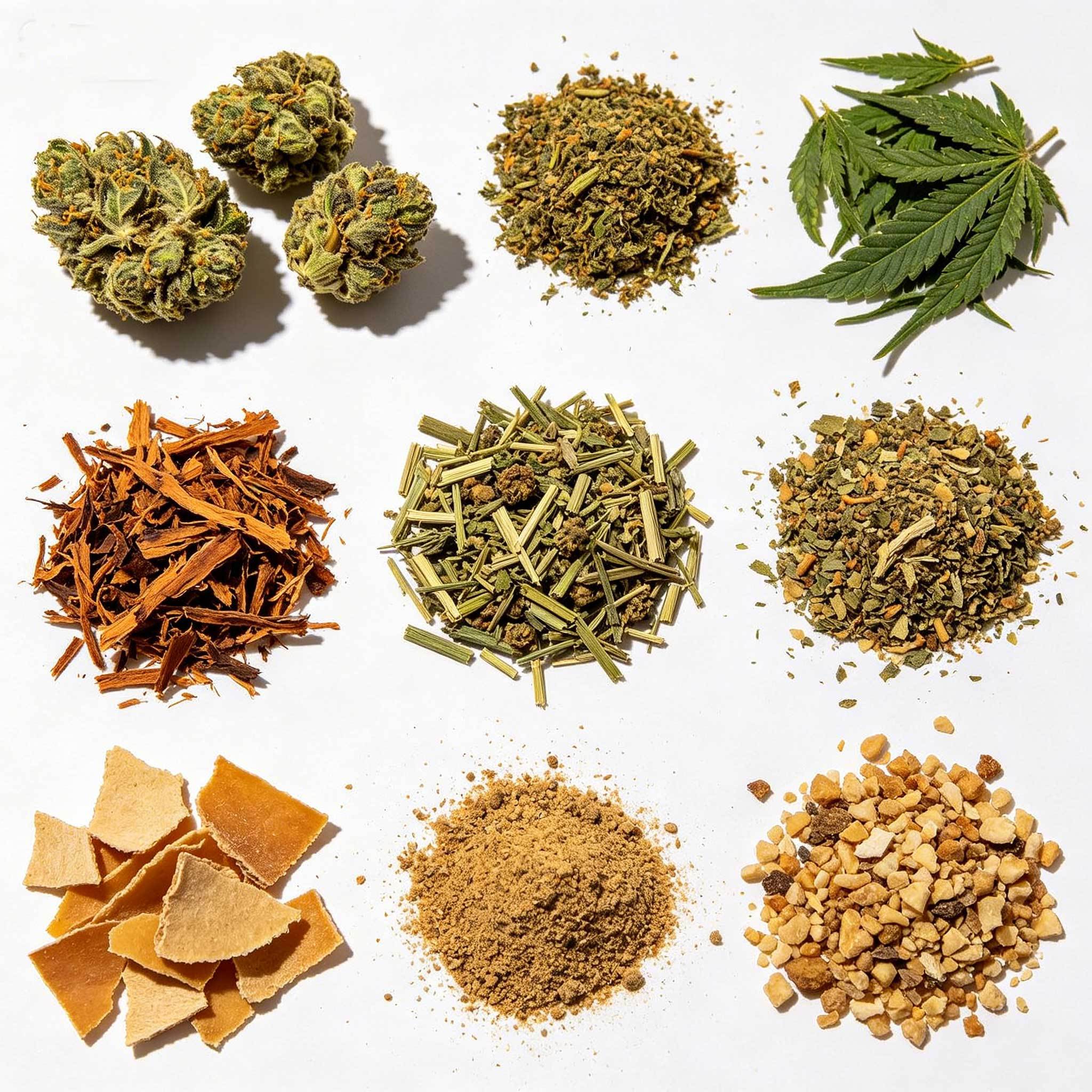
It's crucial to profile your product before you even speak to a machine vendor. Know its viscosity, bulk density, particle size, and whether it's free-flowing or sticky. This data will be the foundation of your machine specification.
Ensuring Product Integrity: Barriers, Shelf Life, and Environmental Resilience
Product integrity is the ability of the package to protect its contents from degradation until it reaches the consumer. This is a function of both the pouch material and the packaging process.
Barrier Properties and Shelf Life: The shelf life of a food product is largely determined by its exposure to external factors. The primary culprits of spoilage are oxygen, moisture, and light.
- Oxygen Barrier: Exposure to oxygen causes oxidation, which leads to rancidity in fats, loss of flavor, discoloration, and depletion of nutritional value. Packaging materials with high oxygen barriers, like those containing aluminum foil (ALU), metallized PET (MPET), or Ethylene Vinyl Alcohol (EVOH), are essential for protecting oxygen-sensitive products.
- Moisture Barrier: Uncontrolled moisture can ruin a product. It can make dry, crispy items like crackers and chips soggy, or it can cause powders to clump and harden. Conversely, products that need to retain moisture, like cured meats, can dry out. Effective moisture barriers are critical for maintaining texture and preventing microbial growth.
- Light Barrier: UV light can degrade vitamins, fade colors, and alter the chemical composition of many products. Opaque materials such as aluminum foil or printed films provide the best protection against light.
Environmental Resilience During Storage and Shipping: Beyond the material itself, the integrity of the completed package is vital. The product must survive the rigors of storage and transportation in varying conditions.
- Temperature: Food storage life is significantly shortened in warm environments. Ideal storage temperatures are generally below 25°C (77°F), with frequent temperature fluctuations being particularly damaging. Your packaging must withstand these potential changes without compromising its seal.
- Relative Humidity: High humidity can cause moisture to permeate the packaging, especially if the material's barrier properties are insufficient. For dry products, storage in high humidity environments can lead to spoilage.
- Physical Stress: The package must be durable enough to resist punctures, flex cracking, and abrasions during handling and transport. The strength of the pouch film and the quality of the seals are critical. Testing methods like burst tests and drop tests are often used to validate package durability.
Ultimately, ensuring product integrity is a shared responsibility between the pouch manufacturer, who creates the high-barrier structure, and the packing machine, which must create a perfect, hermetic seal to lock in that protection.
Operational Excellence: Quality Control and Sustainability in Your Doypack Packing Machine Buying Guide
Investing in a Doypack packing machine is not just about speed; it's about achieving consistent, high-quality results while aligning with modern consumer values. Operational excellence rests on two pillars: stringent quality control to protect your product and brand, and a commitment to sustainability to future-proof your business.
Achieving Optimal Filling and Seal Integrity
Two of the most critical aspects of packaging quality are fill accuracy and seal integrity. Failures in these areas can lead to product giveaway, customer complaints, regulatory issues, and ultimately, a damaged brand reputation.
Best Practices for Filling Accuracy: Fill accuracy ensures that every pouch contains the correct amount of product, preventing overfill (which wastes money) and underfill (which disappoints customers).
- Regular Calibration: The dosing system must be calibrated regularly to maintain accuracy. For auger fillers, this means verifying the volume per revolution; for piston fillers, it's checking the cylinder volume; and for weighers, it's using certified weights to test the load cells.
- Controlling Product Variables: Inconsistent product flow is a major cause of inaccurate fills. For powders, this might mean using agitators in the hopper to prevent bridging. For liquids, maintaining a consistent temperature can stabilize viscosity and improve flow.
- Automated Feedback Loops: Advanced systems incorporate checkweighers immediately after the filler. This device weighs each pouch and sends feedback to the filler, which can then automatically adjust its dispensing to correct any drift in real-time. This reduces giveaway to a minimum.
Ensuring Perfect Seal Integrity: A faulty seal renders all other quality measures moot. It can lead to leaks, contamination, and a drastically reduced shelf life.
- The Three Pillars of Heat Sealing: A perfect seal depends on a precise balance of Temperature, Pressure, and Dwell Time. These parameters must be fine-tuned for your specific pouch material. Too little heat or time results in a weak seal, while too much can burn or distort the film.
- Cleanliness is Non-Negotiable: Any contaminants in the seal area—such as product dust, oil, or moisture—will prevent the sealant layers from fusing properly, creating a weak spot or channel leak. Well-designed machines have features like dust extraction hoods or air jets to clean the seal area just before sealing.
- Routine Inspection and Maintenance: Sealing jaws must be kept clean and properly aligned. The silicone pressure pads and PTFE (Teflon) tape should be inspected for wear and replaced regularly to ensure even pressure and heat transfer.
- Advanced Inspection Systems: Modern quality control can include non-destructive, inline inspection systems like thermal imaging or airborne ultrasound. These systems scan every pouch in real-time to detect invisible defects like incomplete seals or micro-channels, flagging any faulty package for automatic rejection.
Embracing Sustainability and Future-Proofing Your Investment
Sustainability is no longer a niche concern; it is a core business imperative driven by consumer demand and tightening regulations. Your choice of packaging machinery plays a crucial role in your ability to meet these expectations. Reputable manufacturers, such as TOP Y MACHINERY, often provide comprehensive documentation and support to help you navigate these complexities.
Running Sustainable Materials: The single biggest trend in flexible packaging is the shift away from traditional multi-material laminates toward recyclable mono-material structures (e.g., all-PE or all-PP). However, these new films present challenges:
- Narrower Heat-Sealing Window: Mono-materials often have a smaller temperature range for creating a good seal. They can easily stretch, shrink, or burn if the sealing parameters are not precisely controlled.
- Greater Elasticity: These films can be more prone to stretching as they are pulled through the machine, which can affect tracking and sealing.
To address this, a future-proof machine should have advanced sealing technologies and superior tension control. Look for machines with:
- Precise temperature and pressure controls.
- Sophisticated web tension management systems.
- The ability to perform dual-pulse or other specialized sealing profiles suitable for delicate films.
Future-Proofing Your Machine Investment: Thinking ahead when purchasing a machine can save significant costs and headaches down the line. A future-proof investment is one that is flexible, scalable, and technologically current.
- Modularity and Scalability: Choose a machine with a modular design. This allows you to add or upgrade components later, such as adding a second filler, integrating a checkweigher, or expanding automation without replacing the entire line.
- Smart Technology Integration: Machines equipped with IoT capabilities and data-logging features are becoming standard. This allows for remote monitoring, predictive maintenance, and data analysis to optimize efficiency and reduce downtime.
- Focus on Total Cost of Ownership (TCO): Look beyond the initial purchase price. A cheaper machine might have higher energy consumption, require more frequent maintenance, or have a shorter lifespan. Consider long-term value, including energy use, spare parts availability, and upgrade potential.
By prioritizing quality control mechanisms and choosing a machine built to handle the next generation of sustainable materials, you are not just buying a piece of equipment—you are making a strategic investment in the long-term health and success of your brand.
Strategic Investment: Cost, Logistics, and Procurement for Your Doypack Packing Machine
Purchasing a Doypack packing machine is a major capital expenditure that requires careful financial planning and a clear understanding of the procurement process. Looking beyond the sticker price to evaluate the total cost of ownership (TCO) and partnering with a reliable supplier are fundamental to making a sound strategic investment.
Understanding MOQs, Lead Times, and Overall Costs
The initial price of a machine is only one part of the financial equation. A comprehensive budget must account for various direct and indirect costs that occur throughout the machine's lifecycle.
Minimum Order Quantity (MOQ): While Doypack machines are typically sold as single units (MOQ of 1), it's important to note that machine manufacturers often build to order rather than keeping a large inventory. For highly customized machines, some component suppliers may have their own MOQs that can influence the final cost and availability.
Lead Times: The time between placing an order and receiving your machine can vary significantly.
- Standard Machines: For more common configurations, lead times might be in the range of 6 to 10 weeks.
- Custom Machines: Highly customized or complex automated lines can have lead times from 8 to 16 weeks, and sometimes up to 20 weeks or more. This accounts for custom engineering, sourcing of specialized components (some of which can have 16-24 week lead times themselves), manufacturing, and factory acceptance testing.
It is crucial to engage with manufacturers early in your project planning to get an accurate timeline and avoid production delays.
Calculating the Total Cost of Ownership (TCO): TCO provides a more realistic financial picture than the purchase price alone. It encompasses all costs associated with the machine over its entire lifespan.
Here are the key cost factors to consider:
| Cost Category | Description | Examples |
|---|---|---|
| Capital Costs (CAPEX) | One-time, upfront expenses related to the purchase. | Machine purchase price, shipping and freight, installation, commissioning, initial operator training, permits, and validation testing. |
| Operational Costs (OPEX) | Recurring expenses required to run the machine. | Labor costs (operators), electricity and compressed air consumption, consumable materials (beyond the pouches themselves), and space allocation. |
| Maintenance & Support Costs | Ongoing expenses to keep the machine in optimal working order. | Scheduled preventive maintenance, spare and wear parts, unexpected repairs, and costs associated with downtime (lost production). |
A cheaper machine might seem attractive initially, but it could have higher operational and maintenance costs that make it more expensive in the long run. A TCO analysis helps you compare different options on a level playing field.
Regulatory Compliance and Supplier Support
Navigating the regulatory landscape and securing strong supplier support are critical for a successful and legally sound operation.
Regulatory Compliance: For food products sold in the United States, packaging equipment must adhere to strict standards to ensure consumer safety. Key regulations include:
- FDA 21 CFR Part 117 (Current Good Manufacturing Practice - cGMP): This is a primary standard from the U.S. Food and Drug Administration. For equipment, it mandates that machinery must be designed and made of materials that are adequately cleanable to protect against contamination. Food-contact surfaces must be corrosion-resistant, non-toxic, and made of materials proven not to leach harmful substances.
- Food Safety Modernization Act (FSMA): This act requires manufacturers to have preventive controls to minimize contamination risks. Your Doypack machine is a key part of this control plan.
- ANSI/PMMI B155.1: This is a safety standard from the American National Standards Institute and the Association for Packaging and Processing Technologies (PMMI) that covers safety requirements for packaging machinery to protect operators.
A globally compliant machine is often built to meet multiple standards, such as CE for European safety, and using FDA-approved materials for food contact parts. This represents the highest manufacturing standard and is often the best long-term investment.
The Importance of Supplier Support: Your relationship with your machine supplier shouldn't end upon delivery. Strong after-sales support is invaluable and a key indicator of a quality supplier. A great partner will provide:
- Expert Installation and Training: Ensuring your team knows how to operate and maintain the machine correctly from day one.
- Accessible Technical Support: Providing prompt assistance to troubleshoot issues and minimize downtime.
- Readily Available Spare Parts: Having a reliable supply chain for critical wear parts is essential for keeping your machine running.
- Long-Term Partnership: A good supplier acts as a consultant, helping you optimize your equipment and plan for future upgrades as your business grows.
Choosing a supplier with a long, established history in the packaging industry and the ability to customize solutions is a strong indicator of their reliability and expertise.
Conclusion
Navigating the complex world of Doypack packing machines demands a thorough evaluation of your product's unique characteristics, your operational requirements, sustainability objectives, and overall financial implications. From understanding the nuanced anatomy of a stand-up pouch to deciphering the intricate mechanics of filling and sealing, every detail plays a role in the success of your packaging line.
By diligently assessing the information laid out in this Doypack packing machine buying guide, you are now equipped with the knowledge to make a confident and informed decision. You can now engage with suppliers from a position of strength, asking the right questions and demanding solutions that truly fit your needs.
My final piece of advice: invest wisely. Secure a machine that not only meets your current demands but also aligns with your brand's future vision. By doing so, you are preparing for a future of efficient, appealing, and well-protected products that will delight your customers and drive your business forward. We encourage you to share this guide with your team and colleagues to foster a well-rounded discussion and ensure your next investment is your best one yet.
Frequently Asked Questions (FAQ)
What is the average cost of a Doypack packing machine? The cost varies widely based on automation level, speed, and features. A semi-automatic machine might start around a few thousand dollars, while a fully automatic, high-speed rotary machine with integrated weighers and quality control systems can cost well over $100,000. It's essential to get quotes based on your specific needs.
How fast can a Doypack machine operate? Speed is typically measured in pouches per minute (PPM). Semi-automatic machines might produce 10-20 PPM. Fully automatic rotary machines can range from 30 PPM for entry-level models to over 120 PPM for high-speed systems, depending on the product, fill volume, and pouch size.
Can one machine handle multiple pouch sizes and product types? Yes, but with limitations. Most machines can handle a range of pouch sizes, but this often requires purchasing changeover parts (like different grippers or forming sets) and involves downtime for adjustments. Switching between vastly different product types (e.g., from a powder to a liquid) is generally not feasible on a single machine, as it requires completely different filling systems.
What is the difference between a premade pouch machine and a form-fill-seal (FFS) machine? A premade pouch machine, as detailed in this guide, uses pouches that are already manufactured. It focuses on filling and sealing them. A form-fill-seal (FFS) machine creates the pouch from a roll of flat film, then fills and seals it in one continuous process. FFS machines can have a lower per-pouch material cost but offer less flexibility in pouch design and quality compared to premade pouches.
How much maintenance does a Doypack machine require? Regular preventive maintenance is crucial. This includes daily cleaning of product contact parts and sealing jaws, weekly inspection of wear parts like vacuum cups and belts, and periodic lubrication. A good supplier will provide a detailed maintenance schedule. Investing in a service plan can also help ensure longevity and optimal performance.