How Automation Reduces Packaging Labor Costs: Data Analysis
How Much Can Packaging Automation Actually Save on Labor?
Short answer: Automating a food packaging line typically cuts packaging labor costs by 50–70%, with most machinery investments paying back in 8–18 months. For a mid-size producer running two manual packing shifts (roughly 10–14 operators), that is usually $120,000–$250,000 in annual labor savings against a $60,000–$180,000 machine investment. The exact number depends on your wage rates, line speed, shift structure, and how much of the line — filling, sealing, conveying, quality check — you automate.
This data-driven guide walks through where packaging labor costs actually accumulate, the five measurable ways automation removes them, a side-by-side manual vs. automated cost comparison table, a full ROI calculation you can copy for your own factory, and why payback periods cluster in the 8–18 month range. All figures are benchmark ranges from food packaging operations and TOP Y MACHINERY's 20 years of line installations — use them as planning baselines, then recompute with your own numbers.
Where Packaging Labor Costs Really Go: The Data Behind Manual Packing
Before automation makes sense, it helps to see how much labor manual packaging actually consumes. Packaging is one of the most labor-intensive steps in food production because it bundles several repetitive tasks into one station:
- Feeding and loading: Operators place empty bags, pouches, or containers onto the line — typically 1–2 people per line.
- Weighing and dosing: Manual or semi-manual weighing adds 2–3 operators and slows throughput to 10–15 bags per minute per person.
- Sealing and closing: Hand sealing (heat sealers, clip sealers) is slow, inconsistent, and prone to rejects.
- Quality checks: Manual visual inspection catches fewer defects and adds headcount.
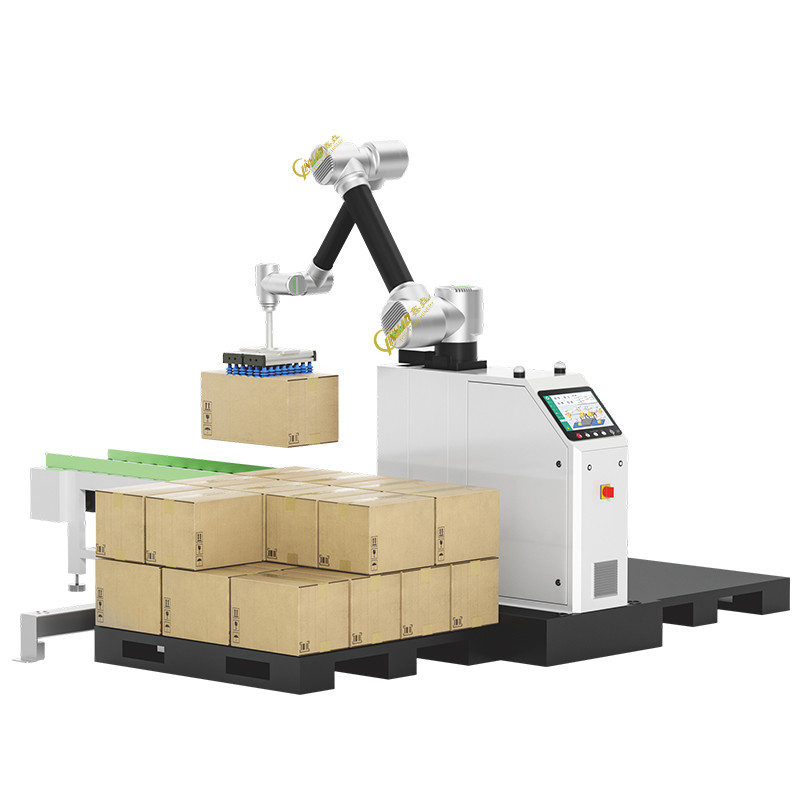
- Conveying and stacking: Moving bags from station to station and palletizing is pure, repetitive physical labor.
- Shift and overtime costs: Manual lines need staggered breaks, overtime for deadlines, and rework when output falls behind.
What the data shows: In food plants, direct packaging labor typically runs 15–25% of total production cost, and 3–4 of every 10 packaging employees are doing work a machine can do — feeding, weighing, sealing, inspecting, stacking. One medium-size producer with 12 packaging workers at $4–6/hour blended labor cost spends roughly $100,000–$170,000 per year on packaging labor alone. Two-thirds of that is replaceable by a fully automated line.
How Automation Cuts Labor: 5 Measured Levers
Automation does not just "replace people with machines" — it removes specific, measurable labor inputs. These five levers explain the 50–70% headline number:
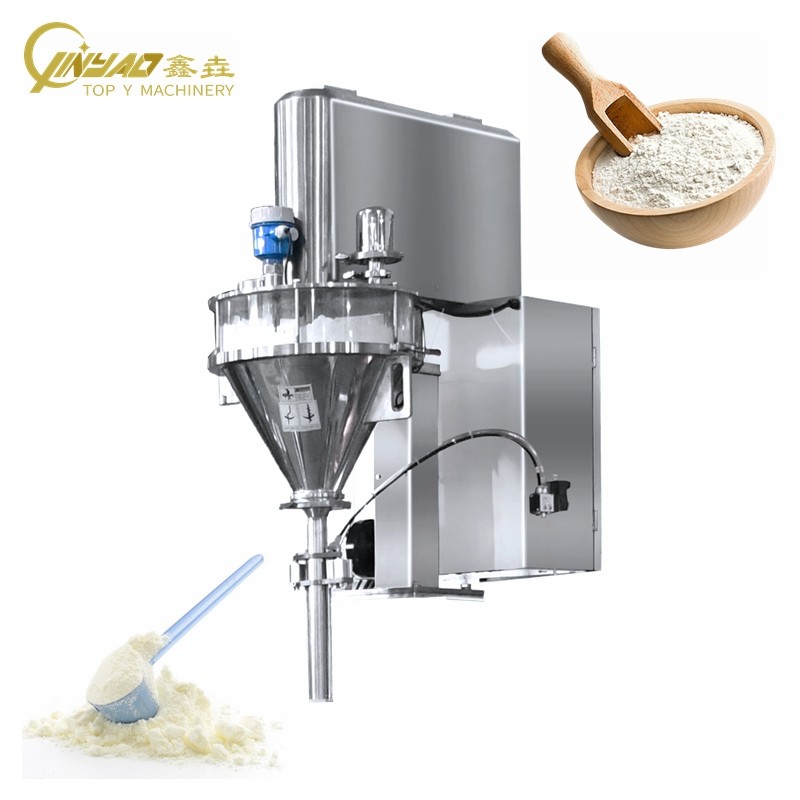
- Automatic weighing and filling (30–40% of savings): Multi-head weighers and auger fillers run 30–80 bags per minute with ±1–2 g accuracy, replacing 2–4 weighing operators and cutting giveaway waste at the same time.
- Automatic bag forming, sealing, and cutting (20–30%): VFFS and premade-bag machines form, fill, and seal in one pass, eliminating separate hand-sealing stations and their rejects.
- Vacuum conveying and material handling (10–15%): Vacuum loaders and conveyors move powder, granules, and bags automatically — no lifting, no carrying, no manual feeding.
- Inline QC: checkweighing and metal detection (5–10%): Machines inspect every bag at line speed; inspectors move from every-bag checks to exception handling.
- One-operator-per-line supervision (rest of savings): A modern line runs with 1–2 operators who load film and monitor the PLC touchscreen, instead of 6–8 hands-on workers.
Benchmark result: A 6-operator manual bagging station upgraded to one automatic VFFS line typically keeps 2 operators for supervision and quality, cutting the crew from 6 to 2 — a 67% labor reduction at the packaging step. Even a partial upgrade (add one weigher and one sealer) usually removes 30–40% of the headcount at that station.
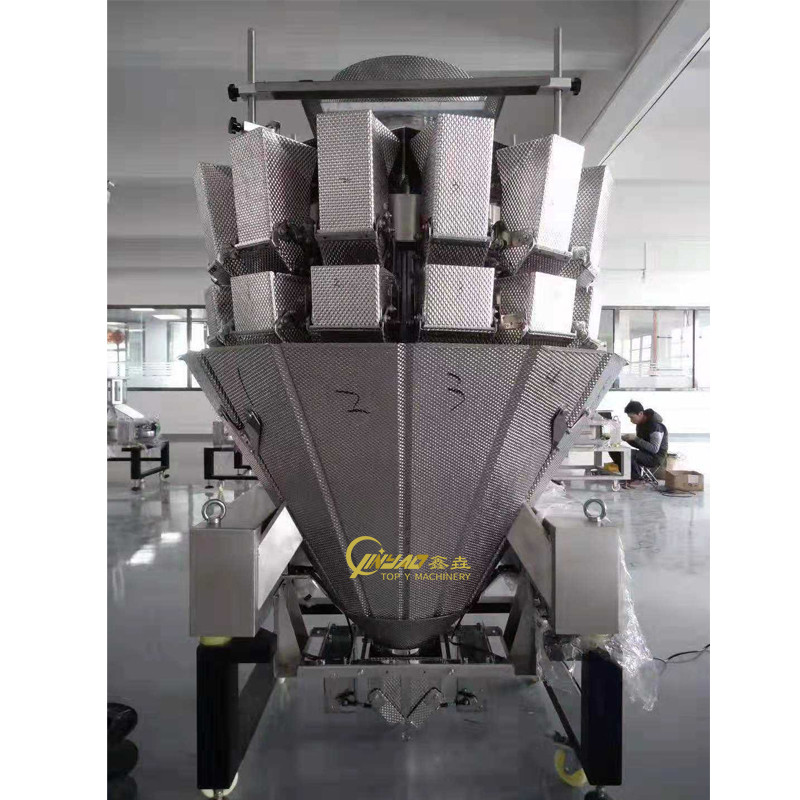
Manual vs Automated Packaging: Cost Comparison Table
The table below compares a typical manual bagging operation against an automated line for a mid-size food producer (assumes 250 working days/year, 2 shifts, blended labor cost $5/hour):
| Cost & Output Factor | Manual Packaging (6 operators/line) | Automated Line (2 operators/line) |
|---|---|---|
| Operators per line | 6 | 2 |
| Labor hours per day (2 shifts × 8h) | 96 h | 32 h |
| Annual labor cost (at $5/h blended) | $120,000 | $40,000 |
| Output (bags per minute) | 12–18 | 30–60 |
| Reject rate | 3–5% (hand-seal variance) | 0.5–1% (seal + checkweigh control) |
| Weight giveaway per bag | ±3–5 g (manual scoop) | ±1–2 g (multi-head weigher) |
| Overtime and rework | Frequent during peaks | Near zero |
| Labor savings per year | — | $80,000 (67% of labor cost) |
| Typical machine investment | — | $60,000–$180,000 |
| Payback period | — | 8–18 months |
Reading the table: At 67% labor reduction, a $60,000 machine pays back in under 9 months even before counting giveaway savings, reject reduction, and energy efficiency. Scale the numbers to your wage rate and shift structure with the ROI formula in the next section.
ROI Calculation: How to Compute Payback on a Packaging Machine
Use this four-step formula to estimate your own payback period. The inputs are numbers you can pull from your payroll and production records today:
Step 1. Annual labor baseline
Operators × hours/day × 250 days × blended hourly cost (wages + benefits + overtime). Example: 6 × 16 h × 250 × $5 = $120,000/year.
Step 2. Labor savings
Apply the 50–70% automation reduction to the baseline. Example: $120,000 × 67% = $80,400/year in labor savings.
Step 3. Add secondary savings
Add 1–3% giveaway reduction on material, reject-rate cuts, and 20% energy savings from modern servo-driven machines. These typically add another 10–20% on top of labor savings.
Step 4. Payback formula
Payback (months) = Machine investment ÷ Annual total savings × 12. Example: $80,000 ÷ $90,000 × 12 = 10.7 months.
Worked example (mid-size producer): Machine investment $85,000 (VFFS line + vacuum loader) · labor savings $80,400/yr · material/giveaway savings $8,500/yr · energy savings $2,500/yr (20% reduction on a $12,500 packaging energy bill) · total savings $91,400/yr · payback = $85,000 ÷ $91,400 × 12 ≈ 11.2 months. Even at double the investment, payback stays inside 18 months.
Why Payback Lands in the 8–18 Month Range: What the Data Shows
Across installed food packaging lines, payback periods cluster tightly between 8 and 18 months. Three forces keep it in that band:
- Labor is the largest quick win: Because packaging labor is 15–25% of production cost, removing even two-thirds of it returns cash immediately — no ramp-up, no market waiting.
- Throughput multiplies the effect: An automated line produces 2–4× the bags per hour with fewer people, so per-bag labor cost drops 70–85% while revenue capacity grows.
- Secondary savings stack up: Less giveaway, fewer rejects, and 20% lower energy consumption add 10–20% to annual savings, which is why most lines pay back at the low end of the range.
- Depreciation and residual value: Packaging machinery depreciates over 5–10 years and retains resale value, so a machine that pays back in 12 months is generating 4–9 years of "free" savings afterward.
When payback stretches toward 18 months: Low wage regions, single-shift operations, or partial upgrades (one weigher instead of a full line) extend payback — but the economics still beat manual labor on a 3–5 year horizon, and the line adds capacity you cannot hire your way into.

Building the Full Automation Line: TOP Y MACHINERY's Labor-Saving Package
TOP Y MACHINERY designs full automation lines that combine filling, sealing, and conveying so a food plant runs packaging with a minimal crew. Two machines anchor the labor-saving configuration for powder and granule products — the automatic premade-bag rotary packer and the vacuum conveying loader that feeds it:
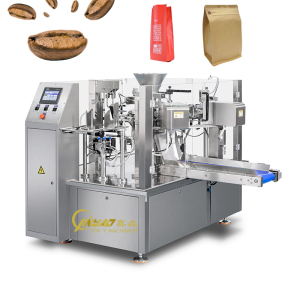
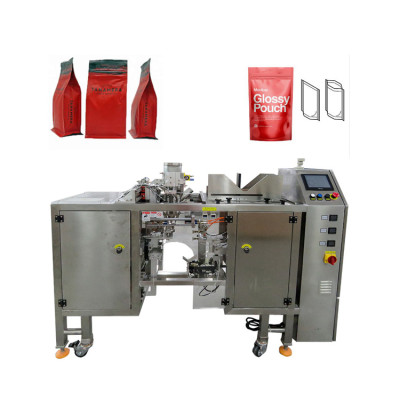
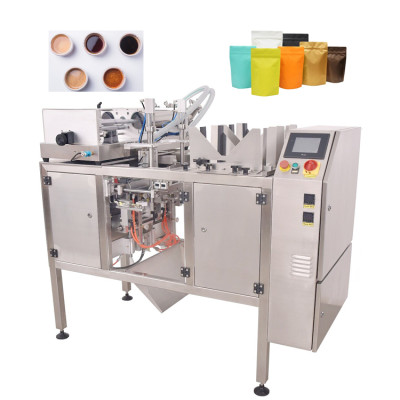
TOPY-RPM Automatic Premade Bag Doypack Packaging Machine
Rotary stand-up pouch packing for powder and granules: automatic bag picking, opening, filling, and sealing in one rotary cycle. One operator supervises the PLC screen instead of a six-person station.
View product details →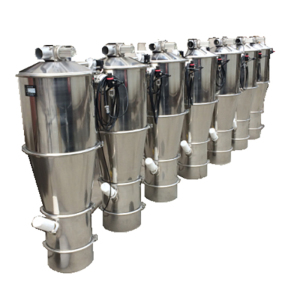
TOPY-VC Powder & Granule Vacuum Feeding Machine
Vacuum conveyor / hopper loader that feeds powder and small granules straight to the packing machine — no manual scooping, no lifting. Removes the heaviest manual task on the line and works with existing production lines and packing machines.
View product details →Beyond headcount: TOP Y's servo-driven lines deliver around 20% energy savings compared with older pneumatic-driven machines, and the full automation line — weigher → bagger → conveyor → checkweigher — is what pushes real-world payback toward the 8–12 month end of the range. With 20 years of food packaging installations, the TOP Y engineering team configures the line to your product, bag format, and shift plan before you commit.
Frequently Asked Questions
How much labor can packaging automation actually save?
Most food producers cut packaging labor costs by 50–70% after automation. A manual station with 6 operators typically runs with 2 after the upgrade — one loading film and one monitoring the line. The exact number depends on how many tasks you automate: filling and sealing alone remove the biggest share of headcount.
How long does it take for a packaging machine to pay for itself?
Typical payback is 8–18 months. Compute it as: machine investment ÷ annual labor and material savings × 12. At $5/hour blended labor, a six-operator manual station costs about $120,000/year; automating it to two operators saves ~$80,000/year, so even an $85,000 line pays back in roughly 11 months.
Do I need a full automatic line, or can I automate step by step?
Both paths work. Adding one automatic weigher or one vacuum loader to an existing line typically removes 30–40% of station labor at a lower entry cost. A full line — weigher, bagger, conveyor, checkweigher — removes 50–70% and is the configuration TOP Y MACHINERY uses to hit payback at the low end of the 8–18 month range.
What hidden savings come with packaging automation besides labor?
Three add up fast: weight giveaway drops from ±3–5 g to ±1–2 g (saving material cost), reject rates fall from 3–5% to under 1%, and modern servo-driven machines use about 20% less energy than pneumatic-driven equipment. Together these usually add 10–20% on top of labor savings.
What happens to the workers replaced by the packaging machine?
On real installations, displaced operators move to higher-value roles: machine operators, quality inspectors, maintenance, and line coordination. Automation creates roughly one supervisory or technical role per line, and plants report lower turnover because the remaining work is less repetitive and physically demanding.
Which products are best suited to automated food packaging?
Powders, granules, grains, snacks, pet food, coffee, spices, and dried foods all automate well with multi-head weighers, auger fillers, VFFS, or premade-bag rotary machines. TOP Y MACHINERY configures full automation lines for these products — including vacuum conveying — with 20 years of installation data behind the labor-saving numbers.
Estimate Your Own Payback: Where to Start
Start with your own payroll: count the operators on your packaging step, multiply by hours and blended hourly cost, and apply the 50–70% savings benchmark. Then compare that annual number against the machine investment for the line that fits your product and bag format. TOP Y MACHINERY builds both entry-level automation (weighers, vacuum loaders) and full automation lines with about 20% energy savings — and the engineering team will run a payback estimate for your volumes. Browse the complete packaging machine range or contact TOP Y MACHINERY for a free ROI analysis of your packaging line.