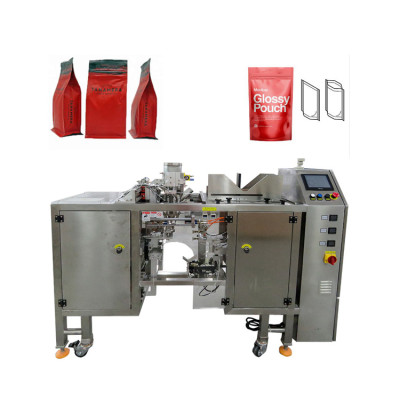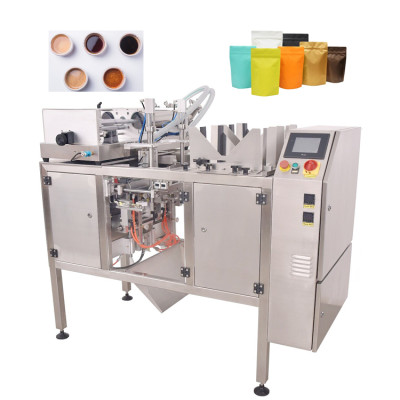
Vertical vs. Horizontal: Understanding Food Packaging Machine Pouch Formats
In modern manufacturing, packaging is not just a necessity; it's a core component of brand strategy. It is crucial for protecting the product, extending its shelf life, and creating a strong visual appeal that captures customer attention on crowded store shelves. The ready-to-eat (RTE) food sector, in particular, has experienced incredible growth, which has driven a parallel demand for efficient, hygienic, and high-quality packaging solutions. Consequently, having a reliable and effective food packaging machine is no longer a luxury but an essential asset for any food producer.
Understanding the fundamental differences between various food packaging machine pouch formats is the first step toward making an informed investment. The two primary categories, vertical and horizontal form-fill-seal systems, offer distinct advantages depending on the product, production volume, and operational goals. Choosing the right equipment is a key strategic decision that directly impacts your business's productivity, efficiency, and ultimately, its bottom line. This guide will explore the nuances of both vertical and horizontal formats to help you select the optimal solution for your needs.
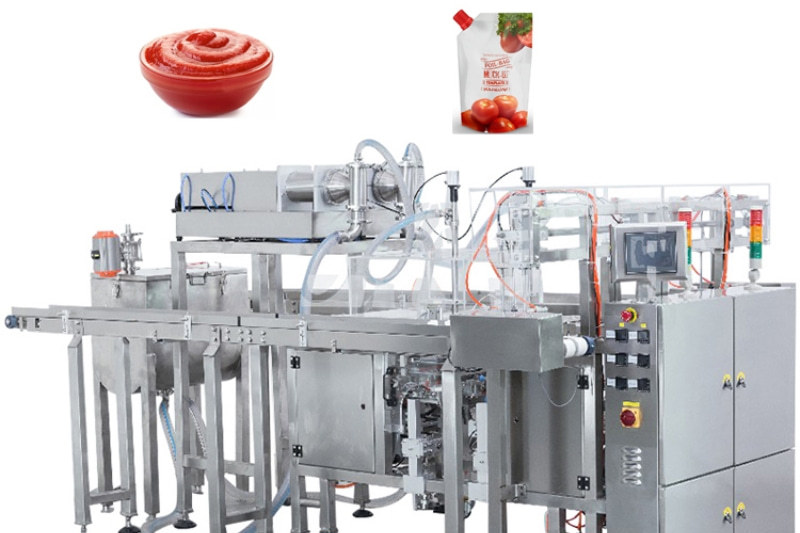
Exploring Vertical Form-Fill-Seal (VFFS) Food Packaging Machine Pouch Formats
Vertical Form-Fill-Seal (VFFS) machines are a cornerstone of the packaging industry, renowned for their efficiency and economical use of space. They construct bags from a single roll of film, fill them with product, and seal them in a continuous vertical motion, making them an ideal choice for a wide variety of goods.
How VFFS Machines Work
The operation of a Vertical Form-Fill-Seal (VFFS) machine is a highly synchronized and efficient process that starts with a large roll of packaging film. This film is fed off the roll and transported to a forming tube. As the film passes over the shoulder of this tube, it is folded around it to create a cylindrical shape. A vertical sealing bar then presses against the two overlapping edges of the film, creating a vertical seal and transforming the flat film into a tube.
Next, a horizontal sealing jaw clamps the bottom of the tube, creating the bottom seal of what will become the pouch. Simultaneously, the filler—which could be a multi-head weigher for solids, an auger filler for powders, or a liquid pump—dispenses a precise amount of the product into the open-ended pouch. Once filling is complete, the horizontal sealing jaw activates again to create the top seal of the filled pouch while simultaneously forming the bottom seal of the next pouch in the sequence. A knife within the jaw assembly then cuts the completed pouch free, allowing it to drop onto a conveyor for transport to the next stage of the packaging line. This entire sequence happens in a continuous, high-speed motion.
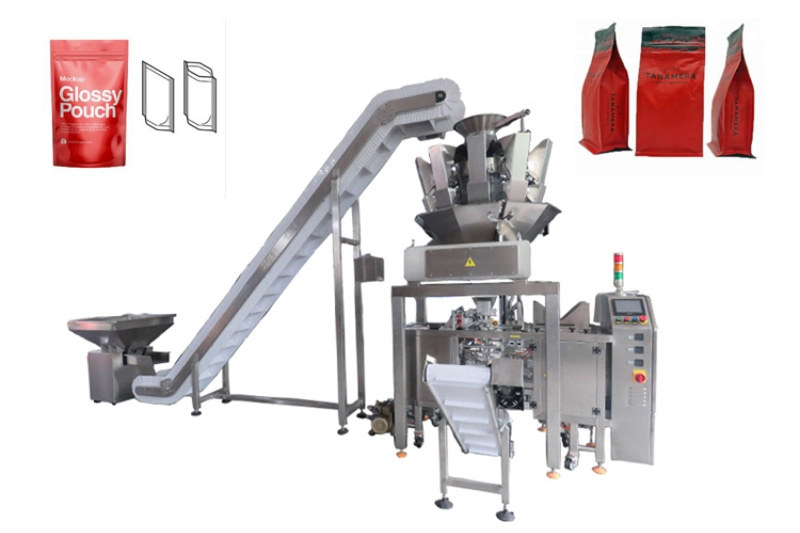
Efficiency and Versatility of Vertical Packaging
The efficiency of VFFS machines is one of their most significant advantages. Because the operation relies on gravity to help fill the bags, it is an inherently fast and effective process, particularly for loose products. The vertical design also gives these machines a much smaller footprint compared to their horizontal counterparts, making them an excellent choice for facilities where floor space is at a premium. This compact design allows manufacturers to optimize their production layout without sacrificing output.
Furthermore, VFFS machines are exceptionally versatile. They can handle a vast range of product types, from powders and granules like coffee and sugar to liquids and gels like sauces and soups, and solid items like candies and snack foods. The versatility extends to the packaging material itself; VFFS systems can work with a wide variety of films, including laminates, polyethylene, and metalized films, allowing brands to choose the material that best suits their product's preservation and marketing needs. Quick and easy changeovers for different bag sizes and product types further enhance their operational flexibility.
Types of Products Suitable for VFFS Food Packaging Machine Formats
The gravity-assisted filling method makes VFFS machines uniquely suited for a broad array of product categories. Their robust design allows them to handle everything from fine powders to chunky solids with precision and speed.
Here is a breakdown of product types commonly packaged using VFFS systems:
| Product Category | Examples | Why VFFS is Suitable |
|---|---|---|
| Loose & Granular Products | Potato chips, popcorn, pretzels, nuts, seeds, trail mix, candy | Gravity filling ensures quick and efficient bagging without damaging the product. |
| Powders & Fine Granules | Ground coffee, flour, sugar, salt, spices, protein powder, drink mixes | Auger fillers integrated with VFFS machines provide highly accurate dosing to prevent waste. |
| Liquids & Sauces | Soups, sauces, dressings, marinades, juices, milk | Piston or pump fillers work in tandem with the VFFS system to package liquids cleanly and without leaks. |
| Fresh & Frozen Produce | Frozen vegetables (peas, corn), fresh-cut salads, shredded cheese | VFFS machines can be built with stainless steel and to sanitary standards suitable for food contact. |
| Non-Food Items | Pet food, detergents, small hardware parts, fertilizer | The versatility of VFFS extends beyond food, making it a reliable solution for many other industries. |
Seal Options and Pouch Styles for VFFS Food Packaging Machines
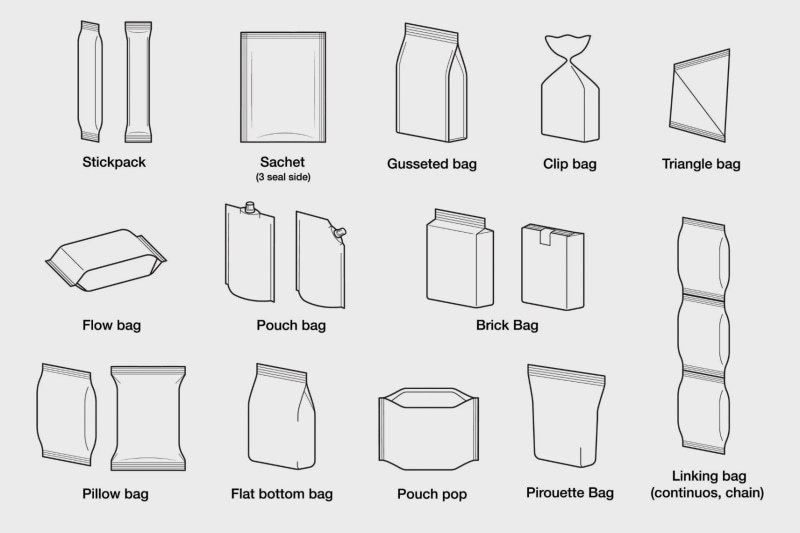
The flexibility of VFFS technology also extends to the types of pouches and seals it can create, providing brands with numerous options to enhance both functionality and shelf appeal. Common pouch styles include pillow bags, which are the most basic and cost-effective, and gusseted bags, which have "tucked" sides that allow them to hold more volume and sometimes stand on their own. For enhanced shelf presence, block-bottom or flat-bottom bags are a popular choice as they offer a stable base and five distinct panels for branding and product information.
Seal options are also varied. The standard seal types are lap seals and fin seals for the vertical seam. Other features like tear notches for easy opening, and zippers or sliders for re-sealability can also be incorporated into the bag design during the VFFS process. This ability to create diverse and consumer-friendly packaging formats makes VFFS a strategic choice for brand differentiation.
The Flex Can: A Unique VFFS Pouch Format
A notable innovation in VFFS packaging is the Flex Can. This format is a sophisticated type of block-bottom bag that is designed to mimic the shape and rigidity of a traditional can or composite can, while being made from flexible film. The Flex Can offers a flat, stable base and a rigid, vertical body, providing exceptional shelf presence and brand impact. It combines the lightweight, material-saving benefits of flexible packaging with the premium look and feel of a rigid container. This unique pouch format is created on a VFFS machine and is ideal for premium products like coffee, snacks, and confectionery, where standing out on the shelf is paramount.
Understanding Horizontal Form-Fill-Seal (HFFS) Food Packaging Machine Pouch Formats
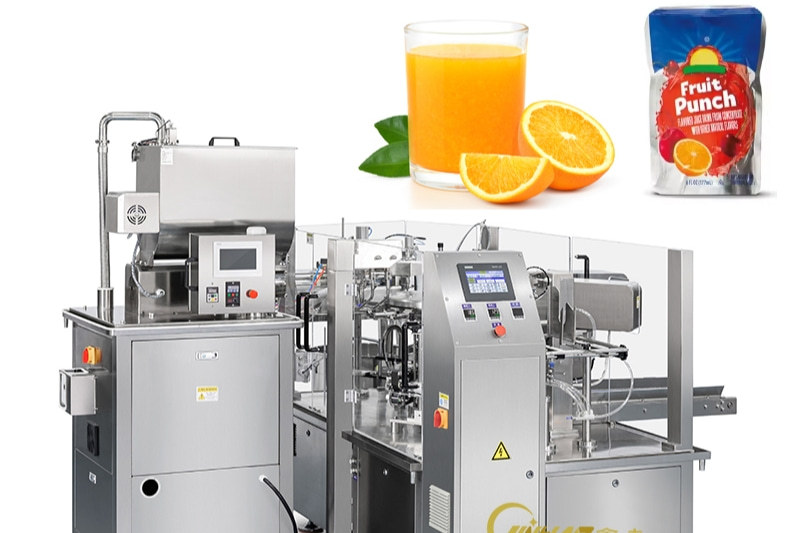
Horizontal Form-Fill-Seal (HFFS) machines operate on a different principle than their vertical counterparts. Instead of using gravity, they form, fill, and seal pouches in a linear, horizontal motion. This makes the horizontal packing machine an ideal solution for packaging single, solid, or delicate items that cannot be easily dropped into a bag from above.
How HFFS Machines Operate
The operation of an HFFS machine begins similarly to a VFFS machine, with a roll of heat-sealable film. The film is unwound and fed into the machine, where it is folded in half lengthwise. The bottom and side edges are then sealed by heated sealing bars to create a pre-formed pouch with an open top. Unlike VFFS, where the product is dropped in, HFFS machines introduce the product horizontally.
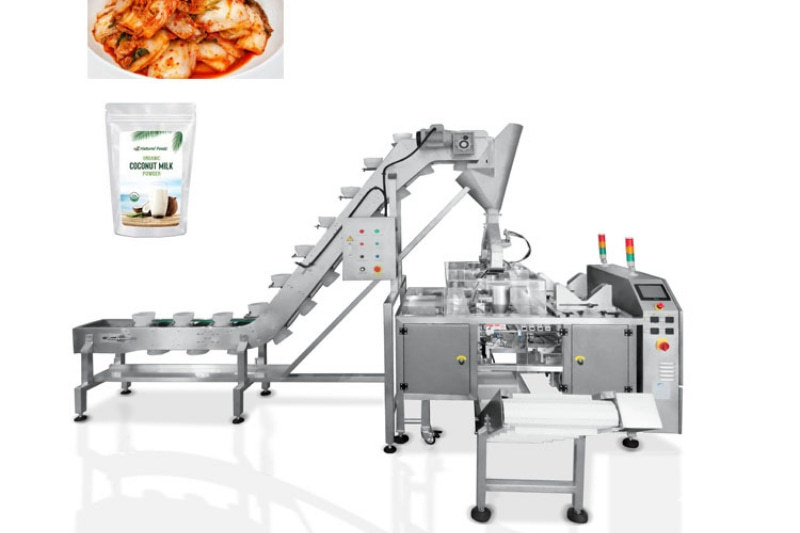
Products are typically loaded into an infeed conveyor that spaces them out and carries them to the pouch-filling station. Here, each item is gently pushed or inserted into the open pouch. Once the product is inside, the pouch is transported to the top sealing station, where the top of the bag is sealed shut. Often, this station will also trim any excess material and may add features like a tear notch or a hang hole. The finished, sealed packages then exit the machine for cartoning or case packing.
Speed and Product Compatibility for Horizontal Food Packaging
HFFS machines are often lauded for their high-speed capabilities, especially for packaging uniform, solid items. Because the process is linear and doesn't rely on the settling time required for gravity-fed products, they can achieve very high throughput rates, making them suitable for large-scale production environments. A rotary HFFS machine, for instance, can produce hundreds of pouches per minute.
This method is particularly compatible with products that are fragile, oddly shaped, or need to be carefully oriented within the package. Items like cookies, brownies, or medical devices could be damaged if dropped, making the gentle horizontal loading process of an HFFS machine a superior choice. It also excels at creating multi-packs by grouping several items together before inserting them into the pouch.
Ideal Products for HFFS Food Packaging Machine Formats
The horizontal loading mechanism defines the types of products best suited for HFFS machines. These systems are the go-to choice for items that require careful handling or are packed as individual units.
Key product categories include:
- Bakery and Confectionery: Chocolate bars, cookies, biscuits, wafers, croissants, and snack cakes. The horizontal motion prevents breakage and crumbling.
- Solid and Counted Items: Soaps, wet wipes, and stacks of trading cards or tortillas. These items are easily pushed into the pre-formed pouch.
- Medical and Pharmaceutical Items: Syringes, surgical gloves, bandages, and diagnostic kits. Sterility and precise placement are critical, which HFFS handles well.
- Multi-packs: Grouping multiple candy bars, granola bars, or other items together into a single master package.
- Hardware: Kits of screws, nuts, and bolts that need to be contained together.
Space and Layout Considerations for Horizontal Food Packaging Machine Pouch Formats
A significant difference between HFFS and VFFS systems is their physical footprint. Due to their linear, horizontal operation, HFFS machines typically require more floor space than VFFS machines of comparable output. The infeed conveyor, forming, filling, and sealing stations are all arranged in a line, which can result in a machine that is quite long.
When planning a facility layout, it is crucial to account for this extended footprint. The layout must accommodate not only the machine itself but also the space for operators to access it for loading film, clearing jams, and performing maintenance. While they take up more room, their high-speed output often justifies the space allocation for high-volume production lines.
Key Differences Between Vertical and Horizontal FoodPackaging Machine Pouch Formats
While both VFFS and HFFS machines create pouches from a roll of film, their fundamental differences in operation, product handling, and footprint make them suitable for very different applications. Understanding these distinctions is crucial for selecting the right system.
Film Direction and Operational Mechanism
The most fundamental difference lies in the machine's orientation and how the product is handled.
- VFFS (Vertical): Operates vertically. The film is drawn downwards, formed into a tube, and sealed. The product is dropped into the pouch using gravity. This "form, then fill" sequence is central to its design.
- HFFS (Horizontal): Operates horizontally. The film is formed into a pouch, which then moves along a flat line. The product is inserted into the pouch from the side, either manually or automatically. The pouch is then sealed. This process is less reliant on gravity and more on mechanical pushers or robotic arms.
Product Suitability and Filling Mechanisms
The operational mechanism dictates the types of products each machine can handle efficiently.
- VFFS: Ideal for products that can be dropped without being damaged. This includes a wide range of loose items like powders, granules, grains, snacks, and some liquids. The filling mechanism (e.g., auger, weigher, pump) is mounted above the forming tube.
- HFFS: Best for solid, single items, fragile products, or items that need to be arranged in a specific way. Cookies, candy bars, medical kits, and hardware benefit from the gentle horizontal loading that prevents breakage or disarray. It also excels at handling pre-made pouches (in a pouch-fill-seal configuration).
Production Speed and Bag Styles
Both machine types offer high speeds, but their capabilities and the types of bags they produce can differ.
- Speed: HFFS machines are often considered faster for single-item, high-volume production runs due to their continuous motion and rotary designs. VFFS machines are extremely fast for bulk, loose products, with speed often limited by the time it takes for the product to settle in the bag.
- Bag Styles: VFFS machines have a slight edge in versatility for bag styles, capable of producing everything from simple pillow bags to complex, stand-up formats like block-bottom bags and the Flex Can. HFFS machines primarily produce flat pouches, stand-up pouches (SUP), and three- or four-side seal sachets. HFFS is also the primary method for creating spout pouches for liquids and purees.
Footprint and Cost Implications for Food Packaging Machine Choices
The physical size and cost are critical business considerations when choosing a packaging machine.
| Feature | Vertical (VFFS) Machine | Horizontal (HFFS) Machine |
|---|---|---|
| Footprint | Small. The vertical design conserves valuable floor space. | Large. The linear layout requires a significantly longer footprint. |
| Initial Cost | Generally lower for entry-level and standard models. | Generally higher, especially for high-speed, fully automated systems. |
| Operational Cost | Can be very cost-effective due to high speeds and automation for bulk products. | Efficient for high volumes, but changeover parts for different product sizes can be more expensive. |
| Maintenance | Typically straightforward, with good access to components. | Can be more complex due to the number of moving parts in the conveying and loading systems. |
Ultimately, the decision requires a holistic view of not just the initial purchase price of the food packaging machine, but its total cost of ownership over its lifespan.
Choosing the Right Food Packaging Machine Pouch Format for Your Business Needs
Selecting the ideal packaging machine is a strategic decision that goes beyond a simple vertical vs. horizontal comparison. It requires a deep analysis of your product, production demands, budget, and long-term business goals. Partnering with an experienced food packaging machine manufacturer can provide invaluable guidance in this process.
Assessing Product Characteristics and Packaging Aesthetics
The product itself is the most important factor in your decision. You must start by asking fundamental questions:
- Product State: Is it a liquid, powder, granule, or a solid item?
- Fragility: Can the product withstand a drop of a few feet without breaking or being damaged? Fragile items like cookies or crackers point towards HFFS.
- Flowability: Does the product (like flour or chips) flow easily and consistently? If so, VFFS is a strong candidate.
- Uniformity: Are the products uniform in size and shape, like candy bars, or irregular, like produce? Uniform items are well-suited for high-speed HFFS automation.
Packaging aesthetics are equally important. How do you want your product to look on the shelf? A VFFS machine can create stand-up block-bottom bags that offer great shelf presence. An HFFS machine, on the other hand, excels at producing sleek, flat pouches with peelable seals, which may be preferable for products like sliced cheese or medical devices.
Evaluating Production Volume, Speed, and Flexibility
Your production needs will heavily influence your choice.
- Production Volume: Are you running a high-volume operation with millions of units per year, or a smaller, more specialized line? High-volume, single-product lines may benefit from a dedicated, high-speed HFFS machine.
- Speed Requirements: Calculate your required pouches per minute (PPM) to meet demand. Both VFFS and HFFS offer high-speed models, but their suitability depends on the product as discussed.
- Flexibility and Changeover: Do you package many different products or bag sizes on the same line? If so, evaluate the time and cost associated with changeovers. Some modern VFFS machines offer tool-less, quick-changeover features that are ideal for businesses with diverse product portfolios.
Considering Operational Costs, Maintenance, and Sustainability of Food Packaging Machine Operations
A packaging machine is a long-term investment, and the total cost of ownership (TCO) is a more critical metric than the initial purchase price. Consider factors such as energy consumption, compressed air usage, and film waste. Maintenance is another key area; ask about the availability of spare parts, the complexity of routine maintenance procedures, and the provider's technical support.
Sustainability is an increasingly important consideration. Modern machines are designed for greater efficiency, reducing energy use and film waste. The ability to run recyclable or compostable films is a significant advantage and can be a key differentiator for your brand. Discuss the machine's compatibility with sustainable materials with any potential supplier.
The Importance of Automation and Hygiene in Food Packaging Machine Selection
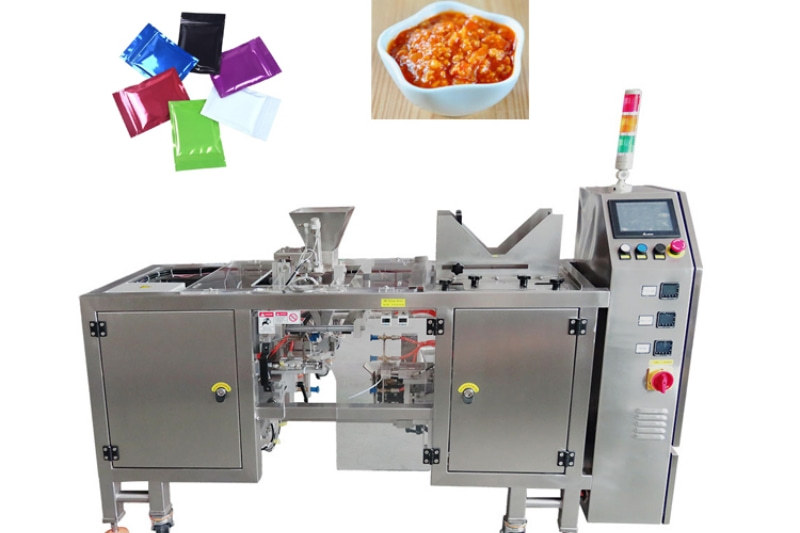
In the food industry, automation and hygiene are non-negotiable. Automation reduces labor costs, minimizes human error, and increases throughput. Look for machines that can be easily integrated with other equipment like weighers, counters, checkweighers, and case packers.
Hygiene is paramount for food safety. A well-designed food packaging machine should feature stainless steel construction (especially for contact parts), be free of crevices where bacteria can grow, and offer easy access for cleaning. Features like Clean-In-Place (CIP) systems are crucial for liquid filling applications. An open-frame design that allows for easy washdowns is a sign of a hygienically designed machine.
The choice between vertical and horizontal food packaging machine pouch formats is a critical decision that directly impacts operational efficiency, product integrity, and profitability. There is no single "best" option; the right choice is entirely dependent on the specific needs of your product and production environment. VFFS machines offer unparalleled versatility and a space-saving design ideal for loose, granular, and liquid products. HFFS machines provide the speed and gentle handling required for solid, fragile, and individually packaged items.
By carefully considering your product's characteristics, required production volumes, aesthetic goals, and long-term operational costs, you can make an informed decision. This strategic selection will ensure you invest in the optimal food packaging machine that not only meets your current demands but also supports your future growth. Ultimately, the right equipment is key to delivering on the promise of food safety, freshness, and convenience that modern consumers expect. We encourage you to share this guide with your team and discuss how these factors apply to your unique business challenges.