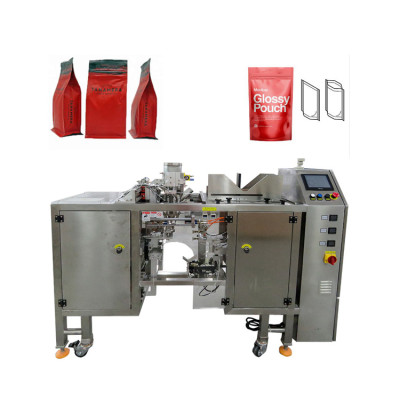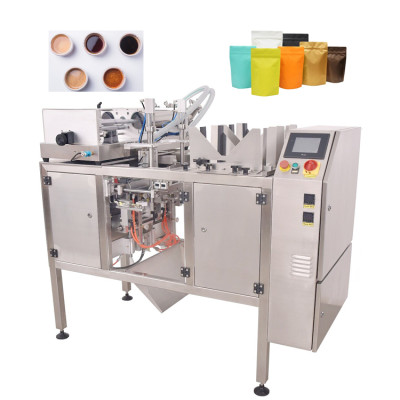
Understanding the Rotary Packing Machine: From Powders to Liquids
As a seasoned professional in the packaging industry, I've had a front-row seat to the evolution of production lines. I’ve witnessed how the right equipment can completely redefine efficiency, and the Rotary Packing Machine is a stellar example of such a transformation. It offers unmatched speed and versatility for an extensive range of products, seamlessly handling everything from delicate powders to free-flowing liquids.
These advanced rotary packing systems are engineered to automate the packaging cycle from start to finish, leading to a dramatic increase in productivity and unwavering consistency in quality. This article will delve into the mechanics of these innovative machines, exploring their operational principles and the substantial benefits they introduce to contemporary manufacturing environments.
Whether your business is in food and beverage, pharmaceuticals, or household goods, gaining a thorough understanding of what rotary packing machines can do is essential. It is the key to optimizing your operations, meeting fluctuating market demands, and ultimately, future-proofing your production line.
Key Takeaways
- Definition and Core Function: A Rotary Packing Machine is an automated system that uses a continuous, circular motion to fill and seal pre-formed pouches. Unlike linear machines that operate along a straight path, the rotary design utilizes a compact, rotating turret with multiple stations, significantly enhancing speed and saving valuable floor space. This design is ideal for high-demand production environments where efficiency is paramount.
- Operational Workflow: The process is a model of automation. It begins with the automatic loading of empty, pre-made pouches onto the machine's grippers. As the turret rotates, each pouch moves sequentially through various stations, including date printing, bag opening, precise product filling, and secure heat sealing before finally being discharged as a finished product. This synchronized, multi-station approach allows for continuous, high-speed operation.
- Key Benefits: The advantages of implementing a rotary packing machine are extensive. They offer a significant boost in efficiency and productivity, capable of handling high volumes with speeds up to 200 cycles per minute. Their versatility is another major plus, as they can accommodate a wide array of products (liquids, powders, solids) and pouch types (stand-up, zipper, spout). This leads to enhanced precision, consistent quality, reduced product waste, and long-term cost-effectiveness.
- Choosing the Right Machine: Selecting the appropriate machine involves considering several critical factors: the types of products you are packaging, required production speed, the sizes and formats of your pouches, and the specific functionalities needed, such as vacuum sealing or nitrogen flushing. The machine's configuration, including the number of stations, determines its flexibility and capabilities. Long-term value also depends on a robust maintenance plan to ensure the machine's longevity and optimal performance.
- Industrial Applications: These machines are indispensable across numerous industries. In the food and beverage sector, they are used for packaging snacks, sauces, coffee, and more, often using features like nitrogen flushing to extend shelf life. The pharmaceutical industry relies on them for sterile and precise packaging of powders and medical devices, while the chemical and cosmetic sectors use them for products like detergents, lotions, and powders.
What Exactly is a Rotary Packing Machine?
In the vast landscape of industrial automation, packaging technology has made remarkable strides. Among the most impactful innovations are rotary packing machines, which have become a cornerstone of modern production for their speed, efficiency, and adaptability. But what sets them apart from other packaging solutions? Let's break down their definition, unique design, and the essential components that make them work.
Defining the Rotary Packing Machine
At its core, a rotary packing machine is a sophisticated, automated system designed to fill and seal pre-formed pouches in a continuous, circular motion. Unlike their linear or horizontal counterparts that process packages along a straight path, rotary machines utilize a rotating turret or table. This fundamental design choice allows them to perform multiple packaging tasks—such as pouch feeding, opening, filling, and sealing—simultaneously at different stations arranged around the central turret. This continuous, multi-station process is the key to their high-speed capabilities and compact footprint, making them a preferred choice for manufacturers aiming to maximize output without sacrificing quality or floor space.
Distinctive Design and Operation of a Rotary Packing Machine
The defining characteristic of a rotary packing machine is its circular layout. Pre-made pouches are picked up from a magazine and securely clamped by a series of grippers mounted on the rotating turret. As the turret rotates, it presents each pouch to a sequence of specialized stations.
Imagine a carousel where each stop performs a specific action. The typical operational flow includes:
- Pouch Loading: Empty bags are automatically fed and gripped by the machine.
- Printing/Coding: A date or lot code is printed on the bag.
- Pouch Opening: A mechanism opens the pouch, preparing it for filling.
- Filling: The product (powder, liquid, or solid) is dispensed into the open pouch.
- Sealing: The top of the pouch is hermetically sealed using heat or ultrasonic methods.
- Cooling & Discharge: The seal is cooled to ensure its integrity, and the finished package is released onto a conveyor.
This continuous, rotational movement allows for a seamless and highly efficient workflow, distinguishing it from the stop-and-go nature of some other systems. While linear machines offer excellent adaptability for diverse product formats, rotary machines are engineered to maximize productivity for high-volume production runs.
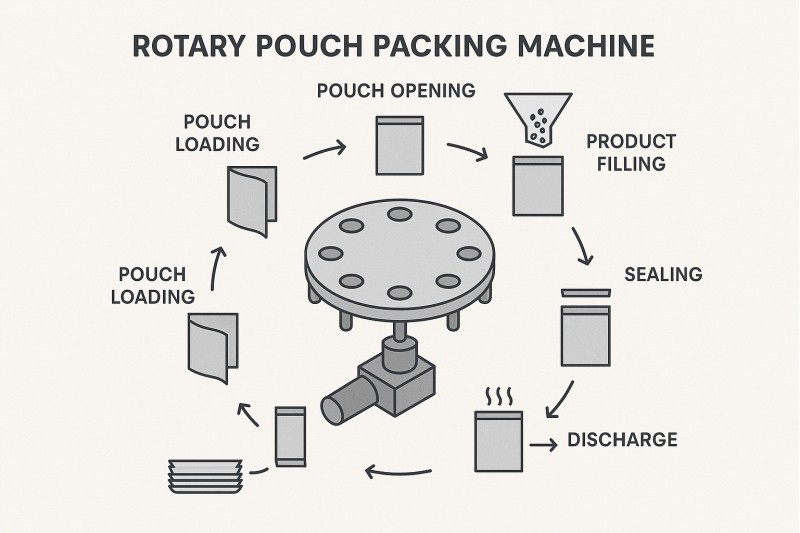 Diagram illustrating the operational workflow of a rotary pouch packing machine.
Key Components of a Rotary Packing Machine
The seamless operation of a rotary packing machine is made possible by the precise coordination of its key components. While designs may vary, most machines include the following essential parts:
| Component | Function | Importance |
|---|---|---|
| Pouch Feeding System | Automatically picks up pre-made pouches from a stack or roll and loads them into the machine's grippers. | Ensures a continuous supply of bags without manual intervention, setting the pace for the entire process. |
| Rotary Turret & Grippers | The central rotating assembly fitted with multiple grippers that hold and transport the pouches through each station. | The heart of the machine, its rotational speed and precision directly determine the overall output and reliability. |
| Printing/Coding Unit | An integrated printer (e.g., inkjet or thermal transfer) that applies dates, batch codes, or other information onto the pouches. | Crucial for traceability, compliance with regulations, and providing essential information to consumers. |
| Pouch Opening Device | A system of suction cups and mechanical jaws that opens the pre-made pouch securely for filling. | Ensures the pouch is correctly positioned and fully open to prevent spillage and ensure an accurate fill. |
| Filling System | The mechanism that dispenses the product into the pouch. This can be an auger filler for powders, a piston or liquid pump for liquids, or a multi-head weigher for solids. | The accuracy of the filler is critical for minimizing product waste, ensuring package weight consistency, and maintaining profitability. |
| Sealing Jaws | Heated bars that press the top edges of the pouch together to create a strong, airtight seal. Advanced systems may use ultrasonic sealing. | Guarantees product integrity, prevents contamination, and extends shelf life by creating a hermetic closure. |
| Control System (PLC) | A Programmable Logic Controller (PLC) with a touchscreen interface (HMI) that synchronizes all mechanical parts and allows operators to set parameters. | Acts as the brain of the machine, controlling a timing, speed, and functions for consistent and reliable operation. |
Understanding these individual parts and how they work in concert reveals why the Rotary Packing Machine is such a powerhouse of productivity in modern packaging lines.
How a Rotary Packing Machine Works: A Step-by-Step Breakdown
The magic of the rotary packing machine lies in its ability to transform an empty pouch into a market-ready product through a seamlessly automated and continuous process. Each step is a masterclass in mechanical and electronic synchronization, ensuring high speed, precision, and consistency. Let's walk through the journey of a single pouch as it travels through the machine.
The Automated Process: From Pouch Loading to Discharge
The entire operation is a well-choreographed dance of automated steps, all occurring as the central turret rotates. While specific configurations can vary, an 8-station rotary machine typically follows this sequence:
Station 1: Pouch Loading The process begins at the bag magazine, where hundreds or thousands of pre-made pouches are stacked. A mechanical arm with vacuum suction cups picks up a single pouch and transfers it to a set of grippers on the rotary turret, which will securely hold the pouch for the remainder of its journey. Sensors ensure that a bag has been successfully picked and loaded; if not, subsequent stations for that gripper will be bypassed to prevent waste.
Station 2: Date Coding As the turret rotates, the pouch moves to the coding station. Here, a printer (often an inkjet or thermal transfer model) imprints the bag with essential information such as the expiration date, batch number, or a QR code for traceability. This step is critical for regulatory compliance and inventory management.
Station 3: Pouch Opening At this station, a vacuum suction pad gently pulls on the front of the pouch while a mechanical opener grips the top edges. The pouch is pulled open, and often a jet of clean air is blown inside to ensure it is fully expanded and ready for filling. Zippers, if present, are also mechanically opened at this stage.
Station 4: Product Filling (First Fill) This is where the product is introduced. The machine is integrated with a specific filling device tailored to the product type—an auger filler for powders, a liquid pump for sauces, or a multi-head weigher for granules and solids. The filler dispenses a precise amount of the product into the opened pouch. For products with multiple components, this station handles the first ingredient.
Station 5: Product Settling or Second Fill After the initial fill, this station may be used to gently vibrate the pouch to help the product settle, removing trapped air and ensuring it sits neatly at the bottom. Alternatively, for products with multiple ingredients (like a soup mix), a second filler dispenses the next component.
Station 6: Sealing Preparation & Optional Functions Before sealing, an air jet may clean the seal area of any product dust or residue to ensure a clean, strong seal. This station can also house optional functions like a nitrogen flush, which displaces oxygen from the pouch to extend the product's shelf life, or a vacuuming process that removes air entirely.
Station 7: Heat Sealing A pair of heated seal bars clamp down firmly on the top edge of the pouch. With precise temperature and pressure control, they melt the inner layers of the packaging material together to create a hermetic, leak-proof seal.
Station 8: Cooling and Discharge Immediately after heat sealing, a set of cooling bars presses against the seal to cool it down rapidly. This solidifies the plastic and strengthens the seal, ensuring its integrity. The grippers then release the finished pouch, which drops onto a conveyor belt to be transported downstream for secondary packaging, such as cartoning or case packing.
Precision Filling with a Rotary Packing Machine
The accuracy of the product fill is one of the most critical aspects of packaging, directly impacting profitability and consumer trust. Rotary packing machines are designed for exceptional precision by integrating with highly accurate filling systems.
- For Powders (e.g., flour, spices, protein powder): An auger filler is typically used. This device features a vertically mounted screw that rotates to dispense a precise volume of powder with each revolution. The system is controlled by a servo motor for high accuracy, often achieving tolerances of less than a gram.
- For Liquids (e.g., sauces, juices, oils): A piston filler or liquid pump is employed. A piston filler draws a set volume of liquid into a cylinder and then dispenses it into the pouch. For thinner liquids, a servo-controlled liquid pump can offer continuous flow with precise cut-offs.
- For Solids & Granules (e.g., snacks, coffee beans, nuts): A multi-head weigher (or combination scale) is the go-to solution. The product is fed into multiple weighing buckets. A computer instantly calculates the combination of buckets that equals the target weight and releases their contents into the pouch below. This method is incredibly fast and accurate.
Sensors play a crucial role in maintaining this precision. "No bag, no fill" sensors prevent the machine from dispensing product if a pouch failed to open correctly, eliminating spillage and waste.
Ensuring Product Integrity: Sealing and Beyond
A package is only as good as its seal. Rotary packing machines employ advanced sealing technologies to guarantee product integrity, extend shelf life, and provide a tamper-evident closure. The most common method is heat sealing, where two heated bars apply controlled temperature and pressure to fuse the sealing layers of the pouch.
However, quality control goes beyond just sealing. Modern machines incorporate several automated checks to ensure every pouch meets the required standards:
- Seal Integrity Checks: Some systems use vision sensors or pressure-decay testers to detect microscopic leaks or imperfections in the seal area, automatically rejecting any faulty packages.
- Temperature Monitoring: The PLC continuously monitors the temperature of the sealing bars. If the temperature deviates from the setpoint, an alarm is triggered to prevent weak or burnt seals.
- Metal Detection and Checkweighing: Downstream from the pouching machine, it's common to integrate a metal detector and a checkweigher. The checkweigher weighs each finished package and rejects any that are over or under the specified weight tolerance, providing a final layer of quality assurance.
Through this highly orchestrated process, the rotary packing machine delivers not just speed, but also the precision and quality control essential for modern manufacturing.
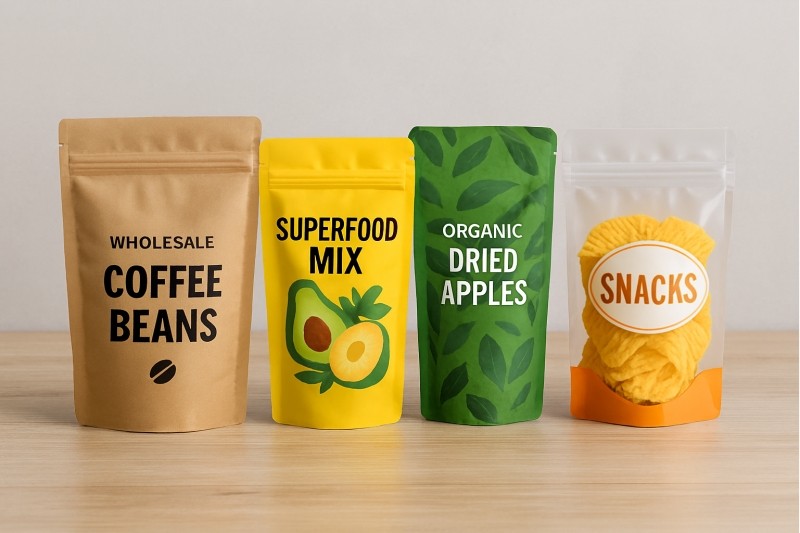 A variety of finished stand-up pouches, showcasing the versatility of rotary packing machines.
The Unparalleled Benefits of a Rotary Packing Machine
Investing in a Rotary Packing Machine is a strategic decision that offers transformative advantages for modern production lines. These machines are engineered to deliver a powerful combination of speed, adaptability, and precision, creating value far beyond what manual or semi-automatic methods can achieve. Let's delve into the substantial benefits that make them an indispensable asset for businesses across various industries.
Enhanced Efficiency and Productivity with Rotary Packing Machines
The most immediate and significant benefit of a rotary packing machine is the dramatic boost in operational efficiency and overall productivity. Their design is centered on high-speed, continuous operation.
- Continuous Motion: Unlike linear systems that may operate intermittently, rotary machines function in a continuous, flowing motion. This allows for the simultaneous execution of filling, sealing, and other tasks, which drastically reduces cycle times and eliminates the bottlenecks associated with stop-and-start processes.
- High Throughput: Rotary packing machines are renowned for their high-speed capabilities, with some models capable of processing up to 200 bags per minute. This high output enables businesses to meet demanding production schedules, handle large orders, and scale their operations effectively without a proportional increase in labor or factory space.
- Reduced Downtime: The automated nature of these machines, combined with their robust construction, minimizes the need for frequent manual adjustments and reduces operator-related errors, leading to more consistent uptime and higher overall equipment effectiveness (OEE).
Versatility in Packaging for Diverse Product Types
One of the standout features of rotary packing machines is their incredible versatility. They are not limited to a single product or package type, making them a future-proof investment for companies with diverse or expanding product lines.
- Product Adaptability: These machines can be configured to handle an extensive range of products, including fine powders (spices, flour), granules (coffee, snacks), liquids (sauces, juices), and solid items (hardware, candy). This is achieved by integrating the appropriate filler, such as an auger filler for powders or a multi-head weigher for solids.
- Pouch Format Flexibility: Rotary machines can easily manage various types of pre-made pouches, from standard flat and pillow bags to more complex stand-up pouches, gusseted bags, and those with special features like zippers or spouts. Adjustments for different bag widths can often be made quickly via the control panel, minimizing changeover time.
- Broad Industry Application: This adaptability makes rotary packers valuable across numerous sectors, including food and beverage, pharmaceuticals, pet food, cosmetics, and chemicals. Their ability to handle such a wide spectrum of applications ensures maximum equipment utilization and a faster return on investment.
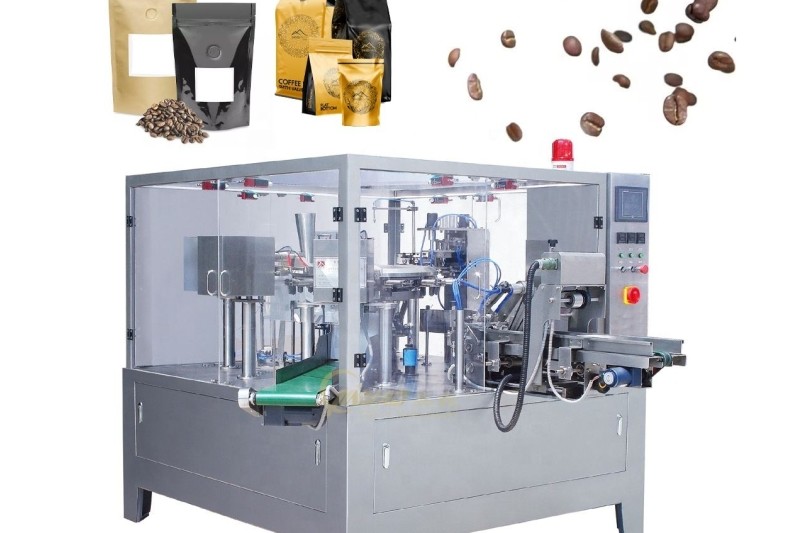 A versatile rotary packaging machine processing different styles of pouches.
Precision, Quality, and Cost-Effectiveness of Rotary Packing Machines
Beyond speed, rotary machines offer a level of precision that enhances product quality and financial returns. They are engineered to ensure every package is filled and sealed to exact specifications, a critical factor for brand reputation and profitability.
Maintaining Product Quality and Reducing Waste
Rotary machines excel at maintaining the integrity of both the product and the packaging.
- Accurate Filling: Integrated high-precision fillers ensure that the exact amount of product goes into every bag, consistently meeting the declared weight. This accuracy minimizes product giveaway, which can lead to significant cost savings over time.
- Superior Sealing: Advanced sealing technology, combined with automated cleaning of the seal area and precise temperature control, creates strong, reliable, and aesthetically pleasing seals. This prevents leaks and contamination, protecting the product and extending its shelf life.
- Automated Quality Control: Many machines are equipped with sensors that detect errors like unopened bags or improper filling, automatically preventing the cycle from completing for that pouch. This "no bag, no fill, no seal" logic drastically reduces product and material waste.
Long-Term Cost Savings with a Rotary Packing Machine
While the initial investment in a rotary packing machine can be substantial, the long-term return on investment (ROI) is compelling.
- Reduced Labor Costs: By automating the entire packaging process, these machines significantly reduce the need for manual labor. A single operator can often supervise a machine that does the work of multiple manual packers, allowing businesses to reallocate human resources to more value-added tasks.
- Material Cost Reduction: The precision of rotary machines extends to material usage. By minimizing rejected packages and optimizing a film or pouch use, material waste is kept to a minimum. Features like nitrogen flushing can also reduce spoilage, further preventing financial loss.
- Improved Profit Margins: The cumulative effect of increased throughput, reduced labor, and minimized waste directly contributes to lower per-unit production costs and improved profitability. The ability to scale production efficiently makes these machines a sound financial investment for growth-oriented companies.
Customization and Industrial Applications of the Rotary Packing Machine
Rotary packing machines are not one-size-fits-all. They can be highly customized to meet the unique requirements of specific industries and applications.
- Customizable Modules: Manufacturers offer a wide array of optional modules that can be integrated into the machine. These include zipper opening devices, gas flushing systems for modified atmosphere packaging (MAP), hole punching for retail display, and integration with downstream equipment like checkweighers and case packers.
- Food and Beverage: In this sector, rotary machines are used to package everything from coffee and snacks to fresh produce and sauces. Features like nitrogen flushing are crucial for preserving freshness and extending the shelf life of perishable goods.
- Pharmaceuticals and Nutraceuticals: For these industries, precision, hygiene, and traceability are paramount. Rotary machines can be built to pharmaceutical-grade standards, providing sterile and accurate packaging for powders, capsules, and medical devices.
- Household and Industrial Products: From dishwasher pods and detergents to fertilizers and small hardware, rotary machines provide robust and convenient packaging solutions that stand up to the rigors of retail environments and supply chains.
The ability to tailor a rotary packing machine to specific needs ensures that businesses can achieve optimal performance, efficiency, and quality, making it a cornerstone of modern, competitive manufacturing.
Choosing the Right Rotary Packing Machine for Your Business Needs
Selecting a rotary packing machine is a significant capital investment that can redefine your production capabilities for years to come. Making the right choice requires a careful evaluation of your current operational needs, future growth plans, and the specific characteristics of your products. A thorough analysis will ensure you select a machine that not only meets but exceeds your expectations, delivering long-term value and a strong return on investment.
Factors to Consider for Your Rotary Packing Machine Investment
Before you begin comparing models, it's crucial to have a clear understanding of your specific requirements. A well-defined checklist of needs will help you navigate the options and identify the machine that is truly the best fit for your business.
- Product Characteristics: The nature of your product is the most critical factor. Is it a powder, liquid, granule, or solid? Is it fragile, sticky, or abrasive? These properties will determine the type of filler required (e.g., auger, liquid pump, multi-head weigher) and may necessitate special handling features.
- Pouch Type and Size: List all the pouch formats you currently use or plan to use in the future. This includes stand-up pouches, flat bags, gusseted bags, and pouches with zippers or spouts. The machine you choose must be able to handle the required range of pouch widths and lengths.
- Production Speed Requirements: Determine your target output in bags per minute (BPM). Be sure to consider not just your current demand, but also your projected growth over the next 3-5 years. Choosing a machine with scalable speed can prevent the need for a premature upgrade.
- Required Features and Customization: Do you need special functions like nitrogen gas flushing to extend shelf life or vacuum packing for product preservation? Other common options include date coders, hole punches for retail display, and automatic zipper opening devices.
- Footprint and Factory Layout: Rotary packing machines, while compact for their output, still require a specific amount of floor space. Measure your available area and ensure the machine, along with any integrated conveyors and upstream equipment, will fit comfortably within your production line.
- Budget and Total Cost of Ownership: Look beyond the initial purchase price. Consider the total cost of ownership, which includes installation, training, maintenance, spare parts, and energy consumption. A cheaper machine might have higher long-term operational costs.
 A team evaluating the specifications for a new rotary packing machine.
Different Types and Configurations of Rotary Packing Machines
Rotary packing machines are not a monolithic category. They come in various configurations, primarily defined by the number of stations and their operational capacity.
- Simplex, Duplex, and Quadruplex Models: These terms refer to how many pouches the machine fills per cycle.
- Simplex: Fills one pouch at a time. It is the most common configuration, offering a great balance of speed and cost.
- Duplex: Fills two pouches simultaneously, nearly doubling the output of a simplex machine without significantly increasing the footprint. Ideal for high-volume production.
- Quadruplex: Fills four pouches at once, offering extremely high throughput for large-scale operations.
- Number of Stations (e.g., 6-station vs. 8-station vs. 10-station): The number of stations on the rotary turret determines the machine's flexibility. A standard 8-station machine can handle all the primary functions (loading, printing, opening, filling, sealing, etc.). A 10-station machine provides extra room for more complex processes, such as adding a second solid ingredient, inserting a desiccant packet, or performing a two-step sealing process.
- Specialized Configurations:
- Rotary Vacuum Chamber Machines: These are designed specifically for vacuum packaging. They often feature a secondary rotary turret dedicated to the vacuum and sealing process, ideal for perishable foods like meat and cheese.
- Horizontal Rotary Machines: While most are vertical, some configurations operate horizontally, which can be advantageous for certain flat-pouch applications or when integrating with specific product feed systems.
Maintenance and Longevity of Your Rotary Packing Machine
A rotary packing machine is a complex piece of equipment, and its longevity and peak performance are directly tied to a robust maintenance schedule. Proper care will minimize downtime, reduce costly repairs, and ensure the machine operates safely and efficiently for decades.
- Routine Cleaning: Regular cleaning is the most fundamental aspect of maintenance. Product residue, dust, and debris can accumulate on moving parts, sensors, and sealing jaws, leading to mechanical issues and poor seal quality. Daily or after-shift cleaning, following the manufacturer's guidelines, is essential.
- Lubrication: All moving parts, including bearings, gears, and chains, require proper lubrication to reduce friction and prevent wear and tear. Use the food-grade lubricant recommended by the manufacturer and adhere to the specified lubrication schedule.
- Regular Inspections: Operators and maintenance staff should conduct regular visual inspections to check for signs of wear on components like belts, grippers, and sealing jaws. Listening for unusual noises can also help detect potential mechanical problems before they escalate.
- Preventive Maintenance Program: Establish a preventive maintenance (PM) program based on the manufacturer's recommendations. This involves scheduling service at regular intervals to inspect, clean, lubricate, and replace worn parts. Performing preventive tasks is crucial for ensuring the long life and efficiency of your machine.
- Spare Parts Inventory: Maintain a stock of critical spare parts as recommended by the manufacturer. Having these on hand can drastically reduce downtime when a component fails, turning a potentially day-long stoppage into a quick repair.
- Proper Operator Training: Well-trained operators are less likely to cause accidental damage and are better equipped to spot early signs of trouble. Ensure your team understands the machine's operation, daily cleaning procedures, and safety features.
By making a thoughtful selection and committing to proper maintenance, your rotary packing machine will be a reliable and highly productive cornerstone of your packaging operations for its entire lifespan, which can often exceed 10 to 20 years.
Frequently Asked Questions (FAQ)
1. What is the main difference between a rotary and a linear packing machine?
The primary difference lies in their design and motion. A Rotary Packing Machine uses a circular turret, moving pouches through different stations in a continuous, rotating motion. This design is highly efficient for high-speed, high-volume production and is generally more compact for its output. A linear packing machine, on the other hand, arranges its stations along a straight line, moving pouches intermittently from one station to the next. Linear machines can be more flexible for accommodating a wide variety of pouch sizes and complex changeovers but typically operate at lower speeds than their rotary counterparts.
2. How much does a rotary packing machine for powders cost?
The cost of a rotary packing machine for powders can vary significantly based on several factors. An entry-level, smaller-scale machine might start in the range of $50,000 to $80,000. Mid-range machines with higher speeds, greater pouch size flexibility, and robust construction typically fall between $80,000 and $150,000. High-end, fully customized systems with advanced features like high-speed duplex operation, nitrogen flushing, complex automation, and integration with multi-head weighers can exceed $200,000. The final price depends on the machine's speed, number of stations, build quality (e.g., stainless steel), required customizations, and the reputation of the manufacturer.
3. What maintenance is required for a rotary pouch packing machine?
Effective maintenance is key to the longevity and performance of a rotary pouch packing machine. A comprehensive maintenance schedule includes:
- Daily Cleaning: Wiping down surfaces and removing product dust and debris from all accessible parts, especially the fillers and sealing jaws.
- Weekly Lubrication: Applying food-grade lubricant to all moving parts like bearings, chains, and gears as per the manufacturer's guide.
- Regular Inspections: Visually checking for wear and tear on consumable parts such as sealing jaws, cutter blades, belts, and vacuum suction cups.
- Filter Cleaning: Cleaning the vacuum filters for the bag opening station is a crucial but often overlooked task that ensures pouches open reliably.
- Scheduled Preventive Maintenance: Following the manufacturer's recommended schedule for more in-depth service, which may include calibrating sensors, checking electrical connections, and replacing worn components before they fail.
4. Can a rotary packing machine handle sustainable packaging materials?
Yes, many modern rotary packing machines are designed to handle a variety of sustainable and recyclable packaging materials. As the industry moves towards eco-friendly options, machine manufacturers have adapted their technology. These machines can often work with recyclable mono-materials (like PE/PE structures), compostable films, and paper-based laminates. However, it's crucial to discuss this with your machine supplier. Some sustainable materials may require specific adjustments to the sealing parameters (temperature, pressure, and dwell time) or even specialized sealing jaws to achieve a strong, reliable seal without damaging the film. Always test your desired material on the machine before making a final decision.
5. How do I choose the best rotary packing machine for a small business?
For a small business, the best rotary packing machine strikes a balance between performance, budget, and future scalability. Key considerations include:
- Assess Realistic Needs: Don't over-invest in speed you don't need. Start with a reliable simplex (single-pouch) machine that meets your current and near-future production targets.
- Prioritize Flexibility: Choose a machine that can handle a range of pouch sizes and formats. This versatility will allow you to adapt as your product line grows without needing a new machine.
- Focus on Ease of Use and Changeover: Look for machines with user-friendly touchscreen interfaces, recipe memory for quick setup, and tool-less adjustments. This will minimize downtime and reduce the need for highly specialized operators.
- Evaluate Manufacturer Support: For a small business, strong after-sales support is invaluable. Partner with reputable packaging machinery manufacturers who provide training, responsive service, and readily available spare parts to keep your operation running smoothly. Asking for a product test run or demo can also be very helpful.
Conclusion
In conclusion, rotary packing machines have firmly established themselves as indispensable tools in the world of modern manufacturing. They offer a potent synergy of speed, unwavering precision, and remarkable adaptability that older, traditional packaging methods simply cannot rival. By automating the entire process from pouch loading to sealing, these machines empower businesses to achieve new levels of operational excellence.
Investing in a high-quality rotary packing machine is a strategic move that yields substantial returns. It enables businesses to achieve heightened productivity, significantly reduce long-term operational costs, and consistently uphold the highest standards of product quality and package integrity. Ultimately, this strengthens a company's competitive edge and solidifies its position in the marketplace.
At TOP Y Machinery, we pride ourselves on being among the leading packaging machinery manufacturers. We leverage cutting-edge technology and draw upon our extensive industry expertise to deliver bespoke rotary packing machine solutions. Our goal is to provide a machine that is perfectly tailored to your unique production needs, ensuring seamless integration, exceptional performance, and a strong return on your investment. If you are ready to elevate your packaging line, please contact us to discuss how we can help you achieve your goals.
We encourage you to share this article with colleagues who may find it insightful and join the conversation by leaving your comments or questions below