Understanding Granule and Powder Packing Machines: A Comprehensive Overview
As we delve into the world of manufacturing, especially in the food, pharmaceutical, and chemical industries, efficient and precise packaging is paramount. This is where granule packing machines and powder packing machines become indispensable tools, ensuring products are accurately filled, safely sealed, and ready for market. These machines are engineered to handle a wide range of dry, free-flowing products, from tiny seeds and coffee granules to fine powders like flour and spices. They are the backbone of automated packaging lines, designed to optimize speed, hygiene, and consistency.
In this comprehensive overview, we'll explore the sophisticated mechanisms, diverse applications, and crucial features of these vital machines. We will examine the distinct technologies that differentiate granule and powder handling and highlight how to select the right equipment for specific needs. We'll also look at specialized solutions offered by manufacturers like TOP Y MACHINERY, who are at the forefront of innovation in automated packing, pushing the boundaries of what these systems can achieve in modern production environments.
Understanding the Core Functionality of a Granule Packing Machine
The journey into automated packaging begins with a solid understanding of the machines designed for granular products. These systems are specifically engineered to handle the unique challenges posed by free-flowing, non-uniform items, ensuring each package meets precise weight and quality standards. From salt and sugar to seeds and snacks, the granule packing machine is a cornerstone of production efficiency.
What Defines a Granule Packing Machine?
A granule packing machine is an automated or semi-automated system designed specifically to dose, fill, and seal packages with granular products. These products are characterized by their solid, free-flowing nature, such as grains, nuts, seeds, small candies, plastic pellets, and detergents. Unlike fine powders, granules do not typically create significant dust and flow predictably under gravity, which dictates the design of the machine's dosing system. The core function of this equipment is to accurately measure a specific volume or weight of the product and securely dispense it into a bag, pouch, or container before sealing it for distribution. These machines are pivotal in maintaining product integrity and ensuring shelf stability while significantly boosting production output.
The primary defining feature is its filling system, which is typically a volumetric cup filler or a multi-head weigher. Volumetric fillers use cups of a specific size to measure the product, offering a simple and fast method for dosing. Multi-head weighers, on the other hand, use a series of weighing buckets to achieve extremely high accuracy by calculating the best combination of buckets to reach the target weight. This precision makes them essential for high-value products where minimizing giveaway is critical.
Working Principles: How a Granule Packing Machine Operates
The operational process of a typical granule packing machine follows a sequential, automated workflow designed for speed and precision. Although designs vary, the fundamental steps are consistent across most models, especially vertical form fill seal (VFFS) systems.
- Film Unwinding and Forming: The process starts with a large roll of packaging film being unwound. The flat film is then transported to a forming tube or collar, which shapes the material into a tube. As the film is pulled down, the back/vertical seam is created by a heated sealing bar, forming a continuous tube of packaging material.
- Product Dosing and Filling: While the bag is being formed, the weighing or dosing system prepares the correct amount of product. For granules, this is often a multi-head weigher or a volumetric cup filler positioned above the forming tube. Once the target weight or volume is ready, the product is dropped through the filling tube into the formed bag.
- Bag Sealing and Cutting: After the product is dispensed, a set of horizontal sealing jaws comes together. These jaws perform two critical actions simultaneously: they create the top seal of the filled bag and the bottom seal of the next bag above it. A knife integrated within the jaws then cuts the completed bag free, which drops onto a conveyor for cartoning or quality checks. This entire cycle repeats at high speeds, capable of producing dozens or even hundreds of bags per minute.
This seamless integration of forming, filling, and sealing into one continuous motion is what makes these machines a powerhouse of efficiency in modern packaging lines.
Exploring Diverse Types of Granule Packing Machine Systems
The world of granule packaging is not one-size-fits-all. Different products, packaging materials, and production scales demand different types of machinery. The three primary categories are Vertical Form Fill Seal (VFFS), Horizontal Form Fill Seal (HFFS), and specialized fillers for pre-made containers, each offering unique advantages for specific applications.

Vertical Form Fill Seal (VFFS) Granule Packing Machines
Vertical Form Fill Seal (VFFS) machines are arguably the most common type of automated packaging system for granules. They are distinguished by their vertical operation, where the product drops from a filler down into a bag being formed and sealed below. This gravity-assisted process is highly efficient for free-flowing products like coffee beans, snacks, rice, and sugar.
The machine constructs bags from a roll of film, simultaneously forming the package, filling it with the product, and sealing it in a continuous vertical motion. This integrated process makes VFFS systems compact and incredibly fast. They are versatile and can create various bag styles, including pillow bags, gusseted bags, and block-bottom bags, making them a flexible solution for a wide range of industries.
Horizontal Form Fill Seal (HFFS) Granule Packing Machines
Horizontal Form Fill Seal (HFFS) machines operate on a similar principle to VFFS but orient the process horizontally. Instead of forming a vertical tube, the film is folded horizontally, and products are introduced from the side. This configuration is ideal for products that are difficult to handle in a vertical drop or for creating specific types of pouches, such as stand-up pouches with zippers or spouts.
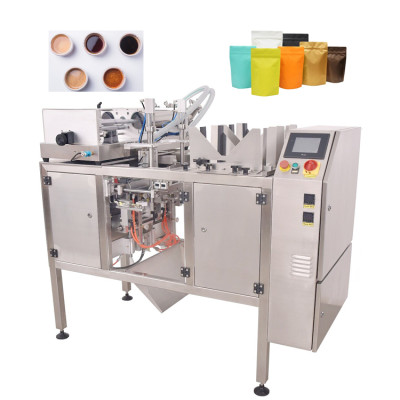
The Granule Horizontal Packing Machine is particularly well-suited for single-item packaging or for products where presentation is key. Because the filling process is not solely reliant on gravity, HFFS machines offer more control and are often used for delicate items or for integrating complex features like re-sealable zippers. While sometimes larger and more complex than their vertical counterparts, they provide unparalleled versatility in pouch design and functionality.
Granule Filling Machines for Rigid Containers
Unlike VFFS and HFFS systems that create their own flexible packaging, granule filling machines are designed to dose product into pre-made rigid or semi-rigid containers such as jars, bottles, cans, and tubs. These machines focus solely on the filling aspect, often using multi-head weighers or linear weighers for high-accuracy dosing.
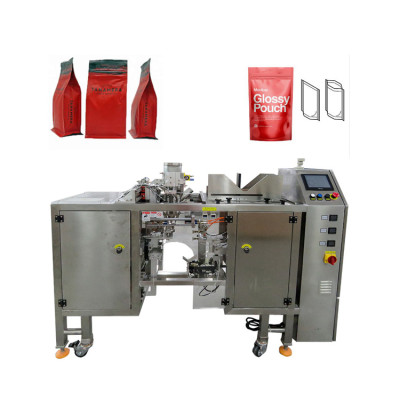
The process involves conveying empty containers to the filling station, where a precise amount of granules is dispensed. After filling, the containers move on to a separate capping or sealing machine. This modular approach is common in facilities that package products like nuts, vitamins, spices, and other goods sold in rigid formats. It allows for flexibility in container shape and size and is essential for products requiring the protection of a hard-shelled package. An example of a great machine that can do this is the Coffee Beans Pouch Filling Machine, a product that combines robust technology with precision filling.
The Specialized World of the Powder Packing Machine
While often grouped with granule machines, powder packing machines are a distinct category of equipment designed to handle the unique challenges of fine, non-free-flowing, and often dusty products. Powders like flour, milk powder, coffee powder, and chemical dusts behave very differently from granules, requiring specialized mechanisms to ensure accurate and clean packaging.
Key Differences: Powder Packing Machine vs. Granule Packing Machine
The fundamental difference between a powder packing machine and a granule packing machine lies in the product handling and dosing system. Granules flow easily with gravity, whereas powders tend to clump, bridge, and generate dust, requiring mechanical assistance to move and measure them accurately.
Here is a comparison highlighting the primary distinctions:
| Feature | Granule Packing Machine | Powder Packing Machine |
|---|---|---|
| Product Type | Free-flowing, solid particles (e.g., rice, nuts, seeds) | Non-free-flowing, fine particles (e.g., flour, spices, milk powder) |
| Dosing Mechanism | Multi-head weigher, linear weigher, or volumetric cup filler. | Auger filler (screw doser). |
| Flow Principle | Relies on gravity and vibration for product movement. | Requires a screw mechanism (auger) to dispense product. |
| Dust Control | Minimal dust generation; requires less stringent dust control. | High potential for airborne dust; often incorporates dust shrouds, extraction systems, and enclosed designs. |
| Accuracy | High precision achieved through weighing combinations. | Accuracy depends on the consistency of the auger's revolutions and powder density. |
The choice between the two is entirely product-dependent. Using a granule machine for powders would result in inaccurate fills and a messy work environment, while using a powder machine for most granules would be inefficient and unnecessarily complex.
Auger Fillers: Precision for Powder Packing Machines
The hero of the powder packing machine is the auger filler. An auger is a spiral-shaped screw that rotates within a funnel or hopper. As the auger turns, it precisely conveys a consistent volume of powder from the hopper down into the package. The fill amount is controlled by the number of rotations the auger makes, which can be precisely managed by a servo motor for high accuracy.
There are two main types of auger filling:
- Volumetric Filling: The fill volume is determined by a set number of auger rotations. This is fast and effective for products with consistent density.
- Gravimetric Filling: The package is placed on a load cell (scale), and the auger fills until the target weight is reached. This method is more accurate as it compensates for variations in powder density.
Auger fillers also feature an agitator within the hopper, which is a blade that gently stirs the powder to prevent bridging or clumping, ensuring a consistent flow to the auger screw. This combination of agitation and precise screw control is what makes accurate powder filling possible.
WeighPack Systems and Paxiom's Contributions to Powder Packing Machine Technology
Leading manufacturers like WeighPack Systems, part of the Paxiom Group, have pioneered significant advancements in powder packaging technology. They specialize in creating fully integrated solutions that address the specific challenges of powders, from minimizing dust to maximizing accuracy. Their systems often combine high-performance auger fillers with advanced VFFS or rotary pouch-filling machines.
Paxiom's contributions include developing sophisticated dust control mechanisms, such as vacuum-assisted shrouds that contain dust at the point of fill. They have also engineered auger fillers with servo-driven precision that can achieve exceptional accuracies, minimizing product waste. Their focus on integrated, end-to-end solutions means that a producer can source a complete line—from filling and bagging to checkweighing and case packing—from a single provider, ensuring seamless operation. Their innovative approach has made handling even the most challenging powders cleaner, faster, and more efficient. For a state-of-the-art solution, consider the Powder Rotary Packaging Machine, which exemplifies modern packaging efficiency.
Applications and Essential Features of Granule and Powder Packing Machines
The versatility of granule and powder packing machines allows them to serve a vast array of industries, each with unique requirements for hygiene, accuracy, and speed. Understanding their applications and the critical features to look for is essential for making an informed investment in packaging automation.
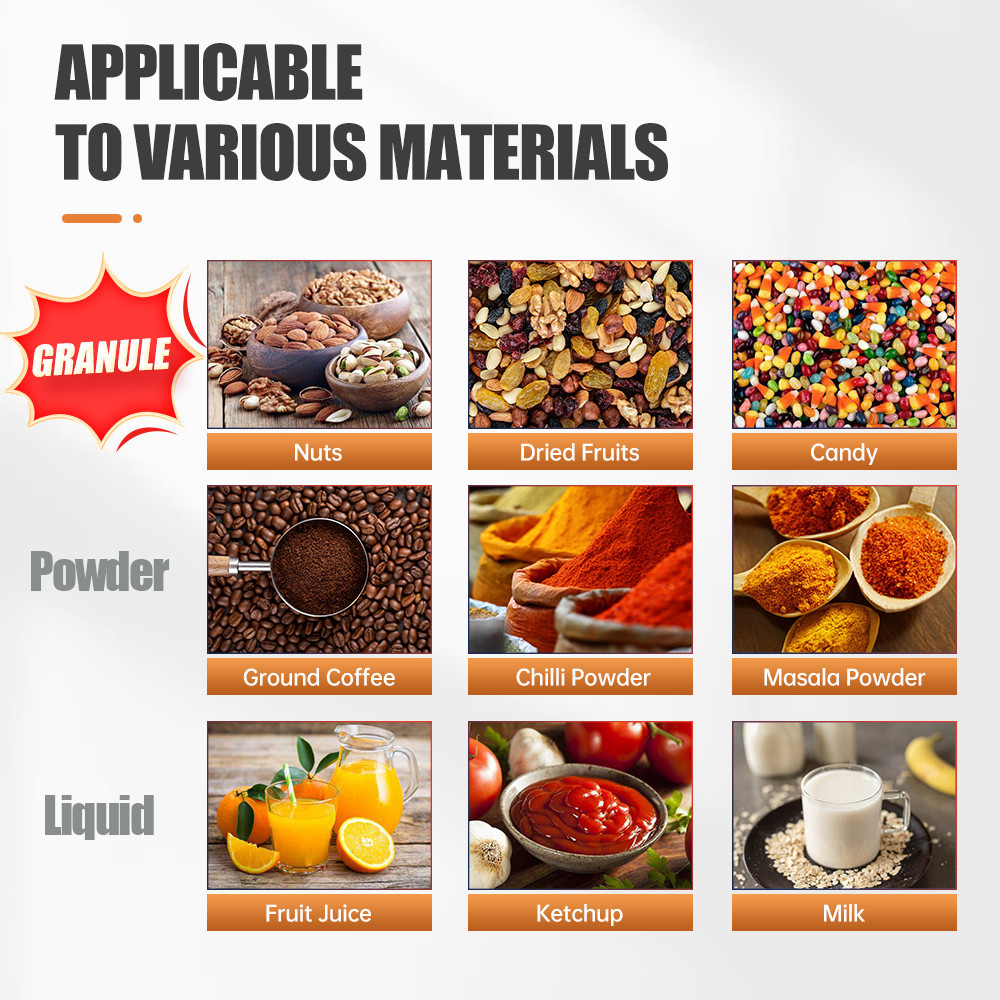
Broad Industry Applications for Granule Packing Machines and Powder Packing Machines
These machines are indispensable across multiple sectors due to their ability to handle a wide range of product types and meet stringent industry standards.
- Food and Beverage: This is the largest market. Granule machines package snacks, cereals, coffee beans, sugar, salt, and pasta. Powder machines handle flour, spices, powdered milk, protein powders, and coffee grounds.
- Pharmaceuticals: For packaging medicinal powders, granulated APIs (Active Pharmaceutical Ingredients), and vitamin supplements where precision dosing and sterile conditions are paramount.
- Chemicals and Agriculture: Used for packaging fertilizers, pesticides, detergents, seeds, and plastic pellets. Durability and resistance to corrosive materials are key in this sector.
- Cosmetics: Filling jars and sachets with powdered makeup, bath salts, and other personal care products.
- Hardware: Automatically bagging small parts like screws, nuts, and bolts using counting weighers integrated with the packing machine.
Critical Features to Consider in a Granule Packing Machine
When selecting a granule packing machine, several key features determine its performance, reliability, and suitability for your specific operation. Evaluating these aspects ensures you get a machine that delivers a strong return on investment.
Accuracy and Precision in Every Granule Packing Machine
Accuracy is arguably the most critical feature, as it directly impacts profitability by minimizing product giveaway and ensuring regulatory compliance. High-precision dosing systems, such as multi-head weighers, use sophisticated algorithms to weigh product in multiple buckets and select the combination that comes closest to the target weight. Even with volumetric cup fillers, look for designs that ensure consistent density and fill, though they are generally less precise than weighers. A machine's ability to consistently deliver accurate fills reduces waste and builds consumer trust.
Speed and Efficiency: Optimizing Your Granule Packing Machine Operations
Production speed, typically measured in bags per minute (BPM), is a crucial metric for overall efficiency. However, true efficiency is a balance of speed and reliability. A machine that runs at 120 BPM but suffers from frequent downtime is less efficient than one running steadily at 80 BPM. Look for machines with servo-driven motors, which offer smoother and faster operation compared to pneumatic or mechanical systems. Features like quick, tool-less changeovers for different bag sizes or products also significantly boost operational efficiency by reducing downtime between runs.
Automation and Integration for Seamless Granule Packing Machine Workflows
Modern packing machines are not standalone units; they are part of a larger, integrated packaging line. A key feature is the machine's ability to seamlessly communicate with upstream and downstream equipment, such as infeed conveyors, checkweighers, metal detectors, and case packers. Look for machines with advanced PLC (Programmable Logic Controller) systems and user-friendly HMIs (Human-Machine Interfaces) that allow for easy integration and centralized control. Full automation reduces labor costs, minimizes human error, and provides valuable production data for analysis and optimization.
Ease of Operation and Maintenance for Your Granule Packing Machine
A machine is only as good as its operator's ability to use it effectively. An intuitive HMI with pre-programmable recipes for different jobs simplifies operation and reduces training time. Similarly, maintenance-friendly design is critical for maximizing uptime. Features to look for include easy access to key components, stainless steel construction for simple cleaning (especially important in food and pharma), and "no-tool" changeover parts. Proactive diagnostic alerts that notify operators of potential issues before they cause a shutdown are also invaluable.
Operational Insights and Maintenance for Your Granule Packing Machine and Powder Packing Machine
Investing in a high-quality packing machine is only the first step. Proper setup, operation, and diligent maintenance are crucial for unlocking its full potential, ensuring longevity, and maintaining peak performance. Whether handling granules or powders, a proactive approach to machine care is essential for maximizing uptime and protecting your investment.
Setting Up and Running Your Granule Packing Machine
The initial setup and calibration of a granule packing machine are critical for achieving accurate and efficient production runs.
- Installation and Leveling: Ensure the machine is installed on a solid, level surface. Any vibrations or instability can negatively impact weigher accuracy and machine performance.
- Product Calibration: This is the most important step. For machines with multi-head weighers, you must run calibration cycles to "teach" the machine how the specific product flows. This involves setting parameters like vibration intensity for the feeder pans and target weights. For volumetric fillers, you'll need to adjust the cup size and test-run to ensure the volume dispensed equals the desired weight.
- Film Tracking and Sealing: Proper film alignment is key to creating quality bags. Adjust the film rollers and forming collar to ensure the film tracks straight and the vertical seal is centered. Set the correct sealing temperature, pressure, and dwell time for your specific film material. Incorrect settings can lead to weak seals or burnt film.
- Operator Training: Train operators not just on how to run the machine, but also on how to identify common problems like poor seals, incorrect bag length, or inaccurate weights. Empowering them with basic troubleshooting knowledge can prevent minor issues from becoming major shutdowns.
Maintaining Optimal Performance of Your Powder Packing Machine
Powder packing machines, particularly their auger fillers, require a specific maintenance regimen due to the nature of the product they handle.
- Daily Cleaning: Powder is pervasive. At the end of each shift, it is crucial to thoroughly clean the hopper, auger, and surrounding surfaces. Product buildup can impede mechanical parts, affect fill accuracy, and pose a cross-contamination risk. Many modern auger fillers are designed for easy disassembly without tools to facilitate quick and thorough cleaning.
- Seal Inspection: Check the seals and gaskets around the auger shaft and hopper. Worn seals can lead to powder leakage, creating a messy and potentially hazardous work environment.
- Auger and Funnel Care: Regularly inspect the auger screw and tooling for any signs of wear or damage. Nicks or scratches on the auger can affect its performance and accuracy. Ensure the tooling is correct for the powder being run—some products require specific auger designs to flow properly.
- Scheduled Lubrication: Follow the manufacturer's guidelines for lubricating moving parts, such as bearings and drive chains. Use food-grade lubricant in food or pharmaceutical applications. Neglecting lubrication can lead to premature wear and component failure.
The Role of TOP Y MACHINERY in Providing Reliable Granule Packing Machine Solutions
Manufacturers like TOP Y MACHINERY play a crucial role that extends beyond simply selling equipment. They are partners in your production success, providing reliable solutions and essential support. A reputable manufacturer offers:
- Expert Consultation: Helping you choose the right machine and configuration based on your product, production goals, and facility constraints.
- Robust Construction: Building durable machines with high-quality components, like stainless steel frames and servo motors, that are designed for long-term industrial use.
- Comprehensive Support: Providing detailed documentation, operator training, and accessible technical support to assist with setup, troubleshooting, and maintenance.
- Parts and Service: Ensuring a ready supply of spare parts and offering service plans to keep your machine running at peak performance for years to come.
By partnering with an experienced manufacturer, you gain access to a wealth of knowledge that helps you optimize your packaging operations and maximize your return on investment. If you are ever unsure of the best path forward, it is always wise to contact our expert team for guidance.
Key Takeaways
Understanding the nuances of granule and powder packing machines is vital for any industry reliant on efficient, automated packaging. This comprehensive overview has explored their core functionalities, diverse types, and critical operational aspects. To distill this information, here are the most important takeaways for your business.
First and foremost, the product dictates the machine. The fundamental difference between granule and powder packing machines lies in their dosing systems. Granules, being free-flowing, are best handled by gravity-fed systems like multi-head weighers or volumetric cup fillers for speed and accuracy. Powders, which are prone to clumping and dust, absolutely require an auger filler to mechanically push the product for a consistent and clean fill. Choosing the wrong machine type for your product will inevitably lead to inaccurate weights, significant product waste, and operational chaos.
Second, the type of packaging machine—VFFS, HFFS, or rigid container filler—radically impacts your packaging style and operational flexibility. VFFS machines are the workhorses for creating standard pillow or gusseted bags at high speed, making them ideal for snacks, grains, and coffee beans. HFFS machines offer superior versatility for creating premium packaging like stand-up, re-sealable pouches, which enhance shelf appeal and consumer convenience. Rigid container fillers are essential for products sold in jars, cans, or tubs, integrating into a modular line with separate capping and labeling stations. Your choice should align with your branding, market positioning, and product protection needs.
Third, accuracy and efficiency are where you make or lose money. When selecting a machine, scrutinize its accuracy specifications. For high-value products, investing in a multi-head weigher over a volumetric filler can provide a rapid return on investment by minimizing product giveaway on a per-bag basis. Efficiency is not just about raw speed (Bags Per Minute) but also about minimizing downtime. Look for machines with quick, tool-less changeover capabilities, intuitive user interfaces (HMI), and robust construction that reduce time spent on setup, cleaning, and maintenance.
Finally, maintenance is not optional; it is essential for performance and longevity. A proactive maintenance schedule is the key to maximizing uptime and extending the life of your equipment. For powder packing machines, daily cleaning of the auger and hopper is non-negotiable to prevent cross-contamination and ensure accuracy. For all machines, regular inspection of seals, lubrication of moving parts, and proper calibration are critical tasks. Partnering with a reputable manufacturer like TOP Y MACHINERY ensures you have access to an expert team, reliable replacement parts, and the support needed to keep your operations running smoothly. If you require specialized assistance, do not hesitate to contact our expert support.
Frequently Asked Questions (FAQ)
1. What is the main difference between a VFFS and an HFFS packing machine?
The primary difference is the orientation of the packaging process. A Vertical Form Fill Seal (VFFS) machine operates vertically; the film is formed into a tube downwards, and the product is dropped into the bag using gravity. This makes it extremely efficient for free-flowing granules and powders. An Horizontal Form Fill Seal (HFFS) machine operates horizontally; the pouch is formed and travels sideways, and the product is filled from the side. HFFS is more versatile for different pouch styles (like stand-up pouches with zippers) and is often used for products that are fragile, oddly shaped, or need to be carefully arranged in the package.
2. How do I choose between a multi-head weigher and a volumetric cup filler for my granule product?
The choice depends on your priorities: accuracy versus cost and speed.
- Volumetric Cup Fillers are simpler, less expensive, and can operate at very high speeds. They work by filling a set of pre-sized cups with your product. However, their accuracy depends on the product having a consistent density. If the density varies, the weight of each bag will fluctuate. They are a good choice for inexpensive, dense products where slight weight variations are acceptable.
- Multi-Head Weighers are significantly more accurate. They use multiple weighing buckets to measure small portions of the product and then use a computer to calculate the best combination of these portions to achieve the exact target weight. This drastically reduces product giveaway, making them essential for high-value products like gourmet coffee, organic nuts, or pharmaceuticals. While more expensive upfront, the savings from reduced waste often provide a quick ROI. An example of a machine that excels at this is the advanced Coffee Beans Pouch Filling Machine, a product known for its precision.
3. Why is dust control so important for powder packing machines?
Dust control is critical for several reasons. First, for worker safety and workplace cleanliness, as airborne powder can be a respiratory hazard and creates a messy, inefficient environment. Second, for machine longevity, as powder dust can infiltrate mechanical and electronic components, causing premature wear and failure. Third, for product integrity, as uncontrolled dust can lead to inaccurate fills and poor-quality seals if powder gets trapped in the seal area. Effective powder packing machines, like the Powder Rotary Packaging Machine, incorporate dust shrouds, vacuum ports, and enclosed systems to manage dust at the source.
4. What does "tool-less changeover" mean, and why is it a valuable feature?
"Tool-less changeover" means that an operator can switch the machine from running one bag size or product to another without needing any tools like wrenches or screwdrivers. Parts like forming tubes, sealing jaws, or volumetric cups can be removed and replaced by hand using quick-release clamps or handles. This is extremely valuable because it drastically reduces downtime. A changeover that might take an hour with tools could take as little as 15 minutes without them, significantly boosting your overall production efficiency (OEE).
5. How often should I perform maintenance on my packing machine?
Maintenance schedules vary by machine type and usage intensity, but a good baseline includes:
- Daily: Cleaning the machine, especially product contact parts. For powder machines, this is non-negotiable. Inspect for any obvious issues like loose parts or film jamming.
- Weekly: Check and clean sensors and photo-eyes. Inspect belts and sealing jaws for wear. Perform a more thorough cleaning of the entire machine.
- Monthly: Lubricate moving parts according to the manufacturer's guide. Check the sharpness of the cutting blades. Calibrate the weigher or auger filler to ensure continued accuracy.
- Annually: Schedule a comprehensive inspection by a qualified technician, who can check wear on motors, bearings, and other critical components.
Always refer to the manufacturer's recommended maintenance schedule as your primary guide.
The evolution of granule packing machines and powder packing machines has revolutionized industrial packaging, offering unparalleled efficiency, accuracy, and hygiene across diverse sectors. From the high-speed simplicity of VFFS systems for grains and snacks to the specialized precision of auger fillers for fine powders, these machines are the engines of modern production lines. We've seen how distinct mechanisms like multi-head weighers and auger screws are engineered to handle the unique physical properties of different products, ensuring that each package is filled correctly and sealed securely.
Selecting the right equipment, understanding its features, and implementing proper maintenance protocols are key to maximizing productivity and ensuring product integrity. This commitment is reflected in manufacturers like TOP Y MACHINERY, who continue to push the boundaries of packaging innovation. By investing in the right technology and embracing a proactive approach to operation and care, businesses can achieve a seamless, efficient, and profitable packaging workflow that meets the demands of today's competitive market.