The Ultimate Guide to Granule Doypack Machines: From Coffee Beans to Pet Food
You've likely noticed the proliferation of stand-up pouches, or doypacks, that keep our favorite snacks fresh and beverages spill-free. Doypack machines are revolutionizing the packaging industry with their efficiency and versatility, making them a popular choice for brands looking to enhance product presentation and shelf appeal.
In this comprehensive guide, we will explore everything you need to know about granule doypack machines, from their basic functions to their advanced applications, especially in areas like coffee beans and pet food. Our aim is to help you understand how these innovative machines can transform your packaging operations and boost your brand's presence in a competitive market.
Key Takeaways
- What is a Granule Doypack Machine? It's a specialized automated system designed to form, fill, and seal stand-up pouches (doypacks) with granular products like coffee, nuts, sugar, and pet food. Its core functionality involves precise weighing, dispensing, and creating an airtight seal to ensure product integrity.
- Why Choose Doypack? This packaging format offers superior shelf appeal due to its upright stance and large printable surface. It's also cost-efficient, using up to 60% less material than rigid containers, which reduces production and shipping costs. The multi-layer material provides excellent protection against moisture, oxygen, and light, extending shelf life and preserving freshness.
- Types of Machines: Key types include Vertical Form Fill Seal (VFFS), which creates pouches from a roll of film, and Horizontal Form Fill Seal (HFFS), which is often used for premade pouches. Specialized models like rotary premade pouch machines offer high speed, while a mini doypack machine is perfect for smaller businesses or niche products.
- Core Applications: The food industry is the largest user, for products like coffee, snacks, grains, and spices. The pet food sector also relies heavily on doypacks for kibble and treats, valuing their durability and resealable features. Other applications include pharmaceuticals, chemicals, and household products.
- Essential Features to Consider: When choosing a machine, prioritize accuracy (especially the weighing system), speed (pouches per minute), flexibility for different pouch sizes, automation capabilities for integration into your production line, and ease of maintenance. Leading providers like TOP Y Machinery offer advanced solutions that cater to these needs.
Understanding the Granule Doypack Machine: What It Is and Why It Matters
In today's competitive consumer market, packaging is more than just a container; it's a critical component of product marketing, protection, and user experience. The rise of the stand-up pouch, or doypack, is a testament to this evolution. At the heart of this trend is the granule doypack machine, an innovative piece of equipment that is reshaping how businesses package granular products ranging from premium coffee beans to everyday pet food.
What is a Granule Doypack Machine?
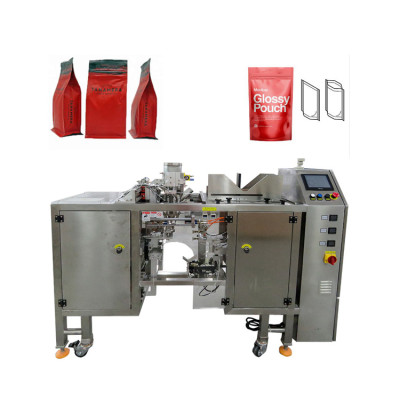
A granule doypack machine is a specialized piece of packaging equipment designed to automatically fill and seal premade stand-up pouches, known as doypacks, with granular or free-flowing solid products. Unlike other packaging systems, these machines are optimized for products like nuts, seeds, candy, coffee granules, detergents, and pet kibble. The term "Doypack" itself originated from its inventor, Louis Doyen, in the 1960s and refers to the pouch's unique ability to stand upright on shelves thanks to a gusseted bottom.
The Core Functionality of a Granule Doypack Machine
The primary function of a granule doypack packing machine is to streamline the packaging process into a seamless, automated workflow. This typically involves several key stages:
- Pouch Feeding and Opening: The machine picks up a single premade pouch from a magazine, grips it, and uses a mechanism like vacuum suction cups or mechanical grippers to open the pouch, preparing it for filling.
- Product Filling: This is the most critical step for granular products. The machine is integrated with a high-precision dosing system, most commonly a multi-head weigher or an auger filler. This system accurately measures the target weight of the granules and dispenses them into the open pouch, minimizing product giveaway and ensuring consistency.
- Sealing and Finishing: After filling, the top of the pouch is securely sealed using heat or ultrasonic methods to create an airtight closure. This preserves freshness and protects the contents from external elements. Additional functions like zipper closing, nitrogen flushing (to extend shelf life), date coding, and tear notch application can also be performed before the finished pouch is discharged.
Key Features That Set Granule Doypack Machines Apart
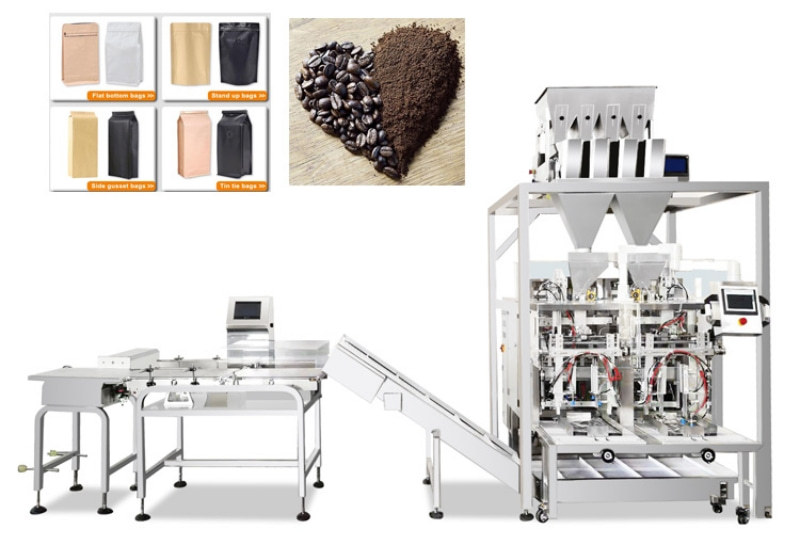
Modern granule doypack machines, such as those offered by TOP Y Machinery, are equipped with advanced features that enhance efficiency, versatility, and safety. These distinguishing features include:
- Precision Dosing Systems: The integration with multi-head weighers ensures exceptional accuracy (often within ±1g), which is crucial for high-value products and maintaining profitability.
- PLC Control and HMI Interface: A central Programmable Logic Controller (PLC) with a user-friendly touch screen (Human-Machine Interface) allows operators to easily set parameters, adjust speeds, and monitor the entire process in multiple languages.
- Versatility in Pouch Handling: These machines can handle a wide variety of pouch types, including standard stand-up pouches, zipper pouches, spout pouches, and bags with custom shapes or hanging holes. The ability to quickly change between different pouch sizes is a key advantage.
- Automatic Checking Systems: Advanced sensors detect issues such as no pouch, incorrect pouch opening, or filling errors. If an error is detected, the machine will not fill or seal, preventing waste of both bags and product.
- Durable and Hygienic Construction: The main structures are typically made from SUS304 stainless steel, which is robust and easy to clean. This is especially important for food and pharmaceutical applications to prevent contamination.
Why Choose a Granule Doypack Machine for Your Packaging Needs?
The shift from traditional rigid packaging like jars, cans, and boxes to flexible doypacks is driven by a powerful combination of marketing, economic, and practical advantages. A granule doypack packaging machine is the engine that unlocks these benefits for manufacturers.
Enhanced Product Presentation and Shelf Appeal with Doypack Packaging
A product's first impression is often its last. Doypacks excel on retail shelves for several reasons:
- Stands on Its Own: The ability to stand upright gives the package a "billboard" effect, ensuring it is seen by consumers. This excellent shelf presence maximizes brand visibility in crowded retail environments.
- Large Printable Surface: The front, back, and even the bottom gusset of a doypack can be custom printed with high-resolution graphics and branding. This turns the package into a powerful marketing tool that can tell a brand’s story and attract customers.
- Perceived Premium Quality: The sleek, modern look of a doypack can increase a product's perceived value by up to 30%, allowing brands to position themselves in a premium segment.
Cost Efficiency and Material Savings with a Granule Doypack Machine
Investing in a doypack machine can lead to substantial long-term savings.
- Reduced Material Usage: Flexible pouches use significantly less material—some reports indicate up to 60% less plastic than rigid containers. This directly lowers manufacturing costs.
- Lower Transportation Costs: Doypacks are lightweight and compact, both when empty and filled. This reduces shipping costs, as more units can be transported per shipment, leading to lower fuel consumption and a smaller carbon footprint.
- Minimized Product Waste: High-precision filling systems prevent overfilling, saving valuable product over time. The automated process also reduces human error and associated waste.
Sustainability Benefits of Doypack Technology
As consumers become more environmentally conscious, packaging choices can influence purchasing decisions. Doypacks offer several eco-friendly advantages:
- Lower Carbon Footprint: The reduced material and energy required for production, coupled with lighter transport weight, result in lower carbon emissions compared to traditional packaging.
- Resource Reduction: Requiring fewer raw materials for production means less overall waste is generated from the start.
- Advancements in Recyclability: While multi-layer films have traditionally been difficult to recycle, the industry is making significant strides. The development of mono-material pouches is improving recyclability and supporting a circular economy.
Improved Product Freshness and Extended Shelf Life
Protecting the product is the fundamental role of any package. Doypacks provide superior protection for granular goods.
- High-Barrier Materials: Doypacks are typically constructed from multi-layer films that can include materials like PET, aluminum foil, and PE. These layers create an excellent barrier against moisture, oxygen, UV light, and external odors, all of which can degrade product quality.
- Airtight Sealing: A properly sealed doypack preserves freshness, taste, and nutritional value, which is crucial for products like coffee and snacks. This extended shelf life reduces food waste for both retailers and consumers.
- Resealable Features: The integration of zippers or sliders allows consumers to securely reseal the pouch after opening. This maintains product freshness over multiple uses, enhancing consumer convenience and satisfaction.
Exploring Different Types of Granule Doypack Machines
Granule doypack machines are not a one-size-fits-all solution. They come in various configurations, each designed to meet different production needs, speeds, and pouch types. The primary distinction lies in how the pouch is formed and filled, mainly categorized as Vertical Form Fill Seal (VFFS) and Horizontal Form Fill Seal (HFFS) systems. Beyond these, specialized machines cater to niche requirements like small-scale production or specific pouch features.
Vertical Form Fill Seal (VFFS) Doypack Machines
A Vertical Form Fill Seal (VFFS) machine creates the doypack pouch from a flat roll of film in a continuous vertical process. Here’s how it typically works:
- Film Transport and Forming: A single roll of film is pulled upwards over a forming tube (or "forming collar"). As the film wraps around the tube, it's shaped into a cylinder.
- Sealing: A vertical sealing bar joins the two outer edges of the film to create a tube. A horizontal sealing jaw then creates the bottom seal of one pouch and the top seal of the previously filled pouch simultaneously. During this stage, a gusseting device forms the base that allows the pouch to stand.
- Filling and Cutting: The product (granules) is dropped down through the forming tube into the partially formed pouch. The jaws then seal the top of the filled pouch and cut it free, a process that also forms the bottom of the next pouch in the sequence.
VFFS doypack machines are often prized for their high speed and efficiency in producing standard pillow pouches, but adapting them to create a true, stable doypack can be complex. They are excellent for producers who want to manage their packaging material in-house from rolls of film, offering cost savings on premade pouches.
Horizontal Form Fill Seal (HFFS) Doypack Machines
Horizontal Form Fill Seal (HFFS) machines operate on a horizontal plane and are incredibly versatile. They can either form pouches from a film roll or, more commonly for doypacks, work with premade pouches. The process for premade pouches is a key differentiator and a popular choice for brands seeking high-quality finishes.
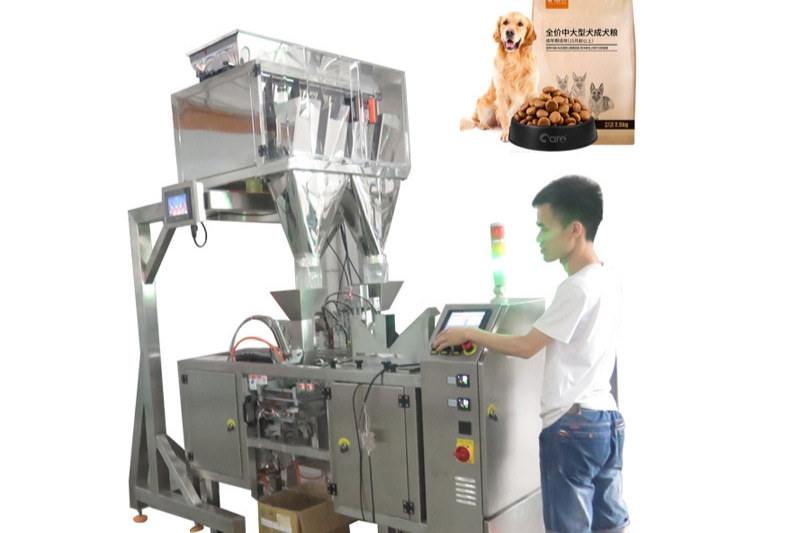
Stand-up Pouch Packing Machines (HFFS)
These machines, particularly the rotary models, are a dominant force in the doypack market. They are specifically designed to handle premade pouches, which allows for more complex pouch shapes, high-quality printing, and features like zippers that are pre-applied. The process generally follows these steps in a circular (rotary) or linear fashion:
- Pouch Pickup: A robotic arm or suction cups pick a premade pouch from a magazine.
- Gripping & Opening: The pouch is transferred to a set of grippers, and a jet of air or a mechanical opener opens the top of the pouch.
- Filling: The open pouch moves to the filling station, where a weigher or doser dispenses the granules.
- Sealing & Cooling: The pouch then moves to a sealing station where heated bars seal the top. A cooling station firms up the seal for maximum integrity.
- Discharge: The finished pouch is released onto a conveyor.
This method is favored for its reliability, flexibility, and the superior final appearance of the pouch.
Flow Wrapping Doypack Machines (HFFS)
Flow wrapping is another type of HFFS technology, but it's more commonly used for single, solid items (like a candy bar). However, adaptations exist for granules. In this process, products are placed on a conveyor and a continuous tube of film is wrapped around them. Sealing jaws then create a "fin seal" along the bottom or top and seal and cut the individual packs. While less common for creating true stand-up doypacks, this technology is known for its high speed and is suitable for certain types of granule packaging where a stand-up feature is not the primary requirement.
Specialized Granule Doypack Machines
To meet the diverse needs of modern manufacturing, several specialized doypack machines have been developed.
Rotary Premade Pouch Doypack Machines
These are a subset of HFFS machines but deserve special mention due to their popularity and efficiency. They use a circular turret with multiple stations (typically 8 or 10), where each station performs a specific task (pouch opening, filling, sealing, etc.) simultaneously. This design allows for continuous motion and very high speeds—often from 25 to 60 bags per minute, depending on the product and bag size. Their compact footprint and automated nature make them a top choice for medium to large-scale producers.
Mini Doypack Packaging Machines
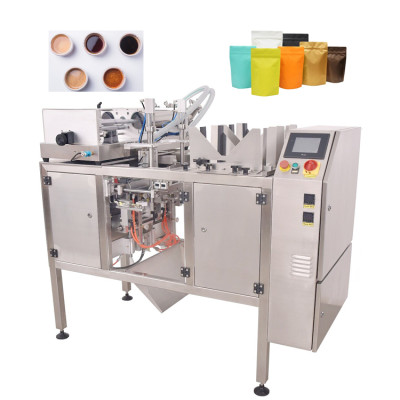
For startups, small businesses, or those producing niche products with smaller batch sizes, a mini doypack machine is an ideal solution. These machines offer the same core functionality as their larger counterparts but in a more compact and affordable package. They typically operate at lower speeds but provide an accessible entry point into automated doypack packaging, eliminating the need for manual filling and sealing. This allows smaller brands to achieve a professional packaging finish without a massive initial investment.
Automatic Vacuum Doypack Packaging Machines
For products that are highly sensitive to oxygen, such as coffee, nuts, and some organic granules, a vacuum doypack machine offers an extra layer of protection. After filling, this machine removes the air from the pouch before sealing it. This process, often combined with nitrogen gas flushing, minimizes oxidation, prevents microbial growth, and can dramatically extend the product's shelf life and preserve its flavor and aroma.
Top Spout Doypack Packing Machines
While less common for purely granular products, spouted pouches are essential for semi-liquids, powders, and some granules like sugar or salt. A spouted doypack machine is equipped with an additional station that inserts and seals a pre-made spout (usually at the top corner or center) onto the pouch. This feature adds significant consumer convenience, allowing for controlled pouring and re-closing. These machines are highly versatile and can often handle both spouted and non-spouted pouches.
How a Granule Doypack Machine Works: A Step-by-Step Guide
Understanding the operational workflow of a granule doypack packing machine demystifies the technology and highlights its efficiency. Whether it’s a high-speed rotary model or a compact linear system, the process follows a logical sequence of automated steps designed for precision and consistency. Let's break down the journey from an empty pouch to a market-ready product.
Preparation and Setup for Your Granule Doypack Machine
Before production can begin, proper setup is crucial. This stage ensures that the machine runs smoothly and meets the specific requirements of the product and packaging.
- Loading Consumables: The operator loads the empty, premade pouches into the machine's bag magazine. Depending on the design, this can be a horizontal stack or a vertical cartridge. Film rolls would be loaded for a VFFS machine.
- Setting Parameters via HMI: Using the touch screen Human-Machine Interface (HMI), the operator inputs key parameters. This includes selecting the bag size, setting the target weight for the filling system (e.g., a multi-head weigher), adjusting the sealing temperature and time, and defining the production speed. Modern machines from manufacturers like TOP Y Machinery feature intuitive interfaces that store recipes for different products, allowing for quick changeovers with minimal manual input.
- Calibration and Checks: The integrated weighing system is calibrated to ensure accuracy. The operator also performs checks on sensors, grippers, and safety mechanisms to ensure everything is functioning correctly before starting a full production run.
The Doypack Machine Packaging Process Workflow
Once the setup is complete, the automated packaging cycle begins. In a typical rotary premade pouch machine, this process is a symphony of synchronized actions performed at different stations.
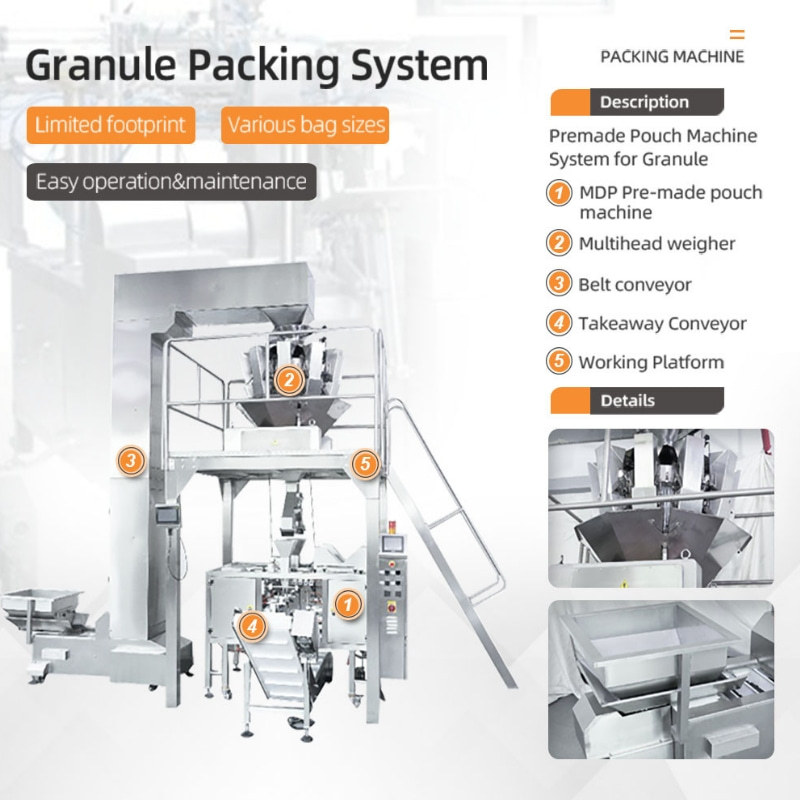
Pouch Loading and Opening with a Doypack Machine
This is the first active stage of the cycle.
- Bag Picking: A set of vacuum suction cups or a mechanical arm picks a single flat pouch from the magazine.
- Pouch Transfer: The pouch is transferred to a pair of grippers that will hold it securely as it travels through the different stations of the machine.
- Opening: As the pouch is held by the grippers, a bag opening device—usually a combination of vacuum suckers pulling the sides apart and a jet of clean air blown into the pouch—ensures it is fully open and ready for filling. Advanced machines have a "no bag, no fill" sensor; if a pouch fails to open correctly, the filling and sealing stations for that cycle are skipped to prevent waste.
Precise Filling Mechanisms in a Granule Doypack Machine
This is where the product is introduced. For granules, accuracy is key to profitability and product consistency.
- Weighing the Product: Above the doypack machine, a multi-head weigher (the most common dosing system for granules) receives the product from a bulk hopper. The weigher's computer calculates the combination of its weigh buckets that comes closest to the target weight.
- Dispensing: Once the open pouch is positioned directly under the filling funnel, the multi-head weigher releases the precisely weighed portion of granules. The product flows cleanly into the pouch. A vibration device may gently shake the pouch to help the granules settle, which is particularly useful for lighter products or to ensure the product level is below the seal area.
Secure Sealing and Discharge from the Doypack Machine
The final steps ensure the product is protected and ready for shipping.
- Dust Removal/Cleaning: Some machines include a feature to blow away any dust or small particles from the sealing area of the pouch to ensure a clean, strong seal.
- Sealing: The filled pouch moves to the sealing station. Here, a pair of heated sealing bars clamp down on the top edge of the pouch. The combination of heat, pressure, and time fuses the inner layers of the film together, creating an airtight, hermetic seal.
- Cooling: Immediately after heat sealing, a set of cooling bars may press against the sealed area. This rapidly cools and solidifies the seal, giving it extra strength and a clean, flat appearance.
- Discharge: Finally, the grippers release the finished, sealed pouch, which then drops onto a discharge conveyor. This conveyor transports the ready-to-ship product to downstream equipment, such as a check weigher, X-ray inspector, or case packing station.
Maintenance and Safety for Your Granule Doypack Machine
To ensure longevity and optimal performance, regular maintenance and adherence to safety protocols are non-negotiable.
- Routine Maintenance: This includes daily cleaning of product contact parts, regular lubrication of moving components, and periodic inspection of wear-and-tear parts like sealing bars, grippers, and suction cups. A well-maintained doypack packaging machine operates more reliably and has a longer useful life.
- Safety Features: Modern machines are built with operator safety as a priority. Standard safety features include safety guards with interlock switches that stop the machine if opened, emergency stop buttons, and clear warnings for hot surfaces or moving parts. Proper training ensures that operators can run the machine effectively and safely.
Applications of the Granule Doypack Machine Across Industries
The versatility and efficiency of the granule doypack machine have led to its adoption across a vast array of industries. While most commonly associated with food products, its ability to handle a wide range of dry, free-flowing materials makes it an invaluable asset for packaging everything from pharmaceuticals to agricultural products. The combination of product protection, consumer convenience, and marketing appeal offered by doypacks has made them a go-to choice for countless brands.
Granule Doypack Machines in the Food Industry: From Coffee to Snacks
The food industry is the largest and most diverse sector utilizing doypack technology. The ability to preserve freshness, aroma, and flavor is paramount, and doypacks deliver on all fronts.
- Coffee and Tea: Whole bean and ground coffee are prime candidates for doypack packaging. Multi-layer films, often with an aluminum layer, protect the delicate aromas from oxygen and light. One-way degassing valves can be incorporated to allow CO2 to escape from freshly roasted beans without letting oxygen in. Teas, whether loose-leaf or in bags, are similarly protected.
- Nuts, Seeds, and Dried Fruits: These snacks are prone to going stale or rancid when exposed to air. A granule doypack packaging machine equipped with nitrogen flushing can displace oxygen from the pouch before sealing, significantly extending shelf life. Resealable zippers are a must-have feature for consumer convenience.
- Snack Foods: Popcorn, chips, pretzels, and beef jerky are all commonly packaged in doypacks. The durable nature of the pouch protects these fragile items from crushing, while the stand-up design provides excellent branding opportunities in competitive snack aisles.
- Grains, Cereals, and Pasta: Products like rice, quinoa, granola, and small pasta shapes are easily handled by the precise weighing and filling systems of these machines. The airtight seal prevents moisture contamination and keeps pests out.
- Confectionery and Baking: Candies, chocolates, sugar, spices, and baking mixes are perfectly suited for doypack packaging. The secure seal contains fine powders and prevents sugar from clumping due to humidity.

The Role of Doypack Machines in Pet Food Packaging
The pet food market has seen explosive growth, and packaging plays a crucial role in brand differentiation and functionality. Doypacks have become a dominant format, especially for dry kibble and treats.
- Dry Kibble: Doypacks are robust enough to handle the weight of dry pet food. Large-format bags often feature integrated handles for easy carrying and resealable zippers to maintain freshness over weeks of use. Pet owners appreciate this functionality, as it keeps food fresh and palatable for their pets.
- Pet Treats: Smaller doypacks are perfect for packaging treats like dental chews, jerky, and biscuits. The high-quality graphics possible on the pouch help brands create a premium look and feel, appealing to pet owners who view their pets as family members.
- Bird Seed and Fish Food: The moisture-resistant properties of doypacks are ideal for packaging bird seed and fish food flakes or pellets, protecting them from spoilage.
Beyond Food: Diverse Applications of the Granule Doypack Machine
The utility of doypack machines extends far beyond edible goods. Any industry dealing with granular, powdered, or solid-piece products can benefit.
Doypack Machines in the Medical and Pharmaceutical Sector
In the medical and pharmaceutical industries, hygiene, precision, and safety are non-negotiable.
- Dietary Supplements: Powders like protein and collagen, as well as capsules and tablets, are often packaged in doypacks. The tamper-evident and airtight seals ensure product integrity and safety.
- Medical Granules: Medicinal powders and granular formulations for reconstitution can be accurately dosed and sealed in sterile pouches. The packaging material is selected to be non-reactive with the contents.
Chemical and Agricultural Industry Uses for a Granule Doypack Machine
Doypacks provide a safe and effective way to package a variety of chemical and agricultural products.
- Fertilizers and Pesticides: Granular fertilizers, pesticides, and seeds can be packaged in durable, puncture-resistant pouches. The secure sealing prevents leakage and protects users from direct contact with the chemicals.
- Detergents and Cleaning Products: Powdered laundry detergents, dishwasher tablets, and bath salts are commonly sold in stand-up pouches. The packaging is moisture-resistant and often features child-resistant zippers for safety.
Electronics Industry and the Granule Doypack Machine
While not a primary application, doypack machines can be used in the electronics sector for packaging small components.
- Small Hardware and Components: Items like screws, nuts, bolts, and small plastic or electronic parts can be sorted, counted, and packaged. Anti-static films can be used to create pouches that protect sensitive electronic components from electrostatic discharge. Clear windows in the pouch can also allow for easy product identification without opening the package.
Key Features to Look for When Choosing a Granule Doypack Machine
Selecting the right granule doypack machine is a critical investment that can significantly impact your production efficiency, product quality, and bottom line. With various models and features available, it’s essential to evaluate your specific needs and prioritize the attributes that will deliver the most value to your operation. When partnering with a trusted manufacturer like TOP Y Machinery, you can find a solution tailored to your requirements. Here are the key features to consider.
Accuracy and Precision: Essential for Your Granule Doypack Machine
For granular products, filling accuracy is paramount. Every gram of product given away for free eats into your profit margins, while under-filling can lead to compliance issues and dissatisfied customers.
- High-Quality Weighing System: The machine's integration with a precise dosing system is the most important factor. Multi-head weighers are the industry standard for granules, offering exceptional accuracy and speed by calculating the best combination of weigh buckets to hit the target weight. Look for weighers that can be calibrated easily and offer low deviation rates (e.g., ±1% or less).
- Product Settling Features: For light or fluffy granules, a machine that includes a vibrating or "shaker" function can be beneficial. This gently settles the product in the pouch before sealing, preventing it from getting caught in the seal area and ensuring a consistent fill level.
Speed and Efficiency of the Granule Doypack Machine
Production output is directly tied to the machine's speed, measured in pouches per minute (PPM) or bags per minute (BPM).
- Rated Speed: Manufacturers will provide a speed range for their machines (e.g., 25-60 BPM). This speed is influenced by the product's characteristics, the target weight, and the pouch size. It's crucial to discuss your specific application to get a realistic estimate of the achievable speed.
- Overall Equipment Effectiveness (OEE): Beyond just raw speed, consider the machine's overall efficiency. This includes factors like quick changeover times between different products or pouch sizes, low maintenance requirements, and reliability (minimal downtime). A slightly slower but more reliable machine may have a better OEE than a faster but more temperamental one.
Flexibility and Customization in Doypack Machine Operations
Your packaging needs may evolve, so a machine that offers flexibility is a more future-proof investment.
- Pouch Size and Type Range: Check the machine's specifications for the minimum and maximum pouch widths and lengths it can handle. A machine with a wide range will allow you to package a variety of products or offer different package sizes without needing new equipment. The ability to handle different pouch types (e.g., zipper, spout, flat) is also a significant advantage.
- Tool-less and Quick Changeovers: Downtime is lost production time. Look for machines designed for easy and fast changeovers. Features like tool-less adjustments for pouch grippers, pre-programmed recipes in the HMI, and easily replaceable parts can reduce changeover time from hours to mere minutes. This is especially valuable for contract packagers or businesses with a diverse product portfolio.
Automation and Integration Capabilities of a Granule Doypack Machine
A modern packaging machine should not be an island. Its ability to communicate and integrate with other equipment is key to building a fully automated production line.
- Upstream and Downstream Integration: Ensure the machine can be seamlessly integrated with upstream equipment like product elevators and multi-head weighers, and downstream equipment such as check weighers, metal detectors, case erectors, and palletizers. This creates a continuous, efficient workflow with minimal manual intervention.
- Smart Controls and Connectivity: Advanced machines equipped with PLCs from reputable brands like Siemens or Panasonic offer superior control and reliability. Look for features like network connectivity (Ethernet/IP) for remote monitoring, data logging for performance analysis, and IoT integration capabilities that provide real-time insights into your packaging operations.
Ease of Operation and Maintenance for Your Doypack Machine
A complex machine that is difficult to operate or maintain can lead to errors, downtime, and increased labor costs.
- Intuitive HMI: A user-friendly, multilingual touch screen interface (HMI) is essential. Operators should be able to easily set parameters, troubleshoot alarms, and access machine diagnostics without extensive training. Fault indications on the panel that clearly explain the problem and suggest a solution are invaluable.
- Accessibility for Cleaning and Maintenance: Look for an open and accessible design that allows for easy cleaning and maintenance. Stainless steel construction and waterproof designs make washdowns simpler and more effective, ensuring hygiene standards are met. Modular replacement of parts also simplifies maintenance and reduces repair times.
By carefully evaluating these features, you can select a doypack packaging machine that not only meets your current needs but also supports your company's growth and success in the long term.
Frequently Asked Questions (FAQ)
1. What is the fundamental difference between a VFFS and an HFFS doypack machine?
The main difference lies in the orientation and a a pouch is formed and filled. A Vertical Form Fill Seal (VFFS) machine creates a pouch from a roll of film in a vertical motion, forming a tube, sealing it, and filling it from above. An Horizontal Form Fill Seal (HFFS) machine operates on a horizontal plane. For doypacks, HFFS machines most commonly use premade pouches, picking them from a magazine, opening, filling, and sealing them as they move horizontally through different stations. HFFS machines are generally preferred for doypacks because they offer greater flexibility with complex pouch shapes, zippers, and provide a higher quality final appearance.
2. What types of granular products can be packaged with this machine?
A granule doypack machine is incredibly versatile and can handle a wide variety of free-flowing solid products. Common applications include food items like coffee beans, nuts, seeds, granola, candy, sugar, and dry pet food (kibble). It's also used for non-food products such as detergents, bath salts, small hardware, plastic components, seeds, and granular fertilizers. Essentially, if the product is a granule, grain, or small solid piece, this machine can likely package it.
3. How does a doypack machine improve product shelf life?
Doypack machines extend shelf life in several ways. First, the pouches themselves are made from multi-layer, high-barrier films that protect the contents from moisture, oxygen, UV light, and odors. Second, the machine creates a strong, airtight heat seal that prevents contaminants from entering. Third, many machines offer advanced features like nitrogen gas flushing, which displaces oxygen inside the pouch before sealing, and vacuum sealing, which removes air entirely. Both methods dramatically slow down spoilage and preserve the product's freshness, flavor, and nutritional value.
4. Are doypacks an environmentally friendly packaging option?
Doypacks offer significant environmental advantages compared to rigid packaging. They use substantially less raw material—up to 60% less plastic than a rigid container of the same volume—and their lightweight nature reduces the carbon footprint associated with transportation. While traditional multi-layer pouches can be challenging to recycle, the industry is heavily investing in sustainable innovations, including pouches made from mono-materials that are fully recyclable and even biodegradable options.
5. What should I consider when choosing between a standard and a mini doypack machine?
The decision depends primarily on your production scale and budget. A standard doypack packaging machine, like a rotary model, is built for high-speed, large-scale production and is ideal for established businesses with high product demand. A mini doypack machine, on the other hand, is a perfect entry point for startups, small businesses, or companies launching new products with smaller initial batch runs. It offers the same professional packaging quality at a lower speed and a more accessible price point, allowing smaller brands to compete without a prohibitive upfront investment.
6. How much maintenance does a granule doypack machine require?
Like any industrial equipment, regular maintenance is key to longevity and performance. Daily tasks typically include cleaning product contact parts to ensure hygiene. Weekly or monthly checks may involve inspecting and lubricating moving parts, checking the condition of wear parts like sealing jaws and suction cups, and verifying sensor functions. Modern machines are designed for easier maintenance, with accessible components and self-diagnostic functions that alert operators to potential issues, minimizing unexpected downtime.
Conclusion
I've seen firsthand how granule doypack machines offer unparalleled advantages in terms of efficiency, product presentation, and sustainability across various industries. From ensuring product freshness and extending shelf life to cutting down on material waste and transportation costs, the benefits are clear and impactful. The technology empowers brands to put their best foot forward on the retail shelf while optimizing their operational workflow behind the scenes.
As you consider the future of your packaging, remember that investing in the right granule doypack machine is a strategic move that can significantly enhance your brand's market competitiveness and operational success. These systems are not just about putting a product in a bag; they are about delivering quality, preserving value, and building a brand that resonates with modern consumers. I encourage you to explore these innovative solutions, like the versatile and reliable machines from TOP Y Machinery, to meet the evolving demands of today's dynamic market.