How a Rotary Packing Machine Works: Simple Operation for Efficient Sealing
Hey there! Have you ever wondered how your favorite snacks or everyday products get perfectly sealed in their pouches? Today, we're diving into the amazing world of the rotary packing machine – a true workhorse in the packaging industry. I'm excited to share how this incredible piece of technology makes packaging efficient and super easy to handle.
Imagine a machine that eliminates the manual effort of packaging, accelerates the process, and ensures every item is sealed flawlessly. That’s precisely what a rotary packing machine does. It's an automated system that has truly revolutionized packaging for businesses of all sizes, replacing tedious hand-packing with smart, swift, and synchronized movements. This automation frees up workers from repetitive tasks, allowing them to focus on other critical aspects of production.
In this comprehensive guide, we'll explore the simple yet powerful operation of a rotary packing machine, discover how it tackles various packaging needs, and understand why it's a game-changer for getting products to market efficiently.
The Core Mechanics of a Rotary Packing Machine: A Step-by-Step Guide
A rotary packing machine is an advanced automated system that fills and seals pre-formed pouches in a continuous, circular motion. Unlike linear machines that operate in a straight line, rotary systems use a rotating turret or carousel where multiple packaging steps occur simultaneously at different stations. This design enables non-stop operation, minimizes idle time, and significantly boosts throughput. The entire process is meticulously controlled by Programmable Logic Controllers (PLCs), which coordinate every movement to ensure seamless transitions and peak performance.
Getting Started: Loading the Rotary Packing Machine with Pouches
The packaging journey begins with flawlessly introducing pre-made pouches into the system. This initial step is critical, as the rest of the automated process depends on the correct placement and handling of each bag. The method of loading can vary depending on the scale of production and the level of automation.
Manual Placement and Bag Magazines
For smaller-scale operations or businesses with diverse, small-batch packaging needs, manual placement is a viable option. An operator manually loads a stack of pre-made pouches into the machine's infeed area or bag magazine. While this involves human intervention, it offers flexibility and requires a lower initial investment.
For high-volume, continuous production, fully automatic bag magazines are the standard. These magazines are designed to hold hundreds or even thousands of pouches, which can be fed vertically from a stand-up magazine or horizontally from a hopper. The machine then automatically draws one pouch at a time from the stack, ensuring a continuous and uninterrupted supply for the packaging line. This automated approach is essential for achieving high speeds and reducing labor dependency.
Gripping and Transferring Pouches
Once the pouches are staged in the magazine, the next crucial action is performed by the gripper mechanism. This component is essentially the "hand" of the machine, responsible for securely picking up a single pouch and transferring it to the first station on the rotary turret.
The process typically involves:
- Pouch Pick-Up: A set of mechanical grippers or vacuum suction cups moves to the bag magazine. Vacuum systems are excellent for lightweight, flat pouches, while mechanical grippers provide a secure grasp on more rigid or unusually shaped bags.
- Detection and Confirmation: Advanced sensors, often digital vacuum sensors, detect whether a bag has been successfully picked up. If a bag is dropped or missed, the system will attempt to pick it up again to prevent an empty cycle.
- Transfer to Turret: The gripper arm, controlled by precise servo motors, rotates and places the pouch into a set of clamps on the rotary table. This turret is the heart of the machine, holding the pouch as it moves synchronously through each subsequent station.
This precise and automated pick-and-place system ensures that each pouch is correctly positioned for the journey ahead, setting the stage for flawless filling and sealing.
The Automated Journey: Filling and Sealing with a Rotary Packing Machine
With the pouch securely clamped on the rotary turret, it begins its circular journey through a series of specialized stations. Each station performs a specific task in a perfectly timed sequence, transforming an empty pouch into a market-ready product.
Date Printing and Bag Opening
The first stop for the pouch is often the printing station. Here, a thermal or inkjet printer engraves essential information directly onto the bag, such as:
- Expiration dates
- Batch numbers
- Lot codes
- Barcodes
This integrated printing eliminates the need for a separate labeling process, further streamlining production.
Immediately after printing, the pouch moves to the opening station. A sensor detects the pouch's presence, signaling a pair of suction cups to grip the outside of the pouch while a mechanical jaw or air blower opens it from the inside. For pouches with zippers, a separate mechanism engages to pull the zipper open. This ensures the pouch is fully prepared for filling, with checks in place to prevent spillage if a bag fails to open.
Precision Filling Mechanisms
Next is the filling station, where the product is dispensed into the open pouch. The accuracy of this step is paramount to prevent waste and ensure product consistency. Rotary packing machines can be integrated with various types of fillers to handle a wide array of product forms.
| Product Type | Common Filling Mechanism | Description |
|---|---|---|
| Powders | Auger Filler | A screw-like device dispenses a precise volume of powder (e.g., flour, protein powder, spices). |
| Granules & Solids | Multi-Head Weigher | A combination scale with multiple weighing buckets ensures highly accurate weights for products like nuts, candies, and snacks. |
| Liquids & Pastes | Liquid Pump / Piston Filler | A pump or piston mechanism dispenses a measured volume of liquids or viscous products (e.g., sauces, juices, lotions). |
| Irregular Items | Vibratory Feeder / Counter | These systems dose and count items like hardware or confectionery before dispensing them. |
The machine's control system signals the filler to dispense the product only when a properly opened bag is detected, preventing material loss. For some products, a "shaker" or vibrating supporter at the bottom of the pouch may be used to help the product settle, especially for loose items or heavy fills.
The Heat Seal: Ensuring Product Integrity
The final and most critical step is sealing. An impeccable seal is vital for protecting the product from contamination, extending its shelf life, and providing a tamper-evident closure. The process involves several stages:
- Air Removal/Gas Flush (Optional): Before sealing, some machines may use a device to press the air out of the bag or flush it with nitrogen to preserve freshness.
- Heat Sealing: A pair of heated seal bars clamps down on the top edge of the pouch. The combination of heat and pressure melts the sealant layers of the pouch material, fusing them together to create a strong, airtight seam. The machine's controller precisely manages the temperature, pressure, and duration to ensure a perfect seal every time, with alarms triggering if the temperature deviates from the setpoint.
- Cooling and Discharging: Immediately following the heat seal, a cooling bar presses against the seal to quickly set it and enhance its strength and appearance. The finished, sealed pouch is then discharged from the machine onto a conveyor belt for collection, ready for cartoning and shipping.
This entire automated journey, from an empty pouch to a sealed product, happens in a matter of seconds, showcasing the incredible efficiency of the Rotary premade pouch packing machine.
Why the Rotary Packing Machine is a Game-Changer for Businesses: Efficiency and Versatility
Investing in a rotary packing machine is a strategic move for any business looking to enhance its operational efficiency and productivity. These machines offer a powerful combination of speed, consistency, and flexibility that allows companies to meet and exceed market demands. The primary benefits of using automated packaging machines boil down to a significant boost in operational efficiency, direct cost savings, and superior product packaging.
Streamlining Operations: How a Rotary Packing Machine Boosts Productivity
The most immediate and impactful benefit of a rotary packing machine is the dramatic improvement in production speed and efficiency. By automating repetitive tasks, these systems remove manual bottlenecks and introduce a level of speed and predictability that is unattainable with human labor alone.
Automation for Large and Small Businesses
One of the greatest strengths of a rotary premade pouch packing machine is its ability to operate continuously. Unlike manual or semi-automatic methods that require frequent stops, the circular, multi-station design allows for non-stop filling and sealing, significantly reducing downtime. With some machines capable of processing up to 60 bags per minute or more, businesses can handle larger orders and meet tight deadlines without compromising on quality. This makes automation an invaluable asset for both large-scale manufacturers requiring high throughput and smaller businesses aiming to scale their operations and compete with larger companies.
Reduced Labor and Consistent Quality
Automating the packaging process directly translates into measurable financial returns. The most significant saving comes from reduced labor costs, as a single machine can often perform the work of several employees. Studies have shown that companies implementing packaging automation can see an average labor cost reduction of 20% to 30% within the first year. This allows businesses to reallocate their workforce to higher-value roles like quality control, maintenance, or logistics.
Furthermore, automation eliminates the inconsistencies and human errors inherent in manual packaging. A rotary machine executes each step—from filling to sealing—with the same precision every time. This unwavering consistency results in:
- Reduced Product Waste: Accurate filling minimizes overfills, and precise sealing reduces the number of compromised packages.
- Improved Quality Control: Uniformity in every package enhances brand reputation and customer satisfaction.
- A Safer Work Environment: Automating repetitive tasks reduces the risk of workplace accidents and repetitive stress injuries.
As a leading rotary packing machine manufacturer, TOP Y Machinery designs machines that are not only efficient but also built for reliability and consistent performance, ensuring businesses get the best return on their investment.
Adapting to Diverse Needs: The Versatility of a Rotary Packing Machine
Beyond sheer speed and efficiency, the versatility of rotary packing machines makes them an indispensable asset for modern manufacturing. They are engineered to handle a wide range of products, pouch types, and materials with minimal adjustments, offering unparalleled flexibility.
Handling Different Pouch Types and Materials
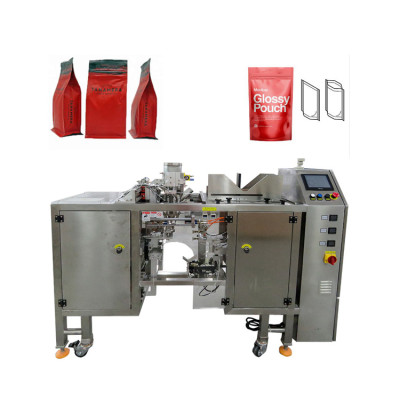
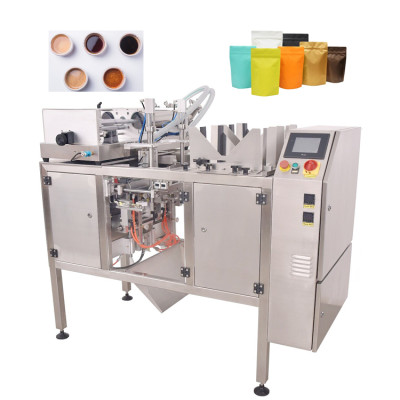
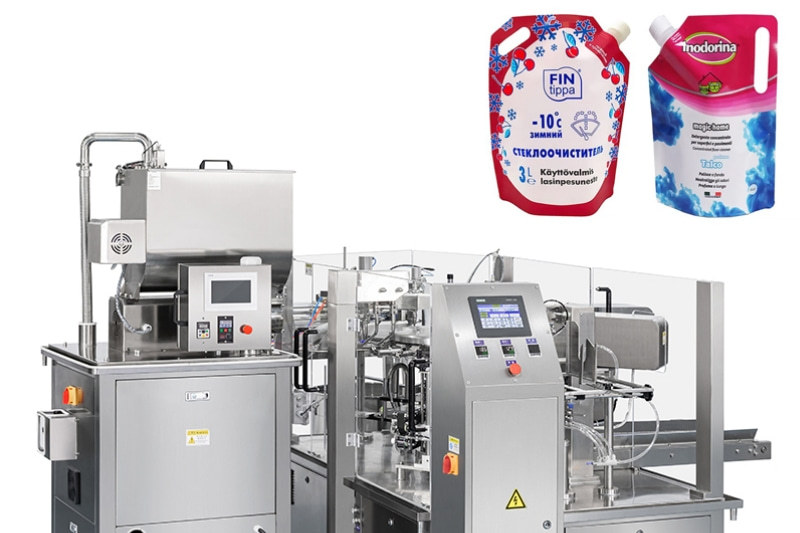
A key advantage of the rotary packing machine is its adaptability to various packaging formats. Whether your product demands a stand-up pouch for shelf appeal, a zipper bag for reusability, or a spouted pouch for liquids, these machines can handle them all. With quick changeovers, a single machine can be configured to work with numerous pouch styles.
Commonly handled pouch types include:
- Stand-Up Pouches (Doypacks)
- Flat Pouches (3-Side or 4-Side Seal)
- Zipper Pouches
- Gusseted Bags
- Spout Pouches
- Irregularly Shaped Pouches
These machines are also compatible with a wide array of heat-sealable materials, from standard laminates like PET/PE to recyclable films and paper-based options, supporting sustainability goals.
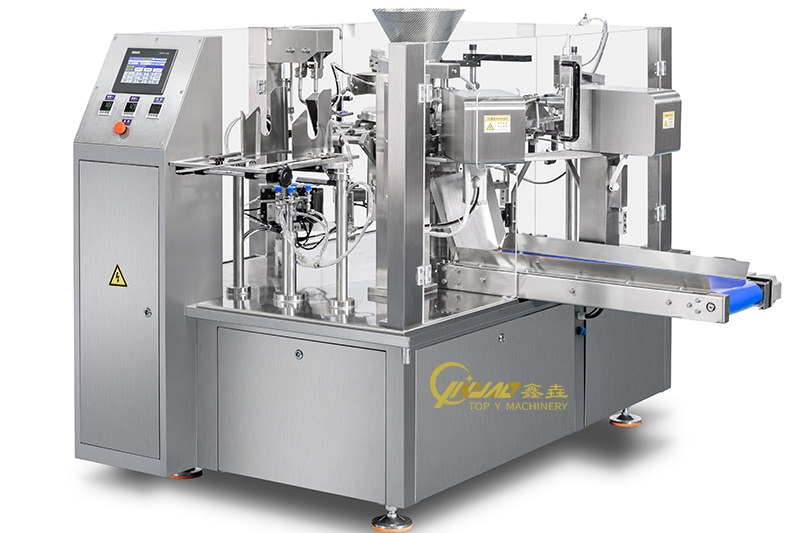
Packaging Various Product Forms
The adaptability of rotary packing machines extends to the products themselves. They are ideal for packaging both edible and non-edible items across solid, liquid, and powder forms. By integrating the appropriate filling system, the same machine can be used across diverse product lines.
Here are just a few examples of products perfectly suited for rotary packaging:
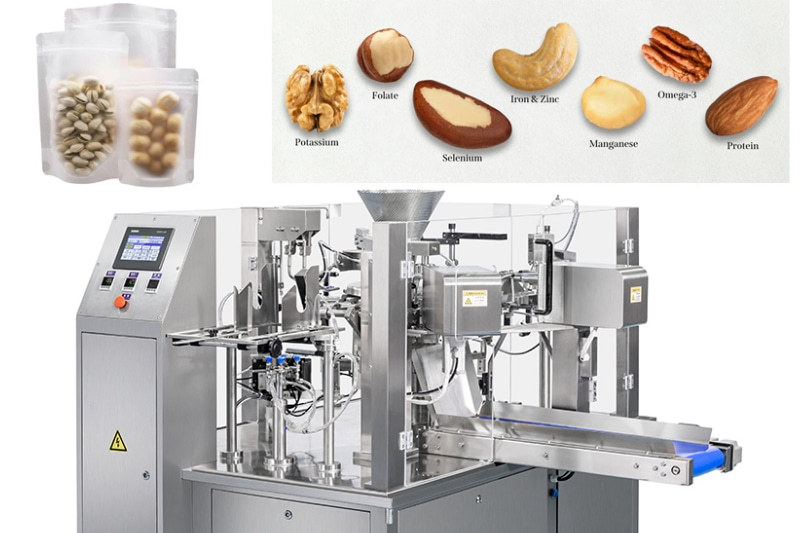
- Solid & Granule: Nuts, candies, coffee beans, pet food, frozen foods, hardware, and seeds.
- Powder: Flour, milk powder, protein powder, coffee powder, spices, and food additives.
- Liquid & Paste: Juices, sauces, detergents, ketchup, jams, and hand sanitizer.
This incredible versatility ensures that as your business grows and your product offerings expand, your packaging equipment can adapt with you, making it a smart, future-proof investment.
Frequently Asked Questions (FAQs)
What is the difference between a rotary and a linear packing machine?
The primary difference between rotary and linear packing machines lies in their design and operational flow.
- Rotary Packing Machines: These systems use a circular design where pouches are held by grippers on a rotating turret. Multiple packaging stations (e.g., filling, sealing, printing) are arranged around this turret, allowing tasks to be performed simultaneously as the pouches rotate. This continuous motion makes them ideal for high-speed, high-volume production and they typically have a more compact footprint compared to their linear counterparts.
- Linear Packing Machines: These machines, as the name suggests, operate in a straight line. Pouches or containers move sequentially from one station to the next along a conveyor. While they are often more flexible for handling a wide variety of container shapes and sizes and can be simpler to maintain, their stop-and-start (intermittent) motion generally results in lower production speeds compared to rotary systems. They are often a good choice for small to medium-sized businesses with lower production needs or more diverse product lines.
How fast can a rotary packing machine operate?
The speed of a rotary packing machine is measured in bags per minute (BPM) and can vary significantly based on several factors. While some standard models operate in the range of 20-60 BPM, high-speed, servo-driven models can consistently achieve 60-100 BPM or even higher.
Key factors influencing speed include:
- Product Type: Free-flowing granules and powders can be filled much faster than viscous liquids or sticky products.
- Bag Size and Weight: Smaller, lighter pouches can be processed more quickly. Heavier products may require slower speeds to maintain stability due to centrifugal force during rotation.
- Pouch Complexity: Bags with special features like zippers or spouts require extra steps (e.g., opening a zipper), which can slow the cycle time.
- Machine Motion: Continuous motion machines are significantly faster than intermittent ones, which pause at each station.
What maintenance is required for these machines?
Proper and consistent maintenance is crucial for ensuring the longevity, optimal performance, and reliability of a rotary packing machine. Neglecting maintenance can lead to breakdowns, reduced efficiency, and costly repairs. A well-structured maintenance plan typically includes:
- Daily Checks:
- Inspect and clean sensors, sealing jaws, and grippers.
- Remove any product residue or debris from the machine's surfaces and moving parts.
- Ensure all moving parts are properly lubricated.
- Weekly Tasks:
- Perform a thorough cleaning of all food-contact and non-contact surfaces.
- Check and clean filters, especially those in vacuum units used for bag opening, as dirty filters can cause malfunctions.
- Monthly Inspections:
- Check for wear on mechanical parts like bearings, belts, and gears.
- Verify mechanical alignment and tighten any loose bolts or screws.
- Inspect and, if necessary, sharpen or replace cutting blades.
It is also essential to use the correct cleaning agents (like chlorinated alkaline detergents) and rinse thoroughly to prevent film buildup or corrosion.
Can a single machine handle different pouch sizes?
Yes, one of the significant advantages of modern rotary packing machines is their flexibility in handling different pouch sizes. Adjusting the machine for a new pouch size, known as a changeover, is typically a quick and tool-free process that can often be completed in under five minutes.
The changeover process usually involves:
- Adjusting Gripper Width: The operator selects the new bag parameters on the HMI (Human-Machine Interface) touchscreen. The machine then automatically adjusts the distance between the bag grippers to match the new pouch width. These settings can be saved as recipes for fast recall in the future.
- Adjusting the Bag Magazine: The guides on the bag feeding magazine are manually adjusted using a simple handle to accommodate the width of the new pouches.
- Adjusting for Pouch Length: If the pouch length is different, a minor adjustment to the bag feeding roller might be necessary.
This ability to perform rapid changeovers makes it feasible for companies to run multiple small-batch products on a single line without significant downtime.
How does a rotary machine ensure fill accuracy?
Fill accuracy in a Rotary premade pouch packing machine is primarily determined by the integrated filling system, not the rotary machine itself. The rotary machine's role is to present the pouch correctly and integrate seamlessly with the filler. Precision is achieved through several mechanisms:
- Sophisticated Fillers: The machine is paired with a high-precision filler suited to the product, such as a multi-head weigher for solids, an auger filler for powders, or a servo-driven pump for liquids. These systems are designed for exact measurement.
- Electronic Controls and Sensors: The machine's PLC and sensors ensure that product is dispensed only when a pouch is present and correctly opened, preventing spills and waste. These electronic controls constantly monitor filling volumes and can make instant corrections to maintain uniformity.
- "No Bag, No Fill" Logic: If the sensors detect that a pouch was not picked up or did not open correctly, the filler will not be triggered for that cycle, saving product. This is a standard feature on most modern machines.
By combining a stable rotary platform with advanced filling technology and intelligent sensor feedback, rotary machines ensure a high degree of accuracy and consistency in every package.
Conclusion
In wrapping up, I hope you can see just how impactful a rotary packing machine is in the landscape of modern manufacturing. It’s a smart, efficient, and remarkably simple solution that consistently delivers perfectly sealed products, representing a monumental leap forward from manual packaging methods.
From its precise, synchronized movements to its ability to automate what was once a labor-intensive task, the rotary packing machine truly embodies innovation and efficiency in the world of packaging. It empowers businesses, including expert manufacturers like TOP Y Machinery, not only to save critical time and reduce operational costs but also to guarantee top-notch quality and consistency for you, the end customer. As your business grows, investing in automation is a surefire way to scale production, enhance brand image, and secure a competitive edge.
If you found this guide helpful, please share it with your network! And if you have any questions or experiences with packaging automation, feel free to leave a comment below. We’d love to hear from you.