How Automatic Flexible Pet Food Packaging Machines Work
As pet owners, we understand the profound importance of providing our furry friends with high-quality, fresh food. But have you ever paused to consider the intricate journey that food takes from the factory to your pet's bowl? Today, we're diving deep into the world of automatic flexible pet food packaging machines, exploring how these ingenious systems ensure your pet's meals are perfectly packaged every time. The pet food industry is experiencing a significant boom, and with that growth comes an increased demand for efficient, reliable, and hygienic packaging solutions. Flexible packaging, with its vast array of benefits, has become a cornerstone of this industry. Join us as we uncover the mechanics and advantages of the automatic flexible pet food packaging machine, with a special look at how leading manufacturers are shaping the future of pet food delivery.
Key Takeaways
- Dominance of Flexible Packaging: Flexible packaging, such as pouches and bags, has become the industry standard for pet food due to its ability to preserve freshness, offer convenience, and provide ample branding opportunities. It is more cost-effective and sustainable than traditional rigid packaging.
- Two Main Machine Types: The industry primarily relies on two types of automated systems: Form-Fill-Seal (FFS) machines, which create bags from a roll of film before filling and sealing them, and Pre-made Pouch machines, which fill and seal bags that are already manufactured.
- FFS Machine Variants: FFS machines are further divided into Vertical Form-Fill-Seal (VFFS), ideal for loose products like kibble, and Horizontal Form-Fill-Seal (HFFS), better suited for single items like pet treats.
- The Importance of Fillers: The accuracy and efficiency of packaging depend heavily on the filling equipment. Multi-head weighers offer unparalleled precision for dry kibble, while auger fillers are used for powders, and liquid fillers handle wet food.
- Diverse Bag Styles: Modern packaging machines can produce a wide variety of bag styles, from basic pillow and gusseted bags to premium stand-up pouches and single-serve sachets, catering to different market segments and consumer needs.
- Critical Selection Criteria: When choosing a packaging machine, key specifications to consider are speed (Bags Per Minute), efficiency (OEE), compatibility with bag sizes and materials, and the machine's power and compressed air requirements.
The Rise of Flexible Pet Food Packaging Machines: Why It Matters
The shift in pet food packaging is not just a trend; it's a fundamental change driven by consumer demand, technological advancement, and the need for greater efficiency and sustainability. Understanding what flexible packaging is and why it has become so dominant is key to appreciating the technology behind it.
What is Flexible Packaging in Pet Food Packaging Machines?
At its core, flexible packaging is any type of package made from non-rigid materials, which allows its shape to be easily changed. Unlike rigid containers such as metal cans, glass jars, or hard plastic tubs, flexible packaging includes bags, pouches, films, and wraps. These are typically constructed from materials like plastic polymers (polyethylene, polypropylene), aluminum foil, or paper, often layered together to achieve specific protective qualities.
In the context of the pet food industry, this means moving away from traditional bulky sacks and cans towards modern, versatile bags and pouches. Automatic flexible packaging machines are designed to handle these pliable materials, forming them into containers, filling them with products like dry kibble, semi-moist foods, or treats, and sealing them to ensure product integrity. The defining characteristic is this adaptability; the packaging forms around the product, providing a snug, protective barrier. This technology is not just about the container itself, but about a holistic system that protects the food from factory to feeding bowl.
Key Advantages of Flexible Pet Food Packaging
The dominance of flexible packaging in the pet food sector is due to a powerful combination of benefits that appeal to manufacturers, retailers, and consumers alike. These advantages have collectively propelled its adoption over more traditional, rigid formats.
- Enhanced Freshness and Extended Shelf Life: The primary function of any food packaging is protection. Flexible packaging excels here, often utilizing multi-layer films with high-barrier properties. These layers are engineered to shield the contents from oxygen, moisture, and light, which are the main culprits behind spoilage, nutrient degradation, and staleness. This robust protection extends the product's shelf life, reducing waste for both retailers and consumers.
- Consumer Convenience: Modern lifestyles demand convenience, and flexible packaging delivers. Features like resealable zippers, sliders, and tear notches make bags easy to open, close, and store. This "stay-fresh" capability is highly valued by pet owners who want to maintain the food's quality after opening. Furthermore, the lightweight nature of pouches and integrated handles on larger bags make them easier to carry and handle than bulky boxes or heavy cans.
- Cost-Effectiveness and Efficiency: From a manufacturing standpoint, flexible packaging is highly efficient. The materials generally cost less than rigid counterparts. Being significantly lighter and less bulky, they reduce transportation costs and require less warehouse storage space, leading to a smaller carbon footprint during shipping.
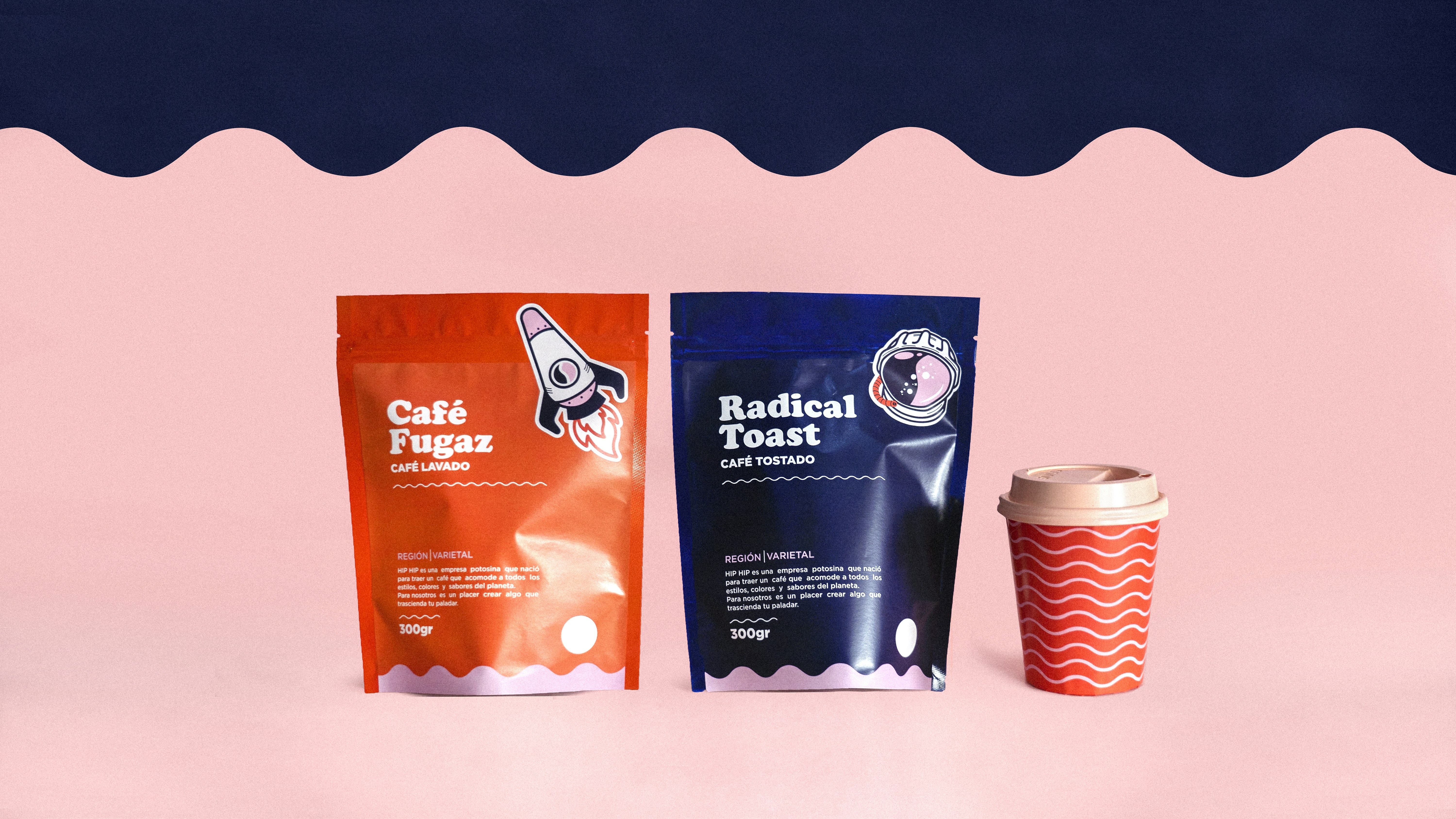
- Superior Brand Appeal and Shelf Presence: The smooth, continuous surface of flexible bags and pouches offers a perfect canvas for high-quality, vibrant graphics. This allows brands to create eye-catching designs that stand out on crowded store shelves. The ability to form the packaging into unique shapes, like stand-up pouches, further enhances a product's visual appeal and perceived value.
- Sustainability Gains: The conversation around packaging is increasingly focused on environmental impact. Research shows that a significant majority of pet owners consider the sustainability of packaging when making purchasing decisions. Flexible packaging often uses less material, consumes less energy in production, and generates fewer greenhouse gas emissions during transport compared to rigid options. The industry is also moving towards more sustainable solutions, including recyclable mono-materials and compostable options, to meet consumer demand and reduce landfill waste.
The table below summarizes the key differences between flexible and traditional rigid packaging for pet food:
| Feature | Flexible Packaging (Pouches/Bags) | Rigid Packaging (Cans/Boxes) |
|---|---|---|
| Product Protection | Excellent barrier against moisture, oxygen, light | Good, but cans can dent and boxes are permeable |
| Convenience | Lightweight, resealable, easy to handle | Bulky, often requires a separate storage container after opening |
| Cost & Logistics | Lower material and shipping costs, less storage space needed | Higher material and shipping costs, more storage space required |
| Shelf Appeal | High-impact graphics, modern shapes | Limited design flexibility, traditional appearance |
| Sustainability | Less material used, lower transport emissions, growing recyclable options | Often recyclable, but heavier and more energy-intensive to produce and ship |
Inside the Pet Food Packaging Machine: Types and Functionality
While the finished bag of pet food is what we see on the shelf, the machine that creates it is a marvel of engineering. The technology is broadly divided into two main categories: machines that create the package from scratch and those that work with pre-formed packages. Understanding these systems reveals the precision required to package pet food safely and efficiently.
Form-Fill-Seal (FFS) Pet Food Packaging Machines
As the name suggests, Form-Fill-Seal (FFS) machines perform three tasks in one continuous, automated sequence: they form the package from a large roll of film, fill it with the product, and then seal it. This integrated approach is highly efficient, minimizing labor costs and contamination risk while maximizing throughput. By using a roll of raw material instead of pre-made bags, FFS machines significantly reduce the cost of packaging materials. These machines come in two primary configurations: vertical and horizontal.
Vertical Form-Fill-Seal (VFFS) for Pet Food Packaging
A Vertical Form-Fill-Seal (VFFS) machine is perfectly suited for packaging free-flowing and granular products like dry pet food kibble, making it a workhorse of the industry. Its design leverages gravity for efficient filling, which simplifies the process and allows for high speeds. The operation is a marvel of synchronized mechanics:
- Film Transport and Forming: A large roll of packaging film is unwound and fed over a special "forming collar." As the film drapes over this collar, it is shaped into a vertical tube. Transport belts grip the film to pull it downwards through the machine.
- Vertical Sealing: As the tube of film is formed, a heated vertical sealing bar presses the two outer edges of the film together, creating the back seam of the bag.
- Bottom Sealing and Filling: A pair of horizontal sealing jaws clamps together below the forming tube. This action serves two purposes: it creates the top seal of the filled bag below it and the bottom seal of the new bag that is about to be filled. Once this bottom seal is made, a precise, pre-measured amount of pet food is dropped from a filler (like a multi-head weigher) down through the hollow forming tube and into the bag.
- Top Sealing and Cutting: After the bag is filled, the horizontal sealing jaws clamp shut again to create the top seal. A knife within the jaw assembly then cuts the completed bag free, allowing it to drop onto a conveyor. This same sealing action has already formed the bottom of the next bag, and the cycle repeats with incredible speed and precision.
VFFS machines are highly valued for their small factory footprint, high throughput, and the cost savings associated with using film rollstock.
Horizontal Form-Fill-Seal (HFFS) for Pet Food Packaging
While VFFS machines are ideal for granular products, Horizontal Form-Fill-Seal (HFFS) machines excel at packaging solid, singular, or fragile items. This makes them the preferred choice for products like dental chews, jerky treats, or other formed pet snacks that cannot be dropped from a height or require specific placement within the bag.
The process operates along a horizontal plane:
- Film Unwinding and Forming: A roll of film is unwound, but instead of being formed into a tube, it is often folded or brought around a forming plow to create the bottom of a pouch.
- Pouch Conveyance and Filling: The partially formed pouch moves horizontally along a conveyor. At the filling station, products are inserted from the side, either manually or by an automated system like a robotic arm. This gentle, precise placement is the key advantage of an HFFS machine.
- Sealing and Cutting: Once filled, the pouch moves to sealing stations where the top edges are brought together and heat-sealed. The individual packages are then cut apart.
HFFS machines are generally more complex and occupy a larger footprint than their vertical counterparts. However, their ability to handle delicate products and create a wide variety of package shapes, including stand-up pouches with zippers or spouts, makes them invaluable for the premium pet treat market.
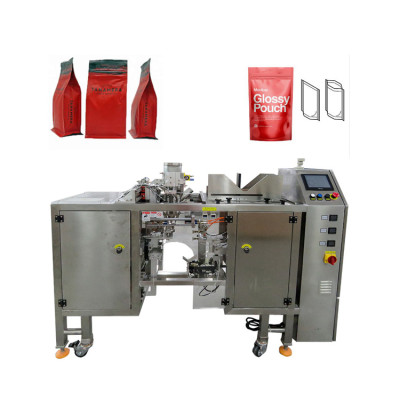
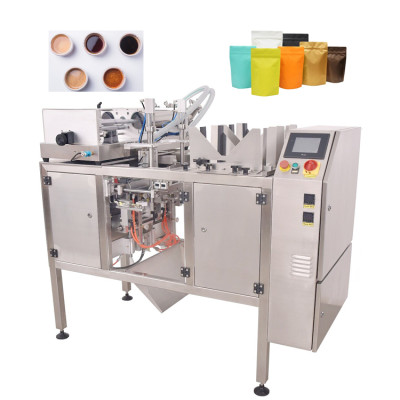
Pre-made Pouch Pet Food Packaging Machines
Instead of creating bags from film, pre-made pouch machines are designed to automate the filling and sealing of bags that have already been manufactured. These machines are especially popular for premium products, as pre-made pouches often feature more complex designs, higher-quality printing, and advanced features like zippers and spouts that are difficult to create on a standard FFS machine. An Automatic Dog Food Packaging Machine is a prime example of this technology, often utilizing a rotary system for high efficiency.
The process, typically arranged on a rotary or linear carousel, involves a series of dedicated stations:
- Pouch Loading and Gripping: A stack of empty, pre-made pouches is loaded into a magazine. A robotic arm with grippers picks up a single pouch.
- Opening: The grippers hold the pouch as it moves to the opening station. Here, suction cups and a jet of air are used to pull the top of the bag open, preparing it for filling.
- Filling: The open pouch is positioned under the filler, and the precise amount of pet food is dispensed into it.
- Sealing: The filled pouch moves to the sealing station, where heated bars press the top of the pouch together to create a secure, airtight seal.
- Cooling and Discharge: The fresh seal is then cooled to ensure its strength, and the finished package is discharged from the machine onto a conveyor for boxing and shipping.
While the cost per bag is higher due to using pre-made pouches, these machines offer unparalleled flexibility in bag style and are excellent for ensuring a premium final appearance for high-end pet foods and treats.
Filling Equipment for Pet Food Packaging Machines
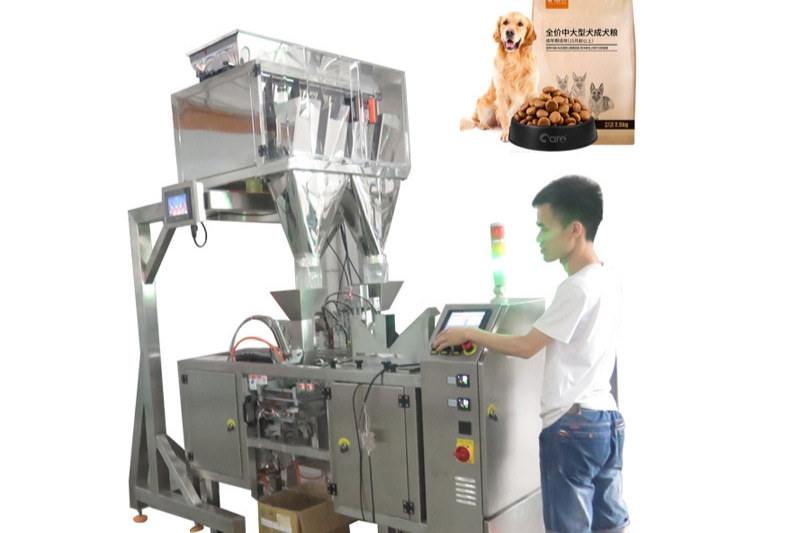
The heart of any packaging machine is the filler—the device responsible for accurately measuring and dispensing the product into the bag. The choice of filler depends entirely on the characteristics of the pet food being packaged. Using the wrong filler can lead to inaccurate weights, product damage, and slow production speeds.
- Multi-Head Weighers: These are the gold standard for packaging dry, granular products like kibble. A multi-head weigher uses a system of multiple small weighing buckets (or "heads"). Product is distributed among the heads, and a sophisticated computer algorithm calculates the combination of buckets that equals the exact target weight. This combination is then released into the packaging machine below. This method provides exceptionally high speed and accuracy, minimizing product "giveaway" and ensuring consistency.
- Auger Fillers: Auger fillers are used for non-free-flowing, dusty, or fine-grained products, such as powdered supplements, protein powders, or flour-based mixes used in some pet food formulations. An auger filler consists of a large hopper and a rotating screw (the auger) at the bottom. As the auger rotates a specific number of times, it dispenses a precise volume of powder into the bag. These fillers offer excellent accuracy for powdery substances.
- Volumetric Cup Fillers: This is a simpler and more cost-effective filling method for free-flowing granules. It consists of multiple cups that are set to a specific volume. Product flows into the cups, a plate slides across to level the top, and the contents are then dropped into the bag. While faster and less expensive than weighers, they are less accurate as they work by volume, not weight, and are susceptible to variations in product density.
- Liquid Fillers: For wet or semi-moist pet food, liquid fillers are essential. These can range from piston fillers, which use a cylinder to dispense a precise volume of viscous product, to pump fillers that handle sauces, gravies, and pâtés. They are designed for hygienic operation and to deliver an accurate fill without drips or mess.
| Filler Type | Best Suited For | Key Advantage(s) | Common Pet Food Application |
|---|---|---|---|
| Multi-Head Weigher | Free-flowing, irregular solids | High speed and unparalleled accuracy | Dry kibble, small treats, mixed snacks |
| Auger Filler | Powders, fine granules | Precise volumetric dosing for non-free-flowing items | Powdered supplements, flour mixes |
| Volumetric Cup Filler | Free-flowing, uniform granules | High speed, cost-effective | Basic dry kibble, seeds |
| Liquid Filler | Liquids, pastes, gels, gravies | Hygienic, accurate dosing for non-solids | Wet food in pouches, gravy toppers |
Diverse Bag Styles Created by Pet Food Packaging Machines
The flexibility of modern packaging machinery allows manufacturers to produce a huge variety of bag styles. This versatility is crucial for brand differentiation, meeting consumer preferences, and suiting different product types and sizes.
Pillow Bags and Gusseted Bags for Pet Food
Pillow Bags The pillow bag is one of the most common and economical forms of flexible packaging. Named for its resemblance to a pillow when filled, it consists of a top seal, a bottom seal, and a vertical "fin" or "lap" seal running down the back. These bags are very efficient to produce on VFFS machines at high speeds. While they offer a large printable area, they must lie flat for display, which can be a disadvantage on retail shelves. They are an excellent choice for smaller-sized pet treat packages and sample bags.
Gusseted Bags Gusseted bags are a significant step up from standard pillow bags. They have folds or "gussets" on the sides or bottom, which expand when the bag is filled. This design offers several key advantages:
- Increased Volume: The gussets allow the bag to hold a larger volume of product compared to a flat pillow bag of the same face dimensions.
- Improved Stability: When the gusset is on the bottom, it can create a flat base that allows the package to stand upright on its own, significantly improving shelf presence.
- More Branding Real Estate: Side gussets provide additional panels for printing information and branding, making for a more visually appealing package.
Gusseted bags are widely used in the pet food market, from small treat bags to large, heavy bags of kibble, providing a good balance between cost and shelf appeal.
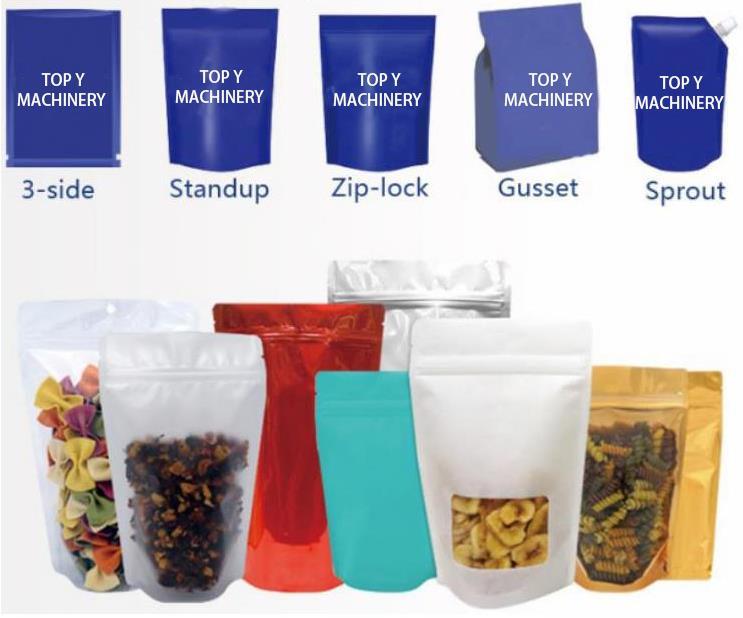
Stand-Up Pouches for Premium Pet Food Packaging
Stand-up pouches, also known as Doypacks, represent the premium end of the flexible packaging spectrum. These pouches are engineered with a gusset at the bottom that allows them to stand upright on shelves, providing excellent visibility and a modern, high-quality appearance. They have become the go-to choice for premium pet food and treat brands for several compelling reasons:
- Exceptional Shelf Presence: Their ability to stand on their own makes them highly visible and attractive in a retail environment. The large, flat front and back panels are perfect for displaying vibrant, high-impact branding.
- Enhanced Consumer Convenience: Stand-up pouches are almost always equipped with user-friendly features. Resealable zippers are a major selling point for pet owners, as they keep large quantities of food fresh over multiple servings. Tear notches ensure the bag is easy to open initially without the need for scissors.
- Superior Product Protection: Like other forms of flexible packaging, stand-up pouches are made from multi-layer laminated films that provide a superior barrier against moisture, oxygen, and light. This protection is crucial for preserving the nutritional value, flavor, and aroma of high-quality pet food.
- Versatility: This format can be used for a wide range of products, from dry kibble and treats to semi-moist and even fully liquid or wet foods when combined with specialized retortable materials that can withstand sterilization.
The combination of aesthetic appeal, functionality, and protective qualities makes stand-up pouches a powerful tool for brands looking to convey a premium image and justify a higher price point.
Specialty Bags: Three-Side Seal, Sachets, and Stick Packs for Pet Food
Beyond the mainstream bag types, packaging machines are capable of creating a range of specialty formats designed for specific use cases, such as single servings, trial sizes, and on-the-go products.
Three-Side Seal Bags: This is a simple, flat pouch sealed on three sides with the top left open for filling. It is one of the most cost-effective packaging formats as it minimizes material usage. Three-side seal bags are an excellent choice for single-serving pet treats, promotional samples, or flat items. While they don't stand up, their slim profile makes them ideal for packing into larger cartons or for hanging displays in stores.
Sachets: Sachets are small, single-use pouches, essentially a smaller version of a three-side seal or pillow bag. They have become increasingly popular in the pet food industry for products like nutritional toppers, gravy mixers, or trial-size portions of new food formulas. Sachets provide perfect portion control, ensure maximum freshness for each serving, and allow pet owners to sample a product before committing to a larger bag.
Stick Packs: Stick packs are narrow, tube-shaped pouches designed for "on-the-go" convenience. They are sealed at the top and bottom and have a longitudinal seal down the back. This format is perfect for single servings of powdered supplements, liquid flavor enhancers, or dental powders for pets. Their slim, portable design makes them easy for pet owners to carry and use anywhere. Packaging machines can be configured with multiple lanes to produce a high volume of these stick packs simultaneously.
Crucial Specifications for Automatic Pet Food Packaging Machine Selection
Choosing the right automatic pet food packaging machine is a major investment and a critical decision that impacts production efficiency, product quality, and profitability. Several key technical specifications must be carefully evaluated to ensure the selected machine aligns with a company's specific needs.
Speed and Efficiency of Pet Food Packaging Machines
A machine's raw output is typically measured in Bags Per Minute (BPM) or Cycles Per Minute (CPM). This number represents the maximum theoretical speed at which the machine can operate. However, this top-line number doesn't tell the whole story. Real-world output is always lower due to factors like product feeding, film changes, and maintenance stops.
A far more valuable metric is Overall Equipment Effectiveness (OEE). OEE provides a comprehensive view of manufacturing productivity by breaking it down into three key factors:
- Availability: This measures the percentage of scheduled time that the machine is actually running. It accounts for all stops, including planned downtime (like changeovers and maintenance) and unplanned downtime (like breakdowns).
- Performance: This compares the machine's actual running speed against its ideal or maximum possible speed. Slow cycles and minor stops reduce the performance score.
- Quality: This is the percentage of good, sellable packages produced compared to the total number of packages made. It accounts for rejects, rework, and scrap due to issues like bad seals or incorrect weights.
The formula is straightforward: OEE = Availability x Performance x Quality. A world-class OEE score is typically considered to be 85% or higher, but many operations run at significantly lower levels. When selecting a machine, it's crucial to look beyond the advertised BPM and inquire about features that boost OEE, such as quick, tool-free changeover mechanisms, reliable components that minimize unplanned downtime, and precise controls that ensure high-quality output.
Bag Parameters and Material Compatibility for Pet Food Packaging
A packaging machine is not a one-size-fits-all solution. It must be specified to handle the intended range of bag sizes and be compatible with the chosen packaging materials.
Bag Size Range: A machine will have a defined minimum and maximum for the bag width and len
gth it can produce. For FFS machines, the width is determined by the forming tube, which must be swapped out to produce a different width. The length can typically be adjusted more easily through the machine's electronic controls. It is crucial to select a machine that can accommodate your entire product portfolio, from small sample bags to large bulk bags, or to plan for multiple machines if the size range is too great for a single unit.
Material Compatibility: Pet food packaging relies on sophisticated laminated films to achieve the necessary strength, printability, and barrier properties. These films are multi-layered structures, with each layer serving a specific purpose:
- Outer Layer (e.g., PET - Polyethylene Terephthalate): This layer is chosen for its strength, stiffness, and excellent printability, providing the structural integrity and high-quality graphics for the bag.
- Barrier Layer (e.g., Aluminum Foil, Metallized PET): This middle layer is the most critical for protection. Aluminum (AL) provides a nearly perfect barrier against oxygen, moisture, and light, maximizing shelf life. Metallized PET (MPET) is a cost-effective alternative that offers very good barrier properties.
- Inner/Sealant Layer (e.g., PE - Polyethylene): This layer must be food-safe and is designed to melt at a specific temperature to create a strong, reliable seal.
The packaging machine's sealing system (jaws, temperature controllers, pressure settings) must be precisely calibrated to work with the specific laminate structure. Different materials require different temperatures and dwell times to achieve a perfect seal without damaging the film. Therefore, it is essential that the machine is compatible with the high-performance films needed to keep pet food fresh and safe.
Power and Air Requirements for Pet Food Packaging Machines
Often overlooked in the initial stages of procurement, the utility requirements of a packaging machine are fundamental to its operation. Ensuring your facility can meet these needs is non-negotiable.
Power Requirements: Industrial packaging machines are heavy-duty equipment with significant power demands. It's crucial to verify the machine's specific electrical requirements, including:
- Voltage: Machines are built to run on specific voltages. In North America, common industrial voltages include 240V, 480V, or 600V, which differ from standard residential power.
- Phase: Most industrial machines require a three-phase power supply, which provides more stable and efficient power delivery for large motors compared to the single-phase power found in homes.
- Frequency: The standard frequency in North America is 60Hz. A mismatch between the machine's required frequency and the facility's supply can cause motors to run at the wrong speed, leading to damage and operational failure.
A dedicated electrical circuit with appropriate over-current protection must be installed by a qualified electrician to power the machine safely and reliably.
Air Requirements: Many automatic packaging machines rely heavily on pneumatic systems to function. These systems use compressed air to power actuators that drive various mechanical movements, such as opening and closing sealing jaws, gripping and opening pouches, and advancing the packaging film.
The specifications for the compressed air are just as important as the electrical supply:
- Pressure (PSI/Bar): The machine requires a consistent supply of air at a specific pressure to operate correctly. Insufficient pressure will lead to weak seals, incomplete movements, and machine faults.
- Flow Rate (CFM/CMM): The air compressor must be able to supply a sufficient volume of air to keep up with the machine's consumption during high-speed operation.
- Air Quality: For food packaging applications, the quality of the compressed air is paramount. The air must be clean, dry, and often oil-free to prevent contamination of the product or the packaging material. This is defined by standards like ISO 8573-1, which classifies air quality based on the content of solid particles, water, and oil. A dedicated air preparation unit, including filters, regulators, and dryers, is essential to condition the compressed air to meet the machine's and food safety standards. Failure to provide clean, dry air can lead to premature failure of pneumatic components and potential product recalls.
TOP Y Machinery's Contribution to Pet Food Packaging Automation
In the competitive landscape of packaging technology, certain companies stand out for their commitment to innovation, reliability, and customer service. As a leading pet food packing machine manufacturer, TOP Y Machinery has made significant contributions to the industry, developing solutions that address the specific challenges of packaging pet food.
Innovative Solutions from TOP Y Machinery for Pet Food Packaging
TOP Y Machinery focuses R&D efforts on creating tangible improvements in packaging efficiency, flexibility, and ease of use. By targeting key pain points in the packaging process, their innovations provide real-world value to pet food manufacturers.
One significant advancement is the optimization of machine speed and throughput. For their VFFS machines, TOP Y Machinery has implemented designs where film pulling is driven by the horizontal sealing jaws, a system controlled by multiple servo motors. This advanced servo-driven technology allows for precise, high-speed, and repeatable movements, enabling their machines to reach speeds of up to 120 bags per minute while maintaining accuracy. This is a dramatic improvement over older, mechanically-driven or simple pneumatic systems and directly translates to higher production capacity.
On their pre-made pouch machines, TOP Y has engineered their rotary systems to separate the filling and sealing stations. This allows one pouch to be sealed while the next pouch is simultaneously being filled, effectively reducing the cycle time per bag and boosting overall output.
Beyond raw speed, innovation also extends to user experience and control. Modern machines from TOP Y feature intuitive, touch-screen Human-Machine Interfaces (HMIs). These interfaces simplify machine operation, allowing operators to quickly set up recipes, adjust parameters, and troubleshoot issues with graphical guidance. This reduces the need for extensive training and minimizes the chance of operator error. The control systems also allow for enhanced automation, such as automated film tracking and tension control, which reduces waste and ensures consistent bag quality without constant manual intervention.
Furthermore, TOP Y Machinery designs its equipment with flexibility in mind. Their machines are built to be compatible with a wide range of fillers and can be upgraded to produce multiple bag styles on a single platform, such as pillow, gusseted, and block-bottom bags. This modularity provides manufacturers with the flexibility to adapt to changing market demands and new product launches without investing in entirely new lines.
Reliability and Service in Pet Food Packaging Machines
While innovative features are important, a machine is only as good as its reliability. In a high-volume production environment, unscheduled downtime is extremely costly, leading to lost output, labor costs, and potentially missed shipping deadlines. A a leading pet food packing machine manufacturer, TOP Y Machinery understands that machine reliability is a cornerstone of a successful long-term partnership.
Reliability starts with robust design and quality components. TOP Y Machinery builds its equipment using high-grade materials and integrates components from globally recognized brands known for their durability. This commitment to quality in the initial build minimizes the risk of premature part failure and extends the machine's operational lifespan.
However, even the most reliable machine requires service. This is where after-sales support becomes critical. A strong service program isn't a bonus; it's an essential part of the investment. TOP Y Machinery demonstrates its customer-first approach by providing comprehensive support, including:
- Installation and Training: Ensuring the machine is installed correctly and that operators are thoroughly trained is the first step to reliable operation. Proper training empowers the on-site team to run the machine efficiently and handle minor issues themselves.
- Technical Support: When problems do arise, responsive technical support is crucial. TOP Y provides access to experienced engineers who can help diagnose issues remotely, often over a video call, to get the machine back online as quickly as possible.
- Spare Parts Availability: Having a ready supply of critical spare parts is key to minimizing downtime. A good manufacturer will provide a recommended spare parts list and ensure that those parts are in stock and can be shipped quickly when needed.
- Preventive Maintenance Programs: Regular, planned maintenance is the best way to prevent unexpected breakdowns. Reputable manufacturers offer service visits to perform inspections, make adjustments, and replace worn parts before they fail, ensuring the machine continues to operate at peak efficiency.
Ultimately, a manufacturer's commitment to reliability and service is a direct reflection of their commitment to their customers' success. By focusing on building durable machines and backing them with strong, responsive support, companies like TOP Y Machinery help ensure that a pet food manufacturer's production lines remain productive and profitable.
Key Takeaways
- Dominance of Flexible Packaging: Flexible packaging, such as pouches and bags, has become the industry standard for pet food due to its ability to preserve freshness, offer convenience, and provide ample branding opportunities. It is more cost-effective and sustainable than traditional rigid packaging.
- Two Main Machine Types: The industry primarily relies on two types of automated systems: Form-Fill-Seal (FFS) machines, which create bags from a roll of film before filling and sealing them, and Pre-made Pouch machines, which fill and seal bags that are already manufactured.
- FFS Machine Variants: FFS machines are further divided into Vertical Form-Fill-Seal (VFFS), ideal for loose products like kibble, and Horizontal Form-Fill-Seal (HFFS), better suited for single items like pet treats.
- The Importance of Fillers: The accuracy and efficiency of packaging depend heavily on the filling equipment. Multi-head weighers offer unparalleled precision for dry kibble, while auger fillers are used for powders, and liquid fillers handle wet food.
- Diverse Bag Styles: Modern packaging machines can produce a wide variety of bag styles, from basic pillow and gusseted bags to premium stand-up pouches and single-serve sachets, catering to different market segments and consumer needs.
- Critical Selection Criteria: When choosing a packaging machine, key specifications to consider are speed (Bags Per Minute), efficiency (OEE), compatibility with bag sizes and materials, and the machine's power and compressed air requirements.
Frequently Asked Questions (FAQ)
Q1: What is the main difference between a VFFS machine and an HFFS machine?
The primary difference is the orientation of the packaging process. A Vertical Form-Fill-Seal (VFFS) machine works vertically, using gravity to drop products like dry kibble or powders into a bag that is formed from a downward-moving film. A Horizontal Form-Fill-Seal (HFFS) machine operates on a horizontal plane, which is ideal for single, solid, or delicate items like pet treats that need to be placed into the pouch gently rather than dropped.
Q2: Why would a company choose a pre-made pouch machine over an FFS machine?
A company would typically choose a pre-made pouch machine for premium products that require high-end packaging. Pre-made pouches often have more complex features like high-quality press-to-close zippers, spouts, and sophisticated shapes that are difficult to produce on an FFS machine. While the cost per bag is higher, the superior shelf appeal and consumer convenience can justify the expense for luxury or specialized pet food lines. The Automatic Dog Food Packaging Machine is a perfect example of equipment optimized for these high-quality pre-made bags.
Q3: How important is a multi-head weigher for packaging dry pet food?
A multi-head weigher is critically important for accurately packaging dry kibble. Its "combination weighing" system is significantly more precise than volumetric fillers. This accuracy minimizes "product giveaway," which is the amount of extra product included in each bag above the stated weight. Over millions of bags, saving a few grams per bag translates into substantial cost savings and ensures compliance with weights and measures regulations.
Q4: Can one packaging machine handle all bag sizes and types?
Generally, no. While many modern machines offer a degree of flexibility, a single machine has a defined range of bag widths and lengths it can handle. A significant change in bag width, for example, often requires changing out major components like the forming tube on a VFFS machine. While some machines can be adapted to create multiple styles (e.g., pillow and gusseted), formats as different as a small stick pack and a large block-bottom bag would almost certainly require different machines.
Q5: What is Overall Equipment Effectiveness (OEE) and why does it matter more than just BPM?
Bags Per Minute (BPM) is a machine's theoretical maximum speed, but Overall Equipment Effectiveness (OEE) measures its real-world productivity. OEE accounts for actual uptime (Availability), running speed versus maximum speed (Performance), and the number of good bags produced (Quality). A machine with a high BPM but frequent downtime or high reject rates will have a low OEE. Focusing on OEE gives a much more accurate picture of a machine's true efficiency and return on investment.
From optimizing costs and extending shelf life to enhancing brand appeal and providing convenience, the impact of automatic flexible pet food packaging machines is undeniable. As pet owners, we can appreciate the fresh, high-quality products these technologies help deliver to our companions. The intricate dance of film, fillers, and sealers ensures that every meal is as good as the last.
The advancements in pet food packaging machine technology, spearheaded by companies like TOP Y Machinery, ensure that pet food is not only safe and fresh but also efficiently and attractively presented. As this dynamic industry continues to evolve, driven by consumer demands for convenience, quality, and sustainability, we can expect to see even more innovative solutions. These future developments will continue to support manufacturers in their quest to keep our beloved pets happy, healthy, and well-fed. If you found this deep dive into packaging technology insightful, please share it with others who might be interested