Automation in Powder Filling Machines: Where Accuracy Meets Safety and Compliance
In the world of manufacturing, especially in industries like pharmaceuticals, food, and chemicals, precision and safety are not just buzzwords—they are fundamental requirements. When it comes to handling powdered substances, ensuring accuracy in filling and maintaining a sterile environment can be complex. That's where automation in powder filling machine technology steps in, transforming these challenges into streamlined, reliable, and compliant processes.
Join me as we explore how automated powder filling machines contribute to higher standards of production, focusing on the critical balance between accuracy, safety, and regulatory compliance. We'll delve into the technologies that make this possible, the benefits they offer, and how they address common industry pain points.
Key Takeaways
This article delves into the critical role of automation in modern powder filling operations. Here are the key insights you'll gain:
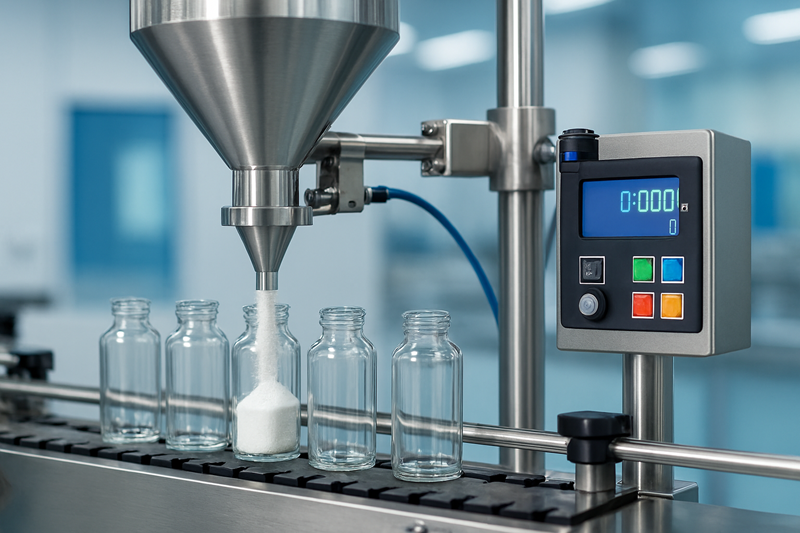
- The Nexus of Accuracy and Technology: We explore the core mechanisms that enable precise dosing in powder filling machines. You'll learn about the distinction between auger fillers, which use a screw mechanism, and vacuum pressure dosing, which relies on air pressure differentials. We also highlight the importance of real-time feedback loops, where systems like checkweighers and sensors continuously communicate with the filler to make micro-adjustments, ensuring every dose is within specification.
- Overcoming Material and Environmental Hurdles: Not all powders are created equal. We address the challenges posed by varying powder characteristics such as particle size, density, and flowability. The article explains how advanced powder filling equipment is engineered with features like custom augers, agitators, and vibration systems to handle even the most difficult, non-free-flowing powders. Furthermore, we discuss how environmental factors like humidity and static electricity can disrupt filling accuracy and how modern machines mitigate these risks through climate control and static elimination features.
- Upholding Safety and Sterility Standards: In industries like pharmaceuticals and infant formula, sterility is non-negotiable. The post outlines the principles of aseptic filling, which is the gold standard for preventing contamination. We compare two key containment technologies—Restricted Access Barrier Systems (RABS) and Isolators—explaining how they create controlled environments to protect both the product and the operator. The importance of hygienic design, featuring 316L stainless steel and crevice-free surfaces, is also emphasized.
- Navigating the Regulatory Maze: Compliance with regulations from bodies like the FDA and adherence to Good Manufacturing Practices (GMP) are mandatory. We illustrate how intelligent powder filling systems are built from the ground up to meet these standards. This includes features for data integrity (compliant with 21 CFR Part 11), full material traceability, and automated quality control reporting, which simplify validation and ensure audit readiness.
- The Future is Automated and Integrated: The article concludes by looking at the holistic benefits of investing in a high-quality automatic powder filling machine. Beyond just filling, these machines are central to creating efficient, safe, and compliant production lines. We showcase how leading innovators like TOP Y Machinery are developing solutions that address industry pain points, from reducing changeover times to minimizing product waste, ultimately driving a higher return on investment and safeguarding brand reputation.
Mastering Precision with Automated Powder Filling Machine Technology
Accuracy in manufacturing is not just about hitting a target; it's about hitting it consistently, thousands of times a day, with minimal deviation. For industries handling high-value or highly regulated powders—such as pharmaceuticals, infant formula, or specialty chemicals—precision is directly tied to product efficacy, safety, and profitability. In this context, the role of an automated powder pouch filling machine becomes paramount. These sophisticated systems are engineered to dose powders with remarkable accuracy, repeatability, and speed, forming the bedrock of modern production lines. By automating the filling process, manufacturers can drastically reduce product giveaway, ensure compliance with stringent weight and volume regulations, and enhance overall operational efficiency. The technology embedded in these machines goes beyond simple mechanics; it involves a deep understanding of powder behaviors and the dynamic control systems needed to manage them.
The Core of Accuracy: How Powder Filling Machines Achieve Exact Dosing
The heart of any powder filling operation is its dosing system. The ability to dispense a precise, repeatable amount of product into each container is what defines the machine's value. Modern machines achieve this through sophisticated mechanical designs and intelligent control systems working in concert. The primary goal is to translate a target weight into a reliable, consistent volumetric fill, cycle after cycle. This is far more complex than it sounds, as the physical properties of powders can vary dramatically. Therefore, the dosing mechanism must be robust and adaptable, capable of handling different materials while maintaining high levels of precision. Two leading technologies dominate this space: auger filling and vacuum pressure dosing. Each offers a unique approach to achieving dosing accuracy, tailored to specific product types and production requirements.
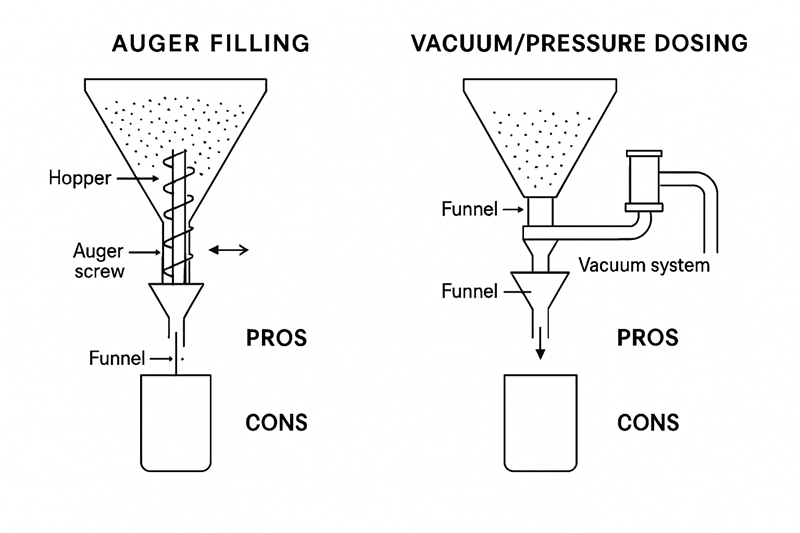
Auger Filling vs. Vacuum Pressure Dosing Disc: A Comparative Look
The choice between these two methods depends heavily on the powder's characteristics, required accuracy, and production speed.
-
Auger Filling: This is the most common method for powder filling, utilizing a vertically mounted screw (the auger) that rotates within a funnel to dispense product. The principle is volumetric: the amount of powder dispensed is determined by the number of rotations the auger makes. This is controlled with extreme precision by servo motors, which can execute fractions of a revolution to achieve pinpoint accuracy. Auger fillers are exceptionally versatile and can handle both free-flowing powders (like granulated sugar) and non-free-flowing powders (like flour or milk powder). For non-free-flowing products, an independently controlled agitator blade rotates within the hopper, preventing bridging and ensuring a consistent flow of material into the auger flights.
-
Vacuum Pressure Dosing: This technology is often favored for high-value, delicate, or sterile powders, especially in the pharmaceutical industry. Instead of an auger, it uses a dosing disc containing precisely machined chambers. The system creates a vacuum to draw powder from a hopper into these chambers, filling them completely. Then, a gentle pulse of sterile air or gas pushes the precisely measured "slug" of powder out of the chamber and into the container. This method offers excellent accuracy and is especially effective for very light, fluffy, or difficult-to-dose powders where augers might struggle. It also provides significant advantages in controlling dust and preventing spillage.
Here is a comparative table to summarize the key differences:
| Feature | Auger Filling | Vacuum Pressure Dosing |
|---|---|---|
| Mechanism | A rotating screw dispenses a set volume of powder based on the number of rotations. | A vacuum pulls powder into a measured chamber, which is then ejected by positive pressure. |
| Best For | A wide range of powders, both free-flowing and non-free-flowing. | High-value, lightweight, sterile, or delicate powders (e.g., injectable pharmaceuticals). |
| Accuracy | High, often with an accuracy of around ±1%. Accuracy can be further enhanced with feedback systems. | Very high, as the chamber provides a precise, repeatable volume. |
| Dust Control | Good, but can generate some dust depending on the powder and setup. | Excellent, as the system is largely enclosed, minimizing airborne particles. |
| Complexity | Mechanically straightforward and widely understood. | More complex due to the need for precise vacuum and pressure control systems. |
Real-time Adjustments and Feedback Loops in Powder Filling Machines
Achieving initial accuracy is only half the battle. Maintaining it over a long production run requires a system of intelligent checks and balances. This is where real-time adjustments and feedback loops come into play, transforming a good filling machine into a great one. These systems continuously monitor the output and make micro-corrections to the filling process, compensating for variations in powder density, environmental conditions, or mechanical drift.
The most common and effective feedback system involves integrating an inline checkweigher. Here’s how it works:
- Filling: The auger filler dispenses the target amount of powder into a container.
- Weighing: The container immediately moves onto a highly sensitive checkweigher, which records its exact weight.
- Communication: The checkweigher communicates this weight data back to the filling machine's PLC (Programmable Logic Controller).
- Analysis: The PLC analyzes the data, often looking at a moving average of the last several fills rather than just a single result. This prevents over-correction based on a single anomalous fill.
- Adjustment: If the system detects a consistent trend of under-filling or over-filling, it automatically sends a signal to the auger's servo motor. It might instruct the motor to rotate slightly more or less on subsequent fills, bringing the average weight back to the precise target.
This closed-loop feedback system is crucial for several reasons. First, it dramatically reduces product giveaway, saving significant costs over time. Second, it ensures every package meets the labeled weight, which is a legal and regulatory requirement in most industries. Advanced systems use highly sensitive load cells that can detect minute changes in weight, providing the data needed for hyper-precise adjustments. Servo motors, with their ability to be controlled with extreme precision, are the key to executing these adjustments accurately and instantly. This dynamic process ensures that the filling operation remains accurate from the first container to the last, regardless of external variables.
Overcoming Challenges to Ensure Consistent Powder Filling Machine Performance
While modern technology provides the tools for precision, the nature of powders themselves presents a unique set of challenges. Unlike liquids, which have predictable properties, powders are complex materials. Their behavior can be affected by a multitude of factors, from their intrinsic physical properties to the ambient environment of the production facility. A high-performance filling machine for powder is therefore not just a dispenser; it's a sophisticated piece of equipment engineered to manage and control these variables, ensuring consistent performance hour after hour. Addressing these challenges head-on is fundamental to achieving a reliable and efficient filling process.
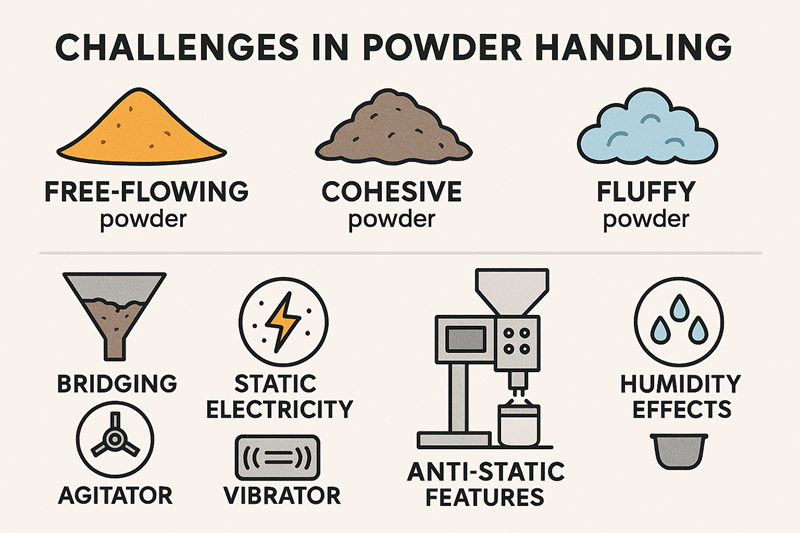
Tackling Powder Characteristics: Particle Size, Flowability, and Density
Not all powders are created equal. Their physical properties have a profound impact on how they behave during the filling process. Understanding and managing these characteristics is the first step toward achieving consistent and accurate results.
- Particle Size and Shape: The size and shape of powder particles influence how they pack together and interact. Fine powders with a smaller particle size have a larger surface area per unit mass, which can increase cohesive forces and make them prone to clumping or poor flow. Conversely, larger, more spherical particles tend to roll over each other easily and flow more freely. Irregularly shaped particles can interlock, increasing friction and hindering flow.
- Flowability: This is perhaps the most critical characteristic. Flowability describes how easily a powder flows under gravity. Poor flowability is a common issue that can lead to major production problems.
- Bridging (or Arching): This occurs when powder particles interlock and form a stable arch over the hopper outlet, completely stopping the flow of material.
- Ratholing: This happens when powder flows only through a narrow vertical channel directly above the outlet, leaving the rest of the material stagnant against the hopper walls.
- Bulk Density: This is the mass of a powder per unit volume in its loose, uncompacted state. Variations in bulk density, which can occur from batch to batch or even within a single batch due to aeration or compaction, directly affect volumetric filling accuracy. If the density decreases, a volumetric filler will dispense less product by weight, and vice versa.
To combat these challenges, advanced powder filling machines incorporate specific design features:
- Hopper Design: Hoppers are designed with steep cone angles to promote mass flow, where the entire contents of the hopper move downward together, preventing ratholing.
- Agitation Systems: For non-free-flowing and cohesive powders, an agitator or stirrer inside the hopper is essential. It continuously mixes the powder, breaking up potential bridges and ensuring a consistent supply of material to the auger.
- Vibrators: Attaching a vibrator to the hopper can help fluidize the powder and break the inter-particle friction that causes bridging and ratholing, promoting a smoother flow.
- Customized Augers: The design of the auger itself—its pitch, diameter, and flight design—can be customized to match the specific characteristics of the powder being filled.
Mitigating Environmental Impacts for Optimal Powder Filling Machine Operation
The surrounding environment of the production hall can be an invisible saboteur of filling accuracy. Fluctuations in temperature, humidity, and static electricity can alter a powder's physical properties, leading to inconsistencies that disrupt an otherwise stable process. For this reason, controlling the immediate environment is just as important as the mechanics of the machine itself.
-
Humidity: Many powders are hygroscopic, meaning they readily absorb moisture from the air. High humidity can cause particles to clump together, forming aggregates that affect flowability and can even lead to the formation of liquid bridges between particles, increasing cohesion and the likelihood of blockages. For sensitive products like pharmaceutical powders, excess moisture can also cause chemical degradation, reducing shelf life and efficacy. To combat this, production facilities for hygroscopic products often use industrial dehumidification systems to maintain a low and stable relative humidity (RH), sometimes as low as 20-25%.
-
Temperature: While often less critical than humidity, temperature fluctuations can still affect powder behavior. Changes in temperature can alter a powder's density and flow characteristics. More importantly, temperature affects relative humidity; as air cools, its ability to hold moisture decreases, potentially leading to condensation on equipment surfaces if not properly controlled. Consistent temperature control is a key component of maintaining a stable production environment.
-
Static Electricity: The friction generated as powder particles move and rub against each other and equipment surfaces (a phenomenon known as triboelectrification) can create significant static charges. This static can cause a host of problems:
- Particle Adhesion: Charged particles can cling to the walls of the hopper, the filling nozzle, or the container itself, leading to inaccurate dosing and product waste.
- Flow Disruption: Repulsion between similarly charged particles can make the powder "fluidize" unpredictably, while attraction to oppositely charged surfaces can impede flow.
- Safety Hazards: In certain environments, a static discharge (spark) can ignite combustible dust clouds, posing a serious explosion risk.
Modern packaging lines employ several strategies to mitigate static:
- Grounding: Ensuring all metal components of the filling machine and conveyor systems are properly grounded provides a path for static charges to dissipate safely.
- Ionization: Static elimination bars or ionizing air nozzles can be installed at critical points, such as the container inlet or the filling head. These devices flood the area with positive and negative ions, which neutralize any static charge on the powder or packaging materials.
- Material Selection: Using anti-static materials for components like flexible connectors can prevent charge buildup from the outset.
By proactively managing these environmental factors, manufacturers can eliminate a significant source of variability, ensuring the powder filling machine operates at its peak potential for accuracy and consistency.
Ensuring Safety and Sterility with Advanced Powder Filling Machine Designs
In the pharmaceutical, nutraceutical, and infant food industries, safety and sterility are not optional—they are the absolute cornerstones of production. Any contamination, whether microbial or particulate, can have severe consequences for consumer health and a company's reputation. Consequently, the design of a powder filling machine for these applications extends far beyond mere accuracy. It must be engineered from the ground up to prevent contamination, facilitate thorough cleaning, and maintain a sterile environment throughout the filling process. Advanced designs incorporate specific materials, surface finishes, and containment technologies to create a fortress against contamination, ensuring that the final product is as pure and safe as intended.
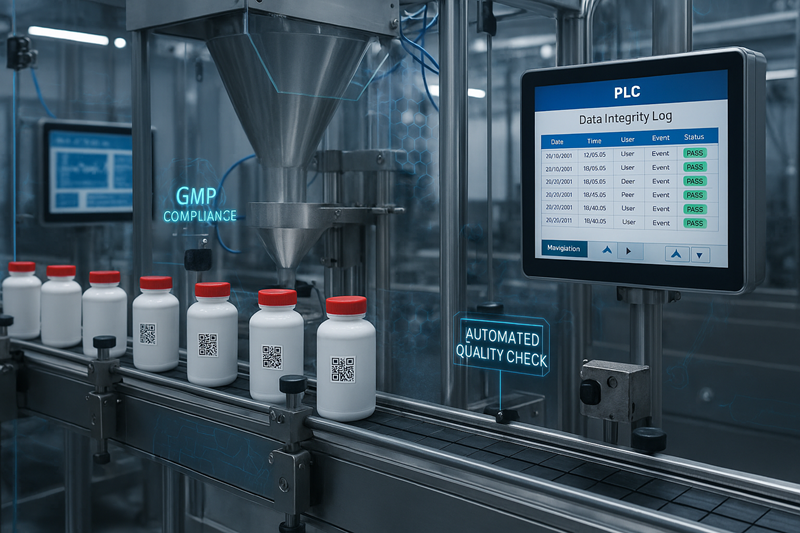
Aseptic Filling: The Gold Standard for Sterile Powder Filling Machines
Aseptic filling represents the pinnacle of sterile manufacturing. The core principle is to fill a pre-sterilized product into a pre-sterilized container within a sterile environment. This process is critical for injectable drugs and other parenteral products that are administered directly into the bloodstream, bypassing the body's natural defense mechanisms. For these applications, the powder filling machine is not a standalone unit but a critical component of a larger, integrated aseptic processing line. Every aspect of its design must be optimized to eliminate the risk of microbial ingress and ensure the final product is free from pyrogens and other contaminants. This requires a holistic approach that considers not just the machine itself, but the entire surrounding environment and operational protocols.
Key Components for Hygiene-Centric Powder Filling Machine Design
To create a fortress against contamination, every detail of the machine's construction matters. Hygienic design is not an afterthought; it is a core engineering principle guided by standards from organizations like the European Hygienic Engineering & Design Group (EHEDG). Key components and principles include:
- Material Selection (316L Stainless Steel): All surfaces that come into contact with the product are typically constructed from Type 316L stainless steel. This specific grade is chosen for its superior corrosion resistance, especially against chlorides and cleaning agents. The "L" signifies low carbon content, which minimizes carbide precipitation during welding, thereby preventing intergranular corrosion and maintaining a stable, non-reactive surface.
- Smooth, Crevice-Free Surfaces: Bacteria and product residues can easily become trapped in microscopic cracks, gaps, and sharp corners. Hygienic design dictates that all surfaces must be smooth, polished, and free of imperfections. Welds are ground smooth and polished to blend seamlessly with the parent material. Additionally, the design philosophy eliminates exposed screw threads, metal-to-metal joints, and any "dead spaces" where product could stagnate.
- Ease of Cleaning (CIP/SIP): Modern aseptic machinery is designed for automated Clean-in-Place (CIP) and Sterilize-in-Place (SIP) procedures.
- CIP is an automated method that uses a sequence of rinses and chemical detergents to clean the internal surfaces of the equipment without disassembly. This ensures a repeatable and validated cleaning process.
- SIP follows the cleaning cycle and uses high-temperature saturated steam (typically above 121°C) to sterilize all product contact surfaces, eliminating any viable microorganisms. The ability to perform CIP and SIP automatically reduces downtime, minimizes human error, and provides a validated, auditable record of cleaning and sterilization cycles.
- Hygienic Seals and Connections: Gaskets and seals must be made from FDA-compliant materials that are non-absorbent and can withstand repeated sterilization cycles. The design must ensure a tight seal with no gaps or crevices, preventing product from seeping into areas that are difficult to clean.
By adhering to these stringent design principles, manufacturers can build powder filling machines that are not just accurate, but also fortresses of sterility, safeguarding product integrity and consumer safety.
RABS vs. Isolators: Creating Controlled Environments for Powder Filling Machines
While a hygienic machine design is crucial, it's not enough on its own. The primary source of contamination in a cleanroom is personnel. To achieve true sterility assurance, the filling process must be physically separated from the operators. This is accomplished using advanced barrier technologies, primarily Restricted Access Barrier Systems (RABS) and Isolators.
Both systems create a highly controlled ISO 5 / Grade A environment around the filling line, but they differ in their fundamental approach to separation and decontamination.
-
Restricted Access Barrier Systems (RABS): A RABS is a rigid-walled enclosure with glove ports that provides a physical barrier between the operator and the critical aseptic zone. It uses HEPA-filtered aiflow to maintain a sterile environment. There are two main types:
- Open RABS (oRABS): These systems use air from the surrounding Grade B cleanroom, which is filtered and directed over the process in a unidirectional flow before being discharged back into the room.
- Closed RABS (cRABS): These systems have a recirculating air system and operate as a more sealed enclosure, offering a higher level of protection. While sealed during operation, they do not offer the gas-tight integrity of an isolator. RABS are often seen as a flexible and cost-effective way to upgrade an existing cleanroom line, providing a significant improvement in sterility assurance over open processing.
-
Isolators: An isolator provides a complete, hermetically sealed enclosure that is entirely separated from the surrounding environment. It is the gold standard for both aseptic processing and handling highly potent or toxic compounds. Operators interact with the process solely through glove ports, eliminating any direct human contact with the sterile zone. Key advantages of isolators include:
- Automated Bio-decontamination: Isolators are decontaminated using a validated, automated cycle, typically with vaporized hydrogen peroxide (VHP), which ensures a highly repeatable and effective sterilization process.
- Superior Sterility Assurance: By creating a fully sealed barrier, isolators offer the highest possible level of sterility assurance, minimizing the risk of contamination from the surrounding environment.
- Lower Operating Costs: Though the initial capital investment is higher, isolators can be operated in a lower-classification background environment (e.g., Grade C or D), significantly reducing the ongoing costs associated with energy, gowning, and environmental monitoring compared to RABS, which require a Grade B background.
The following table summarizes the main distinctions:
| Feature | RABS (Restricted Access Barrier System) | Isolator |
|---|---|---|
| Separation | Physical barrier, but not hermetically sealed. | Hermetically sealed, providing complete separation from the environment. |
| Decontamination | Typically performed manually. | Automated and validated bio-decontamination cycle (e.g., VHP). |
| Sterility Assurance | High, but reliant on procedural controls and the surrounding cleanroom. | Highest possible, as it creates a self-contained sterile environment. |
| Background Environment | Requires a Grade B (ISO 7) cleanroom. | Can operate in a Grade C or D (ISO 8) environment, reducing costs. |
| Flexibility | More flexible for retrofitting on existing lines and for multi-product facilities. | Less flexible; designed as a dedicated, integrated system. |
| Operator Safety | Provides product protection. Closed RABS offers some operator protection. | Provides maximum protection for both the product and the operator, essential for potent compounds. |
| Cost | Lower initial capital cost, but higher long-term operational costs. | Higher initial capital cost, but lower long-term operational costs. |
The choice between a RABS and an isolator depends on the specific application, the nature of the product (sterile vs. toxic), regulatory requirements, and the facility's long-term strategy. However, for new aseptic filling lines and for handling high-potency powders, isolator technology is increasingly becoming the industry standard.
Beyond Design: Operational Aspects for Safe Powder Filling Machine Processes
A perfectly designed machine is only as safe and effective as the procedures that govern its operation. Technology alone cannot guarantee sterility or compliance. Robust operational practices, including thorough validation, continuous monitoring, and comprehensive personnel training, are essential to complete the safety ecosystem. These elements ensure that the machine performs as intended day after day and that every member of the team understands their role in maintaining a state of control. This holistic approach, combining advanced engineering with disciplined human oversight, is what truly underpins a safe and reliable powder filling process.
Validation and Qualification for Powder Filling Machines
In regulated industries like pharmaceuticals, simply purchasing and installing a piece of equipment is not enough. You must provide documented evidence that the equipment is fit for its intended purpose and performs consistently according to predefined specifications. This formal process is known as Validation and Qualification, and it follows a structured, multi-stage approach mandated by regulatory bodies like the FDA. The most critical stages are IQ, OQ, and PQ.
-
Installation Qualification (IQ): This is the first step, performed after the machine is installed. The primary goal of IQ is to provide documented verification that the equipment and all its components have been delivered and installed correctly, according to the manufacturer's specifications and design requirements. Key activities in this phase include:
- Verifying that all components, manuals, and drawings have been received as per the purchase order.
- Checking that the machine is installed in the correct location with sufficient space for operation and maintenance.
- Confirming that all utilities (e.g., electrical power, compressed air, vacuum) are connected properly and meet the required specifications.
- Documenting all equipment details, such as model number, serial number, and material specifications for product contact parts.
-
Operational Qualification (OQ): Once IQ is complete, OQ begins. This phase aims to provide documented evidence that the equipment operates as intended throughout its specified operating ranges, without any product. It involves testing every function, control, safety feature, and alarm. For a powder filling machine, OQ would typically include:
- Verifying that all buttons, switches, and HMI (Human-Machine Interface) controls function correctly.
- Testing safety interlocks (e.g.,guard doors that stop the machine when opened).
- Challenging the alarm systems (e.g., simulating a "no bottle, no fill" scenario).
- Running the machine at various speed settings to ensure all mechanical and electrical components work in harmony.
- Calibrating all critical instruments, such as sensors and weighing systems.
-
Performance Qualification (PQ): PQ is the final stage of qualification, where the machine's performance is tested under real-world production conditions, using actual or placebo product. The goal is to provide documented evidence that the equipment can consistently and reliably produce a product that meets its quality specifications. For a powder filling machine, PQ studies are crucial and would involve:
- Performing multiple filling runs (typically at least three) at minimum, normal, and maximum operating speeds.
- Using the actual product or a placebo with identical physical characteristics (density, flowability, etc.).
- Collecting and weighing a statistically significant number of samples from each run to verify fill accuracy and consistency.
- Testing the machine's ability to perform reliably over an extended period.
- For aseptic lines, PQ would also involve media fill trials (simulating the process with a sterile growth medium) to prove that the process can be conducted without introducing microbial contamination.
Completing the IQ, OQ, and PQ process provides a comprehensive, documented file that proves to regulators that the powder filling machine is validated and in a state of control, ready for GMP-compliant manufacturing.
Continuous Monitoring and Personnel Training for Powder Filling Machine Operators
Validation provides a static snapshot that the equipment is fit for use, but manufacturing is a dynamic process. To maintain a state of control and ensure ongoing safety and sterility, a combination of continuous monitoring and rigorous personnel training is indispensable. These two pillars work together to detect and correct deviations in real-time and, more importantly, to prevent them from occurring in the first place.
Continuous Environmental Monitoring: In an aseptic environment, what you can't see can be the biggest threat. A robust environmental monitoring (EM) program is essential for understanding the state of the cleanroom at all times. This is not a one-time activity but a continuous process of data collection and analysis. A comprehensive EM program includes scheduled monitoring of:
- Viable Particles: This involves detecting living microorganisms like bacteria and fungi. Methods include active air sampling (where a known volume of air is drawn over a culture plate) and settle plates (which collect microbes that settle out of the air over time).
- Non-Viable Particles: These are inert particles (dust, fibers) that are continuously counted by laser-based particle counters. While not alive, they can carry microorganisms and are an indicator of the overall cleanliness of the environment.
- Physical Parameters: Continuous monitoring of pressure differentials between rooms, temperature, and humidity is crucial. These sensors provide real-time data and can trigger alarms if any parameter deviates from its setpoint, allowing for immediate corrective action.
- Surface and Personnel Monitoring: Regular sampling of surfaces, equipment, and operator gowns using contact plates helps verify the effectiveness of cleaning procedures and gowning techniques.
Personnel Training and Qualification: Even with the most advanced automation, humans remain a critical part of the manufacturing process and are the primary source of contamination in a cleanroom. Therefore, training is not just a procedural formality; it is one of the most critical controls in an aseptic operation. Regulatory bodies like the FDA have stringent requirements for personnel training, as outlined in regulations like 21 CFR 211.25.
An effective training program for powder filling machine operators, especially in an aseptic environment, must be comprehensive and ongoing. Key elements include:
- Initial and Ongoing GMP Training: All employees must be trained on the principles of current Good Manufacturing Practices (cGMP) and understand how their specific roles impact product quality and safety. This should be refreshed on a continual basis.
- Aseptic Technique: Operators must be masters of aseptic technique—a set of specific work practices designed to prevent contamination. This includes slow, deliberate movements to avoid disrupting the unidirectional airflow, proper handling of sterile components, and understanding the principles of the barrier system (RABS or isolator). Training should combine classroom theory with extensive hands-on practice in a simulated environment.
- Gowning Qualification: Before entering an aseptic area, operators must demonstrate proficiency in the correct gowning procedure. This is a meticulous process designed to cover the operator from head to toe in sterile garments to minimize the shedding of particles and microorganisms. This qualification must be periodically re-certified.
- Equipment-Specific Training: Operators need detailed training on the specific powder filling machine they will be using. This covers startup, operation, monitoring, cleaning, and basic troubleshooting. They must understand the machine's controls, alarms, and what to do in case of a deviation.
- Deviation Awareness: Training should empower operators to recognize and report any deviation from normal operating procedures immediately. A culture where employees are encouraged to speak up about potential issues is a hallmark of a strong quality system.
By combining continuous system monitoring with a well-trained and disciplined workforce, pharmaceutical manufacturers can create a robust defense against contamination, ensuring the powder filling process is consistently safe and compliant.
Achieving Regulatory Compliance with Intelligent Powder Filling Machine Systems
In the highly regulated world of pharmaceutical and food manufacturing, compliance is not just a goal; it is a license to operate. Regulatory bodies like the U.S. Food and Drug Administration (FDA) and international equivalents establish strict guidelines to ensure product safety, quality, and efficacy. Modern powder filling machines are no longer just mechanical devices; they are intelligent systems designed with compliance at their core. Through a combination of hygienic engineering, precise automation, and sophisticated data management, these machines play a pivotal role in helping manufacturers meet and exceed the stringent demands of Good Manufacturing Practices (GMP) and other regulatory standards. These systems provide the tools to build quality into the process, generating the verifiable data needed to prove that every batch meets the required specifications.
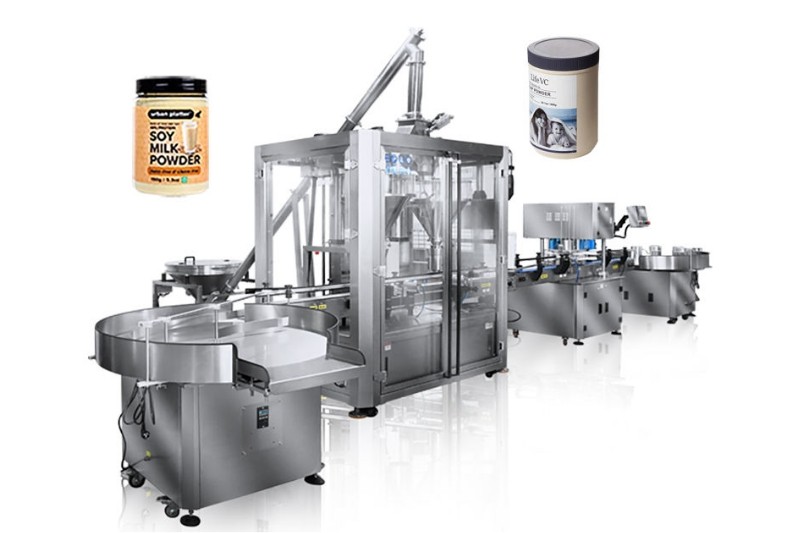
Meeting Industry Standards: How Powder Filling Machines Adhere to GMP and FDA Regulations
Adherence to Current Good Manufacturing Practices (cGMP), as enforced by agencies like the FDA, is a foundational requirement for any equipment used in pharmaceutical or food production. These regulations are designed to ensure that products are consistently produced and controlled according to quality standards. An automatic powder filling machine designed for these industries must meet several key cGMP and regulatory principles:
- Hygienic and Cleanable Design: As discussed previously, the machine must be built to prevent contamination. This includes using appropriate materials like 316L stainless steel for all product contact parts, ensuring smooth and crevice-free surfaces, and designing the system for easy and validated cleaning (CIP/SIP). This aligns with FDA requirements that equipment surfaces do not react with or add to the product.
- Contamination Control: The machine must be designed to minimize the risk of cross-contamination between different products and to protect the product from environmental contaminants. This is achieved through enclosed systems, dust collection mechanisms, and integration within controlled environments like RABS or isolators.
- Accuracy and Precision: FDA regulations (e.g., 21 CFR Parts 210 and 211) require that manufactured drugs possess the "identity, strength, quality, and purity" they are represented to have. This directly translates to fill accuracy. The machine must be capable of consistently delivering the correct dose, with systems in place (like checkweigher feedback) to monitor and maintain this performance.
- Validation and Documentation: The entire lifecycle of the machine, from installation to operation, must be documented. The IQ/OQ/PQ process provides the necessary evidence that the machine is installed correctly, operates according to specifications, and consistently performs its intended function. Manufacturers of GMP-compliant machinery provide comprehensive documentation packages to support this validation effort.
Furthermore, with the digitization of manufacturing processes, compliance with FDA 21 CFR Part 11 has become critical. This regulation governs electronic records and electronic signatures, ensuring they are as trustworthy and reliable as their paper equivalents. An intelligent powder filling machine with a compliant control system will include:
- Secure Access Controls: The system must have role-based access, requiring unique user IDs and passwords to operate the machine or change settings. This ensures that only authorized personnel can access critical functions.
- Immutable Audit Trails: The system must automatically generate a secure, computer-generated, time-stamped audit trail that records all actions related to the creation, modification, or deletion of electronic records. For example, if an operator changes a fill weight parameter, the audit trail will log who made the change, when they made it, and what the old and new values were.
- Electronic Signatures: When actions require approval (e.g., approving a new recipe), the system must support secure electronic signatures that are uniquely linked to an individual and cannot be repudiated.
- Data Integrity: All electronic records must be protected from tampering and remain accessible and retrievable throughout their required retention period.
By integrating these features, an intelligent powder filling machine becomes a powerful tool for ensuring and demonstrating regulatory compliance, providing a foundation of trust and reliability for the entire production process.
The Role of Automation in Traceability and Quality Control with Powder Filling Machines
Automation extends far beyond the physical act of filling. In a modern production environment, it is the backbone of traceability and quality control. Traceability—the ability to track every component and process step from raw material to finished product—is a non-negotiable regulatory requirement. It is essential for managing product recalls, investigating deviations, and ensuring consumer safety. An automated powder filling machine is a central data hub in this ecosystem.
Here’s how automation facilitates robust traceability and quality control:
-
Automated Data Logging: Manual record-keeping is prone to human error, delays, and omissions. Automated systems eliminate these risks. The PLC on a powder filling machine continuously captures and logs critical process parameters for every batch. This data includes:
- Batch numbers and lot codes of the powder being filled.
- Timestamps for the start and end of the production run.
- Machine settings, such as auger speed and target weight.
- Individual weight data from an integrated checkweigher.
- Alarm and event logs, documenting any deviations or operator interventions. This creates a comprehensive, unchangeable electronic batch record that provides a complete history of the filling process.
-
Serialization and Aggregation: To combat counterfeiting and enhance supply chain security, regulators now mandate serialization, where each individual saleable unit is assigned a unique serial number. Automation is essential to this "track and trace" process. The filling line can be integrated with printers that apply a unique 2D data matrix code to each container. Vision systems then verify the code's readability. The process of aggregation takes this a step further by creating a "parent-child" relationship between packaging levels. For example, the unique codes of all bottles in a case are electronically linked to a single code on the outside of the case, and all cases on a pallet are linked to a pallet code. This allows stakeholders to track the movement of product at any level—from a single bottle to an entire pallet—throughout the supply chain with a simple scan.
-
Real-Time Quality Monitoring: Automation transforms quality control from a retrospective activity (testing a few samples after the batch is finished) to a real-time process. Sensors and systems integrated into the powder filling line continuously monitor quality. An integrated checkweigher, for instance, doesn't just check weights; it provides a continuous stream of data that can be analyzed using Statistical Process Control (SPC). This allows operators to spot trends and make corrections before a significant number of out-of-specification products are produced, leading to higher yields and reduced waste.
By leveraging automation, manufacturers can move from a reactive to a proactive approach to quality. The powder filling machine becomes a smart, data-generating asset that ensures every container is filled accurately and provides a complete, traceable digital history to prove it. This level of control is fundamental to meeting modern regulatory expectations and delivering safe, high-quality products.
TOP Y Machinery: Innovating the Future of Powder Filling Machine Technology
In the dynamic landscape of manufacturing, staying ahead requires more than just meeting current standards; it demands a forward-thinking approach that anticipates future challenges and opportunities. At TOP Y Machinery, we are not simply building machines; we are engineering comprehensive solutions that empower our clients to excel. Our philosophy is rooted in a deep understanding of the industry's most pressing pain points—the need for uncompromising accuracy, absolute safety, and seamless regulatory compliance. We innovate with purpose, designing every component of our powder filling lines to solve real-world problems. Our commitment is to deliver technology that is not only powerful and precise but also intuitive, reliable, and fundamentally aligned with the principles of modern, efficient production. We see ourselves as partners in our clients' success, providing the advanced tools they need to enhance product quality, protect their brand, and drive sustainable growth.
Addressing Industry Pain Points with Advanced Powder Filling Machine Solutions
Manufacturing efficiency is constantly being eroded by persistent, costly problems. At TOP Y Machinery, we have engineered our powder filling solutions by focusing directly on these industry-wide pain points. We listen to operators and plant managers to understand the real-world challenges they face and design our machines to be the solution.
Here’s how we tackle the most common issues:
-
Pain Point 1: Inaccurate Fills and Product Giveaway.
- The Problem: Inconsistent fill weights lead to significant financial losses from product overfill and regulatory risks from underfill.
- Our Solution: Our machines integrate high-precision, servo-driven augers that provide exceptional control over the filling process. This is coupled with a real-time checkweigher feedback loop that constantly monitors fill weights and makes automatic, on-the-fly adjustments. This closed-loop system ensures that fill accuracy is maintained at an exceptional level, significantly reducing product waste and ensuring every package meets its target weight.
-
Pain Point 2: Difficult-to-Handle Powders.
- The Problem: Cohesive, sticky, or non-free-flowing powders cause blockages, bridging, and ratholing, leading to inconsistent filling and production stoppages.
- Our Solution: We don't believe in a one-size-fits-all approach. Our engineers analyze your specific powder characteristics to design a tailored solution. This includes custom-designed hoppers with steep angles, independently controlled agitation systems to keep powder moving, and specialized auger tooling to ensure a consistent and reliable flow of even the most challenging materials. This is particularly crucial for a food filling machine handling products like flour, spices, or milk powders.
-
Pain Point 3: Dust Contamination and Worker Safety.
- The Problem: Airborne powder dust creates a messy work environment, poses a cross-contamination risk, and can be a respiratory hazard for operators.
- Our Solution: Our filling systems are designed to be enclosed, minimizing dust from the outset. We incorporate specialized dust collection hoods at the point of fill that use vacuum suction to capture any airborne particles before they can escape. For highly sensitive or potent powders, our machines can be fully integrated within isolator systems, providing total containment and ensuring the highest level of product and operator safety.
-
Pain Point 4: Long Changeover Times and Production Downtime.
- The Problem: Switching between different products or container sizes can be a lengthy and complex process, leading to significant unproductive downtime.
- Our Solution: We design our machines for rapid, tool-less changeovers. Quick-release clamps and pre-set recipes stored in the HMI allow operators to switch products and formats in minutes, not hours. The intuitive touchscreen interface guides the operator through the process, minimizing errors and maximizing uptime. This agility is essential for manufacturers with diverse product portfolios.
By directly addressing these fundamental challenges, TOP Y Machinery provides not just a machine, but a competitive advantage—driving efficiency, reducing waste, and ensuring a safer, more compliant production environment.
Our Commitment to Automated, Safe, and Efficient Powder Filling Machine Production Lines
Our mission at TOP Y Machinery extends beyond manufacturing individual machines. We are committed to engineering the future of powder production through fully automated, safe, and efficient integrated lines. We understand that a powder filling machine is not an island; it is the heart of a larger production ecosystem. Our vision is to create seamless, intelligent, and future-proof production lines where every component works in perfect harmony.
This commitment is driven by key industry trends and our dedication to providing long-term value:
- The Rise of the Smart Factory (Industry 4.0): The future of manufacturing is digital. Our machines are designed to be key data-generating nodes in a smart factory environment. By integrating IoT sensors and AI-powered algorithms, our filling lines provide real-time data on performance, efficiency, and quality. This enables remote monitoring, predictive maintenance alerts, and data-driven decision-making, helping our clients optimize their entire operation and reduce downtime.
- Fully Integrated, End-to-End Solutions: A truly efficient production line minimizes manual intervention and streamlines workflow. We specialize in designing and delivering complete, turnkey packaging lines that integrate the powder filler with upstream and downstream equipment. This includes:
- Container unscramblers and cleaners
- In-line checkweighers and metal detectors
- Capping, sealing, and labeling machines
- End-of-line case packing and palletizing robots This holistic approach ensures maximum efficiency, reduces labor costs, and provides a single point of accountability for line performance.
- Flexibility and Scalability: Market demands are constantly changing. Our machines are built with modular designs that allow for quick changeovers and easy adaptation to different products, container sizes, and packaging formats. This built-in flexibility ensures that our clients can scale their production and adapt to new opportunities without requiring a complete overhaul of their existing lines.
- Sustainability and Waste Reduction: We are committed to promoting environmentally responsible manufacturing. Precision filling systems dramatically reduce product giveaway, conserving valuable raw materials. Furthermore, our energy-efficient designs help lower the carbon footprint of production. By building robust, reliable machines, we also extend their operational lifespan, reducing the need for premature replacement.
At TOP Y Machinery, our promise is to be more than just an equipment supplier. We are an innovation partner dedicated to delivering automated, safe, and efficient powder filling solutions that drive our clients' success. If you are ready to elevate your production capabilities, Contact TOP Y today to discuss how our advanced technology can be tailored to meet your unique challenges and goals.
Frequently Asked Questions (FAQs)
1. What is the most important factor when choosing a powder filling machine?
The most critical factor is the characteristics of your powder. Properties like flowability (free-flowing vs. non-free-flowing), bulk density, particle size, and hygroscopicity (moisture sensitivity) will dictate the best filling technology and machine configuration. A free-flowing granular powder can be handled very differently from a fine, cohesive powder like milk powder. Always start with a thorough analysis of your product to ensure you select a machine, whether it's an auger filler or a vacuum-dosing system, that is properly engineered to handle it accurately and consistently.
2. How do you handle powders with poor flowability?
Powders with poor flowability are prone to issues like bridging (arching over the hopper outlet) and ratholing (forming a narrow flow channel), which lead to inconsistent fills. To combat this, advanced powder filling machines use several mechanisms. The most important is an agitation system within the hopper, where a slowly rotating blade continuously breaks up clumps and keeps the powder moving toward the auger. Other solutions include using hoppers with steep wall angles to promote mass flow and applying vibration to the hopper to fluidize the powder and prevent it from compacting.
3. What is the difference between a semi-automatic and a fully automatic powder filling machine?
The main difference lies in the level of manual intervention required.
- A semi-automatic powder filling machine requires an operator to place the container under the filling nozzle, initiate the fill cycle (often with a footswitch), and then remove the filled container. It is best suited for small-scale production, lab work, or high-mix, low-volume operations.
- A fully automatic powder filling machine is integrated into a conveyor system that handles the entire process. It automatically positions the container, fills it, and moves it to the next station (e.g., capping or labeling) with no operator intervention required for the filling cycle itself. This is the standard for medium to large-scale production where speed, efficiency, and consistency are paramount.
4. How does an automatic powder filling machine improve worker safety?
Automation significantly enhances worker safety in several ways. First, it reduces exposure to airborne dust. Enclosed systems and integrated dust collection hoods capture fine particles at the source, preventing inhalation and reducing the risk of respiratory issues. This is especially critical when handling potent or hazardous powders. Second, it minimizes repetitive strain injuries by automating the manual tasks of scooping, weighing, and filling. Third, by integrating the filling process into a contained system like an isolator, it creates a physical barrier that protects operators from direct contact with highly potent active pharmaceutical ingredients (APIs).
5. What are the maintenance requirements for these machines?
Regular maintenance is crucial for ensuring the long-term accuracy and reliability of a powder filling machine. A typical preventive maintenance plan includes:
- Daily/Weekly Cleaning: Thoroughly cleaning all product contact parts (hopper, auger, nozzle) is essential to prevent cross-contamination, especially during product changeovers.
- Regular Inspection: Periodically inspect wear-and-tear parts like seals, gaskets, and auger flights for any signs of damage.
- Lubrication: Follow the manufacturer's recommendations for lubricating moving parts like bearings and gearboxes to ensure smooth operation.
- Calibration: Regularly calibrate critical components, especially the weighing system (load cells) on an integrated checkweigher, to maintain filling accuracy. A well-documented maintenance schedule is also a key component of GMP compliance.
Conclusion
As we've seen, the advancements in automated powder filling machine technology are crucial for upholding product quality, ensuring consumer safety, and navigating complex regulatory landscapes. From precise dosing mechanisms like servo-driven augers and vacuum-pressure systems to the sterile assurance provided by aseptic designs within RABS and isolators, these machines are indispensable assets in modern manufacturing. The integration of intelligent control systems further elevates their role, enabling robust traceability, real-time quality control, and seamless compliance with standards like GMP and 21 CFR Part 11.
At TOP Y Machinery, we are dedicated to pushing the boundaries of what's possible in powder filling. Our innovative solutions are designed to deliver not just accuracy, safety, and compliance, but also unparalleled efficiency and reliability. We believe that investing in the right powder filling technology is a strategic investment in the future success and integrity of your product line. By partnering with us, you gain access to expertise and technology crafted to solve the industry's toughest challenges, helping you build a more efficient, resilient, and profitable operation.